

Note: This article contains affiliate links. If you click on these links and make a purchase, I may earn a small commission at no extra cost to you. This helps support my research and content. Read my full affiliate disclosure here.
If you have limited patio, balcony, or raised-bed space, choosing the right stackable planter can turn vertical inches into productive growing area. Stackable planters behave differently than single pots: they must drain reliably, lock securely, and provide enough soil volume for the plants you want to grow. This guide covers seven carefully shortlisted stackable planters chosen for small-space gardening, and explains the practical tradeoffs between stability, drainage, and ease of planting. Below you will find clear evaluation criteria and short profiles of the top picks, followed by guidance on choosing the right stackable system for your crops and conditions.
Top Picks at a Glance
| Best Overall The best all-around choice for most situations | VECELO 5-Tier Vertical Raised Garden Bed with Lockable Wheels |  |
| Best Value The sweet spot between price and what you get | Mr. Stacky 5-Layer Vertical Planter (Black & White) |  |
| Best Budget The cheapest option that still gets the job done reliably | Roixeeds 6-Tier Stackable Vertical Garden Planter |  |
| Highest Rated A top-rated pick with lots of positive feedback | GreenStalk 7-Tier Vertical Planter (Evergreen) |  |
| Most Popular A crowd favorite that many people choose with confidence | VIVOSUN 2-Pack 5-Tier Stackable Vertical Planters |  |
| Best Seller A high-volume bestseller chosen again and again | VECELO 5-Tier Vertical Self-Watering Garden Planter (White) |  |
VECELO 5-Tier Vertical Raised Garden Bed with Lockable Wheels

| Capacity | 87 liters |
|---|---|
| Number of Levels | 5 |
| Included Components | Wheels, Instruction manual |
| Mounting Type | Floor Standing |
| Indoor Outdoor Usage | Indoor, Outdoor |
This VECELO 5-tier vertical garden bed stacks five staggered planter boxes on a metal frame to maximize growing space in a compact footprint. Typical use is for herbs, small vegetables, strawberries, or ornamental flowers on balconies, patios, decks, or sunny indoor corners where floor space is limited. Notable features include removable food-grade PP planter boxes for easy potting and cleaning, built-in drainage holes to prevent waterlogging, and four casters with two locks that let you move the unit and then secure it in place. The rust-resistant metal frame and weather-resistant finishes make it suitable for outdoor use without frequent maintenance. Assembly is straightforward with the included instructions, and the staggered layout helps each box get light and airflow. The main limitations are the modest soil capacity per box for larger crops and the overall height that may not suit very low-ceiling indoor spaces; heavy loads of saturated soil will also make moving the unit more difficult despite the wheels.
Best for: Buyers who want a compact, organized container solution to grow multiple herbs, small vegetables, or flowers in tight outdoor or sunny indoor spaces and who value mobility and low maintenance.
Less Ideal for: Not suited for gardeners who need deep beds for large vegetables, those wanting permanent in-ground-style beds, or users who frequently move very heavy, fully planted units.
- Five staggered planter boxes maximize growing area in a small footprint
- Removable food-grade PP boxes simplify repotting and cleaning
- Built-in drainage holes and staggered layout reduce waterlogging risk
- Lockable caster wheels allow easy repositioning and secure placement
- Rust-resistant metal frame and weather-resistant finishes for outdoor durability
- Each individual box has limited soil volume, so large or deep-rooted plants are not suitable
- Unit becomes heavy and harder to move when filled with wet soil
Verdict: A space-saving, mobile 5-tier planter that lets you grow multiple herbs and small edibles in tight spaces while keeping maintenance simple.
Mr. Stacky 5-Layer Vertical Planter (Black & White)

| Unit Count | 5 Count |
|---|---|
| Capacity | 25 quarts |
| Number of Levels | 5 |
| Material Type | Plastic |
| Mounting Type | Inside Mount,Outside Mount |
The Mr. Stacky 5-Layer Vertical Planter is a stackable plastic system built to grow strawberries, herbs, greens and other small edibles in a compact footprint. You assemble the five interlocking tiers and add potting mix; each tier has a flow-through design that helps excess water drain downward into lower levels and a bottom saucer collects runoff. That makes it useful on balconies, patios, or kitchen windows where space and drainage are limited. The planter is lightweight, easy to move, and simple to plant or refill one level at a time, which speeds setup and routine care. It is marketed for indoor use but the plastic construction and mounting options also allow outdoor placement. Limitations to consider are its modest total soil volume per plant and reliance on regular watering in hot weather since stacked layers dry faster than deep single pots. Also, plastic can fade over time if left in strong sun and larger crops will quickly outgrow the available root space.
Best for: A cautious gardener who wants a low-effort, space-saving solution for growing strawberries or small edibles on a balcony, patio, or indoors and values predictable drainage and simple maintenance.
Less Ideal for: Gardeners who want to grow large numbers of heavy-fruiting plants or those who prefer deep-rooted single pots for maximal yield should look at larger containers or garden beds instead.
- Stackable five-tier design maximizes vertical growing space
- Flow-through patented design reduces risk of overwatering between tiers
- Lightweight and easy to assemble and move for repositioning or harvest
- Includes bottom saucer to catch runoff and allow indoor use safely
- Limited soil volume per planting pocket so larger plants or heavy fruiting varieties may be constrained
- Plastic construction can fade or become brittle over extended outdoor sun exposure
Verdict: Choose this if you need a compact, easy-to-use vertical planter that reliably prevents overwatering while growing strawberries or small edibles in tight spaces.
Roixeeds 6-Tier Stackable Vertical Garden Planter
| Number of Levels | 6 |
|---|---|
| Material Type | Plastic |
| Indoor Outdoor Usage | Outdoor |
| Other Special Features | Adjustable Height, Stackable |
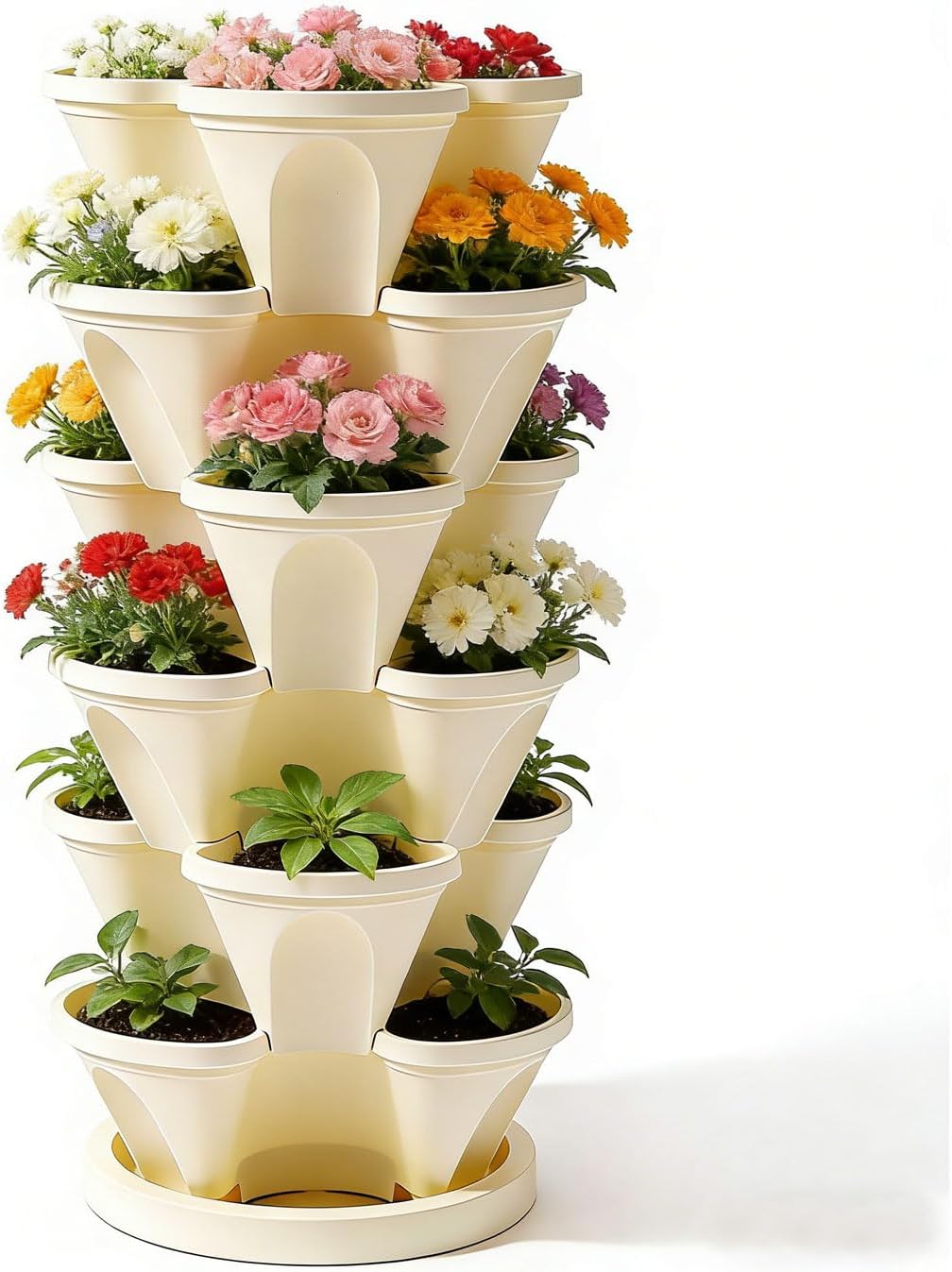
This Roixeeds 6-tier stackable vertical planter is a simple, no-tools solution for creating a compact strawberry or herb garden on a balcony, patio, or small yard. The tiers snap together with an interlocking design, so setup is fast and the unit is easy to move or reconfigure. Each level includes a built-in drainage path that channels excess water downward, helping prevent waterlogged roots and keeping moisture more consistent across tiers. Made of plastic, the planter is lightweight and simple to clean, and its vertical footprint lets you grow several plants in the space one pot would occupy. Important limitations are the modest planting volume per tier and the lightweight plastic construction, which can be less durable in very hot sun or heavy winds compared with thicker resin or ceramic alternatives. For reliability-minded gardeners this planter performs well for small fruits and herbs if you monitor watering and anchor or shelter it in exposed locations.
Best for: Gardeners who need a reliable, space-saving solution for growing strawberries or herbs on a balcony or small patio and prefer an easy-assembly, low-maintenance planter.
Less Ideal for: Those who need large single-plant containers or who require heavy-duty materials for permanent exposed installations should consider sturdier, larger alternatives.
- Stackable interlocking tiers for quick assembly and flexible configuration
- Built-in drainage system that directs excess water to lower layers
- Lightweight plastic makes it easy to move and clean
- Six planting levels maximize vertical growing space for strawberries and herbs
- Individual tier planting volume is limited so larger-rooted vegetables may be constrained
- Plastic construction may degrade faster than heavier materials under prolonged sun exposure
Verdict: Choose this planter when you want a dependable, easy-to-assemble vertical solution to grow multiple strawberries or herbs in a small outdoor space.
GreenStalk 7-Tier Vertical Planter (Evergreen)

| Number of Levels | 7 |
|---|---|
| Capacity | 42 gallons |
| Number of Pieces | 1 |
| Other Special Features of the Product | UV Resistant |
| Material Type | Plastic |
The GreenStalk 7‑Tier Vertical Planter is a tall, free‑standing stackable planter built to maximize planting pockets in a small footprint. It assembles into seven stacked levels that create 42 planting pockets with about 7 inches of depth each, so you can grow leafy greens, herbs, strawberries and shallow root vegetables using a single 19‑inch base area. Made from food‑grade, UV‑resistant plastic that the manufacturer says is BPA, BPS and PVC free, this model is intended for outdoor use and holds roughly 42 gallons of potting mix. Practical benefits include easy vertical access for harvesting, efficient use of patio or balcony space, and a lightweight material that resists sun damage. Limitations are that pocket depth favors small or shallow‑rooted crops rather than deep taproot plants, and it requires a fair amount of potting mix and regular watering because vertical modules dry faster than ground beds. Expect straightforward assembly and sturdy floor‑standing placement rather than wall mounting.
Best for: Buyers who prioritize a reliable, low‑maintenance vertical planter to get consistent seasonal harvests from limited outdoor space and want a durable outdoor solution that resists sun degradation.
Less Ideal for: Gardeners who need to grow large, deep‑rooted vegetables or who prefer in‑ground beds for moisture retention and root development.
- High planting density with 42 planting pockets for diverse small crops
- UV‑resistant, food‑grade plastic suitable for outdoor use
- Free‑standing stacked design saves horizontal space on patios or balconies
- Lightweight construction makes repositioning and seasonal storage easy
- Pockets are shallow so not suitable for deep‑rooted plants
- Vertical setup dries out faster and requires more frequent watering
Verdict: Choose this GreenStalk 7‑tier planter when you want a dependable, UV‑resistant vertical system that delivers a high number of planting pockets in a small outdoor footprint.
VIVOSUN 2-Pack 5-Tier Stackable Vertical Planters

| Material Type | Polypropylene (PP) |
|---|---|
| Number of Levels | 5 |
| Unit Count | 2 |
| Indoor Outdoor Usage | Indoor, Outdoor |
| Capacity | 40 pounds |
The VIVOSUN 2-pack of 5-tier stackable planters turns narrow spots into productive strawberry or herb beds by stacking multiple oval planting pockets vertically. Each planter is made from fade-resistant polypropylene and includes internal drainage holes plus a bottom saucer so excess water drains downward without puddling at the base. The stackable design lets you combine units to increase planting capacity while the floor-standing mounting keeps the setup stable on a balcony or patio. Practical benefits include efficient space use for small outdoor areas and easier harvesting because plants sit at reachable heights. Expect lightweight, weather-tolerant plastic that is simple to move and clean, but know it is not structural like metal and can tip if overloaded or placed in very windy locations. Installation is straightforward but assembling multiple stacked units to form a taller tower takes some time and care to keep the columns aligned. For growing strawberries, the drainage and tiered pockets help prevent root rot and improve air circulation compared with crowded horizontal beds.
Best for: Buyers who want to maximize strawberry or herb production in limited outdoor spaces and prefer a lightweight, low-maintenance planter they can expand over time.
Less Ideal for: People seeking a heavy-duty permanent planter for exposed, very windy locations or gardeners who prefer natural materials like wood or ceramic.
- Space-saving five-tier design lets you grow many plants in a small footprint
- Fade-resistant polypropylene resists cracking and is easy to clean
- Built-in drainage system with bottom saucer reduces waterlogging risk
- Stackable units allow modular expansion to increase capacity
- Lightweight plastic can be less stable than heavier planters and may tip in strong wind
- Assembly and stacking several units requires attention to alignment and takes time
Verdict: If you need a compact, expandable solution to grow strawberries in tight patios or balconies, this 5-tier VIVOSUN stackable planter delivers high planting density with built-in drainage.
VECELO 5-Tier Vertical Self-Watering Garden Planter (White)

| Material Type | Plastic |
|---|---|
| Number of Levels | 5 |
| Indoor Outdoor Usage | Indoor, Outdoor |
| Other Special Features of the Product | Adjustable Height, Self Watering, Stackable |
| Included Components | 5 Pots |
The VECELO 5-tier vertical planter stacks five round pots into a single freestanding column so you can grow multiple strawberry plants or a mix of herbs and flowers in a small footprint. It is made of painted plastic, includes a soil separator and built-in drainage that channels excess water into a base tray, and rolls on integrated wheels to reposition for light or shelter. Typical use is patio or balcony container gardening where space is limited or for indoor windowsill setups that need more planting area. The self-draining, breathable design helps prevent waterlogging while the soil holding boards keep mix from spilling between tiers, which reduces mess when watering and harvesting. Because it is plastic it is lightweight and easy to assemble, but that also means it will be less robust than metal or heavy-duty resin in very windy or rough outdoor conditions. The five-tier layout offers good planting density but limits root volume per plant, so choose shallow-rooted varieties like strawberries, compact herbs, or small salad greens for best results.
Best for: Buyers who want a space-efficient, low-maintenance planter to grow multiple strawberries or compact herbs on a patio, balcony, or indoors and prioritize easy mobility and simple watering management.
Less Ideal for: Gardeners who need deep root space for large vegetables or who want a heavy-duty, permanent outdoor planter for exposed locations should consider other options.
- Stacks five planting levels to maximize plants in a small footprint
- Integrated drainage and soil separator reduce waterlogging and mess
- Wheels make it easy to move for sun or storage
- Lightweight plastic construction simplifies assembly and handling
- Individual pots have limited root volume so not suitable for deep‑rooted crops
- Plastic construction is less durable in very exposed, high-wind outdoor locations
Verdict: If you want a compact, mobile solution to grow several strawberries or herbs in limited space, this five-tier self-draining planter delivers convenient, low-maintenance planting.
Choosing the Right Stackable Planter: Key Factors to Consider
Drainage and Water Management
Stackable planters must move excess water away from plant roots while avoiding leaks between tiers. Poor drainage leads to waterlogged soil in lower levels and root rot, especially for edible crops. Look for systems with dedicated drainage holes per tier, internal channels that direct water safely, or integrated reservoirs with overflow paths.
Consider how you will water the stack. Top-down watering eases routine care but can wash nutrients from upper tiers into lower ones unless the design mitigates leaching. Some stacks include separate reservoirs or detachable tiers to let you water at each level, which helps control moisture for plants with different needs.
Stack Stability and Wind Resistance
A vertically stacked planter concentrates weight and wind exposure, so stability is critical for safety and plant health. Poorly keyed or loosely fitting tiers can shift, tilt, or separate when the stack is wet or when plants grow heavy. Heavy pots at the top increase tipping risk.
Assess whether the system uses secure locking features, wide bases, or the option to anchor to a wall or railing. For balconies or windy sites, choose designs with low center of gravity or the ability to add ballast. Stability also affects access: a wobbly stack makes planting and harvesting difficult and risks spilling soil.
Material and UV Resistance
Stackable planters are exposed to sun, rain, and temperature swings. Materials like thick molded plastic, powder-coated metal, or rot-resistant composites perform better over several seasons. Thin plastics can become brittle and crack, while untreated metals may rust.
Check for UV-stabilized plastics or coatings that slow degradation. If you expect freezing conditions, ensure the material resists freeze-thaw damage. Durability influences long-term cost and how often you need to refresh the stack before plants can reuse it again.
Soil Volume and Root Space
Each tier's usable soil volume determines which plants will thrive. Shallow tiers suit herbs, lettuce, and small annuals but not deeper-rooted vegetables like carrots or large tomato varieties. The effective soil depth matters more than the outer dimensions; internal drainage channels or narrow walls can reduce available soil.
Think about the crops you plan to grow and match tier depth and width to their root requirements. Also consider how soil compaction and watering frequency change with smaller volumes: stacks often require more frequent monitoring and feeding than ground beds.
Ease of Planting and Maintenance
Practical gardening depends on being able to plant, replace, and water without contorting yourself around the stack. Systems with removable tiers, wide access openings, or tiers that swing open make sowing and harvesting simpler. Consider how you will refresh soil, replace plants mid-season, or inspect roots for pests and disease.
Also evaluate how easy it is to move a filled stack if necessary. Lightweight modules can be convenient up front but harder to steady once planted. Accessibility affects long-term enjoyment and the frequency with which you will tend the system.
Modularity and Expandability
One main advantage of stackable planters is modularity. You should be able to add or remove tiers to match space, crop rotation, and seasonal needs. Compatibility between tiers ensures you can replace damaged modules without discarding the whole system.
Consider whether the design supports different tier sizes or accessories such as trellis attachments, irrigation fittings, or anchoring hardware. Expandable systems let you start small and scale up as plants fill in or as your vertical gardening ambitions grow.
Best Plants for Stackable Planters
Not every plant thrives in compact, stacked soil. Choose shallow-rooted herbs and leafy greens for upper tiers where soil volume is smallest. Parsley, basil, chives, arugula, and salad mixes do well when soil remains evenly moist.
Lower tiers or wider modules can support small fruiting crops and compact varieties designed for container culture. Dwarf peppers, patio tomatoes, strawberries, and bush beans are common choices when the tier depth and soil volume are sufficient.
- Top tiers: herbs, succulents, and small ornamentals
- Middle tiers: leafy greens, small root crops like baby carrots
- Bottom tiers: heavier fruiting plants and deeper-rooted veggies
Placement and Site Preparation
Place stacked planters where sunlight meets the needs of your chosen crops. Most edible plants need at least six hours of sun; herbs and some greens tolerate partial shade. Ensure the surface can bear the weight of a filled stack and that drainage from the planter will not damage decking or paint.
If placing on a balcony or railing, check load capacity and consider anchoring hardware. For ground placement, level the base and add a small layer of coarse material if you want improved drainage under the lowest tier.
- Sun exposure: full sun to partial shade depending on crops
- Surface strength: verify weight capacity for filled soil and water
- Protection: windbreaks or rail anchoring for exposed sites
Watering Strategies for Vertical Systems
Watering stacked planters requires attention to how moisture moves between tiers. Frequent light waterings may suit shallow upper tiers, while lower, deeper tiers benefit from slower, heavier soakings. Establish a routine and adjust based on plant cues such as wilting or yellowing leaves.
Consider using a drip line or slow-release irrigation designed for modular systems to reduce overwatering and nutrient leaching. If the system includes an internal reservoir, follow the manufacturer guidance for refill frequency and avoid letting water stagnate between uses.
- Top-down watering can be efficient but may over-saturate lower tiers
- Drip irrigation helps control moisture per tier
- Check reservoirs and overflow paths regularly
Soil Mix and Feeding
Use a light, well-draining container mix with steady nutrient release. Mixes formulated for containers hold moisture without becoming dense, which is especially important in smaller volumes. Adding compost and slow-release fertilizer gives plants a steady supply of nutrients.
Because small soil volumes deplete nutrients faster, plan for regular feeding with liquid fertilizers during the growing season and a soil refresh between major crop cycles. Mulch the top tier to reduce evaporation and maintain more even moisture.
- Choose a loose, high-quality container mix
- Incorporate compost and slow-release fertilizer at planting
- Top-dress or liquid-feed during active growth
Winter Care and Seasonal Cycling
Empty or protect stackable planters before frost if you live in a cold climate. Some durable materials tolerate freezing, but moist soil expands and can damage thin plastics. Consider moving modular tiers indoors or to a sheltered spot for overwintering if feasible.
Seasonal cycling also offers a chance to replenish soil, check drainage paths, and repair any damaged locking mechanisms. Store spare modules flat and clean to extend the system's life.
- Drain and dry tiers before freezing weather
- Store or shelter modules if material is not frost-rated
- Refresh soil annually for best yields
How We Chose the Best Stackable Planter
We focused on practical real-garden performance when shortlisting the seven stackable planters. Primary evaluation criteria included drainage effectiveness, stack stability and locking, material durability under sun and moisture, and usable soil volume per tier. We also considered ease of planting and repotting, how accessible tiers are for watering and harvesting, and whether the system supports root depth required by common edible and ornamental plants. Excluded items included single-piece tall towers that do not allow tier-by-tier access, decorative-only items lacking functional drainage, and systems meant solely for hydroponics. We prioritized products that work outside year-round in temperate climates, use materials that resist UV and frost damage, and provide clear modular expandability so gardeners can scale vertically without sacrificing plant health. These practical filters informed the scoring and selections shown across the guide.
FAQ
Can I grow tomatoes in a stackable planter?
You can grow compact or patio tomato varieties if the lower tiers provide sufficient soil depth and volume. Support and regular feeding are important, and heavier fruit loads are better placed in lower tiers to keep the stack stable.
How often should I water a stacked planter?
Watering frequency depends on tier depth, potting mix, and weather. Shallow upper tiers may need daily checks in hot weather, while deeper lower tiers often require less frequent but more thorough watering. Monitor soil moisture and adjust as conditions change.
Are stackable planters suitable for balconies?
Many stackable planters are designed for balconies, but you should check the load capacity of the balcony surface and use anchoring options if provided. Ensure drainage will not cause issues for neighbors or decking.
Do stackable planters need special soil?
Use a high-quality container mix that is light and well draining. Avoid heavy garden soil, which can compact in small volumes. Adding compost and a slow-release fertilizer helps maintain fertility between plantings.
How do I prevent pests in stacked systems?
Preventive measures include good sanitation, rotating crops, and inspecting tiers regularly. Keep foliage dry where possible, avoid overcrowding, and remove infected plants promptly. Barriers or screens can protect young plants from birds or larger pests.
Can I add irrigation to a stackable planter?
Many gardeners add drip irrigation or micro-sprayers to stacked systems to control moisture more precisely. Use fittings that match the module design and avoid over-pressurizing internal channels to prevent leaks between tiers.
Final Verdict
Stackable planters are a practical solution for maximizing limited outdoor space, but success depends on matching the system to your plants and site. Prioritize drainage and stack stability first, then consider material durability and the usable soil depth each tier provides. Tradeoffs are inevitable: compact systems save space but often require more frequent watering and feeding. Choose a modular system that gives secure stacking, easy access for planting and maintenance, and enough soil volume for your intended crops. With the right balance of stability, drainage, and accessibility, a stackable planter can deliver productive vertical gardening season after season.
