

Note: This article contains affiliate links. If you click on these links and make a purchase, I may earn a small commission at no extra cost to you. This helps support my research and content. Read my full affiliate disclosure here.
If your garden space is limited or you need to move containers seasonally, an elevated planter with wheels changes how you garden. These raised containers reduce bending, improve drainage, and let you shift plants to optimize sunlight or shelter them from weather. Choosing the right mobile elevated planter matters because wheel quality, frame stability, and material durability directly affect plant health and how easy it is to reposition beds. This guide covers our shortlisted picks and explains the practical reasons each design element matters. We evaluated mobility, build materials, drainage, and maintenance to help you find an elevated planter with wheels suitable for patios, balconies, or small yards. Read on for the features that make a planter easy to use and keep your plants thriving.
Top Picks at a Glance
| Best Overall The best all-around choice for most situations | Permasteel EnGrow Raised Garden Bed with Eco-Chamber and Locking Wheels |  |
| Best Quality Built to a higher standard if you want something more solid | Vego Garden Rolling Elevated Raised Garden Bed 2' x 4' with Legs and Storage Rack |  |
| Best Value The sweet spot between price and what you get | FOYUEE 2-Pack Elevated Metal Raised Garden Beds with Wheels and Shelf |  |
| Highest Rated A top-rated pick with lots of positive feedback | Vego Garden Classic Rolling Raised Garden Bed with Wheels |  |
| Most Popular A crowd favorite that many people choose with confidence | FOYUEE Elevated Mobile Raised Garden Bed with Wheels and Shelf |  |
| Best Seller A high-volume bestseller chosen again and again | LEETOLLA 31.6" Elevated Raised Garden Bed with Wheels and Storage Shelf |  |
Permasteel EnGrow Raised Garden Bed with Eco-Chamber and Locking Wheels

| Capacity | 5.6 cubic feet |
|---|---|
| Included Components | Drain Plugs, Storage Shelf, Wheels |
| Material Type | Powder Coated Zinc Alloy Steel |
| Other Special Features of the Product | Breathable, Drainage Hole, Fade Resistant, Portable, UV Resistant |
| Indoor Outdoor Usage | Indoor, Outdoor |
This Permasteel EnGrow raised garden bed is built for easy, high-performance container growing of herbs and compact vegetables on patios or balconies. Its powder-coated zinc alloy steel frame gives a sturdy, rust-resistant shell while the included soil platform and soil fabric lift the planting medium above an Eco-Chamber reservoir to avoid soggy roots. The reservoir holds several gallons, includes a drain valve for easy flushing and a water-level indicator so you know when to empty it. Two locking caster wheels make relocating or positioning the bed simple, and the small footprint fits tight outdoor spaces while still providing a usable planting area. Practical benefits include improved drainage and root aeration from the EnGrow design, reduced fussing over daily watering thanks to the indicator and reservoir, and durable outdoor finish for season-long use. Important limitations are the compact soil capacity that restricts very large crops and the metal construction which will be cooler or hotter than wood in extreme temperatures, so placement and planting choices should reflect that.
Best for: Buyers who want a low-maintenance, performance-focused herb or small-vegetable planter for a balcony or patio and value consistent drainage and easy mobility.
Less Ideal for: Not a good fit for growers who need large planting volumes for full-size vegetables or prefer all-natural wood planters for aesthetics or thermal buffering.
- EnGrow soil platform and reservoir prevent standing water and support healthier root aeration.
- Water-level indicator plus drain valve make monitoring and draining the reservoir straightforward.
- Powder-coated zinc alloy steel resists rust and provides a sturdy, long-lasting frame.
- Locking caster wheels allow easy repositioning and secure placement on patios or balconies.
- Relatively small soil capacity limits large or deep-rooted vegetables.
- Metal sides can heat or cool more rapidly than wood, affecting soil temperature in extremes.
Verdict: For small-space herb and vegetable growers who prioritize consistent drainage and low-maintenance performance, this EnGrow raised bed delivers reliable root health and easy mobility.
Vego Garden Rolling Elevated Raised Garden Bed 2' x 4' with Legs and Storage Rack

| Size | 2' x 4' |
|---|---|
| Capacity | 3.9 cubic feet |
| Material Type | Metal |
| Finish Types | Powder Coated |
| Weight Capacity | 700 lbs |
The Vego Garden Rolling Elevated Raised Garden Bed is a metal, floor-standing planter built for heavier-duty container gardening on patios and decks. It assembles from powder-coated VZ 2.0 steel panels and welded corner legs to create a 32-inch tall bed that raises the planting surface to reduce bending and offers a 12-inch planting depth for substantial root volume. The bed is tested to support up to 700 pounds for the 2' x 4' size, so it handles heavy soil mixes, multiple large plants, or potted specimens without sagging. Practical touches include rot- and rust-resistant finish, a lower storage rack integrated into the leg frame, and rubber edging for safer handling during assembly. Because it is elevated and rolling, the bed is easy to reposition for sun, shade, or winter storage, and it pairs with the brand's add-on covers and irrigation accessories. Limitations are typical of metal beds: you will need to manage insulating and drainage for extreme heat or cold, and assembly requires tightening multiple fasteners and aligning panels for the welded supports to sit correctly.
Best for: Buyers who prioritize durable, performance-oriented raised beds that hold heavy soil loads and make planting easier on the back, and who want a mobile solution for patios or small outdoor spaces.
Less Ideal for: People seeking a lightweight, foldable planter for seasonal use or those who prefer natural wood aesthetics for garden beds.
- High tested weight capacity (700 lbs) suitable for heavy soil and large plants
- VZ 2.0 powder-coated steel construction with welded corners for long-term corrosion resistance
- Raised 32" height reduces bending and provides a deeper planting profile
- Integrated lower storage rack adds useful tool or supply storage without extra footprint
- Metal construction can transfer heat to roots in hot climates without added insulation
- Assembly requires multiple fasteners and careful alignment of panels and legs
Verdict: Choose this rolling Vego Garden elevated bed when you need a tough, high-capacity, mobile planter that minimizes bending and stands up to heavy soil and large plants.
FOYUEE 2-Pack Elevated Metal Raised Garden Beds with Wheels and Shelf
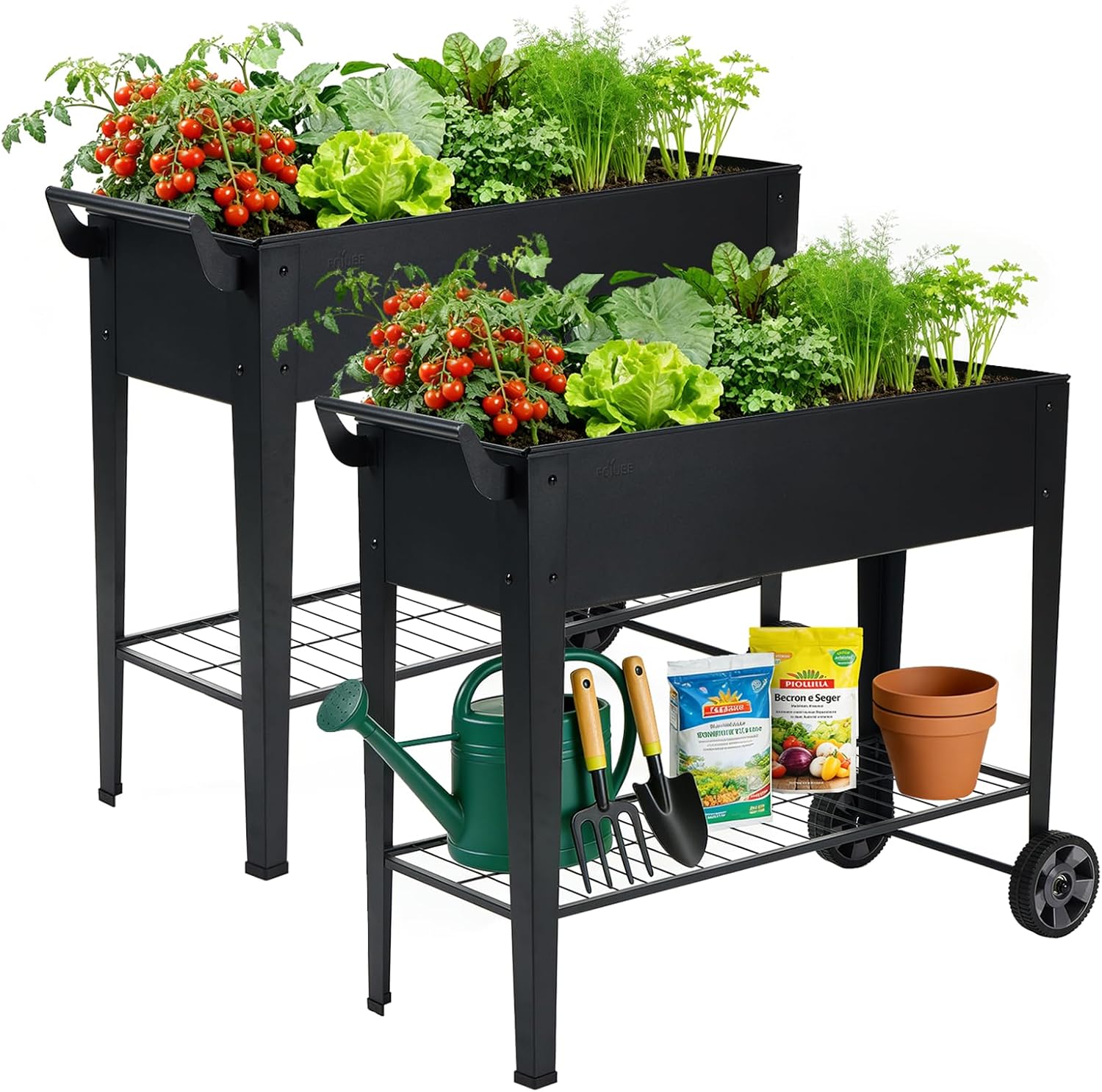
| Capacity | 19.3 gallons |
|---|---|
| Number of Pieces | 2 |
| Material Type | Metal |
| Other Special Features of the Product | Dual-Layer Drainage System, Detachable Storage Shelf |
| Mounting Type | Floor Standing |
These two elevated metal planters are designed for vegetable growing where reduced bending and mobility matter. Each unit stands about 32 inches tall and holds roughly 19.3 gallons of soil, so you can plant small vegetables, herbs, or starter seedlings at comfortable working height. The galvanized, powder-coated steel construction and anti-rust treatment make the beds outdoor-ready for several seasons. A grooved bottom with multiple drain outlets helps prevent waterlogging while the detachable shelf gives a convenient spot for tools and pots and supports lighter supplies. Large 6-inch all-terrain wheels and an ergonomic handle let you roll a filled planter to follow sun or shelter from storms, which is helpful for container-grown veggies that need changing light. Assembly is straightforward with included mounting kits. Limitations: these are not deep beds for very large root crops, and mobility on steep slopes or steps is limited when filled. The metal walls will conduct heat more than wood, so situate them where midday soil overheating is less likely or use shading in hot climates.
Best for: Gardeners who prioritize easy access and proven performance and want mobile elevated planters for growing vegetables with minimal bending and demonstrable durability.
Less Ideal for: People growing very large root crops or those who need permanent, immovable beds in uneven, stepped terrain should consider deeper or fixed alternatives.
- Galvanized powder-coated steel resists rust and stands up to outdoor use
- Raised 32" height reduces bending and makes planting and harvesting easier
- Built-in grooved bottom with multiple drain outlets improves drainage and root health
- Large 6" wheels and ergonomic handle enable relocating planters to follow sun or shelter
- Detachable shelf provides handy storage and a work surface near the bed
- 12" planting depth and 19.3 gallon capacity limit use for very large root vegetables
- Wheels reduce stability on steep slopes and are not suited for steps
Verdict: A durable, easy-to-move elevated planter pair that makes growing vegetables at waist height simple while minimizing back strain.
Vego Garden Classic Rolling Raised Garden Bed with Wheels

| Capacity | 17.91 gallons |
|---|---|
| Number of Levels | 1 |
| Material Type | Metal |
| Other Special Features of the Product | Rust Resistant |
| Indoor Outdoor Usage | Indoor, Outdoor |
The Vego Garden Classic Rolling Raised Garden Bed is a compact mobile planter built for small outdoor spaces. It is used as a portable raised bed on patios, decks, balconies, and rooftops where in-ground planting is not possible. The metal construction and painted, rust-resistant finish give it a sturdy feel and help it withstand outdoor conditions, while the included wheels make it straightforward to reposition for sun, shade, or seasonal storage. The square footprint and relatively deep planting volume support vegetables, herbs, and flowers with healthier root growth than shallow containers. Assembly is typical for metal planter kits and the floor-standing design keeps plants off hard surfaces and away from pests. Limitations include the fixed single-level planter layout and compact overall soil capacity, which means larger shrubs or many plants will need a bigger unit or multiple beds. If you need a low-maintenance, durable planter that you can move without lifting, this model delivers dependable, practical performance for small-space gardeners.
Best for: Home gardeners who need a reliable, low-maintenance elevated planter for small hard-surface outdoor areas and value the ability to move their bed for light or weather management.
Less Ideal for: Gardeners who want to grow large shrubs, trees, or a high number of crops in a single container should choose a larger or multi-level system instead.
- Wheels allow easy repositioning for sunlight or storage without heavy lifting
- Metal construction with painted rust-resistant finish for outdoor durability
- Deep planting space suitable for vegetables, herbs, and flowers
- Compact square footprint fits patios, balconies, decks, and rooftops
- Single-level, limited soil capacity not ideal for large plants or high-volume production
- Requires assembly typical of metal kit planters
Verdict: A durable, rust-resistant rolling raised bed that makes reliable mobile gardening on patios and balconies effortless.
FOYUEE Elevated Mobile Raised Garden Bed with Wheels and Shelf

| Capacity | 2.5 cubic feet |
|---|---|
| Material Type | Metal |
| Finish Types | Powder Coated |
| Mounting Type | Floor Standing |
| Indoor Outdoor Usage | Outdoor |
This FOYUEE elevated raised bed is a mobile planter built for productive container gardening without bending or kneeling. The powder-coated galvanized steel box sits at a standing height and includes a handle plus 6-inch all-terrain wheels so you can roll a full bed around a patio or balcony to follow sun or clear space for events. The planting box is wider than many compact planters, holds several cubic feet of soil, and has molded drainage channels plus a central drain to reduce waterlogging and protect roots. A lower shelf gives handy storage for tools and pots. Construction is heavy-duty enough to support substantial loads, and the rust-resistant finish makes it practical for outdoor seasons. Expect assembly and some metal hardware alignment during setup, and the steel construction makes it heavier to move before wheels are fitted. It is best used for herbs, salad greens, and shallow-rooted vegetables in small outdoor spaces rather than deep-root vegetables that need more soil depth.
Best for: Gardeners who prioritize durability and high performance in a compact, accessible planter and want to maximize yield from a patio, balcony, or small backyard while avoiding frequent bending.
Less Ideal for: Those who need very deep soil for root vegetables or who prefer ultra-lightweight, portable fabric or plastic planters for frequent long-distance moves.
- Sturdy galvanized steel with outdoor-grade powder coating resists rust and supports heavy loads.
- Built-in wheels and handle let you reposition a fully planted bed without lifting.
- Integrated drainage channels and a central drain reduce overwatering and improve root health.
- Wider planting area and a lower storage shelf increase usable space for plants and tools.
- Not suitable for deep-rooted crops because planting box depth is limited.
- Steel construction adds weight before wheels are attached, making initial placement harder.
Verdict: Choose this elevated, wheeled galvanized-steel planter when you want a heavy-duty, rust-resistant mobile bed that boosts productivity and saves your back.
LEETOLLA 31.6" Elevated Raised Garden Bed with Wheels and Storage Shelf

| Capacity | 2.5 cubic feet |
|---|---|
| Number of Levels | 2 |
| Material Type | Iron |
| Indoor Outdoor Usage | Indoor, Outdoor |
| Other Special Features of the Product | 2 universal wheels + 2 stabilizing feet, 5 drainage holes + 2 cross-lines, Handle Bar, Storage Shelf |
This LEETOLLA elevated raised bed lifts container gardening to waist height so you can plant, water, and harvest without kneeling. It is built from painted iron with a powder-coat finish, includes two all-terrain wheels and an ergonomic handle for moving the filled bed, and has a lower shelf for tools or extra pots. The planting area holds about 2.5 cubic feet of soil and features five drainage holes plus cross-channels to help prevent waterlogging. Assembly is straightforward with the included hardware and takes roughly 30 to 45 minutes with two people. Practical benefits include reduced back strain, mobility to follow sun patterns or shelter plants from storms, and tidy storage on the attached shelf. Limitations are the metal construction, which will require touch-up care over time to avoid surface rust in very wet or coastal conditions, and the relatively narrow planting depth compared with deep beds, so very large root crops may be less suitable. The unit fits small balconies and patios but is best for mixed vegetables, herbs, and compact varieties rather than large, heavy crops.
Best for: Buyers who want comfortable, low-effort vegetable or herb gardening on a balcony, patio, or small yard and prioritize mobility and ease of use over maximal soil depth.
Less Ideal for: Gardeners seeking very deep beds for large root vegetables or those who prefer untreated wood or plastic planters that do not require metal maintenance.
- Elevated height reduces bending and kneeling for easier planting and harvesting
- Two large wheels and a handle let you reposition the bed to follow sun or avoid bad weather
- Built-in drainage holes and cross-channels reduce risk of overwatering
- Lower storage shelf keeps small tools and supplies handy
- Powder-coated iron construction for sturdier, decorative outdoor use
- Metal finish can require periodic touch-up to prevent corrosion in very wet or salty environments
- Planting depth is modest so very deep-rooted crops may be limited
Verdict: A mobile, waist-height metal raised bed that makes growing herbs and compact vegetables easier by cutting bending and letting you move plants to the best light.
Choosing the Right Elevated Planter with Wheels: Key Factors to Consider
Wheel Quality and Mobility
Wheels determine how easily you can move a filled elevated planter, and not all wheels perform the same in a garden setting. Look for wheels sized to roll over common outdoor surfaces like pavers, compacted soil, and decking. Pneumatic or larger soft-rubber wheels cushion bumps and reduce jostling of plant roots, while small hard wheels may bind on rough ground.
Locking mechanisms are equally important. A positive lock keeps the planter stationary while you plant or when it sits on a slope, preventing accidental movement that could damage plants or spill soil. Finally, consider wheel attachment points and load ratings; wheels fastened to the frame with reinforced hardware and rated for the planter plus saturated soil will last longer and feel safer to move.
Frame Stability and Tip Resistance
An elevated planter with wheels needs a stable frame because the added height increases the risk of tipping, especially when the bed is full or when you reach inside. Frames with wide footprints, diagonal bracing, or lower crossbars resist wobble and distribute weight evenly. Taller planters benefit from broader bases or adjustable leveling feet to keep the center of gravity low.
Consider how you will access the plants. If you expect to lean on the edge while pruning or planting, the structure should be stiff and well-joined. Check for designs that place wheels near the corners rather than under the center, which improves lateral stability when pushing or pulling the planter.
Materials and Weather Resistance
Materials determine a planter's lifespan and the amount of maintenance required. Rot-resistant woods like cedar and specially treated lumber offer a natural look and good longevity but still need annual care in wet climates. Metal frames with powder-coated finishes resist rust better than untreated steel, and some plastics are molded to resist UV breakdown.
Also evaluate how materials interact with soil moisture. Untreated wood in constant contact with damp soil will fail sooner, while lined metal or plastic avoids direct moisture exposure. Fasteners and brackets should be stainless or plated to resist corrosion, since loose hardware compromises both stability and mobility over time.
Drainage and Soil Health
Good drainage keeps plant roots healthy and prevents waterlogged soil, which is especially important in elevated planters where soils can dry faster at the surface. Look for built-in drainage channels, removable plugs, or designs that accept a liner with drainage holes. Adequate planting depth and consistent soil volume allow beneficial root development and moisture retention.
Consider how easy it is to change or refresh the soil. Some elevated planters include removable liners or access panels that make seasonal soil work simpler. Also think about how the planter sits when drainage occurs; water should not pool against the frame or wheels, and overflowing water should not damage decking or patio surfaces.
Planting Depth and Liner Compatibility
Different plants require different root depths, so the planter's usable soil depth is a key selection factor. Shallow raised beds work for herbs and salad greens, while vegetables and shrubs need deeper profiles. Measure the interior depth and confirm whether the planter includes or recommends a liner, as liners help contain soil and protect materials but can reduce actual planting depth.
Also check how liners attach and whether they are removable for soil replacement. Removable liners speed up maintenance and let you treat or replace soil without moving the entire structure. If your gardening plans include seasonal rotation or growing larger crops, prioritize planters with generous soil volume and easy liner access.
Ease of Assembly and Maintenance
You will interact with an elevated planter with wheels more than once every season, so assembly and upkeep matter. Assess whether the planter requires many fasteners, special tools, or repeated tightening as it settles. Simple, well-documented assembly reduces the chance of misaligned components that cause wobble or uneven wheel wear.
Maintenance includes cleaning, tightening hardware, and treating materials against weather. Removable components like liners, wheel assemblies, and slatted bottoms simplify winterizing and cleaning. Also consider whether replacement parts are standardized; widely used screw sizes and common wheel mounts make future repairs easier.
Best Uses and Garden Situations
Mobile elevated planters excel in small-space gardening, container rotation for sun exposure, and seasonal sheltering of tender plants. On balconies and patios they provide a raised work surface and, with wheels, let you roll plants into shade or inside for cold snaps. In community gardens or rental plots where permanent fixtures are not allowed, wheeled planters offer a semi-permanent, movable solution.
- Balconies and rooftop patios for easy relocation
- Seasonal vegetable beds that need sun tracking
- Temporary shielding of tender plants during storms
Preparing a Site and Protecting Surfaces
Before placing a wheeled elevated planter, consider the surface beneath it. Hard surfaces like concrete and decking handle weight well but can be scratched by wheels. Use protective pads or a short platform if you must avoid direct wheel contact. On softer ground, larger wheels reduce sinking and ease movement.
- Place on level ground or use adjustable feet to stabilize
- Use pads or boards to prevent wheel marks on decking
- Avoid placing on very soft soil without a support base
Potting Mixes and Soil Management for Raised Beds
Because elevated planters can drain faster than in-ground beds, tailor your potting mix to hold moisture while remaining well-draining. A mix with compost, coconut coir or peat alternative, and a portion of aerating material such as perlite or coarse sand balances water retention and airflow. Top up with compost each season to replenish nutrients.
- Aim for a loose, airy mix to promote root growth
- Include slow-release organic fertilizer or regular liquid feedings
- Monitor moisture more frequently in summer due to faster surface drying
Winter Care and Storage
Wheeled planters need winter attention to prevent damage from freeze-thaw cycles and standing water. If possible, roll planters to a sheltered location or tilt them to drain and remove liners for storage. For long-term outdoor storage, elevate wheels off the ground or jack the planter slightly to prevent wheel damage and reduce persistent moisture contact.
- Remove or empty liners to prevent soil freeze and expansion
- Lock wheels or move to a sheltered area during severe weather
- Check and tighten hardware in spring before the growing season
Accessibility and Ergonomics
Elevated planters reduce bending strain and make gardening more accessible for people with limited mobility, but height matters for comfortable use. Aim for a working surface that keeps your elbows slightly bent when tending plants. Wheels add the benefit of repositioning for better light without heavy lifting, but ensure the handle area or sides are reachable without strain.
- Choose a height that suits your reach and mobility needs
- Confirm wheel locks hold securely when working
- Consider side shelves or ledges for tools and pots
How We Chose the Best Elevated Planter with Wheels
We started by focusing on features that matter in everyday gardening with elevated planters and wheels. Our primary evaluation criteria were stability on flat and uneven surfaces, wheel strength and locking, construction materials and weather resistance, ease of planting and potting, and drainage and soil management. For stability we looked for designs with broad bases, reinforced corners, and wheel placement that resists tipping when the bed is full or when you lean on it while working. Wheel evaluation prioritized load capacity, smooth rolling on common surfaces, and a positive locking mechanism to hold the planter in place. Material and finish criteria emphasized rot-resistant woods, powder-coated metals, or durable plastics that withstand sun and moisture without structural failure. We also considered how the planter supports healthy soil and roots through drainage options and liner compatibility, plus how easy it is to access soil for planting or re-potting. We excluded very small decorative pots, purely hanging solutions, and temporary wheeled dollies that lack integrated drainage or planting depth. Our selections favor designs that balance mobility with long-term gardening performance.
FAQ
How much weight can a wheeled elevated planter safely support?
Weight capacity varies by construction and wheel rating. Many well-built elevated planters support the weight of filled soil and plants, but check load ratings for the wheel assemblies and ensure the frame has reinforced joints. If you expect heavy loads, choose larger wheels and sturdier brackets.
Can I use any potting soil in an elevated planter with wheels?
You can use typical potting mixes, but blends that retain moisture while remaining well-draining work best. Elevated beds dry faster than ground beds, so mix in components that hold water and add compost for nutrients. Avoid heavy clay soils that can compact and increase weight.
Are wooden elevated planters with wheels suitable for wet climates?
Wood can work in wet climates if it is naturally rot-resistant or properly treated and lined. Using a liner, raised feet, and regular maintenance extends lifespan. Metal or plastic alternatives may require less upkeep where moisture and rot are persistent concerns.
How do I prevent the planter from moving while I work?
Use planters with positive wheel locks or chocks that engage when you are working. Some designs include leveling feet or built-in brakes. Position the planter on a firm, level surface and engage any lock or brake before planting or pruning.
Can I use wheeled elevated planters indoors on a deck or porch?
Yes, but take precautions to protect the surface from water and scratches. Place a waterproof tray or protective pad under the wheels and ensure good drainage so runoff does not damage the floor. Consider wheel covers or a small platform for extra protection.
Final Verdict
A wheeled elevated planter gives gardeners mobility, ergonomic ease, and flexible siting for seasonal care. Prioritize wheel quality and locking, a stable frame, and materials suited to your climate to keep plants healthy and equipment reliable. Balance planting depth and liner design to match what you want to grow and how often you will move the planter. Focus on the tradeoffs between mobility and long-term durability: heavier, sturdier options resist tipping and last longer, while lighter builds make repositioning effortless. Use the evaluation criteria above to choose an elevated planter with wheels that fits your space, plant choices, and maintenance preferences.
