

Note: This article contains affiliate links. If you click on these links and make a purchase, I may earn a small commission at no extra cost to you. This helps support my research and content. Read my full affiliate disclosure here.
If you want long-lasting color and low maintenance in garden beds, succulents for landscaping are an excellent choice. These water-wise plants reduce irrigation needs, resist many pests, and can form groundcover, structural accents, or container features depending on your layout. This guide covers our shortlisted picks for landscaping use, focusing on real-world traits gardeners care about: sun and drought tolerance, cold hardiness, growth habit, and maintenance needs. Read on to see the choices that perform well in outdoor beds and borders and to learn the practical factors that should guide your selection.
Top Picks at a Glance
| Best Overall The best all-around choice for most situations | SUCCULENTMARKET.COM Colorful Outdoor Succulent Plants, 4-inch, Pack of 8 |  |
| Best Quality Built to a higher standard if you want something more solid | Mountain Crest Gardens Sempervivum 25-Pack (5 Varieties, 2-inch Pots) |  |
| Best Value The sweet spot between price and what you get | Shop Succulents Assorted Mini Succulents, 2-inch, 32-Pack |  |
| Highest Rated A top-rated pick with lots of positive feedback | CitronellaKing Blue Glow Agave (2 live plants, starter cubes) |  |
| Most Popular A crowd favorite that many people choose with confidence | Altman Plants Premium Live Succulent Pack, 20 2-inch Assorted Succulents |  |
| Best Seller A high-volume bestseller chosen again and again | Plants for Pets 10 x 20 in. Assorted Sedum Succulent Mat |  |
SUCCULENTMARKET.COM Colorful Outdoor Succulent Plants, 4-inch, Pack of 8

| Indoor Outdoor Usage | Outdoor |
|---|---|
| Sunlight Exposure | Full Sun |
| Soil Type | Sandy Soil |
| Moisture Needs | Moderate Watering |
| Number of Items | 8 |
These succulents arrive as fully rooted 4-inch plants intended for outdoor, full-sun gardens and containers. The pack of eight includes a variety of colorful species selected and shipped from the seller's greenhouse, so you get instant planting material for borders, rock gardens, or mixed containers. Care is straightforward: plant in sandy, well-draining soil, give moderate water and reduce watering to roughly every two to three weeks once established. The live plants make quick visual impact and simplify starting a succulent bed without propagation work. Limitations to expect are the usual for mail-order plants: you may need to acclimate them to your microclimate and re-pot into larger containers if you plan long-term display. Also the selection is a mixed assortment so you do not get control over specific varieties. For a gardener wanting low-maintenance, colorful outdoor plantings, these provide a fast, easy way to add diversity and texture to sunny areas.
Best for: Buyers who want an easy, low-maintenance way to add colorful, drought-tolerant plants to sunny outdoor containers, rock gardens, or borders without starting from cuttings.
Less Ideal for: Gardeners who need specific named varieties, collectors seeking rare species, or those growing primarily indoors or in shade should consider alternatives.
- Sold as fully rooted live plants ready to plant outdoors
- Includes eight different colorful succulents for instant variety
- Low maintenance once established with infrequent watering
- Grown and shipped from greenhouse stock for healthier starts
- Assortment is random so specific varieties cannot be chosen
- May require acclimation and repotting for long-term growth
Verdict: A quick, low-maintenance way to add eight colorful, fully rooted succulents to sunny outdoor beds and containers.
Mountain Crest Gardens Sempervivum 25-Pack (5 Varieties, 2-inch Pots)

| Unit Count | 25 Count |
|---|---|
| Indoor Outdoor Usage | Indoor, Outdoor |
| USDA Hardiness Zone | 5 |
| Sunlight Exposure | Full Sun, Partial Sun |
| Moisture Needs | Moderate Watering |
This 25-pack delivers established, project-ready Sempervivum (hens-and-chicks) plants grouped as five of each of five hardy varieties, which makes large or repeat plantings fast and consistent. Each plant arrives rooted in a 2-inch nursery pot so you can quickly transplant into rock gardens, container displays, living roofs, or massed borders. The collection is bred for outdoor hardiness to about −20°F (USDA Zone 5) and prefers full to partial sun and well-draining soil, so it performs reliably in cold climates once established. Low-water needs and drought tolerance simplify care; water deeply only after the soil has dried. Practical benefits include uniform variety counts for design symmetry and reusable plastic pots that ease handling. Limitations to consider are the small nursery pot size at delivery, which means many plants will need space or repotting for long-term growth, and the set focuses only on Sempervivum rosettes so it is not a mix of trailing or tall succulents for varied textures.
Best for: Buyers who prioritize reliable landscape performance and want a ready-to-plant, cold-hardy succulent set that streamlines large-scale or repeat installations.
Less Ideal for: People seeking a diverse mix of succulent growth habits, tall or trailing specimens, or those who want mature, fully grown specimens ready to fill large containers immediately.
- Arrives rooted in individual 2-inch pots for easy transplanting and staging.
- Cold-hardy to about −20°F (USDA Zone 5) for reliable outdoor performance.
- Coordinated pack with five of each variety simplifies repeat planting and design symmetry.
- Low-water, low-maintenance plants suited to sunny, well-drained sites.
- Small 2-inch nursery pots mean many plants will need repotting or more space for long-term growth.
- Limited to Sempervivum rosette forms so it does not provide height or trailing textures.
Verdict: Choose this 25-pack when you need cold-hardy, low-maintenance Sempervivum plants that arrive stage-ready for efficient landscaping and repeat planting.
Shop Succulents Assorted Mini Succulents, 2-inch, 32-Pack

| Indoor Outdoor Usage | Indoor |
|---|---|
| Other Special Features of the Product | Drought Tolerant |
| Sunlight Exposure | Partial Sun |
| Soil Type | Sandy Soil |
| Moisture Needs | Moderate Watering |
This 32-pack of assorted 2-inch succulents is a ready-to-use collection for small containers, terrariums, favors, or to jump-start a larger succulent tray. Each plant arrives in a plastic grow pot and is described as drought tolerant and suited to partial sun, so typical use is placing them on bright windowsills or grouped in shallow arrangements where they get indirect light and occasional watering once soil dries. The assortment provides variety for visual interest and seasonal changes in appearance, and the small size makes them easy to plant on propagation soil or transplant into decorative pots. Practical benefits include low daily care, many pieces for projects or gifting, and inclusion of basic care guidance. Limitations are the small nursery-size plants need gradual acclimation if moved outdoors and will require repotting as they grow; species mix may vary by season so you should expect some repeats. The included plastic pots are convenient for shipping but most buyers will replant for longer-term growth.
Best for: Buyers who want a cost-effective supply of easy-care succulents for crafts, favors, or to populate small containers without needing advanced plant care.
Less Ideal for: Not the best choice for someone seeking mature display specimens or for outdoor landscaping that requires larger, established plants.
- Large quantity good for projects or multiple containers
- Low-maintenance plants that tolerate infrequent watering
- Ready-in-grow-pots for easy placement or gifting
- Assorted species provide varied color and texture for displays
- Plants are small nursery size and will need repotting to thrive long term
- Species assortment can vary seasonally so exact types are not guaranteed
Verdict: A practical, affordable way to get thirty-two easy-care starter succulents for projects and small displays.
CitronellaKing Blue Glow Agave (2 live plants, starter cubes)

| Sunlight Exposure | Full Sun to Partial Shade |
|---|---|
| USDA Hardiness Zone | USDA Zones 9-11 |
| Soil Type | Well-Draining Soil |
| Moisture Needs | Light Watering |
| Expected Blooming Period | Summer |
These two Blue Glow Agave starters arrive ready to plant in 2.5 inch nursery cubes and are designed as low-maintenance focal succulents for warm climates. The cultivar forms compact, symmetrical rosettes of blue-green leaves with red-orange margins and typically reaches about 1–2 feet tall, making it suitable for containers, rock gardens, xeriscapes, and borders. Care is straightforward: transplant to well-draining soil, give full sun to some afternoon shade, and water only when the top inch of soil is dry. Notable features include strong drought and heat tolerance and a deer-resistant habit, which reduce ongoing maintenance and replacement risk. Because these are live plants shipped as starters, you should expect a short establishment period before they reach mature size and occasional natural variation in color and form. They are limited to USDA zones 9–11, so they are not winter-hardy in cooler climates and will need protection or indoor wintering outside that range.
Best for: Buyers who prioritize dependable, low-maintenance plants for warm-climate landscaping and want a long-lived architectural succulent that requires minimal watering and care.
Less Ideal for: Gardeners in cooler climates who cannot provide frost protection or people seeking an immediate large specimen without waiting for growth.
- Ready-to-plant starter cubes for quick establishment
- Distinctive blue-green leaves with colorful margins provide strong visual impact
- Very drought and heat tolerant once established, lowering maintenance
- Compact, sculptural habit suits containers and small landscape spots
- Only appropriate for warm climates (USDA Zones 9–11) and not frost-hardy
- Takes time to reach full, dramatic size from starter cubes
Verdict: A dependable, low-maintenance sculptural agave for warm-climate xeriscapes and containers that delivers year-round architectural interest with minimal care.
Altman Plants Premium Live Succulent Pack, 20 2-inch Assorted Succulents
| Indoor Outdoor Usage | Indoor, Outdoor |
|---|---|
| Sunlight Exposure | Full Sun |
| Moisture Needs | Little To No Watering |
| USDA Hardiness Zone | 5 |
| Number of Pieces | 20 |
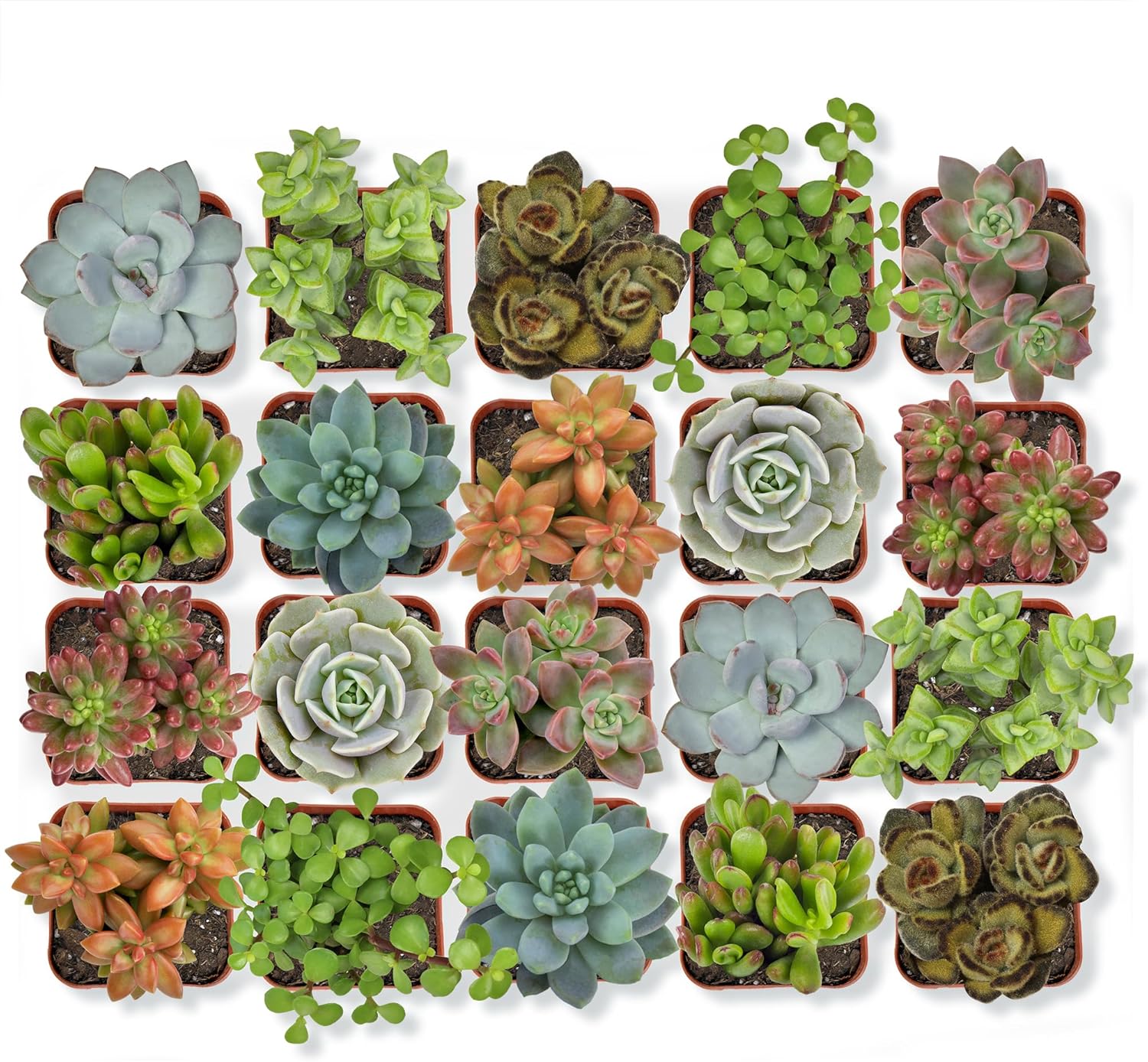
This Altman Plants 20-pack delivers a diverse mix of small, 2-inch succulents intended for beginners and experienced growers who want to kit out containers, terrariums, or event displays. The set includes 10 pairs of popular genera such as Echeveria, Crassula, Sedum, and Kalanchoe, so you get a range of shapes and colors that work well grouped together. These are hardy, low-water plants that prefer bright light and sandy soil, and the listing notes they tolerate outdoor and indoor placement and bloom year round in suitable conditions. Pots arrive planted in plastic nursery containers and plants are described as fully rooted and ready to grow, which reduces initial setup time. The main limitations are small pot size and the natural variation in varieties you receive, so you may not get specific named cultivars and will need to repot larger containers as they grow. For low-maintenance displays, DIY projects, or to start a collection, this pack makes it easy to get a variety of healthy succulents quickly.
Best for: Buyers who want an easy, low-maintenance way to start or expand a succulent collection and prefer a proven, crowd-pleasing assortment backed by many customer purchases.
Less Ideal for: Collectors seeking named or rare cultivars, or gardeners who need large, mature plants for immediate landscape planting.
- Large assortment of 20 healthy, hand-selected 2-inch succulents for instant variety
- Low water and low maintenance needs make them easy for beginners
- Suitable for indoor or outdoor use with full sun tolerance
- Includes common, garden-friendly genera that mix well in containers and arrangements
- Plants come in small nursery pots and will need repotting as they grow
- Varieties are an assorted surprise so you may not receive specific cultivars
Verdict: An easy, low-maintenance 20-pack that lets you quickly assemble varied succulent displays or start a beginner collection with minimal fuss.
Plants for Pets 10 x 20 in. Assorted Sedum Succulent Mat

| Indoor Outdoor Usage | Indoor, Outdoor |
|---|---|
| Other Special Features of the Product | Weather Resistant |
| Expected Blooming Period | Spring to Summer |
| USDA Hardiness Zone | 3, 4, 5, 6, 7 |
| Moisture Needs | Little To No Watering |
This pre-planted sedum mat arrives as a 10 by 20 inch tray of assorted hardy stonecrop varieties that are designed for low-maintenance landscaping, living walls, green roofs, or container edging. It is typically used by pressing the mat into well-draining soil or integrating it into a panel for vertical installations; the plants are shipped dry and should be watered thoroughly on arrival. Notable features include drought tolerance, weather resistance, and several cold-hardy varieties suitable for a wide range of climates. Practically, the mat saves time compared with planting individual succulents and provides immediate coverage and seasonal flowers in late spring to summer. Limitations to consider are variable varietal mix and color between trays, and the need for full sun or bright light for best flowering and compact growth; partial shade will reduce sturdiness and bloom. The plastic tray and ready-made format are convenient but may require trimming or replanting over time as the mat settles into soil or a frame.
Best for: Buyers who want an easy, low-maintenance way to add living coverage to small landscape areas, planters, or vertical displays and prefer a ready-to-install plant solution that tolerates occasional neglect.
Less Ideal for: People seeking precise color or cultivar selection, large-scale landscape projects that need many uniform units, or heavily shaded sites where succulents will not thrive.
- Pre-planted mat provides instant ground cover or vertical planting with minimal setup
- Succulents chosen for drought tolerance and weather resistance reduce watering needs
- Suitable for outdoor and indoor bright locations and hardy across several zones
- Arrives dry to lower risk of shipping rot and is ready to be watered and installed
- Varieties and colors may vary between trays, so appearance is not uniform
- Requires full sun or bright light to flower and maintain compact growth
Verdict: This ready-made sedum mat is a fast, low-water way to add hardy living cover to small landscape edges, planters, or vertical displays.
Choosing the Right Succulents for Landscaping: Key Factors to Consider
Sun and Light Requirements
Succulents vary from full-sun specialists to those that tolerate partial shade. Knowing the light conditions of the planned bed matters because sun-loving succulents will stretch and lose color in shade, while some shade-tolerant species can scorch in hot midday sun.
Assess the exposure of the planting site by observing peak sun hours. Aim to match species to that exposure rather than forcing a plant into an unsuitable microclimate. Consider seasonal changes in light as well; deciduous tree canopy in summer can create different conditions than bare-branch winter light.
Soil and Drainage
Good drainage is essential for outdoor succulents. Soil that holds water will promote root rot, especially in winter. For most landscape situations, incorporate coarse sand or grit and organic matter to create a free-draining mix, or plant on raised beds or mounds where water moves away from roots.
Test the site after a heavy rain to see how long it stays soggy. If water lingers for more than a day in winter, select species with higher tolerance for moisture or improve drainage before planting. Mulch choices also matter; use coarse, airy mulches rather than fine, moisture-retentive materials near crowns.
Cold Hardiness and Overwintering
Cold tolerance varies widely among succulents. Some are hardy to USDA zone levels well below freezing, while others survive only mild, frost-free climates. Pick plants rated for your local winter lows, and consider microclimates such as heat radiating walls, sheltered corners, or frost pockets that can alter actual conditions.
For borderline-hardy species, plan for winter protection strategies like improved drainage, raised planting, or removable coverings. Grouping similar-hardy plants together reduces the risk of losing individual specimens and simplifies seasonal care.
Growth Habit, Size, and Spacing
Succulents present a range of habits: tight rosettes, trailing groundcovers, upright columnar forms, and clumping shrubs. Understanding mature size and spread prevents overplanting and future crowding. Plant too close and you will need frequent division or pruning; plant too far apart and you will wait seasons for fill.
Consider how the growth habit fits the design intent. Use low, spreading succulents for living mulch and erosion control, taller rosettes for focal points, and trailing types on slopes or wall edges. Account for seasonal changes in shape and whether plants will flop or remain tidy.
Flowering, Seasonality, and Ornamental Value
Flowers add seasonal interest but also affect maintenance. Some succulents bloom reliably and produce showy spikes or clusters, while others are primarily foliage plants. Flowering often coincides with increased water and nutrient needs, and spent flower stalks may require cutting back to keep a tidy bed.
Think about bloom timing relative to other plants in the landscape. If year-round texture is the priority, choose species with attractive foliage and reliable form. If peak-season color is desired, select varieties known for dependable bloom and plan complementary plantings to extend the display.
Pest Resistance and Garden Durability
Many succulents are naturally pest resistant, but some are susceptible to scale, mealybugs, or slug damage. Choose species with thicker cuticles or dense growth habits in areas where pests are common. Regular inspection helps catch small infestations before they spread.
Durability also means resistance to trampling, foot traffic, and pet activity if planted near paths. For high-traffic spots, select low, tough groundcovers rather than delicate rosettes that bruise easily.
Designing with Succulents in Beds and Borders
Think of succulents as structural plants rather than just filler. Use contrasting textures and leaf colors to create focal points and define edges. Pair succulents with low, drought-tolerant perennials or ornamental grasses to soften transitions and provide seasonal layering.
Plan groupings in odd numbers and mass similar shapes together so individual forms read clearly from a distance. Where depth is limited, choose vertical or columnar succulents at the back and low spreaders at the front for a neat layered look.
- Group by water needs to simplify irrigation
- Use rock or gravel accents to echo desert aesthetics
- Avoid dense shade plantings unless you select shade-tolerant species
Planting and Establishment Best Practices
Prepare the soil to ensure free drainage before planting. Dig a hole slightly wider than the root ball and mix in coarse sand or grit if the native soil is heavy. Plant so the crown sits slightly above the surrounding soil to discourage moisture pooling.
Water thoroughly at planting to settle roots, then allow the soil to dry between waterings while the plants establish. Over the first season, reduce irrigation gradually so plants develop deeper, drought-resilient roots.
- Avoid deep, frequent watering during establishment
- Protect tender transplants from hot afternoon sun for the first week
- Label varieties so you can track growth habit and winter performance
Seasonal Care and Maintenance
Succulents generally require low maintenance but do benefit from seasonal attention. In spring, remove dead leaves and spent flower stalks, check drainage, and adjust mulches. Summer may need occasional supplemental water in extreme heat, while fall is the time to reduce irrigation and prepare for winter.
For species that resprout from offsets, plan periodic division to refresh beds and control spread. Monitor for disease or pest issues and treat early with targeted, garden-safe methods.
- Prune only as needed to maintain form
- Divide clumps every few years to prevent overcrowding
- Inspect crowns annually for rot or insect infestations
Using Succulents on Slopes and Erosion-Prone Sites
Low-growing, mat-forming succulents can stabilize loose soil and reduce erosion on slopes. Their shallow roots hold surface soil and reduce runoff when planted in tight clusters. Choose species known for rapid lateral spread for faster coverage.
Install plants in staggered rows and secure with light mulching to keep soil in place during establishment. Avoid species that develop tall, floppy stalks that are easily uprooted by heavy rain.
- Plant densely to create a living mulch
- Prefer species with fibrous root mats for surface stability
- Avoid deep irrigation which can encourage erosion
Container and Edge Uses in the Landscape
While this guide focuses on landscape beds, succulents also work well in containers and as edge plantings. Containers require faster-draining mixes and more frequent, controlled watering. Edging succulents can define paths or patios and tolerate slightly more disturbance if chosen for toughness.
Select container-friendly varieties with compact habits to avoid constant repotting. For permanent edges, plant species with tidy margins that do not encroach onto walkways.
- Use shallow containers to emphasize shallow roots
- Place containers in microclimates that match the plants' light needs
- Trim strays that spill onto paths to keep walkways clear
How We Chose the Best Succulents for Landscaping
We focused on traits that matter when planting succulents in permanent landscapes rather than temporary containers. Key criteria included sun and drought tolerance, cold hardiness, growth habit and spread, soil and drainage needs, and maintenance demands such as pruning or division. Each candidate had to demonstrate reliable garden performance across typical outdoor conditions for its rated hardiness zone and establish without excessive intervention. We excluded succulents that are primarily indoor houseplants with poor outdoor survivability, varieties with extreme toxicity concerns for common garden settings, and highly invasive types that can escape into natural areas. We prioritized plants that offer distinct landscape uses: groundcover, edging, specimen rosettes, and mass planting. Where relevant we also considered flowering habit and seasonality because ornamental bloom timing affects curb appeal in mixed beds. This selection emphasizes durability and predictability in garden settings. Practical maintenance and realistic growth rates were weighted heavily in order to recommend plants a gardener can place confidently in outdoor beds and expect steady performance without specialized care.
FAQ
Can succulents survive a wet winter in my landscape?
It depends on the species and soil. Many succulents are vulnerable to prolonged wet soils in cold weather. Improving drainage, planting on mounds, and selecting hardier species reduces the risk of rot during wet winters.
How often should I water succulents planted in the ground?
Usually deep, infrequent watering is best. Water thoroughly only when the soil is dry to the touch, then let plants rest. Frequency varies by climate and season but often is much less than for typical perennials.
Are succulents appropriate for high-traffic garden paths?
Some low, tough groundcover succulents tolerate light foot traffic, but most rosette forms bruise easily. For busy paths choose hardy, low-growing species designed to take occasional steps or place stepping stones to protect plants.
Do succulents need fertilizer in the landscape?
Usually succulents require minimal feeding. A light application of balanced fertilizer in spring can support growth and flowering, but excessive fertilization leads to weak, leggy growth that is less attractive and more vulnerable to pests.
How do I handle invasive or spreading succulents?
Monitor spread and remove runners or offsets before they establish unwanted colonies. Use root barriers or plant in contained beds if a species shows aggressive lateral growth. Regular division keeps plants vigorous and contained.
Final Verdict
Prioritize sun exposure, soil drainage, and cold hardiness when selecting succulents for landscaping. Match growth habits to the intended role in the bed, whether groundcover, focal rosette, or edging plant, and plan spacing to avoid overcrowding and future maintenance headaches. Acceptable tradeoffs include choosing slightly slower growers for long-term stability or using faster-spreading types where quick coverage is needed. With the right site preparation and plant matches, succulents deliver durable, low-water color and year-round texture in outdoor landscapes.
