

Note: This article contains affiliate links. If you click on these links and make a purchase, I may earn a small commission at no extra cost to you. This helps support my research and content. Read my full affiliate disclosure here.
A wifi hose watering timer takes the guesswork out of regular irrigation, letting you control watering from your phone whether you are at home or away. For small yards, container gardens, or vegetable beds, the right timer saves water and prevents over- or under-watering by matching run times to plant needs and weather. This guide covers our six shortlisted Wifi Hose Watering Timers that perform well in everyday garden settings. We evaluated connection stability, schedule flexibility, battery and power options, and how the timers handle real watering scenarios so you can pick one that fits your setup. Read on for practical notes to match a timer to your garden and watering style.
Top Picks at a Glance
| Best Overall The best all-around choice for most situations | Orbit B-hyve XD 1-Port Smart Hose Watering Timer |  |
| Best Quality Built to a higher standard if you want something more solid | Rachio Smart Hose Timer with WiFi Hub (1 Valve + Hub) |  |
| Best Value The sweet spot between price and what you get | GoveeLife H5901 Smart WiFi Sprinkler Timer with Gateway (1‑Outlet) |  |
| Highest Rated A top-rated pick with lots of positive feedback | Grillum Smart WiFi Bluetooth Dual-Outlet Hose Timer |  |
| Most Popular A crowd favorite that many people choose with confidence | RAINPOINT 2-Zone WiFi Water Timer with Brass Inlet and Outlet |  |
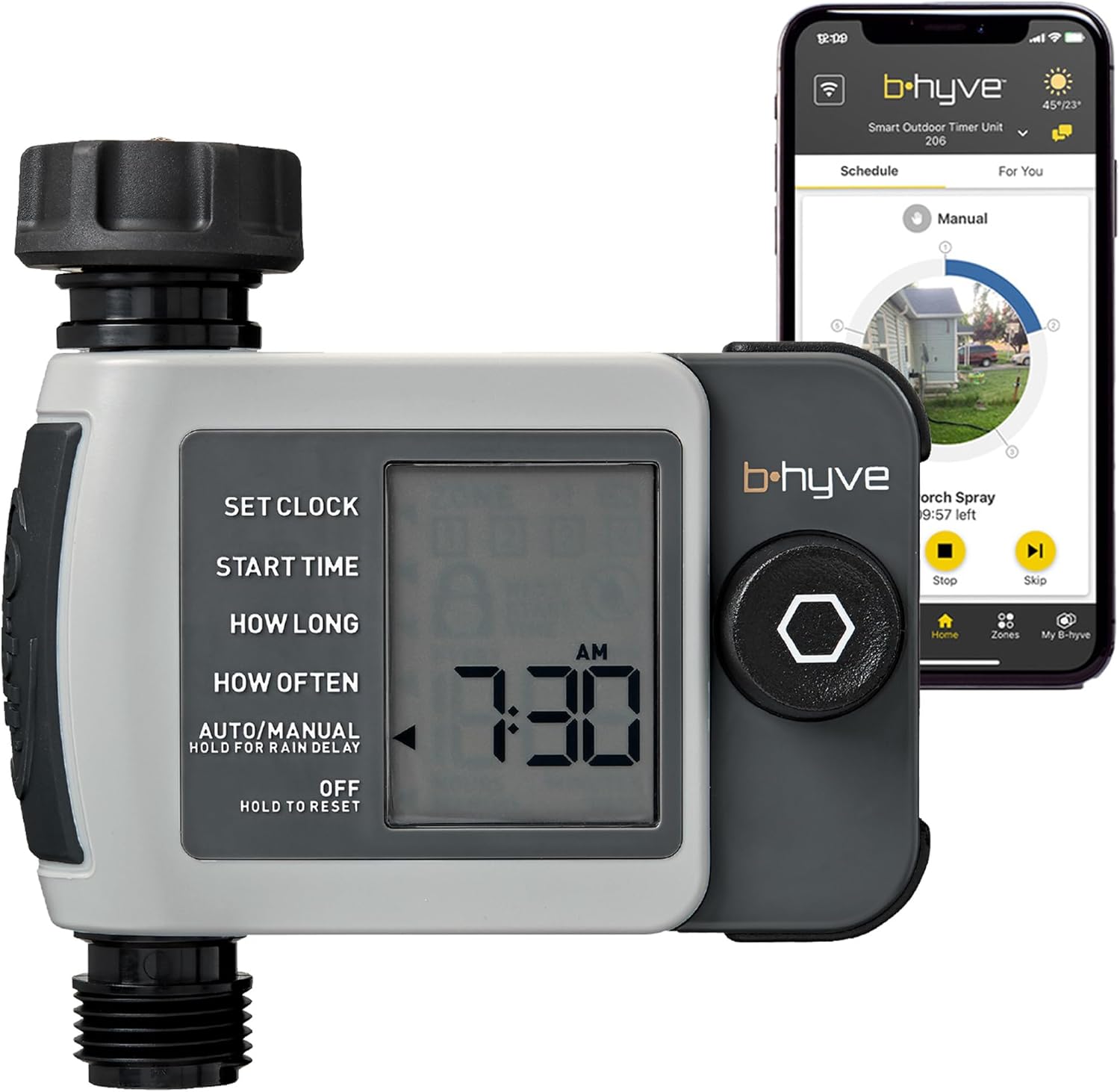
Orbit B-hyve XD 1-Port Smart Hose Watering Timer
| Item Highlight | App Controlled Single Outlet Irrigation Timer, Smart WeatherSense Auto Watering, Weatherproof Battery Powered |
|---|---|
| Material Type | Plastic or Rubber |
| Number of settings | 5 |
| IP Rating | IPX-5 waterproof protection |
The Orbit B-hyve XD is a single-outlet smart hose timer designed to automate routine watering with local weather adjustments. It installs at a faucet and can be programmed directly on the unit, over Bluetooth, or remotely when you add the optional Wi‑Fi Hub to unlock full smart features. WeatherSense uses hyper-local data and drought-level information to reduce overwatering and help comply with local restrictions, and pairing with the hub makes the timer EPA WaterSense compliant. The unit is IPX-5 rated so it tolerates outdoor exposure to spray and rain, and the battery-powered design keeps it independent of mains power. Practical benefits include reliable basic scheduling from the device itself, automatic adjustments for changing conditions when connected to Wi‑Fi, and a compact single-outlet form for small yards or container gardens. Limitations are that advanced remote control and the WaterSense certification require purchasing and installing the Wi‑Fi Hub, and this model only controls one outlet so larger multi-zone systems need a different controller.
Best for: Buyers who want a simple, dependable smart hose timer that reduces watering guesswork and prioritizes conservative, water-conscious operation for a single faucet or small yard.
Less Ideal for: Homeowners needing multi-zone control or those who want full remote features without adding a separate Wi‑Fi hub should consider other controllers.
- App and local programming options let you control schedules from the device, by Bluetooth, or remotely with a hub.
- WeatherSense automatically adjusts watering using high-precision local weather and drought data.
- IPX-5 waterproof rating designed for outdoor use and resistance to spray and rain.
- Battery-powered operation avoids needing electrical hookups and keeps installation simple.
- Remote smart functions and EPA WaterSense compliance require purchasing the separate Wi‑Fi Hub.
- Only a single outlet so it is not suitable for multi-zone irrigation without additional controllers.
Verdict: If you want a low-risk, weather-adjusting smart hose timer for a single faucet, the Orbit B-hyve XD delivers reliable automatic watering with simple local controls and optional remote automation.
Rachio Smart Hose Timer with WiFi Hub (1 Valve + Hub)

| Included components | Smart Hose Timer Valve, WiFi Hub, Hub power supply and quick start guide |
|---|---|
| Number of settings | 3 |
| Material Type | Plastic |
| Manufacturer | Rachio |
The Rachio Smart Hose Timer replaces manual dial timers with app-based control and a small WiFi hub so you can schedule and run hose watering from anywhere. Installation is designed to be quick: attach the valve to a faucet, power the hub, and pair the valve in the Rachio app. The system supports weather-based scheduling and rain skips to avoid unnecessary runs, plus flow monitoring and low-battery alerts to flag leaks or failures. You can trigger instant watering from the valve button or the app, and expand the system by adding up to eight valves on a single hub. Practical benefits include automated, efficient watering that adapts to local conditions and remote control for precise irrigation. Limitations are that the valves require AA batteries and the hub needs a 2.4 GHz WiFi network, so it is not fully plug-and-play in locations without compatible WiFi or readily accessible batteries. The kit is focused on smart scheduling and diagnostics rather than heavy-duty commercial plumbing applications.
Best for: Gardeners who prioritize reliable, efficient irrigation and want remote, weather-aware control of hose watering for performance-driven yard care.
Less Ideal for: People without accessible 2.4 GHz WiFi at their faucet or those who prefer a fully wired or commercial-grade irrigation solution.
- App control with remote scheduling and instant run from phone
- Weather-based scheduling and rain skips reduce wasted water
- Flow monitoring and low-battery alerts help detect leaks or failures
- Expandable system supports up to eight valves per WiFi hub
- Requires a WiFi hub and 2.4 GHz network which may limit installation locations
- Valve operation depends on AA batteries that are not included
Verdict: Choose this kit if you want a performance-focused, weather-aware hose timer that gives remote control and diagnostics with room to expand.
GoveeLife H5901 Smart WiFi Sprinkler Timer with Gateway (1‑Outlet)

| Gateway‑device range | 1640 ft |
|---|---|
| Water pressure operating range | 7.25–116.03 PSI |
| Number of schedules | 10 |
| Watering modes | Continuous, intermittent, custom |
| Material type | Brass, Plastic |
The GoveeLife H5901 is a smart hose timer kit designed to replace a manual spigot with app-based, scheduled watering and basic water‑usage reporting. It installs on a standard 3/4‑inch threaded spigot and pairs to the included gateway so you can control the timer from anywhere within the gateway range. The system offers three watering modes (continuous, intermittent, custom) and up to 10 schedules, plus weather‑adaptive adjustments that skip rain or increase runtime in heat and low humidity. Brass inlet fittings and an IP67-rated housing aim to reduce leaks and stand up to outdoor conditions. The app shows charts of recent watering and supports Alexa and Google voice commands for hands‑free starts. Important limitations: the gateway requires 2.4 GHz Wi‑Fi, the valve needs a minimum starting pressure to operate properly, and only one outlet is controlled per timer so multi‑zone gardens require multiple units or devices.
Best for: Gardeners who prioritize reliable, data‑driven irrigation and want automated, weather‑responsive schedules controlled remotely or by voice.
Less Ideal for: People with multi‑zone irrigation needs who do not want to deploy multiple timers or those limited to 5 GHz‑only home networks.
- Weather‑adaptive scheduling that adjusts runtimes based on local rain and temperature data
- Gateway supports long range and multiple devices so you can centralize control across a property
- Brass connectors and IP67‑rated body reduce risk of leaks and stand up to outdoor exposure
- Up to 10 programmable schedules and three watering modes for flexible irrigation plans
- App provides watering charts and integrates with Alexa and Google Assistant for voice control
- Requires the separate gateway and 2.4 GHz Wi‑Fi which may limit some network setups
- Only a single water outlet per timer so larger multi‑zone systems need extra units or a different controller
Verdict: Choose this timer when you want a weather‑adaptive, remotely managed irrigation solution built for outdoor durability and centralized control.
Grillum Smart WiFi Bluetooth Dual-Outlet Hose Timer

| Outlets | 2 independent outlets |
|---|---|
| WiFi | 2.4 GHz |
| Battery | 4 AA batteries |
| Waterproof Rating | IP55 |
The Grillum Smart WiFi Bluetooth Dual-Outlet Hose Timer provides two independently controlled watering zones so you can run separate schedules for lawn, beds, or containers. It connects directly to a 2.4 GHz WiFi network and pairs with a smartphone app for setting up to 10 programs per outlet, choosing normal or cycle-and-soak modes, and applying rain delays when needed. Voice control via Alexa or Google Assistant adds hands-free start and stop commands. The unit is powered by four AA batteries and is built for outdoor use with a brass female thread, metal threads, an internal metal filter, and IP55 splash protection. In practice this makes it a reliable choice for routine irrigation where you need dependable schedules and basic automation without a hub. Limitations include the 2.4 GHz-only WiFi requirement and battery power rather than mains or solar, so long-term use requires periodic battery changes and placement within range of your router.
Best for: Gardeners who prioritize a dependable, low-maintenance irrigation solution for multiple zones and want simple app and voice control to automate regular watering.
Less Ideal for: Those who need wired power, advanced sensor integration, or support for 5 GHz WiFi should consider a different model.
- Two independent outlets allow separate schedules for different zones
- App control with multiple program modes and rain delay for flexible irrigation
- Works with Alexa and Google Assistant for voice operation
- Durable fittings and IP55 protection for outdoor reliability
- Only supports 2.4 GHz WiFi which can limit placement relative to the router
- Runs on four AA batteries so it requires periodic battery replacement
Verdict: A practical, reliability-focused dual-zone smart timer that automates routine watering with robust fittings and straightforward app and voice control.
RAINPOINT 2-Zone WiFi Water Timer with Brass Inlet and Outlet

| Number of settings | 8 |
|---|---|
| Material Type | Metal |
| Item Type Name | wifi water timer 2 zone |
| Unit Count | 1 Count |
The RAINPOINT 2-zone WiFi water timer turns a standard garden hose into a programmable irrigation controller you can run from the app or with voice assistants. It is typically installed at an outdoor faucet and used to schedule separate watering for two outlets, run manual cycles, or pause watering with a rain delay. Notable features include brass inlet and outlet fittings for more reliable, leak-resistant connections, 2.4 GHz WiFi control through the RainPoint app, weather-aware scheduling that skips unnecessary runs, and a built-in flow meter that records water usage so you can set quantity-based cycles. The unit supports up to six programs and offers minute-to-hour duration control plus soil-sensor pairing for moisture-based irrigation. Practical benefits are easier hands-off watering for small lawns or beds and clearer tracking of water used. Limitations to expect are the need for a 2.4 GHz WiFi network, soil sensor sold separately, and a single hub supporting multiple timers only in hub configurations, so large multi-zone setups require extra hardware or units.
Best for: Buyers who want a reliable step up from basic hose timers and value remote app control, water-usage tracking, and weather-aware schedules to reduce waste and oversight.
Less Ideal for: People managing large automatic irrigation systems or those without 2.4 GHz WiFi access at the faucet should look at wired controllers or different solutions.
- Brass inlet and outlet reduce leaks and feel more durable than plastic fittings
- App and Alexa/Google voice control for remote scheduling and manual runs
- Built-in flow meter lets you monitor gallons or liters and run quantity-based watering
- Weather-aware scheduling and rain delay help avoid overwatering
- Two independently programmable outlets for separate zones or devices
- Requires 2.4 GHz WiFi which may not reach some outdoor faucet locations
- Soil moisture sensor is not included and must be purchased separately
- Larger irrigation systems will need multiple units or a hub to expand beyond two zones
Verdict: A practical two-zone smart hose timer that combines brass fittings, app control, and flow metering to make hands-off, water-conscious watering simple for small yards.
Choosing the Right Wifi Hose Watering Timer: Key Factors to Consider
Connection Reliability and Range
A steady Wifi connection is essential because it determines whether your timer follows remote commands and scheduled events. Weak or intermittent signals can cause missed cycles or delay start and stop times, which matters most for plants on strict moisture schedules.
Consider where your outdoor spigot is relative to your router and whether you can add a Wifi extender. Some timers maintain local schedules without constant cloud access, which helps if your home internet is unstable. Also check whether the device supports 2.4 GHz, as many outdoor controllers rely on that band for better range.
Scheduling Flexibility and Controls
The usefulness of a timer comes down to how precisely you can schedule watering. Look for features such as multiple programs, independent start times, custom run durations, and the ability to set different schedules for separate outlets or zones. Seasonal adjustments and holiday or rain delays let you adapt without rebuilding schedules.
Fine control matters when you have mixed plantings: containers often need short, frequent cycles while established shrubs can take longer, less frequent watering. Also review whether the app supports quick temporary changes and has intuitive overrides for rainy days or special needs.
Power Options and Battery Life
Power design affects maintenance. Battery-powered timers are easy to install but require periodic battery changes; check typical runtime and whether common batteries are used. Plug-in or hardwired options reduce battery chores but may limit placement or need an outdoor outlet. Some models combine battery backup with mains power for reliability.
Long battery life is especially important in colder months when apps may remain connected but physical actuators need sufficient power to operate valves. Also consider whether the unit alerts you when power is low and how easy it is to replace batteries without tools.
Hose and Spigot Compatibility
Ensure the timer fits your spigot and works with existing hoses or valve fittings. Most backyard timers attach directly to a standard 3/4-inch garden faucet, but some designs suit specialized threads or require adapters. Compatibility affects leak risk, ease of installation, and whether you can integrate the timer with splitters or simple drip lines.
Also check how the timer shuts off the water. A positive shutoff mechanism prevents slow leaks and protects plants. If you plan to connect multiple hoses or run a drip system, verify the unit supports the required flow rates and connection types.
App Interface and Local Controls
The app is how you interact with a Wifi-enabled timer, so its clarity and responsiveness matter. A well-designed app makes setting schedules fast, shows current status at a glance, and offers reliable remote activation. Look for features like push notifications for errors, easy program cloning, and simple access to rain delay options.
Physical controls are equally important because you will sometimes need to start or stop watering at the tap. A clear manual override, visible LED indicators, and straightforward reset procedures reduce frustration during routine garden work.
Weather Resistance and Durability
Outdoor timers face sun, rain, temperature swings, and occasional knocks. Durable housings and good seals keep electronics dry and functioning through seasons. Check ingress protection or product descriptions that note waterproofing and UV-resistant plastics. Durable valves and metal fittings can last longer under frequent use.
Consider freeze-risk protocols if you live in cold climates. Some units are designed to be removed for winter or have features that protect internal components from damage when water freezes in the line.
Setting Up a Wifi Timer in Typical Yard Layouts
Placement is the first practical decision. Mount the timer on a convenient spigot that serves the most important plants and keep the router or extender within effective range. If you have multiple separate zones, consider a timer near each zone or plan a simple manifold and splitter arrangement so one unit can service several lines.
During installation, test manual operation at the spigot before relying on app control. Run a short cycle to verify fittings are watertight and the actuator opens and closes fully. Confirm the app shows the run status and sends notifications to your phone so you are aware of failures or low battery alerts.
- Position the timer where you can reach it easily for battery changes.
- Test flow and pressure with your usual hose and sprinkler attachments.
- Keep the unit shaded if possible to reduce UV and heat stress.
Integrating Timers with Drip Irrigation and Soaker Hoses
Many gardeners use timers to automate drip lines and soaker hoses. Ensure the timer can handle the lower flow and pressure typical of these systems. A timer that allows multiple short cycles per day can reduce runoff and improve soil absorption for drip-based setups.
If your drip system uses a pressure regulator or filter, place those components downstream of the timer when recommended. Some timers sit before the regulator, while others work best after it; follow the installation guidance for reliable operation.
- Use short pulses for clay soils to prevent runoff.
- Group containers with similar watering needs on the same schedule.
- Install a filter if water is dusty or has particulates to prevent valve clogging.
Dealing with Intermittent Wifi
If your garden has weak Wifi, pick a timer that supports local scheduling so programmed events run without continuous internet. Another approach is to add a weatherproof Wifi extender closer to the spigot to stabilize the link. Some timers also offer Bluetooth setup that then switches to local schedules if cloud access fails.
Plan for occasional manual intervention by keeping a simple hose shutoff or faucet splitter that lets you bypass the timer if connectivity or power issues arise. Regularly check app logs or notifications to catch missed cycles early.
- Place extenders high and clear of obstructions for best range.
- Enable alerts for missed cycles or failed connections.
- Test a manual override monthly to ensure smooth use.
Winter Care and Off-Season Storage
In climates with freezing temperatures, removing the timer for winter storage often prevents damage from expanding ice. Drain internal water by running a final cycle with the water off so the valve clears and no water is trapped. Store the unit in a dry, frost-free space and remove batteries to prevent corrosion.
Some gardeners prefer timers rated for freeze protection. Even with rated units, confirm the manufacturer guidance for overnight lows and long freezes before leaving the device in place.
- Drain lines and the timer before prolonged freezes.
- Store the unit indoors and replace batteries annually if left idle.
- Inspect seals and O-rings before reinstalling in spring.
Advanced Scheduling Tips for Mixed Plantings
When you have a mix of containers, annuals, and established shrubs, use multiple programs and staggered start times to match each planting's water needs. Containers often benefit from short morning and late-afternoon pulses, while trees and shrubs do better with longer, less frequent runs.
Leverage seasonal scheduling features to increase or decrease run times gradually through spring and fall. Weather-based adjustments, if available, let the timer shorten cycles after rain or during cool spells to avoid overwatering.
- Group plants by water needs rather than location where possible.
- Use short cycles to allow water to soak in between applications.
- Review schedules monthly during the active season and adjust based on growth.
How We Chose the Best Wifi Hose Watering Timer
We selected models that address the real-world needs gardeners face when automating outside watering. Our evaluation emphasized connection reliability and range because a dependable Wifi link determines whether schedules run on time and whether remote adjustments succeed. We also prioritized schedule flexibility to accommodate multiple zones, custom run times, and seasonal overrides so timers can adapt to varied plant types and weather. Battery life and power options were assessed to reduce maintenance and avoid mid-season downtime. Hose and valve compatibility checks ensured units fit standard outdoor spigots and simple irrigation setups. App usability and local manual controls were included because gardeners often need quick adjustments at the tap or while working in the bed. Durability and weather resistance were reviewed for outdoor exposure and freeze-season handling. We excluded units that require specialized plumbing changes, commercial-only controllers, or those lacking weatherproofing suitable for backyard use. The final picks balance reliable wireless control, practical scheduling features, and rugged outdoor performance. The scoring metrics below reflect these priorities.
FAQ
How far from my router can a Wifi hose timer reliably work?
Range depends on the router, walls, and interference. Many garden timers rely on 2.4 GHz Wifi and work well up to about 50 to 100 feet in open areas. If the signal must pass through siding or brick, effective range is reduced and an extender may be needed.
Will a Wifi timer continue running when my internet is down?
That depends on the model. Some timers keep local schedules and will run without internet, while others rely on cloud connectivity and may pause until the connection is restored. Look for explicit local-scheduling capability if you have unstable internet.
Can I use a Wifi hose timer with drip irrigation?
Yes. Most hose timers work with drip systems, but confirm the unit supports the lower flow rates and that filters or regulators are properly placed. Short, frequent cycles often work better for drip lines to improve soil absorption.
How do I protect a timer from freezing temperatures?
The simplest method is to remove the timer and store it indoors for winter. If you leave it installed, choose a model rated for cold climates and ensure lines are drained. Removing batteries and draining water from the valve reduces freeze damage risk.
What power source is best for an outdoor watering timer?
Battery-powered units are flexible and easy to place but require battery changes. Mains-powered or plug-in units reduce maintenance but need an outdoor outlet. Consider battery alerts and backup options when choosing.
How often should I check the timer during the season?
A quick monthly check is usually sufficient to confirm batteries, connections, and app reports are functioning. After storms or major temperature swings, inspect the unit and run a test cycle to ensure proper operation.
Final Verdict
Choose a Wifi Hose Watering Timer that matches your garden layout and how often you want to tinker with schedules. Prioritize connection reliability and scheduling flexibility if you rely on remote control; prioritize strong power design and rugged housings if you value low maintenance and all-season durability. Weigh the tradeoffs between battery convenience and hardwired reliability, and plan for winter care if your climate freezes. With those priorities in mind, you can confidently pick a timer that keeps plantings adequately watered while saving time and reducing wasted water.
