

Note: This article contains affiliate links. If you click on these links and make a purchase, I may earn a small commission at no extra cost to you. This helps support my research and content. Read my full affiliate disclosure here.
A reliable drip irrigation kit changes how you manage watering across beds, containers, and slopes. The right kit delivers steady, targeted moisture to roots, reduces runoff, and frees you from daily hand-watering. This guide looks at seven carefully shortlisted drip irrigation kits suited to common garden situations, from compact container groupings to larger vegetable beds. We evaluate how easy each system is to install, how well it covers different planting layouts, and how durable components are under regular seasonal use. Read on to find a kit that fits your garden size and watering style.
Top Picks at a Glance
| Best Overall The best all-around choice for most situations | Rain Bird LNDDRIPKIT 108-Piece Landscape & Garden Drip Irrigation Kit |  |
| Best Quality Built to a higher standard if you want something more solid | Rain Bird Drip Irrigation Repair & Expansion Kit (102-Piece) |  |
| Best Value The sweet spot between price and what you get | MIXC Drip Irrigation System Kit, 230 ft with Quick-Connect Tubing and Adjustable Emitters |  |
| Best Budget The cheapest option that still gets the job done reliably | POCKET PANDA 150FT Drip Irrigation Kit (Quick-Connect) |  |
| Highest Rated A top-rated pick with lots of positive feedback | MQJIAZHI 66 ft Drip Irrigation System Kit with 40 Brass Nozzles |  |
| Most Popular A crowd favorite that many people choose with confidence | MIXC 200ft 1/4" Drip Irrigation Kit with 32 Adjustable Copper Nozzles |  |
| Best Seller A high-volume bestseller chosen again and again | Orbit 69500 92-Piece Drip Irrigation Assortment Kit | 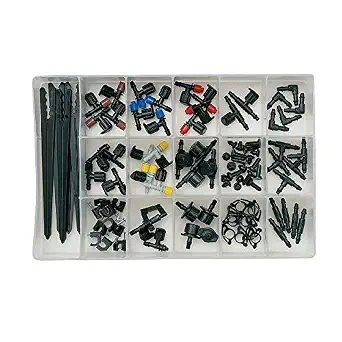 |
Rain Bird LNDDRIPKIT 108-Piece Landscape & Garden Drip Irrigation Kit

| Number of Pieces | 108 |
|---|---|
| Hose Length | 50 inches |
| Maximum Pressure | 50 psi |
| Power Source | Water |
| Material | Plastic |
The Rain Bird LNDDRIPKIT is a complete starter kit for installing a small- to mid-size drip system around container plants, flower beds, or a modest garden. It supplies 50 feet of 1/2" tubing plus 1/4" distribution tubing, a pressure regulator and backflow preventer, and a mix of drippers, micro-bubblers and micro-sprays so you can spot-water up to eight plants or cover wider spacing. Pressure-compensating, clog-resistant emitters and professional-grade tubing make layout and long-term performance straightforward, and the included emitter installation/removal tool speeds setup. Typical use is running the main tubing from an outdoor faucet, branching to individual plants with 1/4" lines, and hiding tubing under mulch for a tidy look. The kit covers basic layouts and saves water versus hand-watering, but it does not include a timer for full automation and may need extra fittings or longer tubing for larger planting areas. Users should also follow local plumbing rules when connecting to a potable water source.
Best for: Gardeners who want a reliable, water-saving drip system that is easy to set up and customize for patios, container plantings, and small landscaped beds.
Less Ideal for: People planning to irrigate large gardens or multiple planting zones without buying significant extra tubing and parts, or those who need built-in scheduling without adding a separate timer.
- Comprehensive 108-piece set includes tubing, pressure regulator, backflow preventer, and a variety of emitters for flexible layouts.
- Pressure-compensating, clog-resistant emitters deliver consistent water to each plant location.
- Professional-grade tubing resists UV, chemicals and algae for longer service life.
- Includes an installation/removal tool and stakes with bug caps to simplify setup and keep emitters clean.
- No hose-end timer included so automation requires an additional purchase.
- Designed for small to mid-size setups and may need extra tubing or fittings for larger gardens.
Verdict: A ready-to-install, water-saving 108-piece kit that gives hobby gardeners a durable, flexible drip system for patios and small garden beds.
Rain Bird Drip Irrigation Repair & Expansion Kit (102-Piece)

| Number of Pieces | 102 |
|---|---|
| Hose Length | 100 feet |
| Material | Polyethylene |
| Power Source | Manual |
This Rain Bird kit supplies the parts most gardeners need to repair or extend a 1/4" drip irrigation run. The kit is typically used to replace damaged tubing, swap clogged emitters, add branches with tees and couplers, or anchor lines with stakes; it stores everything in a compact pouch for easy access. Notable items include 100 ft of self-dispensing 1/4" distribution tubing, 40 spot-watering emitters in three flow rates (0.5, 1.0 and 2.0 GPH), barbed tees and couplings, tubing plugs, and Rain Bird’s emitter installation/removal tool. For performance-focused users the pressure-compensating emitters and multiple flow options make it straightforward to tune output for different plants, and the universal barbed fittings work with other 1/4" components. Practical benefits are fast on-site repairs, predictable emitter flow choices, and a tidy kit that keeps parts organized. Limitations are that the kit is focused on 1/4" distribution lines only and does not include a pressure regulator, filter, or 1/2" mainline components, so you will need those elsewhere in a high-performance system.
Best for: Gardeners or small-scale landscapers who prioritize reliable, tunable irrigation performance and want a ready kit for fast repairs and system expansion.
Less Ideal for: Users building a new system that requires 1/2" mainline components, pressure regulation, or filtration should choose a more complete starter kit instead.
- Comprehensive 102-piece set covers common repair and expansion needs for 1/4" drip lines
- Includes 100 ft of self-dispensing 1/4" tubing for quick layout and extension
- Emitters in three flow rates (0.5, 1.0, 2.0 GPH) let you match output to plant water needs
- Emitter installation/removal tool speeds installation and maintenance
- Organized pouch with individual bags keeps parts accessible on the job
- Only supports 1/4" distribution tubing and does not include pressure regulators or filters
Verdict: A compact, performance-minded repair and expansion kit that gives you the parts and emitter flow options needed to quickly tune and maintain 1/4" drip systems.
MIXC Drip Irrigation System Kit, 230 ft with Quick-Connect Tubing and Adjustable Emitters

| Hose Length | 230 feet |
|---|---|
| Size | 33FT main + 197FT 1/4" tube |
| Control Type | Automatic |
| Power Source | Water Pressure-driven |
| Special Features | Quick Connector Technology |
The MIXC 230 ft drip irrigation kit supplies a full DIY system for watering beds, containers, and small lawns by turning a garden faucet into a pressure-driven, automatic micro-irrigation network. It includes a 33 ft 1/2" mainline, 197 ft of 1/4" branch tubing, multiple emitter types, tees, barbed fittings and a faucet adapter so you can lay out a main hose and branch off to up to 32 emitters. The quick-connect technology and push-fit barbed parts make assembly straightforward and reduce leak points, and adjustable emitters let you change flow patterns from drips to sprays for different plants. Practical benefits include time savings versus hand-watering, flexible layouts for raised beds or potted plants, and the ability to fine-tune delivery to individual plants. Limitations to expect are the plastic construction, which will wear faster than premium materials in harsh sun or freezing conditions, and the need to plan pressure and emitter placement for even coverage rather than relying on a single layout to work everywhere.
Best for: Gardeners who want a practical, ready-to-install drip system to replace frequent hand-watering and who value components that make fast, adjustable layouts for beds and containers.
Less Ideal for: People seeking heavy-duty, long-lasting commercial-grade materials or systems sized for very large agricultural acreage.
- Complete kit that includes both 1/2" mainline and 1/4" distribution tubing plus fittings for a full layout
- Quick-connect fittings simplify assembly and reduce common leak points
- Adjustable emitters and three emitter styles let you tailor flow and spray pattern to different plants
- Designed to run automatically using water pressure so it eliminates frequent manual watering
- Plastic tubing and fittings may degrade faster under prolonged sun exposure or freezing temperatures
- Performance depends on correct pressure and layout planning to avoid uneven watering
Verdict: A practical, all-in-one drip kit that gets a small garden or group of planters on automatic watering quickly with easy-to-connect parts and adjustable emitters.
POCKET PANDA 150FT Drip Irrigation Kit (Quick-Connect)

| Hose Length | 150 feet |
|---|---|
| Number of Pieces | 57 |
| Power Source | Water Pressure-driven |
| Special Features | Adjustable |
| Material | Polyvinyl Chloride (PVC), Polypropylene (PP) |
This POCKET PANDA kit is a full DIY drip irrigation system designed to cover medium to large garden layouts using a 33 ft 1/2" supply hose plus 124 ft of 1/4" distribution tubing for a total advertised length of 150 ft. It uses water pressure to feed adjustable emitters and comes with quick-connect and barbed fittings that make layout changes fast without special tools. Notable features include a mix of emitter types (vortex, stream, standard adjustable), multiple tee connectors and faucet adapters, end plugs, stakes, and Teflon tape so you can assemble lines, split runs, and tailor flow to different beds or plant groupings. In practice the larger 1/2" main run helps preserve pressure across longer runs, while the adjustable nozzles allow tuning so plants get the right amount of water. Limitations are material choices and DIY assembly: components are plastic PVC/PP so expect moderate durability and you will need to plan placement and test for leaks during setup. For gardeners on a budget who want customizable coverage, this kit provides a lot of parts and flexibility for the price.
Best for: Gardeners who want an inexpensive, do-it-yourself drip system to water multiple beds or a mid-sized garden and who value flexibility and many included parts over premium materials.
Less Ideal for: People seeking a ready-made, maintenance-free commercial-grade system or those who prefer metal fittings and longest-term durability.
- Includes a wide range of fittings and emitters to customize layouts
- 1/2" supply hose and multiple barbed tees help maintain pressure over longer runs
- Quick-connect and barbed fittings allow tool-free assembly and easy reconfiguration
- Adjustable emitters let you control flow for different plant needs
- Large 150 ft total length suits medium to larger garden beds without buying extra tubing
- Plastic PVC/PP components are budget-grade and may degrade faster than heavy-duty materials
- Requires hands-on assembly and leak checking during installation
Verdict: A budget-friendly DIY kit that delivers long coverage and many parts so you can build a customizable drip layout without buying extra components.
MQJIAZHI 66 ft Drip Irrigation System Kit with 40 Brass Nozzles

| Hose Length | 66 feet |
|---|---|
| Special Features | 360° Bendable, 40 Nozzles |
| Fit Type | Flexible Tubing, Adjustable Nozzles |
| Power Source | No |
This MQJIAZHI 66 ft drip irrigation kit is designed to deliver consistent, low-pressure watering across small to medium gardens, raised beds, or greenhouses. The dual-head layout and 360° bendable tubing let you aim misting tubes for even coverage and to avoid dry spots, while the included brass nozzles resist rust and provide steady flow. Installation is tool-free and straightforward for a one-person DIY setup, and the flexible tubing makes it easy to route lines around plants or containers. For gardeners focused on reliability, the UV-resistant materials and brass fittings suggest longer outdoor life and fewer failures from sun exposure or corrosion. Limitations to note are that the kit is sized for about 66 feet of hose and 40 nozzles so larger landscapes will need multiple kits or custom extensions, and it relies on compatible water pressure and connectors not detailed in the listing. You should also plan occasional checks for clogging in fine nozzles if you have hard or untreated water.
Best for: Gardeners who want a dependable, easy-to-install drip solution for small to medium vegetable beds, flower borders, or greenhouse benches and who prioritize long-term durability over advanced customization.
Less Ideal for: People planning to irrigate large lawns, multiple distant planting zones, or those who need precise pressure-compensated emitters for uneven elevation and lengthy runs.
- Dual-head design and 360° bendable tubing for broader, adjustable coverage
- Includes up to 40 brass nozzles that resist rust and provide steady output
- Tool-free DIY installation makes setup quick for most gardeners
- UV-resistant tubing intended for longer outdoor durability
- 66-foot hose length and 40-nozzle count may be insufficient for larger yards
- No detailed specifications about required water pressure or connector types
Verdict: Choose this kit when you need a reliable, UV-resistant DIY drip system that delivers even coverage for small to medium garden beds without complicated installation.
MIXC 200ft 1/4" Drip Irrigation Kit with 32 Adjustable Copper Nozzles

| Size | 200ft |
|---|---|
| Power Source | Water Pressure-driven |
| Fit Type | quick-connect |
| Maximum Pressure | 50 psi |
| Included Components | 200ft water hose,32pcs adjustable nozzle,quick connector,accessories |
This MIXC kit supplies 200 feet of 1/4-inch tubing plus quick-connect fittings and 32 adjustable copper nozzles to build a DIY drip or mist irrigation run for beds, containers, and small lawns. It is typically laid out from a faucet or main line and cut to length with the included connectors, tees, and stakes; the manufacturer recommends no more than eight nozzles per 50 feet of tubing to retain water pressure. The kit's copper nozzles and aluminum-alloy wand/rods are more durable than common plastic tips and let you dial in spray pattern and direction for spot irrigation or light misting. Quick-connect pieces make assembly and modifications fast without gluing, and the set includes basic accessories such as plugs and cable ties so you can complete a single-zone installation without extra parts. Expect limitations on pressure and coverage: the system is water-pressure driven with a 50 psi maximum and will need a larger main pipe or additional runs for dense layouts, and extremely long lines will suffer lower pressure at the far end. It is a practical, economy-focused solution for homeowners wanting a flexible, serviceable drip kit for typical garden zones.
Best for: Gardeners who want an affordable, ready-made drip kit that is easy to assemble and tweak and who prioritize practical results backed by visible user feedback.
Less Ideal for: Large properties or high-demand irrigation layouts that require pressurized distribution, professional-grade materials, or multi-zone automatic control.
- Includes 200 feet of 1/4" tubing suited to common US drip systems
- 32 copper adjustable nozzles and aluminum alloy rods for more durable, adjustable spray patterns
- Quick-connect fittings and three-way connectors speed up assembly and reconfiguration
- Comes with plugs, stakes, and cable ties for a near-complete single-zone install
- Not suitable for long runs with many emitters without adding a larger main line or extra zones
- Plastic tubing and fittings may wear faster than professional-grade components under heavy use
Verdict: A complete, budget-friendly 200 foot 1/4" drip kit with durable copper nozzles and quick-connect fittings for fast DIY garden irrigation setups.
Orbit 69500 92-Piece Drip Irrigation Assortment Kit

| Unit Count | 1 Count |
|---|---|
| Number of Pieces | 92 |
| Volume Capacity | 1/4 inch, 6.35 mm |
| Maximum Pressure | 15 psi |
| Power Source | Manual |
The Orbit 69500 kit supplies a broad selection of 1/4-inch micro-sprinklers, emitters, fittings, clamps, stakes, and plugs useful for building or expanding a small garden drip system. Typical use is straightforward: run 1/4-inch drip tubing along beds or containers, place the included barb fittings and micro-sprinklers where plants need water, and secure lines with stakes and clamps. Notable features include a wide variety of spray patterns and inline emitters, shut-off valves for sectioning runs, and a hard plastic case with an illustrated key that keeps parts organized. Practical benefits are quick system prototyping, easy repairs, and compatibility with other major 1/4-inch drip brands for future growth. Limitations are that all components are plastic, so they may wear faster than heavy-duty commercial parts, and the kit is designed for cold outdoor water only and a maximum pressure of 15 psi, so it is not suitable for high-pressure or indoor hot-water applications.
Best for: Buyers who want a low-risk, ready-to-use parts kit to set up or repair a garden drip system quickly and prefer parts that are easy to identify and replace.
Less Ideal for: Professional installers, high-pressure systems, or gardeners seeking metal or industrial-grade components for long-term heavy use.
- Comprehensive selection of 92 commonly used 1/4-inch micro-sprinklers, emitters, fittings, and accessories
- Reusable hard plastic case with illustrated part key for easy organization and identification
- Includes shut-off valves and multiple spray patterns for flexible zone control and targeted watering
- Compatible with Orbit, Hydro-Rain, and other major 1/4-inch drip tubing for easy expansion
- All components are plastic which may be less durable than metal alternatives
- Rated for outdoor cold water and up to 15 psi only, limiting use with higher-pressure systems
Verdict: A complete, easy-to-organize 92-piece 1/4-inch drip kit that lets cautious gardeners quickly build or repair a reliable low-pressure outdoor drip system.
Choosing the Right Drip Irrigation Kit: Key Factors to Consider
System Coverage and Tubing Length
Measure the area you need to water and plan the tubing route before choosing a kit. Short kits can be fine for a few containers or a small raised bed, but larger vegetable plots or multiple beds require longer mainlines and branch tubing. Factor in additional length for routing around obstacles and for future expansion.
Starting with adequate tubing prevents makeshift joins that raise leak risk and reduce water pressure at distant emitters. When a kit lists tubing length, remember actual usable coverage depends on layout efficiency and emitter spacing.
Emitter Types and Adjustability
Emitter choice determines how water is delivered. Built‑in drippers give steady point watering, micro-sprayers cover irregular shapes, and soaker tubing provides continuous moisture along a line. Adjustable emitters let you tune flow for deep-rooted vegetables or moisture-sensitive herbs.
Select a kit with a mix of emitter styles or easily swappable drippers so you can match flow to plant needs. Adjustable emitters and varying flow rates help prevent overwatering where plants with different water requirements are nearby.
Pressure Regulation and Flow Control
Drip systems need consistent low pressure to avoid misting and ensure even emitter output. A kit that includes a pressure regulator and flow control valves makes it simpler to maintain correct pressure from a typical outdoor spigot. Built-in valves or inline controls let you split zones and fine-tune run times for different bed types.
Without regulation, emitters near the source can put out more water than distant ones, especially in longer runs. Good pressure control preserves emitter life and reduces clogging from turbulent flow.
Connector Quality and Expandability
Connectors, barbs, and couplers are the system's weak points when they are undersized or brittle. Higher-quality fittings seat tightly on tubing and tolerate seasonal temperature swings without cracking. Look for kits that use standard tubing diameters so you can add pieces or replace parts from other suppliers if needed.
Kits that are easy to expand save time later. If you plan to add beds or containers, choose a system with simple tee and elbow fittings and clearly labeled components for seamless extension.
Filtration and Clog Resistance
Particles in garden water are the most common cause of emitter clogging. A built-in filter or included screen helps keep small grit and organic debris out of the lines. Some emitters also feature anti-clog designs like labyrinth channels or pressure-compensating elements to maintain steady flow.
Regular backflushing and occasional filter cleaning are part of maintenance. Choosing a kit with an accessible filter housing and spare screens makes upkeep easier and prolongs system reliability.
Ease of Winterizing and Maintenance
Seasonal climates require simple winterizing to prevent freeze damage. Kits with quick-disconnects, drain valves, or accessible end caps speed the process of emptying lines before cold weather. Consider how easy it is to disassemble sections for cleaning or repair.
Maintenance also includes replacing worn fittings and checking emitters for clogging. A kit with common replacement parts and clear maintenance guidance reduces long-term hassles.
Planning Your Layout
Start by sketching the beds, containers, and major obstacles to visualize where mainline tubing and feeder lines will run. Identify zones that need different runtimes, such as sun-exposed vegetable rows versus shaded perennial borders.
Place emitters where roots will access the water rather than at plant tips. For container groupings, a single line with branch drippers often covers multiple pots without crowding the soil surface.
- Map sun exposure and note microclimates
- Plan routes that minimize sharp bends and long dead-ends
- Group plants with similar water needs into the same zone
Installing Without Special Tools
Most home kits are designed for hand assembly using basic garden scissors or a utility knife to cut tubing. Push-fit barbs and compression fittings avoid the need for clamps in many setups.
Avoid over-tightening or forcing fittings. A clean, square tubing cut ensures a better seal than a jagged edge. A pressure test after assembly helps find leaks before burying lines or tucking tubing into mulch.
- Cut tubing squarely and remove burrs
- Start with the supply side and test pressure incrementally
- Use supplied stakes or clips to secure tubing near plants
Managing Watering Schedules and Zones
Divide your garden into zones based on plant type and sun exposure to avoid overwatering. Timers compatible with standard hose spigots make routine scheduling simple and reduce guesswork.
Short, frequent runs suit newly transplanted seedlings, while established vegetables often benefit from longer, less frequent watering to encourage deep roots. Adjust emitter output and run time by season and rainfall.
- Use a timer for consistent schedules
- Set different run times for seedling versus established beds
- Check soil moisture by feel rather than relying on schedule alone
Dealing With Hard Water and Debris
Hard water can leave mineral deposits in emitters over time. Regular inspection and soaking emitters in vinegar or replacement when flow declines keeps performance consistent. A fine mesh filter at the supply point reduces particulate load.
If your water source carries organic debris, consider a larger filter or more frequent cleaning intervals. Inline flush points at the ends of runs help clear accumulated material without disassembling the system.
- Install an accessible filter at the water source
- Flush lines seasonally or after soil disturbances
- Replace heavily clogged emitters rather than repeatedly cleaning
Aesthetics and Tubing Placement
Hide tubing under mulch, along bed edges, or beneath a shallow soil layer to reduce visibility and protect lines from sun degradation. Use stakes to keep tubing flat and prevent it from migrating into planting holes.
For container gardens, route tubing along pot rims or behind plants so drip points do not sit on top of soil surfaces where they will be stepped on or disturbed.
- Use mulch or ground cover to conceal tubing
- Anchor lines with stakes to maintain tidy runs
- Avoid burying emitters deeper than recommended for access
How We Chose the Best Drip Irrigation Kit
We prioritized practical garden performance and long-term reliability when narrowing down the options. Evaluation centered on installation simplicity, coverage flexibility, component durability, and water-control precision. Installation simplicity covered how clear the instructions are, whether common tools are required, and how quickly a typical gardener can get a system running. Coverage flexibility looked at tubing lengths, emitter types, and the ease of customizing layouts for rows, raised beds, or container clusters. Component durability evaluated tubing and connector material, emitter clog-resistance, and valve/filter quality for seasonal use. Water-control precision included available pressure regulation, adjustable emitters, and the ability to tune flow for mixed plantings. We excluded systems that rely on uncommon proprietary fittings or require specialized tools to expand. Kits with poor documentation, flimsy fittings, or unclear flow specifications were not considered. The final shortlist reflects systems that balance ease of use with real-world adaptability in home gardens.
FAQ
Can I use a drip irrigation kit on a slope?
Yes, but pressure and emitter spacing must be managed. Use pressure regulation and split the slope into shorter runs or separate zones to maintain even output and prevent higher-ups from oversupplying lower emitters.
How often should I check emitters for clogs?
Check emitters at least once a month during the growing season and after any heavy rain or irrigation system disturbance. More frequent checks are wise if you use a water source with visible sediment or organics.
Is a filter necessary for a drip system?
A filter is strongly recommended. Even relatively clean municipal water can carry small particles that accumulate over time. Filters protect emitters and reduce maintenance frequency.
Can I run drip irrigation on a timer?
Yes. Timers are a practical way to automate schedules. Choose a timer rated for outdoor use and compatible with your spigot; pairing a timer with zone valves or manual shutoffs helps tailor runtimes for different plant groups.
Will drip irrigation save water compared with overhead sprinklers?
Typically yes. Drip systems deliver water directly to the root zone, reducing evaporation and run-off. Savings depend on proper design and scheduling, but targeted delivery usually uses less water than broadcast watering.
How do I winterize a drip irrigation kit?
Drain lines by opening end caps or using drain valves and disconnecting supply fittings before freezing weather. Store removable components in a sheltered place if possible, and run a brief flush to clear sediments prior to shutdown.
Final Verdict
Pick a drip irrigation kit that matches the size and layout of your planting areas, and prioritize systems with good pressure control and reliable filters. Balance emitter types and tubing lengths to suit the plants you grow, and plan zones so different water needs are met without excess. The most useful kits are those you can install and maintain without special tools and that allow straightforward expansion. Focus on ease of installation, clog resistance, and realistic coverage when choosing so your system delivers consistent moisture with minimal upkeep.
