

Note: This article contains affiliate links. If you click on these links and make a purchase, I may earn a small commission at no extra cost to you. This helps support my research and content. Read my full affiliate disclosure here.
Giving the right fertilizer makes a noticeable difference for Christmas cactus, affecting bloom size, stem health, and how well the plant tolerates indoor conditions. If you grow these succulents in pots, on a windowsill, or under grow lights, the wrong feed can cause leggy growth or prevent flower buds from forming. This guide narrows the field to the top contenders for fertilizing Christmas cactus and explains the practical criteria we used to judge them. The shortlisted products are chosen to suit common winter-flowering routines and container conditions. We focus on nutrient balance, application method, and salt management so you can pick a feed that fits your schedule and potting setup. Read on for the evaluation approach and tips for using fertilizer with holiday-blooming cacti.
Top Picks at a Glance
| Best Overall The best all-around choice for most situations | Cute Farms Christmas Cactus Fertilizer 2-2-3 Liquid Plant Food, 16 fl oz | 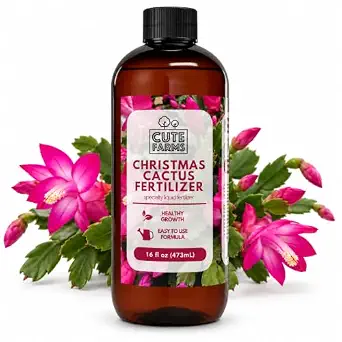 |
| Best Quality Built to a higher standard if you want something more solid | TATAWORM Organic Liquid Seaweed Fertilizer for Christmas Cactus, 2 oz |  |
| Best Value The sweet spot between price and what you get | Miracle-Gro Indoor Plant Food for Cactus & Succulent (2 × 8 fl. oz.) |  |
| Best Budget The cheapest option that still gets the job done reliably | GOOD DIRT Christmas Cactus Fertilizer, Granular 3-2-3 (8 oz) |  |
| Highest Rated A top-rated pick with lots of positive feedback | Cactiva Christmas Cactus Fertilizer (Granules) |  |
| Most Popular A crowd favorite that many people choose with confidence | TPS Nutrients Christmas Cactus Liquid Fertilizer, 8 oz |  |
| Best Seller A high-volume bestseller chosen again and again | TPS Nutrients Succulent Liquid Plant Food, 8 oz |  |
Cute Farms Christmas Cactus Fertilizer 2-2-3 Liquid Plant Food, 16 fl oz

| NPK | 2-2-3 |
|---|---|
| Item Form | Liquid |
| Application Method | Use 1 capful per 32 oz of water |
| Liquid Volume | 16 fluid ounces |
This Cute Farms liquid fertilizer is designed specifically for holiday cacti and comes as a 16 ounce concentrate that you dilute before use. The 2-2-3 NPK ratio supplies moderate nitrogen and phosphorus with slightly higher potassium to encourage sturdy foliage and seasonal blooms without over-stimulating vegetative growth. Typical use is mixing one capful per 32 ounces of water and applying at regular feeding intervals during the growing season to maintain even nutrition. The liquid form makes dosing and foliar or soil applications straightforward for both beginners and experienced growers. Practical benefits include targeted nutrition for cacti that bloom in winter, an easy-to-measure concentrate that reduces storage bulk, and a formula that supports both growth and flowering. Important limitations are that the product is specific to holiday cacti so it is not a universal houseplant formula and dosing must be followed to avoid overfeeding sensitive plants. For growers wanting a simple, purpose-made feed for Christmas cactus, this is a convenient option.
Best for: Buyers who want a simple, purpose-built fertilizer to keep holiday cacti healthy and encourage seasonal blooms without fuss; suitable for hobbyists who prefer an easy-to-use liquid concentrate.
Less Ideal for: Gardeners who need a general-purpose houseplant or outdoor fertilizer for a wide variety of species should look for a more universal formula.
- Balanced 2-2-3 NPK tailored to encourage blooms in holiday cacti
- Liquid concentrate is easy to mix and measure for consistent feeding
- Formulated specifically for Christmas, Thanksgiving, and Easter cactus varieties
- Not formulated as a universal plant food for a wide range of houseplants
Verdict: A focused, easy-to-use liquid concentrate that delivers the right NPK balance to support healthy growth and better blooms on holiday cacti.
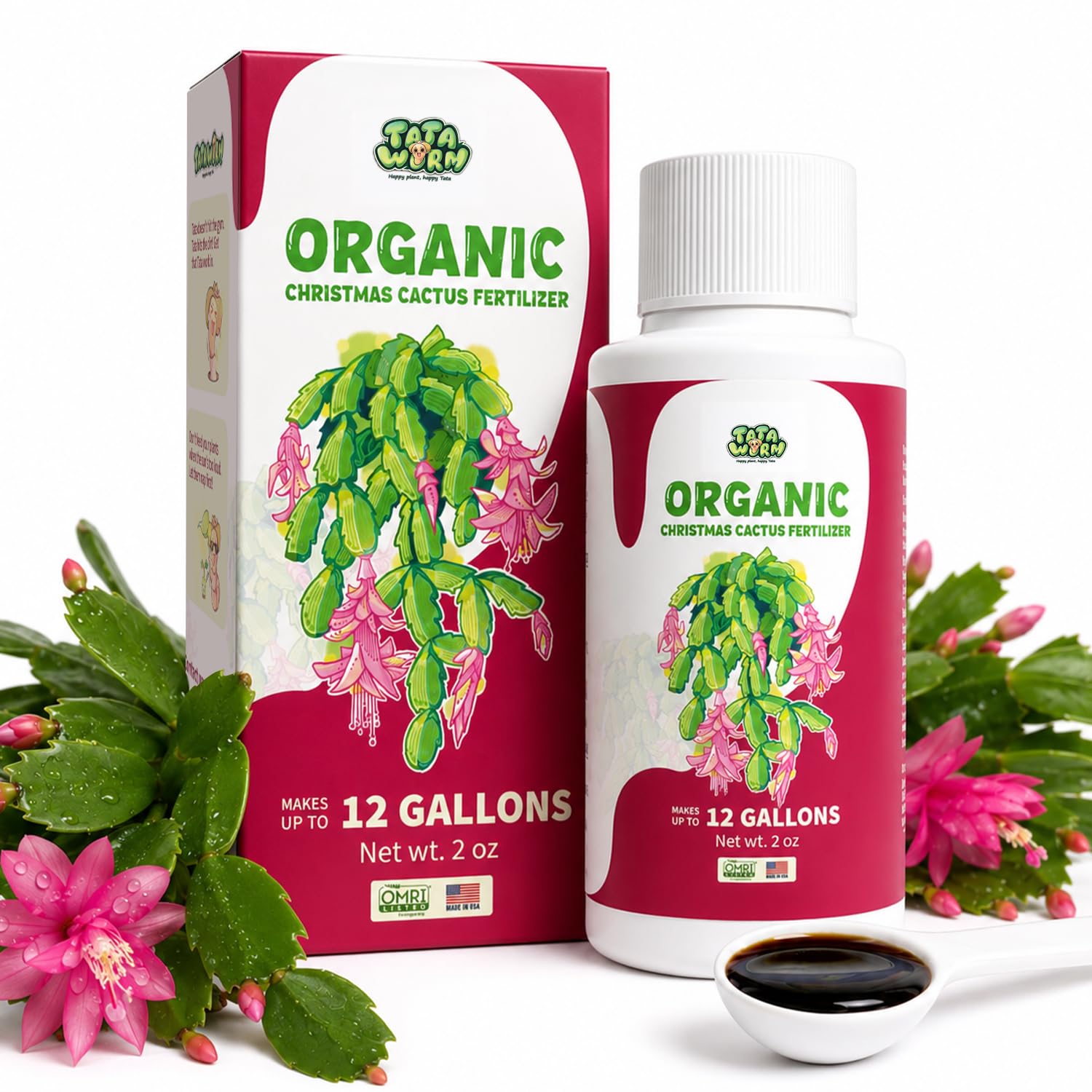
TATAWORM Organic Liquid Seaweed Fertilizer for Christmas Cactus, 2 oz
| Item Form | Liquid |
|---|---|
| Application Method | soil drench |
| Target Species | Christmas Cactus |
| Mixing Ratio | 1/4 tsp per quart |
| Formula | 0-0-4 |
This concentrated liquid kelp is designed specifically for Christmas cactus and similar Schlumbergera, offering gentle, regular nutrition without forcing excessive leaf growth. You mix a quarter teaspoon per quart of water and apply as a soil drench every 2 to 3 weeks during active growth; the 2 oz bottle makes up to 12 gallons of feed solution, so a small bottle covers many feedings. Notable features include an OMRI-listed seaweed extract formula sourced from Maine rockweed, a mild marine scent, and an included measuring scoop for easy mixing. In practice it helps steady root development, improves nutrient uptake, and can encourage fuller segments and brighter blooms when combined with appropriate light and watering. Because the formula is low-strength and organic, results are gradual rather than immediate, so expect improvements over a few weeks with consistent use. Users should avoid overwatering between applications and stop use if signs of bud blast or mushy growth appear. Shelf life after opening is about 12 months if stored cool and out of sunlight.
Best for: Buyers who prioritize steady, plant-friendly performance and want an organic, low-strength feed to support healthier roots and better blooms on Christmas cactus with a repeatable, simple feeding routine.
Less Ideal for: Growers needing fast corrective action for nutrient deficiencies or those who prefer high-nitrogen, quick-response fertilizers for rapid foliage push.
- Concentrated formula makes up to 12 gallons from a 2 oz bottle for many feedings
- OMRI-listed organic seaweed extract sourced from Maine rockweed
- Gentle low-strength feed supports root development and reduces risk of burn
- Easy mix routine with included teaspoon and clear mixing ratio
- Effects are gradual so not suited for rapid corrective feeding
- Small bottle requires careful measuring to avoid waste or over-mixing
Verdict: A concentrated, OMRI-listed seaweed feed that delivers gentle, reliable nutrition to strengthen roots and promote better blooms on Christmas cactus.
Miracle-Gro Indoor Plant Food for Cactus & Succulent (2 × 8 fl. oz.)

| Item Form | Liquid |
|---|---|
| Application Method | Directly to soil or mixed with water |
| Target Species | Cactus and Succulents |
| Mixing Ratio | 8 pumps:1 quart of water |
This liquid plant food is made for indoor cacti and succulents and is designed to be used either directly on soil or diluted in water. The formula emphasizes phosphorus and potassium to support resiliency and encourage healthy growth for species such as Christmas cactus, aloe, jade, and sedum. Use is simple: apply small pump doses for individual pots or mix 8 pumps per quart of water to feed while you water, repeating about every two weeks. The two-bottle bundle gives extra supply for frequent feeders or multiple plants. Practical benefits include quick absorption compared with granular options and an easy pump dispensing method that helps avoid over-application. Limitations are that it is a low-coverage liquid meant for indoor container plants only and requires regular reapplication rather than long-release feeding, so it works best as part of a routine feeding schedule rather than a set-and-forget solution.
Best for: A practical plant owner who wants an easy, repeatable feeding routine for indoor succulents and Christmas cactus and prefers a ready-to-use liquid that is simple to measure and apply.
Less Ideal for: Gardeners seeking a no-maintenance, slow-release fertilizer or those who primarily fertilize large outdoor beds should consider other formats.
- Formulated specifically for cacti and succulents with phosphorus and potassium
- Flexible application: pump directly to soil or mix with water for watering
- Fast-acting liquid that feeds instantly compared with granular fertilizers
- Two 8 fl. oz. bottles provide extra supply for multiple plants or extended use
- Requires reapplication every two weeks instead of providing slow-release nutrition
Verdict: Choose this if you want a simple, cactus-specific liquid feed you can pump or mix and use every two weeks to keep Christmas cactus and other succulents healthy.
GOOD DIRT Christmas Cactus Fertilizer, Granular 3-2-3 (8 oz)

| Item Form | Granules |
|---|---|
| Specific Uses For Product | Blooming, Plant Growth, Root Development, Seed Development |
| Application Method | Sprinkle |
| Target Species | Christmas Cactus |
| Unit Count | 8 Ounce |
This GOOD DIRT granular fertilizer is formulated for Christmas cactus with a balanced 3-2-3 N-P-K plus added calcium and magnesium to support foliage, roots, and blooms. It is applied by sprinkling the granules around the plant base and watering in, with a recommended feed every 14 days during the active growing and blooming season. The small 8 ounce pouch makes it easy to store and use for a few indoor plants or a small collection, and the granule form is simple to dose without mixing liquids. Practical benefits include targeted nutrients for more frequent flowering and improved root strength, and the clear application method reduces guesswork for new growers. Limitations are the small unit size, which may require frequent repurchase for larger collections, and the product is formulated specifically for Christmas cactus so it is not a universal houseplant fertilizer.
Best for: Buyers with a few Christmas cactus plants who want a simple, plant-specific fertilizer that is easy to apply and focused on encouraging blooms and stronger roots.
Less Ideal for: People who need a large-volume fertilizer for many plants or who want a single product to feed diverse houseplants should consider broader-use or bulk options instead.
- Formulated 3-2-3 N-P-K with added calcium and magnesium for balanced nutrition
- Granular form is easy to apply by sprinkling and watering in
- Designed specifically to encourage blooms and healthy foliage in Christmas cactus
- Clear feeding schedule of every 14 days during growing and blooming season
- Small 8 oz pouch may be insufficient for larger collections or frequent use
- Not formulated as a general-purpose fertilizer for a wide range of houseplants
Verdict: A simple, plant-specific granular fertilizer that makes it easy to boost blooms and root health for a small collection of Christmas cactus.
Cactiva Christmas Cactus Fertilizer (Granules)

| Item Form | Granules |
|---|---|
| Specific Uses For Product | Plant Growth, Root Development, Seed Development, Soil Conditioning |
| Target Species | Houseplants |
| Unit Count | 1 Ounce |
This granular Cactiva fertilizer is formulated specifically for Christmas, Thanksgiving and Easter cacti and other flowering tropical cacti grown in containers. It supplies bloom-focused nutrition and includes calcium and magnesium to support sturdy stems and root development plus 2% iron and other micronutrients to help maintain rich green foliage. You would typically apply it to potted holiday cacti on a regular feeding schedule during the active growing and blooming season to encourage bud set and more vibrant flowers. As a reliability-minded choice it targets the common needs of Schlumbergera-type cacti rather than general houseplant feeding, so it simplifies feeding decisions for owners who want consistent bloom support. Limitations are that it is sold in a very small unit count and the listing provides granules but not detailed application rates or NPK breakdown, so you will need to follow label directions carefully and may want to confirm dosing for larger collections.
Best for: A plant owner who wants a purpose-made feeding solution to reliably support flowering holiday cacti grown in pots and containers and prefers a straightforward, bloom-focused product.
Less Ideal for: Gardeners needing bulk fertilizer for many plants or those who require a clearly stated NPK ratio and detailed dosing for large collections should consider other options.
- Formulated for flowering tropical cacti to support bud set and blooms
- Includes calcium and magnesium for stronger stems and root development
- Contains iron and micronutrients to promote green foliage and overall vigor
- Small unit count provided with limited information on exact NPK ratio or long-term supply
Verdict: Choose Cactiva when you want a dedicated, bloom-focused fertilizer to encourage reliable flowering in potted Christmas and other holiday cacti.
TPS Nutrients Christmas Cactus Liquid Fertilizer, 8 oz

| Item Form | Liquid |
|---|---|
| Target Species | Cactus |
| Unit Count | 8 Fluid Ounces |
| Mixing Ratio | 1 teaspoon per quart of water |
This 8 oz liquid fertilizer from TPS Nutrients is formulated specifically for Christmas cactus and is mixed at one teaspoon per quart of water for routine feedings. It supplies a balanced, kelp-enriched nutrient mix intended to reduce bud drop, encourage repeat blooms, and support fresh segment and root growth, which makes it well suited to potted specimens on windowsills or indoor displays. The liquid form is easy to dilute and apply, so you can feed plants consistently without measuring concentrates by weight. The product is aimed at indoor use and carries clear safety directions and a simple mixing ratio, but the bottle is small so regular users with several plants will need multiple bottles over a season. It is designed for medium coverage so it is best for a few houseplants rather than feeding a large collection. If you want a targeted, easy-to-use weekly or biweekly feed that emphasizes bloom production for Christmas cactus, this formulation delivers recognizable, practical benefits.
Best for: Buyers who want a targeted, easy-to-use feed to boost flowering and reduce bud drop on indoor Christmas cactus and who prefer products with visible user approval.
Less Ideal for: Gardeners who need to fertilize large numbers of plants or prefer granular/slow-release fertilizers for long-term feeding schedules.
- Formulated specifically for cactus to encourage bud set and repeat blooms
- Kelp-enriched liquid that is easy to dilute and apply with a clear 1 tsp per quart mixing ratio
- Supports root and segment growth for healthier, fuller plants
- Designed for indoor potted use and medium coverage suitable for household collections
- 8 oz bottle is small for users with multiple plants and may require frequent repurchasing
- Not intended for large-scale or outdoor garden use due to medium coverage
Verdict: A convenient, kelp-enriched liquid feed focused on promoting blooms and healthier growth in indoor Christmas cactus.
TPS Nutrients Succulent Liquid Plant Food, 8 oz

| Item Form | Liquid |
|---|---|
| Target Species | Cactus |
| Unit Count | 8 Fluid Ounces |
| Mixing Ratio | 1 teaspoon per gallon of water |
This 8 oz liquid plant food from TPS Nutrients is a low-concentration fertilizer designed for succulents and related cacti, applied by diluting 1 teaspoon per gallon of water. In use you mix the measured dose into water and feed potted plants during the growing season; the balanced, gentle NPK ratio aims to encourage firmer leaves, prevent leggy stretching, and support root development without forcing rapid, weak growth. Practical strengths are its easy mixing ratio, compact bottle that is simple to store, and a formulation presented as safe for indoor container culture when used as directed. For a risk-averse gardener caring for a Christmas cactus, this product gives a conservative, steady feeding option that lowers the chance of overfertilizing and salt buildup. Important limitations are the small 8 oz volume, which will stretch only so far if you have many plants, and that the label targets succulents and cacti generally rather than naming Christmas cactus specifically, so follow dilution and application instructions carefully for this species.
Best for: Careful indoor gardeners who prioritize gentle, conservative feeding for potted cacti and succulent-type houseplants and want an easy-to-mix liquid for occasional use.
Less Ideal for: Gardeners who need a large-volume or concentrated fertilizer for feeding many plants frequently or who prefer granular slow-release options.
- Low recommended mixing ratio makes accidental overfeeding less likely
- Formulated to promote compact, non-leggy growth suited to container plants
- Liquid form mixes easily for even distribution when watering
- Gentle nutrient balance intended to reduce root stress and buildup
- Only an 8 oz bottle which may be small for multiple plants over a season
- Label emphasizes succulents and cacti broadly rather than providing Christmas cactus-specific directions
Verdict: A gentle, easy-to-dilute liquid fertilizer that helps keep Christmas cactus compact and healthy without risking strong, leggy growth.
Choosing the Right Fertilizer for Christmas Cactus: Key Factors to Consider
Nutrient Ratio and Bloom Support
Christmas cactus responds best to a fertilizer that encourages flower bud formation without forcing excessive vegetative growth. A moderate nitrogen level paired with adequate phosphorus and potassium supports sturdy stems and more prolific blooms. High nitrogen can delay flowering and create soft, floppy growth that bends and snaps when handled.
Look for formulations that specify bloom or flowering balance, or a mild 'houseplant' ratio that leans slightly toward bloom-promoting nutrients during the pre-bloom months. Consistent, measured feeding during the active growth and bud formation period produces better results than occasional heavy feeding.
Salt Buildup and Leaching
Potted Christmas cacti are sensitive to salts that accumulate when water evaporates and fertilizer residues concentrate in the root zone. Excess salts show up as brown tips, leaf drop, or poor bud development. How the fertilizer dissolves and the frequency of applications influence salt accumulation.
Choose products with clear dilution guidelines and a low-salt design if you have limited ability to leach pots frequently. When using any soluble feed, plan regular flushes with plain water a few times per year to rinse salts out of the potting mix and keep roots healthy.
Formulation and Application Method
Fertilizers come as water-soluble concentrates, slow-release granules, or liquid ready-to-use sprays. Each type behaves differently in a small pot. Soluble concentrates allow precise control of dose and timing but require measuring and regular applications. Slow-release granules reduce maintenance but can be harder to adjust if plants show nutrient signs.
Consider how often you want to feed and how comfortable you are with measuring. For beginners, a balanced liquid concentrate with straightforward dilution often offers the most predictable results. For low-maintenance setups, a reputable slow-release option can provide steady feeding across months.
Compatibility With Potting Medium and Water Quality
Christmas cactus is usually grown in well-draining, organic-rich potting mixes. Some fertilizers interact with certain soil components, changing availability of nutrients or altering pH. Hard water can cause mineral buildup that interacts with fertilizer salts and changes the effective concentration the plant receives.
Match your fertilizer choice to the potting mix and local water. If you use tap water with high mineral content, err toward lower-concentration feeds and occasional leaching. Acidifying or alkalizing tendencies of a fertilizer also matter if you keep mix pH tightly controlled for other plants in the same space.
Timing and Seasonal Feeding Strategy
Christmas cactus has a distinct cycle: vegetative growth in spring and summer, bud initiation in fall, and bloom in late fall to winter. Feeding schedules should align with that cycle. Heavy feeding during bud set can interfere with flowering, while withholding nutrients can limit bloom size and longevity.
Plan to feed lightly or stop fertilizing a few weeks before the natural bud-initiating period, then resume a low-dose maintenance feed after the main flowering period. Understanding the plant's seasonal needs helps avoid common mistakes like overfeeding before buds form.
Safety, Convenience, and Indoor Use
Because Christmas cactus is typically grown indoors, fertilizer handling and storage are important. Concentrates should store well without clumping or losing potency. Liquid products should have clear measuring guidance and child-safe caps if household safety is a concern.
Also consider residue on foliage after foliar feeding and whether the product leaves visible deposits on windowsills or beneath pots. Picks that minimize mess and offer straightforward cleanup suit indoor growers best.
When to Start and Stop Feeding
Initiate a regular feeding routine in spring when new growth appears and continue through late summer. Switch to a lighter program or pause feeding in early fall to encourage natural bud initiation as days shorten.
After the main blooming period, resume a gentle maintenance feed to support recovery and prepare the plant for the next growth cycle. Adjust frequency based on plant vigor and growth rate rather than a fixed calendar alone.
- Feed more frequently during active growth; reduce or pause before bud set.
- Use lower concentrations during fall to favor bud formation.
How to Apply Fertilizer Safely Indoors
Always dilute concentrates to the label's recommended strength or slightly weaker for sensitive potted plants. Apply fertilizer to evenly moist soil to prevent root irritation from concentrated salts.
Place a saucer under the pot and discard excess runoff to avoid salt pools. For small pots, use a syringe or measuring spoon for accurate doses and avoid splashing fertilizer onto leaves, which can cause spotting.
- Water first, then feed to help distribute nutrients evenly.
- Rinse foliage if foliar contact occurs to prevent residue buildup.
Adjusting Feeding for Pot Size and Root Bound Plants
Smaller pots require lighter, more frequent feedings because nutrient content and moisture fluctuate faster. If a plant is root bound, it may need repotting rather than more fertilizer; concentrated feeding in tight pots can cause salt stress.
When repotting, refresh the potting medium and hold off on heavy feeding for a few weeks to let roots recover. Observe new growth as a signal to return to your normal feeding schedule.
- Use half-strength solutions for small pots until growth stabilizes.
- Repot root bound plants instead of increasing feed concentration.
Signs Your Christmas Cactus Needs Different Feeding
Look for common cues: pale or yellowing segments can indicate nutrient deficiency, while brown tips and leaf drop often point to salt burn. If buds form then abort, reconsider the timing and concentration of your feed.
Run a simple flush with plain water and pause fertilizing if you suspect salt buildup. If problems persist, evaluate potting mix and watering frequency before changing fertilizer formulations.
- Yellowing new growth suggests low nitrogen; brown tips suggest salts.
- Bud abortion often ties to watering or sudden temperature changes as well as feeding.
DIY Feeding Alternatives
For gardeners who prefer homemade feeds, a diluted, balanced liquid solution made from common garden fertilizers can work if mixed carefully. Organic options like fish emulsion or seaweed extracts supply micro-nutrients and are gentler on potted plants, but they may have an odor and different salt profiles.
When using DIY mixes, measure carefully and keep a feeding log so you can track how plants respond across seasons. Homemade options can be effective but require consistent dilution and storage practices to remain safe for indoor use.
- Start at one-quarter to one-half the recommended strength for homemade feeds.
- Store homemade solutions in cool, dark places and use quickly to avoid spoilage.
How We Chose the Best Fertilizer for Christmas Cactus
We selected fertilizers that suit the specific growth and flowering cycle of Christmas cactus. Key evaluation criteria were nutrient ratio and bloom support, because the right balance of nitrogen, phosphorus, and potassium drives bud set and stem firmness; application method and concentration control, since ease of measuring and diluting affects everyday use; salt buildup risk and leaching behavior, as sensitive potted cacti can develop tip burn from excess salts; compatibility with common potting mixes and soil pH, because some feeds work poorly in high-organic or very acidic media; and user handling and storage, covering shelf life, stability, and safety for indoor use. Products that required specialized equipment, or were designed only for large-scale greenhouse production, were excluded. We also filtered out formulations with ambiguous nutrient labels or lacking clear dilution instructions. The remaining options were judged on how well they deliver predictable feeding for house-grown Christmas cactus and minimize maintenance problems over a growing season.
FAQ
How often should I fertilize my Christmas cactus?
Often feed every two to four weeks during active growth in spring and summer at a reduced strength. Reduce frequency or pause feeding a few weeks before the expected bud-initiation period in fall.
Can I use general houseplant fertilizer on Christmas cactus?
Usually a general balanced houseplant fertilizer works if used at a mild concentration. Choose a formula that does not push excessive nitrogen during the pre-bloom period and follow dilution guidance carefully.
What is the best way to avoid fertilizer burn in potted Christmas cactus?
Avoid overconcentrating feeds, water the pot before applying fertilizer, and flush the potting mix periodically with plain water to remove salt buildup. Using lower strength solutions helps prevent tip burn.
Should I stop fertilizing when my Christmas cactus is blooming?
It depends, but many growers reduce or pause feeding during peak bloom to avoid stressing buds. Resume a gentle maintenance feed after flowering to support recovery.
Are organic fertilizers suitable for Christmas cactus?
Organic options can be suitable and are often gentler in potted conditions. They may release nutrients more slowly and can benefit soil biology, but they require careful dilution and may not match the immediate nutrient boost of soluble synthetics.
Final Verdict
Prioritize a fertilizer that supports bud formation without overwhelming the plant with nitrogen or salts. Match the formulation and application method to your pot size, watering habits, and indoor conditions. Regular, light feeding timed around the plant's growth and bud set will produce the best blooms while minimizing maintenance. Ultimately, choose a feed you can apply accurately and store safely indoors. Pay attention to salt management and seasonal timing; those tradeoffs matter more than chasing a specific brand or product format.
