

Note: This article contains affiliate links. If you click on these links and make a purchase, I may earn a small commission at no extra cost to you. This helps support my research and content. Read my full affiliate disclosure here.
Choosing the right fertilizer for early spring sets the tone for the whole growing season. In cool to warming spring conditions, the right formula helps turf break dormancy, thicken faster, and push roots before heat and drought arrive. This guide covers six top fertilizers shortlisted for early-spring use and explains the practical differences you will notice in a yard, from rapid leaf color to longer-term root development. We evaluate each pick by nutrient balance, how nutrients are released over time, and how easy the product is to apply and store. Read on to understand the tradeoffs between fast green-up and steady feeding so you can pick the product that fits your lawn care rhythm.
Top Picks at a Glance
| Best Overall The best all-around choice for most situations | Scotts Turf Builder Halts Crabgrass Preventer with Lawn Food (covers 5,000 sq. ft.) |  |
| Best Quality Built to a higher standard if you want something more solid | The Andersons Core 24-6-12 All-Purpose Lawn Fertilizer, 18 lb (covers up to 6,200 sq. ft.) |  |
| Best Value The sweet spot between price and what you get | GreenView Lawn Food 48 lb Bag (22-0-4) |  |
| Highest Rated A top-rated pick with lots of positive feedback | Milorganite 6-4-0 Slow-Release Fertilizer with Feeding Tips Brochure, 32 lb |  |
| Most Popular A crowd favorite that many people choose with confidence | Scotts Turf Builder Lawn Food, 12.5 lb |  |
| Best Seller A high-volume bestseller chosen again and again | Scotts Green Max Lawn Food — Granular Lawn Fertilizer with Iron, covers 5,000 sq. ft. |  |
Scotts Turf Builder Halts Crabgrass Preventer with Lawn Food (covers 5,000 sq. ft.)
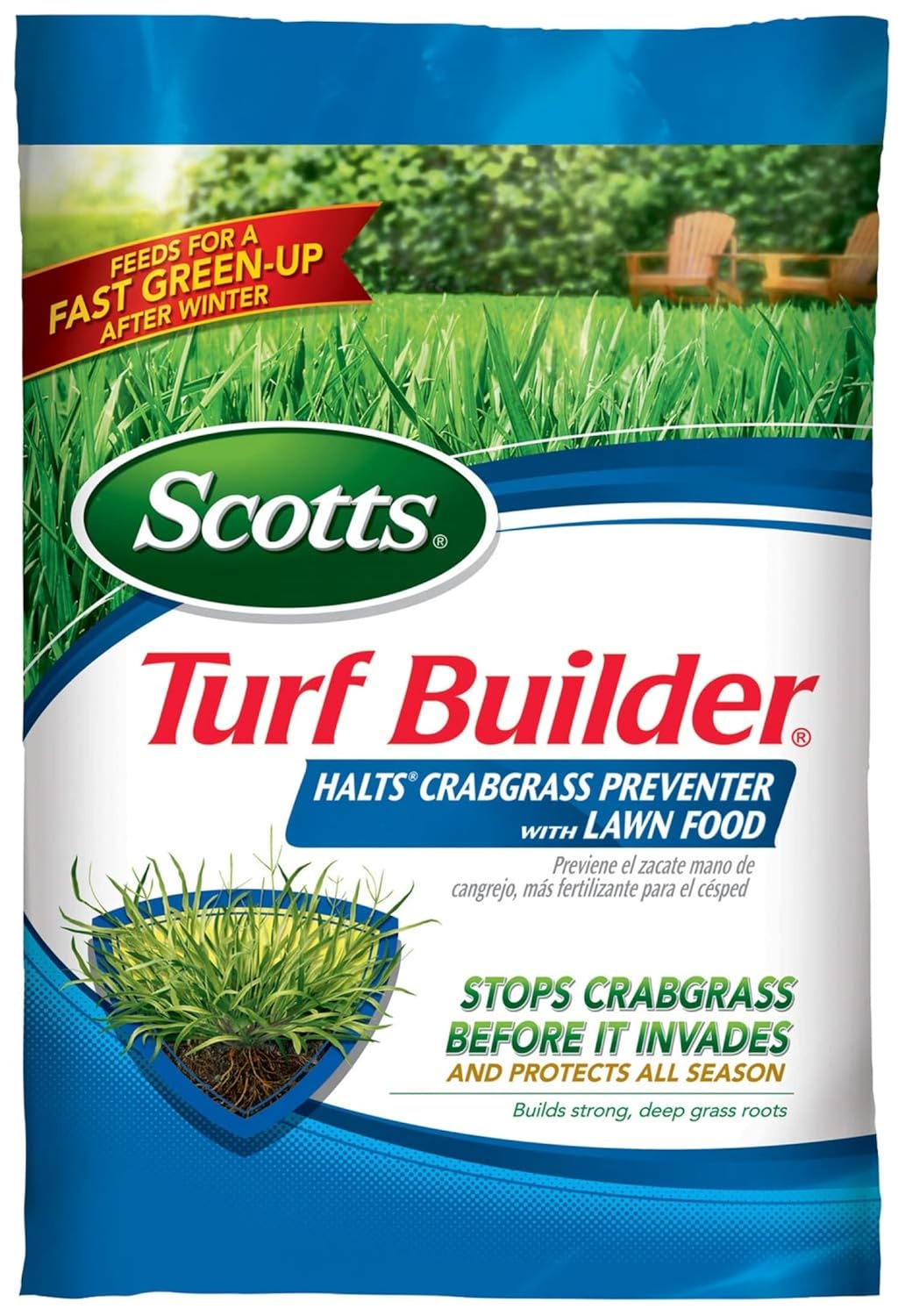
| Item Form | Granule |
|---|---|
| Coverage | 5000 square feet |
| Unit Count | 213.6 Ounce |
| Fertilizer analysis | 30-0-4 |
Scotts Turf Builder Halts combines a pre-emergent crabgrass preventer with a granular lawn fertilizer so you can both stop grassy weeds before they sprout and give grass a fast green-up after winter. It is applied in early spring to a dry, established lawn using a broadcast or drop spreader and requires light watering (about 1/4 to 1/2 inch) within 2 to 3 days to activate the barrier. The package lists fertilizer analysis of 30-0-4 and is intended for common turf types such as Kentucky bluegrass, rye, fescue, bermuda and zoysia while excluding dichondra and bentgrass. Practical benefits include season-long pre-emergent protection against crabgrass and several other listed grassy and broadleaf weeds plus nutrient feed that supports root development. Limitations are that it will not kill mature, established weeds and works only as a preventive; timing matters, so applying too late or on newly seeded lawns can reduce effectiveness. The product is straightforward for routine spring lawn care when paired with a calibrated spreader.
Best for: Homeowners who want an easy spring lawn step that prevents crabgrass and also feeds their turf for quicker green-up, especially those who maintain established lawns and follow seasonal timing.
Less Ideal for: People restoring bare or newly seeded lawns, or those who need a post-emergent weed killer for existing infestations, should choose a different product.
- Pre-emergent formula prevents crabgrass and several listed grassy weeds before they germinate
- Includes fertilizer for fast spring green-up and stronger root development
- Granular form works with common broadcast and drop spreaders for even coverage
- Coverage sized for typical small-to-medium lawns (up to 5,000 sq. ft.)
- Directions specify watering window to activate product for reliable performance
- Does not control existing or mature crabgrass or broadleaf weeds
- Not suitable for use on dichondra or bentgrass lawns
Verdict: Buy this if you want a single early-spring application that prevents crabgrass while giving your established lawn a quick nutrient-driven green-up.
The Andersons Core 24-6-12 All-Purpose Lawn Fertilizer, 18 lb (covers up to 6,200 sq. ft.)

| Item Form | Granules |
|---|---|
| Coverage | 6200 sqft |
| Target Species | Lawn Grass |
| Mixing Ratio | 4:1:2 |
The Andersons Core 24-6-12 is a granular lawn fertilizer aimed at delivering both immediate and sustained nitrogen to turf with a 4:1:2 (24-6-12) NPK formulation. It combines quick- and slow-release nitrogen plus iron and micronutrients for deeper greening and total nutrition. Typical use is a broadcast application across the lawn, followed by a light watering to move granules into the soil; the bag claims coverage up to 6,200 sq ft and feeding that can last about 4 to 6 weeks. The product’s super-fine particle size helps more even distribution and increases particle count per square foot for more consistent results. Practical benefits include strong early-season green-up for a variety of turf types and fewer reapplications compared with straight quick-release products. Limitations to note are the need to time applications around heavy rain to avoid wash-off and to follow watering instructions for best uptake, and that repeat applications are still recommended every 4 to 6 weeks during active growth.
Best for: Gardeners who prioritize visible performance and steady, professional-style results for their lawn in early spring and want a product that combines quick green-up with extended feeding.
Less Ideal for: Homeowners looking for a single-application, season-long fertilizer or those who need a specialized formulation for a specific turf problem like high weed pressure or granular-free liquid feeding.
- Balanced 24-6-12 NPK ratio provides immediate and extended nitrogen for quick green-up and sustained feeding
- Includes iron and micronutrients for deeper greening and improved turf nutrition
- Super-fine granules promote more even distribution across the lawn
- Coverage up to 6,200 sq ft from one 18 lb bag reduces the number of bags needed
- Requires careful timing and watering to prevent wash-off and ensure soil uptake
- Feeding effect lasts up to 6 weeks so regular reapplication is necessary during the season
Verdict: Choose this fertilizer if you want a performance-focused, fast-acting yet extended-release granular formula to jump-start and maintain lawn green-up in early spring.
GreenView Lawn Food 48 lb Bag (22-0-4)

| NPK | 22-0-4 |
|---|---|
| Form | Granules |
| Coverage | 15,000 sq. ft. |
| Application | Broadcast or drop spreader |
GreenView Lawn Food is a granular, broadcast-applied fertilizer designed to feed lawns with a high-nitrogen 22-0-4 formula and a controlled-release nitrogen technology for steady results. It is applied with a broadcast or drop spreader at roughly 1 lb per 1,000 sq ft for routine feeding or 2 lbs for quicker green-up, and should be watered in after application. The MESA controlled-release nitrogen provides a mix of quick-acting and slow-release nutrients that encourage faster spring green-up, deeper roots, and improved drought tolerance without causing a surge of excessive top growth. The zero-phosphate formulation complies with common regional restrictions and helps protect waterways. Practical limitations are its large 48 lb bag size, which is suited for bigger lawns and is less convenient for small properties, and the product requires proper spreader calibration to avoid uneven results or localized burning if overapplied. Follow label directions and local application rules for best outcomes.
Best for: Homeowners managing medium to large cool- or warm-season lawns who want reliable, long-lasting green-up and stronger roots while minimizing repeat applications.
Less Ideal for: People with very small lawns or those who prefer liquid or foliar applications should consider smaller packages or alternative fertilizer formats.
- Controlled-release MESA nitrogen for steady feeding up to 8 weeks
- High nitrogen 22-0-4 formula promotes quick green-up and root development
- Designed for use with broadcast or drop spreader for even coverage
- Zero-phosphate formulation aligns with regional fertilizer restrictions
- Large 48 lb bag is bulky and may be inconvenient for small yards or single applications
- Requires accurate spreader settings and watering-in to avoid uneven feeding
Verdict: Choose this product when you want a high-nitrogen, controlled-release granular fertilizer that delivers up to eight weeks of steady feeding and faster spring green-up for larger lawns.
Milorganite 6-4-0 Slow-Release Fertilizer with Feeding Tips Brochure, 32 lb

| Item Form | Pelletized |
|---|---|
| Application Method | Broadcast, Rotary or Manual |
| Coverage | 2,500 Square Feet |
| Specific Uses For Product | Lawns, Flowers and Gardens, Education |
Milorganite 6-4-0 is a pelletized, slow-release organic fertilizer intended for routine spring feeding of lawns and general garden use. It supplies low-salt nitrogen and organically complexed iron that slowly release over 8 to 10 weeks, so you get steady greening without the quick flush or risk of burn associated with many synthetic starters. The product is applied with a broadcast, rotary, or manual spreader and one 32 lb bag covers about 2,500 square feet, making it practical for typical yard sizes. The included brochure gives seasonal timing and spreader settings, which helps ensure consistent application. Because it is mostly organic material, it also improves soil structure and works well in clay or sandy soils by increasing organic matter and beneficial microbial activity. Limitations to expect are a slower visible response compared with high-analysis chemical fertilizers and a mild earthy odor on application that fades after watering or rain. For gardeners who prioritize predictable, low-risk feeding over rapid color change, this is a dependable spring choice.
Best for: Homeowners who want a reliable, low-risk spring fertilizer that improves soil over time and delivers steady greening rather than rapid color spikes.
Less Ideal for: People seeking an immediate, high-nitrogen green-up or professional turf managers needing rapid correction should consider a high-analysis synthetic alternative.
- Slow-release nitrogen feeds lawns steadily for 8–10 weeks, reducing risk of burn
- Low-salt formula minimizes streaking and damage in hot or dry conditions
- Contains organically complexed iron to promote deep greening without staining concrete
- High organic matter content helps improve soil structure and microbial activity
- Covers approximately 2,500 sq ft per 32 lb bag and includes spreader and timing guidance
- Slower visible results than high-analysis synthetic starter fertilizers
- Has an earthy odor at first application that may attract pets until watered in
Verdict: A dependable slow-release spring fertilizer that feeds lawns steadily and improves soil health with minimal risk of burn.
Scotts Turf Builder Lawn Food, 12.5 lb

| Item Form | Powder |
|---|---|
| Specific Uses For Product | Lawn |
| Coverage | 5,000 sq. ft. |
| Target Species | grass |
| Mixing Ratio | 32:0:4 |
Scotts Turf Builder Lawn Food is a ready-to-use granular fertilizer meant to thicken and green lawns while building stronger roots. It is applied with a broadcast or drop spreader to a wet or dry lawn and can be lightly watered in for faster greening. The formulation is intended for all grass types and the manufacturer provides spreader settings for easy, consistent application. In practice this product supplies routine nutrients that help lawns recover from winter and prepare for spring growth, improving the lawn's ability to absorb water and nutrients. Its powder/granular form stores well between uses and is simple to sweep back onto turf if you spill on hard surfaces. Limitations are the single NPK details are not fully listed on the product page beyond mixing guidance and a single bag covers 5,000 sq. ft. so larger yards will need multiple bags and extra handling. Users should follow safety directions to keep product away from children and water sources.
Best for: Gardeners who want a straightforward, proven spring feed to thicken and green up lawns and who value clear application guidance and visible social proof before buying.
Less Ideal for: Property owners with large lawns who want a single-bag solution or users seeking a fertilizer with detailed ingredient disclosures on the label.
- Works on any grass type so it is versatile across common lawns
- Granular formula is easy to apply with common spreaders and stores well
- Manufacturer provides specific spreader settings for consistent coverage
- Builds root strength and improves nutrient and water uptake
- One 12.5 lb bag only covers about 5,000 sq. ft., requiring multiple bags for larger yards
- Product information on exact NPK numbers in this listing is limited to a mixing ratio rather than a full spec sheet
Verdict: A reliable, easy-to-apply spring lawn food that strengthens roots and greens lawns, backed by wide customer use and clear spreader instructions.
Scotts Green Max Lawn Food — Granular Lawn Fertilizer with Iron, covers 5,000 sq. ft.

| Item Form | Granules |
|---|---|
| Coverage | 5000 square feet |
| Specific Uses For Product | Lawn |
| Target Species | lawn grass |
Scotts Green Max is a straightforward granular lawn food designed for homeowners who want faster greening without complicated steps. Each granule combines nutrients and 5% iron so you can broadcast it with a Scotts spreader, lightly water in, and expect deeper green color in about three days. It is labeled for use on any grass type in spring, and the bag covers 5,000 square feet so one application will treat a typical medium lawn. The product is also guaranteed not to stain concrete when used as directed and allows immediate re-entry for people and pets. Practical benefits include simple application settings provided for Scotts broadcast and drop spreaders and a single-product 2-in-1 formula that removes the need for a separate iron supplement. Limitations are that it is a quick-feeding lawn food rather than a complete seasonal program and the directions emphasize using a compatible spreader for even distribution, so performance depends on proper application technique.
Best for: Homeowners who want a low-effort, reliable spring boost of color and nutrition for established lawns and prefer a simple single-product solution they can apply themselves.
Less Ideal for: Gardeners looking for a complete weed-and-feed or long-term slow-release program, or those who need products formulated specifically for sensitive regional regulations.
- Fast visible greening thanks to included iron for quick color improvement
- Covers 5,000 sq. ft. so one bag treats a typical medium lawn
- Granular formula works with common Scotts spreaders and includes spreader settings on the label
- Safe to re-enter lawn immediately after application and formulated not to stain surfaces when used as directed
- Not a full-season, multi-product program so may need additional treatments for weed or pest control
- Performance depends on even spreading and light watering in, so results vary with application technique
Verdict: Choose Scotts Green Max for a quick, easy spring green-up when you want fast visible color improvement with a single granular product.
Choosing the Right Fertilizer for Grass Early Spring: Key Factors to Consider
Nutrient Ratio and Primary Nitrogen Type
The N-P-K ratio tells you what the turf will get most of. Early spring applications typically favor nitrogen to drive leaf growth, but the form of nitrogen matters. Fast-acting soluble nitrogen gives quick green color but raises burn risk and typically fades sooner. Slow-release or stabilized nitrogen feeds over weeks and reduces the chance of scorching, making it safer when temperatures are still fluctuating.
Knowing the nitrogen source helps you match the fertilizer to your timing and tolerance for rapid green-up. For lawns that need immediate visual recovery before an event, a higher proportion of quick-release nitrogen can be appropriate. For general seasonal starts where steady root work is the priority, choose blends with a clear slow-release component.
Release Profile and Longevity
Release profile describes how quickly nutrients become available. Products labeled quick-release boost growth within days but require careful rate control. Slow-release formulations rely on coated granules, organic sources, or stabilized chemistry to feed turf over several weeks, reducing reapplication frequency.
Longevity affects when you need to reapply and how your lawn looks over time. A mix of fast and slow-release nitrogen often balances an early visual improvement with sustained feeding. For lawns on light soils that leach easily, longer-lasting formulations reduce nutrient loss and can improve efficiency.
Soil Test and Phosphorus Needs
A soil test tells you whether your lawn needs extra phosphorus for root growth. Many mature lawns already have adequate phosphorus, and unnecessary additions can cause environmental runoff concerns. Early spring is a time when roots are establishing, so phosphorus can be useful for new seed or heavily thinned turf, but it should be applied based on test results.
Using a fertilizer with low or zero phosphorus is often fine for established turf. If you are overseeding or dealing with new sod, pick a product with added phosphorus only after confirming a soil deficiency or seeding requirement.
Application Rate and Spreader Compatibility
Correct application rate prevents underfeeding and avoids burning. Labels provide pounds per 1,000 square feet and compatible spreader settings; products with clear spreader charts reduce guesswork. Granule size and flow characteristics influence how evenly a product distributes. Poorly matched spreader settings can cause streaking, patchy green-up, or localized scorch.
Consider whether you prefer broadcast or drop spreader use, and whether you need a product that works well with the equipment you already own. Ease of calibration and a readable label matter for consistent results across the lawn.
Environmental Impact and Safety Measures
Fertilizer application affects nearby water bodies and non-target plants. Early spring rains can carry nutrients off the lawn if applied improperly. Products that provide guidance on buffer distances, timing before predicted rainfall, and stabilized nitrogen forms reduce runoff risks.
Also think about storage and handling safety. Granules that clump in humid storage or liquids that require precise mixing increase the chance of user error. Look for clear safety directions and packaging that minimizes spills when measuring and applying.
Compatibility with Lawn Goals and Maintenance Schedule
Your lawn management style should shape the choice of early-spring fertilizer. If you plan multiple passes through the season, a quick-start product with lower longevity can fit into a schedule of frequent, lighter feedings. If you prefer a low-input approach, pick a longer-lasting formula to reduce application frequency.
Also align fertilizer choice with other practices such as overseeding, aeration, and irrigation. Some fertilizers work better when followed by watering in, while others should sit dry briefly to avoid runoff. Match product directions to your typical tasks for the best outcome.
Timing Your Early-Spring Application
Timing matters more than an exact calendar date. Apply once soil temperatures consistently reach the threshold for active root growth for your grass type. For cool-season grasses that is often when soil at 2 inches warms to around 50 to 55 degrees Fahrenheit. For warm-season grasses, wait until turf shows signs of green-up and nights are consistently warmer.
Avoid fertilizing just before heavy rain to prevent runoff. If you expect a cold snap after application, opt for a product with a slower release to reduce burn risk when temperatures bounce.
- Check soil temperature rather than relying on date alone.
- Avoid applications ahead of significant rainfall events.
- Match fertilizer release speed to short-term weather forecasts.
Preparing the Lawn for Best Uptake
Mow and remove excessive thatch before applying early-spring fertilizer. A clean, slightly shorter canopy allows granules to reach the soil surface and improves absorption. If you aerated in fall, early spring feeding helps roots take advantage of improved soil contact.
Water lightly after application when directions recommend it; this helps soluble nutrients move into the root zone without washing them away. For slow-release products, minimal initial watering is often sufficient to settle granules.
- Mow to a normal height, not scalping, before application.
- Rake clippings if they form mats that block granule contact.
- Follow label water-in instructions for best nutrient uptake.
Overseeding and Fertilizer Use
If overseeding in early spring, choose a fertilizer that supports seedlings. Young grass benefits from gentler, starter-style nutrition and sometimes a small amount of phosphorus for root establishment. Avoid high-soluble nitrogen rates that can scorch delicate new shoots.
Coordinate seeding and feeding so that starter nutrients are present at sowing or shortly after emergence, and use a light irrigation schedule to keep seedbeds moist without causing nutrient runoff.
- Use starter-friendly formulas when overseeding or establishing new turf.
- Apply lower rates when seed is present to avoid burn.
- Water gently and frequently to support germination and nutrient uptake.
Managing Early-Season Weed Pressure
Applying fertilizer can favor the same weeds that compete with turf. If you plan to use a pre-emergent herbicide, check compatibility and timing with fertilizer. Some pre-emergent treatments must be applied before seeding and may affect when you should fertilize.
For lawns with significant winter annual weed pressure, spot-treat or delay high-nitrogen applications until after initial weed control to prevent boosting weeds more than turf.
- Coordinate herbicide and fertilizer schedules to avoid interfering with seeding.
- Consider spot applications of fertilizer in areas of good turf until weeds are controlled.
- Read product labels for compatibility notes between fertilizers and weed treatments.
Storage and Handling Best Practices
Store fertilizers in a cool, dry place away from direct sunlight and moisture to prevent caking and nutrient breakdown. Seal bags after opening and keep containers off concrete floors to reduce moisture transfer.
Use protective gloves and avoid inhaling dust when handling dry granules. For liquids, mix in a well-ventilated area and follow dilution instructions precisely. Keep products securely stored away from children and pets.
- Label opened containers with purchase date and product details.
- Keep fertilizers in original packaging when possible for safety and instructions.
- Dispose of empty bags and rinses according to local guidelines.
How We Chose the Best Fertilizer for Grass Early Spring
We shortlisted fertilizers that match early-spring turf needs and then applied objective, garden-focused filters to select the final six. First, nutrient balance: products were evaluated for whether they provide the right ratio of nitrogen, phosphorus, and potassium for spring recovery and root building. Second, release profile: we looked for clearly labeled fast-release, slow-release, or blended formulations because timing affects green-up and burn risk. Third, application practicality: spreader compatibility, ease of measuring, and clear label directions were required. Fourth, turf and soil compatibility: options that suit cool-season and warm-season grasses and those that include guidance for soil-test adjustments scored higher. Finally, environmental and safety features were considered, such as reduced-burn formulas and clear runoff guidance. We excluded fertilizers designed strictly for specialty uses, such as shrub or vegetable blends, and products lacking transparent nutrient labeling. The result is a focused list of early-spring turf fertilizers chosen for predictable performance, safe application, and clear instructions.
FAQ
When is the best soil temperature to apply early-spring fertilizer?
Apply when soil at 2 inches consistently reaches warm-season or cool-season thresholds for active growth. This often means around 50 to 55 degrees Fahrenheit for cool-season lawns. Soil thermometers give a more reliable indicator than the calendar.
Can I use a quick-release fertilizer for early spring to see immediate green-up?
Yes, quick-release nitrogen will produce fast color, but it carries higher burn risk and shorter feeding duration. Use lower rates or choose a blended formula if temperatures are still variable.
Do established lawns need phosphorus in early spring?
Usually not. A soil test is the best way to determine phosphorus needs. Established turf often has sufficient phosphorus, while newly seeded or heavily thinned areas may benefit from additional starter phosphorus.
How soon after fertilizing should I water my lawn?
Follow label directions. Many soluble fertilizers need light watering to move nutrients into the root zone, while some slow-release products require minimal water to avoid washing nutrients away. Watering within 24 hours is commonly recommended unless the product specifies otherwise.
Can fertilizer applied in early spring harm nearby plants or waterways?
If applied and timed correctly, risks are low. Avoid application before heavy rains, follow buffer guidance on labels, and do not exceed recommended rates. Using stabilized or slow-release formulations can reduce runoff potential.
Should I adjust my fertilizer choice if I plan to overseed?
Yes. For overseeding choose a starter-friendly formulation with gentler nitrogen rates and possible phosphorus support if a soil test indicates a need. Avoid high-solubility, high-rate products that can damage seedlings.
Final Verdict
Select an early-spring fertilizer by matching nutrient form and release profile to your timing goals and lawn habits. Prioritize clear label instructions, appropriate nitrogen type for the speed of green-up you want, and soil test guidance for phosphorus needs. Balance immediate visual results with longer-term root development and environmental precautions to get a healthy start to the season. Focus on application accuracy and timing rather than chasing the strongest formula. With the right approach you will encourage steady recovery, support root growth, and reduce the need for corrective treatments later in the year.
