

Note: This article contains affiliate links. If you click on these links and make a purchase, I may earn a small commission at no extra cost to you. This helps support my research and content. Read my full affiliate disclosure here.
If you want geraniums that flower reliably from spring through frost, picking the right fertilizer matters. Geraniums respond to predictable nutrient cycles and the right balance of nitrogen, phosphorus, and potassium to set strong stems and abundant blooms. This guide covers six top-rated fertilizers for geraniums shortlisted for their nutrient formulas, application methods, and real-garden ease of use. Read on for practical notes about feeding frequency, what to watch for in mixed containers versus garden beds, and the evaluation criteria we used to pick these options.
Top Picks at a Glance
| Best Overall The best all-around choice for most situations | EZ-gro Geranium Fertilizer 15-15-15 Liquid Plant Food (32 fl oz) |  |
| Best Quality Built to a higher standard if you want something more solid | Osmocote Smart-Release Plant Food Plus Outdoor & Indoor, 1 lb |  |
| Best Value The sweet spot between price and what you get | ferti-lome Geranium, Hanging Basket and Pansy Plant Food (1.5 lb) |  |
| Best Budget The cheapest option that still gets the job done reliably | TPS Nutrients Geranium Liquid Fertilizer, 8 oz |  |
| Highest Rated A top-rated pick with lots of positive feedback | Voluntary Purchasing Group Water-Soluble Geranium & Pansy Plant Food, 16 fl oz (2-Pack) |  |
| Most Popular A crowd favorite that many people choose with confidence | ferti-lome All Purpose Water Soluble Plant Food 20-20-20, 3 lb |  |
EZ-gro Geranium Fertilizer 15-15-15 Liquid Plant Food (32 fl oz)

| Item Form | Liquid |
|---|---|
| Target Species | Geranium |
| Liquid Volume | 32 fluid ounces |
| Mixing Ratio | 1 ounce per 1 gallon |
EZ-gro Geranium Fertilizer is a ready-to-mix liquid plant food designed to keep geraniums blooming from spring through frost. The balanced 15-15-15 N-P-K formula supplies nitrogen, phosphate and potash evenly while a full package of chelated micronutrients (boron, copper, iron, manganese, molybdenum, zinc and magnesium) helps prevent pale new growth and micronutrient lockup. Use it by mixing 1 ounce per gallon of water and applying every 7 to 14 days to potted geraniums, hanging baskets, window boxes or beds. As a true liquid it begins working at the next watering rather than waiting for granules to break down. Practical benefits include an easy-to-remember rate, quick uptake for fast correction of deficiencies, and versatility across container and in-ground uses. Limitations to note are that it is a general balanced feed rather than a bloom-boosting high-phosphorus formula and the product is focused specifically on geraniums and similar pH-sensitive flowering plants rather than broad-spectrum landscape feeding.
Best for: Gardeners who want an easy, reliable weekly to biweekly feeding to keep potted and bedded geraniums healthy and in continuous bloom without fuss.
Less Ideal for: Gardeners seeking a bloom-specific high-phosphorus feed or a single product to fertilize a wide range of unrelated garden plants.
- Balanced 15-15-15 N-P-K supports foliage, roots and blooms simultaneously.
- Chelated micronutrient package reduces risk of micronutrient deficiencies.
- Liquid form acts quickly at the next watering for faster correction.
- Simple 1 ounce per gallon mixing ratio is easy to remember and apply.
- Suitable for containers, hanging baskets and beds for seasonal feeding.
- Not formulated as a high-phosphorus bloom booster for plants that need a flowering-specific feed.
- Product is specialized for geraniums and similar plants rather than a universal fertilizer.
Verdict: Choose this product if you want a simple, fast-acting liquid fertilizer that delivers balanced nutrition and chelated micronutrients to keep geraniums blooming reliably.
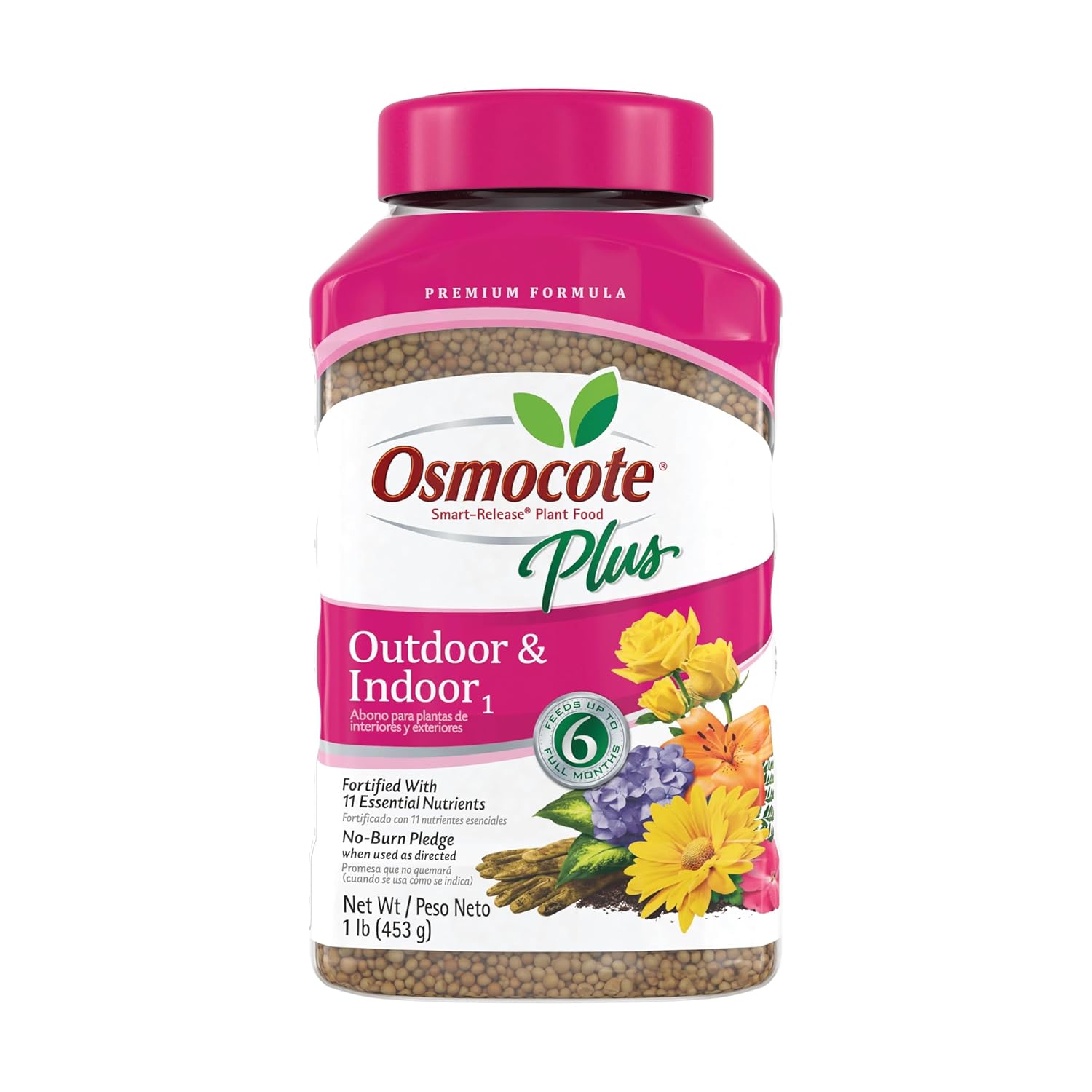
Osmocote Smart-Release Plant Food Plus Outdoor & Indoor, 1 lb
| Unit Count | 16 Ounce |
|---|---|
| Item Form | Granules |
| Application Method | sprinkle around the base and work into the soil |
| Coverage | Full |
| Specific Uses For Product | Plant Food |
Osmocote Smart-Release Plant Food Plus is a granular slow-release fertilizer designed to feed a wide range of outdoor and indoor plants for up to six months from a single application. Each granule is resin-coated to control nutrient release so plants receive steady nutrition rather than quick spikes. It is applied by sprinkling and mixing into the top 1 to 3 inches of potting mix or garden soil and then watered in; for containers the manufacturer gives a scoop-per-pot guideline and recommends halving the rate indoors. Practical benefits include reduced feeding frequency, compatibility with flowers and vegetables, and a no-burn pledge when used as directed, which makes it forgiving for regular garden use. Limitations are that you must follow the specified application rates and reapply only every six months for continued results, and a small 1 pound container covers a modest area so frequent repurchasing is likely for larger geranium plantings. The product is simple to use and effective for steady growth and bloom production when managed to the recommended schedule.
Best for: Gardeners who prioritize steady, reliable plant performance and want to minimize feeding chores for geraniums in containers or garden beds.
Less Ideal for: Growers needing fast-correcting, high-salt fertilizers for acute nutrient deficiencies or those who prefer liquid feeding routines for frequent nutrient adjustments.
- Resin-coated granules deliver controlled, continuous nutrient release for up to six months
- Formulated with 11 essential nutrients suitable for flowers, vegetables, shrubs, and container plants
- Simple sprinkle-and-mix application that reduces the need for frequent fertilizing
- No-burn pledge when used as directed makes it forgiving for common application mistakes
- 1 lb container covers a limited area so larger beds or many pots require multiple purchases
- Fixed slow-release formula offers less immediate correction for severe nutrient deficiencies
Verdict: Use this resin-coated slow-release fertilizer when you want reliable six-month feeding to keep geraniums blooming with minimal fuss.
ferti-lome Geranium, Hanging Basket and Pansy Plant Food (1.5 lb)

| Item Form | Powder |
|---|---|
| Application Method | Soil drench and foliar spray |
| Target Species | Geraniums, Hanging baskets, Pansies |
| Unit Count | 24 Ounce |
This powdered plant food is formulated specifically for geraniums, hanging baskets and pansies and is sold in a concentrated 1.5 pound package. It is mixed into water and applied primarily as a soil drench, though it can also be used as a foliar spray, which makes it useful for regular feeding of container and patio plants. The label lists a simple mixing ratio and the powder form stores easily without leakage or bulk runoff common with liquids. Practical benefits include targeted nutrition for flowering ornamentals and a medium coverage suitable for several containers or a small group of beds. Limitations are that the product information is basic on nutrient breakdown and coverage estimates, so you will need to follow label directions carefully and may want to supplement with a balanced feed for other plant types. For gardeners who want a straightforward, concentrated feed for geraniums and similar plants, this is an efficient option.
Best for: Gardeners who want a no-nonsense, concentrated feed to keep potted geraniums and hanging baskets blooming without fuss and who prefer a product optimized for ornamental flowers.
Less Ideal for: Growers looking for a multi-purpose, fully specified fertilizer for mixed beds or vegetable gardens should choose a balanced formula with a clear nutrient label.
- Concentrated powder form stores compactly and is less messy than many liquids
- Formulated specifically for geraniums, hanging baskets and pansies
- Can be applied as a soil drench or foliar spray for flexible feeding
- Simple mixing ratio that makes routine applications easy
- Product information does not list a detailed nutrient analysis on the provided data
- Coverage described only as medium, so exact number of containers per package is unclear
Verdict: A compact, concentrated powder feed tuned for geraniums and hanging baskets that makes regular flowering maintenance simple and low-effort.
TPS Nutrients Geranium Liquid Fertilizer, 8 oz

| Unit Count | 8 Fluid Ounces |
|---|---|
| Brand Name | TPS NUTRIENTS |
| Best For | Geraniums and container flowering plants |
| Usage Frequency | Apply every 1-2 weeks |
This 8 oz liquid geranium fertilizer from TPS Nutrients supplies a balanced, bloom-focused feed for potted geraniums and other container flowering plants. It is mixed into water at small doses (manufacturer guidance shows about 1 teaspoon per gallon for similar sizes) and applied on a regular schedule to encourage repeat flowering, stronger roots, and healthier foliage. Practical benefits include a fast-acting, easy-to-measure liquid form that is convenient for indoor and patio containers where precise feeding matters. The product is positioned for regular use during the growing season to maintain steady bloom production rather than a one-time boost. Limitations to consider are the small bottle size, which will be used up quickly if you care for many plants, and the need to follow dilution instructions closely to avoid overfeeding. There is no explicit long-term feeding plan included on the label text provided, so you'll want to integrate this into your existing fertilization routine rather than rely on it as a complete seasonal program.
Best for: Gardeners who want an easy-to-use liquid feed to keep geraniums and other container flowers blooming regularly and who prioritize straightforward application over bulk supply.
Less Ideal for: Large-scale gardeners or landscapers who need bulk fertilizer solutions for many plants or long feeding intervals should consider larger concentrates or granular options.
- Balanced NPK aimed at flowering plants to support blooms and foliage
- Liquid concentrate for easy mixing and precise dosing
- Suitable for indoor and outdoor containers and garden beds
- Fast-acting formulation that encourages repeat blooming
- Small 8 oz bottle may require frequent replacement for larger collections of plants
- Label information in the provided data lacks a full seasonal feeding schedule
Verdict: A convenient liquid concentrate that makes it simple to keep potted geraniums blooming for gardeners who value ease of use and targeted bloom support.
Voluntary Purchasing Group Water-Soluble Geranium & Pansy Plant Food, 16 fl oz (2-Pack)

| Item Form | Liquid |
|---|---|
| Application Method | Water Soluble |
| Specific Uses For Product | Plant Food |
| Target Species | Geranium Hanging Plant and Pansy |
| Unit Count | 16 Fluid Ounces |
This is a simple, water-soluble liquid fertilizer formulated specifically for geraniums and pansies and sold as two 16-ounce units. You mix it with water according to the package directions and apply it to soil or container plants to supply regular nutrition. The product’s targeted formulation and medium coverage make it practical for hanging baskets and potted displays where consistent feeding helps blooms and foliage. Because it is water soluble it dissolves quickly and feeds plants more immediately than granular options, which is helpful during the growing season. Limitations are that the label gives only basic application guidance and the product listing does not provide a detailed N-P-K ratio, so users who need precise nutrient levels for corrective feeding may prefer a fertilizer with full analysis printed. For gardeners looking for an easy, reliable monthly feed for geraniums and pansies, this delivers straightforward liquid nutrition in a convenient two-pack.
Best for: Gardeners who want a no-fuss, plant-specific liquid feed to keep geraniums and pansies blooming without needing to research precise nutrient blends.
Less Ideal for: Growers seeking a fertilizer with a full, labeled nutrient analysis for corrective or precision feeding should consider alternatives with complete N-P-K and micronutrient information.
- Formulated specifically for geraniums and pansies which simplifies choice for those plants
- Water-soluble liquid that mixes quickly and delivers nutrients promptly to roots
- Sold as a two-pack providing extra supply for regular feeding cycles
- Medium coverage suitable for hanging baskets and potted plants
- No detailed N-P-K analysis provided in the product information
- Mixing ratio listed but limited application guidance may require users to estimate dosing frequency
Verdict: Choose this water-soluble, geranium- and pansy-focused liquid feed if you want a straightforward, reliable fertilizer to keep container and hanging plants blooming.
ferti-lome All Purpose Water Soluble Plant Food 20-20-20, 3 lb

| Item Form | Granules |
|---|---|
| Application Method | soil drench and foliar spray |
| Target Species | Geraniums, Pansies, Petunias, Impatiens, annuals, perennials, hanging baskets |
| Mixing Ratio | Soil 1-2 tsp/gal; Foliar 1/4-1 tsp/gal |
| Unit Count | 48 Ounce |
This balanced 20-20-20 water-soluble plant food is built for fast feeding of geraniums and other flowering annuals and perennials. It dissolves for use as a soil drench or a foliar spray, with mixing directions for routine maintenance and quick pick-me-ups. Typical use is two to four weekly light feedings during the active growing season, mixing 1 to 2 teaspoons per gallon for soil and 1/4 to 1 teaspoon per gallon for foliar applications. The formula supports steady leaf and flower development and is suitable for hanging baskets and patio containers where frequent, controlled feeding matters. Because it is granular and concentrated, a little goes a long way and it is easy to measure for repeatable results. Limitations to note are that it is a general-purpose balanced formula rather than a bloom booster tuned specifically for geraniums, and foliar application requires careful dilution and timing to avoid leaf burn in hot sun. For gardeners who prefer straightforward, fast-acting soluble feedings, this is a reliable everyday option.
Best for: Gardeners who want a reliable, easy-to-mix soluble feed for regular maintenance of geraniums and other patio or container flowers, and who value proven performance and straightforward instructions.
Less Ideal for: Growers seeking a specialty bloom-enhancing fertilizer formulated to push maximum flower size and color should consider a product with a higher phosphorus or flowering-specific blend.
- Balanced 20-20-20 NPK formula supports both foliage and flower growth
- Water-soluble granules mix quickly for soil drenches or foliar sprays
- Clear mixing ratios let you repeat feedings consistently
- Suitable for a wide range of flowering annuals and hanging baskets
- Not formulated specifically as a bloom-boosting high-phosphorus fertilizer
Verdict: A dependable, easy-to-use 20-20-20 soluble fertilizer for routine feeding of geraniums and container flowers.
Choosing the Right Fertilizer for Geraniums: Key Factors to Consider
Nutrient Ratio and Timing
Geraniums need a balanced approach to feeding. A moderate nitrogen level supports healthy foliage without encouraging weak, spindly growth, while higher phosphorus helps develop flower buds. Look for fertilizers where the N-P-K ratio reflects bloom encouragement rather than leafy green growth alone.
Timing matters too. During active bloom cycles, a regular feeding schedule keeps flowers consistent. Slow-release formulas provide a steady nutrient supply over weeks to months, while liquid or soluble feeds let you boost nutrients quickly when plants show signs of dropping blooms or pale leaves.
Formulation Type
Fertilizers come as granules, slow-release spikes, water-soluble powders, and liquid concentrates. Each type behaves differently in a garden setting. Granules and spikes are convenient for in-ground beds and larger containers because they reduce the need for frequent dosing.
Water-soluble and liquid feeds offer faster correction when plants need a nutrient boost and are easier to measure for small pots. Consider how often you want to feed and how much control you want over dose strength when choosing a formulation.
Container Vs In-Ground Use
Many geraniums live in containers where nutrients wash out with regular watering. Container-grown plants usually need more frequent feeding than those in amended garden beds. Selecting a product labeled for containers or with clear dilution instructions helps prevent underfeeding or salt buildup.
For in-ground plantings, choose a fertilizer that disperses well through watering and complements soil organic matter. In beds, pairing a balanced fertilizer with seasonal compost can maintain long-term fertility without overreliance on concentrated feeds.
Ease of Application and Dosing Accuracy
Practical gardeners prefer fertilizers that are simple to measure and apply. Clear labeled dosages, measured scoop sizes, or pre-measured packets reduce mistakes. Liquid concentrates with measured caps or water-soluble packets minimize guesswork for small pots.
Also consider how the feed fits into your routine. If you water frequently, a fertilizer designed to be applied with each watering or every few waterings will be easier to maintain than one requiring weekly separate applications.
Salt Index and Plant Safety
Fertilizer salts can build up in container media and damage roots. Products with lower salt indices or those formulated specifically for container ornamentals lower the risk of salt burn. Rinsing soil occasionally or doing a thorough flush helps, but choosing a gentler formulation reduces the need for corrective steps.
Plant safety also includes pH considerations. Some formulations can shift substrate pH over time; choosing a neutral or labeled pH-safe option helps geraniums maintain nutrient uptake and prevents leaf discoloration or stunted growth.
Environmental and Handling Concerns
Consider how easy the product is to store and handle safely. Concentrated liquids and soluble powders require careful measurement to avoid spills, while solid slow-release forms are lower risk for accidental over-application. Biodegradable or lower-chemical options appeal to gardeners who want reduced runoff risk.
Also think about runoff from balconies or patios. Selecting a fertilizer with controlled-release properties or applying conservative liquid doses helps protect surrounding plants and local water features.
Feeding Schedules for Different Growing Situations
Container geraniums and basket plantings often need more frequent feeding than in-ground beds because regular watering leaches nutrients. For containers, a lighter liquid feed every one to two weeks or a slow-release product designed to last six to eight weeks typically keeps blooms steady.
In-ground geraniums in amended soils may only require monthly feeding or a seasonal granular application to maintain vigor. Adjust frequency based on bloom counts and leaf color; fewer blooms or pale leaves usually indicate a need to increase feeding frequency or strength.
- Weekly light liquid feed for heavily watered pots
- Slow-release granules for low-maintenance beds
- Flush containers periodically to prevent salt buildup
Adjusting Feed Strength by Season
Elevate bloom-focused feeding in peak flowering months and scale back in late season. Geraniums slow growth as daylight shortens, so reduce nitrogen-heavy feeds in late summer and early fall to avoid stimulating brittle new growth before cold weather.
During re-potting or after pruning, a slightly higher help from a balanced soluble feed can support recovery, but avoid over-fertilizing stressed plants. Ease back to maintenance levels once new growth appears healthy.
- Higher bloom boost during spring and early summer
- Lower doses as plants enter dormancy or slow growth
Recognizing Nutrient Deficiencies and Excesses
Yellowing leaves, reduced bloom counts, or weak stems can indicate specific nutrient issues. For example, very pale leaves with green veins often point to iron or micronutrient problems, while overall pale growth may signal insufficient nitrogen or an imbalanced formula.
Conversely, lush leafy growth with few flowers suggests too much nitrogen relative to phosphorus. Spot symptoms early and adjust the feeding type or schedule rather than simply increasing dose frequency.
- Pale leaves with green veins may need micronutrients
- Excess leaf growth with poor flowering indicates high nitrogen
Combining Fertilizers With Soil Amendments
Fertilizers work best when soil structure and organic matter are in good condition. Mixing compost into garden beds improves water retention and slow-release nutrient availability, complementing granular or slow-release fertilizer choices.
For containers, fresh potting mix with incorporated slow-release granules reduces the need for frequent liquid feeding. Avoid doubling up feeds when adding compost and commercial fertilizers; account for the nutrient contribution of any organic amendments before applying additional fertilizer.
- Incorporate compost to improve long-term fertility
- Adjust fertilizer schedule after re-potting or fresh mulch application
Practical Application Tips
Always follow label dilution rates and measure carefully, especially with concentrated liquids. Apply feeds to moist soil to prevent root irritation and reduce the risk of fertilizer burn.
Rotate between a steady-release base feed and a bloom-boosting soluble feed during peak season for the best balance of steady growth and abundant flowers.
- Apply to moist soil, not directly to dry roots
- Measure doses precisely to avoid salt buildup
How We Chose the Best Fertilizer for Geraniums
We focused on fertilizers that address the specific needs of geraniums: steady bloom production, strong foliage without excessive legginess, and compatibility with container and in-ground planting. Selection began with formulations labeled for flowering annuals or container ornamentals, then filtered for clear N-P-K ratios suited to geranium growth habits and for application versatility. We prioritized products that offer predictable release or dosing, straightforward directions, and proven compatibility with common potting mixes and garden soils. Exclusions included feed options intended only for lawns, broad-spectrum garden amendments without specific bloom-focused nutrients, and specialty products that require complex soil testing or professional application. Key dimensions that determined inclusion were nutrient balance and formulation type, ease of application and dosing accuracy, suitability for containers and beds, and documented gardener-friendly handling and safety. We also considered how easily a feed integrates into regular watering routines and whether it avoids promoting excessive vegetative growth at the expense of flowers.
FAQ
How often should I feed geraniums in pots?
Potted geraniums usually do best with a light liquid feed every one to two weeks or a slow-release product that lasts six to eight weeks. Frequency depends on pot size, watering habits, and whether the potting mix contains incorporated slow-release nutrients.
What N-P-K ratio is best for encouraging blooms?
Geraniums typically respond well to a balanced formula with moderately higher phosphorus relative to nitrogen, rather than extremely high nitrogen. Look for formulations intended for flowering annuals or container ornamentals and adjust slightly if plants show too much leafy growth.
Can I use a general-purpose houseplant fertilizer on geraniums?
Often you can, but check the ratio and strength. Houseplant feeds sometimes favor foliage growth. If you use a general-purpose product, reduce strength and monitor bloom performance, switching to a bloom-focused feed if flowers decline.
How do I avoid fertilizer burn in small containers?
Prevent burn by applying fertilizer to already-moistened soil, using lower-strength solutions, and flushing containers with clear water occasionally to remove accumulated salts. Choosing a low-salt or slow-release formulation also reduces risk.
Should I change feeding when I overwinter geraniums indoors?
Yes. Dormant or semi-dormant plants need much less feeding. Reduce frequency and concentration of feeds while plants are resting and resume regular schedules once active new growth appears in spring.
Are organic fertilizers suitable for geraniums?
Organic options can work well, especially when combined with compost or well-draining potting mixes. They tend to release nutrients more slowly, so expect a gentler, longer-term effect rather than an immediate bloom boost.
Final Verdict
Prioritize a fertilizer that matches your geraniums' growing situation: containers typically need more frequent, lower-dose feeding, while in-ground plants benefit from less frequent, steady nutrition. Balance nutrient ratios to favor bloom production without encouraging weak, leafy growth. Tradeoffs include convenience versus control and immediate correction versus longer-term stability. Choose the feeding method that fits your routine and be ready to adjust strength or frequency based on plant response.
