

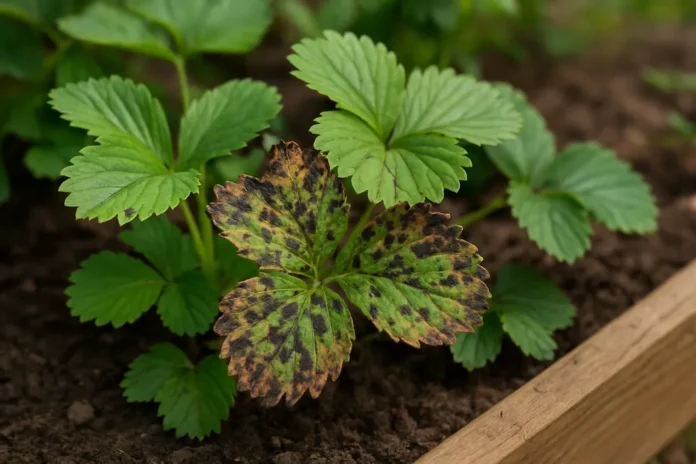
Strawberry leaves usually turn black because of fungal or bacterial disease, cold damage, overwatering, or leaf burn from chemicals or fertilizer. The exact cause often shows up in the pattern, whether it starts as spots, scorched edges, or whole darkened leaves.
Seeing strawberry leaves turning black can be alarming, especially when the plants looked fine just a few days earlier. In my garden, this symptom usually falls into one of a few buckets: a leaf spot disease, cold injury, roots staying too wet, or some kind of burn from sprays, fertilizer, or intense sun after stress.
The key is not just the color, but how the blackening starts. Tiny dark spots with pale centers suggest disease. Blackened edges after a cold night point more toward frost. Entire leaves collapsing on soggy plants often trace back to root trouble. Once you learn those patterns, it gets much easier to choose the right response and avoid making the problem worse.
What Black Strawberry Leaves Are Telling You
Black tissue on strawberry leaves is a sign that the leaf has been badly damaged or killed. Sometimes the tissue dries out and looks crisp, almost scorched. Other times it stays soft, water-soaked, or blotchy. That difference matters because dry black tissue often points to burn or cold, while wet-looking dark patches lean more toward rot or infection.
Before treating anything, look at three things: where the damage starts, whether old or new leaves are affected first, and what the weather has been doing. A plant that blackens after rainy, humid weather is a different story from one that darkens after a freeze or after a strong feeding.
- Black spots on otherwise green leaves often suggest fungal or bacterial leaf disease.
- Black edges or tips often suggest cold, drought stress, salt buildup, or fertilizer burn.
- Blackened whole leaves or crowns can point to severe root stress, rot, or winter injury.
- Leaves that turn dark after spraying may be suffering from chemical phytotoxicity.
When I diagnose strawberries, I rarely judge by a single leaf. I compare older outer leaves, newer center growth, and the crown. If only the oldest leaves are marked, the plant may recover quickly. If the center growth is blackening too, I start worrying about crown or root problems.
Leaf Spot and Leaf Blight Are Common Causes
Several fungal diseases can make strawberry leaves look black or nearly black, especially in wet weather. Two of the most common are leaf spot and leaf blight. These diseases often start as small purple, reddish, or dark spots, then expand, merge, and leave larger dead patches. On some varieties, those lesions get dark enough that the leaf looks peppered or scorched.
How Leaf Spot Usually Looks
Classic strawberry leaf spot often begins as small purplish flecks on the upper leaf surface. As they mature, the centers may turn tan, gray, or almost white while the borders stay dark purple to black. If there are many spots, the leaf can look ragged and burned.
How Leaf Blight Usually Looks
Leaf blight tends to create larger V-shaped or irregular brown to black lesions, often starting near the leaf edge. In humid conditions, these patches spread quickly. Whole leaflets may darken and dry out, especially on crowded plants with poor airflow.
- Spots increase after rain, overhead watering, or heavy dew.
- Lower and older leaves are often hit first.
- Plants may still produce new growth even while older leaves worsen.
- Beds with dense mulch touching leaves or lots of old debris tend to have more disease pressure.
If disease is the cause, remove the worst infected leaves, clean up fallen debris, and improve airflow around the plants. Water at soil level rather than overhead. In home gardens, sanitation and spacing often do more good than repeated spraying. If disease pressure is severe and keeps returning, a labeled fungicide for strawberries may be worth considering, especially during extended wet periods.
Angular Leaf Spot Can Darken Leaves Fast
Angular leaf spot is a bacterial disease that can make strawberry leaves develop water-soaked lesions that later look dark brown to black. The spots are often limited by the leaf veins, so they appear blocky or angular rather than round. In the right light, early lesions can look translucent before they darken.
This disease is more likely in cool, wet weather and where leaves stay damp for long periods. Splashing water spreads it easily. Unlike some nutrient or burn issues, bacterial spotting tends to have a more defined lesion pattern rather than a uniform edge scorch.
- Spots often look water-soaked at first.
- Lesions are angular because veins limit their spread.
- Wet, cool weather usually makes it worse.
- Overhead irrigation can spread it through the patch.
There is no simple cure once bacterial spotting is established on a leaf. The best approach is to remove badly affected foliage, avoid working in wet plants, reduce overhead watering, and keep the patch clean. If this problem repeats every year, resistant varieties and better spacing are usually more helpful than trying to rescue heavily infected leaves.
Cold Injury and Frost Damage Can Blacken Leaf Edges
Strawberries are hardy in many parts of the U.S., but tender new leaves are still vulnerable to sudden freezes, late frosts, and cold dry winds. After a cold event, leaves may look water-soaked first, then turn dark brown or black over the next day or two. Edges and exposed upper leaves often take the worst hit.
This kind of blackening is common in spring when plants have broken dormancy and started pushing lush new growth. It can also happen in containers, where roots and crowns are less insulated than plants in the ground.
- Damage appears suddenly after a cold night.
- Leaf edges, tips, and exposed top leaves are most affected.
- Tissue may look limp first, then black and dry.
- New center growth may remain alive if the crown was protected.
I do not rush to cut off every blackened leaf right after a frost. I wait a few days to see what the crown does. If fresh green growth starts from the center, the plant often recovers well, and I only remove tissue that is fully dead and easy to snip away.
Too Much Water Can Lead to Root Stress and Dark Foliage
Strawberries like steady moisture, but they do not like waterlogged roots. When soil stays saturated, roots struggle for oxygen and may begin to rot. The plant can no longer move water and nutrients properly, so leaves may wilt, collapse, or turn dark from the margins inward. In severe cases, whole leaves turn blackish and die.
Overwatering is especially common in containers without enough drainage, heavy clay beds, or low areas that stay wet after rain. The problem may look like drought at first because the top growth wilts, but adding more water only makes it worse.
Signs the Roots Are Involved
- Soil stays soggy for days rather than drying slightly at the surface.
- Leaves droop even though the bed is wet.
- Older leaves darken and collapse first.
- Plants seem stunted, and crowns may soften if rot is advanced.
If you suspect overwatering, let the soil breathe. Improve drainage, reduce irrigation frequency, and move container plants out of saucers filled with water. In garden beds, raised rows and lighter mulch around the crown can make a big difference. Once roots are severely damaged, the plant may not recover, but catching the issue early often saves it.
Fertilizer Burn and Salt Buildup Can Scorch Leaves Black
Strawberries do not need heavy feeding, and they can react badly to overdoing it. Too much fertilizer, especially fast-release synthetic products, can draw moisture out of the roots and cause leaf margins to burn. The earliest sign is often browning at the edges or tips, but on badly affected plants those areas can become very dark, almost black.
Container strawberries are more vulnerable because salts build up faster in potting mix than in open garden soil. This problem also shows up when liquid fertilizer is mixed too strongly or applied to dry soil.
- Blackening starts at tips or outer edges rather than as random spots.
- Damage may appear shortly after feeding.
- White crust on potting mix or container rims suggests salt buildup.
- New growth may emerge smaller or distorted if the roots were stressed.
If fertilizer burn is likely, flush container soil thoroughly with plain water and pause feeding for a while. In the ground, irrigate deeply to dilute salts if drainage is good. Going forward, feed lightly and only when plants are actively growing. I have found strawberries respond better to moderate, steady nutrition than to strong doses meant for heavy-feeding vegetables.
Spray Burn and Sun Scorch Can Mimic Disease
Not every black patch is caused by a pathogen. Oils, soaps, homemade sprays, and even some foliar fertilizers can injure strawberry leaves if applied in hot sun, at too strong a rate, or to drought-stressed plants. The tissue may first bleach, bronze, or look wet, then darken as it dies.
Sun scorch can also happen after plants are stressed by transplanting, root damage, or heat. In that case the darkening usually appears on the most exposed leaves rather than spreading leaf to leaf as an infection would.
- Damage appears soon after spraying or after a sudden heat spike.
- Upper exposed leaves are worse than shaded interior leaves.
- Patterns may match spray droplets or broad exposed surfaces.
- New leaves may come in normal once the stress passes.
If you suspect spray injury, stop using the product until the plants recover and review the label rate and timing. Apply only in cooler parts of the day and never to wilted plants. For sun scorch, focus on even moisture and reducing additional stress.
When the Crown Is Black, the Problem Is More Serious
Leaves are one thing, but if the crown itself is turning brown or black inside, the plant has a more serious problem. Crown rot and related root diseases can follow saturated soil, poorly drained beds, or infected nursery stock. Plants may look weak, with outer leaves darkening and collapsing while the center fails to push healthy growth.
A simple check is to look closely at the base of the plant. If the crown feels mushy, smells rotten, or shows dark internal tissue when split, recovery is unlikely. A healthy crown should be firm and pale inside.
If I see blackened leaves plus a soft crown, I stop trying to nurse that plant along. It is usually better to remove it, clean up the area, and protect nearby healthy plants by correcting drainage and watering habits.
- Remove and discard severely rotted plants.
- Do not compost obviously diseased crowns if your pile runs cool.
- Improve drainage before replanting in the same area.
- Use healthy certified plants next time to reduce disease carryover.
How to Tell Which Cause Is Most Likely
Because several problems can produce black strawberry leaves, it helps to match the symptom pattern to recent conditions. You do not need a lab test for every case. Most home gardeners can narrow it down by looking at timing, weather, and plant condition.
- Think about what happened just before the damage appeared. Frost, heavy rain, a fertilizer application, or a spray treatment are all strong clues.
- Look at whether the blackening is spotty, edge-based, or affecting whole leaves.
- Check if the problem started on older outer leaves or tender new center growth.
- Feel the soil. Soggy soil points you toward root stress, while normal soil with spotted leaves points more toward disease.
- Inspect the crown if the whole plant is declining.
If you are still unsure, avoid drastic action. Remove only clearly dead leaves, water carefully, and do not pile on multiple treatments at once. A plant's new growth over the next week or two often tells you more than the damaged leaves ever will.
What to Do Right Now to Help Your Strawberries Recover
Once leaves have turned black, that tissue will not become green again. The goal is to protect healthy leaves, encourage clean new growth, and stop the underlying cause. Start with the simplest fixes before reaching for stronger products.
- Trim off leaves that are fully black, collapsed, or clearly infected.
- Dispose of diseased debris instead of leaving it in the bed.
- Water at the soil line and only when the top layer begins to dry slightly.
- Thin crowded plants or runners to improve airflow.
- Pause fertilizer unless you are sure the plant is hungry rather than stressed.
- Protect plants from future frosts with row cover if cold damage is likely.
- Use a labeled fungicide or bactericide only when the symptom pattern and weather strongly suggest disease.
Most strawberry plants can outgrow a modest amount of leaf damage if the crown and roots remain healthy. If the center of the plant is still producing fresh green growth, recovery odds are good. If the crown is dark and soft, replacement is usually the better use of your time.
How to Prevent Black Leaves in the Future
Prevention with strawberries is mostly about keeping foliage dry, roots healthy, and plants uncrowded. In my experience, a clean, airy strawberry patch has far fewer black leaf problems than one that stays wet and overgrown.
- Plant in full sun with good airflow.
- Use well-drained soil or raised beds.
- Water early in the day and avoid wetting leaves whenever possible.
- Keep mulch under fruit and around plants, but do not pack it tightly against crowns.
- Remove old diseased leaves and debris after harvest or at seasonal cleanup.
- Feed lightly and avoid high-salt fertilizer routines.
- Cover blooming or tender spring growth when late frosts threaten.
- Start with disease-free plants from a reliable source.
A little routine observation goes a long way. Catching the first few spotted or scorched leaves is much easier than trying to revive an entire bed after the problem has spread.
FAQ
Should I Cut Off Black Strawberry Leaves?
Yes, if the leaves are fully black, dead, or heavily spotted with disease, it is usually best to remove them. Leave any leaf that is still mostly green and helping the plant, especially if the crown is recovering after cold stress.
Can Overwatering Make Strawberry Leaves Turn Black?
Yes. Waterlogged soil can suffocate roots and lead to rot, which often causes dark, collapsing leaves. This is especially common in containers or beds with poor drainage.
Will Black Strawberry Leaves Turn Green Again?
No. Black tissue is dead and will not recover. The plant's recovery depends on whether it can produce healthy new leaves from a sound crown.
Do Black Spots on Strawberry Leaves Mean Fungus?
Often they do, especially after humid or rainy weather, but not always. Bacterial diseases, frost injury, and chemical burn can also create dark patches that look similar at first glance.
Is It Safe to Eat Strawberries From Plants with Black Leaves?
Usually yes, if the fruit itself is healthy, firm, and free of mold or rot. Do not eat damaged or rotting berries, and always wash harvested fruit well.
Why Did My Strawberry Leaves Turn Black After a Cold Night?
That is often frost injury. Tender leaf tissue can freeze, then darken and die over the next day or two, especially on exposed top growth.
Can Too Much Fertilizer Cause Black Edges on Strawberry Leaves?
Yes. Excess fertilizer or salt buildup can burn leaf margins and tips, which may darken to deep brown or black in severe cases.
When Should I Replace a Strawberry Plant Instead of Treating It?
Replace it if the crown is soft, rotten, or black inside, or if the plant is not producing healthy new center growth. A firm crown with fresh green leaves still has a good chance of recovery.
Need help choosing the right treatment? Read our guide to the best fungicides and strawberry care products so you can act fast and save the rest of your patch.
