

Note: This article contains affiliate links. If you click on these links and make a purchase, I may earn a small commission at no extra cost to you. This helps support my research and content. Read my full affiliate disclosure here.
Choosing the right self-watering planter changes how often you water, how roots develop, and how well container plants withstand heat or travel absences. In patio pots, balcony boxes, or indoor containers the reservoir size, wick performance, and drainage behavior directly affect plant health. This guide shortlists seven top self-watering planters that suit different garden situations and explains the practical traits that matter in everyday use. We'll evaluate water storage, maintenance needs, materials, and plant compatibility so you can pick a solution that fits your space and routine.
Top Picks at a Glance
| Best Overall The best all-around choice for most situations | QRRICA 5-Piece Self-Watering Planter Set (10/9/8/7.5/7 in) |  |
| Best Quality Built to a higher standard if you want something more solid | Lechuza Balconera Color 80 Self-Watering Window Box Planter |  |
| Best Value The sweet spot between price and what you get | YNNICO 12-inch Self-Watering Plant Pot with Tray and Mesh |  |
| Best Budget The cheapest option that still gets the job done reliably | Utopia Home Self-Watering Indoor Plant Pots, Set of 5 (Small) |  |
| Highest Rated A top-rated pick with lots of positive feedback | VIVOSUN FlexFeed 4-Pack Self-Watering Irrigation Pots (with Tray) |  |
| Most Popular A crowd favorite that many people choose with confidence | Fielda 8/10/12 Inch Self-Watering Planter Set |  |
| Best Seller A high-volume bestseller chosen again and again | Bluepro Self-Watering Nursery Pots, Clear, 18-Pack (4/5/6.5 inch) |  |
QRRICA 5-Piece Self-Watering Planter Set (10/9/8/7.5/7 in)

| Material Type | Plastic |
|---|---|
| Other Special Features of the Product | Drainage Hole, Self Watering |
| Included Components | Saucer |
| Unit Count | 5 Count |
| Indoor Outdoor Usage | Indoor, Outdoor |
These QRRICA planters are a practical set for people who want low-maintenance container gardening. Each pot has a separate reservoir and a removable wick that draws moisture into the soil, so one fill typically sustains plants for about one to two weeks depending on conditions. The included saucers and mesh drainage holes keep excess water away from roots and protect surfaces, while the matte plastic bodies are lightweight for easy moving and rated for indoor and outdoor use. The range of five sizes covers small succulents up to larger houseplants such as pothos or small fiddle-leaf figs, making the set useful for repotting or grouping mixed plants. Expect the practical benefit of fewer waterings and less risk of overwatering, though the plastic construction is basic compared with ceramic or decorative planters and the aesthetic is simple rather than ornate. For busy owners or frequent travelers this set simplifies watering routines, but buyers who need premium finishes or very large containers should look elsewhere.
Best for: Gardeners who want a reliable, low-maintenance planter set to reduce watering chores and care for a mix of houseplants without fuss.
Less Ideal for: Shoppers seeking decorative, high-end planters or very large containers for big outdoor specimens should consider ceramic or larger commercial pots instead.
- Self-watering reservoir with removable wick reduces watering frequency
- Mesh drainage holes plus saucers protect roots and surfaces from excess moisture
- Five sizes in one set cover a broad range of plant types and repotting needs
- Lightweight recyclable plastic is easy to move and suitable for indoor or outdoor use
- Basic plastic finish that may not suit decorative or high-end indoor interiors
- Reservoir capacity and refill interval vary with plant size and environment so monitoring is still required
Verdict: A practical five-piece self-watering set that eases plant care for busy owners by cutting watering frequency and protecting roots.
Lechuza Balconera Color 80 Self-Watering Window Box Planter

| Capacity | 12 liters |
|---|---|
| Other Special Features of the Product | Drainage Hole, Self Watering |
| Mounting Type | Indoor,Outdoor |
| Material Type | Plastic |
The Lechuza Balconera Color 80 is a purpose-built self-watering window box that simplifies container gardening on balconies and railings. It uses an internal water reservoir and a visible water-level indicator so plants draw moisture as needed, which reduces how often you must water and helps avoid drought stress for annuals, herbs and flowering foliage. The planter ships with an easy-to-lift planted liner so you can plant on the ground and then insert the liner into the mounted box, which makes installation and maintenance much easier. Built-in drainage and a removable plug let you clear excess rain when used outdoors, and the included LECHUZA-PON substrate separates soil from the reservoir to keep roots aerated. The plastic construction and matte finish resist weathering, but the planter is a single-piece box so heavy plantings may need extra support if hung using brackets sold separately. Expect straightforward, low-maintenance performance for balcony and deck plantings with fewer missed waterings, though you will need to buy mounting brackets separately for railing installation.
Best for: Buyers who want a performance-focused, low-maintenance balcony or railing planter that minimizes daily watering and makes planting and upkeep simple.
Less Ideal for: People who need an all-in-one hanging system right out of the box or those planning extremely heavy, large rootball plantings that require rigid structural support.
- Reliable self-watering reservoir with visible water-level indicator for easy monitoring
- Removable planted liner simplifies planting and replanting without lifting the full box
- Drainage plug allows removal of excess rainwater when used outdoors
- Includes LECHUZA-PON substrate to separate soil from reservoir and improve root aeration
- Mounting brackets for railing or wall installation are sold separately
- Made of plastic so it may flex under very heavy soil loads
Verdict: Choose the Balconera Color 80 if you want a high-performance self-watering balcony planter that cuts watering frequency and makes planting and maintenance much easier.
YNNICO 12-inch Self-Watering Plant Pot with Tray and Mesh

| Material Type | Recycled post-consumer Polypropylene (RM0205) |
|---|---|
| Other Special Features | Drainage Hole, Lightweight, Self Watering |
| Included Components | Tray, Mesh |
| Indoor Outdoor Usage | Indoor, Outdoor |
This YNNICO 12-inch planter is designed to simplify container gardening with a built-in self-watering reservoir, mesh drainage at the base, and a removable tray for bottom watering or catchment. Typical use is straightforward: pot your plant in the deep planting space, use the mesh-lined drainage holes to keep soil aerated, and water into the tray or top as needed so excess drains into the reservoir. The recycled polypropylene construction keeps the pot light for easy repositioning while the glossy finish gives a clean modern look for patios, balconies, or interiors. Practical benefits include reduced risk of overwatering, less frequent top-up watering thanks to the reservoir, and easy cleaning because the tray and mesh are removable. Limitations are that the plastic construction is not weighty like ceramic so it can tip with tall plants in windy outdoor spots and the capacity spec is limited, so very large specimens or heavy wet soils will need larger containers or additional stabilization. For gardeners who want low-maintenance pots with reliable drainage, this model makes routine care easier.
Best for: Buyers who prioritize low-maintenance, efficient care and want a moveable self-watering pot that cuts down daily watering and protects roots from overwatering.
Less Ideal for: Gardeners who need heavy, decorative ceramic planters for stability or those growing very large shrubs that require bigger, higher-capacity containers.
- Integrated self-watering reservoir reduces how often you need to water
- Mesh drainage holes improve soil aeration and help prevent waterlogging
- Lightweight recycled polypropylene construction makes it easy to move
- Removable tray and mesh facilitate bottom watering and simple cleaning
- Light plastic body can be prone to tipping with tall or top-heavy plants
- 12-inch capacity may be small for very large specimens or heavy soils
Verdict: A practical, lightweight self-watering planter that reduces watering chores and keeps roots healthy for time-conscious plant owners.
Utopia Home Self-Watering Indoor Plant Pots, Set of 5 (Small)
| Set count | 5 Count |
|---|---|
| Special feature | Self Watering |
| Mounting type | Tabletop |
| Indoor/outdoor usage | Indoor |
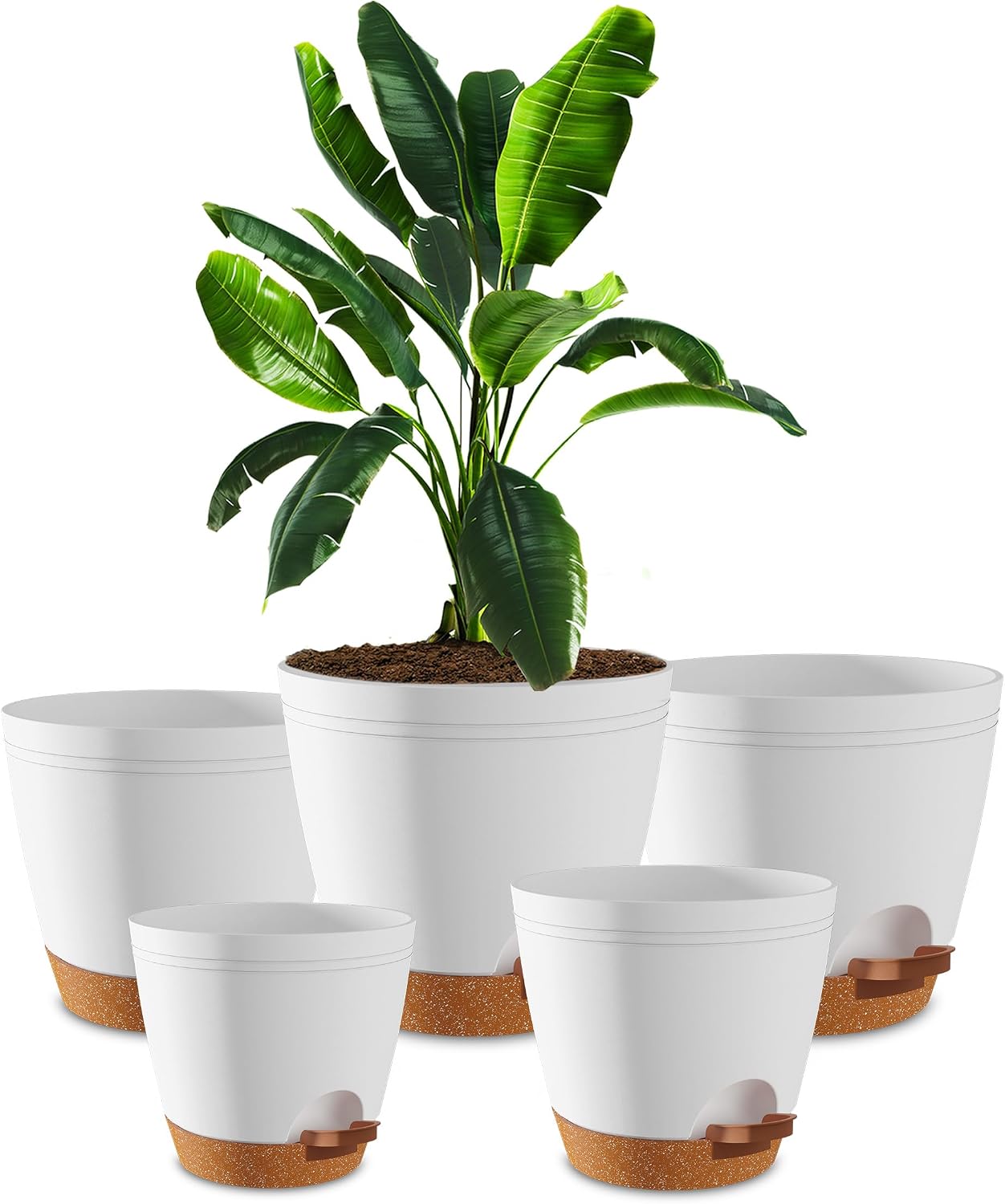
These Utopia Home planters are a practical, budget-friendly set of five small self-watering pots intended for indoor use. Each pot includes a removable reservoir and drainage to keep roots moist without sitting in water, which helps reduce overwatering for succulents, herbs and young plants. The set covers a range of compact sizes so you can pot multiple seedlings or group different plants on a windowsill or desk. Made from lightweight plastic with a matte finish, the pots are easy to move and simple to wipe clean. Because they are tabletop planters with single-level construction they work best for small root systems rather than large houseplants. They do not list heavy-duty materials or advanced wicking components, so longevity will depend on care and exposure to sunlight. For someone replacing nursery pots or looking for low-effort indoor containers, these deliver straightforward self-watering functionality at a low cost, though buyers seeking decorative ceramic looks or larger durable planters should consider alternatives.
Best for: Buyers looking for an inexpensive, low-maintenance way to keep small indoor plants healthy—ideal for beginners, apartment gardeners, or anyone replacing nursery pots for herbs and succulents.
Less Ideal for: Not a good fit for growers who need large, decorative ceramic or long-term heavy-duty outdoor planters or who maintain large-rooted houseplants.
- Self-watering reservoir reduces frequent watering and helps prevent overwatering
- Includes five graduated sizes suitable for seedlings, succulents and small herbs
- Drainage and airflow design supports healthy root aeration
- Lightweight plastic construction makes pots easy to move and clean
- Matte finish provides a clean, neutral look that fits many interiors
- Small sizes limit use to compact plants and young starters
- Plastic construction is less premium and may fade or scratch over long outdoor exposure
Verdict: An affordable, no-fuss set of small self-watering pots that keeps succulents and herbs hydrated with minimal effort.
VIVOSUN FlexFeed 4-Pack Self-Watering Irrigation Pots (with Tray)

| Capacity | 1.3 gallons |
|---|---|
| Included Components | Tray, 4-Pack |
| Item Type Name | Self-watering Irrigation Pot |
| Item Highlight | Water Meter & Maintenance Window, for Use Indoors in Grow Tents/Outdoors |
These FlexFeed self-watering pots act as raised irrigation bases for fabric grow bags, providing a 1.3 gallon reservoir under each pot that supplies water to plants for up to a week. You set the grow bag on the elevated drain plate, fill the reservoir through the maintenance window, and use the clear water meter to monitor levels so you add water only when needed. Notable features include a gridded maintenance window for easy pH or EC testing, an elevated plate with drainage grooves to keep roots from sitting in runoff, and a sturdy glass fiber reinforced polypropylene construction built for repeated use. In practice this means steadier moisture for container-grown vegetables, herbs, or houseplants and less daily attention during busy weeks or short trips. The main limitations are reservoir size—useful for short absences but not multiweek unattended growing—and that the system is designed to pair with fabric pots rather than replace a full irrigation setup for larger beds. For gardeners who prioritize consistent watering and durability, these make an effective, low-maintenance hydration base.
Best for: Gardeners who want a dependable, low-maintenance way to keep container plants consistently watered while minimizing daily checks and maintenance.
Less Ideal for: Those needing long-term, hands-off irrigation for large plantings or growers who require a full automated drip system for many containers.
- Integrated 1.3 gallon reservoir supplies multi-day watering without daily refills
- Clear water meter lets you see reservoir level at a glance
- Maintenance window provides easy access for topping up and testing pH/EC
- Elevated drain plate with grooves prevents root soaking and channels excess to the basin
- Durable glass fiber reinforced polypropylene construction built for repeated use
- Reservoir capacity is limited to short absences rather than multiweek unattended periods
Verdict: Buy these if you want a rugged, easy-to-monitor self-watering base that reliably keeps fabric potted plants hydrated for several days with minimal fuss.
Fielda 8/10/12 Inch Self-Watering Planter Set

| Included Components | Saucer, Water Level Indicator Window |
|---|---|
| Capacity | 2.5 gallons |
| Material Type | Plastic |
| Indoor Outdoor Usage | Indoor, Outdoor |
These Fielda planters are a practical self-watering set for anyone who wants lower-maintenance container gardening. Each pot has a deep reservoir and an absorbent cotton wick that draws water up to the root zone, while a transparent water-level window lets you check reservoir volume without disturbing the plant. Detachable saucers and multiple drainage holes simplify cleaning and prevent overwatering, and the thicker plastic walls make the pots durable for both indoor and outdoor placement. In real use they keep soil evenly moist for roughly a week for typical houseplants, which is convenient for busy schedules or short trips. Limitations to note are the reduced usable planting depth because of the reservoir and the lightweight plastic construction, which can tip with very top-heavy plants in windy outdoor spots. The design is straightforward to set up and maintain, and the visible indicator and removable tray make it easy to avoid waterlogging while reducing daily watering chores.
Best for: Buyers who want a low-maintenance, reliable self-watering solution that visibly shows reservoir status and simplifies weekly care for common houseplants and balcony pots.
Less Ideal for: Growers needing maximum root depth for large specimen plants or those who prefer heavy, terracotta-style pots for stability and aesthetic weight.
- Self-watering reservoir with cotton wick delivers consistent moisture to roots for up to 7–10 days
- Transparent water-level window provides easy visual monitoring without moving the pot
- Removable saucer tray and multiple drainage holes simplify cleaning and prevent waterlogging
- Durable, high-temperature-resistant plastic resists fading and cracking for indoor or outdoor use
- Reservoir reduces usable planting depth compared with a regular pot of the same outer size
- Lightweight plastic can be prone to tipping with large, top-heavy plants in windy conditions
Verdict: A convenient, visible self-watering planter set that cuts down weekly watering while working reliably for typical houseplants and balcony containers.
Bluepro Self-Watering Nursery Pots, Clear, 18-Pack (4/5/6.5 inch)

| Material Type | High Density Polyethylene (HDPE) |
|---|---|
| Other Special Features | Breathable, Drainage Hole, Self Watering, Variety Pack |
| Included Components | Tray, Watering Rope |
| Unit Count | 18 Count |
| Indoor Outdoor Usage | Indoor, Outdoor |
These Bluepro clear self-watering nursery pots are a practical kit for seed starting, propagation and temporary home for young plants. The set includes six 4-inch, six 5-inch and six 6.5-inch pots, each with a reservoir tray and a wick that draws water up into the growing medium. The clear plastic walls make it easy to monitor root development, soil moisture and reservoir level without disturbing plants, and built-in drainage holes plus flexible sides simplify transplanting. Because the wick-reservoir system can supply moisture for up to about a week under favorable conditions, these pots reduce daily watering while still letting you check moisture visually. They are made from HDPE so they clean up and reuse well, and the reinforced rims help when moving or lifting trays. Limitations to consider are that the clear plastic is intended for nursery use rather than decorative display and actual reservoir duration depends on plant size, soil mix and environment, so very thirsty plants or hot outdoor exposure will still need more frequent checks.
Best for: Buyers who want a low-effort, observable system for seed starting, propagation and temporary potting that minimizes daily watering while allowing visual checks of roots and moisture.
Less Ideal for: People seeking attractive display planters for finished houseplants or gardeners who need long-term, high-capacity watering for large, thirsty specimens.
- Wick-based reservoirs reduce how often you need to water for short periods
- Clear walls let you see roots, soil moisture and reservoir level without unpotting
- Includes three sizes (4, 5, 6.5 inch) to support multiple growth stages
- HDPE construction with reinforced rims cleans easily and is reusable
- Clear nursery-style pots are not designed as finished decorative planters
- Reservoir run-time varies widely with plant type and conditions and may be shorter than stated for larger or thirstier plants
Verdict: A dependable, observation-friendly self-watering nursery pot set that reduces daily watering for propagation and early-stage plants.
Choosing the Right Self-Watering Planter: Key Factors to Consider
Reservoir Size Relative to Plant Needs
Reservoir volume determines how long a planter can keep plants watered without topping up. Larger reservoirs are helpful for larger pots, thirsty plants, or gardeners who travel, but they also add weight and reduce soil volume if the reservoir footprint is large. Consider typical plant water use, pot dimensions, and how frequently you want to refill when judging reservoir size.
A deep reservoir paired with a reliable water-delivery path can support multi-day or week-long absences, while small reservoirs work well for small herbs or succulents where frequent checks are acceptable.
Method of Water Delivery to Roots
Self-watering planters use different ways to move water from the reservoir into the soil: wicking fabric, capillary matting, sub-irrigation tubes, or exposed soil columns. Each method affects moisture distribution, root development, and susceptibility to salt build-up.
Wicks and capillary systems provide consistent moisture but may struggle in very coarse mixes. Exposed columns or soil-fed reservoirs let roots grow toward the water but require good drainage to prevent saturation. Match the delivery method to the plants you grow and the soil mix you prefer.
Drainage, Overflow, and Root Aeration
Good drainage prevents root rot in a self-watering setup. Look for overflow ports and drainage holes that evacuate excess water during heavy rain or overfilling. Some planters separate the soil from the reservoir with a barrier that keeps media aerated while still allowing upward moisture movement.
Adequate air near the root zone supports healthy roots. Designs that trap water against the soil without aeration encourage shallow roots and disease. Ensure the planter you choose provides a balance between moisture retention and oxygen flow.
Material and UV/Frost Resistance
Materials affect longevity and maintenance. Molded plastics are lightweight and often UV-stabilized for long outdoor use, while glazed ceramics and fiberglass hold up differently to freezing temperatures. Thinner plastics can become brittle under prolonged sun exposure, while heavier materials may crack if water trapped inside freezes.
Choose a material suited to your climate and whether you plan to move the planter seasonally. Consider how surface finish affects water absorption, staining, and how easy the planter is to clean.
Maintenance Access and Ease of Cleaning
Regular maintenance keeps a self-watering planter working well. Easy access to refill points, removable reservoirs or inserts, and a design that allows flushing of salts and debris simplify upkeep. Without access, algae, mineral buildup, and root intrusion can reduce performance.
Think about how often you will dismantle and clean the reservoir and whether the planter design lets you do that without disturbing plants. Simpler cleaning reduces the long-term effort of using a self-watering system.
Which Plants Benefit Most From Self-Watering Planters
Self-watering planters suit many container-grown plants but are particularly helpful for those that prefer steady moisture, such as herbs, lettuces, many bedding annuals, and tropical houseplants. Plants that like drier conditions, like many cacti and some Mediterranean herbs, can still work if you use a fast-draining mix and a small reservoir.
For plants that need frequent, shallow watering cycles such as seedling flats or microgreens, choose shallow planters with thin reservoirs or skip a reservoir entirely. For larger shrubs or tomato plants, ensure the unit offers substantial reservoir capacity and a deep soil column so roots can develop normally.
- Herbs and lettuces: steady moisture improves flavor and yield.
- Tropical houseplants: consistent moisture reduces stress from indoor heating.
- Tomatoes and peppers: need larger reservoirs and good aeration.
- Succulents and cacti: use small reservoirs and very free-draining mixes.
Soil Mix and Potting Strategy for Best Results
A self-watering planter performs best with a well-structured potting mix that balances water retention and aeration. Lightweight mixes with added compost and a bit of water-retentive material such as coconut coir or peat-free alternatives help capillary systems work effectively. Avoid pure topsoil or heavy garden loam that can compact and block wicking action.
For heavier-feeding plants use a blend with slow-release nutrients or plan for scheduled fertilizing through the reservoir with dilute feed. Flush the reservoir periodically to prevent salt accumulation if you use tap water or liquid fertilizers.
- Use mixes designed for containers rather than garden soil.
- Adjust organic matter and drainage amendments to suit plant type.
- Plan regular reservoir flushing if you feed through the water supply.
Placement, Winter Care, and Mobility
Think about where the planter will sit through the seasons. Full-sun positions require larger reservoirs and more frequent monitoring during heat waves. If you move planters indoors for winter, empty and dry reservoirs first to avoid expansion and cracking from freezing water.
Mobility matters for heavy pots; consider models with integrated casters or lightweight materials if you plan to reposition containers for light or shelter. For permanent setups, ensure the drain and overflow locations will not cause water damage to decks or balconies.
- Full sun needs larger reservoirs or more frequent refilling.
- Empty reservoirs before freezing weather if bringing pots indoors is not possible.
- Use lighter materials or casters for frequent moves.
Common Problems and Simple Fixes
Algae growth in visible reservoirs is usually cosmetic but can indicate nutrient buildup. Cover exposed reservoirs or use opaque materials and clean periodically. If wicking slows, lift a portion of the soil and check for compaction or root intrusion and replace the wick or refresh the soil.
If plants show symptoms of overwatering such as yellowing leaves, check overflow channels and ensure the reservoir is not allowing constant saturation at the soil interface. Improving drainage or adding a soil amendment to increase aeration often resolves these issues.
- Algae: clean and cover reservoirs; flush periodically.
- Slow wicking: check for compacted media and refresh soil.
- Overwatering signs: inspect overflow and increase aeration.
Adapting Self-Watering Planters for Edible Containers
When using self-watering planters for edibles, pay attention to fertilizer strategy and root depth. Vegetables and herbs benefit from consistent moisture but can develop nutrient imbalances if you rely only on the reservoir for feeding. Use measured, diluted feed and flush the reservoir intermittently to avoid salt buildup.
Be conscious of food-safety practices: choose materials that will not leach harmful substances, and avoid using non-food-grade paints or coatings on interiors. Regular cleaning and replacing potting mix between seasons helps maintain a healthy edible container.
- Use measured fertilization and flush reservoirs occasionally.
- Select materials appropriate for edible crops.
- Replace potting mix between seasons to reduce pathogen and salt buildup.
How We Chose the Best Self-Watering Planter
We focused on features that matter most in everyday container gardening. Key evaluation criteria included reservoir volume and refill access for how long plants can go between top-ups, reservoir-to-root delivery methods such as wicks or sub-irrigation for consistent moisture, drainage and overflow design that prevents waterlogging, and material durability against UV and frost for season-long use. Usability factors were also weighed: how easy each unit is to fill and clean, whether soil or inserts are compatible, and whether the planter supports common plant sizes and root systems. We excluded products that lacked predictable reservoir performance, had no clear access to clean or refill the water chamber, or used materials likely to degrade quickly outdoors. Our selection favors planters that balance reliable delivery of moisture with maintenance practicality and solid construction. These are the dimensions that guided inclusion on the shortlist and that gardeners will notice most in real use.
FAQ
How often do I need to refill a self-watering planter?
It depends on reservoir size, plant water use, and weather. Small herb pots may need refilling every few days in hot weather while larger reservoirs can last a week or more. Check the water indicator if present and adjust based on plant appearance.
Can I use any potting mix in a self-watering system?
Not all mixes perform equally. Light, well-structured container mixes with some water-retentive components work best. Heavy or compacting soils can block wicks and reduce capillary action.
Will a self-watering planter prevent root rot?
A well-designed self-watering planter reduces drought stress but does not guarantee against root rot. Proper drainage, overflow features, and aerated soil are still necessary to prevent saturation and fungal problems.
Are self-watering planters suitable for indoor houseplants?
Yes. They are especially helpful for houseplants when you want consistent moisture between waterings or during travel. Ensure you choose a size and delivery method appropriate for the root habits of your houseplants.
How do I winterize a self-watering planter?
Empty and dry the reservoir before freezing weather if the planter will stay outdoors. Alternatively move the planter to a protected area. Drying prevents ice expansion that can crack components.
Final Verdict
For most gardeners a self-watering planter reduces daily watering chores while promoting steadier moisture that supports healthier roots. Prioritize reservoir size and reliable water delivery for your plant types, and check drainage and maintenance access to avoid common problems. Balance material durability with the planter's weight and mobility needs to match your location and climate. When choosing among options, pick the design that best fits your watering schedule and the plants you grow. That focus will deliver the biggest practical benefit from a self-watering system without adding maintenance headaches.
