

Note: This article contains affiliate links. If you click on these links and make a purchase, I may earn a small commission at no extra cost to you. This helps support my research and content. Read my full affiliate disclosure here.
A well-made wooden planter box can transform a patio, balcony, or backyard bed into a productive, attractive planting area. The right box protects roots, manages moisture, and fits the plants and space you have, so picking the right construction and size matters more than you might expect. This guide shortlists the top picks across common garden situations and explains how we evaluated each choice. We focus on construction, rot resistance, drainage, and practical features like liners and assembly. Read on to see the best wooden planter boxes for raised containers, compact patios, and longer-term plantings, and learn which attributes matter most when choosing one for your garden.
Top Picks at a Glance
| Best Overall The best all-around choice for most situations | Kdgarden 48" x 24" x 33" Raised Fir Wood Garden Bed with Legs |  |
| Best Quality Built to a higher standard if you want something more solid | Maple99 Cedar Raised Garden Bed with Legs, 48 x 24 x 30 |  |
| Best Value The sweet spot between price and what you get | MIXC Wooden Raised Garden Bed with Legs, 72" x 23" |  |
| Best Budget The cheapest option that still gets the job done reliably | windiy Rustic Pine Wooden Rectangular Planter Box with Removable Plastic Liner |  |
| Highest Rated A top-rated pick with lots of positive feedback | CONNOO 12‑Piece Wooden Cube Planter Boxes with Plastic Liners |  |
| Most Popular A crowd favorite that many people choose with confidence | Best Choice Products 48 x 24 x 30in Raised Fir Wood Garden Bed with Liner |  |
Kdgarden 48" x 24" x 33" Raised Fir Wood Garden Bed with Legs

| Material Type | Fir Wood |
|---|---|
| Capacity | 48 gallons |
| Number of Levels | 2 |
| Other Special Features | Drainage Hole |
| Indoor Outdoor Usage | Outdoor |
This Kdgarden raised garden bed is a straightforward wooden planter for backyard vegetable, herb, or flower growing that keeps beds off the ground to reduce bending and protect seedlings from pets. It is built from solid fir wood with a polished natural finish and arrives as a kit with an instruction manual for relatively simple assembly. The two-tier design gives a main planting box plus a lower storage shelf for tools or pots, and the unit includes a drainage hole to avoid waterlogging. Practical benefits include comfortable working height, weather-resistant wood suitable for outdoor use, and a roomy 48-gallon capacity that fits several plants or a short row of vegetables. Expect routine maintenance for longevity such as sealing or periodic refinishing if you want extended outdoor life. Also the planter is a single-piece kit so customization options are limited compared with modular raised beds and the wood will still age over time if left untreated.
Best for: Gardeners who want a comfortable, ready-made wooden planter that balances capacity, durability, and ease of use for growing vegetables, herbs, or flowers in a compact backyard or patio.
Less Ideal for: People who need a large modular system to expand planting area over time or who prefer maintenance-free synthetic planters.
- Elevated 33 inch height reduces bending and makes planting and harvesting more comfortable
- Solid fir wood construction offers a natural, sturdy planter suitable for outdoor use
- Built-in drainage hole prevents waterlogging for healthier roots
- Two-tier layout includes a lower shelf for tool storage or extra pots
- Requires assembly and periodic maintenance such as sealing to extend outdoor lifespan
- Fixed single-box design limits expandability compared with modular raised-bed systems
Verdict: Choose this raised fir-wood planter if you want a comfortable, attractively finished elevated bed with built-in storage that is ready to use for backyard vegetables and herbs.
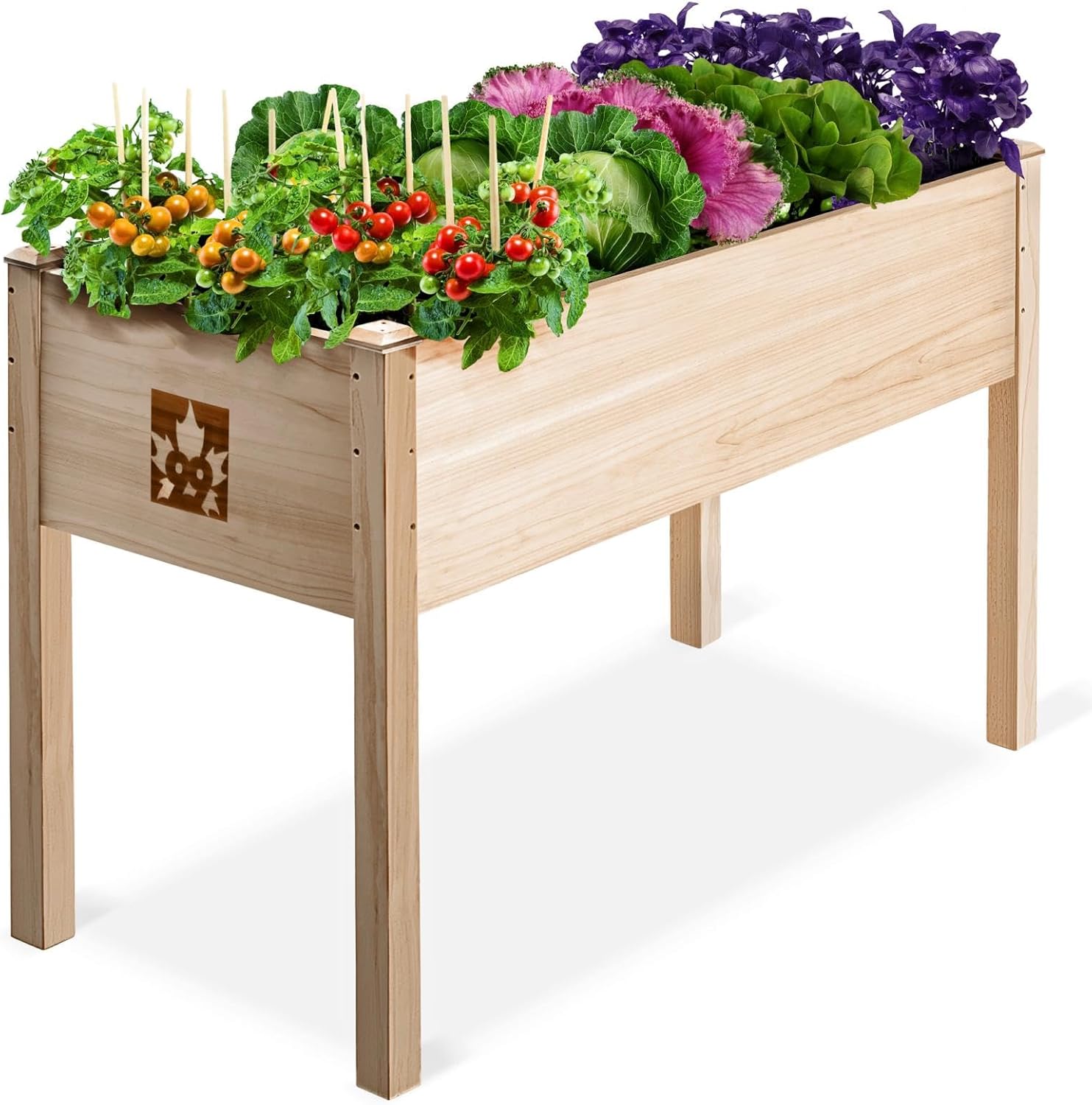
Maple99 Cedar Raised Garden Bed with Legs, 48 x 24 x 30
| Capacity | 200 pounds |
|---|---|
| Material Type | Cedar Wood, Fir Wood, Wood |
| Other Special Features of the Product | Drainage Hole |
| Mounting Type | Floor Standing |
This Maple99 cedar raised garden bed is a sturdy, back-friendly planter built for small-scale vegetable and flower growing. It stands on 30-inch legs so you can tend plants without bending, and the cedar construction offers natural resistance to insects and weather while leaving the option to paint or customize the finish. The box is designed to hold up to 200 pounds of soil and water, and a drainage hole helps prevent waterlogging. Assembly is straightforward and includes the necessary tools and instructions, making it an achievable DIY project for one or two people. Practical benefits include improved ergonomics, reduced weed pressure compared with ground beds, and a contained footprint that works on patios or lawns. Limitations are its medium footprint, which may not suit gardeners who need very large planting volume, and the wood will still age over time so eventual maintenance or replacement is possible. The unit is best used for concentrated vegetable patches, herbs, or decorative flower mixes where raised height and tidy appearance matter.
Best for: Gardeners who prioritize ergonomic, performance-focused planting in a compact footprint and want a durable wooden planter for vegetables, herbs, or flowers that reduces bending and improves access.
Less Ideal for: People needing very large growing volume or commercial-scale production should choose larger beds or in-ground rows instead.
- Cedar and fir construction offers natural insect resistance and an attractive natural finish
- 30-inch legs raise planting height for comfortable, back-friendly gardening
- Supports up to 200 pounds of soil and water for stable planting
- Includes tools and clear instructions for straightforward assembly
- Built-in drainage hole reduces waterlogging risk
- Medium planting volume may be too small for large-scale vegetable production
- Wood will weather over time and require maintenance or replacement
Verdict: Choose this cedar raised bed when you want a durable, ergonomic wooden planter that keeps gardening comfortable while delivering reliable performance for focused vegetable and flower beds.
MIXC Wooden Raised Garden Bed with Legs, 72" x 23"

| Capacity | 8.4 cubic feet |
|---|---|
| Material Type | Fir Wood |
| Mounting Type | Floor Standing |
| Other Special Features of the Product | Breathable, Drainage Hole, Rot Resistant, Weather Resistant |
| Indoor Outdoor Usage | Outdoor |
This MIXC wooden raised garden bed is a straightforward elevated planter intended for patios, decks, and small backyard vegetable or flower plots. It provides about 8.4 cubic feet of planting volume and sits at an ergonomic 30-inch height so you can plant and tend without excessive bending. Constructed from unfinished fir wood, the box is built for outdoor use with multiple drainage holes to prevent waterlogging and promote healthier roots. Its raised design and legs keep plants off the ground which helps deter small animals and improves access on hard surfaces. Expect a simple assembly and a natural, unfinished look that you can stain or seal to match your outdoor decor. Because the wood is unfinished fir it will need periodic sealing if you want maximum weather resistance over multiple seasons. The bed is practical for growing herbs, salad greens, strawberries, and compact vegetable varieties but the single-level design limits very deep-rooted crops. For gardeners who want an elevated, no-frills wooden planter this model balances capacity, accessibility, and drainage in a compact package.
Best for: Gardeners who prioritize efficient, back-friendly planting in small outdoor spaces and want a durable wooden planter they can customize with stain or liner.
Less Ideal for: Growers who need multi-tiered systems, very deep beds for large root vegetables, or a maintenance-free synthetic planter.
- Elevated 30-inch height reduces bending and protects back and knees during gardening
- Six drainage holes improve root aeration and prevent water accumulation
- Made from fir wood for a sturdy, naturally weather-resistant frame
- Generous planting volume (8.4 cubic feet) suitable for multiple small plants
- Unfinished wood will need sealing or treatment to extend outdoor lifespan
- Single-level box limits planting of very deep-rooted crops
Verdict: A practical, ergonomic wooden raised bed that gives small-space gardeners easy access, good drainage, and enough planting volume for herbs and compact vegetables.
windiy Rustic Pine Wooden Rectangular Planter Box with Removable Plastic Liner

| Capacity | 4.32 liters |
|---|---|
| Included Components | Liner |
| Material Type | Pine Wood, Plastic, Wood |
| Mounting Type | Tabletop |
| Indoor Outdoor Usage | Indoor |
This windiy wooden planter box is a simple, budget-friendly way to add rustic charm to a windowsill, table, or centerpiece. It is made from unfinished pine and comes with a removable plastic liner so you can use potting soil or mason jars without worrying about leaks. At about 17 inches long and a narrow profile it fits a row of succulents, air plants, or a small floral arrangement and works well for indoor tabletop displays. The construction is straightforward and lightweight, so it is easy to move and position for seasonal decor or event centerpieces. Because the wood is unfinished and the liner is included but not deeply fitted, expect some manual fitting for snug placement and occasional wiping to keep water from contacting the wood. There are no drain holes, so it is best used with the liner or potted inserts rather than planting directly in the wood. For the price it delivers solid aesthetic value and flexible use for decorative plant displays.
Best for: Buyers looking for an inexpensive decorative planter to display succulents or small arrangements on tables or windowsills who prioritize style and affordability over heavy-duty planting.
Less Ideal for: Gardeners who need long-term outdoor planters for heavy watering or larger plants should choose a planter with drainage and more robust, finished materials.
- Includes a removable plastic liner to protect the wood and contain soil or water
- Lightweight pine construction makes it easy to move and position
- Narrow rectangular shape fits windowsills, tabletops, and centerpieces
- Unfinished rustic look complements farmhouse and country decor styles
- No built-in drain holes so direct planting requires careful moisture management
- Unfinished wood may need sealing over time if exposed to water frequently
Verdict: A very affordable rustic pine planter box that gives quick decorative impact for succulents and tabletop displays thanks to its included removable liner.
CONNOO 12‑Piece Wooden Cube Planter Boxes with Plastic Liners

| Number of Pieces | 12 |
|---|---|
| Material Type | Wood, Plastic Liner |
| Recommended Uses For Product | Fresh flowers, faux flowers, dried florals, succulents, greenery, table centerpieces, shelf decor, small storage |
| Additional Features | Wide Mouth |
These CONNOO wooden cube planters are a practical set for reliable table and event styling. The pack includes six 4-inch and six 5-inch square boxes plus removable waterproof plastic liners sized for the smaller boxes, so you can arrange fresh flowers without soaking the wood. Use the smaller cubes for compact succulents or single stems and the larger cubes for fuller centerpieces or grouped greenery; mixing sizes makes it easy to create layered looks for long tables and round tables alike. The wood finish gives a rustic farmhouse look that suits weddings and everyday decor, and the liners make filling, cleaning and switching between fresh and faux arrangements straightforward. Expect sturdy, reusable boxes that double as small storage after events. Limitations are that only the smaller boxes include liners and the set is intended for tabletop accents rather than large outdoor planting, so it is not a replacement for full-size planters.
Best for: Buyers who want dependable, reusable tabletop planters for events and everyday decor and prioritize waterproofing and low-maintenance styling.
Less Ideal for: Not a good fit for planting larger outdoor plants or as a permanent outdoor planter solution where full drainage and soil depth are required.
- Complete 12-piece set with two sizes for flexible styling
- Removable waterproof plastic liners allow fresh flower arrangements without damaging the wood
- Rustic dark brown finish fits farmhouse and event decor
- Reusable for storage or faux arrangements after events
- Only the 4-inch boxes are listed with liners so larger boxes need alternative waterproofing if used with water
Verdict: A reliable, reusable 12-piece tabletop planter set that lets you arrange fresh flowers easily thanks to removable waterproof liners.
Best Choice Products 48 x 24 x 30in Raised Fir Wood Garden Bed with Liner

| Capacity | 5 cubic feet |
|---|---|
| Material Type | Fir Wood |
| Mounting Type | Floor Standing |
| Other Special Features of the Product | Drainage Hole |
| Indoor Outdoor Usage | Outdoor |
This raised garden bed is a straightforward option for small-space vegetable and herb gardening. Constructed from unfinished fir wood, it assembles into a 48 x 24 footprint with a 30 inch planting height that reduces bending while you tend plants. The included bed liner separates soil from the wood, slowing rot and keeping roots and soil contained, and a built-in drainage hole prevents waterlogging. With about 5 cubic feet of planting volume and a 200 lb weight capacity it accommodates several seasonal vegetables, potting mixes, or a mix of herbs and flowers. The all-wood construction looks natural outdoors but will need sealing or periodic maintenance to maximize longevity. Assembly requires following the included guide and handling multiple pieces, so expect some time and basic tools. For gardeners who value an elevated, ergonomic setup and a ready-to-use liner, this planter delivers a practical balance of planting space and convenience; heavy-duty or permanent raised beds will outlast unfinished fir without added treatment.
Best for: Gardeners who want an elevated, easy-to-use planter for vegetables or herbs and prefer a natural wood look while minimizing daily maintenance.
Less Ideal for: People seeking a permanent, maintenance-free raised bed or very large-scale vegetable production should consider heavier-duty or larger alternatives.
- Ergonomic 30 inch height reduces bending and makes planting and harvesting easier
- Included liner keeps soil off the wood to slow rot and discourage pests
- Built-in drainage hole prevents waterlogging and promotes healthier roots
- Natural fir wood construction offers an attractive, rustic look outdoors
- Unfinished fir requires sealing or periodic maintenance to resist weathering
- Assembly involves multiple parts and basic tools and can take time
Verdict: A practical, elevated wooden planter with a liner and drainage that makes small vegetable and herb gardening easier and more ergonomic.
Choosing the Right Wooden Planter Box: Key Factors to Consider
Wood Species and Natural Rot Resistance
The species of wood determines how well a planter box holds up to constant soil moisture and outdoor exposure. Some softwoods, like cedar or redwood, contain natural oils that slow decay and require less chemical treatment. Untreated or non-rot-resistant species will need a water-resistant finish or liner to reach similar lifespans.
Consider whether you prefer a naturally durable species that can breathe and age gracefully, or a more economical wood that you plan to protect with sealers and liners. Natural resistance reduces maintenance and the need for frequent replacement, especially in wetter climates.
Drainage Design and Liner Compatibility
Good drainage prevents root rot and supports healthy root systems. Look for boxes with pre-drilled drainage holes, slatted bottoms, or an elevated internal platform that lifts soil away from standing water. If a box does not include drainage, plan to add holes or use a liner designed with drainage features.
Liner compatibility matters because liners lengthen the life of the wood by separating wet soil from wood surfaces. Some liners are breathable, others are waterproof; breathable liners reduce trapped moisture against the wood but may shift water management tactics. Make sure the planter design allows easy liner installation and secure attachment where needed.
Joinery, Reinforcement, and Long-Term Strength
How a planter is joined at the corners and reinforced determines whether it will bow or split under heavy soil loads. Look for dovetailed or tightly fitted corner joints, internal corner braces, or metal corner plates that increase rigidity. Thin boards without internal supports tend to bow outward over the first few growing seasons, especially in larger boxes.
Reinforced bottoms and internal cross-bracing are particularly important for longer, wider boxes where soil weight multiplies. Strong joinery lowers the risk of mid-season failure and reduces maintenance needs down the line.
Soil Capacity and Planting Depth
Different plants require different soil volumes and rooting depths. A shallow box will suit herbs and small annuals but will not support deeper-rooted perennials or vegetables. Check the usable soil depth after accounting for liners and drainage layers to ensure the planter meets your planting goals.
Capacity also affects watering frequency and weight. Larger soil volumes retain moisture longer but add substantial weight when saturated. Make sure the structure and the surface supporting the box can handle the expected load.
Finish, Coatings, and Maintenance Needs
Finishes protect wood from sun and moisture but change how the box weathers and how often it needs attention. A penetrating oil or water-repellent finish preserves the wood grain without creating a vapor-impermeable barrier, while heavy paint or sealants can trap moisture if not applied correctly.
Consider whether you want a natural weathering look that requires occasional re-application of protective oil, or a painted finish that offers stronger UV protection but may peel and need periodic refinishing. Maintenance frequency should match how much time you plan to spend caring for outdoor furniture and containers.
Assembly, Mobility, and Installation Location
Some wooden planter boxes arrive fully assembled while others ship flat and require on-site assembly. Ease of assembly affects whether you can set the box in a tight patio corner or need extra hands and tools. Also consider mobility: boxes with integrated casters or lighter construction are easier to move to follow sun and shade patterns.
If you plan to place a heavy, soil-filled box on a deck or balcony, confirm weight limits and use supports or distribution boards to protect decking. Anchoring options may be needed in windy locations for tall or top-heavy plantings.
Sizing Planter Boxes to Plant Types
Match planter dimensions to the plants you plan to grow. Shallow containers about 6 to 8 inches deep suit herbs and annuals, while vegetables and small shrubs often need 12 inches or more of soil depth. Width and length also matter for group plantings and root spread.
For narrow balconies or patios, choose taller, narrower boxes to maximize soil volume without taking excessive floor space. For ground-level displays, wider boxes give more stability and planting room.
- Herbs and lettuces: 6-8 inches depth
- Tomatoes, peppers, small shrubs: 12-18 inches depth
- Long planters for window boxes: ensure adequate depth to avoid frequent watering
Best Practices for Lining and Protecting Wood
Install a liner that allows proper drainage and keeps damp soil from direct contact with the wood. Many gardeners use heavy-duty landscape fabric combined with a waterproof membrane where needed. Leave a small gap at the bottom for drainage holes and avoid stretching the liner tight against the wood to prevent trapped moisture.
Add a gravel or coarse drainage layer only if it improves outflow in your situation. In some cases, a layer of grit or horticultural perlite mixed into the soil gives better drainage without isolating the soil from the lower profile of the planter.
- Use breathable fabric liners where possible to reduce wood saturation
- Drill additional drainage holes if the design restricts outflow
- Seal the exterior with a penetrating oil for longer service life
Placement, Sun Exposure, and Irrigation Strategy
Decide where the planter will sit before choosing a size and finish. South- and west-facing placements dry out faster and may require more frequent watering or a finish that reduces UV breakdown. Shaded spots retain moisture longer and may favor plants that prefer damp soils.
Plan an irrigation routine matched to the planter's soil volume. Smaller boxes need more frequent checks, while large-capacity boxes often allow multi-day gaps between waterings. Consider drip irrigation or soaker lines for heavy-use containers.
- Elevate planters slightly to improve airflow and drainage
- Use drip tubing or self-watering inserts for consistent moisture
- Rotate movable planters to equalize sun exposure for even plant growth
Winter Care and Off-Season Storage
Wooden planter boxes are vulnerable to repeated freeze-thaw cycles. If you expect hard freezes, either drain and store the planter or provide insulation around the outside to reduce stress on the wood. Emptying soil from large boxes can be labor-intensive, so plan for accessible storage or protect in place.
For planted boxes you want to overwinter, add extra mulch to reduce soil freeze and avoid saturating the soil in late fall. In some cases, moving containers to a sheltered spot reduces moisture exposure and prolongs the wood's life.
- Keep planters off bare ground in winter to reduce rot
- Apply a fresh protective coat in early fall for exposed boxes
- Consider removable liners for easier winter soil removal
Customizing Planter Boxes for Raised Bed Use
Many wooden planter boxes double as small raised beds. When using a box as a raised bed, ensure the soil depth meets the needs of deeper-rooting vegetables and that the structure is reinforced to handle full loads. Consider adding a root barrier if the box sits on or near native soil to prevent root intrusion.
If you plan to grow heavy-feeding crops, build in access points for fertilization and expect more frequent watering. Incorporating trellis attachments or removable panels adds versatility for vining plants and seasonal changes.
- Add internal bracing for long boxes to prevent bowing
- Use thicker sideboards for beds that will hold deeper soil
- Plan for in-place composting or soil refresh cycles
How We Chose the Best Wooden Planter Box
We prioritized real-garden performance when selecting the six wooden planter boxes on this list. Key evaluation criteria included the species and treatment of the wood, because heartwood and naturally rot-resistant softwoods last longer outdoors; the joinery and reinforcement methods, since solid corner joints and internal braces prevent sagging under soil weight; and drainage solutions, because plant health depends on avoiding waterlogged roots. We also considered finish and maintenance needs, including whether the box accepts a liner and how easy it is to recoat or repair. Practical assembly and shipping dimensions were reviewed to ensure boxes arrive in manageable pieces and can be put together without specialized tools. Capacity and usable soil depth were checked so each box suits the intended plant type from annuals and herbs to small shrubs. We excluded boxes made primarily from composite plastics or metal frames with thin wood cladding, since those behave differently in outdoor planting situations. Our final list reflects boxes that balance durability, gardening function, and straightforward upkeep for typical home gardens.
FAQ
How deep should a wooden planter box be for vegetables?
It depends on the crop. Many vegetables need 12 inches or more of usable soil depth; root crops and larger perennials may require 18 inches or deeper. Account for liners and drainage layers when measuring usable depth.
Can I plant directly in an untreated wooden planter box?
You can, but untreated wood will absorb moisture and decay faster. Using a breathable liner or applying a non-toxic penetrating oil will extend the life of the box without trapping moisture against the wood.
What is the best way to improve drainage in a wooden planter?
Ensure there are adequate drainage holes and elevate the box slightly. Adding coarse material at the bottom is sometimes helpful, but improving soil mix and using well-draining potting media is often more effective.
How do I protect a wooden planter from winter damage?
Move the planter to a sheltered area if possible, keep it elevated from wet ground, and apply a fresh protective coat before the cold season. For planted boxes, add mulch to reduce freeze-thaw stress on roots and soil.
Are liners necessary inside wooden planter boxes?
Liners are not strictly necessary but they extend the wood's life by reducing direct soil contact. Choose liners that allow some breathability or plan for periodic inspections to prevent trapped moisture and rot.
Final Verdict
When choosing a wooden planter box, prioritize the wood species and drainage design first because they determine longevity and plant health. Match soil depth and capacity to the plants you want to grow, and check joinery and reinforcement if you plan on large or long boxes. Balance the finish and maintenance needs with the look you want; a naturally durable species can reduce upkeep while painted finishes offer different protection tradeoffs. Focus on the planting outcome you need rather than cosmetic details alone. With attention to material, drainage, and structural strength, you can pick a wooden planter box that fits your space and gives reliable performance season after season.
