

Note: This article contains affiliate links. If you click on these links and make a purchase, I may earn a small commission at no extra cost to you. This helps support my research and content. Read my full affiliate disclosure here.
If you garden on a patio, balcony, or tight backyard, a rolling elevated planter box can cut bending and make seasonal moves simple. These raised beds on wheels keep soil at a comfortable working height while letting you reposition plants for light, weather, or storage. Choosing the right one matters because planter depth, wheel quality, and construction affect plant health, drainage, and how easy it is to move the unit when full. This guide looks at seven shortlisted options that perform well in small-space and mobility-focused situations. We evaluated each pick across common gardener concerns like structural durability, drainage and soil depth, and how easy it is to move when planted. Read on for practical guidance and decision points that match your outdoor layout and planting plans.
Top Picks at a Glance
| Best Overall The best all-around choice for most situations | LEETOLLA 31.6-Inch Elevated Raised Garden Bed with Wheels and Shelf |  |
| Best Quality Built to a higher standard if you want something more solid | Vego Garden Rolling Elevated Raised Garden Bed 2' x 4' with Legs and Storage Rack |  |
| Best Value The sweet spot between price and what you get | EFU Raised Garden Bed with Wheels and Lower Storage Shelf |  |
| Best Budget The cheapest option that still gets the job done reliably | LINEX Raised Garden Bed Planter Box with Trellis and Self-Watering Reservoir |  |
| Highest Rated A top-rated pick with lots of positive feedback | Vego Garden Classic Rolling Raised Garden Bed (1.75' x 4') |  |
| Most Popular A crowd favorite that many people choose with confidence | FOYUEE Elevated Mobile Raised Garden Bed with Wheels and Shelf |  |
| Best Seller A high-volume bestseller chosen again and again | Best Choice Products 48 x 24 x 32 in Mobile Raised Garden Bed (Fir Wood) |  |
LEETOLLA 31.6-Inch Elevated Raised Garden Bed with Wheels and Shelf

| Material Type | Iron |
|---|---|
| Indoor Outdoor Usage | Indoor, Outdoor |
| Included Components | Wheels, Handle, Shelf, Panels, Hardware |
| Capacity | 2.5 cubic_meters |
| Number of Levels | 2 |
This LEETOLLA elevated garden bed is a portable, waist-height planter built from painted iron with two large wheels, a handle, and a detachable lower shelf. It is assembled from panels and legs and typically sits on patios, balconies, or decks to grow herbs, vegetables, or flowers without bending. Notable features include dual-layer drainage with five holes plus two cross-lines to reduce waterlogging, two universal wheels and a side handle for repositioning on level surfaces, and a built-in shelf that keeps tools and supplies handy. The standing height reduces back and knee strain and makes frequent harvesting or maintenance simpler. Practical limits are that it requires assembly (about 30–45 minutes, easier with two people), the metal construction can show condensation in very humid conditions, and the wheels are intended for hard, level surfaces so moving it on soft ground is harder. The planter holds roughly 2.5 cubic feet of soil, so it fits several small plants but is not a substitute for large in-ground beds.
Best for: Gardeners who want a flexible, back-friendly planter for balconies, patios, or small yards and value the ability to move plants to follow sunlight or shelter from weather.
Less Ideal for: People who need very large planting volumes or who plan to move a fully loaded planter across uneven ground frequently should consider fixed beds or heavier carts instead.
- Elevated height reduces bending and kneeling for more comfortable gardening
- Two large wheels and an ergonomic handle allow easy repositioning on hard, level surfaces
- Dual-layer drainage system helps prevent waterlogging and keeps roots healthier
- Built-in lower shelf provides convenient storage for tools and supplies
- Powder-coated iron finish is weather resistant for outdoor use
- Requires basic assembly and is easier with two people
- Not designed for movement on uneven or soft surfaces once filled
Verdict: If you want a comfortable, mobile raised bed for balconies or patios that reduces bending and lets you roll plants to the best light, this wheeled LEETOLLA planter is a practical choice.
Vego Garden Rolling Elevated Raised Garden Bed 2' x 4' with Legs and Storage Rack

| Size | 2' x 4' |
|---|---|
| Capacity | 3.9 cubic feet |
| Material Type | Metal |
| Finish Types | Powder Coated |
| Weight Capacity | 700 lbs |
The Vego Garden Rolling Elevated Raised Garden Bed is a metal, floor-standing planter built for heavier-duty container gardening on patios and decks. It assembles from powder-coated VZ 2.0 steel panels and welded corner legs to create a 32-inch tall bed that raises the planting surface to reduce bending and offers a 12-inch planting depth for substantial root volume. The bed is tested to support up to 700 pounds for the 2' x 4' size, so it handles heavy soil mixes, multiple large plants, or potted specimens without sagging. Practical touches include rot- and rust-resistant finish, a lower storage rack integrated into the leg frame, and rubber edging for safer handling during assembly. Because it is elevated and rolling, the bed is easy to reposition for sun, shade, or winter storage, and it pairs with the brand's add-on covers and irrigation accessories. Limitations are typical of metal beds: you will need to manage insulating and drainage for extreme heat or cold, and assembly requires tightening multiple fasteners and aligning panels for the welded supports to sit correctly.
Best for: Buyers who prioritize durable, performance-oriented raised beds that hold heavy soil loads and make planting easier on the back, and who want a mobile solution for patios or small outdoor spaces.
Less Ideal for: People seeking a lightweight, foldable planter for seasonal use or those who prefer natural wood aesthetics for garden beds.
- High tested weight capacity (700 lbs) suitable for heavy soil and large plants
- VZ 2.0 powder-coated steel construction with welded corners for long-term corrosion resistance
- Raised 32" height reduces bending and provides a deeper planting profile
- Integrated lower storage rack adds useful tool or supply storage without extra footprint
- Metal construction can transfer heat to roots in hot climates without added insulation
- Assembly requires multiple fasteners and careful alignment of panels and legs
Verdict: Choose this rolling Vego Garden elevated bed when you need a tough, high-capacity, mobile planter that minimizes bending and stands up to heavy soil and large plants.
EFU Raised Garden Bed with Wheels and Lower Storage Shelf
| Capacity | 21 gallons |
|---|---|
| Number of Levels | 4 |
| Other Special Features of the Product | Drainage Hole |
| Mounting Type | Floor Standing |
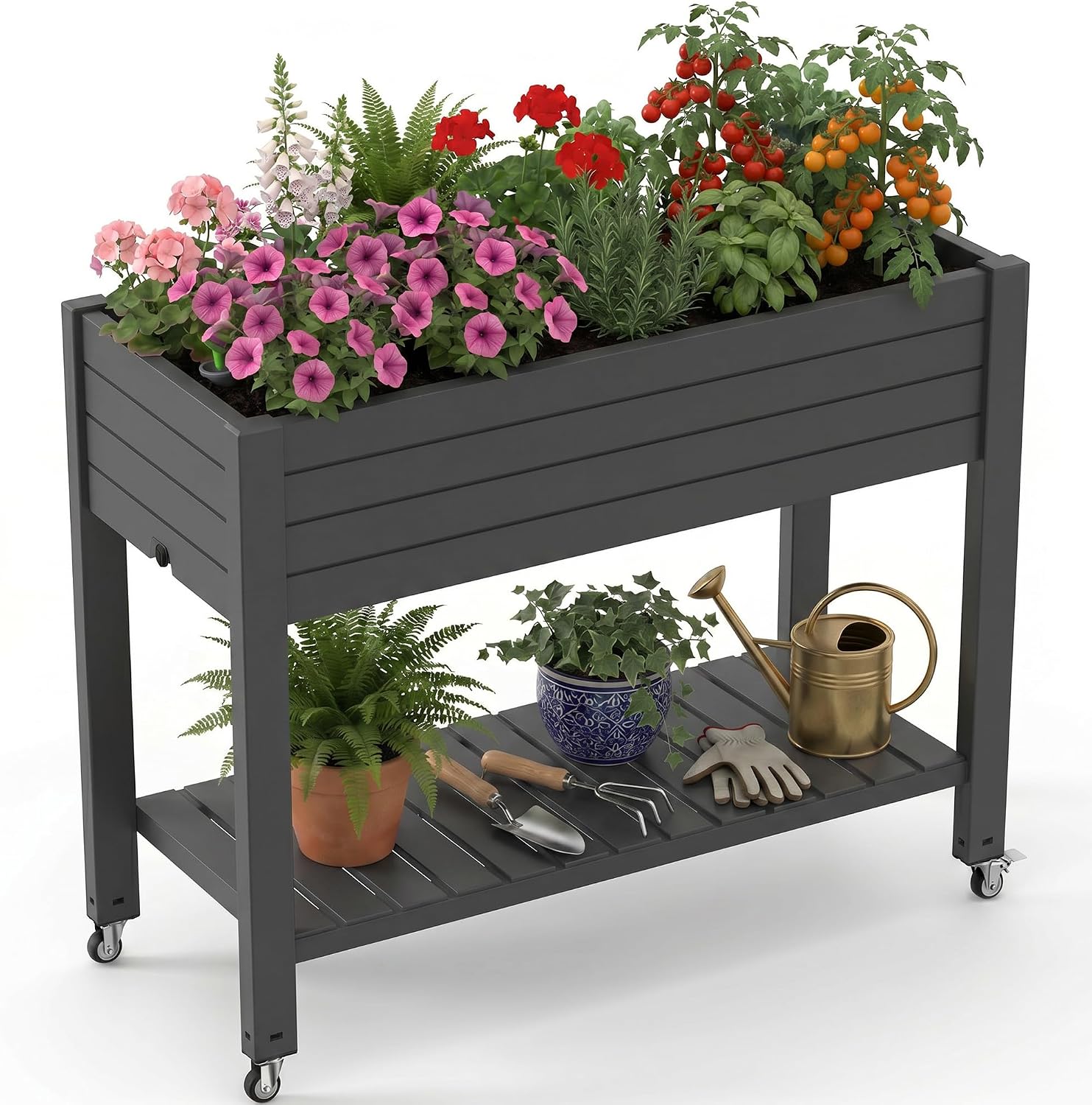
This EFU elevated raised bed is a practical option for home gardeners who want a compact, waist-high planting station that moves. It provides four separate planting zones and about 21 gallons of soil capacity, so you can keep herbs, lettuces, or small tomato varieties organized without spreading into the ground. The high-density resin construction and four reinforced support rods resist cracking and fading outdoors, while the built-in drainage holes and water-level monitor help prevent overwatering and root problems. Lockable casters make it easy to reposition the planter to follow sun or protect plants from bad weather, and the lower shelf stores small tools and pots to keep work tidy. Assembly is straightforward and should take about 20 to 25 minutes with the included manual. Limitations to note are the modest soil volume compared with full-size raised beds and the plastic construction, which may feel less substantial than metal or wood options to some buyers.
Best for: Buyers who want a low-effort, elevated planter for balconies, patios, or small yards and prefer a movable, easy-to-manage setup that reduces bending and soil mess.
Less Ideal for: Gardeners needing large soil volumes for deep-rooted vegetables or those who prefer traditional wood or metal raised beds for a heavier, permanent installation.
- Four separate planting zones for organized small-space gardening
- Lockable casters for easy mobility and placement adjustment
- Built-in drainage holes and water-level monitor to reduce overwatering risk
- Durable high-density resin construction with reinforced support rods
- Lower storage shelf keeps tools and pots close at hand
- 21-gallon capacity limits how large root crops or large tomato plants can grow
- Resin construction may not feel as heavy-duty as metal or thick cedar for long-term aesthetics
Verdict: This elevated, wheeled resin planter is the best pick for risk-averse gardeners who want a sturdy, low-maintenance, movable raised bed for compact vegetable and herb growing.
LINEX Raised Garden Bed Planter Box with Trellis and Self-Watering Reservoir

| Capacity | 4 gallons |
|---|---|
| Material Type | Metal and reinforced PP |
| Other Special Features of the Product | Drainage Hole, Self Watering |
| Mounting Type | Floor Standing |
| Indoor Outdoor Usage | Indoor, Outdoor |
The LINEX raised garden bed is a narrow, tall planter designed to support vining plants like tomatoes, peas, and peppers while saving ground space. It pairs a metal trellis frame with a plastic planter box that includes a built-in water reservoir and drainage holes, so the planter will wick water to roots for several days between fills and prevent overwatering. Assembly is tool-free and quick, and the trellis sections are detachable so you can expand or reconfigure multiple units to fit a patio rail or balcony. Because it is floor-standing and made from reinforced PP plus alloy-steel trellis, it is weather-resistant and low maintenance. The planter holds a small soil volume, so plants will need more frequent fertilizing and monitoring in hot weather, and the narrow footprint limits large root development and multi-plant spacing. Wheels and included connectors make moving and linking units convenient but expect modest capacity compared with full raised beds.
Best for: Buyers who want a compact, low-maintenance solution for growing tomatoes or other vining vegetables in limited outdoor spaces and who prioritize easy setup and minimal daily watering.
Less Ideal for: Gardeners who need large soil volume for big or multiple plants or those planning to grow heavy-producing indeterminate tomato varieties in ground-equivalent conditions.
- Integrated self-watering reservoir reduces daily watering frequency
- Tall trellis provides sturdy vertical support for climbing vegetables
- Tool-free assembly and modular sections let you expand or reconfigure quickly
- Lightweight, weather-resistant materials suited for balcony or patio use
- Small soil capacity limits plant size and may require more frequent feeding
- Narrow footprint restricts how many plants can be grown in a single unit
Verdict: A space-saving, self-watering trellis planter ideal for growers who want easy setup and low-maintenance vertical tomato production on patios or balconies.
Vego Garden Classic Rolling Raised Garden Bed (1.75' x 4')

| Material Type | Metal |
|---|---|
| Other Special Features of the Product | Rust Resistant |
| Mounting Type | Floor Standing |
| Indoor Outdoor Usage | Indoor, Outdoor |
| Capacity | 10 cubic feet |
The Vego Garden Classic is a mobile metal raised bed built for small outdoor spaces where flexibility and durability matter. It rolls on included wheels so you can move the bed to chase sun, shelter plants from storms, or rearrange a patio without heavy lifting. The raised, deep planting space supports vegetables, herbs, and flowers with better root development than shallow containers. Metal construction and a rust resistant finish aim to withstand outdoor exposure and reduce maintenance compared with some wood options. Its square, compact footprint is well suited to decks, balconies, and rooftop planters where floor-standing mounting is required. Expect basic assembly and a sturdy feel once set up, but note the product is a single-level bed without built-in irrigation or a cover, so you will need to add watering and pest protection accessories for long-term convenience. The unit is focused on practical, reliable performance rather than decorative customization.
Best for: Home gardeners who prioritize a low-maintenance, durable planter for small hard‑surface outdoor spaces and want the flexibility to move plants for light and weather control.
Less Ideal for: Gardeners seeking decorative planters with multiple tiers, built-in watering, or large in-ground style beds should consider alternatives better suited to those needs.
- Built-in wheels for easy repositioning on patios and decks
- Deep planting capacity suitable for vegetables and herbs
- Metal construction with rust-resistant finish for outdoor durability
- Compact square footprint fits small spaces like balconies and rooftops
- No integrated irrigation or self-watering system
- Does not include a cover or pest barrier
- Single-level design limits vertical growing without add-ons
Verdict: Choose this rolling metal raised bed if you need a compact, long-lasting planter that you can reliably move around patios and balconies for better light and weather management.
FOYUEE Elevated Mobile Raised Garden Bed with Wheels and Shelf

| Capacity | 2.5 cubic feet |
|---|---|
| Material Type | Metal |
| Finish Types | Powder Coated |
| Mounting Type | Floor Standing |
| Indoor Outdoor Usage | Outdoor |
This FOYUEE elevated raised bed is a mobile planter built for productive container gardening without bending or kneeling. The powder-coated galvanized steel box sits at a standing height and includes a handle plus 6-inch all-terrain wheels so you can roll a full bed around a patio or balcony to follow sun or clear space for events. The planting box is wider than many compact planters, holds several cubic feet of soil, and has molded drainage channels plus a central drain to reduce waterlogging and protect roots. A lower shelf gives handy storage for tools and pots. Construction is heavy-duty enough to support substantial loads, and the rust-resistant finish makes it practical for outdoor seasons. Expect assembly and some metal hardware alignment during setup, and the steel construction makes it heavier to move before wheels are fitted. It is best used for herbs, salad greens, and shallow-rooted vegetables in small outdoor spaces rather than deep-root vegetables that need more soil depth.
Best for: Gardeners who prioritize durability and high performance in a compact, accessible planter and want to maximize yield from a patio, balcony, or small backyard while avoiding frequent bending.
Less Ideal for: Those who need very deep soil for root vegetables or who prefer ultra-lightweight, portable fabric or plastic planters for frequent long-distance moves.
- Sturdy galvanized steel with outdoor-grade powder coating resists rust and supports heavy loads.
- Built-in wheels and handle let you reposition a fully planted bed without lifting.
- Integrated drainage channels and a central drain reduce overwatering and improve root health.
- Wider planting area and a lower storage shelf increase usable space for plants and tools.
- Not suitable for deep-rooted crops because planting box depth is limited.
- Steel construction adds weight before wheels are attached, making initial placement harder.
Verdict: Choose this elevated, wheeled galvanized-steel planter when you want a heavy-duty, rust-resistant mobile bed that boosts productivity and saves your back.
Best Choice Products 48 x 24 x 32 in Mobile Raised Garden Bed (Fir Wood)

| Capacity | 135 quarts |
|---|---|
| Material Type | Fir Wood |
| Mounting Type | Floor Standing |
| Other Special Features of the Product | Drainage Hole |
| Indoor Outdoor Usage | Outdoor |
This raised garden bed is a practical option for gardeners who want an elevated, mobile planting surface. It stands at a convenient working height so you can plant, prune, and harvest without bending, and the included bed liner keeps soil off the untreated fir wood to extend the planter's life. Locking casters make it easy to move the bed to follow sun or shade, and the built-in lower shelf gives space for small tools or pots. Four drainage holes help prevent waterlogging while the 135 quart capacity provides enough soil depth for many vegetables and herbs. Assembly and maintenance are straightforward, though the wood is unfinished so you should treat or seal it if you want longer outdoor durability. The unit has a stated 100 lb weight capacity, which means very heavy soil mixes or large containers on the shelf could exceed limits. For a mainstream buyer who prefers familiar materials and simple features, this offers a low-risk way to get an elevated, movable vegetable bed for a patio or small yard.
Best for: Buyers who want a dependable, easy-to-use elevated planter for vegetables or herbs and prefer low-risk, familiar wooden construction with simple mobility features.
Less Ideal for: People seeking a maintenance-free or long-term rot-proof planter or those who need to support very heavy soil loads or large potted plants.
- Elevated height reduces bending and makes gardening easier for those with back issues
- Locking wheels allow the planter to be moved and secured to track sun exposure
- Included bed liner separates soil from wood to slow moisture damage
- Built-in lower shelf adds convenient storage for tools and supplies
- Four drainage holes prevent soil oversaturation and root rot
- Fir wood is unfinished and will weather unless sealed or treated
- 100 lb weight capacity limits very heavy soil mixes or added large pots on the shelf
Verdict: A practical, easy-to-use elevated wooden planter that moves with locking wheels and keeps soil off the wood for straightforward, low-risk vegetable gardening.
Choosing the Right Rolling Elevated Planter Box: Key Factors to Consider
Materials and Weather Resistance
Material choice determines how long a rolling elevated planter box will survive outdoor exposure. Wood offers a natural look but needs rot-resistant species or treatment to withstand repeated wetting and drying. Metal frames can be very durable but should be powder-coated or made from rust-resistant alloy to avoid corrosion. Plastic and composite materials resist rot and are low maintenance, but check for UV-stabilization to prevent brittleness over time.
Consider how the material will interact with soil moisture and fertilizers. Some untreated woods leach tannins that can mildly acidify soil, while certain metals may corrode if exposed to acidic conditions. For patios and balconies, also account for weight limits and how materials might stain or scratch decking or flooring.
Wheel Size, Type, and Load Capacity
Wheels are the defining feature of a rolling elevated planter box because they determine whether you can actually move the unit once it is filled. Larger-diameter wheels roll more easily over uneven surfaces and resist getting stuck on thresholds or pavers. Pneumatic or semi-pneumatic tires provide cushioning and smoother rolling; hard plastic or caster wheels are simpler but can be difficult on rough ground. Check the rated load capacity and assume wet soil is much heavier than dry mix.
Wheel mounting and directionality matter. Locking casters help secure the planter in place when watering or harvesting. Swivel wheels improve maneuverability in tight spots, while fixed wheels track better for straight-line moves. Verify how the wheels attach to the frame and whether they are replaceable if damaged.
Soil Depth, Volume, and Planting Needs
Soil depth and total volume define what you can grow in a rolling elevated planter box. Shallow trays work for herbs and small annuals, but deeper roots need more depth and volume to avoid frequent drying and nutrient depletion. Aim for sufficient planting depth for the intended crops: shallow for salad greens and herbs, deeper for vegetables and small shrubs.
Volume also affects weight, drainage frequency, and watering routine. Larger volumes stay moist longer but are heavier to move. Consider whether the planter allows layering of amendments, placement of irrigation or wicking supplies, and how easy it is to refresh soil or add compost.
Drainage Design and Water Management
Effective drainage prevents waterlogging, which leads to root rot and nutrient loss. Rolling elevated planters should have well-placed drain holes or removable trays to allow excess water to escape. Some designs include false bottoms or integrated reservoirs that offer wicking irrigation and reduce watering frequency. If using indoors or on a balcony, a catch tray or liner may be necessary to protect surfaces while still allowing proper drainage.
Also consider how easy it is to access and clear drain holes and whether the design channels water away from structural components to prevent premature decay. Good water management reduces the need for frequent repotting and keeps plants healthier.
Height and Ergonomics for Comfort
The main advantage of an elevated planter is reduced bending and strain. Height should place the soil surface at a comfortable working level for potting, planting, and harvesting based on the primary user. Taller stands are better for standing gardeners, while shorter units may be ideal for seated use. Consider the working edge width too, since a deep or wide rim can force you to reach further.
Ergonomics also include edge finishing, accessibility for tools, and whether the planter allows comfortable two-handed work. Think about how the planter will be used during different seasons and whether the height facilitates adding frost protection or cover when needed.
Assembly, Maintenance, and Longevity
Consider how much time you can invest in setup and upkeep. Some rolling elevated planters arrive mostly assembled and require minimal hardware, while others need careful alignment and many fasteners. Ongoing maintenance can include tightening mounts, treating exposed wood, cleaning debris from wheels, and checking drainage outlets.
Maintenance needs affect long-term value. A low-maintenance material and simple fastenings will make the planter easier to live with, especially if you plan to move it frequently. Assess the availability of replacement parts, such as extra wheels or screws, and whether the design allows for simple repairs if a component wears out.
Best Uses and Placement Ideas
Rolling elevated planter boxes are versatile for a range of small-space plantings. Use them on balconies to chase direct sun through the day, or place them near a door where you can easily grab herbs while cooking. Their mobility also makes them ideal for protecting tender plants by moving them under cover before a storm or into a sunnier microclimate as seasons change.
Think about surface compatibility. Large wheels handle grass and gravel better, while smaller casters are suited for smooth concrete or decking. If you plan to roll the planter across a threshold, measure the clearance to avoid wheel jams.
- Create portable herb stations near the kitchen door.
- Group several narrow rolling planters to form a movable raised bed.
- Roll plants into sun or shade through the day to control exposure.
Planting Combinations That Work Well
Match planting depth to the planter. Shallow boxes are excellent for mixed herb pots and leaf lettuces, while deeper rolling beds can accommodate compact vegetables, strawberries, and small perennials. Combine plants with similar water needs to simplify irrigation when the unit is moved.
Consider companion planting that fits the soil volume. A mix of trailing and upright plants can create visual interest while using available soil efficiently. For heavier crops, stagger plant placement so weight is balanced over the wheelbase to maintain maneuverability.
- Shallow depth: herbs, salad greens, annual flowers.
- Moderate depth: strawberries, bush tomatoes, peppers.
- Deep depth: compact root vegetables and small shrubs.
Seasonal Care and Winter Storage
Use the planter mobility to your advantage across seasons. Move units to sheltered locations during high winds or freeze events. In colder climates, you can roll planters against an insulated wall to benefit from reflected heat. For overwintering, emptying soil or lifting potted inserts may reduce weight and moisture-related damage.
If you plan to store the planter for winter, clean soil away from structural interfaces, dry all components, and protect wheels from prolonged exposure to standing water. Storing on a hard, level surface will reduce strain on casters and make spring setup easier.
- Roll planters to sheltered microclimates for frost protection.
- Empty or lighten units before long-term storage.
- Inspect and lubricate wheel fittings before spring use.
Surface Protection and Local Regulations
When using a rolling elevated planter on a balcony or deck, protect the surface from moisture and scratches. Use rubber feet or a protective mat under wheel contact points when the planter is stationary. Many municipal or building rules restrict excessive weight or water runoff on balconies, so check load limits and drainage policies before filling a heavy planter.
A discrete catch tray beneath the planter helps keep floors dry and prevents staining. For rented spaces, non-permanent protection measures maintain good landlord relations while still allowing you to enjoy mobile raised gardening.
- Place a waterproof mat under the planter on decks or balconies.
- Verify structural load limits for large, heavily filled units.
- Use drip trays to catch overflow and protect building surfaces.
Simple Upgrades and Accessories
A few modest upgrades can improve a planter's utility. Swap small casters for larger pneumatic tires if you need to roll over uneven ground. Add a liner to simplify repotting and protect wooden interiors. Installing a simple drip irrigation line or a wicking reservoir can reduce watering frequency, especially for sunny balconies.
Accessories such as removable tool hooks, shade cloth frames, or mobility locks make daily use easier and safer. Choose accessories that do not add excessive weight or interfere with drainage.
- Upgrade wheels for better outdoor rolling.
- Use liners to extend internal material life.
- Add a small irrigation system for consistent watering.
How We Chose the Best Rolling Elevated Planter Box
We prioritized attributes that matter for raised, wheeled planters in everyday garden use. Evaluation emphasized build durability and materials that resist rot or rust in outdoor conditions, because a planter that fails structurally quickly becomes a maintenance problem. Mobility inspection focused on wheel size, bearing quality, and the ease of steering when the planter is loaded with soil and plants. Planting performance was judged by soil depth and drainage design, since root space and water management determine long-term plant health. Ergonomics and workspace height were measured to ensure the units actually reduce bending and provide comfortable access for potting and harvesting. Assembly complexity and maintenance needs rounded out the criteria, because a difficult setup or constant upkeep undermines usefulness. We excluded large stationary raised beds, non-elevated containers, and purely decorative rolling carts that lack sufficient soil volume for sustained planting. The final shortlist contains durable, mobile elevated planters that hit practical thresholds for depth, drainage, and wheel performance while remaining suitable for patios, balconies, or small yards.
FAQ
How much soil do rolling elevated planter boxes usually hold?
Capacity varies widely by size and depth. Shallow boxes may hold only enough soil for herbs and small annuals, while deeper rolling beds provide the volume needed for vegetables. Check depth and internal dimensions and remember that wet soil is heavier than dry soil, which affects mobility.
Can I use a rolling elevated planter box on a balcony?
Yes, but take precautions. Confirm the balcony's load limit and protect the surface from water and abrasion with trays or mats. Smaller wheel sizes work better on smooth decking, whereas larger wheels are needed for uneven outdoor surfaces.
How do I move a planter once it is filled?
Move it slowly and steer deliberately, especially over thresholds. Larger diameter wheels and pneumatic tires make moving easier. Use locking casters to secure the planter after positioning and consider removing some soil or plants if the unit is too heavy to move safely.
Do rolling elevated planters need special drainage?
Good drainage is essential. Look for designs with drain holes, removable trays, or integrated reservoirs. If you use a liner, ensure it does not block drainage and that excess water can be managed without damaging the frame or the surface beneath.
What plants are best for rolling elevated planters?
Herbs, salad greens, strawberries, and many compact vegetables do well in rolling elevated planters. Choose plants with similar water and sunlight needs and match root depth to the planter's internal depth for the best results.
Final Verdict
Prioritize build durability, wheel quality, and adequate soil depth when choosing a rolling elevated planter box. Those three factors most directly affect long-term plant health and whether you can realistically move the unit when planted. Expect tradeoffs between soil volume and mobility: larger, deeper planters support a wider range of crops but are heavier to roll. Decide which features matter most for your space and routine. If you need frequent relocation, favor larger wheels and a sturdy frame. If growing capacity is the priority, choose deeper boxes and plan for occasional assistance when moving. With the right balance of materials, mobility, and drainage, a rolling elevated planter box can make small-space gardening easier and more productive.
