

Note: This article contains affiliate links. If you click on these links and make a purchase, I may earn a small commission at no extra cost to you. This helps support my research and content. Read my full affiliate disclosure here.
If you want a productive vegetable patch without bending into the soil, an elevated planter box changes how you grow. These raised containers lift beds to a comfortable working height, improve drainage, and limit root competition in small yards, balconies, and patios. The right elevated planter also reduces rodent and slug access, and makes seasonal planting and fall cleanup faster. This guide covers six shortlisted elevated planter boxes chosen for durability, drainage, and growing performance. Below we explain why each criterion matters and help you match a planter to your space, crops, and maintenance style before the product list.
Top Picks at a Glance
| Best Overall The best all-around choice for most situations | Best Choice Products 48 x 24 x 32 in Mobile Raised Garden Bed (Fir Wood) |  |
| Best Quality Built to a higher standard if you want something more solid | Vego Garden Elevated Raised Garden Bed 2' x 4' with Legs and Storage Rack |  |
| Best Value The sweet spot between price and what you get | SoliWood Cedar Raised Garden Bed with Legs, 48 x 24 x 30 in |  |
| Best Budget The cheapest option that still gets the job done reliably | Generic Modular Elevated Planter Box with Wicker-Style Finish |  |
| Highest Rated A top-rated pick with lots of positive feedback | BIVODA Small HDPE Elevated Raised Garden Bed |  |
| Most Popular A crowd favorite that many people choose with confidence | FOYUEE 31.5" Elevated Mobile Raised Garden Bed with Wheels and Shelf |  |
Best Choice Products 48 x 24 x 32 in Mobile Raised Garden Bed (Fir Wood)

| Capacity | 135 quarts |
|---|---|
| Material Type | Fir Wood |
| Plant or Animal Product Type | Vegetable |
| Other Special Features of the Product | Drainage Hole |
| Mounting Type | Floor Standing |
This raised garden bed is designed for small outdoor vegetable plots where mobility and comfort matter. The bed stands 32 inches tall so you can tend plants without bending, and the included locking casters let you reposition the planter to follow sun or shade. Constructed from unfinished fir wood with a removable liner, it keeps soil off the wood to reduce rot while the liner also helps block weeds. A built-in lower shelf gives a handy spot for potting tools and small bags of soil and the four drainage holes prevent waterlogging for healthier roots. Assembly is required and the unfinished wood will need sealing or staining for long-term weather resistance. The 100 lb weight capacity limits very heavy soil mixes or large potted specimens, and fir is less rot-resistant than cedar, so expect to treat or replace it sooner if exposed to constant moisture. For gardeners who want an ergonomic, movable elevated planter with storage, this is a practical, space-efficient option.
Best for: Gardeners who want an easy-to-access, movable raised bed for growing vegetables in small yards, patios, or balconies and who prioritize comfort and practical storage while gardening.
Less Ideal for: People seeking a maintenance-free or long-lasting hardwood planter or those who need to use very heavy professional soil mixes or large planters that exceed the stated load capacity.
- Ergonomic 32 inch height reduces bending and back strain for planting and maintenance
- Locking wheels provide easy mobility to move the bed for optimal light or protection
- Removable garden bed liner separates soil from wood to slow rot and block weeds
- Built-in lower shelf offers convenient storage for tools and supplies
- Multiple drainage holes help prevent oversaturation and root problems
- Unfinished fir wood will require sealing or staining to resist weathering and decay
- 100 lb weight capacity limits use with very heavy soil mixes or large container loads
Verdict: A practical, movable elevated planter that makes vegetable gardening easier by combining ergonomic height, drainage, and on-board storage.
Vego Garden Elevated Raised Garden Bed 2' x 4' with Legs and Storage Rack

| Capacity | 700 pounds |
|---|---|
| Plant or Animal Product Type | Vegetable |
| Material Type | Metal |
| Finish Types | Powder Coated |
This Vego Garden 2' x 4' elevated raised bed is a heavy-duty metal planter built for vegetable production and repeated seasonal use. It arrives as a kit that bolts together without special skills and uses powder-coated VZ 2.0 metal to resist rust and rot. The 32-inch overall height reduces bending while the 12-inch planting depth gives roots room for most vegetables, and a stated 700-pound capacity means it will hold ample soil and mature plants. Practical touches include one-piece welded corners and a center support that improve rigidity and a rubber edging that covers sharp panels during assembly. Because it is metal, the bed warms up and drains faster than wood or plastic, which can speed early-season growth but may require more frequent watering in hot weather. The kit needs assembly and fastener tightening, so expect an hour or two to set up. If you want a durable, high-capacity raised bed that eases back strain and stands up to multi-year vegetable gardening, this model delivers strong, performance-focused value.
Best for: Gardeners who prioritize long-term performance and structural strength for vegetable production and want an elevated bed that reduces bending and holds a lot of soil.
Less Ideal for: People who want a no-assembly, lightweight seasonal planter or those who prefer the moisture retention and look of natural wood in ornamental beds.
- Robust VZ 2.0 powder-coated metal construction offers long-term rust and rot resistance
- High load capacity (700 lb) supports deep soil and heavy plantings
- 32-inch total height reduces bending and improves ergonomics for planting and harvest
- One-piece welded corners, center support, and storage rack add rigidity and utility
- Metal walls warm and dry soil faster than wood, increasing watering frequency in heat
- Requires assembly with fasteners which takes time and basic hand tools
Verdict: A durable, high-capacity elevated metal bed built for serious vegetable gardeners who want less bending and long-lasting performance.
SoliWood Cedar Raised Garden Bed with Legs, 48 x 24 x 30 in

| Capacity | 6 cubic feet |
|---|---|
| Material Type | Cedar Wood |
| Finish Types | Grey Water Based Painting |
| Included Components | Liner |
This SoliWood raised garden bed is a straightforward elevated planter designed for reliable home vegetable growing. It provides a roomy planting area and a comfortable 30-inch working height so you can tend herbs and vegetables without constant bending. Constructed from cedar with a water-based finish, the box resists outdoor exposure better than untreated softwood and comes with a liner and drainage holes to reduce waterlogging and help roots stay healthy. Assembly uses pre-drilled holes and basic fasteners so one person can put it together in a short time. The 2.4-inch-thick legs and a specified weight capacity make it stable for soil and mature plants on patios, balconies, and backyards. Expect natural wood to require occasional maintenance if left exposed over years, and the planting volume is moderate so very large root crops or multiple seasons of heavy soil may need more frequent replenishing. For straightforward, low-fuss vegetable beds that prioritize durable materials and ergonomic access this unit delivers predictable performance.
Best for: Gardeners who want a dependable, ergonomic planter for growing vegetables and herbs on patios, balconies, or small backyards and who prioritize durable natural materials over lowest cost.
Less Ideal for: People who need very large planting volume for commercial-scale or heavy-rooted crops or who prefer maintenance-free synthetic planters.
- Cedar construction with water-based finish offers natural rot resistance for outdoor use
- Included liner and drainage holes improve soil moisture control and root health
- 30-inch height reduces bending and makes planting and harvest easier
- Pre-drilled holes and straightforward assembly speed setup for most users
- Moderate planting capacity may be small for very large vegetables or dense planting plans
- Natural wood will need periodic maintenance to preserve appearance and longevity
Verdict: A reliable, ergonomically raised cedar planter that makes growing vegetables easier while offering durable, well-draining construction.
Generic Modular Elevated Planter Box with Wicker-Style Finish

| Material Type | Plastic, Polypropylene (PP) |
|---|---|
| Capacity | 0.5 cubic feet |
| Other Special Features of the Product | Elevated Raised Bed, Expandable, Modular |
| Mounting Type | Free Standing |
| Indoor Outdoor Usage | Outdoor |
This modular elevated planter is a budget-friendly plastic raised bed designed for small-space vegetable gardening on patios, balconies, or decks. Each freestanding unit assembles without tools from interlocking panels, legs, and connector clips so you can use one box alone or join multiple units to make a longer bed. The built-in bottom reservoir and drainage holes help retain moisture for roots while allowing excess water to escape, which reduces watering frequency and protects seedlings from overwatering. The 15.7-inch footprint and roughly 7.9-inch planting depth suit shallow-rooted vegetables, herbs, and salad greens. Because it is made of polypropylene with a woven rattan texture, it is lightweight and easy to move but will not have the insulation or longevity of thicker resin or wood raised beds. Capacity is limited, so heavier feeders or deep-root crops will need more frequent watering and feeding or a different planter. For the price, it delivers solid utility for starting and maintaining small vegetable beds with a neat, decorative look.
Best for: Gardeners on a tight budget who need a compact, easy-to-assemble elevated bed for herbs, salad greens, and shallow vegetables on a patio or balcony.
Less Ideal for: Growers who want to cultivate deep-rooted crops or large, high-yield vegetable beds should choose deeper, heavier-duty raised beds instead.
- Modular design allows single use or connection of multiple units to expand planting area
- Built-in water reservoir plus drainage holes helps manage moisture and reduce overwatering
- Tool-free assembly with included connector clips and leg posts makes setup quick
- Lightweight polypropylene construction is easy to move and has a decorative wicker-style finish
- Shallow planting depth and small capacity limit use to shallow-rooted vegetables and herbs
- Plastic construction is less insulating and may degrade faster than thicker resin or treated wood
Verdict: An affordable, modular elevated planter that makes starting small vegetable beds on patios and balconies fast and simple.
BIVODA Small HDPE Elevated Raised Garden Bed
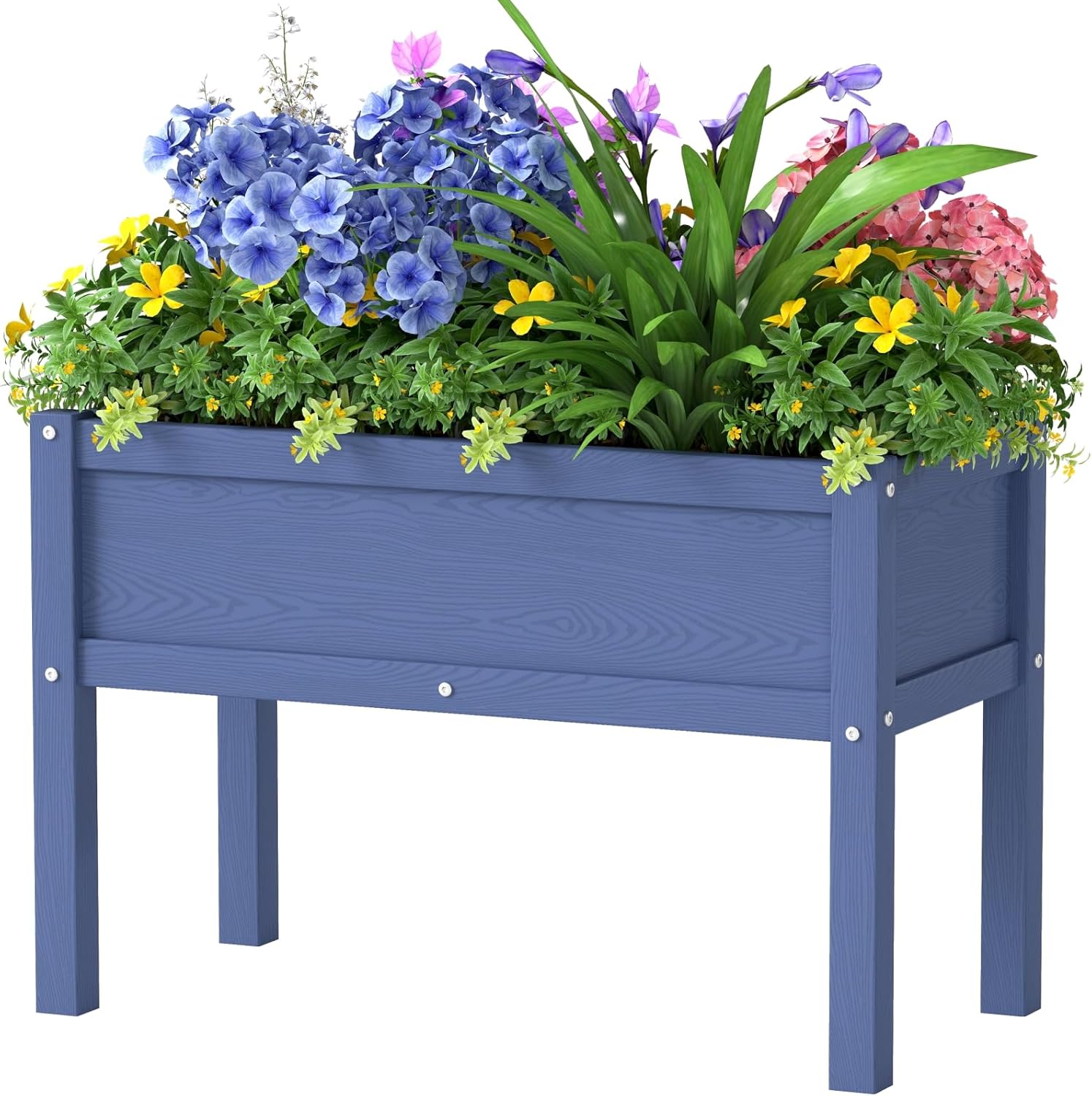
| Material Type | High Density Polyethylene (HDPE) |
|---|---|
| Capacity | 10 gallons |
| Number of Levels | 1 |
| Other Special Features of the Product | Drainage Hole, Fade Resistant, Rot Resistant, Rust Resistant, Weather Resistant |
| Mounting Type | Floor Standing |
This BIVODA raised garden bed is a compact, elevated planter built from high-density polyethylene (HDPE) designed for outdoor vegetable and herb growing. It assembles quickly using pre-inserted nuts and 304-grade stainless steel screws, and the elevated 19.7 inch height keeps plants off the ground for easier planting and protection from small pests. The molded HDPE construction is rot and rust resistant and promises low maintenance since it does not need painting or sealing; drainage holes and a reinforced bottom help keep soil from waterlogging while supporting root mass. Practical for balconies, patios, or small yards, it provides about 10 gallons of planting capacity for a few dwarf vegetables, salad greens, or concentrated herb beds. Limitations include a relatively small planting volume and footprint, so it is better for succession planting or compact varieties rather than large, full-season tomatoes or deep-rooted crops. The plastic construction is durable but will not provide the insulating or aesthetic properties of natural wood for certain garden designs.
Best for: Gardeners who prioritize a low-maintenance, long-lasting raised bed for vegetables in small spaces and want a reliable, pest-elevated planting surface they can use season after season.
Less Ideal for: Growers who need large soil volume for big, deep-rooted vegetables or who prefer the thermal and visual qualities of natural wood beds.
- Durable HDPE construction resists rot, cracking, peeling and weathering
- Rust-resistant 304-grade stainless steel hardware reduces corrosion risk
- Pre-inserted nuts and screws make assembly fast and tool-friendly
- Drainage holes and reinforced bottom help prevent waterlogging and add support
- Limited planting capacity at about 10 gallons, not suitable for large root crops
Verdict: Choose this HDPE elevated planter when you want a reliable, low-maintenance raised bed for concentrated vegetable and herb growing in a small outdoor space.
FOYUEE 31.5" Elevated Mobile Raised Garden Bed with Wheels and Shelf

| Capacity | 2.5 cubic feet |
|---|---|
| Material Type | Metal |
| Finish Types | Powder Coated |
| Mounting Type | Floor Standing |
| Included Components | Wheels, Plant Stand |
This FOYUEE elevated raised bed is a mobile, waist-height planter designed for easy, ergonomic vegetable and herb growing on patios and balconies. The galvanized steel box with a powder-coated finish resists rust and supports heavy fill so you can add ample soil for productive vegetable crops. Built-in drainage channels and a central drain help prevent waterlogging while the raised profile improves air circulation around roots. A lower storage shelf keeps tools and pots handy and the integrated handle plus 6-inch all-terrain wheels make it straightforward to reposition the planter for sun or shelter. Typical uses are growing salad greens, herbs, compact vegetables, or creating a movable culinary garden outside a kitchen door. Assembly and moving when fully loaded will require some effort despite wheels, and the metal surface can warm in strong sun so seedling protection may be needed. The unit favors growers who want less bending and an organized, movable planting station rather than a large in-ground plot.
Best for: Gardeners who want an ergonomic, moveable vegetable planter for patios or balconies and value easy access, organization, and rust-resistant construction.
Less Ideal for: People who need very large planting volumes, deep-rooted crops, or a permanent in-ground bed for large-scale vegetable production.
- Powder-coated galvanized steel construction resists rust for outdoor use
- Raised waist-height design reduces bending and back strain
- Integrated drainage channels and central drain prevent water buildup
- Built-in wheels and handle allow the planter to be moved for light or weather
- Lower shelf provides convenient storage for tools and supplies
- May be heavy and awkward to assemble or move when filled with soil
- Metal walls can heat up in direct sun and may require shading for sensitive plants
Verdict: Buy this if you want a durable, waist-height mobile planter that makes growing herbs and compact vegetables easier without stooping.
Choosing the Right Vegetable Garden Elevated Planter Box: Key Factors to Consider
Material and Weather Resistance
The material determines how long an elevated planter will last in sun, rain, and freezing conditions. Rot-prone woods need protective finishes or liners; cedar and redwood resist decay naturally but still benefit from breathable liners to extend life. Metal frames can be very durable but may require rust-resistant coatings and careful corner construction to avoid weak spots.
Material choice also affects heat retention and soil temperature. Dark metals and some plastics warm up faster, which can be useful in cool climates but stressful in hot summers. Consider how exposed the planter will be to full sun and choose materials that balance longevity with local climate demands.
Drainage and Soil Depth
Vegetables need free-draining soil and enough depth for roots to expand. Shallow boxes restrict root vegetables and large tomatoes, while deeper beds support big root systems and retain moisture more evenly. Look for a planter that gives at least 8 to 12 inches of usable soil for most leafy greens and herbs, and deeper if you intend to grow carrots, beets, or large tomato varieties.
Drainage design matters as much as depth. Built-in drain holes, removable bottom panels, or a raised internal shelf that creates a drainage layer will prevent waterlogging. Poor drainage leads to root rot and nutrient lock-up, so plan for the expected rainfall and irrigation style in your area.
Stability and Structural Design
A secure frame prevents tipping, warping, and joint failure when filled with heavy, wet soil. Wide legs, bracing, and corner reinforcement improve stability, especially for taller elevated planters or those placed on uneven surfaces. If you plan to keep heavy containers on a balcony or deck, confirm that the design distributes weight and that decking can support the load.
Check joinery and fasteners as well. Screws and bolts often hold up better than staples or thin nails. Removable panels are convenient for replacement but must lock securely to avoid leaks and collapse.
Ergonomics and Working Height
One main advantage of elevated planters is reduced bending. Choose a height that suits your primary tasks – seeding, weeding, harvesting – and your body size. Standard raised planters often sit between 24 and 36 inches high; taller models are easier for seated gardeners and those with mobility limits. Consider edge width too, since very wide tops can force you to lean into the bed instead of reaching from the side.
Comfort features like wide ledges for kneeling, rounded edges, and corner openings for hand access can make daily care easier. If multiple users will tend the bed, prefer a mid-range height that accommodates the most common gardener.
Pest Management and Maintenance Access
Elevated planters reduce some ground pests but do not eliminate insects or rodents. Designs that incorporate removable slats, tight seams, and the ability to add wire mesh under the soil layer help keep burrowing pests out. Smooth interiors and accessible liners make summer clean-up and winter soil replacement simpler.
Think about long-term maintenance: can panels be repaired or replaced? Are finishes easy to refresh? Will liners trap moisture and accelerate corrosion in metal beds? Choosing a planter with straightforward access for repair and cleaning saves time and prolongs garden productivity.
Assembly, Portability, and Footprint
How the planter arrives and whether you can move it are practical concerns. Some elevated planters arrive as simple flat packs you assemble with basic tools, while others are heavier, pre-built items that need two people to place. If seasonal relocation is part of your plan, lightweight composite or modular designs ease transport.
Footprint matters when working in tight spaces. Measure the intended location, including clearance for access on all sides. Also consider whether the planter can sit on paving, decking, or directly on soil without causing drainage or structural problems.
Best Planting Mixes for Elevated Boxes
Elevated planter boxes need a lightweight, nutrient-rich mix that drains well. A blend of compost, loam, and a light inorganic material such as perlite or coarse sand gives both fertility and porosity. Avoid pure garden soil – it compacts faster in a contained space and limits root oxygen.
Match the mix depth to the crops. For shallow-rooted lettuces and herbs, aim for at least 8 inches of loose mix. For root vegetables and larger fruiting plants, increase depth and add fibrous compost to retain moisture without waterlogging.
- Layer a coarse drainage material at the bottom only if the planter is very deep and drainage is slow.
- Top-dress with compost mid-season to replenish nutrients without disturbing roots.
- Use slow-release organic fertilizers to reduce leaching in smaller volumes of soil.
Placement and Sun Exposure
Siting elevated planters affects yield. Most vegetables need six or more hours of direct sun; place boxes where morning light is strongest and afternoon shade is limited. On balconies or against walls, reflectivity and heat buildup can alter microclimates, so monitor soil temperature during hot spells.
Consider airflow. Good air movement reduces disease pressure, especially for tomatoes and squash. Avoid blocking vents or creating narrow corridors where humidity can stay high.
- Rotate boxes seasonally to even out wear from sun exposure on materials.
- Leave clearance for watering and harvest on at least one long side.
Watering Strategies for Elevated Planters
Elevated planters dry faster than in-ground beds. Plan to water more frequently, especially in hot weather or when using airy potting mixes. Drip irrigation or soaker hoses with a timer help maintain even moisture without oversaturating the soil.
Mulching the surface reduces evaporation and keeps soil temperatures steadier. Use organic mulches like straw or shredded leaves and refresh as needed to maintain coverage.
- Check soil moisture by hand rather than relying solely on a schedule.
- Install overflow holes or ensure excess water can drain away from decking or foundations.
Seasonal Care and Winterizing
Elevated planters require seasonal attention to protect materials and soil health. In late season, remove spent plants promptly to reduce pest and disease carryover, and add a light layer of compost to rebuild nutrients. If the planter has a liner, inspect it for tears and replace before winter storms.
In cold climates, consider insulating the exterior or moving frost-sensitive beds to a sheltered spot. Some gardeners temporarily raise planters off decking with blocks to prevent water pooling beneath during freeze-thaw cycles.
- Store removable components indoors when not in use to extend their life.
- Avoid leaving wet soil in wooden beds over winter if the wood is untreated.
Design Options for Small Spaces
For balconies and patios, narrow and long elevated planters maximize planting area without taking up too much floor space. Tiered or multi-level options let you grow different crops at ergonomic heights while keeping vigorous plants like peas and beans off the lower beds.
Consider integrated features such as built-in trellises, shelf space for pots, or foldable legs that make storage easier. Modular systems let you add more length or height later without replacing the whole unit.
- Choose square or rectangular footprints over circular ones to make the most of tight corners.
- Look for designs that allow planting on multiple sides if the box will sit in the middle of a space.
How We Chose the Best Vegetable Garden Elevated Planter Box
We evaluated elevated planter boxes according to features that directly affect growing success and day-to-day use in a vegetable garden. Durability and material construction were primary filters – we looked for rot-resistant woods, coated metals, or sturdy composites that withstand moisture and sun. Drainage and soil depth were assessed because vegetables need free-draining media and enough rooting space for healthy yields. Stability and structural design mattered for safety, especially for taller boxes or those placed on decking. We also prioritized ease of access for planting and harvest, including height and edge design that reduce the need to bend. Pest resistance and maintenance features such as removable liners or replaceable panels were included as separate criteria. Portability and assembly complexity were considered for gardeners who move boxes seasonally or work without heavy tools. Products that lacked clear construction details, had insufficient drainage options, or were clearly intended only for decorative use were excluded. The final selections balance real-world garden performance with practical features gardeners use most often.
FAQ
How deep should an elevated planter be for vegetables?
Depth depends on the crops. Aim for at least 8 to 12 inches for leafy greens and herbs, and 12 to 18 inches or more for root crops and larger vegetables. Deeper beds support better moisture retention and root development.
Will elevated planter boxes dry out faster than ground beds?
Yes, elevated boxes typically dry out faster because they have more exposure to air on all sides. Using a water-retentive but well-draining mix, mulching, and drip irrigation can maintain steady moisture.
Can I use raised planter boxes on a deck or balcony?
Often you can, but check weight limits and protect decking from moisture. Use drip trays or elevated feet to allow drainage away from the structure and consider lighter materials if load is a concern.
How do I prevent pests in an elevated planter?
Elevated height reduces some burrowing pests, but you still need good sanitation, tight seams, and optional mesh under the soil to block rodents. Regular inspection and row covers help keep insect pests in check.
Should I line a wooden elevated planter?
Liners extend wood life by reducing direct soil contact, but they can also trap moisture and accelerate decay if they prevent ventilation. Use breathable liners or choose naturally rot-resistant wood and apply maintenance coatings as needed.
Is it worth investing in a deeper, heavier planter?
Deeper planters offer better growing conditions for many vegetables and are more forgiving of watering mistakes, but they are heavier and may be harder to move. Balance depth with site permanence and whether you expect to relocate the bed.
Final Verdict
Elevated planter boxes transform how you garden by improving access, drainage, and control over soil conditions. When choosing a planter, prioritize material durability, sufficient soil depth and drainage, and a stable design that fits your space and lifting ability. Expect tradeoffs between portability and long-term robustness: lighter modular boxes move easily, while heavier, deeper beds deliver better root environments. Match the planter height to your comfort and the crops you grow, and factor in maintenance needs like liner replacement and winter protection. With the right balance of features, an elevated planter becomes a productive, low-stress way to grow vegetables in limited spaces.
