

Note: This article contains affiliate links. If you click on these links and make a purchase, I may earn a small commission at no extra cost to you. This helps support my research and content. Read my full affiliate disclosure here.
A good soil test kit gives you data that changes how you garden. Whether you are starting a new vegetable patch, refreshing lawn care, or correcting pH around ornamental beds, accurate soil readings help you apply the right amendments at the right time. This guide outlines the top shortlisted kits that performed well for home gardeners and small-scale growers. We evaluated each kit for lab-grade accuracy where applicable, the clarity of instructions and results, and how simple it is to collect and interpret samples in typical backyards, raised beds, and containers. Below are our top picks and the practical reasons they made the list.
Top Picks at a Glance
| Best Overall The best all-around choice for most situations | Luster Leaf Rapitest Digital Soil Test Kit (pH, N, P, K) |  |
| Best Quality Built to a higher standard if you want something more solid | MySoil Professional Mail‑In Soil Test Kit (Single Test) |  |
| Best Value The sweet spot between price and what you get | Luster Leaf Rapitest Soil Test Kit (40 Tests) for pH, N, P, K |  |
| Best Budget The cheapest option that still gets the job done reliably | Palinoia 2-in-1 Soil Test Kit for pH and Nitrate-Nitrogen (100 strips) |  |
| Highest Rated A top-rated pick with lots of positive feedback | VILLNO Soil pH Test Kit with 130 Test Strips and Centrifuge Tube |  |
| Most Popular A crowd favorite that many people choose with confidence | SONKIR MS02 3‑in‑1 Soil Tester (Moisture, pH, Light) |  |
| Best Seller A high-volume bestseller chosen again and again | Luster Leaf Rapitest Soil Test Kit (20 tests) |  |
Luster Leaf Rapitest Digital Soil Test Kit (pH, N, P, K)

| Tests included | pH, Nitrogen, Phosphorus, Potash |
|---|---|
| Number of tests | 25 total (10 pH, 5 N, 5 P, 5 K) |
| Included components | Digital soil kit and booklet |
The Luster Leaf Rapitest Digital Soil Test Kit gives home gardeners a simple way to check soil pH and the three primary nutrients—nitrogen, phosphorus and potassium—without sending samples to a lab. You perform up to 25 tests (10 pH, 5 each for N, P and K) using single-use test tubes that slide into the tester’s optical chamber; the built-in LED sensor reads color changes and displays results instantly. The included booklet links readings to recommended fertilizer adjustments and lists pH preferences for over 450 plants, which helps translate numbers into actions. Its main strengths are ease of use, quick results, and a straightforward workflow for routine garden checks. Limitations to expect are the reliance on consumable test tubes and that handheld color-based sensors are less precise than professional lab analysis. For gardeners seeking regular, actionable guidance rather than lab-grade accuracy, this kit is a practical, time-saving option.
Best for: Gardeners who want a reliable, easy-to-use tool for routine soil checks and practical guidance to adjust soil and fertilizer for a variety of plants.
Less Ideal for: Users who need laboratory-level precision for research or commercial soil management should choose professional lab testing instead.
- Measures pH plus N, P and K for a broad nutrient snapshot
- Digital LED color sensing provides instant, easy-to-read results
- Includes guidance booklet with pH preferences for 450+ plants and fertilizer recommendations
- Uses single-use chemical test tubes that must be replaced over time
- Less precise than laboratory soil analysis for exact nutrient quantification
Verdict: A convenient, user-friendly digital tester that gives quick, actionable pH and nutrient readings to help home gardeners tune soil and fertilizer decisions.
MySoil Professional Mail‑In Soil Test Kit (Single Test)
| Tests included | 13 nutrients and pH |
|---|---|
| Results time | 6 to 8 days |
| Kit contents | Sample jar, soil scoop, instructions, prepaid mailing envelope |
| Number of tests | 1 |
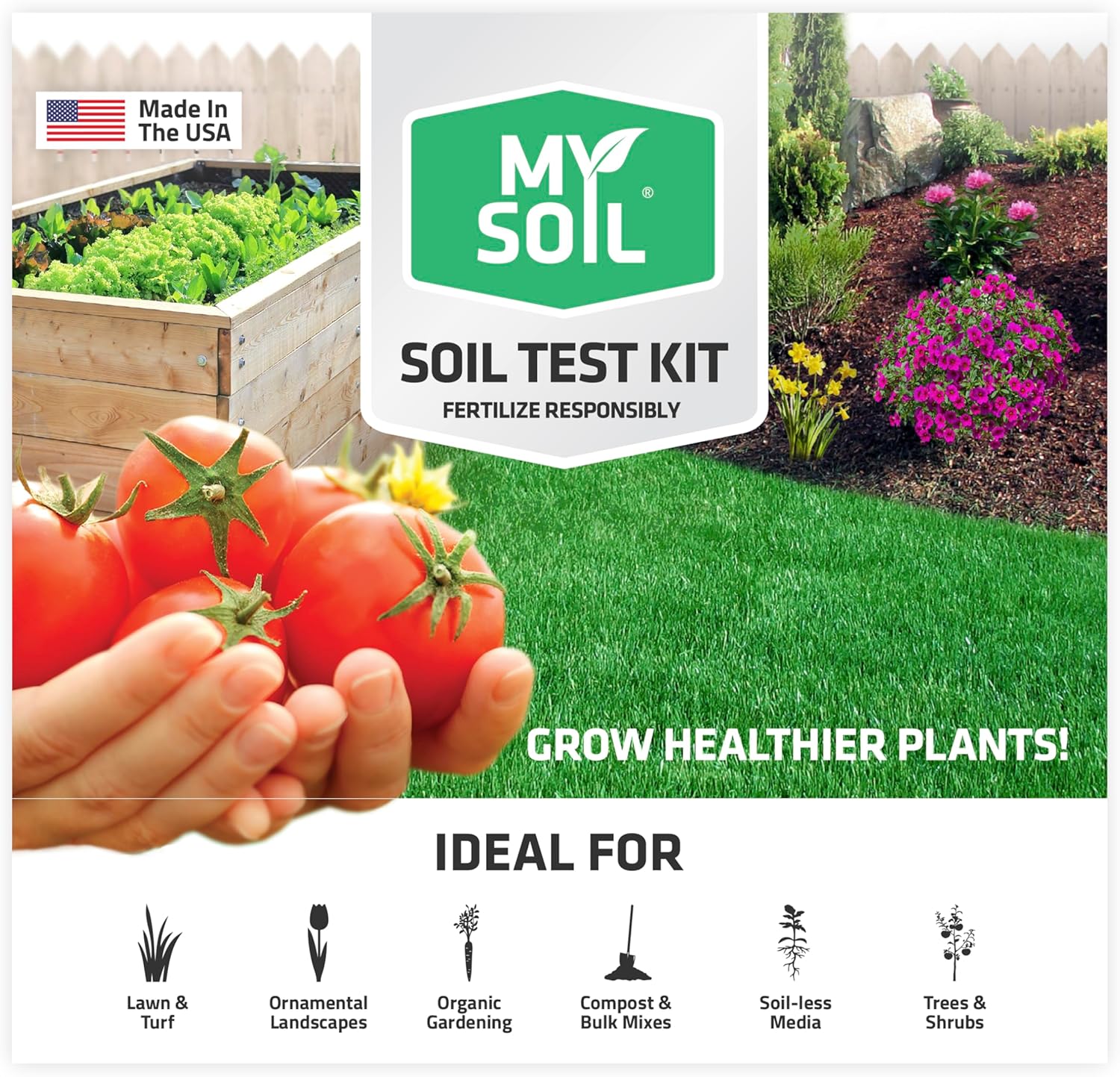
The MySoil kit is a single-use mail-in soil test that gives lab-grade nutrient and pH analysis for targeted lawn and garden improvements. You collect a soil sample, register it online, and send the prepaid sample to MySoil; results and a dashboard appear in about 6 to 8 days with clear, plant-specific recommendations. The kit measures 13 plant-available nutrients including pH and provides both organic and conventional fertilizer suggestions plus timing and application rates, which helps eliminate guesswork and reduce unnecessary products. It is designed to work with any soil type or growing situation from turf and vegetables to houseplants and hydroponics. Practical limits are that the kit covers only one test per package and requires waiting for lab return — it is not an instant in‑field reader — and you will need multiple kits to compare different garden zones or to track changes over time. For gardeners focused on precise nutrient management, the lab report and actionable guidance make this an effective way to improve performance.
Best for: Gardeners and turf managers who prioritize measurable performance and want precise, lab-backed nutrient recommendations to optimize plant health and yields.
Less Ideal for: Casual hobbyists who need instant pH readings or those who only want a low-cost, spot-check method instead of a full laboratory report.
- Lab-grade analysis of 13 plant-available nutrients plus pH for accurate results
- Includes prepaid mailer and online dashboard with clear, custom fertilizer and application recommendations
- Works for any soil type and a wide range of growing scenarios including lawn, vegetable, ornamental, and soilless media
- Fast turnaround for a lab test with results available in about 6 to 8 days
- Single-use kit covers one sample only, so multiple areas require multiple purchases
- Requires mailing time and waiting for lab results rather than instant in-field readout
Verdict: If you want accurate, lab-backed nutrient and pH analysis with actionable amendment plans to improve lawn or garden performance, this mail-in kit delivers professional results.
Luster Leaf Rapitest Soil Test Kit (40 Tests) for pH, N, P, K

| Tests included | 40 tests (10 pH, 10 N, 10 P, 10 K) |
|---|---|
| Battery | No batteries required |
| Mounting type | Tabletop |
| Model | 1601 |
The Luster Leaf Rapitest Soil Test Kit is a straightforward, low-tech way to check garden soil pH and basic nutrient levels (N, P, K) without sending samples to a lab. The kit includes reagents and a patented color comparator that lets you match test tubes to a chart, and it supplies 10 tests each for pH, nitrogen, phosphorus, and potash for a total of 40 tests. In practice it is used by collecting small soil samples, mixing with the provided solutions, then comparing the resulting color to the printed guide to decide whether to amend or fertilize. The main practical benefits are ease of use, clear instructions, and the included plant pH preference list that covers hundreds of species. Limitations are inherent to colorimetric kits: results are semi-quantitative rather than laboratory-accurate, and interpretation can vary with lighting or user perception. For gardeners who want repeat checks across beds or seasonal checks before planting, this kit offers an inexpensive, repeatable method to guide amendments and fertilizer choices.
Best for: Gardeners who want a practical, low-cost way to monitor pH and basic nutrient levels themselves and use results to guide routine amendments and fertilizing.
Less Ideal for: Users who need laboratory-grade, highly precise soil nutrient analysis or who require digital readouts and absolute numeric values.
- Covers pH and the three primary nutrients (N, P, K) in one compact kit
- Includes enough reagents for 40 individual tests (10 per parameter)
- Simple capsule system and color comparator make testing quick and beginner-friendly
- Comes with detailed instructions and a plant pH preference list for over 450 plants
- Color-matching is semi-quantitative and can be affected by lighting and user perception
- Not as precise as laboratory soil analysis for exact nutrient concentrations
Verdict: Choose this kit if you want an inexpensive, easy-to-use way to check pH and basic NPK levels at home and act on straightforward amendment advice.
Palinoia 2-in-1 Soil Test Kit for pH and Nitrate-Nitrogen (100 strips)

| Unit Count | 100 Count |
|---|---|
| Sterility Rating | 0.0-14.0 |
| Recommended Uses For Product | Soil Testing, pH Test |
This Palinoia kit provides a simple, low-cost way to check two key soil measurements: pH and nitrate-nitrogen. You mix a soil sample with water, let solids settle, dip a test strip, and match the strip to the included color chart. The kit ships with 100 strips plus a sampling spoon, test tube, and resealable pouches so you can test many beds, pots, or lawn spots without frequent repurchases. Because it targets nitrate-nitrogen only, results tell you the plant-available nitrogen rather than total nitrogen from ammonium or urea products. The visual color-match method is fast and beginner friendly, but it is less precise than lab testing or electronic meters and can be affected by sample dilution and lighting when reading colors. For routine spot checks to guide fertilizer or lime choices, this delivers clear practical value at a low price, but growers who need lab-grade accuracy or measurements of other nutrient forms should look elsewhere.
Best for: Gardeners looking to stretch a small budget while monitoring basic soil acidity and nitrate-nitrogen across multiple spots; good for homeowners doing routine, practical checks rather than precise lab analysis.
Less Ideal for: Professional soil testing needs or growers who require exact nutrient concentrations, multi-nutrient profiles, or measurements of ammonium and organic nitrogen sources.
- Two-in-one testing for soil pH and plant-available nitrate-nitrogen in one kit
- Large 100-count supply suitable for repeated testing across a garden or many pots
- Includes sampling spoon, test tube, and resealable pouches for organized field testing
- Simple mix-dip-and-compare procedure that is beginner friendly and quick
- Color chart strip readings are semi-quantitative and less precise than lab analysis or digital meters
- Measures nitrate-nitrogen only and does not report ammonium or urea-derived nitrogen
Verdict: If you want an inexpensive, easy-to-use kit to routinely check soil pH and plant-available nitrate across many spots, this gives the most tests for the money.
VILLNO Soil pH Test Kit with 130 Test Strips and Centrifuge Tube

| Unit Count | 130 Count |
|---|---|
| Included Components | Soil pH Test Strips, Centrifuge Tube |
| Material Type | paper |
| Sterility Rating | 3.5-9 |
The VILLNO Soil pH Test Kit is a no-frills kit for gardeners who want fast, repeatable pH checks without lab equipment. You mix a small soil sample with water, dip a paper strip, then match the color to the included chart to read pH between 3.5 and 9.0. The kit supplies 130 strips and a centrifuge tube, so it supports routine testing across beds, containers and lawns through a season. Its strengths are ease of use and volume of tests, which make it practical for monitoring changes after amendments or when troubleshooting persistent plant issues. Because the strips are paper based they deliver quick approximate readings rather than lab-grade precision, so they are best for trackable trends and routine care rather than research-level accuracy. The kit is compact and low-maintenance, but users who need highly precise pH numbers or soil nutrient analysis will still need professional probes or lab tests.
Best for: Gardeners who prioritize dependable, repeatable field checks to monitor soil pH over time and want an easy-to-use kit for routine maintenance.
Less Ideal for: Users who require highly precise pH measurements, detailed nutrient analysis, or professional soil diagnostics should choose a lab test or electronic meter instead.
- Large supply of 130 strips supports frequent or multi-plot testing
- Wide measurable range from pH 3.5 to 9.0 covers most garden soils
- Simple three-step procedure yields fast, easy-to-read results
- Includes a centrifuge tube for cleaner sample preparation and reuse
- Paper strips provide approximate pH values rather than lab-grade precision
- Does not measure other soil factors like nutrients or EC
Verdict: A practical, high-count strip kit for gardeners who need fast, repeatable soil pH checks across multiple beds and seasons.
SONKIR MS02 3‑in‑1 Soil Tester (Moisture, pH, Light)
| pH range | 3.5–8 pH |
|---|---|
| Moisture range | 1–10 scale (1–3 dry, 4–7 normal, 8–10 wet) |
| Probe length | 7.9 inches |
| Power | No battery required |
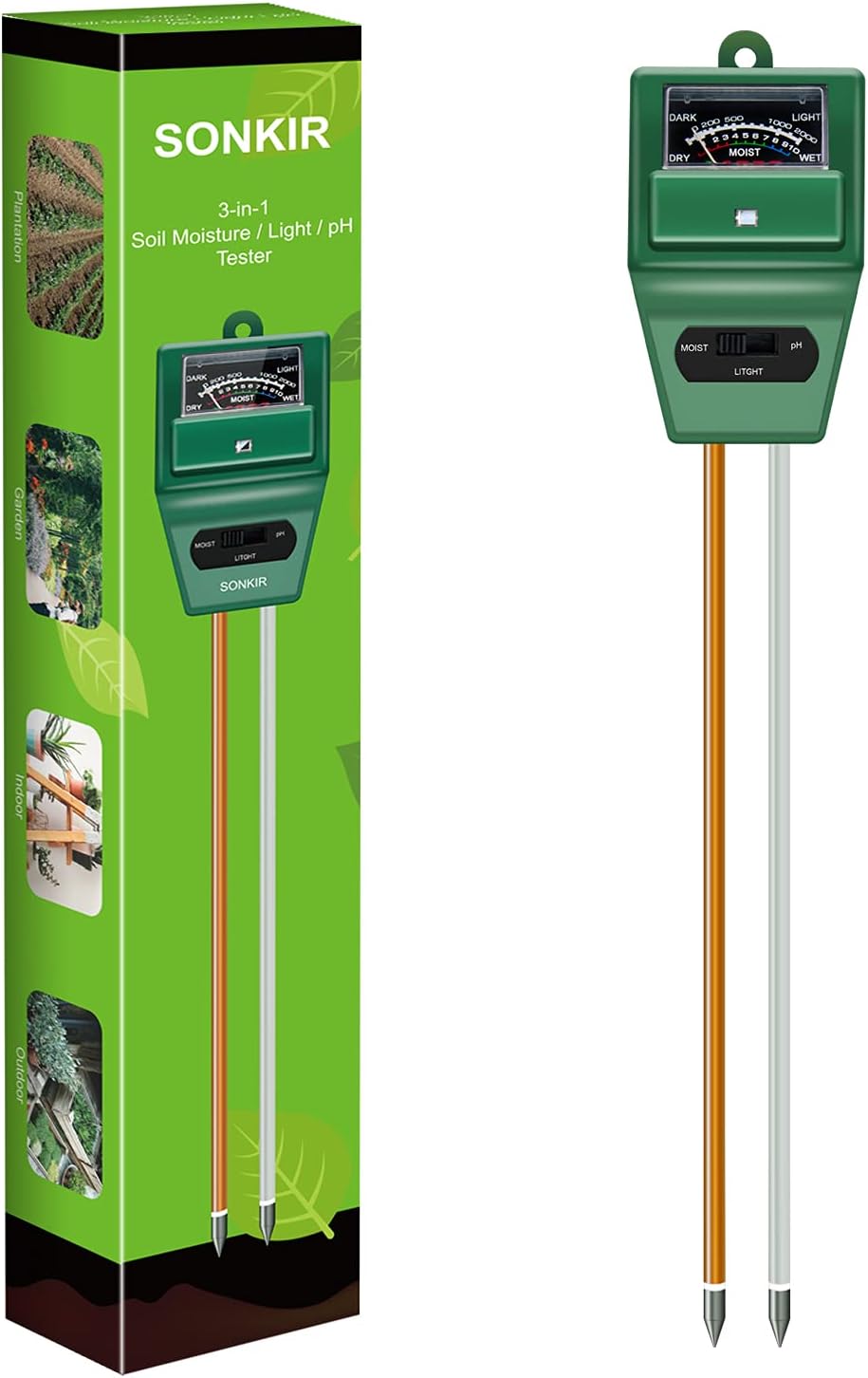
The SONKIR MS02 is a pocketable, no‑battery soil meter that gives quick, readable feedback on moisture, soil pH, and light levels. You switch the dial to the desired function, insert the probes about 6–7 inches into the soil, wait around 10 minutes, and read results on the analog display. Its strengths are ease of use and portability: it is useful for casual gardeners checking when to water, whether a planting spot gets enough sun, or whether the soil leans acidic or alkaline. The mechanical dial and simple ranges for moisture and pH make interpretation straightforward without apps or calibration. Important limitations are that the pH function is intended only for soil (not liquids), the probe is thin and can be damaged if forced into compacted ground, and readings are broad rather than laboratory‑grade. Also, very dry soil may not move the moisture needle, so prewatering is sometimes necessary for a reading. For everyday garden decisions this meter delivers fast, low‑effort guidance, but it is not a substitute for precise lab testing or heavy‑duty professional meters.
Best for: Gardeners who want a low‑effort way to check basic soil conditions and make faster watering and placement decisions based on simple, actionable readings.
Less Ideal for: Users who need laboratory‑level pH accuracy, professionals who require rugged probes for dense or rocky soils, or anyone wanting quantitative digital logging and calibration features.
- Three functions in one tool for moisture, pH, and light without needing batteries
- Analog dial is simple to read and usable without setup or apps
- Portable and compact for spot checks around garden beds and potted plants
- Not suitable for testing liquids; pH readings only work in soil
- Probe can be damaged if forced into hard or rocky soil
- Provides broad range indicators rather than precise laboratory measurements
Verdict: Buy this if you want an inexpensive, battery‑free tool for quick, everyday checks of soil moisture, pH trends, and light exposure to guide routine garden decisions.
Luster Leaf Rapitest Soil Test Kit (20 tests)

| Brand Name | Luster Leaf |
|---|---|
| Unit Count | 20 Count |
| Item Type Name | Soil Test Kit |
| Model Number | 1602 |
The Luster Leaf Rapitest Soil Test Kit provides a simple, low-tech way to check garden soil pH and the three main nutrients gardeners track: nitrogen, phosphorus and potash. The kit includes reagents and comparators for 20 tests total (five tests per measurement), so you can sample several areas across a lawn or vegetable bed. Use involves mixing small soil samples with the provided capsules or solutions, then matching the resulting color against the included chart. That makes it fast and approachable for beginners and steady gardeners who want a practical snapshot before amending or fertilizing. The clear instructions and plant pH preference list for over 450 species are helpful for making actionable adjustments. Limitations are the coarse resolution of color-based readings and the limited number of tests compared with lab analysis, so it is best for routine spot checks rather than precise scientific monitoring.
Best for: Gardeners who want a straightforward, low-cost way to check soil health before amending and prefer practical, easy-to-follow results over lab-level precision.
Less Ideal for: Users who need laboratory-grade accuracy, quantitative nutrient concentrations, or frequent high-volume testing for professional soil management.
- Covers core measurements gardeners need: pH, nitrogen, phosphorus and potash.
- Includes materials for 20 total tests to sample multiple garden spots.
- Patented color comparator system makes results easy to read without special tools.
- Comes with detailed instructions and a plant pH preference list for many common species.
- Color-matching gives approximate results and is less precise than laboratory testing.
- Only five tests per measurement limits long-term or frequent monitoring without repurchasing.
Verdict: Buy this kit if you want an easy, affordable way to spot-check soil pH and basic nutrient levels across your garden before amending.
Choosing the Right Soil Test Kit: Key Factors to Consider
Measurement Accuracy and Consistency
Accurate measurements determine whether you add lime, sulfur, fertilizer, or nothing at all. For gardeners, consistency between repeated samples matters more than a single absolute value. If a kit produces stable pH and nutrient readings from the same spot sampled multiple times, you can trust trends and the effect of amendments.
Home chemical kits can be convenient but sometimes trade accuracy for speed. Mail-in lab kits often provide higher precision for macronutrients and trace elements, which helps with corrective fertilizer plans. Consider how much precision you need for your plants and how errors would affect your management choices.
Test Range and Parameters
Different kits measure different things. Basic kits typically test pH and a small selection of nutrients like nitrogen, phosphorus, and potassium. More comprehensive kits add secondary nutrients, organic matter estimates, and electrical conductivity, which helps with saline or container-grown soils.
Choose a kit that measures what you will act on. If you are managing vegetable plots, pH plus N-P-K and organic matter are usually essential. For ornamental beds or lawns, pH and phosphorus levels may be the priority. Avoid buying broad multi-parameter kits if you only need a pH check, but also avoid too-narrow kits when you suspect multiple limiting nutrients.
Ease of Sampling and Field Use
A kit is only as useful as the samples you collect. Clear instructions for how deep and where to sample, how to composite multiple plugs, and how to avoid contamination are critical. Tools that include a sampling probe, scoop, and labeled sample bags reduce user error.
Portability and the number of samples the kit supports matter for larger gardens. If you plan to map soil variability across a yard, a kit that supports multiple sample collections without extra purchases will save time and money. Also consider how messy or technically demanding the chemistry is if you plan to test in the field.
Result Readability and Guidance
Getting results is only useful if you can interpret them. Kits that provide clear color charts, numeric readouts, or lab reports with actionable recommendations are far more valuable than ones that give ambiguous results.
Look for kits that translate test results into amendment suggestions or target ranges for common crops. When guidance is missing, you will need to cross-reference general tables or seek extension service help, which adds effort and potential confusion for novice gardeners.
Lab Support and Reagent Quality
For mail-in kits, the lab's accreditation and transparency about methods affect how much you trust results. Reagent-based home kits depend on the stability and quality of chemicals included. Degraded reagents or unclear expiration information lead to unreliable readings.
Kits that include controls or reference samples let you check that the kit is functioning. Also consider whether the kit vendor provides follow-up support such as interpreting results or answering questions about specific crops or soil types.
Sample Coverage and Repeat Testing
Soil variability means one test rarely represents an entire yard. A useful kit supports collecting multiple subsamples and mixing them into composite samples, or it supplies enough tests to cover several distinct beds separately.
Repeat testing is important for monitoring changes after amendments. A kit that is economical for multiple rounds, or that includes enough reagents for seasonal retesting, will be more helpful for active gardeners tracking soil health over time.
When to Use a Home Chemical Kit Versus a Mail-In Lab
Home chemical kits are valuable for quick checks and pH troubleshooting when you need immediate answers before planting or amending. They are portable and usually give same-day results, which is helpful for last-minute adjustments in containers or small raised beds.
Mail-in lab kits take longer but are preferable when you need precise nutrient numbers, especially for addressing persistent poor growth or diagnosing complex deficiencies. Labs often test a broader set of elements and provide comments tailored to soil texture and cropping plans.
- Use home kits for fast pH checks and basic N-P-K guidance.
- Use mail-in labs when you need precise nutrient levels and tailored recommendations.
- Consider cost per test if you plan to resample seasonally.
How to Collect Representative Soil Samples
Collecting representative samples is as important as the test itself. Take multiple small cores across the zone you want to characterize and mix them into a single composite sample rather than relying on a single plug. For lawns take cores across several spots; for garden beds sample each bed separately.
Avoid sampling right after fertilizing, liming, or heavy watering unless that timing is deliberate. Clean tools between spots to prevent cross-contamination and label samples clearly if you are testing multiple areas.
- Sample depth: 4 to 6 inches for most beds, deeper for deep-rooted perennials.
- Mix 8 to 12 cores per composite sample for even coverage.
- Record location, date, and recent amendments for later comparisons.
Interpreting pH and Nutrient Results Practically
pH affects nutrient availability more than most gardeners realize. Small shifts can alter the availability of phosphorus and certain micronutrients. Use pH results to decide on lime or sulfur and then retest after an appropriate interval to track change.
Nutrient numbers should be viewed alongside crop needs. High phosphorus may not need immediate correction unless new planting demands it. Nitrogen is more transient and may require seasonal management rather than a one-time amendment. Treat lab recommendations as starting points and monitor plant response after changes.
- Adjust pH gradually and retest after several months.
- Address nitrogen with split applications during the growing season.
- Use phosphorus and potassium corrections cautiously and based on clear deficiency signs or test readings.
Using Soil Test Results to Build a Fertility Plan
Translate numbers into a seasonal plan that matches your crops. For vegetables, plan pre-plant corrections for pH and phosphorus, and schedule nitrogen as side-dressings. For ornamentals, aim for soil conditions that match species preferences rather than chasing textbook nutrient targets.
Combine test results with observed plant symptoms and soil texture. Organic matter amendments, cover cropping, and targeted mineral additions can all be part of a balanced program driven by test data.
- Prioritize pH correction then macronutrients.
- Use organic matter to improve nutrient retention and structure.
- Monitor changes over multiple seasons before making large, permanent adjustments.
Maintaining Good Sampling Records
Keeping records of test dates, sample locations, and amendment history makes it easier to interpret trends and avoid redundant corrections. Create a simple log with sample IDs that map to garden zones so you can compare year-to-year changes reliably.
Digital photos and notes about crop performance at the time of sampling add valuable context for later decisions. Over time, the database you build will reduce guesswork and help you refine amendment timing and quantities.
- Log sample IDs, dates, pH, key nutrients, and amendments applied.
- Retest the same spots each season for true trend data.
- Keep color charts or digital copies of lab reports for reference.
How We Chose the Best Soil Test Kit
We focused on real-world suitability for home and small-scale gardening when narrowing the list. Key evaluation criteria emphasized measurement reliability, ease of sample collection, clarity of instructions and readouts, and the breadth of tests included (pH plus primary nutrients). We also considered turnaround and lab involvement for kits that send samples away, as well as the quality of included reagents and controls for at-home chemical tests. Practical usability was another filter: how straightforward the kit is for gardeners who are not lab-trained, whether the kit includes clear guidance for sampling depth and quantity, and whether it supports common soil types like loam, clay, and raised-bed mixes. Durability and organization of included tools were checked so the kit can be reused or stored easily. We excluded products that only offered a single, non-actionable measurement or that required specialized equipment beyond the kit contents. Kits that lacked clear instructions or produced ambiguous color charts were also filtered out. The final selection balances accuracy, ease of use, and the range of actionable nutrient and pH information gardeners need.
FAQ
How often should I test my garden soil?
Most home gardens benefit from testing every 2 to 3 years to track pH and major nutrient trends. Test more frequently if you make major amendments, change crop types, or see persistent growth problems.
Can I rely on a single pH test for the whole yard?
Not usually. Soil varies across lawns, beds, and raised containers. Take composite samples from defined zones so readings reflect the specific area you will manage.
Are home chemical kits accurate enough for vegetables?
Home kits give useful directional information for pH and basic nutrient levels, but they may lack the precision of lab analyses. For sensitive crops or persistent problems, a mail-in lab test is often worth the extra accuracy.
What should I do if my soil test shows low organic matter?
Add compost, well-rotted manure, or use cover crops to build organic matter. Repeat testing over seasons to watch for improvement, and combine organic inputs with reduced disturbance to retain gains.
Will recent fertilizer applications affect my test results?
Yes. Test results can reflect recent fertilizer or lime applications. If you need baseline data, avoid sampling immediately after applying amendments and wait several weeks to let materials settle into the soil.
Can I reuse reagents or strips from a home kit?
Some kits include multiple tests but reagents can degrade over time. Check storage guidance and expiration information. Using controls or reference samples helps confirm that leftover reagents still produce reliable responses.
Final Verdict
Choose a Soil Test Kit that matches the level of detail you need and the scale of your garden. For quick troubleshooting and seasonal pH checks a portable chemical kit can be convenient, while mail-in lab tests are better for comprehensive nutrient planning and persistent issues. Prioritize accurate sampling, clarity of results, and support for repeat testing. With a consistent testing routine and sensible interpretation, you will make more targeted amendments and see clearer improvements in plant performance.
