

Note: This article contains affiliate links. If you click on these links and make a purchase, I may earn a small commission at no extra cost to you. This helps support my research and content. Read my full affiliate disclosure here.
Picking the right soil for veggies matters more than many gardeners expect. The wrong mix can hamper germination, stunt root growth, and force you into constant watering or heavy fertilizing. You want a medium that holds nutrients, drains well, and supports steady root oxygenation across the season. This guide covers seven shortlisted soils for veggies chosen for real garden use: raised beds, in-ground rows, and container growing. We explain how each type behaves in the garden and summarize the evaluation criteria used to choose them, including nutrient profile and moisture management. Read on to find the soil style that fits your bed, your watering routine, and the vegetables you want to grow.
Top Picks at a Glance
| Best Overall The best all-around choice for most situations | Coast of Maine Organic Planting Soil for Vegetables & Tomatoes (20 Qt, 2 Pack) |  |
| Best Quality Built to a higher standard if you want something more solid | FoxFarm Ocean Forest Potting Soil, 12 qt |  |
| Best Value The sweet spot between price and what you get | Miracle-Gro Moisture Control Potting Mix, 16 qt. (2-Pack) |  |
| Best Budget The cheapest option that still gets the job done reliably | Back to the Roots 3-in-1 Seed Starting Mix, 6 Quart, Organic Peat-Free |  |
| Highest Rated A top-rated pick with lots of positive feedback | FoxFarm Happy Frog Potting Soil for Containers, 2 cu ft (with 2 Plant Tags) |  |
| Most Popular A crowd favorite that many people choose with confidence | Miracle-Gro Organic Indoor Potting Mix, 16 qt. |  |
| Best Seller A high-volume bestseller chosen again and again | Back to the Roots Organic Expanding Coco Coir Potting Soil Brick |  |
Coast of Maine Organic Planting Soil for Vegetables & Tomatoes (20 Qt, 2 Pack)

| Brand | Coast of Maine |
|---|---|
| Volume | 20 quarts |
| Unit Count | 2 Count |
| OMRI listed | Yes |
This Coast of Maine planting soil is an organic, multi-use blend designed specifically for tomatoes and vegetables. It combines composted manure, peat moss, and sea- and land-based amendments like lobster and kelp meals to deliver a nutrient-rich medium that supports seeding, transplanting, and topping off beds or containers. The mix is formulated to retain enough moisture for thirsty vegetable roots while still offering good drainage, which helps reduce waterlogging in pots and raised beds. Being OMRI-listed and made from repurposed organic materials, it supports soil biology and biodiversity, encouraging worms and beneficial microbes. Practical benefits include a ready-to-use, gardener-friendly texture and ingredients that supply slow-release nutrients so plants establish faster and produce more vigorously. Important limitations are that the product comes in 20 quart bags so multiple bags are needed for larger beds and the safety note about dust means you should avoid inhaling when handling. For a balanced gardener looking to boost vegetable performance with an organic option, this mix is a convenient, eco-minded choice.
Best for: Gardeners who want a ready-made organic soil to improve vegetable and tomato performance in containers or raised beds while supporting soil life and sustainable sourcing.
Less Ideal for: People who need bulk quantities for large-scale row gardens or who prefer a completely mineral-based, soilless potting medium should consider other options.
- OMRI-listed organic formula that supports soil biology and is safe for edible gardens
- Blend of composted manure, peat moss, and sea-derived amendments provides slow-release nutrients
- Balanced moisture retention and drainage suitable for both containers and in-ground beds
- Made from repurposed organic byproducts which supports more sustainable gardening
- Sold in 20 quart bags so covering a large vegetable bed requires many bags
- Contains fine particles that can produce dust during handling which may irritate airways
Verdict: A convenient OMRI-listed organic soil blend that boosts vegetable and tomato growth in containers and raised beds while supporting soil biology.
FoxFarm Ocean Forest Potting Soil, 12 qt

| Item Form | Granules |
|---|---|
| Specific Uses For Product | Dry Fertilizer |
| Coverage | 4.8 sq ft |
| Mixing Ratio | 1:1 |
FoxFarm Ocean Forest is a pre-mixed potting soil built for strong early growth in containers and seed starts. It combines aged forest products, sandy loam and sphagnum peat moss for a light, well-aerated texture that drains yet holds moisture. The mix is enriched with fish meal, crab meal and earthworm castings so plants get an immediate nutrient boost and usually do not need additional fertilizer for the first 30 days. Typical uses are filling pots, repotting houseplants, and starting vegetable seedlings in trays or small containers. Notable features include a pH-adjusted formula for nutrient uptake and a 1:1 mixing guideline for blending with other soils or amendments. Practical benefits for vegetable growers are faster establishment and fewer early nutrient deficiencies. Important limitations are that this is a bagged potting mix designed for containers rather than bulk garden beds and it contains organic amendments that will continue to break down over time, so long-term container crops may need supplemental feeding later in the season.
Best for: Vegetable gardeners who want a high-performing container mix to get seedlings and small pots off to a vigorous start and who prioritize early growth and establishment.
Less Ideal for: Large-scale in-ground vegetable beds or gardeners seeking a raw, unamended topsoil for landscape grading should consider bulk garden soil alternatives.
- Ready-to-use mix with balanced aeration and drainage for container-grown vegetables
- Contains organic nutrients (fish meal, crab meal, earthworm castings) to support seedlings and early growth
- pH adjusted to improve nutrient uptake
- Suitable for repotting, seed starting, and top-dressing without immediate fertilizer needs
- Formulated for containers not bulk in-ground beds
- Nutrient content is front-loaded so additional feeding is usually needed after the first month
Verdict: Choose this mix when you need a ready-to-use, nutrient-rich potting soil that accelerates seedling and container vegetable growth.
Miracle-Gro Moisture Control Potting Mix, 16 qt. (2-Pack)
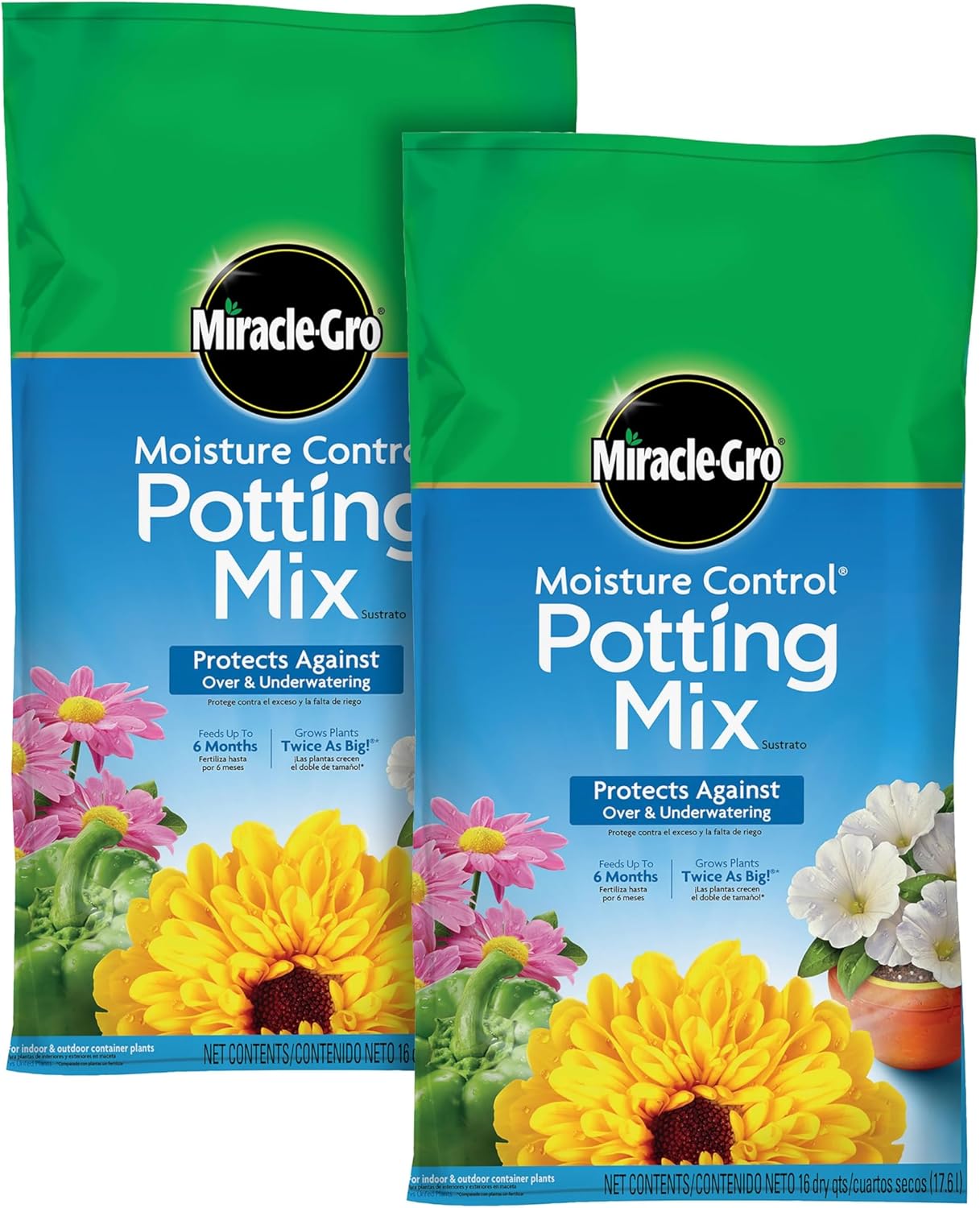
| Number of Packs | 2 |
|---|---|
| Style Name | 16 qt. |
| Feeds Plants | Up to 6 months |
| Item Highlight | Protects against Over- and Under-Watering |
Miracle-Gro Moisture Control Potting Mix is a ready-to-use soil blend designed for outdoor containers and planters. It combines coir, sphagnum peat moss, and a wetting agent (AquaCoir formula) to absorb up to 33% more water than basic potting soils and includes slow-release nutrients that feed plants for up to six months. Typical use is filling pots and hanging baskets, planting flowers, shrubs, or vegetables, and watering through until drainage occurs. The mix is airy to help roots breathe and is aimed at reducing the frequency of watering while still allowing the container to dry between waterings. Practical benefits include consistent moisture management, built-in nutrition for several months, and easy handling in standard pots. Limitations to consider are that it is formulated for containers rather than in-ground beds, so it should not replace garden soil for raised beds, and container-grown plants may still need annual repotting to refresh nutrients and prevent compaction.
Best for: Gardeners who grow vegetables or mixed edibles in containers and prioritize consistent moisture and reduced watering frequency for productive, low-maintenance pots.
Less Ideal for: People planting directly in raised beds or in-ground vegetable rows who need a soil designed to amend native soil for long-term bed use.
- AquaCoir formula absorbs more water to reduce over- and under-watering.
- Feeds plants for up to six months with slow-release nutrients.
- Airy texture that promotes healthy root respiration in containers.
- Pack of two 16 qt. bags suitable for multiple 12-inch pots.
- Formulated specifically for container use and not intended as in-ground soil.
- Nutrients decline after the feed period so repotting or topping up is needed annually.
Verdict: A convenient, moisture‑controlling potting mix that keeps container vegetables evenly watered and fed for up to six months, making it a smart choice for container vegetable growers.
Back to the Roots 3-in-1 Seed Starting Mix, 6 Quart, Organic Peat-Free

| Unit Count | 192 Fluid Ounces |
|---|---|
| Style Name | 3-in-1 Seed Starting Mix |
This Back to the Roots 3-in-1 Seed Starting Mix is a ready-to-use, peat-free potting medium aimed at starting seeds and supporting young vegetable transplants. It combines coconut coir, mycorrhizae, dolomitic limestone and yucca extract with nutrient-rich amendments and worm castings to encourage root development and balanced pH. Typical use is filling trays or small pots for herbs, tomatoes, peppers and other veggie seedlings before transplanting to larger containers or garden beds. The mix is lightweight and drains well while retaining enough moisture for even watering, so young roots can establish without sitting in water. Practical benefits include organic inputs that reduce the need for early fertilizing and a formulation meant to limit overwatering problems common with seed starting. Limitations are the small 6-quart volume, which means you may need multiple bags for larger vegetable projects, and it is formulated primarily for seed starting rather than as a finished potting soil for mature plants or large raised beds.
Best for: A budget-minded gardener who wants an easy, organic seed-starting mix to get veggie seedlings off to a healthy start without custom blending ingredients.
Less Ideal for: Gardeners who need bulk soil for filling raised beds or who want a single potting mix to use from seedling through mature vegetables should look for larger-volume or all-purpose mixes.
- Organic, peat-free formula with mycorrhizae and worm castings to support early root growth
- Includes moisture-controlling yucca extract to help reduce overwatering issues
- Balanced additives like dolomitic limestone to help moderate pH for seedling health
- Ready-to-use mix suitable for seed trays, small pots, and indoor starts
- Small 6-quart volume may require multiple bags for starting many vegetable seedlings
- Designed for seed starting rather than long-term potting or filling large raised beds
Verdict: Pick this organic, peat-free seed starting mix when you want a ready-made, beginner-friendly medium that helps vegetable seedlings establish strong roots.
FoxFarm Happy Frog Potting Soil for Containers, 2 cu ft (with 2 Plant Tags)

| Brand Name | FoxFarm |
|---|---|
| Item Highlight | Amended Container Blend with Soil Microbes, Earthworm Castings, Bat Guano, and Aged Forest Products |
| Unit Count | 600 Ounce |
| Style Name | Container Garden |
| Volume | 2 cubic feet |
FoxFarm Happy Frog Potting Soil is a premixed container blend designed to give potted vegetables and other container plants a nutrient-rich, biologically active growing medium. The bag comes ready to use and is amended with earthworm castings, bat guano, and aged forest products plus a custom blend of beneficial soil microbes and mycorrhizal fungi to encourage root development and nutrient uptake. In practice it works well for filling pots, planters, and grow bags for tomatoes, peppers, herbs, and other edibles where roots cannot reach native soil. The included plant tags help track varieties and planting dates. Practical benefits for reliable growers include strong initial fertility, improved soil biology for better root performance, and a pH adjusted mix for nutrient availability. Limitations are that it is a container-specific mix so gardeners should expect to supplement nutrients over the season for heavy-feeding vegetables and replace or refresh the medium between crops in long-term containers.
Best for: Gardeners who prioritize a reliable, biologically active potting mix for container-grown vegetables and want a ready-made solution that reduces setup time and improves early root performance.
Less Ideal for: Growers looking to build in-ground beds or those who prefer to mix their own custom potting media from bulk ingredients should consider other options.
- Ready-to-use mix with organic amendments for immediate planting
- Contains beneficial microbes and mycorrhizal fungi to boost root growth
- Amended with earthworm castings and bat guano for natural fertility
- pH adjusted to improve nutrient uptake in containers
- Formulated for containers so long-season vegetable crops may need additional fertilizer during production
- Will require replacement or top-up between successive container crops
Verdict: Choose this if you want a dependable, ready-made potting soil rich in organic amendments and microbes to jump-start container vegetable production.
Miracle-Gro Organic Indoor Potting Mix, 16 qt.

| Brand Name | Miracle-Gro |
|---|---|
| Item Highlight | Protects Against Over & Under Watering |
| Unit Count | 1 Count |
| Volume | 1 cubic feet |
| Style Name | Indoor |
Miracle-Gro Organic Indoor Potting Mix is a ready-to-use organic blend designed for houseplants, seed starting, and indoor container gardening. The mix combines coir for improved air space and moisture holding, sphagnum peat moss for water retention and release, and a quick-start natural fertilizer to give seedlings and transplants an early nutrient boost. It is OMRI listed, which supports use in organic setups, and one 16 qt. bag is intended to fill about a 12-inch pot. Typical use is filling pots with drainage, transplanting houseplants or sowing seeds in shallow trays, then watering and keeping seedlings out of direct sun until established. Practical benefits include consistent moisture regulation for indoor conditions and ingredients that help roots establish quickly. Limitations for vegetable growing: the product is formulated for indoor ornamental plants and seed starting rather than long-term in-pot fertility for heavy-feeding vegetable crops, so you will likely need to supplement nutrients for productive vegetable containers or successive plantings.
Best for: Buyers who want an organic, low-fuss potting mix for starting seeds and growing herbs or small vegetables indoors and who value proven, widely used products.
Less Ideal for: Growers planning to produce large, heavy-feeding vegetables in the same soil without additional fertilization or those who need an outdoor garden soil blend.
- OMRI listed for organic use
- Blend includes coir and sphagnum peat to balance aeration and moisture retention
- Contains quick-start natural fertilizer to help seedlings and transplants establish
- Convenient bag size that fills a typical 12-inch container
- Not formulated as a long-term, high-nutrient mix for heavy-feeding vegetable crops
Verdict: A dependable, OMRI-listed potting mix that simplifies seed starting and indoor container growing by balancing moisture and aeration.
Back to the Roots Organic Expanding Coco Coir Potting Soil Brick

| Item Highlight | 10 lb compressed coco coir brick; peat-free; OMRI Listed |
|---|---|
| Item Type Name | Coconut Coir |
| Volume | 2 cubic feet |
| Ingredients | Coconut Coir |
This expanding coco coir brick is a lightweight, peat-free potting media that soaks with water and fluffs into roughly 2 cubic feet of soil-ready substrate. You hydrate the compressed block, break it apart, and use it alone for containers, as a seed-starting medium, or mixed into existing garden soil to improve aeration and water retention. The product is OMRI listed and made of 100 percent coconut coir, so it is useful for growers who prefer organic inputs and want a neutral pH that works across vegetables, herbs, and flowers. Practical benefits include compact storage before use, easier handling than heavy bagged soils, and good drainage while holding moisture for young roots. Limitations are that coco coir is low in nutrients by itself, so plan to add fertilizer or compost for long-term vegetable production, and you will need to measure water to fully expand the block evenly before planting.
Best for: Gardeners who want a low-mess, organic potting medium for starting seeds, potting vegetables, or light amendment of container mixes and who prefer predictable, beginner-friendly materials.
Less Ideal for: Growers seeking a ready-to-use, nutrient-rich vegetable potting mix or those who want a single product to feed plants long-term without additional fertilization.
- Expands to about 2 cubic feet from a compact 10 lb block for convenient storage
- Peat-free and OMRI listed for organic-compatible gardening
- Neutral pH and good balance of aeration and water retention for seed starting and containers
- Easy to use: hydrate, break apart, and mix or use alone without heavy lifting
- Contains no significant nutrients so you must add fertilizer or compost for vegetable beds
Verdict: A compact, organic coco coir brick that expands into a neutral, easy-to-use medium ideal for starting vegetables and improving container mixes when paired with fertilizer.
Choosing the Right Soil for Veggies: Key Factors to Consider
Nutrient Balance and Fertility
Vegetable plants need a steady supply of macronutrients and a baseline of micronutrients to develop leaves, flowers, and fruits. A soil with a balanced nutrient profile or built-in slow-release organic fertilizer reduces the need for constant feeding and supports steady growth from seedling to harvest.
Look for mixes that list composted materials, well-aged manure, or formulated organic fertilizers. Those inputs release nutrients gradually and help avoid the quick spikes and crashes that can occur with soluble chemical feeds. Also consider whether you plan to top-dress or side-dress during the season; if so, a moderate baseline fertility is often preferable to an overly rich initial mix that can burn young roots.
Moisture Retention and Drainage
Good vegetable soil must hold enough moisture to buffer daily swings without becoming waterlogged. Waterlogged roots suffer from low oxygen and are prone to disease, while overly sandy soils drain too fast and force frequent watering.
Evaluate the soil's ability to retain moisture while still allowing excess water to escape. Ingredients like coconut coir, compost, and well-rotted organic matter improve water-holding capacity. Coarse components such as sharp sand or small aggregates promote drainage. For containers and raised beds, a balance is crucial because those systems dry faster than in-ground gardens.
Soil Texture and Structure
Texture determines how easily roots penetrate the soil and how well the medium holds together. A friable, crumbly texture encourages root branching and makes planting and transplanting easier. Heavy, compacted mixes restrict roots and reduce oxygen flow.
Structure also affects long-term performance: soils that break down quickly can compact and lose porosity, while too-stable mixes can resist root exploration. Aim for a medium that is loose enough for roots but has enough cohesion to hold plant stakes and support seedlings without sagging or collapsing.
Organic Matter and Biological Activity
Organic matter feeds the soil food web, improves water retention, and slowly releases nutrients as it decomposes. Soils with a healthy level of compost or other stable organic inputs tend to support beneficial microbes that help nutrient cycling and disease suppression.
High organic content can mean more frequent attention to nitrogen levels, because decomposition consumes nitrogen. That is manageable with routine feeding or by choosing mixes with compost that has already stabilized. For long-term beds, plan to replenish organic matter each season to maintain structure and fertility.
Suitability for Intended Planting Method
Different vegetable gardening methods have distinct soil needs. Seed starting mixes should be fine-textured and sterile enough to prevent damping-off while still offering some nutrition. Transplant mixes need more structure and fertility to support root establishment. In-ground amendments focus on improving existing soil rather than replacing it.
Match the soil choice to how you plant: seed rows, transplanting, container crops, or no-dig beds. Choosing the right consistency avoids overworking seedlings and reduces transplant shock.
Ease of Use and Handling
Practical handling influences how often you will amend beds and how quickly you can plant. Light, easy-to-spread soils make bed preparation and pot filling faster. Very heavy or compacted mixes are tiring to work with and can cause uneven settling.
Consider dust, clumping when dry, and compaction when wet. A soil that fluffs easily and resists extreme clumping will save time and reduce waste. Also think about storage and bag handling if you will buy soil in bulk or bags.
Choosing Soil for Raised Beds Versus Containers
Raised beds and containers present different moisture and root-space dynamics. Raised beds retain more moisture than containers but still drain faster than native in-ground soil, so mixes for beds should be richer in organic matter and slightly heavier than container blends.
Containers need a lighter, more aerated mix to avoid compaction and to keep watering manageable. If you plan to use the same soil across both systems, choose a balanced all-purpose vegetable mix and adjust watering and top-dress fertilization to suit the container crops.
- Raised beds: prioritize organic matter and moderate drainage
- Containers: prioritize aeration and consistent moisture retention
- Same soil can work in both if you modify watering and feeding routines
Amending Existing Garden Soil for Vegetables
If you are improving in-ground beds, full replacement is rarely necessary. Working in compost, well-rotted manure, or aged leaf mold improves texture, fertility, and drainage over time. Aim to incorporate organic matter to a depth that matches common root zones for your crops.
Avoid overcompacting during amendment. Use a fork or broadfork to loosen compacted layers before adding organic material. Staged additions over several seasons build structure steadily without shocking soil biology.
- Incorporate 2 to 4 inches of compost annually for most vegetable beds
- Loosen compacted subsoil before adding amendments
- Top-dress with compost between crops to maintain fertility
Seed Starting and Transplant Mix Tips
Seed starting mixes should be fine, light, and free of large particles that hinder root emergence. A slightly sterile medium reduces disease risk for tiny seedlings. When transplanting, move seedlings into a sturdier mix that supplies more nutrients and encourages root growth.
Consider mixing a portion of garden compost into a starter mix for slow-release fertility, but avoid heavy compost that retains too much moisture for delicate seedlings.
- Use a fine-textured starting mix for seeds; add modest compost for transplants
- Keep seed mix slightly moist but never waterlogged to prevent damping-off
- Harden off transplants before planting into richer bed soil
Managing pH and Micronutrients
Vegetables generally prefer a slightly acidic to neutral pH. Test your soil periodically and correct pH with lime to raise pH or sulfur to lower it when needed. Many vegetable-friendly mixes arrive near neutral, but in-ground beds can drift depending on local conditions and amendments.
Micronutrient deficiencies show in leaf symptoms and slow growth. Balanced organic inputs and regular compost additions usually provide a broad micronutrient base, but targeted soil tests let you address specific shortages such as magnesium or boron.
- Test pH before major planting seasons
- Adjust pH gradually and retest after a season
- Use compost and diverse organic inputs to maintain micronutrients
Seasonal Care to Maintain Soil Health
Vegetable soils benefit from ongoing seasonal care rather than one-time fixes. After harvest, remove roots and crop residues that can harbor pests and diseases. Add compost or cover crops in the off-season to rebuild organic matter and protect soil structure.
Mulching during the growing season reduces moisture fluctuation, suppresses weeds, and gradually feeds the soil. Rotate crops and use cover crops to prevent nutrient depletion and break pest cycles.
- Apply compost after harvest and before planting the next season
- Use cover crops to restore fertility and prevent erosion
- Mulch to conserve moisture and suppress weeds
How We Chose the Best Soil for Veggies
We prioritized criteria that matter in everyday vegetable production, focusing on mixes and blends that deliver consistent plant growth across seasons. Key evaluation points included nutrient balance and slow-release organic matter to support seedlings through harvest, and moisture management that combines water retention with reliable drainage to avoid root rot. Texture and structure were assessed for ease of planting and root penetration, including how well a soil holds together in beds and breaks down over time. We also considered organic content and the presence of composted inputs or stable amendments that contribute microbes and gradual fertility. Practical handling matters too: how easy the soil is to fluff, spread, and level in a raised bed or container affects planting speed and results. Finally, we looked at suitability for common veggie uses such as seed starting, transplanting, and direct sowing across different garden settings. Excluded from the list were mixes that rely primarily on peat with no long-term organic content or those formulated only for ornamentals rather than edible gardens. We also excluded media lacking clear drainage or stability information. The shortlisted soils consistently scored well across the criteria above and are appropriate for small and large vegetable plantings.
FAQ
How often should I add compost to vegetable beds?
Usually add a 1 to 2 inch layer of compost annually or every season for heavy feeders. Lighter feeders can get by with smaller annual additions and targeted side-dressing during the season.
Can I reuse potting soil from last year for new vegetable plantings?
You can reuse it if you refresh it with compost and check for compaction or disease. Sterilize or replace heavily infested or depleted mixes; otherwise supplement with fresh organic matter and nutrients.
What pH is best for common vegetable crops?
Most vegetables do best between pH 6.0 and 7.0. Some crops like potatoes prefer slightly more acidic conditions. Test your soil and correct pH gradually rather than making large adjustments at once.
Should I choose a soil with slow-release fertilizer already mixed in?
A built-in slow-release organic fertilizer can simplify feeding, especially for busy gardeners. If you prefer precise control, choose a neutral mix and plan regular side-dressing instead.
How do I improve drainage in a heavy garden soil?
Incorporate coarse sand and generous amounts of compost and organic matter, and consider creating raised beds to lift root zones above compacted subsoil. Avoid working wet soil to prevent further compaction.
Is peat-free soil okay for growing vegetables?
Yes. Alternatives like coir and well-aged compost provide good water retention and sustainability. Ensure the mix still drains well and contains stable organic inputs for nutrients.
Final Verdict
Focus on the tradeoffs between water-holding capacity and drainage, and prioritize a soil that matches your planting style, whether containers, raised beds, or in-ground rows. Rich organic content and stable structure support steady yields but require ongoing replenishment. Balance initial fertility with the need to avoid waterlogging or compaction. Use the evaluation criteria above to guide your selection: nutrient balance, moisture behavior, texture, and ease of use should drive your choice. With the right soil for veggies in place, you will spend less time troubleshooting and more time harvesting healthy crops.
