

Note: This article contains affiliate links. If you click on these links and make a purchase, I may earn a small commission at no extra cost to you. This helps support my research and content. Read my full affiliate disclosure here.
Container-grown plants face different challenges than those in the ground: limited soil volume, faster nutrient depletion, and greater risk of salt buildup. Picking the right plant food for container plants helps you keep foliage healthy, support steady flowering or fruiting, and prevent stress from over- or under-feeding. This guide looks at a curated shortlist of top plant foods suited to pots, window boxes, and hanging baskets, with an emphasis on nutrient profile and application ease. Below we explain how we evaluated each option and what to expect from different feeding approaches before the product list.
Top Picks at a Glance
| Best Overall The best all-around choice for most situations | Miracle-Gro Liquid All Purpose Plant Food Concentrate, 32 oz |  |
| Best Quality Built to a higher standard if you want something more solid | Osmocote Smart-Release Plant Food Plus, 1 lb. |  |
| Best Value The sweet spot between price and what you get | Purived 16 oz All-Purpose Liquid Plant Fertilizer |  |
| Best Budget The cheapest option that still gets the job done reliably | Jobe's Organics Houseplant Fertilizer Spikes, 50 Count |  |
| Highest Rated A top-rated pick with lots of positive feedback | Miracle-Gro Water Soluble All Purpose Plant Food, 12.5 lb |  |
| Most Popular A crowd favorite that many people choose with confidence | Miracle-Gro Water Soluble All Purpose Plant Food, 1.5 lb |  |
| Best Seller A high-volume bestseller chosen again and again | TPS NUTRIENTS Indoor Plant Food Liquid Fertilizer, 8 oz |  |
Miracle-Gro Liquid All Purpose Plant Food Concentrate, 32 oz

| Item Form | Liquid |
|---|---|
| Specific Uses For Product | Plant Growth, Root Development |
| Application Method | Mix with water in a watering can |
| Target Species | Flowers, trees, houseplants |
| Mixing Ratio | 1:10 (concentrate to water, estimate) |
Miracle-Gro Liquid All Purpose Plant Food is a concentrated, water-soluble fertilizer designed for regular feeding of container and in-ground plants. You mix the concentrate with water in a watering can and apply every 1 to 2 weeks; the manufacturer gives simple dosing guidelines for garden beds and houseplants so beginners can follow them easily. Its liquid form delivers nutrients to the root zone quickly, which helps leafy growth and flowering on flowers, vegetables, shrubs and houseplants. Because it is a general all-purpose formula it is convenient for gardeners who want one product for mixed containers and assorted plant types. The product is easy to store and measure and the concentrate format lasts through several feedings. Limitations are that it is a general-purpose feed rather than a crop-specific formula, so growers seeking high-phosphorus bloom boosters or specialty succulents may prefer targeted fertilizers, and frequent application schedules mean you need to remember regular feedings to see consistent results.
Best for: Gardeners who want a single, easy-to-use feed for a mixed collection of container plants and houseplants and prefer predictable, regular feeding to support steady growth.
Less Ideal for: Specialist growers who need crop-specific nutrition strategies or low-frequency organic solutions should look for targeted formulas or slow-release alternatives.
- Concentrated liquid mixes quickly with water for fast nutrient delivery to roots
- Clear, simple dosing instructions for both garden beds and houseplants
- Suitable for a wide range of plant types including flowers, vegetables and houseplants
- Convenient single product for mixed container plant collections
- All-purpose formula is not optimized for specific needs like flowering boost or succulents
- Requires frequent feeding every 1 to 2 weeks to maintain results
Verdict: A convenient, easy-to-use liquid concentrate that lets you feed a wide variety of container plants with one regular feeding routine.
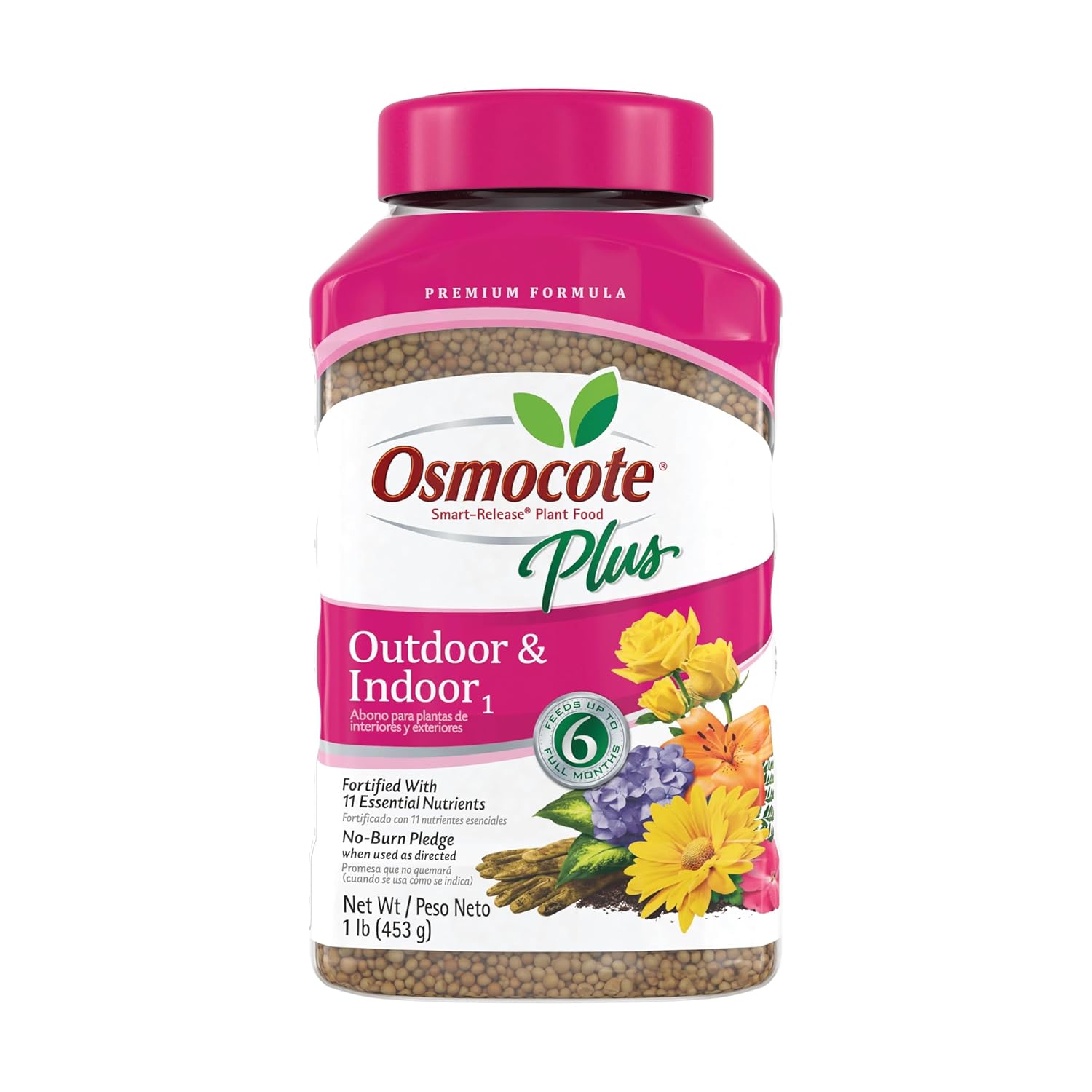
Osmocote Smart-Release Plant Food Plus, 1 lb.
| Item Form | Granules |
|---|---|
| Specific Uses For Product | Plant Food |
| Application Method | Sprinkle around the base and work into the soil |
| Coverage | Full |
| Unit Count | 16 Ounce |
Osmocote Smart-Release Plant Food Plus is a granular, time-release fertilizer designed for containers, raised beds and in-ground plantings. You sprinkle the measured granules into the top 1 to 3 inches of soil, water them in, and the resin coating meters nutrients to plants over up to six months so you do not need frequent feedings. It is labeled for virtually all plant types from houseplants and flowers to vegetables and shrubs and includes 11 nutrients for balanced growth. Practical benefits include predictable long-term feeding that reduces application frequency and a no-burn pledge when used as directed, which is helpful for performance-minded growers who want steady results without risking root burn. Limitations are that coverage is finite—a 1 lb. container treats about 37 sq ft—so larger collections require multiple doses, and fixed release timing means you cannot rapidly correct a sudden deficiency. For precise, high-frequency tweaking of nutrient ratios, a soluble fertilizer would be more appropriate.
Best for: Container gardeners and busy plant owners who prioritize consistent, low-maintenance feeding for performance and steady growth across a variety of plant types.
Less Ideal for: Growers who need rapid nutrient adjustment, precise control of NPK ratios, or those managing a large number of containers who prefer concentrated or soluble fertilizers for cost efficiency.
- Smart-release resin coating feeds plants gradually for up to six months
- Formulated with 11 essential nutrients for balanced plant growth
- Easy application by sprinkling and watering, reducing maintenance frequency
- No-burn pledge when used according to directions, safer for sensitive plants
- Small 1 lb. package only covers about 37 sq ft so frequent repurchases for larger collections
- Fixed slow-release schedule limits ability to quickly adjust nutrient levels
Verdict: Choose this product when you want a low-effort, long-lasting fertilizer that reliably feeds container plants for up to six months.
Purived 16 oz All-Purpose Liquid Plant Fertilizer

| Item Form | Liquid |
|---|---|
| Application Method | soil drench, foliar feed, full & semi hydroponics |
| Target Species | Houseplants |
| Mixing Ratio | 320:1 |
Purived 16 oz All-Purpose Liquid Plant Fertilizer is a concentrated, multi-use plant food formulated for container and houseplants. One 16 oz bottle claims to make about 50 gallons when mixed to the stated ratio, so a small bottle stretches across many feedings. It is designed for soil drench, foliar feeding and both full and semi-hydroponic systems, which makes it flexible for indoor growers who switch between watering methods. The formula includes primary nutrients plus micronutrients such as iron, magnesium and zinc, and the product is marketed as odorless and groundwater safe. Practical benefits include easy measuring (one cap per gallon), instant feeding action, and a long shelf life. Limitations to note are the lack of a detailed N-P-K breakdown on the provided information and the need to follow dilution directions carefully to avoid overfeeding sensitive species. Users should also handle it with care and keep it away from children and pets.
Best for: Ideal for practical indoor gardeners who want a single, space-saving fertilizer to cover regular feedings for many potted plants and occasional hydroponic setups.
Less Ideal for: Not the best choice for growers who need precise N-P-K ratios for specialist plants or for those who prefer granular slow-release feeding schedules.
- Highly concentrated formula that makes up to 50 gallons from one bottle
- Versatile application: soil drench, foliar feed, and hydroponic use
- Includes a range of micronutrients in addition to basic NPK elements
- Simple measuring with a one-cap-per-gallon mixing instruction
- No explicit N-P-K ratio provided in the product details
- Requires careful dilution to avoid overfeeding sensitive container plants
Verdict: A compact, versatile concentrate that stretches a single bottle into many feedings, making it a practical choice for maintaining container plants.
Jobe's Organics Houseplant Fertilizer Spikes, 50 Count

| Unit Count | 50 Count |
|---|---|
| Application Method | Insert spikes into soil |
| Mixing Ratio | 13-4-5 |
| Target Species | Houseplant |
Jobe's Organics houseplant fertilizer spikes are pre-measured, slow-release nutrient sticks designed to sit in potting soil and feed container plants over time. You insert the spikes into the soil around the root zone and replace them every 60 days, making them a low-effort option for busy or forgetful plant owners. The 13-4-5 NPK ratio targets growth and bloom production, while the stick form eliminates mixing, spills, and runoff. For container growers this means predictable feeding without changing your watering routine or risking overfertilization. Limitations are that the spikes provide a medium coverage intended for individual pots rather than large groupings, and they are specific to indoor houseplants so outdoor or specialty crop needs may not be met. Also you must follow placement and replacement intervals for steady results instead of relying on a one-time application.
Best for: Ideal for budget-conscious indoor gardeners who want a simple, no-mess feeding routine for individual containers and flowering houseplants.
Less Ideal for: Not a good fit for growers who manage large planters, vegetable containers, or plants with specific micronutrient requirements.
- Pre-measured spikes remove mess and guesswork when feeding individual pots
- Slow-release formula supplies nutrients over a 60-day interval
- 13-4-5 NPK is balanced for foliage growth and flowering
- Compact, no-mix application suits small indoor containers and renters
- Medium coverage means multiple spikes are needed for larger pots or grouped containers
- Formulation is aimed at general houseplants and may not suit specialist nutrient needs
Verdict: A low-cost, low-effort slow-release spike that makes regular feeding of individual container houseplants easy and mess-free.
Miracle-Gro Water Soluble All Purpose Plant Food, 12.5 lb

| Item Form | Powder |
|---|---|
| Specific Uses For Product | Plant Food |
| Coverage | general purpose, suitable for various plants |
| Mixing Ratio | 1 tablespoon per gallon of water |
This 12.5 lb container of Miracle-Gro Water Soluble All Purpose Plant Food is a powder you mix with water to give a quick nutrient boost to container plants, in-ground beds, and houseplants. It contains an NPK formulation intended to promote leafy growth and overall vigor and is applied using a watering can or a compatible garden feeder. Typical use is straightforward: measure the scoop, dissolve in the recommended volume of water, and soak the soil at the base of each pot every 1 to 2 weeks depending on whether plants are indoors or outdoors. The product feeds a wide range of species so it works as a single go-to for mixed containers and seasonal rotations. Practical benefits include fast uptake through soluble feeding, a clear mixing ratio included on the label, and high coverage from a single tub. Limitations are that it is not a slow-release formula so it requires regular repeat applications and careful measuring to avoid overfeeding, and it is a general-purpose fertilizer rather than a specialist formula for specific crops or bloom boosting.
Best for: Buyers who want a dependable, single fertilizer to keep mixed container plants and houseplants consistently fed with an easy water-soluble solution and predictable dosing.
Less Ideal for: People seeking a specialty formula for flowering, fruiting, or succulents that needs infrequent feeding should consider a product tailored to those needs instead.
- Water-soluble powder feeds plants quickly when mixed and applied
- Clear mixing instructions for indoor and outdoor use
- Designed for use on a wide range of plants including containers and houseplants
- Large unit covers a substantial garden area, reducing refills
- Requires frequent reapplication because it is not slow-release
- Must be measured and mixed each time which adds routine work
Verdict: A reliable, easy-to-mix all-purpose soluble fertilizer ideal for keeping container plants and houseplants consistently fed.
Miracle-Gro Water Soluble All Purpose Plant Food, 1.5 lb

| Item Form | Powder |
|---|---|
| Application Method | Watering Can |
| Target Species | For all flowers, vegetables, trees, shrubs and houseplants |
| Mixing Ratio | 24-8-16 |
Miracle-Gro Water Soluble All Purpose Plant Food is a powdered fertilizer you dissolve in water to feed container plants, in-ground gardens, flowers, vegetables and houseplants. It is typically mixed in a watering can or used with a garden feeder and applied to the soil at the base of each plant every 1 to 2 weeks depending on whether plants are indoors or outdoors. The high-nitrogen 24-8-16 formula delivers a fast nutrient boost that helps leafy growth and overall vigor, and because it is water-soluble the nutrients reach roots quickly. The package includes dosing guidance for small indoor pots and larger outdoor applications, and one 1.5 lb container covers roughly 600 sq ft when used as directed. Limitations are that the formula is a general-purpose feed rather than a specialized bloom or fruit booster, and frequent use requires attention to proper dilution to avoid overfeeding. For container gardeners it is convenient but you may still want a bloom-specific or low-nitrogen option for flowering or fruiting container crops.
Best for: Container gardeners who want a reliable, easy-to-mix feed to boost growth on houseplants, mixed containers and vegetables and who value proven results from a widely used formula.
Less Ideal for: Growers focused specifically on maximizing flowers or fruit in containers should consider a bloom-boost or lower-nitrogen fertilizer instead.
- Fast-acting water-soluble formula that delivers nutrients quickly to roots
- Clear dosing instructions for both indoor pots and outdoor use
- Versatile all-purpose NPK suitable for a wide range of plants
- Compact 1.5 lb container covers a substantial area when mixed as directed
- High-nitrogen ratio may not be ideal for promoting blooms or fruit in some container plants
- Powder requires careful measuring and mixing each application rather than a slow-release option
Verdict: A quick, dependable water-soluble feed that makes regular container fertilizing simple and effective.
TPS NUTRIENTS Indoor Plant Food Liquid Fertilizer, 8 oz

| Item Form | Liquid |
|---|---|
| Application Method | Watering can |
| Unit Count | 8 Fluid Ounces |
| Mixing Ratio | 2:1 (oz/gallon) or 1:64 (tbsp/gallon) |
This TPS NUTRIENTS Indoor Plant Food is a liquid concentrate designed for weekly or regular feedings of container houseplants. You mix a small measured dose with water and apply it with your watering can as part of normal watering. The kelp-enriched formula and balanced nutrients are targeted at improving leaf color and gloss, promoting steady new growth, and strengthening root systems so potted plants absorb water and nutrients more efficiently. Practical benefits for container gardeners include easy dilution (1 tbsp per gallon recommended), suitability for a wide range of common houseplants, and a small 8 oz bottle that is easy to store and measure from. Because it is a concentrated liquid, you get quick uptake compared with slow-release granules, but it does require consistent measuring and regular application to see results. Also the bottle size is small for larger collections, so frequent repurchase may be needed for heavy users. Follow safety directions to keep product away from children and pets and avoid skin or eye contact.
Best for: Ideal for cautious indoor gardeners who want a simple, reliable liquid feed for houseplants and prefer measured, repeatable care routines to support healthy foliage and steady growth.
Less Ideal for: Not the best choice for buyers managing large numbers of containers who prefer low-maintenance, infrequent feeding options or bulk purchase formats.
- Concentrated liquid formula mixes easily for measured weekly feedings
- Kelp-enriched blend aimed at improving foliage color and encouraging new leaf growth
- Suitable for a wide range of common indoor container plants
- Quick nutrient uptake compared with granular slow-release products
- Clear mixing instructions included for straightforward use
- Small 8 oz bottle may not be economical for large collections or frequent heavy use
- Requires regular measuring and consistent application to maintain results
Verdict: A small, easy-to-use kelp-enriched liquid fertilizer that reliably supports healthier foliage and steady growth for indoor container plants.
Choosing the Right Plant Food for Container Plants: Key Factors to Consider
Nutrient Ratio and Availability
The N-P-K ratio tells you what a plant food supplies most of, but availability matters more in containers. Water-soluble nutrients feed plants quickly and are useful during active growth and flowering, while slow-release coated granules deliver steady nutrition over weeks or months. In small pots you typically want a balanced formula or one tailored to the plant type, such as slightly higher phosphorus for bloom production or modest nitrogen for leafy herbs. Check whether the label lists secondary nutrients and micronutrients; iron, magnesium, and trace elements prevent common deficiencies that appear fast in limited potting mixes.
Release Method and Feeding Frequency
How a product releases nutrients affects how often you need to feed and how much salt accumulates in the potting mix. Liquid feeds give immediate uptake but require more frequent applications, which can be handy during peak growth but increase the chance of salt build-up if not leached occasionally. Slow-release granules lower maintenance by releasing over time, but they can be less responsive if a plant needs an immediate boost. Water-soluble powders strike a middle ground when mixed at the right strength. Consider the time you want to spend feeding and whether you can flush containers periodically to manage salts.
Salt Index and Root Safety
Salt concentration in fertilizer can damage roots in small soil volumes, causing leaf-tip burn, stunted growth, or wilting. Container gardeners should prefer products with a lower salt index or that recommend reduced-strength mixes for small pots. Organic-based feeds often have gentler release profiles but may not supply nutrients quickly enough for heavy feeders. Always follow dilution instructions and watch for signs of salt stress; periodic flushing with clear water can mitigate buildup. Knowing a product's recommended frequency and maximum dose is essential to avoid root damage in confined containers.
Ease of Measurement and Application
Precise dosing is more important in container gardening because small errors scale up quickly in tight root spaces. Products that offer easy-to-use measuring caps, clear concentration tables for different pot sizes, or premeasured spikes simplify feeding. Liquid concentrates that require only a small capful per gallon reduce guesswork, while slow-release stakes eliminate mixing but require correct placement and timing. Choose a feed method that fits how you garden-daily attention favors liquids, low-maintenance containers favor slow-release options, and mixed beds with multiple pot sizes benefit from clear dosing guidance.
Compatibility with Potting Mix and Plant Types
Not all plant foods suit every potting mix or species. Some mixes already contain slow-release fertilizer, so additional slow-release granules can lead to overfeeding. Acid-loving plants, succulents, and herbs have different nutrient preferences; look for products that specify suitability or provide separate feeding charts. Also consider how well the feed works with soil-less mixes versus mixes with compost. Versatile formulas that include micronutrients and have flexible application rates are often the best choice for mixed container plantings.
Liquid Feeding Vs Slow-Release for Containers
Deciding between liquid and slow-release plant food depends on how often you want to intervene and how quickly plants need nutrients. Liquids are ideal when you want immediate results during active growth or to correct a deficiency because roots can absorb dissolved nutrients right away.
Slow-release options reduce maintenance by delivering steady nutrition, which is convenient for hanging baskets or vacation periods. However, they are less responsive to sudden nutrient needs. Many gardeners use a hybrid approach: slow-release for baseline feeding and occasional liquid boosts during peak bloom or fruit set.
- Liquid feeds: fast uptake, frequent application, easier to adjust
- Slow-release: lower maintenance, predictable long-term supply, less immediate control
- Hybrid approach works well for mixed containers and seasonal peak demands
Feeding Schedules by Plant Type
Different container plants require different feeding rhythms. Flowering annuals and fruiting edibles typically need more regular feeding during their production phase, while foliage houseplants can thrive on a steadier, moderate schedule.
Adjust frequency for pot size and light. Smaller pots and high-light locations dry and deplete nutrients faster and often need more frequent feeds. When in doubt, dilute liquid feeds to half strength and observe plant response before increasing strength or frequency.
- High-light flowering containers: feed every 1 to 2 weeks during bloom season
- Houseplants in low light: feed every 4 to 8 weeks, depending on growth rate
- Herbs in small pots: frequent, weak feeds to avoid excessive leaf growth with poor flavor
Troubleshooting Common Container Feeding Issues
Yellowing leaves, brown leaf tips, and stunted growth are common signals that container plants need attention. Yellow leaves with green veins often indicate iron or micronutrient deficiency, while overall pale foliage suggests nitrogen shortfall. Brown tips usually point to salt burn from over-fertilization or inconsistent watering.
Before changing fertilizer, check watering routine, pot drainage, and whether the potting mix is compacted. Leach the pot with clear water to remove excess salts if you suspect buildup. For suspected micronutrient issues, a balanced liquid feed or targeted supplement can correct the problem faster than slow-release granules.
- Salt buildup signs: brown leaf tips, white crust on soil surface
- Underfeeding signs: slow growth, pale leaves, fewer blooms
- Leach containers periodically to reset salt levels
Using Plant Food with Edibles in Containers
When growing herbs, tomatoes, or peppers in pots, focus on balanced nutrition and food-safe ingredients. Edibles respond well to regular, modest feeding; too much nitrogen can favor leaf growth at the expense of flowers and fruit. Choose products that list complete N-P-K values and, if you prefer organic approaches, those derived from plant or mineral sources that are appropriate for food crops.
Timing matters. Feed more during the main production window and taper as harvest approaches if the product instructions recommend it. Rinse harvested leaves when prepping food to remove any residue from foliar applications.
- Favor balanced formulas for fruiting edibles
- Follow label guidance on pre-harvest intervals for foliar sprays
- Use reduced-strength solutions for baby greens and delicate herbs
Storage, Shelf Life, and Seasonal Use
How you store plant food affects performance. Keep liquids and concentrates sealed and away from freezing temperatures. Granules and spikes should be kept dry to retain their release characteristics. Most products include a shelf-life estimate; older stock can clump or lose potency, so rotate supplies and note purchase dates.
Seasonal gardening also affects feeding plans. In temperate climates, reduce or stop fertilizing in winter when growth slows. In warm-season production, maintain feeding through the active period and flush containers occasionally to prevent buildup.
- Store dry products in a cool, dry place
- Avoid freezing liquids and concentrates
- Adjust feeding schedules with seasonal growth cycles
How We Chose the Best Plant Food for Container Plants
We focused on formulas and features that matter in confined potting environments. Key evaluation criteria included nutrient ratio and bioavailability, because container plants need soluble, plant-available nitrogen, phosphorus, and potassium sized to common pot mixes. We examined release method and longevity to distinguish between quick liquid feeds, slow-release granules, and water-soluble concentrates, since application frequency and risk of salt buildup change with delivery style. Application simplicity was another filter, favoring products that are easy to dose accurately in small pots and that offer clear instructions for different pot sizes. We also assessed salt index and risk of root burn, prioritizing feeds that allow safe use with frequent irrigation and potted soil. Finally we considered suitability across common container plant types, such as ornamentals, herbs, and small edibles, to find versatile formulas gardeners can trust. Excluded from the list were products designed solely for large in-ground beds, amendments meant only as soil conditioners rather than direct fertilizers, and proprietary blends lacking clear nutrient labeling. The resulting picks focus on measurable nutrient content, predictable release behavior, and practical application guidance for container gardeners.
FAQ
How often should I feed container plants during the growing season?
It depends on the feed type and plant. Liquid feeds are often used every 1 to 2 weeks for active bloomers, while slow-release granules supply nutrients for several weeks to months. Adjust frequency for pot size and light exposure.
Can I use the same plant food for houseplants and outdoor pots?
Often you can, but choose a formula suited to both light conditions and plant types. Houseplants in low light need less frequent feeding than sun-loving outdoor containers. Use weaker concentrations indoors to avoid excess growth and salt buildup.
How do I prevent fertilizer burn in small pots?
Use reduced-strength mixes for small pots, follow label dosing closely, and flush containers with clear water if salts accumulate. Slow-release products with a low salt index or organic feeds can also lower burn risk.
Are organic plant foods better for container gardening?
Organic feeds often release nutrients more slowly and can be gentler on roots, but they may not correct deficiencies as quickly as soluble mineral fertilizers. The choice depends on how quickly plants need nutrients and your preference for organic inputs.
Should I change my feeding routine when repotting?
Yes. Fresh potting mix often contains starter nutrients, so delay additional fertilization for several weeks or follow the mix maker's guidance. Once the new roots are established, resume a regular feeding schedule appropriate to the plant and pot size.
Final Verdict
Choosing the right plant food for container plants comes down to balancing nutrient needs, delivery method, and risk of salt stress. Prioritize a nutrient profile matched to your plant type, pick a release method that fits your maintenance routine, and pay attention to salt index and dosing instructions. With a feeding plan that matches light, pot size, and crop type, you can keep containers productive and healthy without overcomplicating care.
