

Note: This article contains affiliate links. If you click on these links and make a purchase, I may earn a small commission at no extra cost to you. This helps support my research and content. Read my full affiliate disclosure here.
Picking the right budget plant food shapes how well your houseplants, patio containers, or vegetable pots respond to a tight feeding schedule. When money is limited you still need a fertilizer that supplies balanced nutrients, is easy to apply, and won't burn roots or create salt buildup. This guide covers seven shortlisted budget plant food options chosen for everyday gardeners. We focus on nutrient profile, how forgiving the formula is in typical home conditions, and the practical steps for applying each type. Read on for clear criteria and guidance to match a low-cost fertilizer to your growing situation.
Top Picks at a Glance
| Best Overall The best all-around choice for most situations | Miracle-Gro Water Soluble All Purpose Plant Food, 3 lb |  |
| Best Quality Built to a higher standard if you want something more solid | FoxFarm Grow Big Liquid Plant Food Concentrate (16 fl oz) |  |
| Best Value The sweet spot between price and what you get | Purived All-Purpose Liquid Houseplant Fertilizer, 16 oz |  |
| Best Budget The cheapest option that still gets the job done reliably | Jobe's Organics Houseplant Fertilizer Spikes, 50 Count |  |
| Highest Rated A top-rated pick with lots of positive feedback | Miracle-Gro Water Soluble All Purpose Plant Food, 1.5 lb |  |
| Most Popular A crowd favorite that many people choose with confidence | Miracle-Gro Indoor Plant Food for All Plants, Liquid, 8 fl. oz. (2-Pack) |  |
| Best Seller A high-volume bestseller chosen again and again | TPS NUTRIENTS Indoor Plant Food Liquid Fertilizer, 8 oz |  |
Miracle-Gro Water Soluble All Purpose Plant Food, 3 lb

| Item Form | Powder |
|---|---|
| Application Method | Mix with water in a watering can |
| Target Species | All indoor and outdoor plants |
| Fertilizer Analysis | NPK 24-8-16 |
| Unit Count | 48 Ounce |
Miracle-Gro Water Soluble All Purpose Plant Food is a powdered, mix-with-water fertilizer designed to give plants a fast nutrient boost. You mix the scoop with water in a watering can and apply directly to the soil around flowers, vegetables, shrubs, trees, and houseplants; outdoor applications are recommended every 7 to 14 days and indoor feeding every 2 weeks. The 24-8-16 NPK formula supplies a high nitrogen dose for vigorous leafy growth while still providing phosphorus and potassium for roots and blooms. Because it is water soluble it delivers nutrients to the roots quickly, useful for container plants or when you want visible results fast. The included scoop and clear directions make measuring easy, and one 3 lb. container covers a substantial area. Important limitations are that the high nitrogen ratio is geared toward leafy growth rather than bloom-heavy feeding, and frequent watering with soluble feed requires attention to avoid overfeeding if you also use other fertilizer products. Handle carefully to avoid skin or eye contact and store dry.
Best for: Buyers who want an affordable, no-fuss fertilizer that produces quick, visible growth for mixed gardens and houseplants and who prefer regular, hands-on feeding as part of routine care.
Less Ideal for: Gardeners seeking a low-maintenance, slow-release fertilizer or those prioritizing bloom- or fruit-specific NPK balances should consider specialized or granular alternatives.
- Fast-acting water-soluble formula delivers nutrients quickly to roots
- Versatile for indoor and outdoor use across flowers, vegetables, trees, shrubs, and houseplants
- Clear application instructions with a measuring scoop for consistent dosing
- Covers a large area from a single 3 lb. container so one purchase lasts several feedings
- High nitrogen ratio favors vegetative growth over flower-heavy or fruit-heavy feeding
- Requires regular reapplication every 1–2 weeks, so it is more maintenance-intensive than slow-release options
Verdict: A budget-friendly, fast-acting all-purpose soluble fertilizer that delivers quick, reliable growth for a wide variety of indoor and outdoor plants.
FoxFarm Grow Big Liquid Plant Food Concentrate (16 fl oz)

| Unit Count | 16 Fluid Ounces |
|---|---|
| Item Form | Liquid |
| Application Method | watering |
| Mixing Ratio | 2 teaspoons per 1 gallon |
| Target Species | Plants |
FoxFarm Grow Big is a fast-acting, liquid concentrate designed to push vegetative growth in vegetables, roses and houseplants. You mix 2 teaspoons per gallon and apply by watering or as an early-morning foliar spray every other watering, so it fits into standard feeding routines without extra equipment. The 6-4-4 NPK ratio and added micronutrients support leaf and stem development, which helps plants bulk up before flowering or fruiting. Its low-pH formula improves nutrient stability and makes the feed more readily available to roots and foliage. In practice the pint concentrate treats multiple feedings for small gardens and container plants, and it is easy to measure and store. Limitations are that this is a vegetative-strength formula, so you should switch to a bloom or fruit-focused feed as plants flower, and larger landscapes will need larger containers or more frequent purchases. Follow label safety and dilution instructions to avoid overfeeding sensitive seedlings.
Best for: Gardeners who prioritize fast, measurable growth—especially those growing vegetables, roses or container plants who want predictable vegetative gains on a budget.
Less Ideal for: Large-scale gardeners or landscapers needing bulk fertilizer or growers looking for an all-in-one bloom/finish formula should consider other options.
- Concentrated liquid mixes easily for quick nutrient delivery
- NPK 6-4-4 ratio promotes vigorous vegetative growth
- Low pH formulation for nutrient stability and better uptake
- Versatile application by soil watering or foliar spray
- Pint size limits how many feedings for larger gardens before repurchasing
- Formulation is geared toward vegetative growth and not ideal as a flowering/finish feed
Verdict: Pick this concentrate if you want a budget-friendly, fast-acting liquid fertilizer that reliably boosts vegetative growth in vegetables and potted plants.
Purived All-Purpose Liquid Houseplant Fertilizer, 16 oz

| Item Form | Liquid |
|---|---|
| Specific Uses For Product | Houseplant Fertilizer |
| Application Method | soil drench, foliar feed, full & semi hydroponics |
| Mixing Ratio | 320:1 |
| Liquid Volume | 16 fluid ounces |
This 16 oz Purived liquid plant fertilizer is a concentrated, all-purpose feed designed for indoor potted plants and adaptable to several application styles. One capful mixes into a gallon of water at the stated 320:1 ratio, and a single bottle claims to make roughly 50 gallons of ready-to-use solution, which keeps ongoing costs low. It can be applied as a soil drench, foliar spray, or used in full and semi-hydroponic setups, so it works whether you hand-water, mist, or run a small hydro system. The formula lists macronutrients and a range of micronutrients like iron and zinc, so it supports general growth and corrects common deficiencies. It is odorless and has a two-year shelf life when stored properly. Limitations are that the label gives a single mixing ratio without detailed guidance for seedlings or heavy feeders, and as a general-purpose blend it is not tailored to specific stages like rooting or bloom. Users should follow safety directions to avoid skin or eye contact.
Best for: Practical plant owners who want a low-cost, versatile fertilizer that stretches across many plants and watering methods and prefer a simple mix-and-feed routine.
Less Ideal for: Specialist growers who need nutrient formulas tailored to flowering, propagation, or specific crop stages should consider targeted fertilizers instead.
- Highly concentrated so one 16 oz bottle makes about 50 gallons of feed
- Works with multiple application methods: soil drench, foliar feed, and hydroponics
- Contains a broad spectrum of macro and micronutrients for general houseplant health
- Odorless formula with a two year shelf life when stored correctly
- Single recommended mixing ratio provided so adjustments for seedlings or heavy feeders require user judgment
- Not formulated for stage-specific needs like rooting or flowering support
Verdict: A concentrated, multiuse liquid fertilizer that stretches a small bottle into many gallons of affordable, everyday feed for practical houseplant care.
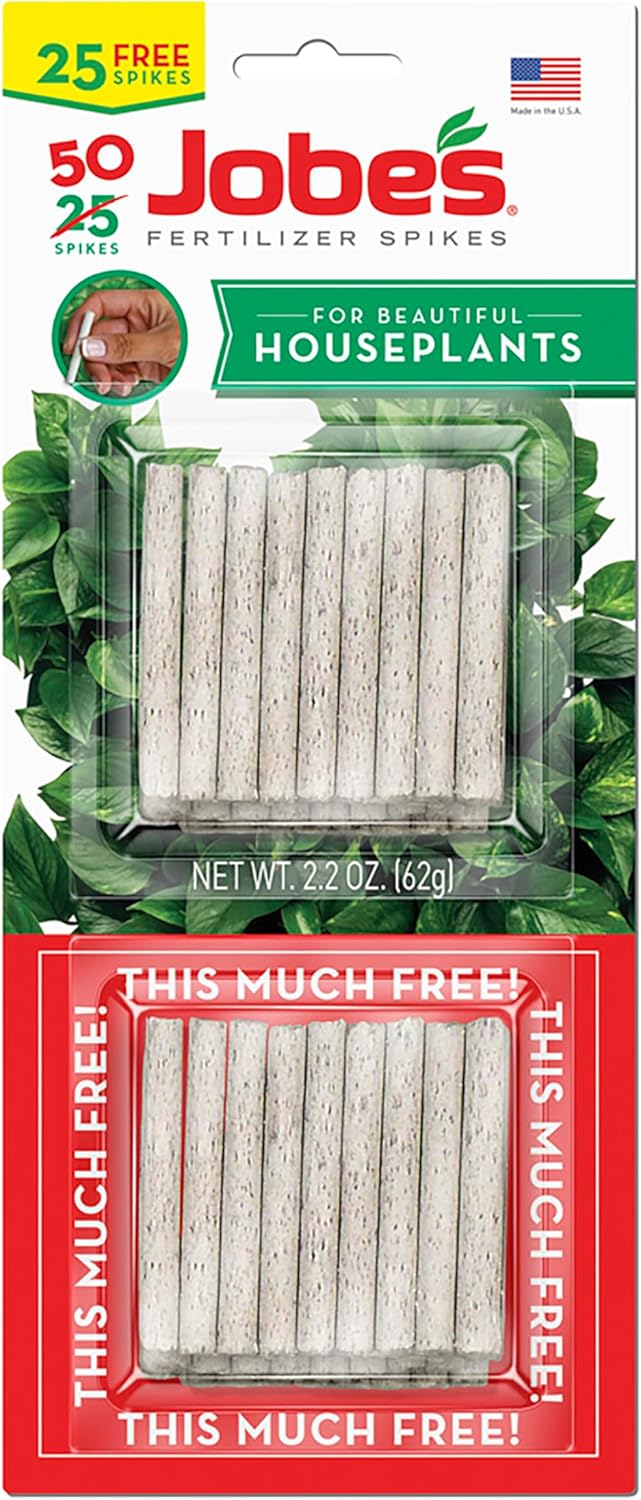
Jobe's Organics Houseplant Fertilizer Spikes, 50 Count
| Unit Count | 50 Count |
|---|---|
| Item Form | Granules, Liquid, Sticks |
| Application Method | Insert spikes into soil |
| Coverage | Medium |
| Specific Uses For Product | Plant Growth, Root Development, Seed Development, Soil Conditioning |
Jobe's Organics Houseplant Fertilizer Spikes are pre-measured sticks you push into potting soil to feed indoor flowering and foliage plants for about 60 days. Each pack contains 50 spikes formulated at 13-4-5 NPK to support growth and blooms while avoiding messy liquids or runoff. Use them at planting or as a regular maintenance step by inserting spikes near the root zone; the slow-release design supplies nutrients steadily so you do not need frequent dosing. The biggest practical benefits are convenience and consistent feeding without measuring or mixing, which makes them easy for busy or new plant owners. Limitations include fixed nutrient content and dosing per spike, so you cannot fine-tune feeding for very small pots or plants with unusual nutrient needs, and they must be replaced every two months. Also they are intended for houseplants specifically, so outdoor or specialty plant use is outside their design.
Best for: A buyer who prioritizes low-cost, low-effort plant care and wants a simple, no-mess way to keep multiple houseplants fed on a schedule.
Less Ideal for: Gardeners who need precise nutrient control, fertilize large outdoor beds, or care for specialist plants with unique feeding requirements should consider other options.
- Pre-measured spikes for no-mess, no-mixing feeding
- Slow-release formula supplies nutrients steadily for about 60 days
- Formulated NPK (13-4-5) suited for flowering and foliage houseplants
- Large pack of 50 covers multiple plants or repeated applications
- Fixed dose per spike makes precise feeding for very small pots difficult
- Not customizable for plants that need atypical nutrient ratios
Verdict: An inexpensive, no-mess way to keep multiple indoor flowering and foliage plants fed on a regular two-month schedule.
Miracle-Gro Water Soluble All Purpose Plant Food, 1.5 lb

| Item Form | Powder |
|---|---|
| Application Method | Watering Can |
| Target Species | All flowers, vegetables, trees, shrubs and houseplants |
| Mixing Ratio | 24-8-16 |
Miracle-Gro Water Soluble All Purpose is a straightforward powdered fertilizer you mix into a watering can to feed a wide range of plants. With an NPK of 24-8-16 it supplies an immediate nitrogen-rich boost that encourages fast leafy growth for vegetables, flowers, houseplants, shrubs and trees. Typical use is simple: measure the included scoop, dissolve in water and apply to soil at the base of plants every 1 to 2 weeks for containers and indoor plants or every 7 to 14 days outdoors. It works with garden feeders or by hand watering and starts acting quickly because it is water soluble. The product is convenient to store and the manufacturer notes it is formulated not to burn plants if used as directed. Limitations are that its high nitrogen emphasis favors foliage over flowering at first and it is a short‑term, quick‑release feed rather than a slow‑release option, so you will need regular applications during the growing season.
Best for: Buyers who want a dependable, easy-to-use feed for everyday gardening tasks and prefer predictable, repeatable results across many plant types.
Less Ideal for: Gardeners seeking a single long‑term, low‑maintenance fertilizer or those who need a bloom‑focused or slow‑release program for seasonal use.
- Water‑soluble powder that delivers nutrients quickly to roots
- Easy to mix and apply with a watering can or garden feeder
- Labeled for use on a wide range of plants including vegetables, flowers and houseplants
- Includes clear dosing guidance for indoor and outdoor use
- Quick‑release formula requires frequent reapplication compared with granular slow‑release fertilizers
- Higher nitrogen ratio may prioritize leaf growth over blooms initially
Verdict: A reliable, quick‑acting all‑purpose water‑soluble feed that makes regular, predictable fertilizing simple for budget‑minded gardeners.
Miracle-Gro Indoor Plant Food for All Plants, Liquid, 8 fl. oz. (2-Pack)

| Item Form | Liquid |
|---|---|
| Application Method | Apply directly to soil or mix with water |
| Target Species | Houseplants |
| Liquid Volume | 8 fluid ounces |
| Mixing Ratio | 4 pumps per 1 quart of water |
Miracle-Gro Indoor Plant Food is a ready-to-use liquid fertilizer intended for routine feeding of indoor potted plants. It is typically used by mixing the recommended 4 pumps per quart of water and watering plants every two weeks or by applying directly to soil for quick feeding. The product comes as two 8 fl. oz. bottles, so it suits casual indoor gardeners who want an easy, repeatable feeding routine. Notable features include a simple pump dosing system, compatibility with many houseplants, and an instant-feed liquid formula that plants absorb quickly. In practice this makes it convenient for busy owners and those who prefer watering-and-feeding in one step. Limitations are that the label provides only a generic NPK listing rather than exact ratios and it is formulated for general indoor use rather than species-specific nutrition, so growers of sensitive succulents or specialized plants may want a tailored formula. For basic to moderate indoor collections this is a low-effort, familiar option that delivers visible plant vigor when used as directed.
Best for: Houseplant owners who want a simple, low-effort feeding routine and reassurance from a well-known brand when stocking a small to medium indoor collection.
Less Ideal for: Collectors who grow specialist plants that require precise NPK ratios or strict feeding regimens should consider species-specific fertilizers instead.
- Easy pump dosing for consistent mixing and watering every two weeks
- Liquid formula feeds instantly and can be applied directly to soil or mixed with water
- Sold as a two-pack so you get additional supply for routine feeding
- Broadly suitable for a wide range of indoor plants including herbs, flowers, and vegetables
- Nutrient information is given only as N,P,K without a specific NPK ratio on the listing
- General-purpose formula may be less ideal for plants that need specialized feeding schedules
Verdict: A straightforward, easy-to-use liquid plant food that makes regular indoor feeding quick and reliable for everyday houseplant care.
TPS NUTRIENTS Indoor Plant Food Liquid Fertilizer, 8 oz

| Item Form | Liquid |
|---|---|
| Application Method | Watering can |
| Unit Count | 8 Fluid Ounces |
| Mixing Ratio | 2:1 (oz/gallon) or 1:64 (tbsp/gallon) |
| Target Species | Plants |
This 8 oz TPS NUTRIENTS indoor plant food is a liquid concentrate designed to mix with water and feed houseplants during routine watering. It supplies balanced nutrients meant to boost leaf color and vigor, encourage steady new growth, and support root strength. The bottle is kelp-enriched and intended for weekly, gentle feeding across common houseplants like pothos, monstera, snake plants, and tropicals. Practical benefits include simple dosing (mix per the label) and compatibility with a watering can application so it fits into normal care routines without extra tools. As an 8 oz concentrate it will stretch to several feedings for a small collection, but frequent use for many plants will require repurchasing sooner than a larger jug. There is also standard safety guidance to keep it away from children and pets and to avoid skin or eye contact. For cautious buyers this product is easy to measure and use and gives predictable foliage and root support, though those wanting bulk economy may prefer larger sizes.
Best for: Cautious indoor plant owners who want an easy, low-effort liquid fertilizer to add to regular watering and prefer predictable results for common houseplants.
Less Ideal for: Gardners managing large collections or looking for the lowest cost per feeding should consider larger commercial concentrates or bulk options instead.
- Liquid concentrate mixes with water for straightforward dosing and use with a watering can
- Formulated for general indoor houseplants and safe for weekly gentle feedings
- Kelp-enriched formula that supports leaf vigor, new growth, and root health
- Compact 8 oz size is convenient for first-time users or small plant collections
- Small 8 oz volume means more frequent repurchase for larger collections
- No NPK numbers listed in the provided specs for buyers wanting precise nutrient ratios
Verdict: A simple, kelp-enriched liquid concentrate that makes weekly feeding of common houseplants easy and predictable for risk-averse indoor growers.
Choosing the Right Budget Plant Food: Key Factors to Consider
Nutrient Balance and Guaranteed Analysis
Balanced nutrient ratios determine how a budget plant food supports growth, flowering, and overall plant health. Look for a clear guaranteed analysis showing nitrogen, phosphorus, and potassium percentages. A moderate N-P-K ratio is usually safest for mixed plantings because it reduces the risk of preferentially stimulating leaf or root growth at the expense of other needs.
On budget formulas, lower concentration often means easier forgiveness if you accidentally overfeed. Very high concentration products require strict dilution and increase the chance of root burn for novice gardeners. Also check for listed secondary nutrients such as magnesium or calcium when container or potting mixes may lack those elements.
Formulation Type and Solubility
The physical form-liquid concentrate, water-soluble granules, or slow-release granules-changes how you use the product and how quickly plants respond. Liquid concentrates and water-soluble granules dissolve and act fast, which is useful for quick corrections or during active growth periods.
Slow-release granules reduce maintenance by giving a steadier nutrient supply over weeks or months, but many budget slow-release products are less precise in nutrient ratios. Consider whether you prefer immediate feeding control or lower-maintenance feeding cycles when evaluating formulation type.
Salt Index and Root Safety
Salt buildup from concentrated fertilizers can damage roots and cause leaf scorch, especially in containers with limited drainage. Budget plant foods vary in their salt index. Products with lower salt ratings are safer for frequent applications and for salt-sensitive species like ferns and many tropical houseplants.
If you regularly reuse potting mix or water with poor-quality tap water, choose formulas labeled as low-salt or dilute more aggressively. Periodic flushing of containers with plain water also mitigates buildup when using any budget fertilizer.
Versatility for Different Plants and Media
A single budget plant food that works acceptably across houseplants, vegetable containers, and ornamental pots saves money and simplifies care. Versatility depends on both nutrient balance and formulation. Neutral, balanced mixes and soluble concentrates tend to be more adaptable than high-phosphorus or bloom-specific formulas.
Also think about the growing medium. Some potting mixes release nutrients slowly and need lighter supplementary feeding, while sterile soilless mixes may require more frequent inputs. Choose a product whose label gives guidance for a range of media and plant types.
Ease of Dosing and Packaging Size
Small measurement errors matter more with concentrated fertilizers. Packaging that includes clear measuring caps, scoops, or premeasured tabs reduces dosing mistakes. For budget-conscious gardeners, larger economical sizes can lower per-feed cost but may be harder to store and dose accurately.
Consider how often you feed and how many plants you care for. If you have a few pots, a small bottle with a measuring cap might be less wasteful. For many containers, look for bulk packaging with a reliable dosing tool.
When to Choose Liquid Vs Granular Budget Feeders
Liquid concentrates provide fast uptake and are easy to spot-correct nutrient deficiencies. They are also forgiving at lower concentrations, making them well suited to container-grown vegetables and active houseplants during the growing season.
- Use liquids for quick greening and during peak growth.
- Soluble granules mix with water and act similarly to concentrates when applied correctly.
- Slow-release granules reduce application frequency but may be less precise for mixed plantings.
Application Tips for Containers and Houseplants
Apply budget plant food at reduced strength compared with label maximums when you are unsure about media fertility. Start at half the recommended concentration and observe plants for a week before increasing. Watering thoroughly between feedings helps avoid salt buildup in the root zone.
- Always check drainage and avoid leaving saucers filled with nutrient solution.
- Flush pots with plain water every 4 to 8 weeks if feeding frequently.
- Record feeding dates to prevent accidental overfeeding.
Feeding Schedules for Common Garden Situations
Match feed frequency to plant type and season. Fast-growing annuals and many vegetables benefit from feeding every one to two weeks during peak growth. Most houseplants and dormant-season specimens need feeding less often, often every 3 to 6 weeks depending on the product formulation.
- Increase frequency during active growth and flowering.
- Reduce or stop feeding during winter dormancy for temperate species.
- Adjust frequency lower for slow-release granules compared with soluble fertilizers.
Adjusting for Water Quality and Potting Mixes
Hard water can add dissolved minerals that interact with fertilizer salts and raise overall salt levels in pots. If your tap water is high in dissolved solids, dilute fertilizer more than usual and flush containers more frequently. Inert soilless mixes like coco coir often require regular feeding because they contain few native nutrients, while aged compost-rich mixes may need less supplemental fertilizer.
- Test runoff occasionally for visible salt crust and flush when present.
- Use rainwater or softened water when possible for sensitive plants.
- Match fertilizer type to the nutrient-holding characteristics of your potting medium.
Signs You Are Overfeeding or Underfeeding
Yellowing between veins, leaf crisping, stunted growth, or white crust on soil surface are common indications of overfeeding and salt buildup. Conversely, pale new growth, slow vigor, and poor flowering can indicate insufficient nutrients. When in doubt, reduce dose and increase watering frequency to leach excess salts.
- Scale back concentration first, then frequency if problems persist.
- Repot if root-bound plants show persistent decline despite corrected feeding.
- Keep notes on responses after any feeding change to identify patterns.
How We Chose the Best Budget Plant Food
We focused on products that deliver predictable feeding results without niche claims or specialist uses. Selection began by screening widely available budget plant food formulas for clear guaranteed analysis and straightforward application instructions. We excluded specialty mixes intended only for one crop or extreme conditions to keep the list broadly useful for common indoor and container gardening. Evaluation emphasized several concrete dimensions: nutrient balance and concentration to avoid under- or overfeeding, solubility and formulation type for ease of use, salt index and safety margin for frequent feeding, packaging size and dispensing options for waste and dosing accuracy, and versatility across plants and media. We also considered how forgiving a product is when gardeners make small dosing mistakes and whether it reduces common problems like leaf burn or salt buildup. Performance claims without supporting formulation details or clear directions were a disqualifying factor. The final shortlist represents budget formulas that meet these practical criteria and suit everyday garden situations.
FAQ
How often should I feed indoor houseplants with a budget plant food?
It depends on the formulation. For soluble liquids and water-soluble granules, many gardeners feed light doses every two to four weeks during active growth. Slow-release products typically need reapplication every two to four months. Start at lower strength and adjust based on plant response.
Can I use one budget plant food for both vegetables and ornamentals?
Often you can, if the formula is balanced and labeled for general use. Avoid specialist bloom boosters or high-phosphorus mixes for young vegetables. When in doubt, choose a neutral-balanced fertilizer and adjust application timing rather than swapping formulas.
Will a cheaper fertilizer harm my plants?
Not necessarily. Cheaper formulas can be effective if they list a clear guaranteed analysis and have reasonable salt ratings. The main risks are unclear dosing instructions or very high concentration, which increase the chance of overfeeding. Diluting and monitoring plants reduces risk.
How can I avoid salt buildup when using budget fertilizers?
Use lower-strength solutions than the maximum, water through the pot until runoff occasionally, and flush containers with plain water every month or two if feeding regularly. Also avoid leaving nutrient-rich water standing in saucers.
Are organic budget plant foods better for houseplants?
Organic options can be gentler and add organic matter, but they release nutrients more slowly and can be variable in concentration. For quick corrections or precise feeding schedules, soluble inorganic formulas are often more predictable. Choose based on your preference for slow steady feeding versus immediate nutrient availability.
Final Verdict
A practical budget plant food should give you clear nutrient numbers, be easy to dose, and pose minimal salt risk for frequent use in containers and houseplants. Prioritize a balanced nutrient profile and a formulation that matches how often you want to feed and how many plants you manage. If you want low-maintenance care, choose a slower-release option with clear dosing tools. If you need quick results and fine control, select a soluble concentrate and feed at reduced strength. Balance convenience, salt safety, and versatility to pick the best economical feeding approach for your garden.
