

Note: This article contains affiliate links. If you click on these links and make a purchase, I may earn a small commission at no extra cost to you. This helps support my research and content. Read my full affiliate disclosure here.
Plumeria grown in containers has different soil needs than plants in the ground. In pots, roots are confined, water moves differently, and nutrient availability changes rapidly, so the right soil keeps the tree healthy and blooming. This guide looks at seven shortlisted potting soils and mixes suited for plumeria in pots, focusing on how they manage drainage, moisture retention, and nutrient support. You will find practical notes on structure, organic content, and how the mixes behave through the growing season. Below we summarize criteria used to evaluate the soils and what matters most when choosing a planting medium for potted plumeria.
Top Picks at a Glance
| Best Overall The best all-around choice for most situations | Chalily Tropical Gold Potting Soil for Tropical Plants |  |
| Best Quality Built to a higher standard if you want something more solid | FoxFarm Ocean Forest Potting Soil, 12 Quart |  |
| Best Value The sweet spot between price and what you get | Miracle-Gro Moisture Control Potting Mix, 8 qt. (2-Pack) |  |
| Best Budget The cheapest option that still gets the job done reliably | Miracle-Gro Organic Outdoor Potting Mix, 16 qt. |  |
| Highest Rated A top-rated pick with lots of positive feedback | E.B. Stone Organics Citrus & Palm Mix Potting Soil, 1.5 cu ft |  |
| Most Popular A crowd favorite that many people choose with confidence | Miracle-Gro Cactus, Palm & Citrus Potting Mix, 8 qt. |  |
| Best Seller A high-volume bestseller chosen again and again | Back to the Roots Premium Organic Potting Mix, 6 Quart |  |
Chalily Tropical Gold Potting Soil for Tropical Plants

| Brand Name | Chalily |
|---|---|
| Style Name | Tropical |
Chalily Tropical Gold is a pre-mixed potting soil aimed at tropical species and container-grown specimens like plumeria. It combines organic, natural ingredients to supply nutrients while retaining enough moisture for tropical roots and still allowing excess water to drain. In practice it works as a ready-to-use repotting and top-up mix for pots and hanging baskets, helping establish healthy root systems and encouraging larger leaves and vigorous growth. The manufacturer emphasizes professional use in greenhouses, which suggests the blend is robust for repeated container culture. Because the mix balances moisture retention and drainage it reduces common watering shocks for plumeria, but exact component ratios are not listed so experienced growers may want to amend for very free-draining needs or to tune fertility for specific stages. Packaged for easy use, this soil is practical for gardeners who want a reliable, tropical-focused base without mixing ingredients themselves.
Best for: Ideal for home gardeners who want a convenient, tropical-focused potting mix for plumeria and other tropical container plants without mixing components themselves.
Less Ideal for: Not the best choice for growers who require a custom, ultra-fast-draining medium or who prefer to micromanage exact fertilizer and soil particle composition.
- Formulated specifically for tropical plants, supporting species like plumeria
- Nutrient-enriched to help establish strong roots and promote vigorous foliage
- Balanced moisture retention with drainage to reduce overwatering stress in pots
- Ready-to-use mix suitable for repotting and top-dressing without additional blending
- Manufacturer does not list exact ingredient ratios or detailed particle sizes needed by growers who prefer precise mixes
Verdict: A convenient, nutrient-rich potting mix tailored to tropical plants that makes repotting and maintaining potted plumeria easier.
FoxFarm Ocean Forest Potting Soil, 12 Quart

| Item Form | Granules |
|---|---|
| Specific Uses For Product | Dry Fertilizer |
| Coverage | 4.8 sq ft |
| Mixing Ratio | 1:1 |
FoxFarm Ocean Forest is a pre-mixed potting soil designed for container gardening and houseplants. It combines aged forest products, sandy loam, and sphagnum peat moss to give a light, aerated medium that drains well while retaining enough moisture for potted plants. The mix is amended with organic inputs such as fish meal, crab meal, and earthworm castings so seedlings and established plants get an early nutrient boost without added fertilizers for the first 30 days. Typical use is filling pots or top-dressing containers and then planting and watering thoroughly; the bag also mixes 1:1 with other soils if you want to lighten heavier mixes. Practical benefits include improved root aeration, built-in organic fertility for strong starts, and convenience from being ready to use straight from the bag. Important limitations are that specific nutrient numbers are not listed so experienced growers who track exact N-P-K levels may want to supplement or test, and the mix can be richer than plain cactus mixes so you may need to adjust watering and drainage for truly drought-tolerant species.
Best for: Growers who prioritize vigorous, fast starts and healthy root development in potted tropicals and flowering container plants and want a convenient, nutrient-rich ready mix.
Less Ideal for: Gardeners seeking an ultra-draining, low-organic cactus or succulent medium or those who require exact fertilizer formulations for controlled feeding.
- Light, aerated texture that promotes good root oxygenation in containers
- Pre-amended with organic nutrients (fish meal, crab meal, earthworm castings) for strong early growth
- Ready to use out of the bag for quick potting and planting
- Suitable for top dressing or blending with other soils using the provided 1:1 mixing ratio
- No explicit N-P-K or detailed nutrient analysis provided for precision feeding
- Heavier organic amendment may retain more moisture than gritty mixes preferred for very drought-prone plants
Verdict: Choose this mix when you want a ready-made, nutrient-rich potting soil that jump-starts container-grown plumeria and other tropicals.
Miracle-Gro Moisture Control Potting Mix, 8 qt. (2-Pack)

| Number of Packs | 2 |
|---|---|
| Unit Count | 512 Ounce |
| Item Type Name | Potting Mix |
| Feeds Plants | Up to 6 months |
| Style Name | 8 qt. |
Miracle-Gro Moisture Control Potting Mix is a ready-to-use container soil designed to reduce over- and under-watering while feeding plants for up to six months. You use it the same way as other potting mixes: choose a drained pot, fill, set the plant, top off, and water through. The formula combines coir, sphagnum peat and a wetting agent that the brand says absorbs up to 33% more water than basic potting soils and keeps the mix airy so roots get oxygen. For potted plumeria this means less frequent watering cycles and a lighter mix that helps roots establish without staying waterlogged. The included nutrition reduces how often you need to add fertilizer during the first season. Practical downsides are that it is a packaged mix sized for small containers and will need annual repotting or supplemental nutrients for heavier-feeding plants, and like many premixes it is not tailored specifically to plumeria nutrient ratios so occasional targeted feeding may still be needed.
Best for: Gardeners who want a low-maintenance, reliable potting mix for outdoor potted plants and prefer to reduce watering frequency and initial feeding tasks.
Less Ideal for: Growers who want a custom soil recipe or precise nutrient control for high-performance plumeria displays should consider mixing media and tailored fertilizers instead.
- Moisture-control formula helps prevent both over- and under-watering in containers.
- Feeds plants for up to six months, reducing immediate need for fertilizer.
- Airy mix components promote good root aeration and faster root establishment.
- Ready-to-use bags simplify potting and repotting for container plants.
- Bag size and formulation are generalized for containers and not customized to plumeria-specific nutrient balance.
Verdict: A convenient moisture-control potting mix that makes container care easier by reducing watering needs and supplying up to six months of nutrients.
Miracle-Gro Organic Outdoor Potting Mix, 16 qt.

| Volume | 1 cubic feet |
|---|---|
| Unit Count | 1 Count |
| Item Highlight | Plant Soil For Outdoor Container Plants, Contains Quick-Release Natural Fertilizer, OMRI Listed |
This 16 qt. bag of Miracle-Gro Organic Outdoor Potting Mix is made for planting and repotting plants in outdoor containers. It combines responsibly sourced peat with upcycled green waste and a quick-release natural fertilizer so newly potted flowers, herbs, vegetables, and small shrubs get an initial nutrient boost and moisture retention suited to sun and wind exposure. Use it to fill pots, loosen the plant root ball, set the plant, top up and water; a single bag is intended to fill roughly a 12-inch container. The OMRI listing makes it acceptable for organic container gardening, and the formula is intended to feed for up to two months, reducing the need for immediate additional fertilizer. Expect to repot or refresh containers roughly every six months to avoid compaction and replenish nutrients. The mix is focused on outdoor container performance rather than long-term in-ground soil amendment, and its peat content may concern gardeners avoiding peat-based products entirely.
Best for: Good choice for gardeners who want an easy, organic-certified potting mix that gives young container plants a fast nutrient boost and holds moisture in sunny outdoor balconies, patios, or porches.
Less Ideal for: Not the best option for gardeners who avoid peat entirely or who need a mix specifically formulated for indoor plants or long-term in-ground soil improvement.
- Formulated for outdoor containers with moisture retention and wind/sun tolerance
- Contains quick-release natural fertilizer that feeds plants for up to two months
- OMRI listed for organic use
- Locally crafted blend using responsibly sourced peat and upcycled green waste
- Contains peat moss which some gardeners avoid for environmental reasons
- Designed for container use so it is not intended as a long-term in-ground soil amendment
Verdict: A convenient OMRI-listed outdoor potting mix that gives container plants an immediate nutrient boost and reliable moisture retention for easier potted-plant success.
E.B. Stone Organics Citrus & Palm Mix Potting Soil, 1.5 cu ft

| Brand | E.B. Stone Organics |
|---|---|
| Volume | 1.5 cubic feet |
| Suitable for | Citrus, palms, avocado, tropical plants |
| Key components | Aged fir bark, pumice, mycorrhizae |
This ready-to-use potting mix is designed to give deep-rooted tropicals the drainage and aeration they need while retaining enough moisture for steady growth. It is typically used straight from the bag to pot citrus, palms, avocado and other tropical plants, or worked into beds when planting in the ground. The blend of aged fir bark and pumice creates a chunky, airy texture that reduces the risk of waterlogged roots, while added mycorrhizae supports nutrient and water uptake for healthier root systems. Because it is formulated specifically for thirsty, deep-rooted species it helps establish plumeria and similar tropicals more reliably than generic potting soils. The practical benefits are ease of use, improved root oxygenation, and a balanced moisture-holding profile that reduces overwatering problems. Limitations are limited bulk per bag for larger containers and the lack of specified nutrient analysis, so you may still need to supplement with fertilizer during the growing season for best flowering performance.
Best for: Buyers who prioritize reliable root health for potted tropicals and want a purpose-built mix that reduces watering mistakes and establishes strong root systems.
Less Ideal for: Gardeners who need a general-purpose all-around potting soil for many plant types or those who want a soil with built-in, measured fertilizer levels.
- Fast-draining blend of aged fir bark and pumice reduces root rot risk
- Contains beneficial mycorrhizae to improve nutrient and water uptake
- Ready to use from the bag for potting or amending planting holes
- Formulated specifically for citrus, palms and other tropical deep-rooted plants
- Bag size is modest at 1.5 cubic feet, so multiple bags are needed for large pots
- No listed N-P-K or guaranteed analysis so fertility must be managed separately
Verdict: A purpose-built, fast-draining organic mix that helps plumeria and other potted tropicals establish healthy, well-oxygenated root systems reliably.
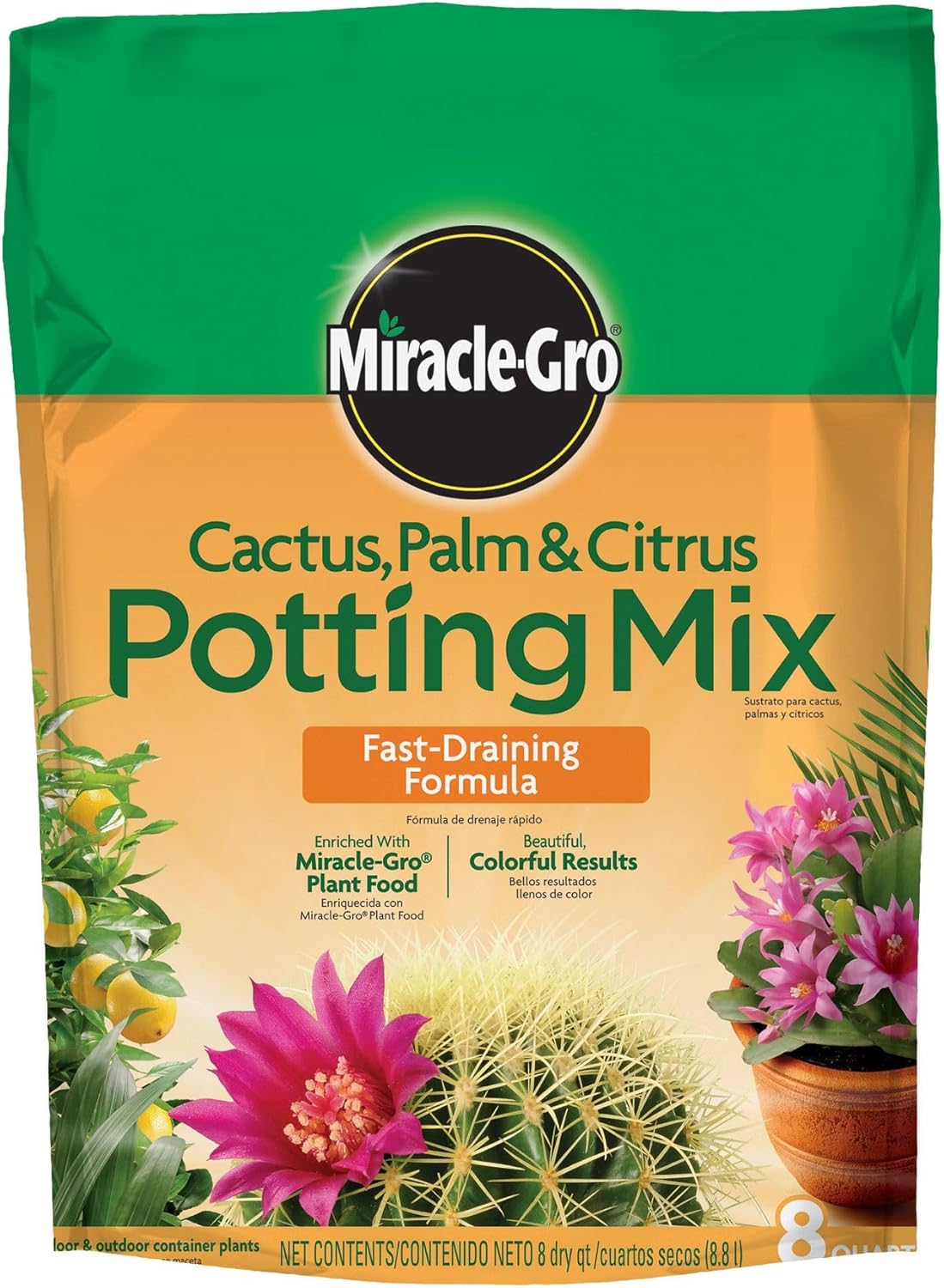
Miracle-Gro Cactus, Palm & Citrus Potting Mix, 8 qt.
| Brand Name | Miracle-Gro |
|---|---|
| Volume | 8 quarts |
| Item Highlight | Palm and Citrus Potting Mix, For Indoor or Outdoor Container Plants, Great for Succulents |
| Contains | Forest products, sphagnum peat moss, sand and perlite |
This potting mix is designed to give container plants a fast-draining, low-compaction medium by combining forest products, sphagnum peat moss, sand and perlite and by including a bit of Miracle-Gro plant food. It is typically used to repot succulents, cacti, palms and citrus in pots with drainage holes; directions recommend filling the pot, seating the root ball, watering thoroughly and allowing the mix to dry between waterings. The practical benefits are predictable drainage, easier root aeration and a small nutrient boost out of the bag, which helps reduce early feeding needs. Because it is blended for containers, one 8-qt bag will fill roughly two 8-inch pots, making it convenient for small repotting jobs. Limitations to consider are that the included plant food is a starter boost rather than a long-term fertilizer and the mix will still require regular feeding for heavy feeders like plumeria; also the bag size is small for larger trees or frequent repotting. For potted plumeria, this mix's drainage and light texture are helpful, but plan a follow-up feeding schedule for sustained growth and flowering.
Best for: Gardeners who want a reliable, ready-to-use container mix that prioritizes drainage and easy initial growth for potted tropicals and succulents, and who prefer a product with many customer endorsements.
Less Ideal for: Growers planning to pot large plumeria trees or those who want an all-in-one long-term fertilizer solution should look for larger volumes or mixes formulated for extended feeding.
- Fast-draining blend reduces risk of root rot in container plants
- Includes perlite and sand to keep soil light and well aerated
- Enriched with a starter dose of Miracle-Gro plant food for early growth
- Formulated specifically for container-friendly species like succulents, palms and citrus
- Starter plant food is not a substitute for ongoing fertilization for heavy feeders
- 8-quart bag is small for large pots or repeated repotting needs
Verdict: Choose this mix when you need a light, fast-draining container soil that gives potted plumeria a solid start with minimal fuss.
Back to the Roots Premium Organic Potting Mix, 6 Quart

| Unit Count | 192 Fluid Ounces |
|---|---|
| Item Highlight | Peat-free potting soil for outdoor plants, indoor plants, vegetables, herbs and flowers |
| Volume | 6 quarts |
| Brand Name | Back to the Roots |
This 6‑quart Premium Blend potting mix from Back to the Roots is a ready‑to‑use organic soil designed for container gardening and general planting. It mixes upcycled plant matter, yucca extract for improved moisture distribution, dolomitic limestone to help stabilize pH, and organic plant food so seedlings and established plants get a balanced start. Typical use is filling pots, repotting houseplants, or topping containers for herbs, vegetables, and ornamental plants. For potted plumeria it offers a lighter, well‑draining medium compared with heavy garden soils while still retaining enough moisture control to prevent rapid drying. The product is peat‑free and made in the USA, which may appeal to buyers preferring sustainable ingredients. Limitations are the small 6‑quart size that means multiple bags are needed for larger pots or several plants and the formula is an all‑purpose mix rather than a plumeria‑specific cactus or succulent blend, so growers who want very fast drainage may need to amend it with extra coarse grit or perlite.
Best for: Buyers who prefer an organic, ready‑to‑use potting mix made with sustainable ingredients and who want a reliable, easy starting soil for potted plumeria and other container plants.
Less Ideal for: Growers seeking a highly specialized, ultra‑fast draining cactus or succulent mix or those who need bulk quantities for large containers or many plants.
- Peat‑free organic formula made from upcycled plant matter
- Includes yucca extract to improve moisture distribution in containers
- Dolomitic limestone added to help balance soil pH
- All‑purpose blend suitable for a wide range of herbs, vegetables, and ornamentals
- Small 6‑quart bag requires multiple units for large pots or multiple plants
- Not a specialty fast‑draining mix so may need amendments for very drought‑tolerant species
Verdict: A convenient peat‑free organic potting mix that gives potted plumeria a sustainable, well‑balanced starting medium when you need an all‑purpose soil.
Choosing the Right Soil for Plumeria in Pots: Key Factors to Consider
Drainage and Aeration
Plumeria roots need oxygen to stay healthy and to avoid rot, especially in pots where water can collect at the bottom. A soil that drains quickly and maintains pore space prevents waterlogging while allowing roots access to air. Look for mixes with coarse components such as coarse sand, perlite, or pumice that create stable macropores. Avoid fine-textured soils that compact when watered because compaction reduces oxygen and increases the risk of root disease.
Drainage also affects how often you water. Faster-draining mixes require more frequent watering but reduce root-rot risk, while slower mixes hold moisture but can allow harmful anaerobic conditions to develop in tight containers.
Moisture Retention
Plumeria benefit from a balance between wet and dry. In pots, soil that dries out too fast stresses the plant and limits blooms, while soil that stays wet invites root problems. Components such as coconut coir, well-aged compost, or small amounts of fine peat can help hold available moisture without creating a soggy environment when combined with coarse drainage materials.
Consider the pot material and exposure when judging moisture needs. Unglazed clay pots wick moisture and will dry mixes faster, while plastic or glazed pots retain moisture longer. Choose or amend soils to match the container type and local climate so you get consistent moisture between feedings.
Nutrient Balance
Plumeria are flowering trees that need a steady supply of nitrogen, phosphorus, and potassium plus micronutrients to produce healthy growth and abundant blooms. Potting soil should provide some initial fertility and a medium that holds and releases nutrients predictably. Organic matter supplies slow-release nutrients and supports beneficial microbial activity, but too much fresh compost can tie up nitrogen or introduce salts.
A good potting mix for plumeria gives an initial nutrient boost and holds on to supplemental fertilizer applied during the season. Look for mixes that combine inert structure with modest organic content so you can manage feeding according to bloom cycles.
Structural Stability and Longevity
Soil in pots undergoes frequent wet-dry cycles and root growth that can cause loose mixes to break down and compact over a season. Structural stability means the mix keeps its texture and pore space so drainage and aeration remain consistent. Materials like pumice, coarse perlite, and aged bark resist decomposition and maintain structure longer than fine peat or uncomposted wood chips.
If you prefer a DIY approach, include a stable inorganic ingredient to prolong the useful life of the mix. Stable structure also reduces the need to repot often and keeps root systems healthier between scheduled repotting.
Salt and pH Management
Plumeria can be sensitive to high soluble salts and extremes in pH, both of which affect nutrient uptake in potted plants. Potting mixes should have low initial salt levels and a pH range that keeps key nutrients available. Avoid mixes with unknown fertilizer salts or excessive manures that can raise electrical conductivity.
Regular leaching through occasional heavy watering helps control salt buildup in containers. When selecting a soil, consider whether it allows for easy leaching and whether it buffers pH so trace elements remain accessible to the plant.
Choosing Between Ready Mixes and DIY Blends
Ready-to-use potting mixes are convenient and often formulated for container plants, but not all are ideal for plumeria. Many commercial mixes err toward either water retention or lightness. Evaluate a ready mix by looking for explicit drainage components and modest organic content rather than a heavy, moisture-retentive base.
DIY blends let you control particle sizes and ingredients precisely. A typical DIY recipe for potted plumeria pairs a chunky inorganic like pumice or coarse sand with a modest portion of high-quality potting soil and a small amount of organic matter. DIY mixes require sourcing components but let you match the blend to your pot type and climate.
- Ready mixes: fast setup, variable drainage characteristics
- DIY blends: customizable but need correct component proportions
- Match the mix to pot size and material for reliable moisture behavior
How Pot Size and Material Change Soil Performance
Small pots heat up and dry out faster, so a mix that holds a bit more moisture or using slightly larger particle sizes that retain more water may be necessary. Large pots buffer moisture better but can hide drainage problems if the soil compacts deep in the container.
Unglazed clay pots lose moisture through the sides and surface evaporation, which can benefit overwatered plants but may require more frequent watering in hot weather. Plastic or glazed containers retain moisture longer and may need a faster-draining mix to avoid saturated root zones.
- Small pots: choose mixes that retain some moisture
- Large pots: prioritize consistent drainage and stability
- Unglazed pots: faster drying, adjust watering schedule accordingly
Seasonal Care and Watering Practices
Plumeria growth and watering needs change through the season. During active growth and bloom, plants need more frequent watering and feeding. In cooler or dormant periods, reduce moisture to avoid root stress. The soil you choose should let you modulate watering without risking root problems.
Use the finger test or a moisture meter to gauge moisture below the surface of the pot. Water deeply until excess drains from the pot bottom, then allow the top portion of the soil to dry before the next thorough watering. Good soil structure makes this cycle predictable and repeatable.
- Adjust watering to growth stage: more in bloom, less in dormancy
- Deep watering encourages deeper roots and reduces salt buildup
- Monitor moisture below the surface, not just the top inch
Feeding and Recharging Potting Soil
Because potted soils have limited nutrient reserve, fertilize during the growing season to support blooms. A balanced fertilizer regimen combined with a soil that holds nutrients will support flowering without forcing excessive leaf growth at the expense of blooms.
Over time, organic components break down and the mix loses volume and structure. Repotting with fresh mix or top-dressing with a small layer of fresh potting medium and compost every one to two years helps maintain fertility and structure without disturbing the root ball excessively.
- Feed during active growth with a balanced fertilizer
- Top-dress or repot when the mix shows compaction or poor drainage
- Avoid heavy manures that can raise salts in small containers
Common Amendments and When to Use Them
Perlite, pumice, coarse sand, and bark chips are common amendments to improve aeration and drainage. Use pumice or chunky bark when you need long-lasting structure; use perlite when you want immediate, lightweight aeration. Coarse sand increases weight and aids drainage but must be coarse enough to avoid compaction.
Organic amendments like coconut coir or well-rotted compost add moisture retention and some fertility. Use them sparingly in mixes for plumeria, pairing them with ample coarse material to prevent the mix from becoming too dense or water-retentive.
- Pumice: stable structure, good aeration
- Perlite: lightweight aeration, shorter-lived
- Coir/compost: moisture and nutrients, use moderately
How We Chose the Best Soil for Plumeria in Pots
We evaluated mixes based on performance factors that matter in container plumeria culture. Key criteria included drainage rate and aeration to prevent root rot in confined pots, moisture retention so the soil does not dry out too quickly between feedings, and nutrient availability to support blooms without constant refeeding. We also considered structural stability to ensure the mix does not compact over a season, organic matter content for slow-release fertility, and salt management because container-grown plumeria can be sensitive to salt buildup. Products were shortlisted from widely recommended container mixes and custom potting blends suitable for tropical, drought-tolerant ornamentals. We excluded garden soils and heavy, high-clay mixes unsuited to pots. Blends that required extensive modification to meet basic drainage and aeration needs were not included. The final selections favor ready-to-use mixes or easily amended recipes that deliver the balance of drainage, moisture, and nutrients most gardeners need for potted plumeria.
FAQ
How often should I water plumeria in pots?
Watering frequency depends on pot size, mix, and weather. During active growth, most potted plumeria need a thorough soak when the top few inches of soil feel dry. In hot weather that can be every few days; in cooler or less sunny conditions, allow the top to dry more between waterings.
Can I use standard potting soil for plumeria?
Standard potting soil can work if it has good drainage and you amend it with coarse material. If a potting mix stays too wet or compacts, add pumice, perlite, or coarse sand to increase aeration and prevent waterlogging.
Should I add fertilizer to the potting mix before planting?
A light baseline of slow-release organic material or a starter fertilizer is helpful, but avoid heavy fresh manures or concentrated salts. Most gardeners rely on regular feeding during the growing season rather than loading the mix with fertilizer at planting.
What potting mix pH is best for plumeria?
Plumeria prefer a slightly acidic to neutral range, roughly pH 6.0 to 7.0. A balanced pH helps keep nutrients available. If your mix is outside that range, choose amendments or use buffered potting soils to correct the pH before planting.
How often should I repot plumeria in containers?
Repot when the soil has degraded, drainage declines, or the plant becomes root-bound, typically every one to three years depending on pot size and mix stability. Use repotting as an opportunity to refresh the medium and check root health.
Final Verdict
Choose a potting soil that balances rapid drainage with enough moisture retention to support consistent growth and flowering. Prioritize mixes that maintain structure and allow easy leaching to manage salts and pH. Match the soil to your pot type and seasonal watering habits so you can water and feed predictably. In the end, favor a well-aerated, modestly organic mix that you can tune with simple amendments. That approach minimizes root problems and maximizes bloom potential for plumeria grown in pots.
