

Note: This article contains affiliate links. If you click on these links and make a purchase, I may earn a small commission at no extra cost to you. This helps support my research and content. Read my full affiliate disclosure here.
Petunias in containers respond quickly to the fertilizer you choose. Potted petunias have limited root volume and nutrient reserves, so selecting the right fertilizer affects bloom size, frequency, and overall plant vigor. In this guide we shortlisted seven top fertilizer options suited for petunias grown in pots and evaluated them for the needs of container gardeners. Below you will find practical notes on feeding schedules, nutrient ratios that favor flowering, and application methods that work in hanging baskets, window boxes, and patio pots. Use the evaluation criteria to match a fertilizer to your watering habits and available time.
Top Picks at a Glance
| Best Overall The best all-around choice for most situations | Miracle-Gro Water Soluble Bloom Booster Flower Food, 10-52-10, 1 lb |  |
| Best Quality Built to a higher standard if you want something more solid | FoxFarm Tiger Bloom Liquid Plant Food (16 fl oz) |  |
| Best Value The sweet spot between price and what you get | Miracle-Gro Watering Can Singles All Purpose Plant Food, 24 Packets |  |
| Best Budget The cheapest option that still gets the job done reliably | Jobe's Organics Flower Fertilizer Spikes, 18 Count |  |
| Highest Rated A top-rated pick with lots of positive feedback | Jack's Classic Petunia FeED Water‑Soluble Fertilizer, 20-6-22, 24 oz |  |
| Most Popular A crowd favorite that many people choose with confidence | Miracle-Gro Water Soluble All Purpose Plant Food, 1.5 lb |  |
| Best Seller A high-volume bestseller chosen again and again | Miracle-Gro Indoor Liquid Plant Food for All Plants, 2×8 fl oz |  |
Miracle-Gro Water Soluble Bloom Booster Flower Food, 10-52-10, 1 lb

| Item Form | Liquid |
|---|---|
| Application Method | Water Soluble |
| Coverage | 500 square feet |
| Target Species | all blooming plants |
| Mixing Ratio | 1 tablespoon/gallon (1.5 tsp/gal for indoor plants) |
This Miracle-Gro bloom booster is a water-soluble fertilizer designed to encourage bigger blooms and stronger flower production in potted petunias and other flowering plants. It mixes easily with water (1 tablespoon per gallon for outdoor use and a reduced rate for indoor plants) and can be applied every 7 to 14 days during bud set and bloom for faster visible results. The high middle number (phosphorus) targets flowering rather than leafy growth, so you should see better color and more blossoms when used as directed. Practical benefits include simple measuring, compatibility with watering cans and feeder systems, and coverage suitable for container plantings. Important limitations are that it is a concentrated bloom formula, so it is not meant as an all-purpose, balanced feed for foliage growth and requires regular reapplication during the flowering period. Also follow label rates carefully to avoid overfeeding sensitive plants.
Best for: Gardeners growing petunias in pots who prioritize more frequent, showy blooms and want an easy-to-mix feed applied during the flowering season.
Less Ideal for: Growers who need an all-purpose fertilizer for overall plant growth or those who prefer very slow-release or organic feeding methods.
- High phosphorus formulation encourages more and larger blooms in flowering plants
- Water-soluble formula mixes quickly for use with watering cans or garden feeders
- Simple dosing instructions for outdoor and indoor container use
- Works quickly with repeat applications every 7 to 14 days during flowering
- Focused on bloom promotion so it does not provide a balanced nutrient profile for foliage development
Verdict: A quick‑acting, easy-to-mix bloom booster that helps potted petunias produce bigger, more abundant flowers when fed regularly during bloom.
FoxFarm Tiger Bloom Liquid Plant Food (16 fl oz)
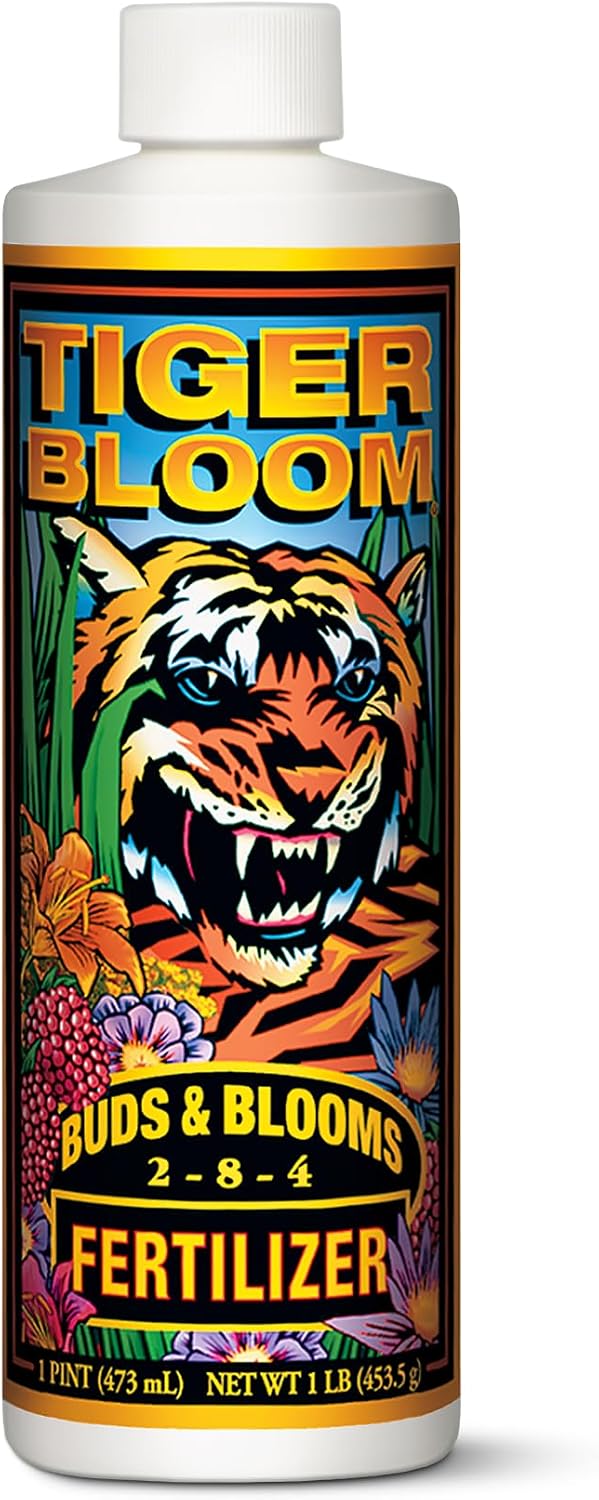
| Unit Count | 16 Fluid Ounces |
|---|---|
| Item Form | Liquid |
| Specific Uses For Product | Hydroponic |
| Application Method | Watering; Foliar spraying |
| Mixing Ratio | 1:200 or 1:300 (1 part fertilizer to 200 or 300 parts water) |
Tiger Bloom is a concentrated liquid bloom formula intended to boost flowering and fruit set during the reproductive stage. Gardeners mix 2 to 3 teaspoons per gallon (up to 4 teaspoons for heavy feeding) and apply via watering or as a foliar spray every other watering from first signs of flowering through harvest. Its 2-8-4 N-P-K and micronutrient content promote quicker nutrient uptake and more vigorous bloom production, which is helpful for potted ornamentals that need a bloom-focused feed. The product is compatible with both soil and hydroponic setups and stores with stability thanks to its low pH. Important limitations are that it is a bloom-focused fertilizer rather than an all-purpose feed so it is not ideal for vegetative growth, and because it contains phosphorus you should avoid runoff and follow local restrictions. Also smaller 16-ounce bottles require careful measuring for repeated container use compared with larger volume options.
Best for: Gardeners focused on maximizing flower production in container-grown ornamentals who want a fast-acting, bloom-focused feed and are comfortable measuring concentrated liquid fertilizers.
Less Ideal for: Beginners seeking an all-in-one houseplant fertilizer or growers who prefer slow-release granular feeds for low-maintenance feeding schedules.
- High phosphorus 2-8-4 formula targeted for bud and flower development
- Suitable for both soil and hydroponic systems for flexible use
- Concentrated liquid mixes quickly for fast nutrient uptake
- Can be applied by watering or foliar spray for targeted feeding
- Small 16 fl oz bottle may require frequent repurchasing for many potted plants
- Formulation is bloom-specific and not balanced for vegetative growth
Verdict: Use Tiger Bloom when you want a concentrated, high-phosphorus liquid to push bigger, fuller blooms on potted petunias.
Miracle-Gro Watering Can Singles All Purpose Plant Food, 24 Packets

| Number of Packs | 24 |
|---|---|
| Application Method | watering can |
| Specific Uses For Product | Plant Food |
| Mixing Ratio | 1 teaspoon per 1 gallon of water |
These Miracle-Gro Watering Can Singles are pre-measured packets of water-soluble all-purpose fertilizer designed to be added to a watering can and applied while watering. Typical use is simple: tear one packet into a gallon of water for outdoor plants or into two gallons for indoor pots, then water the base of plants every 7 to 14 days. The packets remove measuring and mess, making them convenient for container-grown petunias where consistent feeding helps maintain bloom production. They are formulated for all flowers and vegetables so one product works across mixed container plantings. Practical benefits include quick mixing, consistent dosing, and measured coverage of about 10 sq ft per prepared gallon for outdoor beds. Limitations are that the formula is a general-purpose feed rather than a flower-specific bloom booster and you must reapply frequently during active growth, so it is a recurring task rather than a slow-release solution.
Best for: Ideal for gardeners who want a low-fuss, consistent way to feed petunias and other potted flowering plants while watering, with predictable results and minimal measuring.
Less Ideal for: Not the best choice for gardeners seeking a single, long-lasting application or a specialized bloom-boosting fertilizer for peak flowering performance.
- Pre-measured single-use packets remove measuring and reduce mess when feeding potted plants
- Water-soluble formula mixes quickly for immediate nutrient availability
- Designed for use on flowers and container vegetables so it suits mixed pot plantings
- Convenient dosing schedule (every 7–14 days) supports regular feeding during the growing season
- Not a bloom-specific formula so it may not boost flowering as much as a high-phosphorus bloom feed
- Requires frequent reapplication compared with slow-release fertilizers
Verdict: If you want a tidy, reliable way to feed petunias in pots while you water, these pre-measured Miracle-Gro packets make regular feeding quick and consistent.
Jobe's Organics Flower Fertilizer Spikes, 18 Count

| Unit Count | 18 Count |
|---|---|
| Application Method | Insert into soil |
| Item Form | Sticks |
| Mixing Ratio | 8-9-12 |
Jobe's Organics Flower Fertilizer Spikes are pre-measured sticks you insert into potting soil to deliver nutrients directly to the root zone for up to eight weeks. Designed for potted plants and hanging baskets, the 8-9-12 NPK formula supports bloom production and foliage growth without the mess of liquid fertilizers. Use is straightforward: push the recommended number of spikes around the root ball and replace according to the label every eight weeks. The slow-release delivery helps prevent nutrient runoff and reduces the chance of overfertilizing compared with granular or liquid feeds. Because the spikes are compact and contained, they are convenient for small containers and for gardeners who want low-effort maintenance. Limitations are that dosing is fixed per spike so fine-tuning nutrient levels for very small pots or specific bloom cycles is harder, and they do not supply micronutrients beyond NPK. They are best used as a regular maintenance feed rather than a corrective treatment for nutrient deficiencies.
Best for: A thrifty gardener who wants a simple, low-maintenance way to keep petunias in pots blooming with minimal measuring or mess.
Less Ideal for: Growers who need customizable dosing, want a full micronutrient formula, or who are treating a diagnosed deficiency should choose a different fertilizer approach.
- Pre-measured spikes provide mess-free, easy application
- Slow-release formula feeds roots for up to eight weeks reducing watering loss
- 8-9-12 NPK targets flowering and foliage support
- Compact form is convenient for pots and hanging baskets
- Fixed nutrient dose per spike limits precise dosing for very small containers or plants with special needs
- Does not list micronutrients so may not correct specific deficiencies
Verdict: An inexpensive, no-fuss slow-release spike that keeps potted petunias fed and flowering with minimal effort.
Jack's Classic Petunia FeED Water‑Soluble Fertilizer, 20-6-22, 24 oz

| Item Form | Powder |
|---|---|
| Specific Uses For Product | Bloom Production |
| Application Method | Spray |
| Unit Count | 24 Ounce |
Jack's Classic Petunia FeED is a water‑soluble powder designed specifically for bloom production on petunias and other iron‑loving annuals. You mix the measured powder with water using the included scoop and apply it as a root drench or foliar spray, or through a continuous feed system. The 20‑6‑22 NPK formula plus added micronutrients supports vigorous green growth while encouraging flower set and color. As a powdered concentrate it is economical because a single container makes multiple gallons of feed solution, and clear mixing instructions make it straightforward to use. The product is aimed at gardeners who want consistent, professional results rather than experimental blends. Limitations are that it is a targeted bloom formula so it is less suited as a general all‑purpose feed for non‑flowering plants, and users must follow the mixing guidance to avoid overfeeding; it does not include dilution ratios on the product data here beyond noting instructions exist. For potted petunias where reliable bloom and green‑up matter, this provides a predictable, easily applied feeding program.
Best for: Gardeners who want a dependable, professional‑grade fertilizer to keep potted petunias consistently green and flowering and who prefer a predictable feeding routine over experimental blends.
Less Ideal for: Beginners who want a one‑size‑fits‑all houseplant feed or gardeners looking for a single product to feed nonflowering shrubs and vegetables.
- High NPK ratio (20-6-22) targeted to promote blooms and lush green foliage
- Water‑soluble powder concentrates for economical mixing and multiple gallons of feed
- Includes micronutrients to address iron‑loving plants and reduce the need for additional supplements
- Versatile application as foliar spray, root drench, or continuous feed
- Formulated specifically for bloom production so not ideal as a universal feed for all plant types
- Mixing and correct dilution are required to avoid overfeeding, which adds a small learning step
Verdict: A reliable, professional water‑soluble bloom fertilizer that consistently produces lush foliage and abundant flowers on potted petunias.
Miracle-Gro Water Soluble All Purpose Plant Food, 1.5 lb

| Item Form | Powder |
|---|---|
| Application Method | Watering Can |
| Target Species | All flowers, vegetables, trees, shrubs and houseplants |
| Mixing Ratio | 24-8-16 |
Miracle-Gro Water Soluble All Purpose Plant Food is a fast-acting powder fertilizer you mix into water and apply with a watering can or garden feeder. It supplies a high nitrogen formula that encourages quick leafy growth and repeat feedings are intended every 7 to 14 days outdoors or every 2 weeks for houseplants. Typical use is dissolving the scoopful into a gallon or more of water, then soaking soil at the base of container or in-ground plants to feed roots directly. Notable features include a broad "safe for all plants" claim, an included scoop, and coverage guidance that a 1.5 lb container feeds about 600 sq ft. In practice this makes it convenient for potted petunias because it dissolves easily and delivers an immediate nutrient boost that helps produce fuller foliage and more blooms when used as directed. Important limitations are the high NPK ratio that favors foliage over bloom if overused and the need to follow dilution instructions closely to avoid nutrient imbalance. It is best as a regular liquid feed in pots rather than a slow-release, long-term solution.
Best for: Buyers who want a reliable, easy-to-mix liquid feed to keep potted petunias vigorous and blooming with predictable, frequent applications and social proof of widespread use.
Less Ideal for: Gardeners seeking a single seasonal, low-maintenance slow-release fertilizer or those who prefer bloom-boosting low-nitrogen formulations should consider alternatives.
- Water-soluble formula delivers nutrients quickly to roots
- Clear mixing and application instructions for watering can or garden feeder
- Market-proven all-purpose formula labeled safe for a wide range of plants
- Included scoop makes consistent dosing simple
- One container covers a substantial area for multiple pot batches
- High nitrogen NPK (24-8-16) can promote foliage more than flowers if used too frequently
- Requires regular reapplication and is not a slow-release fertilizer
Verdict: A fast-dissolving, widely used liquid feed that gives potted petunias a quick, reliable nutrient boost when applied regularly.
Miracle-Gro Indoor Liquid Plant Food for All Plants, 2×8 fl oz

| Item Form | Liquid |
|---|---|
| Application Method | Apply directly to soil or mix with water |
| Target Species | Houseplants |
| Liquid Volume | 8 fluid ounces |
| Mixing Ratio | 4 pumps per 1 quart of water |
This Miracle-Gro indoor liquid plant food is a ready-to-use nutrient concentrate for potted indoor plants that comes as two 8 fl oz bottles. It is designed to be applied directly to the soil or diluted at the recommended ratio (4 pumps per quart of water) and used while watering every two weeks. The pump dispenser and clear mixing instructions make dosing straightforward for routine feeding, and the formula is intended to deliver balanced NPK nutrients that are absorbed quickly by container-grown plants. For petunias in pots this product provides a convenient, quick-feeding option to maintain bloom and vigor between repots. Limitations to keep in mind are that it is a general all-purpose indoor formula rather than a bloom-specific high-phosphorus fertilizer and it requires regular reapplication as a liquid feed rather than providing slow-release nutrition. Users growing a large container display may prefer a bloom-boosting or longer-lasting granular option alongside this for peak flowering over a season.
Best for: Buyers who want a low-effort, dependable liquid feed to keep potted petunias and other indoor flowering containers healthy between waterings. Ideal for someone who prefers clear instructions and predictable results over experimentation.
Less Ideal for: Gardeners seeking a specialized bloom booster or a slow-release fertilizer to reduce application frequency should consider alternative products tailored for heavy flowering outdoor containers.
- Easy pump dispenser and simple mixing ratio for predictable dosing
- Formulated for indoor container plants including flowers and herbs
- Feeds quickly when applied with watering so effects are seen between feedings
- Not marketed as a bloom-boosting or high-phosphorus flower-specific formula
- Requires biweekly applications rather than providing long-term slow release
Verdict: A simple, reliable liquid feed that makes routine biweekly nutrition easy for potted petunias and other indoor container plants.
Choosing the Right Fertilizer for Petunias in Pots: Key Factors to Consider
Nutrient Ratio and Bloom Focus
Petunias perform best when fertilizer provides enough phosphorus to support flower formation without starving foliage. A ratio skewed toward bloom promotion usually has moderate nitrogen, higher phosphorus, and adequate potassium. In containers, excessive nitrogen can produce lush foliage at the expense of blooms, while too little nitrogen causes pale leaves and weak stems.
When choosing a product, look for clear NPK labeling and directions that specify rates for small containers. Some formulas marketed for 'flowering annuals' are tailored to the petunia growth habit, delivering repeated flushes of blooms when applied on schedule.
Release Type and Feeding Frequency
Container gardening changes how nutrients are retained. Quick-draining pots and frequent watering can leach soluble nutrients rapidly, so fast-release fertilizers require more frequent feeding. Conversely, slow-release granules or coated pellets deliver steady nutrients but can be less responsive if you need to correct a deficiency quickly.
Consider your watering routine and how often you want to feed. Hanging baskets and small pots often benefit from liquid feeds every one to two weeks during peak bloom, while larger patio containers can do well with an initial slow-release plus occasional liquid boosts.
Application Method and Garden Routine
Ease of application matters for container growers who want low-maintenance color. Water-soluble concentrates are flexible and let you control strength for different pot sizes, but they require measuring and mixing. Spikes and pre-measured sachets simplify dosing but might not distribute nutrients evenly in small pots.
Also think about safety and cleanliness. Granular products can create dust or spills, while liquids reduce mess but need clean watering equipment. Choose a format that fits how you care for your pots and how often you inspect and water them.
Micronutrients and Leaf Health
Petunias in pots can show micronutrient deficiencies quickly because the growing medium has limited reserves. Magnesium deficiency shows as yellowing between leaf veins, while iron deficiency is common in alkaline mixes. Fertilizers that include a mix of trace elements help prevent these problems and keep foliage attractive, which supports sustained flowering.
If your potting mix is basic or you reuse media, favor formulas that list micronutrients explicitly. Foliar feeds can correct a deficiency fast, but a balanced granular or soluble fertilizer reduces the need for ad hoc treatments.
Salt Build-Up and Container Drainage
Because containers concentrate salts from repeated feedings, you must consider how a fertilizer contributes to salt accumulation. High-salt formulations can stress roots and lead to brown leaf edges or reduced bloom. Good drainage and periodic leaching with plain water help, but choosing lower-salt or controlled-release feeds reduces the frequency of corrective flushing.
Also assess your potting mix and drainage. Dense or slow-draining media magnify salt problems. Pair fertilizer choice with proper watering technique to avoid buildup and maintain healthy roots.
Compatibility With Watering Systems and Pot Size
Different application methods interact with irrigation approaches. If you use drip irrigation or self-watering containers, soluble fertilizers can deliver nutrients systemically but may require dilution adjustments. Spikes or slow-release granules work well in pots that are hand-watered and checked regularly.
Match fertilizer concentration and delivery to pot volume. Small 4-6 inch pots need much lower doses than large containers. Many product labels give rates by pot diameter; follow those guidelines to avoid overfeeding.
When to Start Feeding Petunias
Begin fertilizing once young petunia seedlings or transplants are established and have a couple of true leaves. Seedlings in seed-starting mixes often do not need added nutrients immediately, but potted transplants will benefit from light feeding to support root recovery and early bloom production.
Adjust the start time based on the potting mix. Mixes with added starter nutrients may delay the need for additional fertilizer for a few weeks, while sterile mixes will need feeding sooner.
- Start light liquid feeds about two weeks after transplanting.
- Use half-strength solutions for small pots or stressed plants.
Feeding Schedules for Different Pot Types
Hanging baskets, window boxes, and small pots generally require more frequent applications because they dry out and lose nutrients faster. A simple schedule is a diluted liquid feed every 7 to 14 days during peak growth. For larger patio planters, a single slow-release charge at planting plus monthly liquid boosts often suffices.
- Hanging baskets: weekly to biweekly liquid feed.
- Small pots: every 7 to 14 days at reduced strength.
- Large containers: slow-release at planting with occasional liquid feed.
Correcting Common Nutrient Problems
Yellowing leaves, weak stems, or reduced flowering point to specific nutrient issues. Pale leaves with green veins suggest magnesium or iron deficiency, while overall fading color and few blooms often indicate insufficient phosphorus or potassium.
Quick fixes like a foliar spray of a balanced micronutrient solution or a targeted liquid feed can restore vigor. For persistent problems, refresh the top layer of potting mix and check for salt buildup by leaching the pot with plain water.
- Magnesium deficiency: look for interveinal yellowing on older leaves.
- Iron deficiency: new leaves turn yellow first, with green veins remaining.
- Salt toxicity: brown leaf tips and poor water uptake; leach and reduce feed strength.
Organic Versus Synthetic Options
Organic fertilizers supply nutrients more slowly and improve potting mix structure over time, but they may not act as quickly as synthetic liquids when you need an immediate bloom boost. Synthetic formulas are fast-acting and predictable in container settings.
For gardeners prioritizing soil health, a blended approach can work: use organic base amendments and supplement with targeted liquid feeds during bloom peaks.
- Organics build long-term fertility but feed slowly.
- Synthetics give faster correction and reliable bloom responses.
Practical Tips for Mixing and Measuring
Use graduated measuring tools for concentrates and follow label dilution rates based on pot size. Over-concentrating feeds is a common cause of burned roots and stunted blooms in containers. If dosing by spoon or cup, measure out the amount for one pot rather than estimating.
Record what you use and when so you can adjust the schedule if plants show signs of overfeeding or deficiency.
- Always err on the side of weaker mixes for small pots.
- Flush pots with plain water every few weeks if you feed frequently.
How We Chose the Best Fertilizer for Petunias in Pots
We focused on criteria that matter to gardeners growing petunias in containers. First, nutrient balance was essential: fertilizers that promote flowering require a phosphorus-forward or balanced NPK but must also include sufficient nitrogen to maintain healthy foliage without encouraging leggy growth. Second, release profile was evaluated to match container cultures: quick-release formulas suit frequent waterings and short-season color while slow-release options reduce maintenance for larger pots. Third, application ease mattered because many container growers want simple, low-mess options such as water-soluble concentrates, pre-measured spikes, or coated granules. Fourth, secondary nutrients and micronutrients were considered since magnesium, iron, and trace elements prevent common container deficiencies. We also checked compatibility with common potting mixes and container irrigation routines. Products were excluded if they were formulated strictly for lawns, indoor foliage only, or required professional equipment. We filtered out fertilizers with vague labeling on NPK or those lacking clear instructions for small containers. The final picks align with the scoring metrics above and represent practical choices for a range of container sizes and gardener preferences.
FAQ
How often should I fertilize petunias in small hanging baskets?
Often weekly to biweekly with a diluted liquid fertilizer during the main bloom period. Hanging baskets dry and leach nutrients faster, so more frequent but weaker feeds keep blooms consistent.
Can I use a general-purpose houseplant fertilizer on petunias in pots?
Often yes if the label includes directions for flowering annuals, but check the nutrient ratio. General-purpose formulas with balanced NPK can work, though products labeled for flowering plants usually encourage more blooms.
What signs indicate I am overfeeding petunias in containers?
Common signs include leaf burn, brown leaf edges, reduced flowering, and crusty white deposits on the soil surface. If you see these, flush the pot with plain water and reduce feed concentration or frequency.
Are slow-release granules safe for small pots and hanging baskets?
They can be, but in very small pots the dose may be too strong unless the product has low-release rates. Slow-release options are better suited to larger containers or when the product provides specific rates for small pots.
Should I change fertilizer when petunias shift from vegetative growth to peak bloom?
It depends. Many gardeners switch from a balanced feed to a bloom-focused or higher-phosphorus liquid during peak flowering to encourage larger, more frequent blooms. Alternatively, maintain a consistent flowering formula throughout the season for steady results.
Final Verdict
Choose a fertilizer that matches how you water and care for your pots, balancing a bloom-friendly nutrient ratio with a release profile that fits your routine. Watch for micronutrient symptoms and salt buildup, and adjust strength and frequency rather than increasing concentration. Prioritize bloom-nutrient balance and application ease for the best flowering results in containers. With the right feed and a consistent schedule, you can keep potted petunias blooming strongly all season.
