

Note: This article contains affiliate links. If you click on these links and make a purchase, I may earn a small commission at no extra cost to you. This helps support my research and content. Read my full affiliate disclosure here.
Picking the right soil mix for vegetable gardens has a bigger impact on harvests than fertilizer or seed variety alone. The right blend controls water retention, root aeration, and nutrient availability so plants establish quickly and resist stress. This guide looks at the top shortlists for in-ground beds and raised containers tailored for vegetable production. We evaluated mixes for texture, organic matter, and water management to highlight options gardeners can use across seasons. Below are the best soil mixes for vegetable gardens chosen for reliable structure and fertility, followed by practical notes to help you match a mix to your site and crops.
Top Picks at a Glance
| Best Overall The best all-around choice for most situations | Espoma Organic Vegetable & Flower Garden Soil Mix, 1 Cu Ft |  |
| Best Quality Built to a higher standard if you want something more solid | Coast of Maine Castine Blend Raised Bed Mix, 4-pack (1 cu ft each) |  |
| Best Value The sweet spot between price and what you get | Back to the Roots All-Purpose Peat-Free Potting Mix, 2-Pack (12 Qt) |  |
| Best Budget The cheapest option that still gets the job done reliably | Back to the Roots 3-in-1 Seed Starting Mix, 6 Quart Organic |  |
| Highest Rated A top-rated pick with lots of positive feedback | FoxFarm Happy Frog Potting Soil for Containers (2 cu ft) with 2 Plant Tags |  |
| Most Popular A crowd favorite that many people choose with confidence | Miracle-Gro Potting Mix, 16 qt. (2-Pack) |  |
| Best Seller A high-volume bestseller chosen again and again | Back to the Roots Organic Expanding Coco Coir Potting Soil Brick |  |
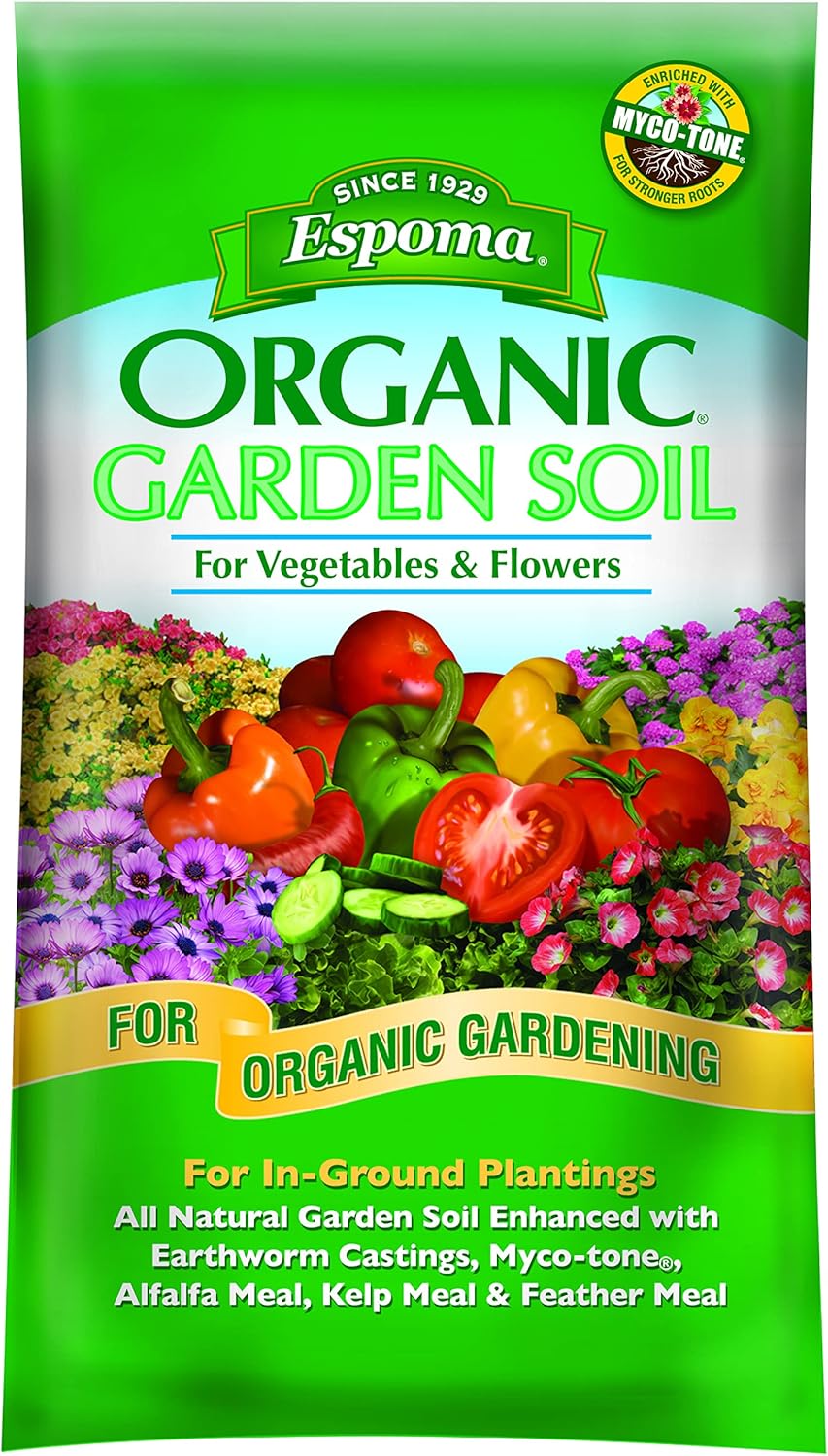
Espoma Organic Vegetable & Flower Garden Soil Mix, 1 Cu Ft
| Brand | Espoma |
|---|---|
| Volume | 1 cubic feet |
| Style Name | Peat Moss |
| Ingredients | Peat moss, aged forest products/composted rice hulls, earthworm castings, alfalfa, kelp, feather meal, yucca extract |
Espoma Organic Vegetable & Flower Garden Soil is a premixed, organic planting blend designed to improve native garden soil when planting or transplanting. It combines Canadian sphagnum peat moss with aged forest products or composted rice hulls, plus earthworm castings and organic meals such as alfalfa, kelp and feather meal to add nutrients and structure. The mix also includes Espoma's MYCO-TONE mycorrhizae blend to encourage root establishment and can be worked into beds or used to backfill transplants. For small vegetable beds or individual planting areas this bag makes it easy to raise organic fertility and improve moisture retention without synthetic fertilizers. Limitations are that a single 1 cubic foot bag covers only a small area, so larger beds require multiple bags or bulk soil, and the peat-based formula may compress over time and need replenishing seasonally. Expect to mix it well with your existing soil rather than rely on it alone for deep bed building.
Best for: Home gardeners who want an easy organic amendment for planting or transplanting vegetables and flowers in small beds or containers and value improved root health and natural fertility.
Less Ideal for: Those establishing large-scale raised beds or amending large areas who should choose bulk compost or soil blends sold by the yard.
- Organic ingredient blend with earthworm castings and plant meals for natural fertility
- Includes mycorrhizal inoculant to support root development and transplant success
- Formulated for direct use when planting or transplanting without added synthetic chemicals
- Good water retention and improved soil structure from peat and composted materials
- Sold in a single 1 cubic foot bag which is insufficient for larger beds
- Peat-based mix can compact and may need seasonal top-ups or incorporation into native soil
Verdict: A convenient organic planting mix that boosts root establishment and natural fertility for small vegetable and flower plantings.
Coast of Maine Castine Blend Raised Bed Mix, 4-pack (1 cu ft each)

| Number of Packs | 4 |
|---|---|
| Unit Count | 4 Count |
| Made in | United States |
| OMRI Listed | Yes |
The Castine Blend is a purpose-built raised bed mix aimed at vegetable, herb, and flower gardens that need a nutrient-rich, ready-to-use growing medium. It combines fully cured compost, sphagnum peat moss, aged bark, biochar, worm castings, mycorrhizae, kelp meal, greensand, and lobster and crab shell meal to support moisture retention, drainage, and soil structure. In practice this means you can fill planter boxes or raised beds without additional amendments and expect steady growth from seedlings through harvest thanks to slow-release organic nutrients and beneficial microbes. The OMRI listing and emphasis on living soil make it a good fit for gardeners prioritizing organic fertility and soil biology. The trade-offs are typical for premium organic mixes: it is heavier and comes in bagged units so moving large quantities requires effort, and the peat component may be a consideration for growers avoiding peat. For performance-focused vegetable gardeners who want a plug-and-play, biologically active mix that supports consistent yields, Castine Blend delivers an easy-to-use foundation with long-term soil-building ingredients.
Best for: Gardeners who want a high-performance, plug-and-play organic mix to establish productive raised beds or containers and who prioritize biological fertility and steady harvests.
Less Ideal for: Growers who need a custom soil recipe for specific crops or who prefer peat-free or extremely lightweight mixes for frequent container moves.
- Formulated with compost, worm castings, mycorrhizae, and shell meals to support nutrient availability and soil biology
- Ready-to-use blend tailored for raised beds and container gardens with no additional mixing required
- Designed to balance moisture retention and drainage for steady vegetable growth
- OMRI listed and made in the USA with sustainably sourced organic ingredients
- Bags are heavy and moving multiple units for large beds can be labor intensive
- Contains sphagnum peat moss, which some gardeners prefer to avoid for environmental reasons
Verdict: Choose this mix if you want a ready-made, biologically rich raised bed soil that supports reliable vegetable production without extra amendments.
Back to the Roots All-Purpose Peat-Free Potting Mix, 2-Pack (12 Qt)

| Number of Packs | 2 |
|---|---|
| Unit Count | 384 Ounce |
| Item Type Name | Natural & Organic All-Purpose Peat-Free Potting Mix |
| Style Name | Specialty Potting Mix |
This potting mix is designed as a ready-to-use, peat-free soil for vegetables, herbs, and flowers in containers or raised beds. It combines coconut coir for water retention, mycorrhizae to support root development, and yucca extract to help distribute moisture and nutrients through the root zone. Dolomitic limestone helps balance pH and supplies calcium and magnesium to reduce common nutrient deficiencies. For a practical gardener focused on productivity, the mix cuts down on prep time because it arrives nutrient-rich and ready to plant, and the peat-free formula addresses sustainability concerns. It works well for starting seedlings, potting up transplants, and topping off container plantings, though heavier garden amendments or compost may still be needed for long-term in-ground beds where soil structure and microbial life matter more. Bags are modest in volume, so plan quantities for larger vegetable plots rather than relying on this product alone for full bed builds.
Best for: Gardeners who want a ready-to-use, sustainable potting mix that speeds container and transplant success and reduces guesswork when starting vegetables and herbs.
Less Ideal for: People building or restoring large in-ground vegetable beds who need bulk topsoil or long-term soil amendments should choose bulk compost or mineral-rich topsoil instead.
- Peat-free, organic blend that supports more sustainable gardening
- Contains mycorrhizae to promote healthier root establishment
- Coconut coir and yucca extract improve moisture retention and distribution
- Includes dolomitic limestone to help balance pH and supply calcium and magnesium
- Sold in relatively small volume per pack so multiple bags are needed for large vegetable beds
- Not formulated to replace heavy compost or long-term soil conditioning for permanent in-ground beds
Verdict: Choose this peat-free, nutrient-ready potting mix when you want a sustainable, low-fuss soil that helps seedlings and container vegetables establish quickly.
Back to the Roots 3-in-1 Seed Starting Mix, 6 Quart Organic

| Unit Count | 192 Fluid Ounces |
|---|---|
| Volume | 0.23 cubic feet |
| Organic | 100% Organic |
| Peat-free | Yes |
This ready-to-use 3-in-1 seed starting mix is designed to get vegetable seedlings and herbs off to a strong start. It combines coconut coir, mycorrhizae, worm castings and yucca extract to improve water uptake, support root development and add gentle nutrients, while dolomitic limestone helps balance pH. Typical use is filling seed trays, pots or small containers for indoor or protected outdoor starts; the moisture-controlling elements reduce the risk of overwatering during the vulnerable seedling stage. The peat-free formula and organic inputs make it an eco-minded choice, and the 6-quart size is convenient for hobby beds or starting multiple flats. Limitations are the modest volume for larger garden projects and that this is a seed-starting blend rather than a finished garden soil, so transplants will still benefit from being moved into richer potting mix or amended garden beds as they grow. For budget-focused gardeners this mix offers a good balance of organic ingredients and beginner-friendly performance for starting vegetables and herbs.
Best for: Gardeners on a budget who need an organic, easy-to-use seed starting mix to raise healthy vegetable and herb seedlings for transplanting into beds or larger pots.
Less Ideal for: Those planting large vegetable beds or seeking an all-purpose garden soil for full-season containers should choose bulk potting soil or amendments instead.
- Peat-free organic formula with mycorrhizae and worm castings to support early root growth
- Contains moisture-controlling yucca extract to reduce seedling overwatering issues
- pH balanced with dolomitic limestone to help prevent nutrient lockup
- Ready-to-use 6 quart size that is convenient for starting multiple flats or pots
- Only 6 quarts, so you will need multiple bags for larger vegetable gardens
- Formulated for seed starting rather than long-term potting or in-ground planting
Verdict: A budget-friendly organic seed starting mix that gives vegetable and herb seedlings healthy roots and easier watering while you prepare beds or larger containers.
FoxFarm Happy Frog Potting Soil for Containers (2 cu ft) with 2 Plant Tags

| Brand Name | FoxFarm |
|---|---|
| Item Highlight | Ready-to-Use Amended Container Blend with Soil Microbes, Earthworm Castings, Bat Guano, and Aged Forest Products |
| Volume | 2 cubic feet |
| Style Name | Container Garden |
| Unit Count | 600 Ounce |
FoxFarm Happy Frog Potting Soil is a premixed container blend designed to give potted plants a nutrient-rich, biologically active medium right out of the bag. It contains earthworm castings, bat guano, aged forest products, and a custom microbial blend that supports root growth and helps break down organic matter. Typical use is filling pots and planters for vegetables, herbs, fruiting shrubs, and houseplants; the bag is described as pH adjusted and ready to plant without additional mixing. The practical benefits are stronger root development and improved nutrient uptake, which can translate into more vigorous vegetative growth and better flowering or fruiting in containers. Two plant tags are included for straightforward labeling. Limitations are that this is formulated for containers rather than in-ground beds, so gardeners should not treat it as a bulk garden topsoil replacement and may need supplemental fertilizer over a growing season for heavy feeders. Expect good convenience and biological activity, but plan additional amendments for long-term large pots or nutrient-hungry vegetable crops.
Best for: Gardeners who need a dependable, plug-and-play potting mix for container vegetable beds, herbs, or fruiting shrubs and who prioritize consistent, biologically active soil that reduces upfront prep time.
Less Ideal for: People looking to amend large in-ground vegetable beds or replace bulk garden soil should consider products formulated for raised beds or topsoil instead.
- Ready-to-use mix eliminates initial blending or composting steps
- Includes beneficial amendments: earthworm castings, bat guano, and forest humus
- Contains soil microbes and mycorrhizal-friendly ingredients to support root development
- pH adjusted for improved nutrient availability in containers
- Formulated specifically for containers and not intended as a bulk in-ground soil replacement
- May require additional fertilizer during a long growing season for heavy-feeding vegetables
Verdict: Choose this potting soil when you want a reliable, ready-to-use, microbially active mix that simplifies container vegetable and herb growing.
Miracle-Gro Potting Mix, 16 qt. (2-Pack)

| Feeds plants | Up to 6 months |
|---|---|
| Volume | 16 quarts (per bag) |
| Number of packs | 2 |
| Ingredients | Sphagnum Peat Moss, Peat, Perlite, Compost, Fertilizer |
Miracle-Gro Potting Mix is a ready-to-use container soil designed for outdoor pots, hanging baskets, and planters. It combines peat moss, perlite, compost, and fertilizer so roots get light, fast-draining media that also supplies nutrients for up to six months. Typical use is filling a pot with a drain hole, setting the plant at nursery depth, and topping off before watering through until runoff. The mix is easy to handle, reduces compaction compared with plain garden soil, and is convenient for planting vegetables, herbs, and annual flowers in containers. Because it is formulated specifically for containers it encourages healthy root growth and less frequent feeding early in the season. Limitations are that it is a potting mix rather than a garden soil, so it is not intended for amending in-ground beds and will need refreshing annually once nutrients deplete; gardeners seeking organic or specialized mixes for heavy feeders or specific soil chemistry needs may prefer alternatives.
Best for: Gardeners who want a reliable, ready-made potting mix for outdoor containers and value proven results from a well-known brand for vegetables, herbs, and annuals.
Less Ideal for: Growers who need soil to amend raised beds or who require certified organic or custom soil chemistry for specialty crops should look elsewhere.
- Feeds container plants for up to six months with built-in fertilizer
- Formulated for fast drainage and root aeration thanks to peat and perlite
- Convenient pre-mixed bags that are ready to use for pots and hanging baskets
- Suitable for a wide range of outdoor container plants including vegetables and herbs
- Not formulated to amend in-ground garden beds
- Contains peat-based ingredients which some gardeners avoid for sustainability reasons
Verdict: A dependable, ready-to-use potting mix that makes planting and growing vegetables and herbs in containers easier by providing fast drainage and months of built-in feed.
Back to the Roots Organic Expanding Coco Coir Potting Soil Brick

| Item Highlight | 10 lb compressed coco coir brick; peat-free; OMRI Listed |
|---|---|
| Expands to | 2 cubic feet |
| Item Type Name | Coconut Coir |
| Ingredients | Coconut Coir |
This compressed coco coir block is designed to expand into a loose, fluffy growing medium when water is added, making it an easy-to-store alternative to bulky soil bags. Typical use is to rehydrate the 10 lb brick in a large tub or wheelbarrow, break it apart, and use it alone for seed starting or mixed with garden soil to improve drainage and aeration for vegetables, herbs, and flowers. Notable features include organic, peat-free coir that is OMRI listed and pH balanced, which supports healthy root development and helps retain moisture without compacting. Practical benefits for vegetable gardeners are lighter weight for handling, convenient storage, and versatility as both a stand-alone potting mix or soil amendment. Important limitations are that coco coir has low inherent nutrients so you will need to add fertilizer or compost for long-term vegetable beds, and a brief hydration and fluffing step is required before planting. For growers who prefer a ready-to-plant, nutrient-rich mix out of the bag, additional amendments are necessary.
Best for: Practical home vegetable gardeners who want a reliable, peat-free growing medium that is easy to store and use as a seed-starting mix or soil amendment.
Less Ideal for: Gardeners who want a complete, ready-to-plant soil with built-in fertilizer or those unwilling to hydrate and amend a compressed block.
- Peat-free organic coconut coir that is OMRI listed, suitable for organic gardens
- Expands to about 2 cubic feet, reducing storage space and shipping bulk
- Lightweight and airy after rehydration, improves drainage and aeration in pots and garden mixes
- pH balanced and versatile for seed starting, container vegetables, or as a soil amendment
- Contains no significant nutrients so requires added fertilizer or compost for vegetable production
- Needs rehydration and manual breaking up before use which adds a prep step
Verdict: A convenient, peat-free coco coir brick that reliably expands into a light, pH-balanced medium ideal for seed starting and improving vegetable garden soil when paired with nutrients.
Choosing the Right Soil Mix for Vegetable Gardens: Key Factors to Consider
Drainage Versus Moisture Retention
This factor determines how often you water and how roots access oxygen. A mix that drains too quickly leaves seedlings vulnerable to drought stress and uneven growth, especially in warm weather. Conversely, an overly retentive mix can stay waterlogged, which reduces oxygen at the root zone and increases root rot risk. For most vegetables you want a middle ground: enough coarse material to prevent saturation but enough fine and organic components to hold accessible moisture.
Texture adjustments are simple to make at home by adding grit or compost, but choosing a base mix with the right balance saves time. Consider your local climate and irrigation frequency when judging a mix's drainage-retention profile.
Organic Matter and Fertility
Organic matter supplies slow-release nutrients and supports soil life that converts organic compounds into plant-available forms. Higher organic content improves structure and water-holding capacity while feeding beneficial microbes that help nutrient cycling. However, very high fresh organic inputs can temporarily tie up nitrogen as they decompose, so mixes that include a proportion of well-aged compost are preferable for immediate vegetable production.
Look for mixes that state compost or humus content and avoid those relying solely on peat or inert fillers if you want ongoing fertility. Plan to top-dress or side-dress heavy feeders as the season progresses.
Particle Size and Texture
The physical feel of a mix-how gritty, fine, or chunky it is-affects seed sowing, root penetration, and compaction. Small-seeded crops and transplants prefer a finer, crumbly surface for good seed-to-soil contact, while root vegetables need loose texture to form straight, unbranched roots. Coarse particles like perlite, sand, or small gravel improve aeration but too much coarseness reduces water retention.
A predictable particle distribution also helps with consistent watering and prevents the dreaded layered effect where fine material compacts on top of coarse base, impeding drainage.
Nutrient-Holding Capacity and pH Stability
Cation exchange capacity and the presence of stable organic material determine how well a mix holds onto nutrients and buffers pH swings. Vegetable crops benefit from mixes that retain applied fertilizers and release them steadily. A mix that quickly loses nutrients to leaching will require more frequent feeding and can lead to uneven growth.
pH stability matters because many vegetables prefer a slightly acidic to neutral range. Mixes with lime-stabilized components or natural buffering minerals reduce the need for corrective amendments during the growing season.
Cleanliness and Disease Risk
Starting with a clean mix reduces the chance of introducing weed seeds, soil-borne pathogens, or pests into beds and containers. Sterilized or heat-treated components lower disease risk, which is especially important for seedlings and densely planted beds. Compost can be a vector for weed seeds or pathogens if not properly cured, so mixes that document their compost source and processing give gardeners more confidence.
If you grow seedlings indoors before transplanting, prioritize mixes with clear hygiene practices to avoid early damping-off or fungal issues.
Longevity and Structural Stability
Some mixes break down quickly and need frequent replenishment, while others maintain structure for multiple seasons. Longevity affects maintenance time and amendment planning. Durable mixes maintain pore space and resist compaction under regular watering and foot traffic, which benefits root health and reduces the need for annual major refurbishment.
Consider whether you want a short-term boost for a single season or a more stable long-term planting bed; that choice will affect the ideal mix composition.
Match Mix to Garden Context
Decide whether you are filling raised beds, amending in-ground soil, or potting containers. A mix that performs well in deep raised beds may be too heavy for large containers and too loose when added directly to compacted native soil. For in-ground use, blends that integrate well with your existing soil texture will reduce layering and promote root exploration.
Think about irrigation style. Drip systems, hand-watering, and overhead sprinkling interact differently with mix texture and retention. Choose a mix suited to how you water so moisture distribution is even through the root zone.
- Raised beds generally benefit from higher organic content and lighter texture.
- In-ground amendments should avoid creating a dense layer that repels roots.
- Containers need mixes that hold enough moisture between waterings but remain aerated.
Adjusting Mixes Seasonally
Vegetable gardens have changing needs across the season. Early-spring cool soils need mixes that warm quickly for seed germination. During hot midsummer, mixes that retain some moisture help reduce stress on fruiting crops.
You can tweak a base mix by adding compost or aged manure in spring for fertility, or incorporating extra grit in summer if drainage becomes an issue. Small adjustments keep the same mix performing well across planting cycles.
- Add fine compost in spring for nutrients.
- Increase coarse material for late-summer watering cycles to improve drainage.
How to Test Texture and Moisture Holding at Home
Before committing to a large purchase, test a small batch. Squeeze a handful when slightly moist. A good vegetable mix will form a loose ball that crumbles easily with gentle pressure rather than staying sticky or collapsing into slurry. That indicates a balance between fine particles and coarse material.
Watch how the sample drains in a pot over 24 hours after thorough soaking. Excess pooling or complete dryness are signs the composition needs adjusting before wide use.
- Squeeze test for crumble and cohesion.
- Drain test in a small container to check percolation.
Top-Dressing and In-Season Feeding
Even well-composed mixes will need additional fertility for heavy-feeding vegetables like tomatoes and squash. Use top-dressing or side-dressing with compost, balanced granular fertilizers, or foliar feeds depending on crop needs. Choose methods that work with the mix's nutrient-holding traits to avoid leaching.
For continuous harvests, schedule light, frequent nutrient applications rather than large single doses to maintain steady growth and reduce the chance of salt buildup in container mixes.
- Top-dress with compost midseason for slow release.
- Use targeted side-dressing for heavy feeders during fruit set.
Working with Poor Native Soil
If your garden soil is heavy clay or very sandy, using a high-quality soil mix in raised beds or as a deep amendment is often more effective than trying to fully transform the entire plot. Mixing at a 50/50 ratio with native soil improves structure while preserving beneficial local microbial communities.
For large-scale improvements, sheet composting and cover cropping are complementary strategies that work over seasons with selected mixes used for planting holes and containers.
- Raised beds can bypass poor native soil quickly.
- Blend mixes with native soil to reduce abrupt layer differences.
How We Chose the Best Soil Mix for Vegetable Gardens
To build this list we focused on characteristics that matter most for growing vegetables successfully. We prioritized mixes that deliver a balance of drainage and moisture retention so roots get oxygen without drying out between irrigation. Organic matter content and nutrient-holding capacity were assessed to favor blends that support steady feeding and microbial activity without frequent heavy amendments. Particle size and texture were evaluated for consistent seedbed performance and ease of transplanting. We also considered long-term structure: mixes that resist compaction and break down at a predictable rate fit better in beds and containers. Weed seed load and disease hygiene were filters to exclude mixes with obvious contamination risks. Finally, we looked at suitability across common vegetable types and seasonal use so the selections perform for leafy greens, fruiting crops, and root vegetables. Products lacking clear composition information or with inconsistent texture were excluded.
FAQ
How often should I refresh the soil mix in raised beds?
Usually every one to three years depending on the mix and cropping intensity. Heavy feeders and repeated planting cycles deplete structure and nutrients faster, so plan to top-dress annually and add a deeper refresh every few seasons.
Can I use the same soil mix for seedlings and mature plants?
Seedlings prefer a finer, well-draining seed-starting mix, while mature plants benefit from more organic matter and nutrient capacity. Many gardeners use a lighter mix for starting and transplant into a richer bed mix when seedlings are ready.
Is compost alone a good soil mix for vegetables?
Compost is an excellent soil amendment but rarely works as a standalone mix. Pure compost can compact and hold too much moisture, and fresh compost may temporarily reduce available nitrogen. Blending compost with mineral components creates a more balanced, stable mix for vegetables.
How do I know if my soil mix is holding too much water?
Symptoms include yellowing leaves, soft stems, and poor root development. A simple check is to dig into the root zone after watering; persistent sogginess or a foul odor indicate poor drainage and potential root problems.
Should I worry about weed seeds in bagged mixes?
Some mixes include fully cured compost that is low in viable weed seeds, but others may contain seedbank if processing was incomplete. Choose mixes that state heat treatment or mature compost to reduce weed introduction, and surface-sterilize small quantities if starting seedlings indoors.
Final Verdict
Match your choice to how you garden and the crops you grow. Prioritize a balance of drainage and moisture retention, stable organic matter, and clean starting material to reduce disease and weed pressure. Expect to make small in-season adjustments for fertility and texture based on crop needs. Focus on the handful of traits covered here when choosing a soil mix for vegetable gardens. That approach minimizes surprises, reduces maintenance, and helps you harvest consistently through the season.
