

Note: This article contains affiliate links. If you click on these links and make a purchase, I may earn a small commission at no extra cost to you. This helps support my research and content. Read my full affiliate disclosure here.
Choosing the right soil mix for lemon trees changes how the tree establishes, holds moisture, and produces fruit. Lemon trees need a balance of good drainage to avoid root rot and enough available nutrients and water-holding capacity to support bloom and fruit set. This guide presents seven shortlisted soil mixes carefully chosen for container and in-ground lemon trees across yard, patio, and greenhouse settings. We evaluate mixes for drainage, nutrient content, and how they support root health and feeding routines. Read on to find a mix that matches your planting situation and maintenance habits.
Top Picks at a Glance
| Best Overall The best all-around choice for most situations | GARDENWISE Organic Lemon Tree Soil Potting Mix (3 Quarts) |  |
| Best Quality Built to a higher standard if you want something more solid | LECHUZA CITRUSPON Citrus Potting Soil, 2.7 US dry gal |  |
| Best Value The sweet spot between price and what you get | Duspro Pre-Mixed 4‑in‑1 Citrus Tree Potting Soil Mix, 6 Quarts |  |
| Best Budget The cheapest option that still gets the job done reliably | Doter Citrus Tree Potting Soil Mix (1 qt) |  |
| Highest Rated A top-rated pick with lots of positive feedback | E.B. Stone Organics Citrus & Palm Mix Potting Soil, 1.5 cu ft |  |
| Most Popular A crowd favorite that many people choose with confidence | Miracle-Gro Cactus, Palm & Citrus Potting Mix, 8 qt. |  |
| Best Seller A high-volume bestseller chosen again and again | Soil Sunrise Citrus Tree Potting Soil Mix (12 Quarts) |  |
GARDENWISE Organic Lemon Tree Soil Potting Mix (3 Quarts)

| Included Components | Perlite, coarse sand, coconut coir, vermiculite, garden compost, peat moss, dolomite, organic fertilizer |
|---|---|
| Unit Count | 96 Fluid Ounces |
| Item Type Name | Lemon Tree Soil |
| Volume | 3 quarts |
This lemon tree soil is a pre-mixed, ready-to-use potting medium designed specifically for potted citrus like Meyer lemons. It combines perlite, coarse sand, coconut coir, vermiculite, compost, peat moss and dolomite with an organic fertilizer that the maker says feeds plants for up to six months. The blend aims to deliver good drainage and aeration while retaining enough moisture for steady growth, and the stated pH of 5.5 to 6.5 suits citrus preference. Practical benefits include easier repotting and reduced need for frequent feeding, plus built-in micronutrients such as iron, magnesium and manganese that support foliage and fruit set. Because it is a packaged 3 quart volume it works well for small to medium container plants and indoor citrus. Limitations are the modest bag volume for larger trees or multiple pots and that long-term fertility will still depend on repotting or supplemental feeding after the initial nutrient period ends.
Best for: Gardeners who want an easy, purpose-made potting mix to repot or start potted lemon and other citrus trees with minimal fuss and balanced performance.
Less Ideal for: People planting citrus directly in the ground, or those who need large quantities for multiple planters or full-size trees without buying many bags.
- Formulated specifically for citrus with an optimized pH of 5.5 to 6.5
- Contains organic fertilizer that supplies nutrients for up to six months
- Includes perlite, coarse sand and vermiculite for improved drainage and aeration
- Lightweight, breathable mix suitable for potting and repotting indoor citrus
- Small 3 quart volume requires multiple bags for larger trees or several pots
- Nutrient boost is temporary and will need replenishing after the stated feeding period
Verdict: A ready-made, citrus-specific potting mix that simplifies repotting and gives potted lemon trees the right pH, drainage, and a built-in nutrient boost for several months.
LECHUZA CITRUSPON Citrus Potting Soil, 2.7 US dry gal

| Brand Name | Lechuza |
|---|---|
| Item Highlight | peat-free mineral substrate; improves drainage and aeration; for lemon, orange and citrus |
| Volume | 12 liters |
LECHUZA CITRUSPON is a purpose-built potting mix for lemon, orange and other potted citrus that emphasizes fast drainage and root aeration. It is a mineral, peat-free substrate that comes pre-fertilized to feed plants for approximately six to eight months, so you can repot a citrus tree and expect steady nutrient availability during establishment. In practice the mix sheds excess water quickly and helps prevent the soggy root conditions that stunt fruiting, while its open structure improves oxygen access to root systems. That combination supports stronger flowering, better fruit set and healthier glossy foliage compared with generic potting soils. The product is sold in a 2.7 US dry gallon bag suitable for small to medium containers, and being mineral-based it is more stable and less compressible than peat mixes. Limitations are the fixed fertilizer payload and bag size: you may need to supplement nutrients after the initial feeding window and buy multiple bags for larger trees or repeated repots.
Best for: Growers who prioritize vigorous performance from potted citrus and want a ready-to-use, low-maintenance substrate that prevents waterlogging and supports fruiting.
Less Ideal for: Gardeners wanting a large-volume, budget bulk soil for landscape planting or those who prefer to custom-blend their own amendment and fertilizer schedule.
- Designed specifically for citrus so it targets the watering and nutrient needs of lemon and orange trees
- High drainage and aeration reduce risk of waterlogged roots and root rot in containers
- Pre-fertilized formula supplies nutrients for about six to eight months after repotting
- Peat-free, mineral composition offers a more sustainable, stable substrate than peat-heavy mixes
- Sold in a relatively small 2.7 US dry gallon bag which may require multiple bags for larger pots or trees
- Pre-fertilized nutrients are limited to about six to eight months and will need supplementation afterward
Verdict: Choose this mix when you want a peat-free, high-drainage, pre-fertilized substrate that helps potted lemon trees set fruit and avoid root waterlogging.
Duspro Pre-Mixed 4‑in‑1 Citrus Tree Potting Soil Mix, 6 Quarts

| Blend | Coco coir, coco fiber, perlite, vermiculite |
|---|---|
| Intended use | Potted citrus trees |
| Size option | 6 Quarts |
This pre-mixed 4-in-1 potting soil is designed specifically for potted citrus like lemon, lime and orange trees and removes the need to buy and blend multiple components. The mix pairs coco coir and coco fiber with vermiculite to hold even moisture while perlite increases drainage and root aeration, which helps prevent waterlogging in container-grown lemons. It is sold in a compact 6 quart size that fits repotting one to two standard 8-inch pots and is double-screened for a consistent, pourable texture. Practical gardeners will appreciate that it can be used straight from the bag or amended with additional substrates if you need a lighter or heavier blend. Expect a dry, dusty texture on opening because ingredients are dried for shipping, so handle outdoors or with a mask if you are sensitive to dust. The product focuses on convenience and consistent performance rather than large-volume reuse, so buy a larger size if you plan multiple repots or larger trees.
Best for: Buyers who want a no-fuss, shop-and-pour potting mix tailored to container citrus and who prioritize consistent results and time saved over sourcing individual components.
Less Ideal for: Gardeners repotting larger citrus trees, multiple plants at once, or those needing a custom soil recipe for specialty conditions should choose larger volumes or mix their own components.
- Pre-mixed 4-in-1 formula combines coco coir, coco fiber, perlite and vermiculite for balanced moisture and drainage
- Double-screened texture for cleaner, more consistent pouring and easier repotting
- Sized for potted citrus trees with a 6 quart option convenient for one to two 8-inch pots
- Can be used alone or mixed with other substrates to fine-tune drainage or moisture retention
- Small 6 quart bag is not ideal for multiple repots or larger trees
- Dry, dusty texture on opening may require handling precautions to avoid inhaling particles
Verdict: A convenient, ready-to-use soil blend that gives potted lemon trees balanced moisture and improved drainage without mixing ingredients yourself.
Doter Citrus Tree Potting Soil Mix (1 qt)
| Brand Name | Doter |
|---|---|
| Item Type Name | Garden soil |
| Volume | 1 quarts |
| Item Weight | 224 g |
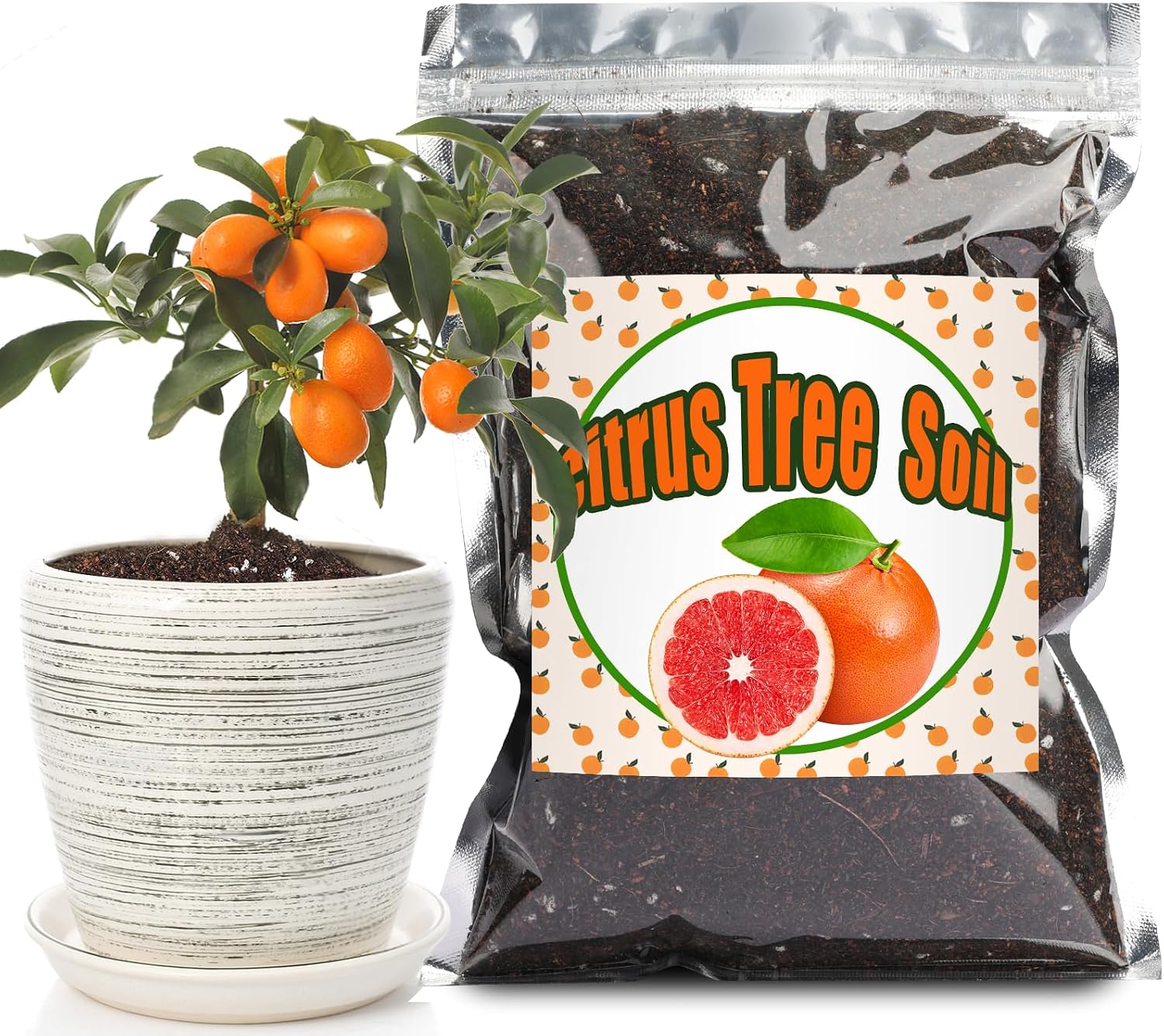
This 1-quart Doter citrus potting mix is made for container citrus like lemon and lime trees and is ready to use straight from the bag. It is formulated to hold a near-neutral pH (6.0–7.1) and includes organic and mineral components that improve drainage and provide nutrients to support vegetative growth and fruiting. In practice the mix is easiest to use when repotting young citrus or top-dressing small container specimens where good aeration and quick drainage matter to avoid root rot. Its small package makes it convenient to trial in a few pots before committing to a larger quantity. Limitations are obvious for larger trees since the bag is only 1 quart and you will need to mix or buy much more soil for bigger containers or full repots. Also the product description lists general benefits but does not give a guaranteed nutrient analysis or ingredient proportions, so gardeners who prefer exact formulations may want a labelled bulk mix.
Best for: Buyers who want a convenient, citrus-specific potting mix to top-dress or repot small lemon or lime trees and who prioritize an affordable way to trial a specialty soil.
Less Ideal for: People repotting large or mature citrus trees or those who need a bulk, fully specified commercial soil for precision fertilization.
- Formulated pH range suitable for citrus (6.0–7.1)
- Designed for improved drainage to reduce risk of root rot in containers
- Enriched with organic and mineral nutrients to support growth and fruiting
- Ready-to-use packaging is convenient for small pots and quick repotting trials
- Very small 1-quart volume limits use to seedlings or top-dressing rather than full repots
- No detailed nutrient analysis or ingredient proportions provided in the product information
Verdict: A compact, citrus-focused ready-to-use mix that makes it easy and inexpensive to trial appropriate pH and drainage for small lemon or lime containers.
E.B. Stone Organics Citrus & Palm Mix Potting Soil, 1.5 cu ft

| Brand | E.B. Stone Organics |
|---|---|
| Volume | 1.5 cubic feet |
| Suitable for | Citrus, palms, avocado, tropical plants |
| Ingredients | Aged fir bark, pumice, mycorrhizae |
This ready-to-use Citrus & Palm Mix is designed for lemon trees and other deep-rooted subtropicals grown in containers or planted in the ground. The blend of aged fir bark and pumice gives the mix fast drainage and good aeration, which helps prevent waterlogged roots and root rot while still retaining enough moisture for thirsty citrus. Added mycorrhizae and organic components support nutrient uptake and establish beneficial soil biology that can improve root health over time. Because it is formulated specifically for citrus, you can pot up a lemon tree straight from the bag without extra amendments, or use it to improve planting holes for in-ground trees. Limitations to note are that the baged mix does not state specific nutrient numbers or pH, so gardeners who need precise fertilization or pH control will want to test and adjust separately. Also the 1.5 cu ft size is practical for potting but may require multiple bags for larger trees or re-potting.
Best for: Home gardeners who prioritize a reliable, plant-focused soil that minimizes root rot risk and encourages steady growth in lemon trees without needing to blend components themselves.
Less Ideal for: Growers who require exact pH control or specific fertilizer formulations, or those planting large mature trees who need bulk volumes from the start.
- Formulated for citrus and tropical plants so root needs are addressed
- Fast-draining mix from aged fir bark and pumice reduces risk of root rot
- Includes beneficial mycorrhizae to improve nutrient and water uptake
- Ready to use straight from the bag for potting or amending planting holes
- No listed pH or N-P-K analysis for precise nutrient management
- 1.5 cubic foot bag may be insufficient for large trees or multiple repottings
Verdict: Choose this mix if you want a dependable, ready-to-use organic soil that gives lemon trees the drainage and microbial support they need to establish and thrive.
Miracle-Gro Cactus, Palm & Citrus Potting Mix, 8 qt.
| Volume | 8 quarts |
|---|---|
| Enriched with | Miracle-Gro Plant Food |
| Intended use | Cactus, palm & citrus for containers |
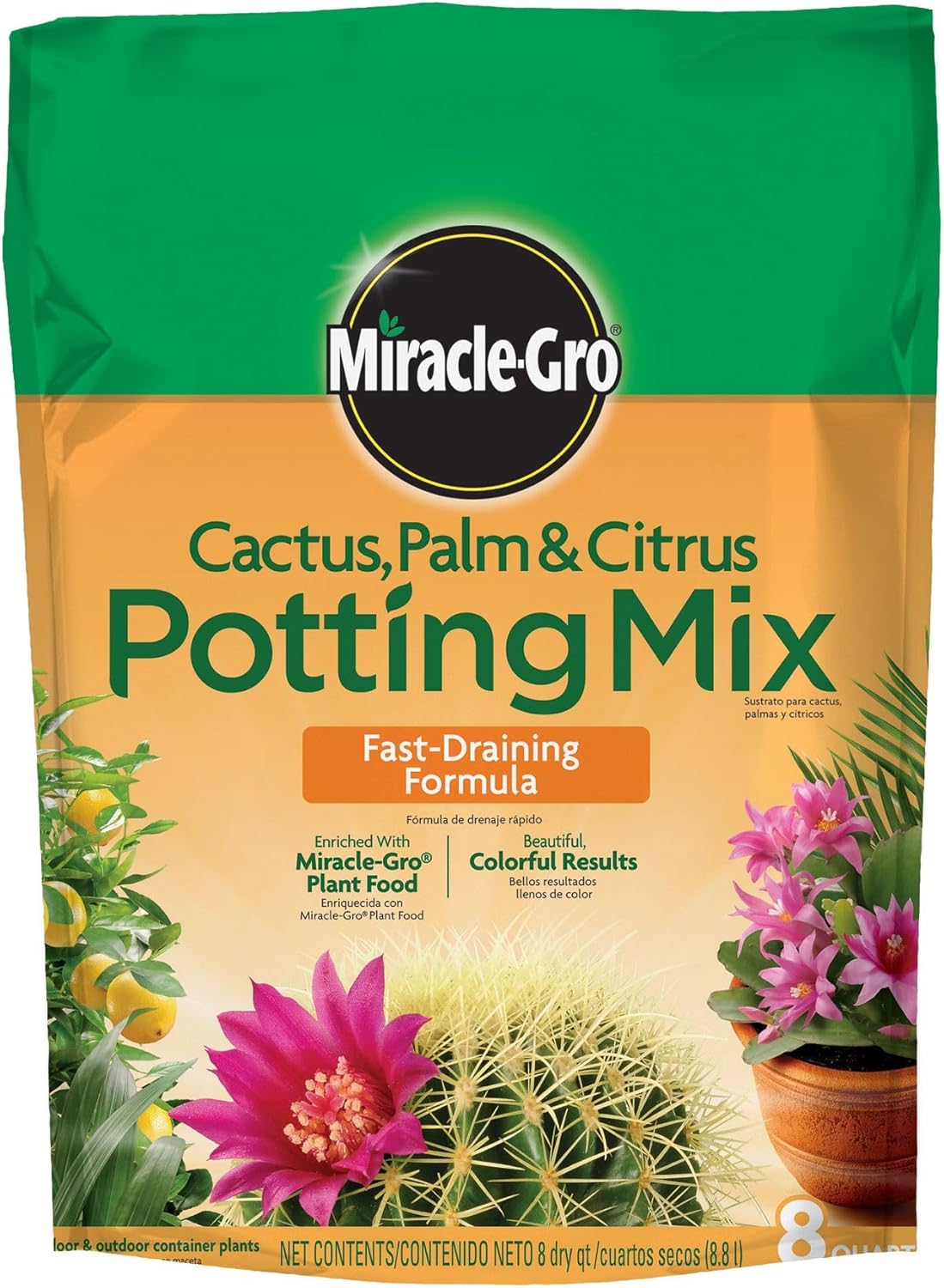
This 8-quart Miracle-Gro potting mix is designed for container-grown cacti, palms and citrus and combines peat moss, sand and perlite for quicker drainage than regular potting soil. It is pre-enriched with Miracle-Gro plant food so newly potted lemon trees in containers get an initial nutrient boost without immediate fertilizer additions. Use it in a pot with drainage holes, fill around the root ball, water to settle the mix and allow the surface to dry between waterings. The blend resists compaction, which helps prevent root rot in potted citrus that need good air around roots. Because the bag is 8 quarts it will fill about two 8-inch containers, so plan accordingly for larger lemon trees or multiple repottings. If you prefer an organic or custom soil recipe for long-term citrus production you may need to amend or switch mixes later, but for starting, repotting smaller container lemons, or improving drainage this is a convenient, reliable option supported by widespread user approval.
Best for: Buyers who want a ready-to-use, fast-draining potting mix to repot or start lemon trees in containers with minimal fuss and reliable performance.
Less Ideal for: Growers planning long-term organic soil management or those needing large volumes for mature lemon trees should consider bulk or custom mixes instead.
- Fast-draining blend of peat moss, sand and perlite reduces risk of waterlogged roots
- Pre-enriched with plant food to give young or recently repotted lemon trees an initial nutrient boost
- Formulation resists soil compaction, improving aeration for container root systems
- Sized to fill roughly two 8-inch pots which is practical for small citrus or repotting seedlings
- Eight-quart bag is a limited quantity for larger lemon trees or repeated repottings
- Contains peat moss and non-organic plant food which some growers avoid for long-term organic culture
Verdict: A convenient, fast-draining potting mix that makes repotting or starting container lemon trees quick and low-effort.
Soil Sunrise Citrus Tree Potting Soil Mix (12 Quarts)

| Unit Count | 1 Count |
|---|---|
| Volume | 12 quarts |
| Ingredients | Peat moss, perlite, sand, worm castings, lime |
| Style Name | Peat Moss,Potting Soil Mix |
Soil Sunrise Citrus Tree Potting Soil Mix is a small-batch blend designed for potted lemons, limes, mandarins and other container citrus. It combines peat moss, perlite, sand, worm castings, and lime to create a light, airy medium that drains freely while holding enough moisture and nutrients for young and established citrus in pots. Typical use is repotting or top-dressing indoor and patio lemon trees; the perlite and sand help prevent waterlogged roots and the lime helps stabilize pH for citrus needs. Worm castings provide a gentle, natural nutrient boost so you may not need heavy feeding right away. The bag size suits one or two small containers rather than large landscape plantings, and because it contains peat the mix will compress over time and may need occasional refreshes or top-up with fresh mix or compost. Safety guidance notes to avoid skin and eye contact. For buyers who want a straightforward, plant-focused soil tailored to citrus, this mix delivers predictable drainage and feeding in container setups.
Best for: Homeowners who prefer a safe, no-frills potting mix made for potted lemon trees and want predictable drainage and gentle nutrition with minimal fuss.
Less Ideal for: Gardeners planting citrus directly in the ground or those who need bulk volumes for multiple large trees should look for landscape soils or larger bags.
- Formulated specifically for citrus with ingredients that support drainage and pH balance
- Includes worm castings for natural nutrient supply
- Light, airy texture reduces risk of root rot in containers
- Suitable for both indoor and outdoor potted citrus
- 12-quart bag is modest for multiple or larger containers and may require buying more for repotting larger trees
- Contains peat which can compact and lose structure over time requiring periodic refresh
Verdict: A convenient, plant-focused potting mix that gives potted lemon trees reliable drainage, balanced pH, and gentle nutrition for steady, low-risk growth.
Choosing the Right Soil Mix for Lemon Trees: Key Factors to Consider
Drainage and Aeration
Lemon trees need soil that sheds excess water quickly while leaving air-filled pore space for roots. Poor drainage leads to waterlogged roots and root rot, especially in containers where excess water has nowhere to go.
Assess mixes for coarse components like coarse sand, perlite, pumice, or small gravel that increase macroporosity. A mix that crumbles slightly when squeezed and lets water pass through in a few seconds indicates good drainage. For in-ground planting, ensure the native soil is amended to improve aeration rather than relying on dense clay to support citrus.
Nutrient Retention and Release
Citrus are moderate feeders that need consistent access to nitrogen, potassium, and micronutrients during leaf flushes and fruiting. A soil mix should include organic matter that holds nutrients on cation exchange sites and releases them gradually through microbial activity.
Look for well-aged compost, coconut coir, or finely processed bark to provide this buffering. Avoid mixes that contain only inert fillers with no capacity to hold or exchange nutrients, because those require more frequent feeding and increase the risk of nutrient leaching.
pH and Chemical Balance
Lemon trees prefer slightly acidic to neutral pH, generally around 5.5 to 6.5. Soil pH affects nutrient availability; iron, manganese, and other micronutrients become less available at higher pH, which can cause deficiency symptoms even when nutrients are present.
Choose mixes formulated for citrus or amend general-purpose mixes with acidifying materials such as elemental sulfur or acidic organic matter if testing shows pH trending too high. Avoid mixes that contain large amounts of lime or materials that strongly raise pH.
Texture and Structure Stability
A good citrus mix maintains a stable crumb structure over months and years rather than compacting into a clay-like mass. Stable structure preserves root paths, ensures even wetting, and limits anaerobic pockets.
Components such as pine bark fines, coconut coir, and small-grade pumice help preserve structure while organic matter decomposes slowly. Rapidly decomposing ingredients will change the mix over a season and require more frequent repotting or topdressing to maintain good root conditions.
Salt Load and Fertilizer Compatibility
Citrus are sensitive to salt buildup, especially in containers where fertilizers and irrigation water can concentrate salts in the root zone. A mix should allow excess salts to be flushed during deep irrigation and should not contain high-salt amendments.
Prefer mixes with low-salt organic matter and those that accept periodic deep watering or leaching. Also consider how the mix responds to slow-release fertilizers versus soluble feeds, because some blends tie up nutrients or hold them too tightly when paired with certain fertilizer types.
Container Vs In-Ground Suitability
Mixes designed for containers need more consistent drainage and lighter weight, while in-ground mixes can afford denser organic matter if the native soil drains well. Container mixes must resist compaction and be light enough for easier repotting of potted citrus.
When planting in the ground, focus on how the mix will interact with existing soil. Amending a hole with a smaller proportion of rich mix can encourage roots to expand into surrounding native soil while avoiding a sharp boundary that traps water.
Choosing a Mix for Containers Versus Beds
Container-grown lemon trees need mixes that stay airy and drain quickly because root systems are confined and salts concentrate faster. A typical container mix uses a higher proportion of coarse components like pumice or perlite and less fine organic matter than a bed planting mix.
For in-ground trees, match the amendment ratio to your native soil texture. Sandy soils need organic material that holds moisture, while clay soils need coarse amendments to improve porosity. Avoid creating a perfect pocket of rich soil surrounded by poor soil, which can cause roots to circle and stay confined.
- Containers: prioritize lightweight, well-draining ingredients and good structure stability
- Beds: balance drainage improvement with moisture-holding organic matter
- Amend gradually for in-ground trees to encourage root spread
How to Test and Adjust pH
Test soil pH before planting and then periodically in the first year after planting. Simple test kits or handheld meters give a practical reading that helps determine whether amendments are necessary.
If pH is too high, add small amounts of elemental sulfur or acidic organic materials and retest after several weeks. If pH is too low, garden lime can be applied carefully, but major pH adjustments are best done slowly and in small increments to avoid shocking the tree.
- Test before planting and every season
- Adjust slowly and retest after changes
- Document amounts added so you can reverse or maintain adjustments
Repotting and Long-Term Mix Management
Container lemon trees typically need repotting every 2 to 4 years depending on growth rate and mix stability. When the mix begins to compact, drains slowly, or shows uneven wetting, it is time to refresh the rootball and replace part or all of the media.
Topdressing with compost or slow-release fertilizer can extend the life of a mix, but watch for salt buildup. Periodic deep watering to flush salts and light replacement of the top few inches keeps the root zone healthy without a full repot every season.
- Watch for compaction, slow drainage, and root crowding
- Use topdressing and leaching to manage fertility and salts
- Plan full repotting every few years depending on plant vigor
Making Your Own Citrus Mix
A DIY citrus mix gives you control over drainage, organic content, and pH. A common recipe balances coarse mineral components with stable organic matter: coarse horticultural sand or grit, pumice or perlite for aeration, and aged compost or coconut coir for nutrient buffering.
Adjust proportions for container use by increasing inorganic porosity to prevent waterlogging. Always mix materials thoroughly and wet-test the blend in a small container to observe drainage and settling before filling large pots or planting in-ground.
- Core components: coarse sand or grit, pumice/perlite, and stable organic matter
- Test blends in small containers to check drainage before large-scale use
- Match proportions to planting situation: lighter for containers, heavier for beds
Watering Practices That Complement the Mix
How you water interacts directly with a soil mix's performance. Fast-draining mixes require more frequent but measured watering, while mixes with more organic matter hold moisture longer and need less frequent irrigation.
Use the finger test, weight of the pot, or a moisture probe to guide watering rather than a fixed schedule. Deep, infrequent watering that wets the root zone fully is preferable to frequent shallow dribbles, which encourage weak surface roots and salt accumulation.
- Fast-draining mixes: shorter intervals but ensure deep wetting
- Moisture probes help avoid over- or under-watering
- Flush containers occasionally to prevent salt buildup
How We Chose the Best Soil Mix for Lemon Trees
We focused on mixes that meet the specific needs of citrus: rapid but controlled drainage, stable aeration around roots, and a nutrient profile that supports flowering and fruit development. Our selection criteria emphasized proven physical properties like particle size distribution, organic matter content, and the presence of materials that improve air porosity without holding excessive water. Evaluation criteria included drainage rate and pore space, nutrient retention and release, soil structure stability over time, pH buffering suitable for citrus, and suitability for containers versus in-ground planting. We also considered how easily a mix accepts fertilizer and topdressing, and whether it resists compaction as it ages. Exclusions included mixes designed solely for acid-loving woodland plants or that require specialist amendments incompatible with citrus needs. Products that relied on vague ingredient lists or lacked clear physical characteristics were omitted. The result is a list of mixes that strike a practical balance between drainage, fertility, and long-term root health.
FAQ
Can I use standard potting soil for lemon trees?
Standard potting soil can work if amended to improve drainage and aeration. Add coarse sand, pumice, or perlite and some stable organic matter to prevent compaction. Monitor drainage and repot if the mix compacts over time.
How often should I repot a lemon tree in a container?
Most container lemon trees need repotting every 2 to 4 years depending on growth and mix stability. Repot sooner if you see compacted mix, slow drainage, or roots circling the pot.
Is sand a good amendment for citrus soil mixes?
Coarse horticultural sand can improve drainage when combined with other coarse materials. Avoid fine sand that can compact; use grit or coarse sand in combination with pumice or perlite for best aeration.
What pH should I aim for when planting lemon trees?
Aim for a slightly acidic to neutral pH around 5.5 to 6.5. That range helps keep key micronutrients available while reducing the risk of deficiencies common at higher pH.
How do I prevent salt buildup in container mixes?
Leach containers periodically with a thorough deep watering to flush accumulated salts. Use low-salt organic amendments and follow fertilizer instructions to avoid overapplication. Repot or replace topsoil if salts cause leaf burn or decline.
Final Verdict
Choose a soil mix that matches how you grow lemon trees: prioritize high porosity and structure stability for containers, and balance drainage with organic matter for in-ground trees. Focus on drainage, nutrient retention, and appropriate pH as the primary tradeoffs when selecting or mixing media. By matching the mix to your watering routine and repotting schedule, you can reduce stress on roots and encourage consistent flowering and fruiting.
