

Note: This article contains affiliate links. If you click on these links and make a purchase, I may earn a small commission at no extra cost to you. This helps support my research and content. Read my full affiliate disclosure here.
Choosing the right bagged soil makes a big difference in how quickly plants establish, how often you need to water, and whether roots get enough air. Whether you are filling containers, topping up vegetable beds, or refreshing a flower border, soil texture and moisture-holding capacity determine plant vigor and your maintenance time. This guide shortlists the top bagged soils for common garden uses and evaluates them on the practical traits that matter in real outdoor and container growing. Below you will find our top choices and clear evaluation criteria so you can pick the best soil for your bed, pot, or raised container.
Top Picks at a Glance
| Best Overall The best all-around choice for most situations | Miracle-Gro Moisture Control Potting Mix, 16 qt., 2-Pack |  |
| Best Quality Built to a higher standard if you want something more solid | FoxFarm Ocean Forest Potting Soil, 12 qt (with 2 Plant Tags) |  |
| Best Value The sweet spot between price and what you get | Espoma Organic Vegetable & Flower Garden Soil, 1 cu ft |  |
| Best Budget The cheapest option that still gets the job done reliably | Back to the Roots Organic Indoor Potting Mix, 6 Quart |  |
| Highest Rated A top-rated pick with lots of positive feedback | FoxFarm Happy Frog Potting Soil, Container Garden, 2 cu ft (bundle with 2 plant tags) |  |
| Most Popular A crowd favorite that many people choose with confidence | Miracle-Gro Indoor Potting Mix for All Plants, 6 qt. (2-Pack) |  |
| Best Seller A high-volume bestseller chosen again and again | Back to the Roots Organic Expanding Coco Coir Potting Soil Brick |  |
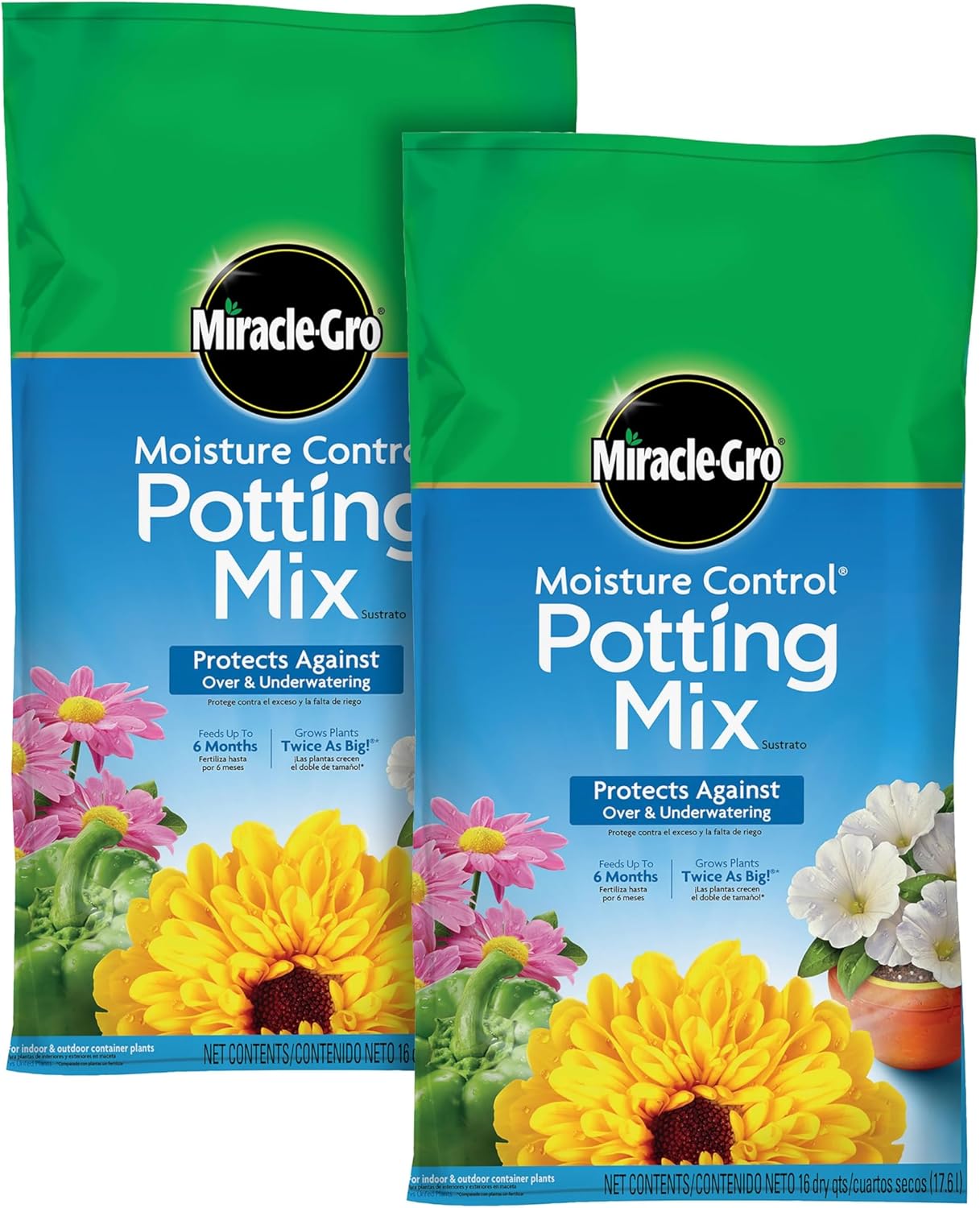
Miracle-Gro Moisture Control Potting Mix, 16 qt., 2-Pack
| Number of Packs | 2 |
|---|---|
| Item Highlight | Plant Soil For Container Plants, Protects against Over- and Under-Watering |
| Feeds Plants | Up to 6 months |
| Style Name | 16 qt. |
Miracle-Gro Moisture Control Potting Mix is a ready-to-use soil blend designed specifically for potted and container plants. It uses an AquaCoir formula with sphagnum peat moss, coir, and a wetting agent to absorb more water than basic potting soils while remaining airy so roots can breathe. Typical use is simple: pick a pot with drainage, fill about a third with mix, set the plant, top off, and water through until drainage. The mix feeds plants for up to six months, which reduces how often you need to add fertilizer for small containers, and the improved moisture retention helps protect against sudden drying or waterlogged pots when watered properly. Practical benefits include easier watering management for flowers, veggies, annuals, and perennials in outdoor containers and less frequent feeding. Limitations are that it is formulated for containers rather than in-ground beds and that container plants still benefit from annual repotting to avoid compaction and refresh nutrients.
Best for: Gardeners who want a reliable, low-maintenance potting mix for outdoor containers and want to simplify watering and feeding schedules without specialty blends.
Less Ideal for: Those planting directly in garden beds or wanting an organic-only mix should choose a product formulated for in-ground use or certified organic soils.
- AquaCoir formula absorbs up to 33% more water than basic potting soil, helping prevent under-watering
- Feeds plants for up to six months, reducing the need for frequent fertilizer in containers
- Light, airy texture that promotes root aeration and works well in pots and hanging baskets
- Sold as a two 16 qt. bag bundle where each bag is sized to fill a typical 12-inch container
- Formulated for containers only and not intended as a replacement for in-ground garden soil
- Container soils can compact over time so annual repotting is recommended to maintain performance
Verdict: A dependable, moisture-managing potting mix that makes container watering and feeding easier for everyday gardeners.
FoxFarm Ocean Forest Potting Soil, 12 qt (with 2 Plant Tags)

| Brand | FoxFarm |
|---|---|
| Unit Count | 144 Ounce |
| Volume | 12 quarts |
| Item Highlight | Light, Aerated Texture with Fish Meal, Crab Meal, Earthworm Castings |
FoxFarm Ocean Forest is a premixed potting soil designed for immediate use in containers, houseplants, and seedling starts. The blend of aged forest products, sandy loam, and sphagnum peat moss gives a light, aerated texture that helps roots access oxygen while draining excess water. It is fortified with organic amendments such as fish meal, crab meal, and earthworm castings so seedlings and transplants get a nutrient boost without needing immediate fertilizer. Typical uses are repotting houseplants, filling starter pots, and top-dressing containers where good structure and fertility matter. The included plant tags are a helpful small addition for tracking varieties and dates. Limitations are that the bag is a consumer retail size—suitable for several pots but not large beds—and the organic nutrients will deplete over time so regular feeding is needed for long-term container crops. If you need a sterile, soilless mix for cuttings or a very large volume for landscaping, this bag may not be the ideal choice.
Best for: Gardeners focused on plant performance who want a nutrient-rich, ready-mix for repotting, container gardening, or getting seedlings off to a strong start.
Less Ideal for: People needing bulk soil for in-ground landscaping or a sterile, soilless rooting medium for sensitive propagation should consider other options.
- Ready-to-use light, aerated texture that improves root oxygenation and drainage
- Contains organic amendments (fish meal, crab meal, earthworm castings) for immediate nutrient availability
- Formulated for seedlings, transplants, and container plants so less prep is required
- Includes two plant tags for easy labeling of varieties and planting dates
- Retail 12 qt bag size is limited for larger projects or heavy container use
- Not a sterile soilless medium, so may contain microorganisms unsuitable for some propagation tasks
Verdict: Choose this bag when you want a performance-oriented, ready-to-use potting soil that jump-starts container plants and seedlings with built-in organic nutrients.
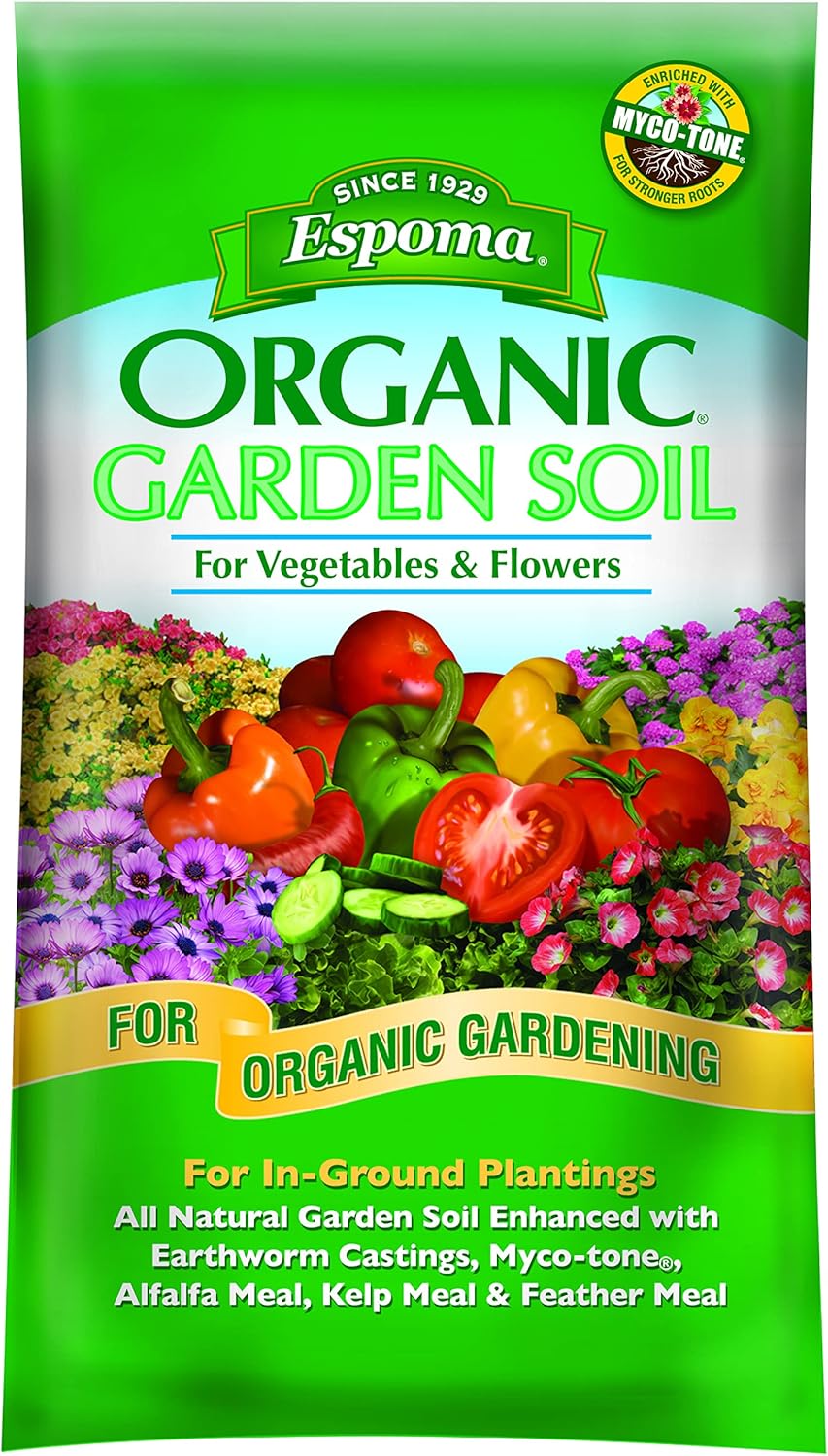
Espoma Organic Vegetable & Flower Garden Soil, 1 cu ft
| Brand | Espoma |
|---|---|
| Volume | 1 cubic feet |
| Ingredients | Peat moss, aged forest products/composted rice hulls, limestone, earthworm castings, alfalfa meal, kelp meal, feather meal, yucca extract |
| Contains | Endo & ecto mycorrhizae |
Espoma Organic Vegetable & Flower Garden Soil is a ready-to-use 1 cubic foot planting mix designed to be blended into native garden beds at planting or transplanting time. It contains Canadian sphagnum peat moss, aged organic materials, earthworm castings and a mix of organic meals and kelp, plus a proprietary mycorrhizae blend to help root establishment. In practice you work it into the hole or top few inches of bed soil to lighten heavy native soils, improve porosity, and add slow-release organic nutrients beneficial to vegetables and ornamentals. The inclusion of mycorrhizae and earthworm castings can speed early root growth and improve transplant survival. Because it is an organic, peat-based mix it will not replace long-term soil-building practices like regular compost additions, and peat can hold moisture differently than loam so monitor watering until plants adjust. This bag is handy for spot improvements, new beds, and container top-dressing when you want an organic, ready-mixed option.
Best for: Gardeners who want a convenient, organic planting mix to improve transplant success and condition small beds or containers without custom blending.
Less Ideal for: Those restoring large areas of poor soil or seeking a long-term bulk soil replacement should consider bulk compost or topsoil options instead.
- Organic blend with earthworm castings, alfalfa, kelp and feather meal for slow-release nutrients
- Contains endo and ecto mycorrhizae to support early root development and transplant establishment
- Formulated for mixing into native soil at planting, making it easy to use for beds and containers
- Ready-to-use 1 cubic foot bag sized for spot improvements and small garden projects
- Peat-based formula means it is not a long-term replacement for regular compost or broader soil improvement
- Small 1 cu ft bag requires multiple bags for larger beds which can be less convenient for big projects
Verdict: A convenient organic planting mix that boosts transplant success and soil structure for small beds and containers.
Back to the Roots Organic Indoor Potting Mix, 6 Quart

| Volume | 6 quarts |
|---|---|
| Ingredients | Coconut Coir, Yucca, Mycorrhizae, Perlite, Horticultural Sand |
| Special Features | Peat-free, contains yucca extract and mycorrhizae |
This 6-quart Back to the Roots indoor potting mix is a ready-to-use soil blend aimed at houseplants like pothos, monstera and ferns. It combines coconut coir, yucca extract, perlite, horticultural sand and mycorrhizae to hold moisture without becoming waterlogged while encouraging stronger root development. Typical use is repotting small to medium indoor plants, topping up containers, or refreshing soil in starter pots. Practical benefits include being peat-free and made in the USA, which reduces environmental concerns, and a formula that is less attractive to indoor gnats because it does not rely on composted bark. The inclusion of dolomitic limestone helps stabilize pH for better nutrient availability. Limitations are the small 6-quart volume, which means frequent repurchases for multiple plants or larger pots, and the bagged mix does not include fertilizer so expect to supplement nutrients over time for heavy feeders.
Best for: Budget-minded indoor plant owners who want an organic, peat-free potting mix for small to medium houseplants and prefer a low-maintenance soil that helps retain moisture and supports roots.
Less Ideal for: Growers repotting large plants or furnishing soil for many containers at once should choose bulk bags or mixes with built-in fertilizer instead.
- Peat-free, 100% organic blend suitable for eco-conscious indoor gardeners
- Yucca extract helps retain moisture so soil stays hydrated longer
- Contains mycorrhizae to support root growth and nutrient uptake
- Formulated to be less prone to indoor gnats by excluding bark and compost
- Only 6 quarts per bag, which is small for repotting multiple or larger plants
- No added fertilizer so nutrients need to be supplemented for long-term growth
Verdict: A compact, eco-friendly indoor potting mix that holds moisture and boosts roots, ideal for budget-conscious plant owners refreshing small pots.
FoxFarm Happy Frog Potting Soil, Container Garden, 2 cu ft (bundle with 2 plant tags)

| Brand Name | FoxFarm |
|---|---|
| Unit Count | 600 Ounce |
| Volume | 2 cubic feet |
| Style Name | Container Garden |
FoxFarm Happy Frog Potting Soil is a premium, ready-to-use potting mix designed specifically for containers. It supplies beneficial microbes and mycorrhizal fungi plus organic amendments such as earthworm castings, bat guano, and aged forest humus to support stronger root development and better nutrient uptake. Typical use is filling pots and planters for annuals, shrubs, fruiting or ornamental container plants; the bag is pH adjusted and meant to be used straight from the bag without initial amendment. Practical benefits include improved root health that can translate to more vigorous vegetative growth and better flower and fruit production, and two included plant tags that help you track varieties and planting dates. Important limitations are that this is a container blend rather than garden topsoil so it is formulated for pots not in-ground beds, and while richly amended it may still need periodic fertilization for heavy-feeding crops over a season. The product is best for gardeners who want a dependable, biologically active soil mix for pots and want to avoid blending their own mix.
Best for: Gardeners who want a reliable, biologically active potting mix that performs consistently in containers and saves time by removing the need to blend amendments.
Less Ideal for: People looking to amend large in-ground beds or seeking a bare-minimum budget soil; also not intended for growers who prefer to custom-mix every component themselves.
- Ready-to-use mix formulated for container gardening with pH adjusted for nutrient uptake
- Contains beneficial microbes and mycorrhizal fungi to support root development
- Rich organic amendments (earthworm castings, bat guano, aged forest products) for sustained nutrition
- Includes two plant tags for easy labeling and record keeping
- Not intended as in-ground garden soil so not ideal for amending beds directly
- May require supplemental fertilizer for heavy-feeding plants over long growing seasons
Verdict: Choose this potting soil when you want a dependable, microbe-rich container mix that promotes strong roots and consistent results.
Miracle-Gro Indoor Potting Mix for All Plants, 6 qt. (2-Pack)

| Number of Packs | 2 |
|---|---|
| Item Highlight | Feeds for up to 6 Months |
| Ingredients | Sphagnum Peat Moss, Coir, Perlite, Fertilizer, Wetting Agent |
| Unit Count | 400.58 Ounce |
This two-pack of Miracle-Gro Indoor Potting Mix is a convenient, ready-to-use soil for a wide range of houseplants. The blend of sphagnum peat moss, coconut coir, and perlite is lightweight and holds then releases moisture, which helps prevent over- or under-watering between waterings. Because the formula omits compost and bark, it is less likely to shelter fungus gnats, and the included fertilizer feeds plants for up to six months so you can repot and get growing right away. Typical use is straightforward: fill a draining container with the mix, pot the plant, water thoroughly, and follow annual repotting guidance to refresh nutrients. Practical benefits include consistent moisture management for common indoor plants, a cleaner bagged mix that reduces pest risk, and the convenience of two 6-quart bags to service multiple small pots. Limitations are that it is a general all-purpose mix rather than a specialty formula for orchids or succulents and that heavier-feeding or large plants will need additional fertilizer or more frequent repotting beyond the six-month nutrient window.
Best for: Buyers who want a dependable, low-fuss potting soil to repot a variety of indoor plants and prefer a product that reduces pest risk and provides several months of nutrients out of the bag.
Less Ideal for: Growers seeking a specialist medium for orchids, succulents, or high-drainage containers should choose a purpose-made mix instead.
- Ready-to-use mix of peat moss, coir, and perlite for balanced water retention and drainage
- Includes fertilizer that feeds indoor plants for up to six months
- Formulated without compost or bark to reduce places where fungus gnats breed
- Lightweight texture makes repotting and root growth easier for common houseplants
- Not formulated specifically for orchids, cacti, or other specialty plants
- Nutrient supply lasts about six months so additional feeding may be needed for heavy feeders
Verdict: A convenient all-purpose indoor potting mix that reduces gnat-friendly materials and provides months of feeding, making it a safe, low-effort choice for most houseplant owners.
Back to the Roots Organic Expanding Coco Coir Potting Soil Brick

| Item Highlight | 10 lb compressed coco coir brick; peat-free; OMRI Listed |
|---|---|
| Item Type Name | Coconut Coir |
| Volume | 2 cubic feet |
| Ingredients | Coconut Coir |
This compressed coco coir brick is designed to give you lightweight, peat-free growing media without hauling heavy bags. Add water and the 10 lb block expands to roughly 2 cubic feet of loose, fluffy coir you can use alone for seed starting and container plants or mix into existing soil to improve aeration and water retention. It is OMRI listed and made from 100% coconut coir, so it is a sustainable alternative to peat and works well for vegetables, herbs, and flowers. The brick form makes storage simple and the product is easy to portion for small containers. Limitations to note are that coco coir provides few nutrients on its own, so you will need to amend with fertilizer or compost for longer-term plant nutrition, and pH or salt levels can vary so pre-rinsing may be useful for sensitive seedlings. For risk-averse gardeners this is a predictable, beginner-friendly growing medium that reduces mess and handles a range of common container and garden tasks.
Best for: Gardeners who prefer low-mess, easy-to-store growing media and want a peat-free, beginner-friendly option for pots, seed starting, or amending garden soil.
Less Ideal for: Buyers who want an all-in-one potting mix with built-in fertilizer or those who prefer ready-to-use soil that does not require any amendments.
- Expands to about 2 cubic feet from a compact 10 lb brick for easy storage
- Peat-free and OMRI listed, suitable for organic growing
- Improves water retention and aeration when used alone or mixed with soil
- Simple to use and portion for seed starting, containers, or garden amendment
- Contains little inherent nutrients so fertilization is required for long-term growth
- May need rinsing or buffering to address salts or pH for very sensitive plants
Verdict: Pick this if you want a compact, peat-free coco coir brick that reliably expands into a lightweight, versatile growing medium for containers and seed starting.
Choosing the Right Bagged Soil: Key Factors to Consider
Drainage and Aeration
Drainage determines how quickly excess water leaves the root zone. A mix with good drainage prevents waterlogged roots and reduces root rot risk.
Aeration is tied to particle size and the presence of coarse components like perlite, sand, or bark. These create pore space for oxygen so roots can breathe. For containers and raised beds, look for mixes that balance fine material for moisture retention with coarse material for aeration to avoid compaction over time.
Moisture Retention
Moisture retention affects how often you need to water. High-retention mixes hold water longer, which is helpful in hot climates or for heavy feeders, but can be too wet for plants that prefer dryer conditions.
Consider the plant type and microclimate: containers dry faster than in-ground beds, so container mixes often include water-holding components. For garden beds, a moderate retention level combined with good drainage usually gives the best balance between water availability and root health.
Organic Matter and Nutrient Content
Organic matter provides short-term nutrients and improves soil structure as it breaks down. Composted materials, leaf mold, or aged bark add fertility and support beneficial microbial activity.
Check whether the bagged soil lists stabilized compost or screened topsoil and whether it contains starter nutrients. High organic content helps new transplants but will decompose over time, so plan for supplemental feeding or periodic soil refreshes in long-term beds.
Texture and Workability
Texture describes how the soil feels and how easy it is to work with. A friable, crumbly texture makes planting, digging, and root placement straightforward.
Very fine, silt-like mixes can compact and limit root growth, while very coarse mixes may not hold seedlings upright. Choose a texture that suits the planting method-seed-starting requires a finer, lighter mix, while established shrubs and trees benefit from a coarser, more stable blend.
pH and Chemical Balance
Soil pH affects nutrient availability and suitability for different plants. Many bagged soils are blended to a near-neutral pH, but some specialty mixes are adjusted for acid-loving or alkaline-preferring plants.
If you are growing sensitive crops such as blueberries or certain ornamentals, check for pH information. For general use, a neutral to slightly acidic mix is versatile, but testing and adjusting pH over time can improve long-term results.
Packaging, Weight, and Handling
Bag packaging affects how easy it is to move and pour soil. Heavy bags can be awkward for one person, and poorly designed packaging can tear and spill during transport.
Look for resealable or tear-resistant bags if you will store leftover soil. Also consider bag size that matches your vehicle and lifting ability. Good packaging reduces mess and waste during filling and planting.
Choosing Bagged Soil by Use
Different garden tasks call for different soil characteristics. For containers and hanging baskets, choose mixes with lighter texture and better drainage to prevent root suffocation. For filling raised beds and amending in-ground areas, a mix with more organic matter and moderate drainage is preferable because it supports longer-term fertility.
For seed starting or transplant flats, a finer, sterile seed-starting mix helps young roots establish without competing weed seeds. When topping up established beds, a well-screened garden soil that matches the existing bed texture will integrate more smoothly and reduce layering issues.
- Container planting: lighter, fast-draining blends with some water-holding components
- Raised beds: richer mixes with higher organic matter and stable structure
- Seed starting: fine-textured, low-disease mixes
- Top dressing: screened garden soil or compost to match bed texture
How to Adjust Bagged Soil on Site
Bagged soil is rarely a perfect match for every garden. Simple on-site adjustments can tailor a mix to your needs. To improve drainage, incorporate coarse sand or perlite. To boost moisture retention, add compost or a small percentage of coconut coir.
When amending in-ground beds, mix bagged soil with existing soil rather than layering it on top to avoid creating a barrier to roots and water. For containers, blend a portion of bagged soil with fresh compost and a controlled-release fertilizer if longer feeding is desired.
- Loosen compacted mixes by blending in coarse material
- Prevent layering by mixing with existing bed soil when planting in-ground
- Match particle sizes when combining different bagged soils to avoid separation
Storing Leftover Bagged Soil
Store opened bags in a cool, dry location to prevent mold growth or nutrient loss. If you will keep soil for more than a season, move it to a sealed bin or tub to protect it from pests and moisture.
Stack bags flat and avoid long-term exposure to sunlight, which can degrade organic components. Label the storage container with the purchase date and type so you can track how fresh the material is when you return to it next season.
- Use resealable containers for partial bags
- Keep stored soil off the ground to avoid contamination
- Check stored soil for odor or visible mold before reuse
Testing and Amending After Planting
After planting, monitor how the soil drains and how quickly it dries. Simple field checks-such as digging a small hole to inspect root zone moisture-help you decide whether to adjust irrigation or add amendments.
Regular soil testing every one to three years reveals pH and nutrient trends. Based on results, add lime or sulfur to adjust pH and organic amendments or fertilizers to correct nutrient shortfalls. Observing plant health often tells you more quickly whether the chosen bagged soil is meeting expectations.
- Dig small test holes to check moisture and compaction
- Use periodic soil tests for pH and nutrient levels
- Amend gradually and monitor plant response over a season
How We Chose the Best Bagged Soil
We focused on practical, measurable traits that gardeners encounter when using bagged soil. Our selection filtered for bagged products that are formulated for general garden use or specific planting contexts and that provide clear ingredient or specification information. We excluded mixes that are strictly decorative topdressings or that lack any listed components. Evaluation emphasized particle texture and drainage, because soil structure drives root health and watering frequency. We measured moisture retention and water-release balance to reflect how often gardeners will need to irrigate. Organic matter and nutrient content were considered as indicators of short-term fertility and how quickly the mix will support seedlings. Bulk density and compaction tendency were checked because heavy, compacting mixes reduce aeration in pots and beds. Finally, ease of use and handling – including dust, mess, and how the bag performs during transport and pouring – influenced the selections. Excluded items included pure amendments sold only as additives, soils with unspecified ingredients, and mixes clearly meant for professional use with restricted availability. The result is a list of bagged soils that perform well across common garden tasks and that provide clear specifications gardeners can trust.
FAQ
Is bagged soil the same as potting mix?
Not always. Potting mixes are formulated specifically for container use with lighter textures and added drainage components. Some bagged soils are intended for in-ground beds and may be heavier or contain screened topsoil.
How long does bagged soil stay usable after opening?
Bagged soil can remain usable for a season or longer if kept dry and protected. Over time organic components decompose and nutrients decline, so store in a sealed container if you plan to keep it for multiple seasons.
Can I mix bagged soil with my garden soil?
Yes. Mix bagged soil into existing garden soil rather than layering it on top. Blending helps prevent a barrier layer and encourages roots to move between amended and native soil.
Should I expect bagged soil to contain fertilizer?
Some bagged soils include starter nutrients or slow-release fertilizers, but not all do. Check the product details for nutrient content and plan a feeding schedule based on plant needs if the mix has minimal fertility.
What is the best bag size for home gardeners?
Choose bag size based on the volume you need and what you can lift comfortably. Smaller bags are easier to handle for containers, while larger bags may be more efficient for filling raised beds if you have help to move them.
Final Verdict
Match the bagged soil to how and where you will use it. Prioritize drainage and texture for containers and lighter mixes for seed starting, and favor higher organic content for raised beds or long-term planting areas. Consider handling and packaging when choosing bag size to reduce strain and mess. Balancing moisture retention, aeration, and organic matter will guide most decisions. Use the evaluation criteria in this guide to weigh tradeoffs and pick the bagged soil that fits your garden tasks and maintenance style.
