

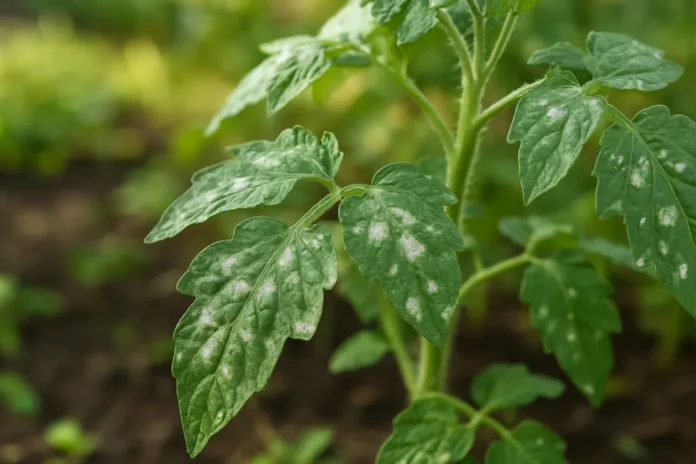
Tomato leaves develop white patches most often from sunscald, powdery mildew, pest damage, or chemical burn. In some cases, nutrient stress or natural leaf aging can also cause pale or bleached areas.
Seeing tomato leaves with white patches can be alarming, especially when the rest of the plant seemed healthy just days earlier. The good news is that this symptom usually narrows the problem down to a handful of common causes, and the pattern of the white areas often tells you a lot about what is happening.
Some white patches look dusty or fuzzy, which often points to disease. Others appear bleached, papery, stippled, or scorched, which can suggest sun exposure, pest feeding, spray injury, or stress in the root zone. Once you match the patch pattern to the likely cause, it becomes much easier to protect new growth and keep your tomato plant producing.
What White Patches Usually Mean on Tomato Leaves
White patches are not a single problem. They are a symptom that can come from several different issues, ranging from harmless cosmetic damage to fast-moving disease. The exact look of the leaf matters. A bright white, bleached area is different from a powdery coating, and both are different from tiny pale speckles caused by insects.
Start by looking at where the white patches show up. If they are mostly on upper leaves that suddenly got stronger sun, sunscald is a strong possibility. If the spots look like flour dusted across the surface, powdery mildew is more likely. If the leaf has fine stippling, bronzing, or webbing, pests may be feeding there. If the damage appeared soon after spraying, transplanting, or a weather swing, think stress or chemical injury.
- Fuzzy or dusty white growth often points to powdery mildew.
- Bleached, papery patches often suggest sunscald or spray burn.
- Tiny pale specks that merge together are common with spider mites or thrips.
- Irregular white scarring or scraped-looking areas can come from insect feeding.
- White areas between still-green veins may reflect nutrient stress or root trouble.
Most Common Causes of White Patches on Tomato Leaves
Powdery Mildew
Powdery mildew is one of the most recognizable causes of white patches. It usually starts as small, soft-looking white spots on the leaf surface, then spreads into larger dusty patches. Unlike many fungal problems, powdery mildew does not always need soaking wet leaves to develop. It often shows up when plants have poor air flow, crowded growth, or a mix of warm days and humid conditions.
In early stages, the white growth may rub off on your fingers. As it spreads, leaves can yellow, curl, dry out, and drop. Severe infections reduce plant vigor and can expose fruit to sun damage.
Sunscald and Sudden Sun Exposure
Tomato leaves can develop white or pale tan patches after sudden exposure to intense sun. This commonly happens when seedlings are moved outdoors too quickly, when pruning removes too much protective foliage, or when a plant is stressed and loses leaves that used to shade the rest. The damaged tissue often looks bleached first, then dries into a thin, papery patch.
Sunscald damage usually appears on the most exposed side of the plant. It does not spread like a disease, but the damaged areas will not turn green again.
Spider Mites and Thrips
Tiny sap-feeding pests can make leaves look speckled, silvery, or whitened. Spider mites are especially common in hot, dry weather. They pierce leaf tissue and suck out contents, leaving behind many tiny pale dots that can blend into larger white patches. Heavy infestations may also cause bronzing and fine webbing under leaves.
Thrips can create a similar pale or silvery scarring, though the pattern may look more streaked or scraped. Because both pests are small, gardeners often notice the leaf damage before they see the insects.
Chemical Burn From Sprays or Fertilizers
Foliar fertilizers, insecticidal soaps, neem, horticultural oils, and some homemade sprays can burn tomato leaves if applied too strongly or during hot, bright weather. Herbicide drift can also leave pale, bleached, or distorted growth. The white patches from spray injury often appear suddenly and may be most obvious where droplets sat on the leaf surface.
Damage from chemical burn often has a sharp, irregular pattern rather than the gradual spread of disease. New growth may look normal if the exposure was brief and the plant is otherwise healthy.
Nutrient Stress and Root Problems
True nutrient deficiencies more often cause yellowing than crisp white patches, but severe stress in the root zone can create pale areas, interveinal discoloration, and weak tissue that later bleaches out. Poor drainage, compacted soil, overwatering, and damaged roots can keep the plant from taking up magnesium, iron, or other nutrients efficiently.
If the white areas come with stunting, general chlorosis, or poor growth across the whole plant, look below the leaf surface and think about the roots, watering pattern, and soil balance.
How to Tell Which Cause You Are Dealing With
Because several problems can create a similar pale look, diagnosis comes down to pattern, texture, and timing. A quick comparison can save you from treating the wrong issue.
- If the patch looks like a powdery coating and slowly enlarges, powdery mildew is likely.
- If the patch is flat, bleached, and papery, especially after strong sun or transplanting, think sunscald.
- If the leaf has many tiny pale dots, fine webbing, or a dusty underside, suspect spider mites.
- If the leaf shows silvery streaks or scarred patches, thrips may be feeding.
- If the symptom appeared right after spraying, chemical injury moves high on the list.
- If the whole plant seems off-color, droopy, or slow-growing, root stress and nutrient uptake problems may be involved.
Also note whether only old leaves are affected or whether tender new growth is showing symptoms too. Powdery mildew often starts on older leaves and spreads. Herbicide injury often distorts new growth. Sunscald usually affects whichever leaves took the hardest light hit. Pest damage can occur anywhere but is often worse on stressed plants and on the undersides of leaves.
Weather history matters too. After a hot spell, sunscald and mites become more likely. After humid, stagnant conditions, powdery mildew becomes more likely. After feeding or spraying, leaf burn moves closer to the top of the list.
What to Do Right Now
If the Patches Are Caused by Powdery Mildew
Remove the most affected leaves if the plant still has plenty of healthy foliage. Improve air circulation by spacing plants properly, tying up vines, and pruning lightly. Avoid overhead watering late in the day. If the infection is spreading, use a garden fungicide labeled for powdery mildew on tomatoes and follow the label exactly.
If the Patches Are Sunscald
Leave mildly damaged leaves in place if they still provide shade and are not mostly dead. Keep watering consistent so the plant is not stressed further. If plants were recently moved outdoors, give them temporary shade during the hottest part of the day until they adjust. Avoid heavy pruning that exposes fruit and inner leaves too quickly.
If Pests Are the Cause
Check the undersides of leaves with a hand lens if you have one. A strong spray of water can reduce light mite or aphid populations, though it may not be enough for established spider mites. Insecticidal soap or horticultural oil can help when applied thoroughly and at safe temperatures. Repeat applications are often needed because these pests reproduce quickly.
If Chemical Burn Is Likely
Stop using the suspected product until the plant recovers. Rinse foliage only if the application was very recent and the label permits it. Keep the plant evenly watered and wait for healthy new growth before deciding how much permanent damage was done. Do not stack multiple sprays close together in hot weather.
If Nutrient or Root Stress Is Involved
Correct watering first. Tomatoes do best with deep, consistent moisture in well-drained soil. If the bed stays soggy, improve drainage. If the soil dries hard between waterings, add mulch and water more evenly. A soil test is the best way to confirm nutrient issues before adding amendments, especially if several plants show similar symptoms.
When White Patches Are Serious and When They Are Mostly Cosmetic
Not every white patch means your tomato plant is in serious trouble. A few bleached spots after a hot afternoon or a minor spray mishap may not affect harvest much at all. If new growth stays green and vigorous, the plant can usually outgrow the damage.
The situation becomes more serious when white patches continue spreading, many leaves are involved, the plant starts yellowing or wilting, or flowers and fruit begin dropping. Powdery mildew that climbs through the canopy, a heavy spider mite outbreak, or repeated herbicide exposure can weaken the plant enough to reduce yield significantly.
- Mostly cosmetic: isolated white patches, stable symptoms, normal new growth, healthy flowering.
- Needs closer attention: patching on many leaves, visible powdery spread, webbing, leaf curl, or ongoing decline.
- More urgent: fast damage during heat, severe pest buildup, distorted new growth, or widespread stress across several plants.
How to Prevent White Patches on Future Growth
Prevention usually comes down to reducing stress and keeping the canopy balanced. Tomatoes are more likely to resist disease, recover from minor damage, and tolerate hot weather when they are watered consistently, spaced well, and not pushed too hard with fertilizer or pruning.
- Harden off transplants gradually before exposing them to full sun.
- Water deeply and consistently rather than letting the soil swing from dry to soggy.
- Mulch around plants to moderate soil moisture and root temperature.
- Space and support plants so leaves dry quickly and air can move through the canopy.
- Inspect leaf undersides weekly for spider mites, thrips, and other sap-feeding pests.
- Spray soaps, oils, and foliar products only in cooler parts of the day and exactly as labeled.
- Avoid overpruning, especially during hot, sunny weather.
- Remove badly infected leaves promptly and clean up plant debris at the end of the season.
If you garden in a humid area where fungal issues return each year, choose tomato varieties with good disease resistance and avoid crowding plants near walls or dense companion plantings. If you garden in a hot, dry climate, shade cloth during extreme heat and regular pest scouting can prevent many white-patch problems before they get established.
FAQ
Can Tomato Leaves Recover After White Patches Appear?
The white areas themselves usually do not turn green again. Recovery depends on whether the cause has stopped and whether the plant can keep producing healthy new leaves.
Is Powdery Mildew on Tomato Leaves Dangerous to the Fruit?
Powdery mildew mainly weakens foliage, but severe infections can reduce plant vigor and expose fruit to sunscald. It is best managed early before leaf loss becomes heavy.
Do White Patches Always Mean a Fungal Disease?
No. White patches can also come from sunscald, spider mites, thrips, spray burn, herbicide drift, or root-related stress.
Should I Remove Leaves with White Patches?
Remove badly affected leaves if the plant still has enough healthy foliage to support growth. Keep mildly damaged leaves if they are still functioning and helping shade fruit.
Can Too Much Sun Really Bleach Tomato Leaves?
Yes. Sudden intense sun can bleach leaf tissue, especially on transplants that were not hardened off or on plants exposed by heavy pruning.
What Pests Cause White Speckling on Tomato Leaves?
Spider mites are a very common cause, especially in hot, dry weather. Thrips can also create pale, silvery, or scarred patches on tomato leaves.
Will Overhead Watering Cause White Patches?
Overhead watering does not directly cause every kind of white patch, but it can encourage fungal issues and keep the canopy humid. Watering at the base is usually better for tomatoes.
Need the right treatment fast? Read our guide to the best fungicides, insecticidal soaps, and tomato care products so you can stop leaf damage before it spreads.
