

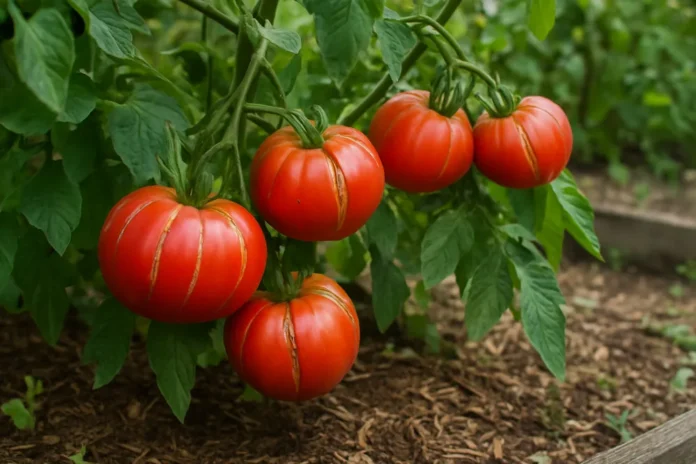
Tomatoes usually split because the fruit swells faster than the skin can stretch, most often after uneven watering or heavy rain. Heat, variety, and delayed harvesting can make fruit cracking worse.
Seeing tomato fruits suddenly split on the vine is frustrating, especially when they looked nearly ready to pick. This kind of fruit cracking usually happens when tomato fruit takes up water quickly after a dry spell, causing the inside of the fruit to expand faster than the skin can keep up.
The good news is that splitting is usually a growing-condition problem, not a sign that your plant is dying. In most home gardens, the biggest triggers are inconsistent moisture, summer storms, heat, and a variety that is naturally more prone to cracking than others.
Once you know what causes tomatoes to split, it becomes much easier to prevent most of it. A few changes to watering, mulching, feeding, and harvest timing can make a big difference in how many smooth, usable tomatoes you bring indoors.
What Tomato Splitting Usually Means
Tomato splitting happens when the flesh inside the fruit grows or takes up water faster than the outer skin can stretch. The pressure causes the skin to crack open. This can happen while the fruit is still green, but it is most common as tomatoes approach full color and ripeness.
In most cases, splitting is tied to moisture swings. A plant that stays too dry for a while may produce fruit with relatively slow, steady growth. If that dry period is followed by deep watering or a heavy rain, the fruit can suddenly absorb a lot of water. The inside expands quickly, and the skin ruptures.
Splitting is usually cosmetic at first, but cracked fruit is more vulnerable to rot, insects, and disease organisms. If the crack is small and the fruit is otherwise healthy, you can often harvest it and use it quickly. If the crack is deep, soft, moldy, or leaking, it is best to discard it.
The Most Common Causes of Splitting Tomatoes
Inconsistent Watering
This is the top cause in backyard gardens. Tomatoes prefer evenly moist soil. When the soil swings from dry to soaked, fruit cells expand irregularly. That sudden surge in internal pressure can break the skin, especially on fruit that is almost ripe.
Heavy Rainfall After a Dry Spell
A summer thunderstorm can trigger splitting overnight. After a stretch of dry weather, roots rapidly pull in available water from rain-soaked soil. The fruit swells quickly, and cracks can appear before you even notice the plants have had a growth spurt.
Hot Weather and Heat Stress
High temperatures do not directly cause every crack, but they increase stress on the plant and speed ripening. Heat can also make watering needs change from day to day. A tomato plant that dries out fast in extreme heat is more likely to experience the moisture swings that lead to splitting.
Variety Differences
Some tomato varieties are simply more prone to cracking. Thin-skinned heirlooms often split more easily than many modern hybrids. Large beefsteak types can also crack because their fruits expand rapidly and have more surface area under tension.
Fruit Left Too Long on the Vine
Very ripe tomatoes are more likely to split because the skin becomes less able to handle sudden swelling. If a tomato is nearly fully colored and a heavy rain arrives, the chance of cracking goes up quickly.
Excess Nitrogen or Fast, Lush Growth
Overfertilizing, especially with nitrogen-heavy products, can encourage rapid growth. While this is more often discussed in relation to leafy growth, it can also contribute to fast fruit expansion under favorable moisture conditions. Rapid, soft growth tends to be more vulnerable to stress.
Types of Tomato Cracks and What They Suggest
Radial Cracks
Radial cracks run from the stem downward toward the blossom end. These are commonly linked to moisture fluctuations and often show up after rain or irregular watering. They can range from shallow lines to deep splits that expose the flesh.
Concentric Cracks
Concentric cracks form circular rings around the stem shoulder. These are also associated with rapid changes in fruit growth, but they are often somewhat shallower than radial cracks. Some varieties develop them more readily than others.
Fine Surface Checking
Tiny, shallow cracks or corky lines on the fruit shoulder are sometimes called checking. They may not ruin the fruit, but they still point to stress, fast ripening, variety traits, or inconsistent moisture. They are often more common in hot weather.
- Deep stem-end cracks usually point to sudden swelling from water uptake.
- Circular cracking near the shoulders often reflects both moisture changes and variety tendency.
- Small superficial cracks may still be edible but signal that conditions have not been fully even.
When Splitting Is Most Likely to Happen
Tomatoes are most likely to split during periods of rapid change. The highest-risk situations usually happen in midsummer, when heat, watering demands, and storms create big swings in soil moisture.
- After several hot, dry days followed by deep irrigation
- After a thunderstorm or multiple days of soaking rain
- As fruit begins to color and soften
- When plants are growing in containers that dry out quickly
- When mulch is missing and soil moisture changes rapidly
- When fruits stay on the vine past the ideal picking stage
Container tomatoes are especially prone to cracking because potting mix can dry much faster than garden soil. Raised beds can also fluctuate more than in-ground beds, especially in windy or very sunny spots.
How to Prevent Tomato Fruit From Splitting
Water Consistently
The best prevention is steady soil moisture. Tomatoes generally do best with deep, regular watering rather than long dry gaps followed by soaking. Exact frequency depends on your soil, weather, and whether plants are in the ground, raised beds, or containers, but the goal is to keep moisture even.
Instead of watering on a rigid calendar, adjust based on conditions. Sandy soil drains fast and needs water more often. Clay holds water longer. Containers may need watering daily during heat waves, while in-ground plants may need much less frequent irrigation.
Mulch Around the Plants
A 2 to 3 inch layer of straw, shredded leaves, or other organic mulch helps stabilize soil moisture. Mulch slows evaporation, reduces temperature swings at the root zone, and limits the wet-dry cycle that leads to fruit cracking.
Harvest at the First Ripe Stage
If heavy rain is in the forecast, pick tomatoes that are showing full or nearly full color and let them finish ripening indoors. Once a fruit reaches the breaker stage, when it first starts changing color, it can continue to ripen off the vine with good flavor.
Avoid Overfertilizing
Use a balanced tomato fertilizer and avoid pushing excessive leafy growth with high nitrogen. Fast, lush growth can make plants more reactive to watering swings and may increase the chance of fruit quality problems.
Choose Crack-resistant Varieties
If splitting is a yearly problem, variety choice matters. Many hybrid tomatoes are bred for better crack resistance. Heirloom tomatoes can still be worth growing for flavor, but they often need more careful moisture management.
Use Containers and Raised Beds Carefully
Plants in pots need extra attention because they can dry out very quickly. Use large containers, high-quality potting mix, and consistent watering. Self-watering containers or drip irrigation can help keep moisture levels steadier.
- Water deeply enough to moisten the full root zone
- Apply mulch after the soil has warmed
- Pick nearly ripe fruit before major rain events
- Avoid cycles of drought stress followed by heavy soaking
- Do not overfeed with nitrogen-rich fertilizer
- Select varieties labeled crack resistant when possible
What to Do with Split Tomatoes
A split tomato is not always a lost cause. If the crack is recent, clean, and shallow, the fruit is usually still usable. Harvest it promptly before insects, fungi, or bacteria move in.
- Use lightly cracked tomatoes right away in salads, sauces, or roasting
- Trim away the cracked area if the rest of the fruit is sound
- Discard fruit that is soft, moldy, sour-smelling, or insect-damaged
- Do not leave split tomatoes on the vine if rain or humidity continues
If you have several split fruits after a storm, process them quickly. Fresh salsa, cooked sauce, and freezer batches are good ways to avoid waste. The longer cracked fruit sits, the faster quality drops.
Problems That Look Similar but Are Different
Blossom End Rot
Blossom end rot causes a dark, sunken patch on the bottom of the tomato, not a split in the skin. It is linked to calcium transport problems that are often triggered by inconsistent watering, so the underlying moisture issue can overlap even though the symptom looks different.
Sunscald
Sunscald shows up as pale, whitish, or yellow blistered patches on exposed fruit. It is caused by intense sun exposure, often after leaves are lost or plants are heavily pruned. It does not create the same crack patterns as moisture-related splitting.
Catfacing
Catfacing produces scarred, distorted fruit, often at the blossom end. It usually starts early in fruit development and is associated with cool temperatures or flower damage. It is not the same as a tomato that suddenly cracks near ripening.
Insect or Bird Damage
Peck marks and feeding wounds can resemble irregular cracking, but they usually look punctured, gouged, or chewed rather than split under internal pressure. Cracks from watering problems are more predictable in shape and often occur near the stem or shoulders.
Weather, Soil, and Growing Setup All Matter
Tomato splitting is rarely caused by just one thing. It usually happens when weather patterns, soil type, plant variety, and care routine all combine. A gardener with sandy soil in a hot Southern climate may struggle with rapid drying, while someone in a humid region may see splitting mostly after repeated rain events.
Soil with good organic matter helps buffer moisture changes. Compost improves both sandy and clay soils, helping them hold moisture more evenly without becoming waterlogged. Drip irrigation also helps by delivering water gradually instead of all at once.
If your tomatoes split every year, think beyond a single watering mistake. Look at the whole system, including container size, mulch depth, plant spacing, fertilizer choice, and how exposed your garden is to drying wind and intense afternoon sun.
A Simple Prevention Routine for Home Gardeners
The easiest way to reduce cracking is to keep your tomato plants on a predictable, low-stress routine. You do not need perfect conditions, but you do want fewer extremes.
- Plant tomatoes in soil enriched with compost for steadier moisture retention.
- Add mulch soon after planting and refreshing it as needed through summer.
- Water deeply and consistently, adjusting for heat, rain, and container size.
- Avoid letting plants wilt repeatedly before watering.
- Feed with a balanced fertilizer instead of pushing fast leafy growth.
- Harvest fruit as it colors, especially before storms or irrigation changes.
- Note which varieties resist cracking best in your specific garden.
Even experienced gardeners lose a few tomatoes to splitting during tough weather. The goal is not always zero cracks. The goal is reducing severe moisture swings so most of your harvest develops with smooth, healthy skins.
FAQ
Can I Eat Tomatoes That Have Split on the Vine?
Yes, if the crack is fresh, shallow, and the fruit is still firm and clean. Use it quickly, and discard it if it is moldy, soft, foul-smelling, or insect-damaged.
Do Split Tomatoes Mean I Am Overwatering?
Not always. The bigger issue is usually uneven watering, especially a dry period followed by a lot of water all at once from irrigation or rain.
Will Cracked Tomatoes Heal if I Leave Them on the Plant?
They may dry slightly around the crack, but they do not truly repair themselves. Leaving them on the vine usually increases the risk of rot, pests, and quality loss.
Are Heirloom Tomatoes More Likely to Split?
Yes, many heirloom varieties are more prone to cracking because they often have thinner skins and less crack resistance than many modern hybrids.
Should I Pick Tomatoes Before They Are Fully Ripe to Prevent Splitting?
Picking fruit at the breaker stage or when it is nearly ripe can help, especially before expected rain. Tomatoes will continue ripening indoors with good quality.
Does Mulch Really Help Prevent Tomato Cracking?
Yes. Mulch helps keep soil moisture more even by reducing evaporation and buffering the root zone from quick wet-dry changes.
Why Do My Container Tomatoes Split More than Garden Tomatoes?
Containers dry out faster and heat up more quickly than in-ground beds. That creates larger moisture swings, which makes fruit cracking more likely.
Can Fertilizer Cause Tomatoes to Split?
Fertilizer is usually not the main cause, but too much nitrogen can encourage fast, soft growth that is more vulnerable when moisture levels change suddenly.
Want fewer cracked tomatoes and a bigger harvest? Read our tomato care and watering guides to choose the best fertilizers, mulch, and irrigation tools for healthier fruit.
