

Note: This article contains affiliate links. If you click on these links and make a purchase, I may earn a small commission at no extra cost to you. This helps support my research and content. Read my full affiliate disclosure here.
Getting the right soil for planting seeds makes the difference between frustrating failures and steady germination. Seed-starting mixes behave differently than garden beds: they need a fine, uniform texture to allow tiny roots to push through, enough water retention to stay evenly moist, and low disease pressure to protect vulnerable seedlings. This guide reviews seven carefully shortlisted soil options for planting seeds that match common starting methods – trays, flats, and small pots – and explains the practical tradeoffs gardeners face. Below you will find the top seed soils we shortlisted and the criteria we used to evaluate them, including texture, moisture control, and contaminant risk. Use the summaries and decision factors to choose the mix best suited to your starting setup.
Top Picks at a Glance
| Best Overall The best all-around choice for most situations | Old Potters Germination Mix (24 Quarts) |  |
| Best Quality Built to a higher standard if you want something more solid | Back to the Roots Organic Expanding Coco Coir Potting Soil Brick |  |
| Best Value The sweet spot between price and what you get | Miracle-Gro Indoor Potting Mix for Seed Starting, 8 qt. (2-Pack) |  |
| Best Budget The cheapest option that still gets the job done reliably | SunGro Seedling Mix – Organic Seed Starting Mix, 8 Quart |  |
| Highest Rated A top-rated pick with lots of positive feedback | Sol Soils Seedling & Propagation Mix (1 gal) |  |
| Most Popular A crowd favorite that many people choose with confidence | Miracle-Gro Organic Indoor Potting Mix (16 qt) |  |
| Best Seller A high-volume bestseller chosen again and again | Back to the Roots 3-in-1 Seed Starting Mix, 6 Quart, Organic |  |
Old Potters Germination Mix (24 Quarts)

| Volume | 24 quarts |
|---|---|
| Unit Count | 768 Fluid Ounces |
| pH range | 5.4 – 6.3 |
| Electrical conductivity | 1.0 – 1.5 mmhos/cm |
This germination mix is designed to give seeds and cuttings a reliable, uniform start. Its composition is largely finely milled Canadian sphagnum peat moss combined with fine horticultural perlite and vermiculite to improve aeration and moderate moisture retention. Calcitic and dolomitic limestone are added to stabilize pH in the 5.4–6.3 range and a wetting agent helps distribute water evenly so trays and plugs do not develop dry pockets. The fine texture and included starter charge make it well suited for trays, cell packs, and small pots used with either overhead or sub-irrigation. Practical benefits include consistent germination conditions, easier seedling root penetration, and reduced need for frequent watering compared with straight peat. Limitations are that the bag is a prepared mix rather than a long-term potting soil, so seedlings will need transplanting to richer media as they grow, and its finer particles mean it can compact over time if overwatered. For starting seeds, though, it provides a predictable, grower-friendly medium.
Best for: Gardeners who want a reliable, easy-to-use seed starting medium that produces consistent germination in trays, plugs, and small pots.
Less Ideal for: Growers seeking a finished potting soil for mature plants or for heavy-feeding species that need higher nutrient levels.
- High sphagnum peat content for consistent moisture retention without waterlogging
- Fine perlite and vermiculite improve aeration and root penetration
- pH balanced with calcitic and dolomitic limestone for optimal nutrient availability
- Wetting agent promotes even moisture distribution across trays
- Starter charge provides initial nutrients to support early growth
- Not formulated as a long-term potting mix so transplants will need richer soil later
- Fine texture can compact if overwatered, reducing aeration
Verdict: Choose this mix when you need a dependable, fine-textured medium that optimizes moisture, aeration, and pH for starting seeds and cuttings.
Back to the Roots Organic Expanding Coco Coir Potting Soil Brick

| Item Highlight | 10 lb compressed coco coir brick; peat-free; OMRI Listed |
|---|---|
| Item Type Name | Coconut Coir |
| Volume | 2 cubic feet (expanded) |
This compressed coco coir brick is designed to expand into a light, airy growing medium when mixed with water, making it a practical choice for starting seeds and potting small plants. You hydrate the 10 lb brick to create roughly 2 cubic feet of coco coir that can be used alone for seed starting or blended with compost or garden soil to improve aeration and water retention. The product is peat-free and OMRI listed, which suits growers who want an organic substrate. Because coco coir holds moisture while remaining well drained, it helps delicate seedlings develop strong root systems without waterlogging. The brick format is compact for storage and easy to handle compared with bulky bagged mixes. On the downside it is a single-ingredient substrate, so you will likely need to add nutrients or amend it for longer-term container plantings and heavy feeders. Performance-focused gardeners should plan to supplement with fertilizer for sustained growth.
Best for: Gardeners focused on reliable seed starting and fast root development who prefer an organic, easy-to-handle growing medium and are willing to manage feeding separately.
Less Ideal for: People who want an all-in-one potting mix with built-in long-term fertilizer or those who prefer ready-to-use bagged mixes without any preparation.
- Expands to about 2 cubic feet from a compact 10 lb compressed brick for easy storage and transport
- Peat-free and OMRI listed organic coco coir suitable for organic seed starting
- Improves aeration and water retention compared with plain potting soil, supporting healthy root development
- Versatile use alone for seed starting or blended with soil and compost for potting and garden amendments
- Single-ingredient coco coir contains minimal nutrients and requires fertilization for sustained growth
- May need buffering or rinsing in some water chemistries to adjust salt levels before use
Verdict: A compact, organic coco coir brick that reliably expands into a light, moisture-retentive seed-starting medium for gardeners who will supplement nutrients themselves.
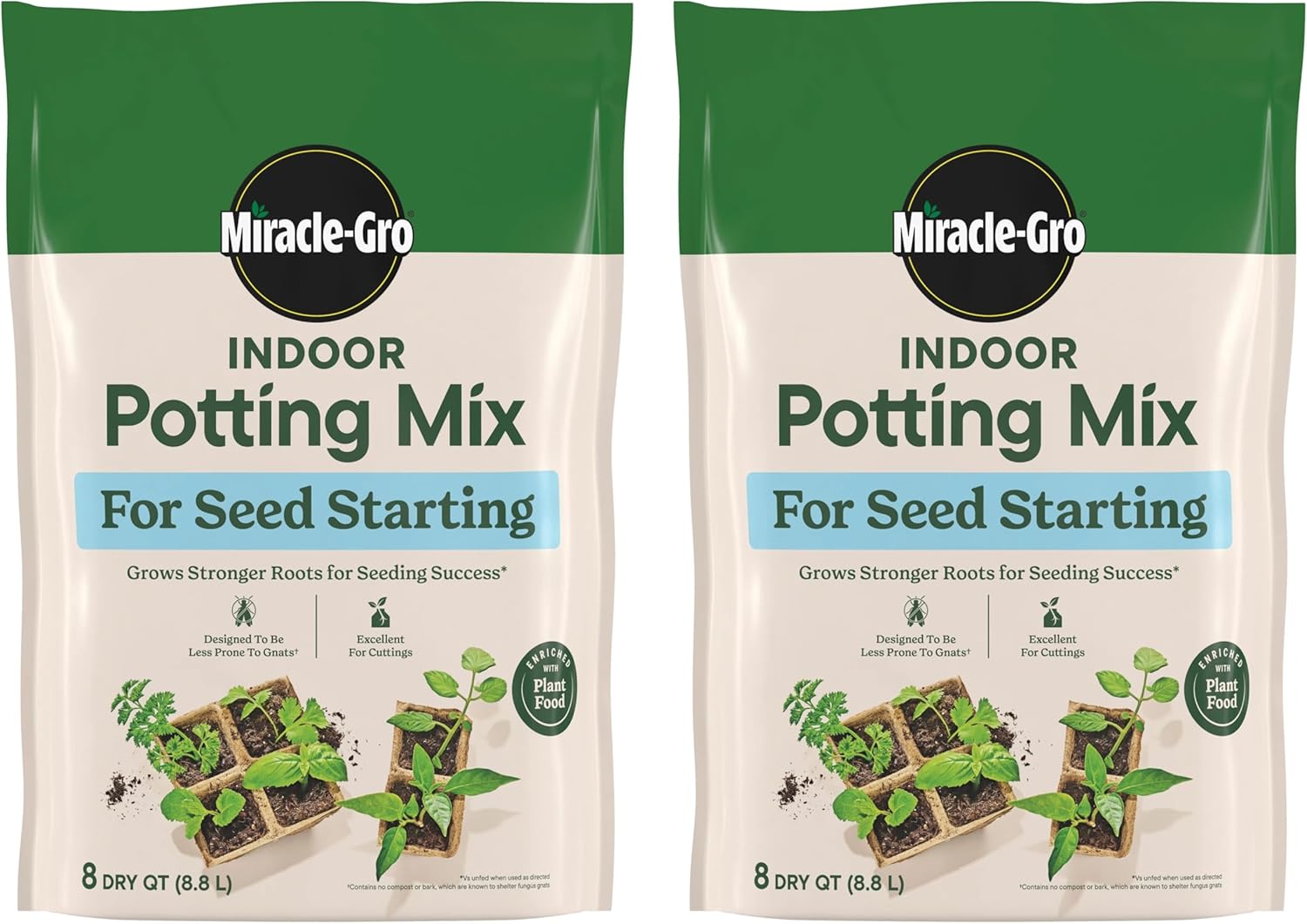
Miracle-Gro Indoor Potting Mix for Seed Starting, 8 qt. (2-Pack)
| Number of Packs | 2 |
|---|---|
| Unit Count | 512 Ounce |
| Item Type Name | Potting Mix |
| Item Highlight | For Starting Vegetable, Flower, and Herb Seeds Indoors, Excellent for Cuttings |
This seed-starting potting mix is designed to give seedlings and cuttings a fast, reliable start by combining a lightweight texture with built-in plant food. You use it straight from the bag in cell trays or small containers, keeping the medium moist and out of direct sun until seeds sprout or cuttings root. Notable features are its fertilizer enrichment for stronger early root growth compared with unfed mixes and the absence of compost or bark, which reduces the chance of fungus gnat problems. Practically, one 8 qt. bag claims to fill about three 72-cell trays, and the two-pack gives enough mix for multiple rounds of seed starting or for propagating lots of cuttings. Limitations are that it is a seed-starting mix rather than an all-purpose potting soil, so you will still need to transplant into a longer-term potting medium or amend when moving plants outdoors. Also it contains fertilizer, so follow package directions and handle carefully to avoid inhalation or runoff.
Best for: Buyers who want a straightforward, ready-to-use seed starting mix to maximize early germination and root growth and who run multiple trays or frequent propagation sessions.
Less Ideal for: Gardeners looking for an all-purpose potting soil for long-term container growth or for direct in-ground planting should choose a different product tailored to those needs.
- Lightweight texture ideal for germination and easy root emergence
- Enriched with plant food to support stronger early root development
- Formulated without compost or bark to help reduce fungus gnat habitat
- Two 8 qt. bags provide enough mix for several seed trays or propagation rounds
- Not formulated as a long-term potting or in-ground soil so plants need repotting after seedlings establish
- Contains fertilizer that requires cautious handling and correct use to avoid safety or environmental concerns
Verdict: A practical, ready-to-use seed-starting mix that speeds early root growth and reduces gnat risk, ideal for anyone optimizing multiple indoor seed or cutting starts.
SunGro Seedling Mix – Organic Seed Starting Mix, 8 Quart

| Brand Name | SUN GRO |
|---|---|
| Volume | 8 quarts |
| Style Name | Peat Moss |
| Unit Count | 1 Count |
This SunGro Seedling Mix is a purpose-built organic medium for germinating seeds and raising seedlings. Its fine texture and water-retentive peat-based formula make it easy to fill flats, pots, or cell trays and keep moisture uniform across the root zone, which helps seeds germinate evenly. The mix includes an organic wetting agent so water soaks in reliably and a silicon-enriched additive intended to support stronger, less wilt-prone seedlings. Because it is OMRI listed, you can use it for edible and ornamental seedlings in organic gardens. Practical benefits include predictable moisture control, a light texture that encourages root penetration, and compatibility with common seed-starting setups. Important limitations are its small 8 quart volume, which means you will likely need multiple bags for larger projects, and peat-based mixes can compress over time and may require gentle fluffing before reuse.
Best for: Home gardeners starting vegetables, herbs, or flowers who want an organic, reliable seed mix on a tight budget and prefer a ready-made option that promotes uniform germination.
Less Ideal for: Gardeners who need bulk quantities for large-scale propagation or those looking for peat-free or reusable soilless mixes should consider other options.
- OMRI listed organic formula suitable for edible and ornamental seedlings
- Fine, water-retentive texture that promotes even germination
- Includes an organic wetting agent for consistent water absorption
- Silicon-enriched additive to support seedling vigor and reduce wilting
- Small 8 quart bag may require buying multiple units for larger seed-starting needs
- Peat-based mix can compact with time and may need fluffing before reuse
Verdict: A compact, OMRI-listed seed starting mix that delivers reliable moisture control and fine texture for budget-minded gardeners starting small batches of seedlings.
Sol Soils Seedling & Propagation Mix (1 gal)

| Brand Name | sol soils |
|---|---|
| Style Name | Seedling & Propagation Mix |
| Unit Count | 128 Ounce |
| Volume | 1 gallons |
This Seedling & Propagation Mix is designed specifically for starting seeds and rooting cuttings. It combines calcined clay for moisture buffering and aeration, hardwood biochar to improve structure and microbial activity, coconut husk as a peat-free moisture-retentive medium, and earthworm castings to supply gentle nutrients. In practice the mix is fine-textured and holds water without becoming soggy, which helps delicate roots establish while reducing the risk of damping-off. It is sterile out of the bag and compatible with most plant types, so you can use it in trays, small pots, or plug cells for both indoor seed starting and greenhouse propagation. Bags are hand-mixed in small batches so texture varies slightly between bags, but the ingredients are chosen to extend time between waterings and resist compaction over a single growing cycle. Important limitations: the bag is one gallon so larger or repeated projects will require multiple bags, and users should soak coconut husk as recommended to remove tannins before heavy use.
Best for: Buyers who prioritize reliable, low-maintenance seed starting want a consistent, sterile medium that reduces overwatering risk and helps fragile roots establish. Ideal for hobbyists and small greenhouse growers focused on dependable results.
Less Ideal for: Not a good fit for growers who need large volumes for broadscale sowing or those who prefer DIY mixes tailored to specific crop nutrient profiles.
- Blend formulated for seedlings with calcined clay for moisture consistency and aeration
- Hardwood biochar and castings support beneficial microbes and gentle nutrient supply
- Peat-free coconut husk improves moisture retention while providing aeration
- Fine texture and sterile mix suitable for trays, small pots, and cuttings
- Small 1 gallon volume may be insufficient for larger seed-starting projects
- Batch-to-batch texture variability due to small-batch mixing
Verdict: A dependable, fine-textured peat-free propagation mix that helps seedlings and cuttings establish with less risk of overwatering.
Miracle-Gro Organic Indoor Potting Mix (16 qt)

| Unit Count | 1 Count |
|---|---|
| Item Type Name | Miracle-Gro Organic Indoor Potting Mix |
| Manufacturer | Scotts Miracle Gro |
| Volume | 1 cubic feet |
| Item Highlight | Protects Against Over & Under Watering |
Miracle-Gro Organic Indoor Potting Mix is an organic container mix designed for houseplants and seed starting. It combines coir for improved air space and moisture holding with sphagnum peat moss to retain and release water, plus a quick-start natural fertilizer to give new seedlings an initial nutrient boost. Typical use is filling seed trays or pots with drain holes, sowing seeds or transplanting seedlings, and keeping the growing medium consistently moist but not waterlogged. Notable features are its OMRI listing for organic use, a blend aimed at reducing over- and under-watering, and packaging sized to fill roughly a 12-inch pot. In practice this mix gives reliable germination conditions for many common annuals and herbs and simplifies indoor repotting by providing good structure and immediate nutrition. Limitations are that the bag is a single 16 qt unit so larger projects need multiple bags and the blend is a general indoor formula rather than a specialty mix for orchids, cacti, or succulents that need very fast drainage.
Best for: Buyers who want an easy, organic-ready potting mix that gives reliable germination and consistent moisture control for houseplants and small-scale seed starting.
Less Ideal for: Gardeners running large seed-starting operations, or those who need specialty high-drain mixes for cacti, orchids, or outdoor in-ground soil amendment.
- OMRI listed for organic indoor gardening
- Blend of coir and peat moss balances aeration and moisture retention
- Includes a quick-start natural fertilizer to feed seedlings
- Formulated specifically for indoor container plants and seed starting
- Single 16 qt bag may be insufficient for larger seed-starting runs or multiple repots
- Not formulated as a specialty fast-draining mix for succulents or orchids
Verdict: A dependable OMRI-listed indoor potting mix that simplifies seed starting and houseplant repotting by balancing moisture retention and aeration.
Back to the Roots 3-in-1 Seed Starting Mix, 6 Quart, Organic

| Unit Count | 192 Fluid Ounces |
|---|---|
| Style Name | 3-in-1 Seed Starting Mix |
| Brand Name | Back to the Roots |
This seed starting mix is designed to simplify getting seeds off to a healthy start. It is a peat-free, organic blend that combines coconut coir, mycorrhizae, worm castings and yucca extract to support root development and steady moisture uptake while dolomitic limestone helps balance pH. Use it straight from the bag in trays, small pots, or plug cells for herbs, vegetables, and flowers; the texture provides light aeration and modest nutrient content so many seedlings will sprout and grow without extra amendments. The fast-draining nature reduces the risk of soggy soil and root rot common with heavier mixes, which is helpful for beginners who worry about overwatering. Because it is a small 6 quart bag, it is easiest for single flats and starting a few plants rather than large-scale seed runs. Expect to pot seedlings up into a larger mix or add fertilizer after a few weeks for sustained growth to maturity.
Best for: Buyers who want a low-risk, ready-to-use organic seed mix for starting small batches of herbs, veggies, and flowers and prefer a product that emphasizes easy germination and root health.
Less Ideal for: Growers planning to start many flats at once or who prefer a single mix to carry seedlings all the way to transplant without additional fertilizer.
- Peat-free organic formula with mycorrhizae and worm castings to support early root growth
- Includes coconut coir and yucca extract for improved moisture retention and uptake
- pH balancing dolomitic limestone reduces need for immediate pH adjustments
- Light, airy texture suitable for trays, small pots, and plug cells to reduce damping off
- Small 6 quart bag limits how many flats you can fill before needing more mix
- Modest nutrient levels mean fertilization is usually required after seedlings establish
Verdict: A convenient, peat-free organic seed starting mix that reduces beginner mistakes by providing light texture, starter nutrients, and balanced pH for reliable germination.
Choosing the Right Soil for Planting Seeds: Key Factors to Consider
Particle Size and Texture
Fine, uniform particle size matters because tiny seeds need consistent contact with the substrate to absorb moisture and sprout. Coarse chunks or large bark pieces create air gaps that prevent even moisture distribution and make it hard for small roots to penetrate. Texture also affects how well the mix compacts; gentle firming is helpful, but excessive compaction will suffocate emerging roots.
When selecting a seed-starting soil, look for a light crumb structure that crumbles easily between your fingers. That texture supports root spread while minimizing the risk of dry pockets or overly wet clumps.
Moisture Retention and Drainage
Seeds need steady moisture during germination but cannot tolerate standing water. A good seed soil will hold moisture long enough for capillary action to keep the seed moist, while still draining excess after watering. The right balance reduces the need for constant misting and lowers the chance of damping-off caused by saturated conditions.
Consider whether you will use bottom-watering, frequent misting, or a humidity dome. Mixes with materials like fine coco coir or peat alternatives retain moisture well, while perlite or fine vermiculite improve drainage and aeration. Choose a blend that matches your watering routine and container type.
Pathogen and Contaminant Risk
New seedlings are highly susceptible to soil-borne diseases and contaminants. Sterile or pasteurized seed-starting mixes reduce the risk of damping-off, root rot, and seedling mold. Avoid using unprocessed garden soil for seed starting because it often contains microbes, weed seeds, and variable particles that can compromise germination.
Look for mixes labeled for seed starting or described as sterilized. If you reuse a mix from previous seasons, consider pasteurizing or refreshing it to reduce pathogen load.
Nutrient Appropriateness for Seedlings
Seeds generally carry enough stored energy to reach the first true leaves, so heavy fertilization is unnecessary and can harm tender roots. A good seed soil provides a low, gentle nutrient baseline or is essentially inert so you can control feeding later. Too much soluble fertilizer can burn seedlings; too little organic matter can leave transplants weak once true leaves appear.
Choose mixes formulated for seedlings or those with mild starter nutrients. Plan to begin light feeding only after the first set of true leaves has developed.
pH Stability and Mineral Content
Most vegetables and annuals prefer a slightly acidic to neutral pH for optimal nutrient availability. Extreme pH swings in a seed mix can interfere with nutrient uptake right as seedlings are establishing. Mineral content, including salts, matters because young roots are sensitive to high salt levels that can inhibit water absorption.
Check product labels or supplier data for pH ranges and avoid mixes with high soluble salts. If using homemade blends, test pH and flush with water before sowing if salt buildup is suspected.
Handling, Filling, and Practical Use
Ease of use affects how quickly you can sow many trays and how neat the process is indoors. Lightweight, dust-controlled mixes are easier to pour into cells without creating a mess. Mixes that compress or cake when wet make transplanting harder and can damage roots.
Also consider whether the mix works well with your seed containers and whether it requires pre-moistening. Some mixes are sold dry and need wetting before use, while others are sold pre-moistened for convenience.
When to Choose a Sterile Seed-Starting Mix
Sterile mixes are best when you are starting many small or vulnerable seeds indoors or when you have had past issues with damping-off. They dramatically reduce the presence of pathogens that attack tender stems and roots.
If you routinely sow in flats in a heated propagation tray or under grow lights, a sterile mix simplifies disease control and increases your success rate. Sterile mixes also make early watering and bottom-watering routines more predictable because they lack irregular organic debris.
- Reduces microbial risks that cause damping-off
- Consistent texture for even germination
- Works well with humidity domes and heat mats
Using Reusable Garden Soil Safely
Garden soil can be tempting to reuse for seed starting, but raw soil often contains weed seeds, pathogens, and inconsistent texture. If you choose to repurpose garden soil, pasteurize it first by heating to reduce microbial and seed risks.
Mix repurposed soil with sterile components like fine compost or sifted compost and plenty of drainage amendment. Always sieve to remove large particles and test for compaction tendencies before sowing small seeds.
- Sieve out debris and large particles
- Pasteurize or sterilize before use
- Blend with inert materials to improve drainage
Balancing Organic and Inert Components
A balanced seed mix usually combines small amounts of fine organic matter with inert components that control airflow and drainage. Organic components supply tiny amounts of nutrients and help retain moisture, while inert materials keep the structure open and prevent compaction.
Common pairings include fine peat alternatives with perlite or vermiculite. For gardeners aiming for organic inputs, well-aged, finely screened compost can be used sparingly to avoid excess nutrients or salts.
- Organic matter for gentle nutrients and moisture
- Inerts like perlite for aeration and drainage
- Avoid large wood-based materials in seed mixes
Preparing Mixes for Different Containers
Container depth and cell size change how a seed mix behaves. Deep pots need mixes that retain moisture longer, while small cells benefit from mixes that drain quickly to avoid waterlogging. Adjust the ratio of moisture-retentive to draining components to suit the containers you use.
For bottom-watering systems, a slightly coarser top layer can prevent surface crusting. For tiny seed flats, finer textures improve seed-to-soil contact and germination uniformity.
- Shallow cells: finer texture, quicker drainage
- Deeper pots: more moisture-retentive components
- Bottom-watering: consider a coarse top layer to aid wicking
Transitioning Seedlings to Potting Mix or Garden Soil
Seedlings started in light seed mixes must adapt to denser potting blends or garden soil. Gradually introduce slightly richer mixes when true leaves appear and transplanting is imminent. This helps roots thicken and prepares plants for outdoor conditions.
Before transplanting outdoors, harden seedlings by reducing humidity, lowering water frequency slightly, and exposing them to cooler temperatures to acclimate their root-soil relations.
- Begin light feeding after true leaves form
- Mix starter mix with small amounts of potting mix before final transplant
- Harden off to reduce transplant shock
How We Chose the Best Soil for Planting Seeds
We shortlisted soils based on attributes that directly affect seed germination and early seedling health. Primary evaluation criteria included particle size and texture to ensure uniform contact between seed and substrate, moisture-holding capacity balanced with drainage to prevent drowning or drying, and nutrient content appropriate for seeds that require little feeding before true leaves develop. We also examined pH stability and absence of contaminants or pathogens, since disease-free mixes reduce damping-off and other early failures. Ease of use for common seed-starting containers and compatibility with heating mats or cold frames were considered as practical handling factors. Exclusions: we filtered out heavy garden soils, potting mixes designed for mature plants with large bark chunks, and blends with high slow-release fertilizer levels unsuitable for delicate seedlings. The final list focuses on seed-specific mixes and lightweight blends that reliably support germination and transplant-ready seedlings. Our scoring aligned with measurable, gardener-relevant dimensions such as texture, moisture control, nutrient suitability, disease risk, and handling convenience.
FAQ
Can I use garden soil straight from the yard to start seeds?
Usually not. Yard soil often contains weed seeds, variable texture, and microbes that cause damping-off. If you must use it, sieve and pasteurize it and blend with inert components to improve drainage and consistency.
How damp should seed-starting soil be when sowing?
Aim for evenly moist but not soggy. The mix should hold together slightly when pressed but not drip water. Pre-wetting and letting excess drain before sowing helps seeds make good contact with the substrate.
Do seeds need fertilizer in the starting soil?
Most seeds contain enough nutrients to reach the first true leaves. A low-nutrient or inert starting mix is usually best. Begin light feeding only after true leaves appear and seedlings are actively growing.
What is the best texture for tiny seeds like lettuce or petunia?
Very fine, uniform texture with minimal large particles is ideal for tiny seeds. Fine mixes allow even contact and moisture uptake. Avoid coarse materials that create air gaps around small seeds.
How can I reduce the risk of damping-off in seed trays?
Use sterile mixes, ensure good air circulation, avoid overwatering, and water from below when possible. Thinning overcrowded seedlings and using clean trays also reduce disease pressure.
Final Verdict
When choosing soil for planting seeds, prioritize fine texture, balanced moisture retention, and low pathogen risk. Seedlings benefit from substrates that support steady germination without heavy nutrients or large particles that impede root growth. Match mix drainage and moisture characteristics to your container type and watering method, and plan a gentle transition to richer potting mix as plants develop. Focus on the tradeoffs described here to pick a mix that fits your propagation style: sterile and fine for many small seeds, or slightly richer and moisture-retentive for deeper pots. That focus will boost germination rates and make early care more predictable.
