

Note: This article contains affiliate links. If you click on these links and make a purchase, I may earn a small commission at no extra cost to you. This helps support my research and content. Read my full affiliate disclosure here.
If you grow vegetables, fruit trees, or container plants, calcium is one of the nutrients that makes the difference between spotty, soft produce and firm, long-lasting harvests. The right organic calcium fertilizer strengthens cell walls, cuts down common disorders like blossom end rot, and helps plants tolerate heat and irregular moisture. This guide focuses on the best organic calcium fertilizers for home gardens and small allotments. We shortlisted seven top options and evaluated them on measurable gardener concerns including available calcium per application and how easy each product is to apply. Read on to find the type and application style that fits your soil, crop, and watering routine.
Top Picks at a Glance
| Best Overall The best all-around choice for most situations | Neptune's Harvest Organic Crab & Lobster Shell Plant Food (5-3-0), 4 lb |  |
| Best Quality Built to a higher standard if you want something more solid | True Organic Tomato & Vegetable Food, Granules, 8 lb |  |
| Best Value The sweet spot between price and what you get | Espoma Organic Tomato-tone 3-4-6 Organic Tomato Fertilizer (4 lb) |  |
| Best Budget The cheapest option that still gets the job done reliably | Down To Earth Solution Grade Calcium 96 (1 lb) — Water-Soluble Limestone Powder |  |
| Highest Rated A top-rated pick with lots of positive feedback | Espoma Organic Tomato-tone 3-4-6 Organic Fertilizer (4 lb, Pack of 2) |  |
| Most Popular A crowd favorite that many people choose with confidence | MARPHYL Organic Cal-Mag Liquid Plant Food |  |
| Best Seller A high-volume bestseller chosen again and again | Burpee Bone Meal Fertilizer, 3 lb |  |
Neptune's Harvest Organic Crab & Lobster Shell Plant Food (5-3-0), 4 lb

| Item Form | Flake |
|---|---|
| Specific Uses For Product | Plant Growth, Root Development, Seed Development, Soil Conditioning |
| Application Method | Broadcast spreader |
| Mixing Ratio | 5-3-0 |
Neptune's Harvest Crab & Lobster Shell is a dry, slow-release organic fertilizer made from ground crab and lobster shells that supplies calcium, magnesium, and modest nitrogen to soil. It is typically worked into planting beds or used as a top dressing around established plants and can be applied with a broadcast spreader on lawns or garden rows. The product’s high calcium content and chitin-rich shell meal help improve soil structure, encourage deeper roots, and can suppress some soil pests such as nematodes and grubs. Because it breaks down slowly, it provides longer-term soil conditioning rather than an immediate nitrogen spike, making it suited to crops that benefit from steady nutrition and improved rooting. Important limitations are the low NPK numbers for gardeners seeking quick, high-nitrogen feeding and the inclusion of phosphorus which may be restricted by local turf regulations. For corn specifically this works best as a soil conditioner and calcium source when used alongside a higher-nitrogen fertilizer rather than as the sole feed.
Best for: Gardeners who prioritize long-term soil health and steady nutrient delivery and want an organic amendment to strengthen roots and correct calcium deficiencies while managing soil pests.
Less Ideal for: Growers who need fast, high-nitrogen feeding or a single-product solution for heavy-feeding crops should choose a higher-N fertilizer or combine this product with a concentrated nitrogen source.
- High calcium content supports strong stalk and root development
- Slow-release shell meal improves soil structure and organic matter over time
- Chitin and mineral profile can help reduce certain soil pests
- Resealable bag and flake form are easy to apply and incorporate
- Low overall nitrogen level so it will not deliver rapid green-up on its own
- Contains phosphorus which may be restricted for some turf or local regulations
Verdict: A performance-minded organic choice to improve soil structure and supply calcium for stronger corn roots when paired with a higher-nitrogen feed.
True Organic Tomato & Vegetable Food, Granules, 8 lb

| Item Form | Granules |
|---|---|
| Mixing Ratio | 4:5:6 |
| Unit Count | 128 Ounce |
| Included Components | 100% Made in the USA with Organic Inputs |
True Organic Tomato & Vegetable Food is an all-natural granular fertilizer intended to feed fruiting vegetables through the growing season. It supplies 4% nitrogen (3% slow-release), 5% phosphate, 6% potash and a notable 6% calcium, plus 1% sulfur, so it both fuels growth and targets blossom end rot prevention. Typical use is monthly surface applications for in-ground beds and containers; the 8 lb bag is sized to cover roughly 140 sq ft. The formula blends organic inputs such as poultry manure, fish bone meal and shell meals, which can improve soil biology over time rather than just providing quick-release salts. Practical benefits include steady nitrogen from the slow-release fraction, improved fruit set from balanced P and K, and calcium that helps reduce tip rot in tomatoes. Limitations are that nutrient levels are lower than synthetic fertilizers so results take a few applications to build, and supply is less precise for growers who need exact, high-strength feeds or quick correction of acute deficiencies.
Best for: Gardeners who prioritize crop performance and soil health and want an organic fertilizer that supports steady fruit development and helps prevent blossom end rot.
Less Ideal for: Commercial growers or gardeners who need rapid, high-concentration nutrient corrections or tightly controlled soluble feeds for hydroponics should consider more targeted products.
- Contains 6% calcium specifically to reduce blossom end rot in tomatoes and other fruiting vegetables
- Includes 3% slow-release nitrogen for sustained feeding rather than a single flush
- Contains a balanced N-P-K (4-5-6) suitable for fruit and vegetable development
- Made from organic inputs that support soil microbial activity over time
- Lower nutrient concentrations than synthetic fertilizers so multiple applications are needed to see fast results
- Granular form requires monthly application and is less precise for spot-treating acute deficiencies
Verdict: Choose this product when you want an organic, calcium-fortified granular fertilizer that steadily improves vegetable yield and reduces blossom end rot.
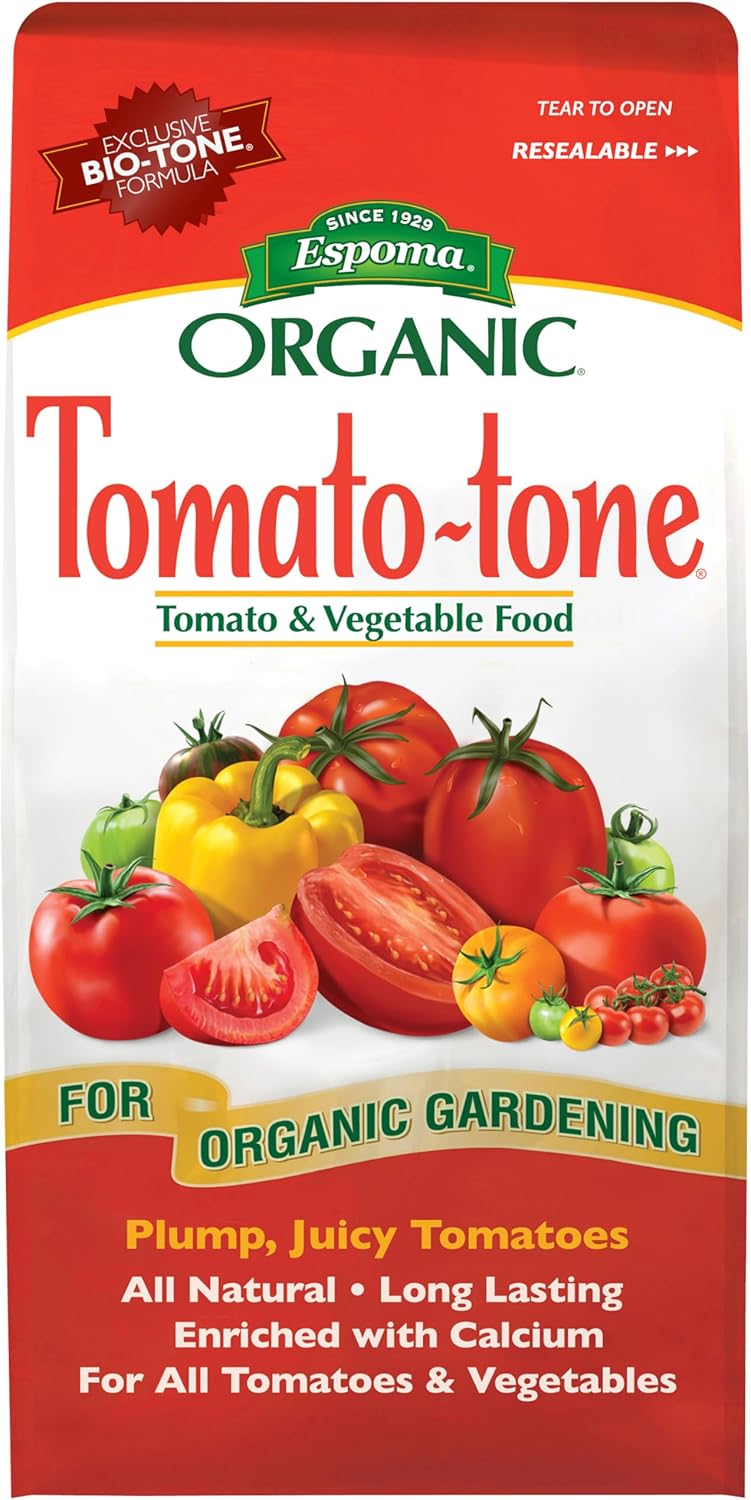
Espoma Organic Tomato-tone 3-4-6 Organic Tomato Fertilizer (4 lb)
| Mixing Ratio | 3:4:6 |
|---|---|
| Item Form | Granules or Pellets |
| Target Species | tomatoes and vegetables |
| Unit Count | 64 Ounce |
Espoma Organic Tomato-tone is a ready-to-use granular fertilizer formulated specifically for tomatoes and other vegetables. Applied to the soil around the plant drip line every two weeks during the growing season, it delivers a 3-4-6 NPK balance with an added 8% calcium that supports fruit set and can reduce blossom end rot. The granule form is easy to spread by hand and requires watering in rather than mixing, making it convenient for in-ground beds and large containers. Because it is an OMRI-approved organic input and made from natural ingredients, it is a good fit for organic gardeners who want continuous feeding without synthetic products. Limitations include the need for regular reapplication every two weeks and that granular feeding gives slower nutrient release than some liquid or water-soluble options, so results develop over time rather than immediately. It is not a complete soil amendment if your garden has other nutrient deficiencies, so occasional soil testing and supplementing may still be necessary.
Best for: Gardeners focused on producing consistent, flavorful tomato harvests who prefer organic inputs and an easy granular application routine.
Less Ideal for: Growers who need fast, immediate correction of nutrient deficiencies or those who prefer precise, frequent dosing via liquid fertilizers for hydroponics or rapid-response feeding.
- Formulated specifically for tomatoes and vegetables to promote flowering and fruiting.
- Contains 8% calcium to help prevent blossom end rot.
- OMRI-approved organic input suitable for certified organic production.
- Granular, ready-to-use form is easy to apply around the plant drip line without mixing.
- Requires reapplication every two weeks during the growing season for best results.
- Slower nutrient availability compared with water-soluble or liquid fertilizers.
Verdict: A convenient organic granular fertilizer designed to boost tomato fruiting and reduce blossom end rot with built-in calcium.
Down To Earth Solution Grade Calcium 96 (1 lb) — Water-Soluble Limestone Powder

| Item Form | Powder |
|---|---|
| Specific Uses For Product | Plant Growth |
| Target Species | plants |
| Mixing Ratio | 8 lbs per gallon |
| Unit Count | 16 Ounce |
This Down To Earth Solution Grade Calcium 96 is a very concentrated, ultra-fine calcium carbonate powder intended to prevent calcium deficiency and improve fruit quality. It dissolves readily for foliar sprays, soil drenches, drip systems or hydroponic use, which makes it easy to mix into standard nutrient routines. The OMRI listing means it can be used in certified organic gardens, and the high 96% calcium content targets problems like blossom-end rot and weak cell structure. Practical benefits include precise calcium supplementation without adding extraneous nutrients and compatibility with a variety of application methods. Because it is a pure mineral powder, you control the concentration and timing, but that also means you must measure and mix carefully to avoid overapplication and potential pH shifts. The fine mesh and solution grade form speed dissolution but can create dust during handling, so use a mask or mix in a closed container. For gardeners focused on correcting calcium-specific deficiencies in an affordable, organic-friendly form, this product is a straightforward option.
Best for: Practical gardeners on a budget who need a concentrated, organic-approved calcium supplement to prevent blossom-end rot and firm up fruit on vegetables and ornamentals.
Less Ideal for: Growers who prefer ready-to-use liquid products or those unwilling to measure and mix powdered amendments; not suited to users wanting a multi-nutrient fertilizer.
- Very high calcium content (96% CaCO3) for effective correction of calcium deficiency
- Solution grade ultra-fine powder dissolves quickly for foliar, drip, hydroponic, or soil use
- OMRI listed so it is suitable for certified organic gardening
- Pure mineral formulation allows precise control of dosing without extra nutrients
- Requires careful measuring and mixing to avoid overapplication and potential pH effects
- Dusty powder that can irritate if inhaled during handling
Verdict: A concentrated, organic-approved and economical calcium powder for gardeners who need precise, effective correction of calcium deficiencies.
Espoma Organic Tomato-tone 3-4-6 Organic Fertilizer (4 lb, Pack of 2)

| Item Form | Powder |
|---|---|
| Specific Uses For Product | Gardening,Organic |
| Coverage | Full |
| Target Species | Tomatoes |
Espoma Tomato-tone is a ready-to-use organic fertilizer designed specifically to support tomato fruiting rather than excessive leaf growth. It contains a 3-4-6 N-P-K analysis and 8% calcium, which helps reduce blossom end rot when applied to soil around the plant drip line and watered in. Use it every two weeks during the growing season for potted tomatoes and other vegetables; the product is labeled for organic gardening and requires no on-site mixing. Practical benefits include consistent nutrient delivery tailored to fruit set, built-in calcium for common tomato disorders, and the convenience of a powder/granular form that is simple to apply in containers. Limitations are that feeding frequency and exact rates must be followed to avoid over-application in small pots, and as an organic product it releases nutrients more slowly than synthetic quick-release formulas. This fertilizer is best when paired with good potting mix and regular watering practices to get reliable, fruit-focused results in container tomato production.
Best for: Home gardeners who prioritize steady, reliable fruit production in potted tomatoes and prefer an organic, low-maintenance feeding plan.
Less Ideal for: Gardeners who need very fast, immediate nutrient boosts or who want an all-in-one liquid feed system for frequent foliar feeding.
- Formulated for tomatoes with a 3-4-6 N-P-K ratio to encourage blooms and fruit production.
- Contains 8% calcium to help prevent blossom end rot, a common issue for tomato growers.
- Ready-to-use granular/powder form requires no mixing and is easy to apply around container plants.
- Certified for organic gardening, suitable for organic potted vegetable production.
- Slower nutrient release compared with synthetic quick-release fertilizers, so results are not instantaneous.
- Regular biweekly applications are recommended which requires consistent attention for container plants.
Verdict: Choose this organic tomato fertilizer if you want a reliable, fruit-focused feed with built-in calcium to reduce blossom end rot in potted tomatoes.
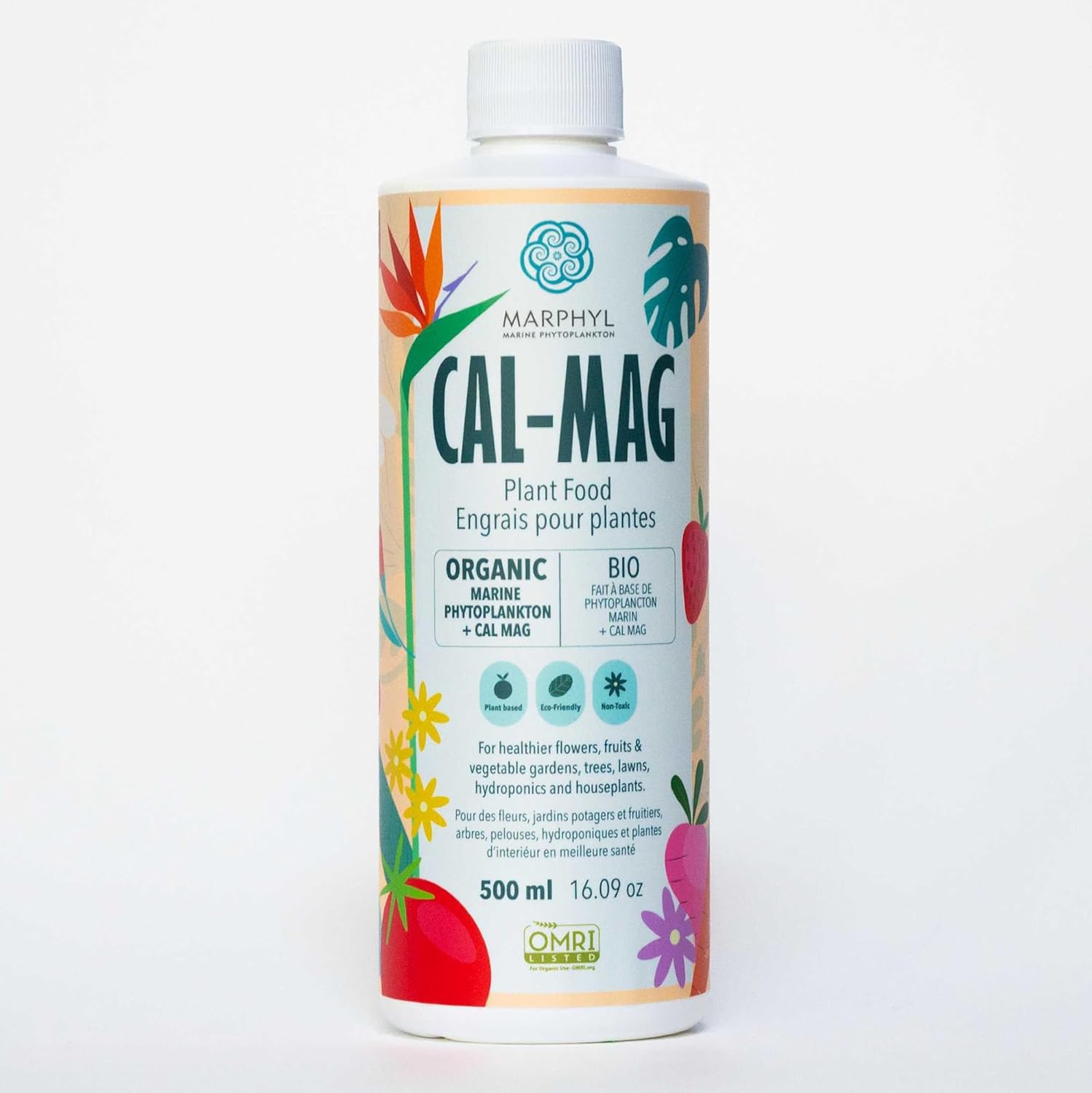
MARPHYL Organic Cal-Mag Liquid Plant Food
| Item Form | Liquid |
|---|---|
| Specific Uses For Product | Plant Growth, Root Development, Seed Development, Soil Conditioning |
| Target Species | Flowers, Vegetables |
| Mixing Ratio | 1:20 |
| Liquid Volume | 16.9 fluid ounces |
MARPHYL Organic Cal-Mag is a liquid concentrate that supplies calcium and magnesium to plants and is intended for regular supplemental feeding. You dilute the concentrate 1:20 and apply it about every two weeks to vegetables, flowers, leafy plants, succulents and houseplants whether in soil, coco coir, or hydroponic systems. Key features include an organic formulation with phytoplankton, a clear mixing ratio on the label, and directions that target root development, stem strength and greener foliage. In practice this product is convenient for container gardeners and small beds because the ready-to-mix concentrate is easy to measure and blends into irrigation or hand-watering schedules. Limitations to note are that it is a targeted calcium-magnesium supplement rather than a complete fertilizer so it will not replace a balanced NPK feed, and users must follow dilution and safety guidance to avoid overapplication and contact with skin or eyes.
Best for: Gardeners who want an organic, easy-to-use supplement to correct calcium or magnesium shortfalls in vegetables, flowers and container plants and who prefer clear dosing instructions and documented ingredients.
Less Ideal for: Large-scale growers who need a full-spectrum fertilizer for broad nutrient needs or buyers seeking an all-in-one feed for high-volume beds.
- Provides both calcium and magnesium in an organic liquid form for targeted supplementation
- Clear mixing ratio (1:20) and directions for biweekly use simplify dosing
- Suitable for soil, coco coir and hydroponic systems, making it versatile across growing methods
- Phytoplankton ingredient may support natural nutrient uptake and plant vigor
- Not a complete NPK fertilizer so additional feeding is required for balanced nutrition
- Small 16.9 fl oz unit may require frequent repurchasing for larger gardens
Verdict: Choose this organic Cal-Mag concentrate if you need a simple, plant-safe way to correct calcium and magnesium deficiencies in home gardens and containers.
Burpee Bone Meal Fertilizer, 3 lb

| Item Form | Powder |
|---|---|
| Specific Uses For Product | Plant Growth, Root Development |
| Coverage | 240 Sqaure Feet |
| Target Species | tomatoes, peppers, and bulbs |
Burpee Bone Meal is a slow-release granular fertilizer designed to boost early root development and flowering in root and bulb crops. Gardeners typically work it into planting holes for bulbs or mix it into soil and potting media when starting seeds or transplanting vegetables like carrots, beets, and onions. The product is OMRI listed for organic gardening and provides phosphorus and calcium that support stronger root systems and better early-season growth. Its fine granular texture makes it easy to apply evenly, and because it breaks down slowly it feeds plants over the season without burning them. Practical benefits include targeted support for root vegetables and an easy application method for beds and containers. Limitations are that it supplies mainly phosphorus and calcium rather than a balanced NPK profile, so it is best used alongside a nitrogen source if foliage development is needed, and results are gradual rather than immediate because of the slow-release nature.
Best for: Gardeners focused on improving root development and bulb planting who prefer organic inputs and want a simple amendment to add at planting or during bed preparation.
Less Ideal for: Growers seeking an all-in-one balanced fertilizer for both foliage and root development or those who need fast-acting, soluble nutrients for immediate correction.
- OMRI listed for organic gardening, suitable for certified organic beds
- Fine granular form that is easy to spread and incorporate
- Provides phosphorus and calcium to encourage strong root and bulb development
- Slow-release action reduces risk of burning plants and supplies season-long support
- Not a complete fertilizer profile so additional nitrogen may be needed for leafy growth
Verdict: A reliable organic bone meal to strengthen roots and jump-start bulbs and root vegetables when added at planting.
Choosing the Right Organic Calcium Fertilizer: Key Factors to Consider
Form of Calcium
Calcium in organic fertilizers appears in different chemical forms that affect how quickly plants can access it. Some products deliver calcium as carbonate compounds that slowly increase soil calcium over weeks to months. Others supply more soluble forms suitable for foliar feeding or rapid correction of deficiencies. Knowing the form helps you match the product to the urgency of the problem and the feeding schedule.
For container gardens and potted plants you may prefer more soluble forms or foliar applications because potting mixes have limited buffering capacity. For established beds and orchards, slower-release calcium sources reduce the need for frequent reapplication and help avoid pH swings.
Application Method
Application method determines how reliably calcium reaches the plant tissues that need it. Soil amendments change root-zone calcium over time and are best for long-term correction and building reserves. Foliar sprays deliver calcium directly to leaves and fruit surfaces and can correct early-stage disorders quickly, though they often need repeated treatments for lasting effect. Drenches and side-dressings are intermediate options that place calcium where roots can take it up without foliar contact.
Consider how you water and how accessible your beds are. Foliar sprays require more labor and calm weather, while soil amendments are lower-effort but slower to show results.
Compatibility With Soil pH
Soil pH affects calcium availability. In acidic soils calcium may be locked up or leached away, while in very alkaline soils certain calcium compounds can interact with other nutrients and reduce their uptake. Choose a calcium source that behaves predictably at your garden pH. Some organic calcium fertilizers also change soil pH slightly over time, so factor that into long-term plans for nutrient balance.
Testing your soil pH before choosing a product reduces the risk of creating new deficiencies or imbalances when correcting calcium levels.
Crop and Timing Considerations
Different crops and stages of growth have distinct calcium requirements. Fruiting crops like tomatoes, peppers, and eggplants benefit from steady root-zone calcium during fruit set. Rapid foliar applications may be the only feasible remedy for visible blossom end rot late in the season. For perennial fruit trees, timing applications in early spring and during fruit development gives the best protection against physiological disorders.
Think about the crop calendar in your garden and whether you need preventive feeding or emergency correction when selecting a product.
Residues and Long-Term Soil Effects
Some calcium amendments leave residues that alter soil texture, drainage, or nutrient interactions when used repeatedly. High rates of particulate calcium materials can change soil structure in containers and compact fine-textured soils if not mixed properly. Others may tie up micronutrients temporarily. Consider the long-term implications of repeated applications and plan for occasional soil tests to monitor cumulative effects.
Choosing a product with known residual behavior helps avoid slow-onset problems and keeps soil biology and nutrient cycles functioning.
When To Use Organic Calcium Versus Other Fixes
Use an organic calcium fertilizer when plant tissue tests or visible symptoms point to a true calcium shortage, like blossom end rot on tomatoes or bitter pit on apples. If the issue is caused by irregular watering or extreme heat, addressing moisture and shading should be part of the response; calcium products help most when there is a real soil or tissue deficit.
If soil tests show adequate calcium but plants still show symptoms, evaluate water management, root damage, and competing nutrient levels such as magnesium or potassium before assuming more calcium is the cure. Organic calcium works best alongside good cultural care.
- Foliar sprays for fast, targeted correction of fruit or leaf symptoms
- Soil amendments to build reserves and prevent recurring disorders
- Drenches or side-dressing when root uptake is the intended route
Preparing and Applying Foliar Calcium Sprays
Foliar calcium sprays can reduce fruit disorders quickly but require careful mixing and timing. Use clean water, follow recommended dilutions, and avoid spraying during the heat of the day to reduce leaf burn and improve uptake. Multiple light applications are often more effective than a single heavy spray because absorption through leaf cuticles is limited.
Always test a small area when using a new foliar product and avoid combining incompatible materials in the same tank. Calm, cool conditions improve spray coverage and reduce the risk of wash-off from irrigation or rain.
- Spray in the early morning or late afternoon for best uptake
- Conduct a small spot test before full-plant application
- Repeat at manufacturer or label suggested intervals for sustained effect
Using Calcium in Containers and Raised Beds
Container and raised bed soils have less buffering capacity than in-ground gardens, so calcium levels can change quickly. Choose soluble calcium sources or scheduled soil applications to maintain a steady supply. Mix particulate amendments thoroughly into potting mix and allow time for stabilization before planting when possible.
Because containers are prone to leaching, monitor pH and nutrient levels seasonally and adjust the feeding routine rather than relying on single heavy applications.
- Incorporate slow-release calcium at potting time for long-term supply
- Use foliar or soluble options mid-season for quick correction
- Avoid over-applying dry particulates on the soil surface in pots
Calcium And Other Nutrient Interactions
Calcium interacts with magnesium, potassium, and available phosphorus. High rates of one cation can reduce uptake of others, so balanced feeding is important. If you add calcium repeatedly without addressing the rest of the fertility program, you may see secondary deficiencies.
Micronutrients like boron influence calcium movement within plants. Adequate boron often improves calcium transport to developing fruit, so consider a comprehensive soil and tissue testing approach when persistent calcium-related disorders appear.
- Rotate soil tests and tissue tests to track interactions
- Calcium works best as part of a balanced fertility plan
- Address cultural stresses like irregular watering that limit nutrient uptake
Storage, Mixing, and Safety Tips
Store organic calcium fertilizers in a cool, dry place away from direct sunlight and moisture. Keep containers sealed to prevent clumping and contamination. When mixing concentrates or powders, measure precisely and use protective gloves and eyewear if label guidance recommends them.
Rinse sprayers and equipment after use to prevent buildup. Label leftover mixed solutions with dilution and date if you plan to reuse them shortly, and dispose of any unused mix according to local guidance.
- Keep materials dry to maintain consistent dosing
- Rinse equipment immediately after use to avoid blockages
- Follow label instructions for personal protective equipment
How We Chose the Best Organic Calcium Fertilizer
We prioritized attributes gardeners actually use when choosing organic calcium fertilizers. First, nutrient availability mattered: we favored products with clear calcium analysis and forms that release or are available to plants in typical garden conditions. Second, application methods were a major filter. We assessed whether a product can be used as a soil amendment, foliar spray, or drench and how easy it is to measure and mix. Third, formulation and purity influenced selection; products with minimal inert fillers and fewer additives scored higher for predictable calcium delivery. Fourth, safety and suitability for edible gardens were required; we excluded any fertilizer with prohibited or questionably labeled ingredients for food crops. Finally, packaging and handling were considered for small-scale gardeners who need clear dosing and recloseable containers. Excluded from the list were industrial or lawn-only calcium sources, unverified homemade blends lacking nutrient analysis, and materials intended solely for agricultural broadcast at large scale. The evaluation emphasized measurable specs gardeners can compare, like percent elemental calcium, suggested application rates, and compatibility with common garden soil pH ranges.
FAQ
Can I use organic calcium fertilizer to fix blossom end rot quickly?
Foliar-applied organic calcium can reduce blossom end rot quickly on affected fruit, but results often require multiple applications. Also confirm that watering is consistent because irregular moisture is a common underlying cause.
How often should I apply calcium to fruit trees and vegetable beds?
Frequency depends on the product form and crop. Slow-release soil amendments are usually applied seasonally or annually, while foliar or soluble products may be applied every 7 to 21 days during key growth stages. Follow label guidance and monitor plant response.
Will adding calcium change my soil pH?
Some calcium sources slightly raise pH over time, while others have minimal pH effect. The actual change depends on the compound used and your soil buffering capacity. Test soil pH periodically when making repeated applications.
Is foliar calcium safe for edible crops?
Most labeled organic foliar calcium products are safe for edible crops when used according to directions. Rinse fruit if advised by the product label and avoid spraying close to harvest unless the product specifically allows it.
Can I combine calcium with other foliar sprays?
Compatibility varies. Some calcium mixes may react with other inputs and cause precipitation or leaf burn. Perform a small jar compatibility test and spot test on plants before combining sprays.
How do I know if my soil actually needs calcium?
A soil test that includes exchangeable calcium is the most reliable way to know. Visible symptoms, tissue tests, and persistent blossom issues can indicate a need, but testing reveals the actual levels and helps guide correct application rates.
Final Verdict
Choose an organic calcium fertilizer based on the form you need and how quickly you must correct a deficiency. Soluble and foliar options give fast results for acute problems, while soil amendments build reserves and reduce the need for repeated treatments. Match the product to your crop, container or in-ground situation, and watering routine. Prioritize predictable calcium availability, ease of application, and compatibility with edible production when selecting a product. Regular soil and tissue testing will help you target applications and avoid unintended nutrient imbalances, letting you protect fruit quality and plant health with confidence.
