

Note: This article contains affiliate links. If you click on these links and make a purchase, I may earn a small commission at no extra cost to you. This helps support my research and content. Read my full affiliate disclosure here.
Choosing the right organic fall fertilizer matters because late-season feeding affects root development, winter survival, and next spring's vigor. In cooler months, your plants are shifting energy belowground. The wrong product or timing can waste nutrients or disturb soil biology. This guide covers seven shortlisted organic fall fertilizers suited to garden beds, lawns, and container plantings. We explain how each pick matches common late-season goals and summarize the evaluation criteria used, including nutrient balance and soil conditioning. Read on to find options that strengthen roots, improve soil health, and protect your garden through winter.
Top Picks at a Glance
| Best Overall The best all-around choice for most situations | Suståne 8-0-4 Organic Fall/Winter Lawn Fertilizer, 30 lb |  |
| Best Quality Built to a higher standard if you want something more solid | Espoma Turf-Tone Fall Winterizer 8-0-5 Organic Lawn Food, 30 lb | 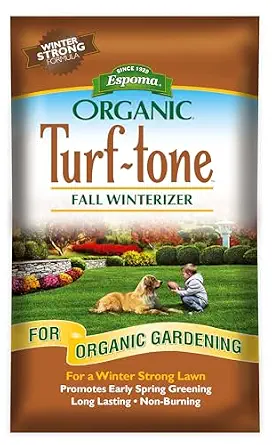 |
| Best Value The sweet spot between price and what you get | Jobe's Organics All-Purpose Granular Fertilizer (16 lb) |  |
| Best Budget The cheapest option that still gets the job done reliably | TPS Nutrients Fall Fertilizer Liquid Plant Food, 8 oz |  |
| Highest Rated A top-rated pick with lots of positive feedback | Espoma Turf-Tone All Season Organic Lawn Food with Bio-Tone, 28 lb |  |
| Most Popular A crowd favorite that many people choose with confidence | Farmer's Secret Soil Revitalizer Organic Liquid Compost (32 oz) |  |
| Best Seller A high-volume bestseller chosen again and again | Dr. Earth Organic Tomato, Vegetable & Herb Fertilizer (64 oz) |  |
Suståne 8-0-4 Organic Fall/Winter Lawn Fertilizer, 30 lb

| Item Form | Granules, Powder |
|---|---|
| Specific Uses For Product | Lawns,Organic |
| Application Method | Broadcast Spreader |
| Target Species | Lawn Grass |
| Mixing Ratio | 8-0-4 |
This Suståne 8-0-4 winterizer is an organic granular fertilizer intended for a September or October broadcast application to lawns. It combines aerobically composted turkey litter, green waste compost, feather meal and sulfate of potash to deliver slow-release nitrogen plus potassium for root development and soil improvement. In practice you spread it with a broadcast spreader over a 30 (unit) coverage to feed grass through dormancy and promote a quicker, thicker spring green-up. The product is easy to use, supports soil biology because of its compost-based ingredients, and reduces the need for frequent feeding compared with fast-release synthetics. Expect gradual results rather than immediate greening, and plan to apply in the recommended fall window for best effect. The main limitations are the seasonal timing requirement and the bulk weight that makes handling and storage more cumbersome than smaller bags.
Best for: Homeowners who want an all-purpose, organic fall lawn treatment that improves soil and builds root strength with a single seasonal application.
Less Ideal for: Gardeners who need quick visible results or who prefer frequent small-dose liquid feedings; also not ideal for those who cannot handle or store a large, heavy bag.
- Organic, compost-based formula that supports soil biology
- Slow-release nutrients for sustained feeding through winter
- Specifically balanced for fall use to encourage root development and spring green-up
- Formulated for broadcast spreader application for even coverage
- Bulk 30-pound packaging can be heavy to lift and store
- Effects are gradual and not suited for instant greening
Verdict: A reliable organic fall fertilizer that builds root strength and soil health for a thicker, earlier spring lawn.
Espoma Turf-Tone Fall Winterizer 8-0-5 Organic Lawn Food, 30 lb

| Mixing Ratio | 8-0-5 |
|---|---|
| Item Form | Granules |
| Specific Uses For Product | Lawns (Fescues, Bluegrass, Rye Grass, St. Augustine, Zoysia) |
| Coverage | Full |
| Ingredients | Feather Meal, Poultry Manure, Potash |
Espoma Turf-Tone Fall Winterizer is an 8-0-5 granular lawn fertilizer made from natural ingredients such as feather meal, poultry manure, and potash, designed for fall application. It is applied with a drop or broadcast spreader to lawns like fescue, bluegrass, rye, St. Augustine, and zoysia to build root strength before winter dormancy and help recovery after summer stress. The higher potassium content supports hardiness and winter survival while the organic nitrogen sources feed more slowly for steadier uptake and reduced burn risk. A single 30 lb bag covers up to 5,000 sq ft, making it practical for medium to large yards. Because it is organic, results are generally slower than synthetic granules, so expect gradual improvement rather than an immediate green-up. For gardeners prioritizing long-term turf health and reduced synthetic inputs, this product delivers seasonally targeted nutrition with low leaching potential.
Best for: Gardeners focused on long-term lawn performance who want an organic, season-specific fertilizer to strengthen turf going into winter.
Less Ideal for: Users seeking a rapid, immediate green-up or a full-spectrum synthetic fertilizer program for quick correction of specific nutrient deficiencies.
- Organic formula with feather meal and poultry manure for slow, steady nitrogen release
- Higher potassium (8-0-5) to improve winter hardiness and root strength
- Covers up to 5,000 sq ft per 30 lb bag, suitable for medium to large lawns
- Won't burn when applied as directed and is less likely to leach than soluble fertilizers
- Slower visible results compared with synthetic fast-release fertilizers
- Single formulation may not address specific nutrient deficiencies beyond N and K
Verdict: Choose this organic fall winterizer if you want a potassium-rich, slow-release fertilizer that strengthens turf for winter and supports healthier spring recovery.
Jobe's Organics All-Purpose Granular Fertilizer (16 lb)

| Item Form | Granules |
|---|---|
| Specific Uses For Product | Plant Growth, Root Development, Seed Development, Soil Conditioning |
| Mixing Ratio | 4-4-4 |
| Coverage | Resealable |
This is a straightforward organic granular fertilizer designed for regular feeding of vegetable gardens and other ornamentals. With an NPK of 4-4-4 and ingredients like feather meal, bone meal, and processed poultry manure, it supplies balanced nutrients and some calcium and sulfur for steady growth and improved root development. You apply it to soil every 2 to 3 weeks during the growing season; as a slow-to-release granular it reduces the need for daily attention and lowers the risk of burning when used as directed. The product is OMRI listed for organic gardening and is presented in a resealable bag for tidy storage. Limitations to be aware of are the modest NPK numbers, which mean it is best for maintenance feeding rather than rapidly correcting severe nutrient deficiencies, and the need to reapply frequently compared with longer-term slow-release formulations. For growers wanting an easy, certified-organic feed for vegetables and mixed beds, this covers most bases without complex application methods.
Best for: Home vegetable gardeners and practical growers who prioritize organic inputs and want a simple, repeatable feeding routine to maintain steady plant growth.
Less Ideal for: Growers who need a high-concentration or targeted corrective fertilizer for severe nutrient deficiencies or for single-crop intensive production should consider specialized formulas instead.
- OMRI listed and made from organic-derived sources suitable for certified organic vegetable production
- Balanced 4-4-4 NPK supports foliage, flowers, and fruit development without strong spikes
- Granular, slow-to-release form reduces immediate burn risk and simplifies feeding schedule
- Resealable packaging helps keep product dry and minimizes mess during storage
- Lower nutrient concentrations mean more frequent application or higher volumes are needed for nutrient-poor soils
- Not formulated for a single crop nutrient correction so may be insufficient for plants with specific high-demand deficiencies
Verdict: A reliable, OMRI-listed all-purpose granular fertilizer that gives practical, balanced organic feeding for vegetable gardens with minimal fuss.
TPS Nutrients Fall Fertilizer Liquid Plant Food, 8 oz

| Item Form | Liquid |
|---|---|
| Coverage | Low |
| Target Species | plants |
| Liquid Volume | 8 fluid ounces |
This TPS Nutrients fall fertilizer is a concentrated 8-ounce liquid designed to be applied in autumn to promote deeper root growth and help plants recover before dormancy. It is typically used on lawns, garden beds, shrubs, flowers, and young trees in late season applications to boost root strength and improve winter resilience. Notable features from the product information include a liquid formula for easy mixing and low labeled coverage, making it simple to spot-treat vulnerable plants or feed small areas. Practical benefits are targeted nourishment for preparing plants for cold weather and a compact bottle that is easy to store and measure. Important limitations are the small 8-ounce volume and low coverage designation, which mean this product is best for trial use, container gardening, or treating limited areas rather than feeding large lawns or mature trees. Buyers should plan to purchase multiple bottles for broader coverage or combine this with a broader-coverage program for whole-yard fall feeding.
Best for: Buyers who need an affordable, small-quantity fall feed for containers, trial patches, or targeted problem spots and prefer an easy-to-apply liquid.
Less Ideal for: Homeowners looking to treat large lawns or entire landscapes in a single application should choose a higher-coverage product or granular option instead.
- Liquid formula allows easy measuring and mixing for spot treatments
- Formulated to support root strength and seasonal recovery before winter
- Compact 8-ounce bottle is convenient to store and use for small areas
- Versatile for use on lawns, shrubs, flowers, and trees
- Low coverage and small volume make it impractical for large lawns or full-yard applications
- No clear organic certification listed in the product details
Verdict: A convenient, easy-to-use liquid fall fertilizer best for budget-minded gardeners treating containers or small, targeted areas.
Espoma Turf-Tone All Season Organic Lawn Food with Bio-Tone, 28 lb

| Item Form | Granules |
|---|---|
| Application Method | Spread evenly on a dry, mowed lawn |
| Target Species | Lawn Grass |
| Unit Count | 448 Ounce |
Espoma Turf-Tone is a 28 lb granular, slow-release lawn fertilizer designed for routine feeding of lawns including Kentucky bluegrass. It supplies a low-rate nitrogen formula that releases slowly to encourage steady greening and reduced frequency of applications. The product is intended to be applied with a drop or broadcast spreader to a dry, mowed lawn and claims coverage up to about 5,000 sq ft. Notable features are its organic ingredients and Bio-Tone microbial formula, which aim to support soil biology while minimizing risk of burn or leaching compared with high-salt synthetic feeds. Practical benefits for bluegrass include gentler, longer-lasting color improvement and less chance of creating quick flushes of top growth that demand more mowing. Important limitations are that its nutrient numbers are modest (9-0-1) so it is not a quick corrective for severe nitrogen deficiency and may require multiple seasonal applications to build vigor; large or very depleted lawns may need supplemental treatments or higher-analysis products for rapid recovery.
Best for: Homeowners who prioritize reliable, low-risk feeding and steady seasonal improvement for cool-season lawns like Kentucky bluegrass and who prefer organic products over synthetic quick fixes.
Less Ideal for: Gardeners needing a fast green-up or immediate corrective treatment for very nutrient-deficient or large commercial lawns should consider higher-analysis or targeted products instead.
- Slow-release nitrogen that promotes steady greening without rapid top growth
- Organic and natural ingredient base that reduces burn risk and supports soil health
- Formulated with Bio-Tone microbes to help root and soil biology
- Easy to apply with a broadcast or drop spreader and suitable for all-season use
- Lower analysis (9-0-1) so it is not ideal for rapid correction of severe nutrient deficiencies
- Coverage claim depends on even spread; may require multiple bags for large or thin lawns
Verdict: Choose this organic, slow-release Turf-Tone when you want dependable, low-risk seasonal feeding that supports Kentucky bluegrass and soil biology.
Farmer's Secret Soil Revitalizer Organic Liquid Compost (32 oz)

| Item Form | Liquid |
|---|---|
| Specific Uses For Product | Organic |
| Application Method | spray/pour |
| Coverage | 32,000 square feet |
| Mixing Ratio | 1:128 |
Farmer's Secret Soil Revitalizer is a concentrated liquid amendment that uses activated humics to improve soil structure, stimulate microbial activity, and make nutrients more available to plants. It is mixed at 1 ounce per gallon of water and can be applied with a watering can, sprayer, irrigation system, or as a foliar feed for houseplants. For clay soils the product's humic-rich formula helps loosen compacted particles over time and supports biological activity that improves drainage and root penetration. It is OMRI listed and made from organic sources, so it is suitable for edible gardens and safe around children and pets when used as directed. The effects are gradual rather than immediate because it works by rebuilding soil biology rather than supplying fast-release NPK, so gardeners should expect cumulative improvement after several applications every 2 to 4 weeks. Coverage claims are high for the bottle size, so plan dosing carefully if treating a large lawn or landscape.
Best for: Gardeners who want a low-risk, soil-first approach to improve compacted or nutrient-poor soils and are willing to use a repeat feeding schedule to build long-term soil health.
Less Ideal for: People seeking rapid green-up or instant high-amount nutrient feeds for heavy-feeding annuals or lawns should consider a supplemental synthetic fertilizer instead.
- OMRI listed organic formula safe for edible gardens when diluted as directed
- Activated humics increase microbial activity and long-term soil structure improvement
- Versatile application options: watering can, sprayer, hose-end or irrigation
- Concentrated mixing ratio (1:128) stretches one bottle over many applications
- Not a fast-acting synthetic fertilizer so visible results take multiple applications
- Coverage per bottle may be optimistic for large yards, requiring multiple bottles for whole-lawn use
Verdict: Use this organic, humic-rich liquid if you want to rebuild clay soil biology and structure over time rather than chase quick fertilizer results.
Dr. Earth Organic Tomato, Vegetable & Herb Fertilizer (64 oz)

| Unit Count | 64 Ounce |
|---|---|
| Item Form | Granules |
| Specific Uses For Product | Organic |
| Target Species | Herb |
| Coverage | Medium |
This granular organic fertilizer is designed to boost vegetable and herb production by supplying balanced nutrients and soil biology support. It is typically broadcast into beds, mixed into potting mixes, or applied at planting and midseason for a nutritional lift; the manufacturer recommends reapplying every six weeks for containers. Notable features include a fully organic ingredient list, fast but sustained nutrient release, and a blend of probiotic microbes plus ecto and endo mycorrhizae intended to improve nutrient uptake and drought tolerance. In practice that means healthier root systems and potentially better yields and flavor in crops like cucumbers when used as part of an organic program. Limitations are that it is a medium coverage product in a 64 ounce bag so larger plots will need more frequent purchases, and it contains phosphorus so local runoff rules should be checked before use. Follow the directions for pH and application timing to avoid overapplication in small containers.
Best for: Gardeners who prioritize organic soil health and want a single, biology‑focused fertilizer to support vegetables like cucumbers in beds or containers.
Less Ideal for: Large‑scale growers seeking a bulk, high‑coverage fertilizer or those who must avoid phosphorus due to local regulations should consider other options.
- 100 percent organic formula suitable for certified organic gardens
- Contains beneficial microbes and eight strains of mycorrhizae to support root health and nutrient uptake
- Granular form releases nutrients quickly and continues feeding for several months
- Works for beds, raised planters and containers and can be used at planting, transplanting or midseason
- Bag is medium coverage so not economical for very large vegetable plots
- Includes phosphorus which may be restricted in some local jurisdictions
Verdict: Choose this product if you want an organic, microbe‑rich granular fertilizer that supports root health and steady feeding for cucumber and other vegetable plantings.
Choosing the Right Organic Fall Fertilizer: Key Factors to Consider
Nutrient Ratio for Root Development
Late-season fertilizer should favor nutrients that help roots and overwinter reserves rather than promote leafy growth. Higher phosphorus and available potassium relative to nitrogen encourages root expansion and carbohydrate storage. Look for product labels or analyses showing this balance.
Excess nitrogen in fall can cause tender new shoots that are vulnerable to frost and disease. For lawns and perennials, a lower nitrogen count or a slow-release nitrogen source reduces the chance of late flushes while still supporting carbohydrate formation in roots.
Release Profile and Timing
How quickly nutrients become available determines whether feeding helps before the ground freezes. Slow-release organic sources supply nutrients gradually and feed soil biology, whereas fast-release materials act quickly but may be washed away or unavailable if temperatures drop. Consider your local first-frost dates and soil temperatures when choosing a release profile.
If you need a quick root boost before a hard freeze, choose a partly soluble organic option that releases within weeks. If the fall is long and mild, a slower-release material that feeds soil microbes and sustains root function into winter can be preferable.
Soil Conditioning and Organic Matter
Many organic fall fertilizers include composted materials, humates, or plant meals that improve soil structure and water retention. These components increase microbial activity, which helps convert bound nutrients into plant-available forms and supports root health. Adding organic matter in fall also helps the soil retain heat and moisture over winter.
A fertilizer that doubles as a soil amendment is often more valuable than a straight nutrient source in tired or sandy soils. For heavy clay, look for materials that add friability; for sandy soils, prioritize materials that increase water-holding capacity.
Application Method and Ease
Consider how you plan to apply the product. Granular spreads are convenient for lawns and large beds, while liquid or water-soluble organic options are easier to use for containers and newly planted areas. Some organic products require pre-soaking or mixing, and others are intended to be incorporated into the topsoil.
Ease of application affects whether the treatment is done promptly and evenly in fall. Choose forms and packaging that match your tools and planting areas to avoid uneven feeding or accidental overapplication.
Safety for Established Plants and Lawns
Fall feeding should not stress established plants or encourage growth that cannot harden off. Organic formulations tend to be gentler, but concentrations still matter. Products with high soluble salt content can damage roots or seedlings if applied too heavily.
Follow label rates for different plant types and allow time for roots to use nutrients before cold spells. For newly planted shrubs and trees, use caution with concentrated materials and favor low-medium release profiles that support root establishment without burning young roots.
Compatibility with Soil Life and Amendments
A key benefit of organic fall feeding is supporting beneficial microbes and mycorrhizae that store nutrients and improve plant uptake. Some fertilizers include inoculants or are formulated to be microbe-friendly, while others may be less supportive. Consider existing soil amendments and recent applications-adding nitrogen-heavy manures in late fall can upset microbial balance.
If you plan to add compost, leaf mulch, or other organic amendments, choose a fall fertilizer that complements those practices rather than duplicating them. This coordination maximizes nutrient availability in spring and preserves soil ecology.
When to Apply in Your Climate
Timing fall fertilizer depends on soil temperature more than calendar date. Apply when soil is still warm enough for roots to be active, often several weeks before your average first hard freeze. In mild climates that have long autumns, you can apply later than in cold regions where root activity stops sooner.
Check soil temperature with a probe if you can. If the ground is consistently below about 50°F, nutrient uptake slows and application benefits decline. For lawns, a window of two to four weeks before persistent freezing is usually effective. For shrubs and trees, apply earlier in fall to allow roots time to take up and store nutrients.
- Prefer soil-based timing over fixed calendar dates
- Aim for 2-4 weeks before consistent freezing for lawns
- Apply earlier for woody plants to allow nutrient translocation
Using Organic Fertilizer on Lawns Versus Garden Beds
Lawns respond differently than garden beds because of application scale and thatch presence. Granular organic blends spread evenly and feed grass slowly; avoid high-soluble nitrogen that triggers late leaf growth. For beds, targeted application around the root zone of perennials and ornamentals conserves product and reduces foliar contact.
For both lawns and beds, follow rates based on nitrogen-equivalent guidance. Overapplying in fall can lead to runoff and unnecessary nutrient loss. When in doubt, err on the side of lighter feeding and supplement with compost or mulch to build long-term soil health.
- Use spreader-calibrated rates on lawns
- Target root zones for shrubs and perennials
- Pair light fertilizer with compost topdressing
Preparing Soil with Fall Amendments
Fall is an excellent time to add organic amendments that improve structure and feed microbes. Compost, well-rotted manure, and leaf mold applied in autumn break down over winter and release nutrients in spring. Combining these with a balanced fall fertilizer can increase nutrient retention and reduce the need for heavy spring feeding.
When incorporating amendments, avoid deep digging around established roots late in the season. Surface-applied compost or a thin top dressing is usually sufficient and less disruptive to root systems preparing for dormancy.
- Apply compost as a surface dressing for beds
- Avoid deep soil disturbance near woody roots
- Combine organic fertilizer with mulches to retain nutrients
Container Plants and Small-Space Considerations
Containers cool and dry faster than beds, so late-season feeding needs to be conservative. Use low-concentration, slow-release organic products or dilute liquid feeds to avoid burning roots. Reduce watering frequency as temperatures drop to prevent root rot in cool, wet conditions.
If you plan to overwinter containers outdoors, use a light fall feeding to strengthen roots, then move pots to a protected spot and reduce further fertilization. For indoor overwintering, stop feeding once plants enter lower light conditions and reduced growth phases.
- Choose low-strength feeds for containers
- Cut back on watering as growth slows
- Apply light feeding several weeks before moving plants
Environmental and Runoff Concerns
Late-season applications can still contribute to runoff if heavy rains occur before nutrients are incorporated by roots or microbes. Prefer organic forms that bind to soil and are less prone to rapid leaching. Apply according to label rates and avoid treating frozen ground where runoff risk is highest.
Buffer planting strips and maintaining vegetative cover help intercept any movement of nutrients offsite. Prioritizing soil-building approaches and modest nutrient additions reduces environmental risk while improving long-term garden resilience.
- Avoid applying to frozen or saturated soil
- Use vegetative buffers to limit runoff
- Prefer soil-binding organic materials over high-soluble salts
How We Chose the Best Organic Fall Fertilizer
We selected products by focusing on late-season garden needs rather than generic growing-season claims. Evaluation prioritized nutrient ratios and release behavior appropriate for autumn, evidence of soil-building ingredients, and minimal risk of pushing tender late-season growth that could be damaged by frost. We also looked for materials with clear organic sourcing and compatibility with common garden systems, including beds, lawns, and containers. Concrete criteria used were nutrient composition tailored to root and crown development, release profile or solubility, organic matter and soil-conditioning content, ease and safety of application, and demonstrated suitability for different planting situations. We excluded any formulations intended primarily for spring green-up or heavy nitrogen-driven top growth, synthetic-only blends, and products lacking clear usage guidance for fall application. The final shortlist favors fertilizers that feed roots, enhance soil life, and reduce winter stress without encouraging late foliar flushes.
FAQ
Can I use any organic fertilizer in fall?
Often you can, but not every organic product is appropriate for late-season use. Choose formulations with lower soluble nitrogen and higher phosphorus and potassium for root support. Avoid materials that are intended mainly to promote leafy growth in spring and summer.
How late into the season can I safely apply fall fertilizer?
It usually depends on soil temperature and plant type. Apply while soils are still warm enough for root uptake, commonly two to four weeks before expected hard freezes for lawns and somewhat earlier for woody plants. If the ground is consistently cold, benefits drop significantly.
Will fall fertilizer damage dormant plants?
Properly chosen and applied fall fertilizers are unlikely to harm dormant plants. Harm comes from high soluble salts or overapplication that can stress roots. Stick to recommended rates and gentler organic formulations to avoid damage.
Should I combine fall fertilizer with compost or mulch?
Yes. Combining light fall fertilization with compost or mulch improves soil structure and nutrient retention. Surface-applied compost breaks down over winter and complements the fertilizer by feeding soil organisms and improving moisture holding capacity.
Is there a difference between fall feeding for lawns and shrubs?
Yes. Lawns typically need a balanced, low-nitrogen feed in granular form for even spread, while shrubs and perennials benefit from targeted applications near root zones with soil amendments. Timing also differs slightly to allow woody plants more time to translocate nutrients before dormancy.
Can fall fertilization help with spring bulbs and perennials?
Often it can. A fall application that boosts root development and builds soil organic matter helps spring-flowering bulbs and perennials by increasing stored energy and improving early-season nutrient availability. Use formulations that favor roots rather than late foliar growth.
Final Verdict
For fall feeding prioritize root-focused nutrient ratios, gentle release profiles, and products that enhance soil biology rather than forcing new top growth. Match the form and timing to your planting situation-granular spreads for lawns, targeted applications for beds, and low-strength feeds for containers. Emphasize soil conditioning and conservative application rates to reduce environmental risk and support stronger spring performance. Using those priorities will help you choose an organic fall fertilizer that strengthens roots and improves garden resilience through winter.
