

Note: This article contains affiliate links. If you click on these links and make a purchase, I may earn a small commission at no extra cost to you. This helps support my research and content. Read my full affiliate disclosure here.
If you manage a lawn that needs reliable, large-area weed control, the right commercial weed killer makes the job faster and more consistent. You want products that remove broadleaf weeds and grassy invaders without causing unnecessary turf stress or rework. This guide covers five shortlisted commercial-grade options selected for their performance in typical lawn situations, from municipal turf to large residential lawns. We evaluate each option for how effectively it kills target weeds, how it interacts with common turf species, and how easy it is to apply safely. Read on to see which features matter most when choosing a professional-strength lawn herbicide and why those factors influence real-world outcomes.
Top Picks at a Glance
| Best Quality Built to a higher standard if you want something more solid | BASF Drive XLR8 Post-Emergent Herbicide Concentrate (64 fl oz) |  |
| Best Value The sweet spot between price and what you get | Spectracide Large Plot Weed Stop for Lawns Concentrate, 1 Gal |  |
| Best Budget The cheapest option that still gets the job done reliably | Spectracide Weed Stop for Lawns Plus Crabgrass Killer, Ready-to-Use, 1 Gal |  |
| Highest Rated A top-rated pick with lots of positive feedback | Trimec 992 Broadleaf Herbicide, 2.5 Gallons |  |
| Most Popular A crowd favorite that many people choose with confidence | Scotts Liquid Turf Builder Plus 2 Weed Control, 32 fl. oz. Ready-to-Spray |  |
BASF Drive XLR8 Post-Emergent Herbicide Concentrate (64 fl oz)
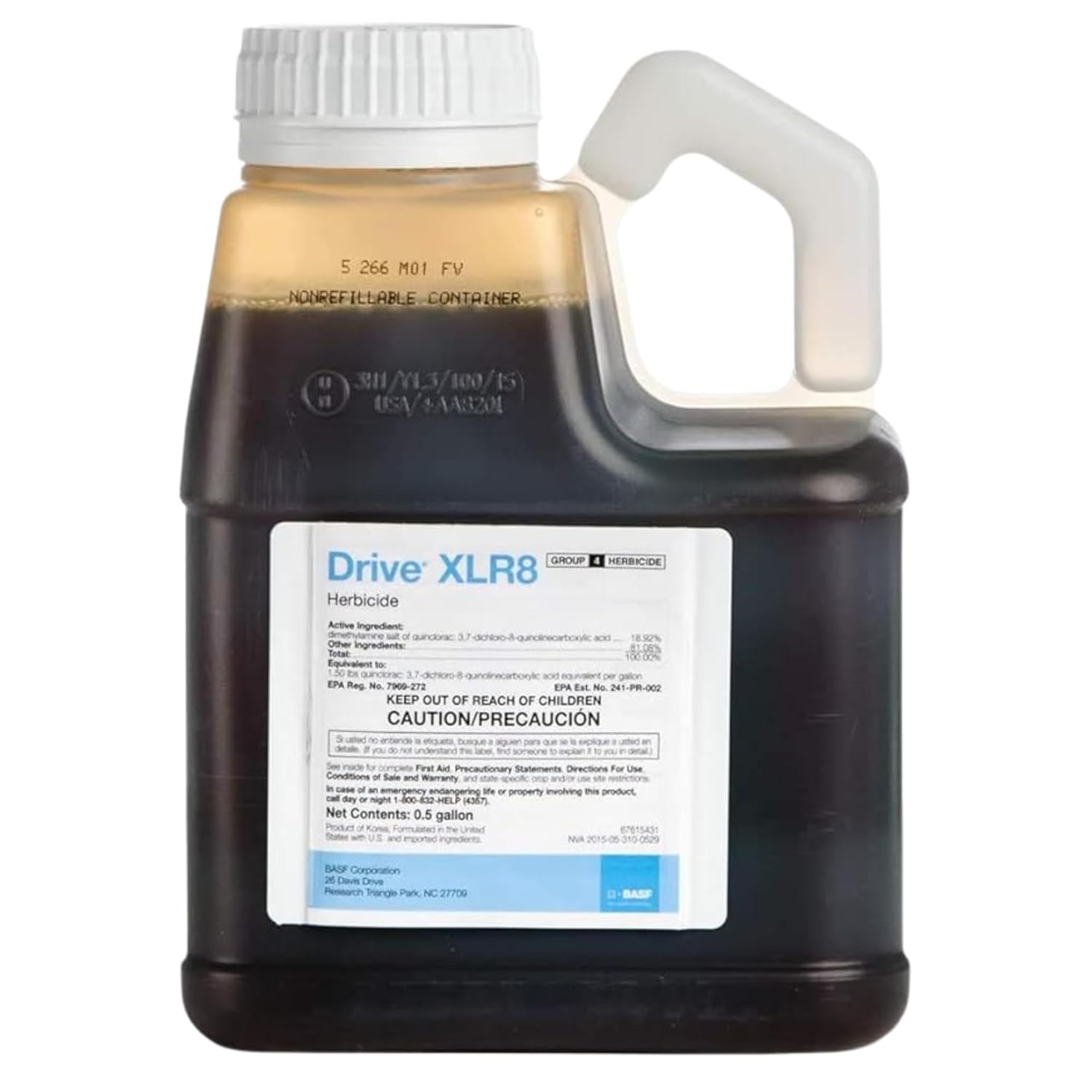
| Unit Count | 64 Ounce |
|---|---|
| Item Form | Liquid |
| Coverage | Full |
| Active Ingredients | Quinclorac 18.92% |
BASF Drive XLR8 is a water-based concentrate designed to knock back crabgrass and a range of grassy and broadleaf weeds in turf. You mix small amounts with water and an oil adjuvant, then spray uniformly to treat about 1,000 sq ft per gallon of finished spray when mixed as directed. Notable features include quinclorac as the active ingredient for selective grassy weed control, compatibility with other pre- and post-emergent products, and a label claim of roughly 30 days residual activity and rainfastness in under an hour. In practice it gives rapid uptake and practical residual suppression of common problem grasses and weeds, making it suitable for routine spot treatments or larger turf applications when applied with appropriate PPE and equipment. Important limitations are that it is a chemical herbicide requiring careful handling, label compliance, and temporary mowing restrictions around application; some turf types or local regulations may restrict use or require spot treatment only. Follow the label for correct rates and any state-specific restrictions.
Best for: Property managers, groundskeepers, and performance-focused homeowners who prioritize fast, reliable control of crabgrass and other turf weeds and who are comfortable following label safety and application procedures.
Less Ideal for: Homeowners who prefer organic or non-chemical methods or those unwilling to follow protective equipment and regulatory requirements should consider alternatives.
- Effective active ingredient (quinclorac) for crabgrass and many grassy weeds
- Water-based formulation for faster plant uptake and quick rainfastness
- Label indicates up to 30 days of residual control reducing reapplication frequency
- Tank-mix compatible with many other turf herbicides for flexible programs
- Requires careful handling and PPE since it is a concentrated herbicide
- Some states have application restrictions or allow spot-only use
- Not suitable for users seeking non-chemical or organic weed control
Verdict: Choose Drive XLR8 when you need a professional-strength, fast-acting herbicide that delivers dependable control of crabgrass and other turf weeds with a month-long residual.
Spectracide Large Plot Weed Stop for Lawns Concentrate, 1 Gal

| Item Form | Liquid |
|---|---|
| Coverage | 32000 square feet |
| Unit Count | 128 Fluid Ounces |
Spectracide Large Plot Weed Stop is a concentrated lawn weed killer designed for use with a pressure or hose-end sprayer to cover large turf areas. It targets more than 200 listed broadleaf weeds, including dandelion, chickweed and clover, and is formulated to kill weeds down to the root with visible results in hours. You mix the concentrate with water at the labeled rate, spray evenly across the lawn, then keep people and pets off the treated area until it dries. Notable features include a high coverage claim—up to 32,000 sq ft on northern grasses—and rainproofing within hours so applications are not easily washed away. Practical benefits are efficient treatment of large yards and the ability to spot-treat stubborn patches if needed. Important limitations are the temperature restriction for safe application and the need to follow label mixing and safety directions closely; it can damage grass if used when daytime temperatures exceed 85°F. Users should plan timing, protective gear, and sprayer setup before treating large areas.
Best for: Homeowners or groundskeepers who need an efficient, large-area solution for broadleaf weeds and who prioritize covering big lawns with a single concentrate product.
Less Ideal for: Those who want an all-natural or non-chemical option or who manage very small lawns where a concentrated, sprayer-applied product is unnecessary.
- Concentrated formula treats large areas, listed coverage up to 32,000 sq ft for northern grasses
- Kills over 200 listed broadleaf weeds and works down to the root for longer control
- Becomes rainproof within hours, reducing the chance of wash-off after application
- Compatible with pressure or hose-end sprayers for even, efficient application
- Requires careful mixing and adherence to temperature limits to avoid lawn damage
- Strong chemical formulation requires safety precautions and keeping people and pets away until dry
Verdict: Choose this concentrate if you need a powerful, sprayer-applied product that quickly knocks down broadleaf weeds over large lawn areas.
Spectracide Weed Stop for Lawns Plus Crabgrass Killer, Ready-to-Use, 1 Gal

| Item Form | Spray |
|---|---|
| Coverage | Up to 5,000 sq ft |
| Liquid Volume | 1 gallons |
Spectracide Weed Stop for Lawns Plus Crabgrass Killer is a one-gallon ready-to-use spray designed to knock down broadleaf and grassy weeds quickly. You use it by applying directly to the lawn after mowing and within the recommended daytime temperature window; the label says visible results can appear in about five hours. The formula targets weeds by contact and claims to kill down to the root, which helps reduce repeat sprouting of common pests like dandelions, clover, chickweed and crabgrass. Its ready-to-use format removes the need for measuring or mixing, so it is convenient for homeowners or grounds crews who want a straightforward application. Important limits are the temperature recommendations and specific cautions for Bermudagrass to avoid discoloration; follow the label for timing and turf compatibility. Also note it works by contact, so dense or large weeds may need repeat treatment. For a low-effort, broad-spectrum lawn weed control option this product delivers quick visible impact but requires careful application to avoid turf stress on heat-sensitive grasses.
Best for: Buyers looking for a low-effort, broad-spectrum lawn weed treatment who prioritize convenience and fast visible results for typical residential or commercial turf areas.
Less Ideal for: People who need a selective pre-emergent control strategy or who manage heat-sensitive turf varieties year-round should consider alternate products or timing strategies.
- Ready-to-use spray requires no mixing or measuring for fast application
- Covers up to 5,000 sq ft per gallon, suitable for medium lawn areas
- Effective on a wide range of weeds including crabgrass and common broadleaf species
- Produces visible results in as little as five hours when used as directed
- Contact-kill action may require repeat applications for large or established weeds
- Has temperature and turf-specific restrictions that can limit when and where it can be applied
Verdict: A convenient, ready-to-use solution for quickly reducing a wide range of common lawn weeds without mixing.
Trimec 992 Broadleaf Herbicide, 2.5 Gallons

| Unit Count | 320 Fluid Ounces |
|---|---|
| Liquid Volume | 2.5 gallons |
| Item Form | Liquid |
| Coverage | About 975 square feet |
| Active Ingredients | Herbicide, Trimec |
Trimec 992 is a ready-to-mix concentrated broadleaf herbicide sold in a 2.5 gallon jug intended for treating lawns, sports turf, and commercial sites. It combines three active ingredients to target dandelion, clover, chickweed, plantain and many other common broadleaf weeds. Typical use involves diluting into a sprayer and applying to foliage under calm, dry conditions following the label's spray volume and re-entry guidelines. Notable features are the large volume container and an estimated coverage of about 975 square feet per fill, which suits larger yards or frequent maintenance programs. Practical benefits include broad-spectrum control across many common turf weeds and formulation flexibility for professional sprayers. Important limitations are the need for careful handling and strict adherence to safety directions, sensitivity to application on certain grass types such as Floratam St. Augustine, and weather constraints like wind limits and rain-free windows that affect timing. Users should plan applications and protective measures accordingly.
Best for: Property managers, groundskeepers, and homeowners who prioritize dependable, broad-spectrum weed control for medium to large lawns and commercial turf and who are comfortable following professional application practices.
Less Ideal for: Casual gardeners with very small yards or users unwilling to follow pesticide safety and application rules should consider simpler consumer products or non-chemical options instead.
- Triple-active formulation targets a wide range of common broadleaf lawn weeds
- Large 2.5 gallon volume supports repeated or large-area treatments without frequent reordering
- Designed for professional and commercial turf sites including sports turf and sod farms
- Clear label directions for sprayer mixing and a stated approximate coverage per container
- Requires careful handling and personal protective equipment due to concentrated herbicide ingredients
- Not safe for certain turf grass varieties such as Floratam St. Augustine and may be unregistered in some states
Verdict: Choose Trimec 992 when you need a reliable, professional-strength broadleaf herbicide in a large-volume container for consistent commercial or large-lawn weed control.
Scotts Liquid Turf Builder Plus 2 Weed Control, 32 fl. oz. Ready-to-Spray

| Item Form | Spray |
|---|---|
| Coverage | 6000 square_feet |
| Liquid Volume | 32 fluid ounces |
| Active Ingredients | Nitrogen |
Scotts Liquid Turf Builder Plus 2 Weed Control combines a 25-0-2 liquid fertilizer with a broadleaf weed killer in a convenient hose-end applicator so you can spray a lawn quickly without mixing. It is used by connecting the bottle to a garden hose and evenly spraying target turf when weeds are actively growing and temperatures are below 85°F. Notable features include an easy hose connection, coverage claims of up to 6,000 sq ft on warm-season lawns (4,000 sq ft for cool-season lawns), and an NPK-focused nitrogen boost to green up grass. Practically, it speeds up routine lawn feeding while beginning to curl listed weeds within days and can be reapplied in 3 to 4 weeks for stubborn plants. Important limitations are that it is only labeled for specific grass types and listed weeds, may cause temporary injury on some bermudagrass, and requires no watering for 48 hours after treatment, which can complicate timing around irrigation or rain. For commercial-scale use, multiple bottles or larger formats will be needed to treat extensive acreage efficiently.
Best for: Buyers who prioritize easy, proven lawn treatments and want a familiar, low-effort product with clear performance expectations for managing common broadleaf weeds.
Less Ideal for: Landscape professionals managing very large commercial lawns or those needing a product labeled for all turfgrass types should consider higher-capacity or specialized commercial formulations.
- Ready-to-spray hose-end applicator makes application fast and simple without measuring or mixing
- Provides a rapid nitrogen boost to improve turf color and vigor
- Targets common broadleaf lawn weeds with visible curling within a few days
- Clear label directions for timing, repeat application, and watering restrictions
- Label limits use to listed grass types and listed weeds only
- Coverage per 32 fl. oz. bottle is modest for large or commercial lawns requiring many bottles
Verdict: Choose this ready-to-spray Scotts formula when you want a straightforward, familiar way to feed turf and reduce common broadleaf weeds quickly.
Choosing the Right Commercial Weed Killer for Lawns: Key Factors to Consider
Target Weed Spectrum
Different commercial herbicides are formulated to control different groups of weeds. Broadleaf weeds like clover and dandelion respond to a different set of active ingredients than grassy weeds such as crabgrass or annual bluegrass. Knowing which species dominate your lawn determines whether you need a broad-spectrum product or a mix that targets specific problems.
Also consider perennial versus annual weeds. Perennial weeds often require systemic chemistry that moves into roots, while annuals can be controlled with fast-acting contact herbicides. Identifying the life cycle and species of your problem plants helps you choose a product that reduces repeat treatments.
Turfgrass Compatibility
Commercial formulations vary in which turfgrass species they are safe to use on. Warm-season turf types tolerate different active ingredients than cool-season lawns. Using a product not labeled for your grass can cause discoloration, thinning, or long-term injury.
Read and follow label directions about acceptable turf species and any suggested timing relative to overseeding, fertilizing, or seasonal stresses. In higher-traffic or high-value lawns, prioritize products with explicit turf-safe labels for your grass type.
Application Method and Equipment
How you apply a commercial weed killer affects coverage, effectiveness, and safety. Some products come as ready-to-use concentrates for spot treatment, while others are concentrated liquids that require dilution in backpack or truck-mounted sprayers. Equipment compatibility matters for consistent dosing over large areas.
Consider nozzle selection, pressure settings, and agitation requirements to keep the mix homogeneous. Look for products with clear mixing charts and guidance on spray volume per area, which reduces risks of under- or over-application on extensive lawns.
Timing and Environmental Conditions
Temperature, humidity, and recent cultural practices influence herbicide performance. Many systemic products work best when applied to actively growing weeds during mild temperatures and when grass is not stressed by drought or heat.
Avoid applications before heavy rain or during high winds to limit runoff and drift. Also check re-entry and irrigation restrictions on the label so you do not compromise turf recovery or expose people and pets to residues unnecessarily.
Persistence and Residual Activity
Some commercial products provide residual soil activity that prevents weed germination for weeks or months. Residual control is valuable for preventing new flushes of annual weeds, but persistent chemistry can limit overseeding windows and affect desirable plants nearby.
Balance the need for long-term control against plans for lawn renovation or establishing new turf. If overseeding or planting is planned soon, choose a product with minimal residual or plan timing accordingly.
Safety, Drift Risk, and Environmental Impact
Commercial-strength herbicides can pose risks to non-target plants, pollinators, and water bodies if misapplied. Look for formulations and product labels that include guidance on buffer zones, drift reduction, and pollinator protection. Tank-mix compatibility and surfactant guidance also affect off-target movement.
Proper personal protective equipment, mixing-area practices, and disposal instructions reduce accidental exposure. Consider products with lower volatility or those compatible with drift-reduction agents when treating near flower beds, vegetable gardens, or water features.
Understanding Active Ingredients
Active ingredients determine how a product attacks weeds and how selective it is for turf. Common groups include synthetic auxins for broadleaf control and post-emergent grass herbicides that target grassy species. Knowing active ingredients helps you match chemistry to the weeds you face and manage resistance risk over time.
Rotate modes of action across seasons if you rely heavily on chemical control. This practice reduces the chance that a weed population will develop resistance and keeps herbicides effective for longer. Labels list active ingredients clearly and are the best source for identifying chemistry classes.
- Systemic versus contact action affects how thoroughly roots are controlled
- Some actives offer residual preemergent control while others only treat emerged plants
- Always follow label mixing and application instructions for targeted control
Application Timing and Seasonal Strategy
Timing applications to weed life cycles makes treatments more effective. For example, apply post-emergent controls when target weeds are actively growing and not stressed by drought or extreme heat. Preemergent products belong before germination of seasonal weeds and are tied to soil temperatures rather than calendar dates.
Plan seasonal treatments around overseeding, fertilization, and irrigation to reduce turf stress. For persistent perennial weeds, follow-up treatments are often necessary and should be scheduled according to label recommendations to avoid cumulative turf damage.
- Match preemergent timing to local soil temperature cues
- Avoid heavy fertilizer or mowing immediately before treatment
- Stagger follow-ups based on observed control and label intervals
Safe Handling and Application Best Practices
Commercial herbicides require respect for label directions, protective equipment, and safe mixing routines. Use chemical-resistant gloves and eye protection when handling concentrates, and measure accurately to avoid over-application that can harm turf and surrounding plants.
Calibrate sprayers before treating large areas to ensure even coverage. Keep bystanders, pets, and children away from treated areas during application and until the product's re-entry interval has passed. Proper storage and disposal of leftover concentrate and rinsate prevent accidental exposure and environmental contamination.
- Calibrate spray equipment to deliver the labeled gallons per acre or liters per hectare
- Use low-drift nozzles and avoid spraying during thermal inversion or high wind
- Follow label instructions for PPE, rinse water management, and storage
Integrating Chemical Control with Cultural Practices
Herbicides work best when combined with sound turf management. Mowing at the recommended height, maintaining proper fertility, and overseeding thin areas reduce the niches where weeds establish. Healthy turf shades the soil and competes with weed seedlings, lowering the need for repeated chemical treatments.
Addressing the root cause of weed pressure, such as compacted soil or poor drainage, improves long-term control. Use chemical treatments as one part of an integrated lawn care plan rather than relying on them as a standalone solution.
- Raise mowing height slightly to improve shade and competition
- Correct soil compaction and improve drainage where weeds persist
- Use targeted spot treatments for isolated outbreaks to preserve beneficial plants
Regulatory and Label Compliance
Labels are legal documents that dictate where and how a commercial herbicide can be used. Always follow the label for application rates, buffer zones, restricted uses near water, and any record-keeping requirements. Noncompliance can lead to turf damage or regulatory penalties in commercial settings.
If you manage municipal or commercial properties, track product usage and application dates. That record keeping helps with liability management and ensures adherence to any local restrictions or integrated pest management policies.
- Check label for allowed turf species and prohibited sites
- Observe required buffer zones near water and sensitive vegetation
- Retain application records for commercial property maintenance
How We Chose the Best Commercial Weed Killer for Lawns
We prioritized products that deliver reliable weed control across a wide range of common lawn weeds while minimizing harm to desirable turf. Selection criteria focused on measurable, garden-relevant dimensions: how quickly a product kills or suppresses target species, labeled turf safety and recommended turfgrass, spectrum of weeds controlled, and clarity of application instructions and re-entry intervals. We also evaluated formulation types and how they affect application accuracy and drift risk for larger properties. We excluded garden or garden-center formulations designed only for ornamental beds, hand-spray spot treatments that are ineffective at scale, and products labeled only for non-turf surfaces. We favored formulations with explicit labeling for common turfgrasses and clear guidelines for timing relative to mowing and irrigation. Finally, we considered ease of dilution and compatibility with common commercial spray equipment as part of selection filters.
FAQ
Can I use a commercial weed killer on all types of turf?
It depends. Many commercial products are labeled for specific turf species. Using a product not labeled for your grass can cause injury. Always check the label to confirm compatibility with your turf type and follow timing recommendations.
How soon will I see results after applying a commercial product?
Response times vary. Contact herbicides can show visible damage within days, while systemic products may take one to several weeks to kill roots and cause complete dieback. Speed also depends on temperature and plant growth stage.
Is it safe to overseed after applying a commercial herbicide?
That depends on the product's residual activity. Some chemistries prevent seed germination for weeks to months. Check label replanting or overseeding intervals and choose a product that aligns with your renovation timeline.
How can I reduce drift when spraying large lawns?
Use low-drift nozzles, spray at lower pressures, avoid small droplet settings, and do not spray during high winds or temperature inversions. Increasing spray volume and using drift-control adjuvants when allowed by the label also helps reduce off-target movement.
Do commercial weed killers harm pollinators?
Many herbicides pose limited direct risk to pollinators compared with insecticides, but they can reduce floral resources. Avoid spraying when flowering weeds or nearby plants are in bloom, and follow label guidance about pollinator protection and buffer zones.
Final Verdict
Choose a commercial weed killer based on the weeds you need to control and the turf species you are protecting. Prioritize products with the right active ingredients for your weed spectrum, clear turf labeling, and application instructions that match your equipment and timing needs. Balance the benefits of residual control with overseeding plans and environmental precautions. When used as part of a broader cultural program, the right commercial herbicide can significantly reduce weed pressure while preserving turf health.
