

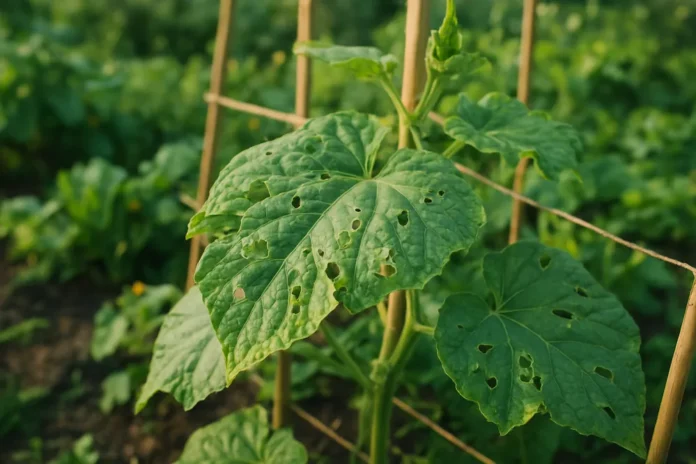
Cucumber leaves usually get holes because something is chewing them, especially cucumber beetles, flea beetles, slugs, caterpillars, or other common garden pests. Less often, holes appear after leaf tissue dies from disease, wind damage, or minor physical injury.
When I see cucumber leaves with holes, I try not to panic right away. Cucumbers grow fast, and a few damaged leaves do not always mean the plant is in serious trouble. In many gardens, the most common reason is simple: something is eating the foliage.
That said, not every hole has the same cause. Some are clean chew marks from beetles or caterpillars, while others start as yellow, brown, or water-soaked spots that dry out and fall away. If you look closely at the size, shape, and location of the damage, you can usually narrow the problem down pretty quickly.
The good news is that cucumber leaf damage is often manageable once you know what you are dealing with. The key is figuring out whether the plant has an active pest problem, a disease issue, or older damage that the plant can simply grow past.
What the Holes Are Telling You
Holes in cucumber leaves are a symptom, not a diagnosis by themselves. Start by noticing whether the damage is mostly on young leaves, older leaves, or all over the plant. Also look at whether the edges of the holes are smooth, ragged, brown, or surrounded by yellow tissue.
- Small scattered holes often point to flea beetles or young chewing insects.
- Larger ragged holes can suggest cucumber beetles, caterpillars, grasshoppers, or slugs.
- Holes that develop from dead spots may be linked to bacterial or fungal leaf diseases.
- Torn or shredded leaves can come from wind, hail, rubbing, or accidental physical damage.
When I diagnose this problem, I look at the newest leaves first. If fresh leaves are coming in clean, the worst of the issue may already be over. If new leaves are getting damaged as they unfold, something is still actively causing trouble.
Chewing Pests That Commonly Make Holes in Cucumber Leaves
Cucumber Beetles
Cucumber beetles are one of the first pests I suspect on cucumbers. They chew irregular holes in leaves, flowers, and sometimes even small fruit. You may see striped or spotted yellow-green beetles moving quickly when disturbed.
The leaf damage alone is annoying, but the bigger problem is that cucumber beetles can spread bacterial wilt. If you have holes in leaves plus sudden wilting on one or more vines, this pest deserves immediate attention.
Flea Beetles
Flea beetles create tiny shot-hole damage, especially on young cucumber plants. The holes are usually small and numerous, and the beetles themselves jump when disturbed. Seedlings and recent transplants are the most vulnerable because they do not have much leaf area to spare.
Slugs and Snails
If the holes are irregular and seem to appear overnight, slugs or snails may be feeding. They often chew softer leaf tissue and can leave ragged openings or partially eaten edges. In damp gardens, mulched beds, or shady spots, they can be surprisingly destructive.
A shiny slime trail on leaves, containers, boards, or surrounding soil is a strong clue. Damage may be worse low on the plant or on leaves touching the ground.
Caterpillars and Loopers
Caterpillars chew larger sections from leaves and often leave dark droppings nearby. Some hide under foliage during the day, so the plant can look mysteriously damaged until you flip leaves over and inspect them closely.
Grasshoppers and Other General Feeders
In hotter, drier parts of the U.S., grasshoppers can make large holes or chew leaf edges. Earwigs and occasional beetles may also feed on cucumber foliage, though they are less consistent culprits than cucumber beetles and flea beetles.
How Disease Can Create Holes That Look Like Insect Damage
Not every leaf hole starts with chewing. Some diseases kill small patches of tissue first. Once that dead tissue dries and drops out, the leaf can look perforated.
Angular Leaf Spot
Angular leaf spot is a bacterial disease that causes water-soaked lesions limited by the leaf veins. As the tissue dries, those spots can crack or fall away, leaving holes with angular outlines. The leaf may also show yellowing or a papery texture around the damaged area.
Anthracnose and Other Fungal Leaf Spots
Fungal leaf spot diseases can also create dead spots that eventually tear out. These usually look less like fresh chewing damage and more like lesions with brown, tan, or yellow margins. If the plant has many spotted leaves before the holes appear, disease is more likely than insects.
When Disease Is More Likely
- The holes are surrounded by yellow, brown, or water-soaked tissue.
- The damage follows a spotted pattern rather than random chewing.
- Leaves stay damp for long periods from overhead watering or humid weather.
- Lower leaves are affected first and the problem spreads upward.
If the edges of the hole look dead or discolored, I lean toward disease or old physical injury. Fresh insect feeding usually leaves tissue that still looks green and recently chewed unless the damage happened days earlier.
Weather and Physical Damage That Can Leave Holes
Cucumber leaves are soft and easily torn, especially early in the season. Wind can whip leaves against cages, fencing, or rough mulch. Hail can punch or shred foliage in a single storm. Even rough handling during weeding or tying vines can leave holes that later expand as the leaf grows.
This kind of damage usually looks more torn than eaten. The pattern may be widespread across many plants at once, especially if a storm just passed through. In that case, the injury often stays limited to older leaves and the new growth looks normal afterward.
- Wind damage often shows as splits or tattered edges.
- Hail damage may appear suddenly on many leaves and nearby plants.
- Mechanical damage is common after transplanting, staking, or harvesting.
- Leaves that unfolded while stressed can look distorted and tear more easily later.
How to Tell Which Cause You Are Dealing With
A close inspection saves a lot of guesswork. Try checking plants early in the morning and again around dusk, since some pests feed at different times. Look on top of leaves, underneath them, around stems, and at the soil surface.
- Look for the actual pest. Beetles, slugs, caterpillars, and grasshoppers are often easier to find than people expect.
- Check the hole shape. Tiny pinholes suggest flea beetles, while larger ragged holes suggest slugs, beetles, or caterpillars.
- Notice any discoloration around the hole. Yellow, tan, or brown margins can point to disease or old tissue death.
- Compare old and new growth. If only older leaves are damaged, the problem may be fading. If new leaves are hit fast, it is ongoing.
- Inspect nearby plants. If beans, squash, lettuce, or flowers also show chewing, a general feeder may be involved rather than a cucumber-specific issue.
If you are unsure, it helps to think in terms of pattern. Insects usually leave random feeding marks. Disease tends to produce repeated lesions with similar size, shape, and discoloration. Weather damage often shows up all at once after a noticeable event.
One mistake I see a lot is treating every hole as a major pest emergency. Cucumbers can outgrow a surprising amount of leaf damage once warm weather kicks in, so I focus more on whether the newest leaves and the growing tips are staying healthy.
When Holes in Cucumber Leaves Are Serious
A few holes are mostly cosmetic. The plant can usually keep growing if the roots are strong and the vines are putting out fresh leaves. The problem becomes more serious when damage is heavy, repeated, or tied to disease spread.
- Seedlings lose a large share of their leaf area.
- Flowers and growing tips are also being eaten.
- New leaves emerge damaged every few days.
- The plant is wilting, yellowing, or declining beyond simple chewing damage.
- You see cucumber beetles in large numbers, especially where bacterial wilt is a risk.
Young cucumber plants are much less forgiving than mature ones. A mature vine can often tolerate a moderate amount of chewing. A seedling with only two or three true leaves can be stalled badly by the same level of damage.
What to Do for Pest-related Holes
The best response depends on the pest, but the general goal is to protect healthy new growth rather than trying to make old leaves look perfect again.
Hand-picking and Simple Exclusion
For small plantings, hand-picking beetles and caterpillars can make a real difference. Row covers are very effective early in the season for excluding cucumber beetles and flea beetles, especially before flowering. Just remember that cucumbers need pollination once blooms appear unless you are growing a parthenocarpic variety.
Slug Management
Reduce hiding places, water early in the day, and keep vines from sprawling into dense wet mulch if slugs are the issue. Traps and iron phosphate slug baits can help where pressure is high.
Caterpillar Control
Hand removal works well for light infestations. Biological controls labeled for caterpillars can be useful when damage is extensive and the pest has been correctly identified.
Keeping Plants Vigorous
Healthy cucumbers recover faster from chewing damage. Give them even moisture, warm soil, good airflow, and steady nutrition without overdoing nitrogen. Too much lush growth can sometimes make pest problems harder to manage.
What to Do if Disease Is Behind the Holes
When holes come from leaf spot diseases, focus on slowing spread and protecting new foliage. Damaged tissue will not repair itself, so success shows up as cleaner new leaves rather than old leaves improving.
- Avoid overhead watering when possible.
- Water early so foliage dries quickly.
- Space plants well and train vines for better airflow.
- Remove badly infected leaves if the plant still has plenty of healthy foliage.
- Clean up plant debris at the end of the season to reduce carryover.
If bacterial or fungal disease keeps showing up year after year, crop rotation matters. Try not to plant cucumbers or other cucurbits in the same spot each season. Resistant varieties can also save a lot of frustration.
How to Prevent Holes in Future Cucumber Crops
Prevention is usually easier than rescuing badly chewed plants. A few simple habits can reduce most leaf-hole problems before they get momentum.
- Use floating row covers early in the season where cucumber beetles or flea beetles are common.
- Inspect plants several times a week, especially when they are young.
- Keep weeds under control so pests have fewer hiding places.
- Trellis cucumbers when possible to improve airflow and keep leaves off damp soil.
- Water consistently to reduce stress and help the plant outgrow minor damage.
- Rotate cucumbers, squash, melons, and other cucurbits to new areas each year when space allows.
- Remove badly diseased plant debris after harvest.
I have found that early attention makes the biggest difference. Once a cucumber planting is stressed, crowded, and full of unchecked pests, the damage compounds quickly. Catching a problem while it is still limited to a few leaves is much easier than trying to fix a bed full of declining vines.
FAQ
Can Cucumber Plants Recover From Holes in the Leaves?
Yes. Mature cucumber plants often recover well if the roots are healthy and new growth remains mostly undamaged. The old holes will stay, but the plant can keep producing if the cause is controlled.
Should I Cut Off Cucumber Leaves with Holes?
Not always. If a leaf is only lightly damaged, it still helps feed the plant. Remove leaves that are badly diseased, mostly destroyed, or lying in wet soil, but avoid stripping too much foliage at once.
What Insect Makes Tiny Pinholes in Cucumber Leaves?
Flea beetles are a common cause of tiny pinholes, especially on seedlings and young transplants. Their feeding often looks like fine shot-hole damage scattered across the leaf.
What Makes Large Ragged Holes in Cucumber Leaves Overnight?
Slugs, snails, caterpillars, and sometimes cucumber beetles can create large irregular holes quickly. Nighttime feeders are especially likely if the damage seems to appear by morning.
Can Powdery Mildew Cause Holes in Cucumber Leaves?
Powdery mildew usually causes white coating, yellowing, and gradual leaf decline rather than true holes. Holes are more often tied to chewing pests or diseases that create dead spots which later fall out.
Are Holes in Cucumber Leaves Always a Problem for Fruit Production?
No. Light leaf damage may have little effect on harvest, especially on established plants. Heavy damage on young plants, repeated feeding, or cucumber beetle activity tied to bacterial wilt is much more serious.
How Do I Know if It Is Bugs or Disease?
Bugs usually leave random chew marks, ragged edges, or fresh green tissue around the holes. Disease-related holes often begin as spotted, yellow, brown, or water-soaked lesions before the dead tissue drops out.
Need the right fix fast? Check our guide to the best cucumber pest controls and disease treatments so you can protect new growth and keep your harvest on track.
