

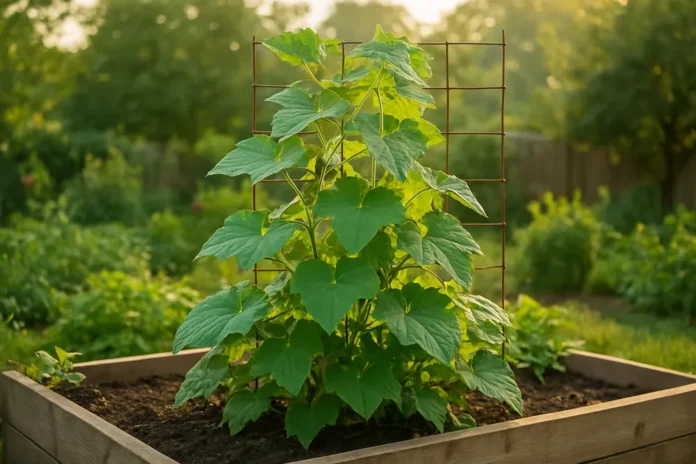
Cucumber plants usually fail to flower because they are too young, getting too much nitrogen, not enough sun, or are stressed by heat, cold, or uneven watering. Some varieties also produce mostly male flowers first, so blooming can seem delayed even when the plant is healthy.
If your cucumber plant looks healthy enough to climb, spread, and make lots of leaves but still has no blooms, the problem is usually cultural rather than mysterious. Cucumbers are fast growers, but they are also surprisingly sensitive to light, nutrition, temperature swings, and simple timing.
In my garden, a non-flowering cucumber is often a plant that has been pampered a little too much with nitrogen or set out into weather it did not appreciate. Sometimes the answer is easier than people expect: the plant is still immature, or it is following a normal flowering pattern and just has not reached the female-flower stage yet.
The good news is that most flowering problems are fixable. Once you know what cucumbers need to switch from leafy growth into bloom mode, you can usually get the plant back on track without starting over.
How Cucumbers Normally Begin Flowering
Before assuming something is wrong, it helps to know how cucumbers usually behave. Most cucumber plants do not flower the instant they begin vining. They spend an early stretch building roots, leaves, and stems, then move into bloom. Depending on the variety, weather, and whether you started from seed or transplant, flowering may begin roughly 35 to 55 days after planting.
Many cucumber varieties also produce male flowers first. These blooms often appear days or even a couple of weeks before the female flowers that carry the tiny baby cucumber behind the blossom. Gardeners sometimes think the plant is failing because they do not see fruit yet, when in fact it is still following its normal sequence.
- Young plants may still be putting energy into roots and vines.
- Male flowers often appear before female flowers.
- Cool or unstable weather can delay the whole process.
- Bush and vining types can bloom on slightly different timelines.
When I troubleshoot cucumbers, I first ask whether the plant is truly not flowering or whether it is only producing male blooms so far. That distinction matters, because a normal flowering sequence needs patience, while a bloom-free plant usually needs a growing-condition correction.
The Most Common Reasons Cucumber Plants Do Not Flower
Too Much Nitrogen
This is one of the most common causes of a leafy cucumber with no blooms. Nitrogen pushes green growth. If you have been feeding with lawn fertilizer, high-nitrogen vegetable food, strong manure tea, or repeated doses of fish emulsion, the plant may stay in foliage mode instead of shifting toward flowers.
The telltale signs are lush, dark green leaves, vigorous vines, and very few or no flower buds. The plant does not necessarily look sick. In fact, it often looks impressively healthy while refusing to bloom.
Not Enough Sunlight
Cucumbers need strong sun to bloom well. In most U.S. gardens, they perform best with at least 6 to 8 hours of direct light, and more is often better. If the bed is shaded by fences, trees, corn, sunflowers, or even an overgrown tomato patch, the plant may make stems and leaves but delay flowering.
Shady cucumbers also tend to look stretched, thinner, and less sturdy. Even bright indirect light is not enough. Cucumbers want real sun, especially from late morning through afternoon.
The Plant Is Still Immature
Sometimes the answer is simply time. A cucumber transplant that struggled to settle in, got chilled after planting, or had root disturbance may pause before it reaches flowering size. Seed-grown plants can also vary a bit in timing, especially in cool springs.
Temperature Stress
Cucumbers are warm-season plants. If nights are too cool, growth slows and flowering can stall. Extended daytime heat can also interfere with normal flower development, especially when combined with dry soil. Temperatures below about 55 degrees Fahrenheit can set cucumbers back, while extreme heat above the mid-90s can stress them enough to delay or reduce flowering.
Irregular Watering
A cucumber that alternates between dry soil and soggy soil often responds with stress growth instead of balanced flowering. These plants prefer evenly moist soil. They do not like drought, but they also dislike sitting in waterlogged ground where roots cannot breathe.
Crowding and Poor Airflow
Overcrowded cucumber plants compete for light, water, and nutrients. If they are jammed together or packed into a container that is too small, blooming may be delayed. Dense growth also reduces airflow, which adds stress and raises disease pressure.
Environmental Stress That Delays Blooms
Even if you are not making an obvious mistake, weather and site conditions can keep cucumbers from flowering on schedule. A plant may survive stress without ever becoming productive until conditions improve.
Cold Soil After Planting
Cucumbers hate cold feet. If they were planted into chilly spring soil, they may sit still for a long time before resuming normal development. Black plastic, landscape fabric, or simply waiting until the soil warms can make a big difference in cooler regions.
Transplant Shock
Cucumber roots are not as forgiving as tomato roots. If a transplant was root-bound, disturbed during planting, or exposed to wind and sun before establishing, it may need extra time before it flowers. Plants started in peat pots or cells can also stall if the root ball dries out repeatedly.
Container Stress
Cucumbers can grow beautifully in containers, but the pot needs enough volume and consistent moisture. A small container heats up fast, dries out quickly, and leaves little room for roots. Under those conditions, plants often stay smaller and bloom later.
- Containers should have excellent drainage.
- Large pots hold moisture more evenly than small ones.
- Potting mix dries out faster than garden soil, especially in summer heat.
- Trellised container cucumbers need especially regular water and feeding.
If a cucumber is underperforming in a container, I do not assume fertilizer is the answer right away. I check how hot the pot gets by midafternoon and how quickly the mix dries, because root stress can mimic a nutrient problem.
Variety and Flower Type Can Change What You See
Not all cucumber plants flower in exactly the same way. Some are monoecious, meaning they produce separate male and female flowers on the same plant. Others are gynoecious, meaning they produce mostly female flowers and are bred for heavy yields. Parthenocarpic types can set fruit without pollination, but they still need good growing conditions to reach that stage.
If you are growing from seed packets mixed from past seasons, or if the label is gone, the plant's flowering pattern may differ from what you expected. Pickling cucumbers, slicers, burpless types, bush forms, and greenhouse-adapted varieties can all behave a little differently in the home garden.
Male Flowers Without Female Flowers
This usually points to timing, excess nitrogen, heat stress, or immature plants rather than a total failure to bloom. Male flowers often arrive first because the plant is not yet ready to support fruit.
No Visible Buds at All
When there are no buds, the cause is more often low light, too much nitrogen, root stress, or unfavorable temperatures. A plant cannot move toward flowering if it is still trying to recover or build basic vegetative mass.
How to Get a Cucumber Plant to Start Flowering
The best fix depends on what pushed the plant off course, but the general goal is the same: reduce stress and encourage balanced growth instead of endless leaves.
Back Off High-nitrogen Fertilizer
If you have been feeding heavily, stop applying nitrogen-rich products for now. Do not keep trying to force growth. Let the plant use what is already in the soil. If feeding is needed later, switch to a more balanced vegetable fertilizer or one with a lower nitrogen ratio.
Improve Light Exposure
If nearby plants or structures are shading your cucumber, open up the area if you can. Train vines onto a trellis to lift foliage into better light. In containers, move the plant to a sunnier location. This single change can make a dramatic difference.
Water Deeply and Evenly
Aim for consistent moisture rather than frequent shallow splashes. In-ground plants usually do best when the soil is kept evenly moist several inches down. Mulch helps a lot by reducing swings between hot, dry soil and sudden soaking.
Support Healthy Roots
Avoid cultivating too close to the plant, because cucumber roots are fairly shallow. Keep weeds down so roots are not competing. If the plant is in a cramped pot, moving it to a larger container may help if it is still early enough in the season.
Wait Out Weather Extremes
You cannot control every temperature swing, but you can buffer the plant. Row covers help early in the season when nights are cool. Mulch reduces root-zone stress during summer heat. Once temperatures settle into a more favorable range, cucumbers often begin flowering quickly.
- Stop high-nitrogen feeding if the plant is overly leafy.
- Give the plant full sun or as much direct light as possible.
- Keep moisture steady instead of letting the soil swing between dry and soggy.
- Trellis or thin nearby growth to reduce crowding.
- Be patient if the plant is still young or weather has been unstable.
I have had cucumber plants look stalled for two weeks and then suddenly cover themselves in blooms once the nights warmed up. When the foliage is healthy and the plant is growing steadily, a delayed bloom is often a timing issue more than a permanent problem.
When Pests or Disease Are Part of the Problem
Cucumbers with serious pest or disease pressure may delay flowering because the plant is spending energy on survival. This is less common than light or fertilizer issues, but it does happen.
Common Pests That Stress Cucumbers
Aphids, spider mites, cucumber beetles, and squash bugs can weaken plants enough to slow flowering. Heavy pest pressure reduces vigor, distorts new growth, and creates ongoing stress.
Diseases That Slow Development
Powdery mildew, bacterial wilt, damping off in young plants, and root rot from wet soils can all interfere with normal growth. If leaves are spotted, collapsing, curling badly, or yellowing well before bloom time, the plant may not be healthy enough to flower normally.
- Inspect leaf undersides for insects and stippling.
- Look for wilting that does not improve after watering.
- Check stems near the soil line for rot or damage.
- Remove badly infected foliage only if the plant still has enough healthy leaves left to recover.
What Not to Do when Cucumbers Are Not Blooming
A non-flowering cucumber can tempt gardeners into overcorrecting. Unfortunately, that often slows the plant down even more.
- Do not keep adding fertilizer every few days in hopes of forcing flowers.
- Do not prune aggressively unless you are removing dead or clearly diseased growth.
- Do not let the soil bake hard and dry between waterings.
- Do not assume every delay means the plant is doomed.
- Do not transplant an established in-ground cucumber unless there is no other option, because root disturbance can set it back further.
The fastest path to flowers is usually stable care, not dramatic intervention. Cucumbers respond well when their basics are right and left alone long enough to recover.
When It Makes Sense to Replace the Plant
If the season is moving along and your cucumber is still tiny, root-bound, diseased, badly pest-damaged, or planted in a poor site, replacement may be the more practical choice. This is especially true in warm regions with a long growing season, where a healthy new plant can catch up quickly.
I usually lean toward replacing a cucumber if it has been stalled for weeks, shows no active new growth, and is clearly in worse shape than neighboring plants grown under the same conditions. A healthy replacement often outperforms a chronically stressed plant.
FAQ
How Long Does It Take for a Cucumber Plant to Flower?
Most cucumber plants begin flowering about 35 to 55 days after planting, though timing depends on variety, temperature, and whether the plant was stressed early on.
Why Does My Cucumber Plant Have Leaves but No Flowers?
That usually points to too much nitrogen, not enough sun, the plant still being immature, or stress from cold, heat, or uneven watering.
Why Does My Cucumber Plant Only Have Male Flowers?
Male flowers commonly appear first on many cucumber varieties. Excess nitrogen, heat stress, and youth can also delay the arrival of female flowers.
Can Too Much Fertilizer Stop Cucumbers From Flowering?
Yes. High-nitrogen fertilizer often causes lush leafy growth at the expense of flowers, especially if applied repeatedly.
Will Cucumbers Flower in Partial Shade?
They may survive in partial shade, but flowering is often reduced or delayed. Cucumbers bloom and fruit best in full sun.
Should I Prune My Cucumber Plant if It Is Not Flowering?
Usually no. Pruning is not a cure for lack of flowers and can add stress. Focus on light, fertilizer, water, and temperature conditions first.
Do Cucumbers Need Pollinators to Start Flowering?
No. Pollinators are needed for fruit set on most standard varieties, but they are not required for the plant to produce flowers in the first place.
Want better blooms and heavier harvests? Read our cucumber care guide and top fertilizer picks to give your plants exactly what they need to start producing.
