

Note: This article contains affiliate links. If you click on these links and make a purchase, I may earn a small commission at no extra cost to you. This helps support my research and content. Read my full affiliate disclosure here.
If you want to remove broadleaf weeds without damaging grass, the right selective weed killer makes the job far easier and less risky. You are looking for a product that targets dandelions, clover, and plantain while leaving desirable turfgrass intact, and that works reliably across your yard conditions. This guide shortlists the top selective weed killers and explains how each was evaluated for effectiveness, turf safety, and ease of use. Read on to understand the tradeoffs between speed of control, application method, and safe timing for treating your lawn before choosing among the top picks.
Top Picks at a Glance
| Best Overall The best all-around choice for most situations | Roundup for Lawns Ready-to-Use with Extend Wand, 1.33 gal |  |
| Best Quality Built to a higher standard if you want something more solid | Nufarm Change Up Premium Selective Herbicide, 32 oz |  |
| Best Value The sweet spot between price and what you get | Spectracide Weed Stop for Lawns Concentrate, 32 oz Ready-to-Spray |  |
| Best Budget The cheapest option that still gets the job done reliably | Spectracide Weed Stop for Lawns Plus Crabgrass Killer, Ready-to-Use, 1 Gallon |  |
| Highest Rated A top-rated pick with lots of positive feedback | Factory Hardware Store Hi-Yield 2,4-D Broadleaf Weed Killer Concentrate, 32 oz (2-Pack) |  |
| Most Popular A crowd favorite that many people choose with confidence | Ortho WeedClear Weed Killer for Lawns with Comfort Wand, 1 gal. | 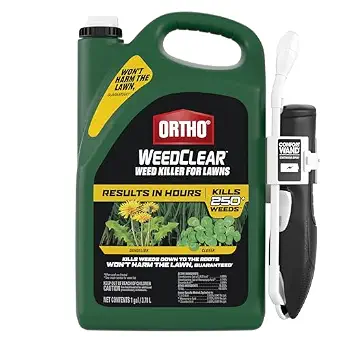 |
| Best Seller A high-volume bestseller chosen again and again | Ortho WeedClear Lawn Weed Killer Ready-to-Spray, 32 fl. oz. |  |
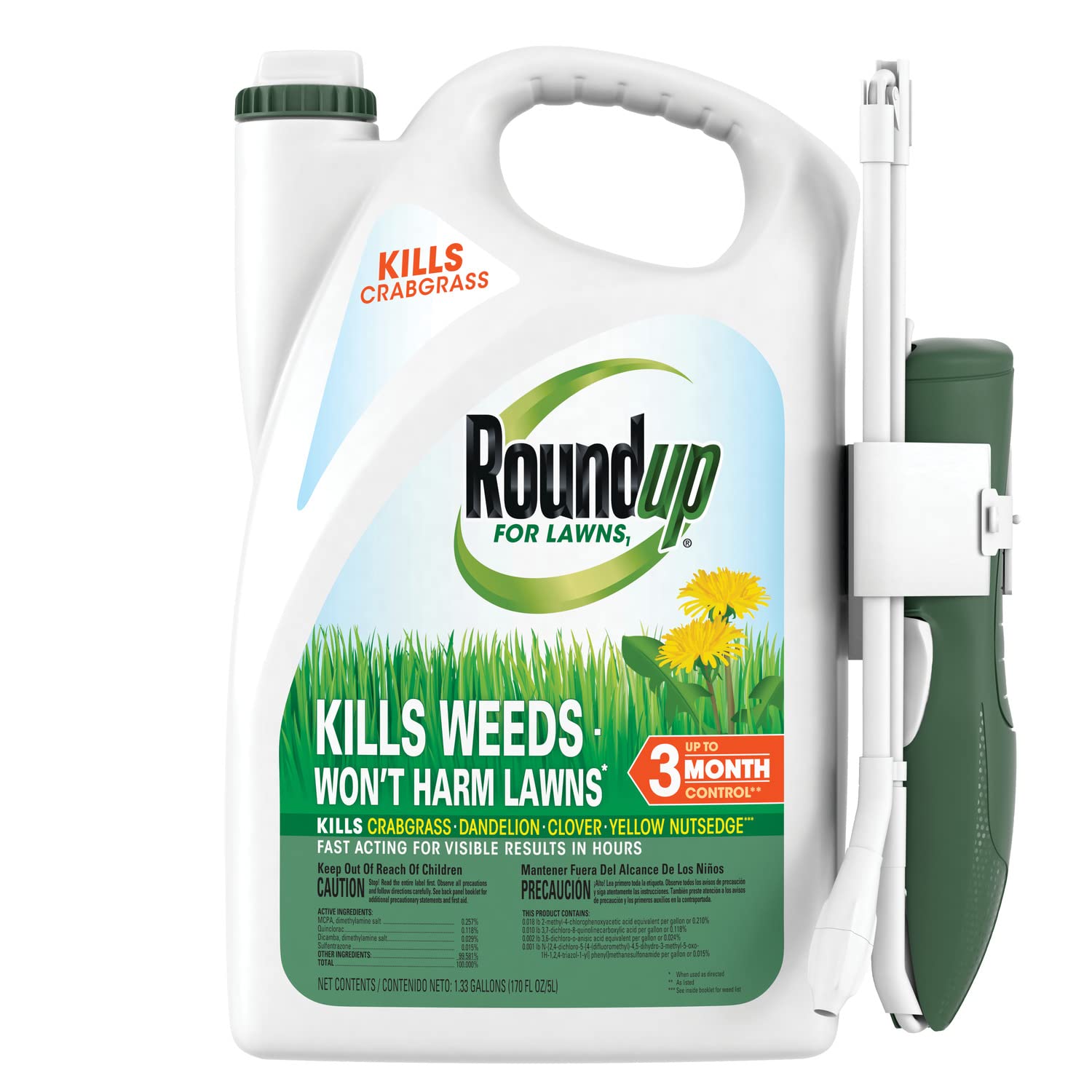
Roundup for Lawns Ready-to-Use with Extend Wand, 1.33 gal
| Liquid Volume | 1.33 gallons |
|---|---|
| Coverage | 5,000 square feet |
| Item Form | Liquid |
| Active Ingredients | Mcpa; Dimethylamine Salt; Quinclorac; Dicamba; Satrentrazone |
Roundup for Lawns is a ready-to-use selective weed killer designed to remove common lawn weeds from northern turf without needing mixing. It is applied with the included extended-reach spray wand for targeted spot treatments or covering larger patches up to the stated coverage. The formula claims fast visible activity, becomes rainproof within a few hours, and lists control of many common weeds including crabgrass, dandelion, clover and nutsedge. Practical benefits include ease of use because no dilution is required, the wand simplifies spraying around beds and near ornamentals, and the product is intended for use during active weed growth in spring or fall when temperatures are moderate. Important limitations are that it is labeled for northern grass species only and may require repeat applications at interval to control grass weeds; treated areas should not be entered until sprays have dried and it is not approved for use in several states or territories. Buyers should follow label directions closely for timing and turf compatibility to avoid damage to nonlisted grasses or nearby plants.
Best for: Homeowners with northern lawn grasses who want a convenient, no-mix selective herbicide for spot and area weed control and prefer an easy-to-use wand for targeted applications.
Less Ideal for: Those with southern turf varieties or mixed lawns containing unlisted grass species should look for a product labeled for their grass type or consult a turf specialist.
- Ready-to-use formula requires no mixing and is simple for quick spot treatments
- Extendable spray wand provides reach and continuous spray for easy application around beds
- Fast-acting and becomes rainproof in about three hours for less weather delay
- Broad listed weed control that includes common lawn weeds and roots for up to months of control
- Recommended for northern grasses only so not suitable for all turf types
- May need repeat applications for persistent grass weeds and tough infestations
Verdict: A convenient ready-to-use selective herbicide with an extendable wand that makes targeted weed control on northern lawns fast and easy.
Nufarm Change Up Premium Selective Herbicide, 32 oz

| Unit Count | 32 Ounce |
|---|---|
| Item Form | Liquid |
| Coverage | 1000 square feet |
| Active Ingredients | MCPA, fluroxypyr, dicamba |
Nufarm Change Up is a professional-strength selective herbicide designed to knock back a wide range of broadleaf weeds in both cool- and warm-season turf. You mix the liquid at labeled rates and apply over lawns, commercial turf or other labeled sites to target more than 200 species such as dandelion, plantain, oxalis and thistles. The three active ingredients work together for quick visible burnback and extended weed control while being an alternative where 2,4-D is undesired. Coverage is stated at 1,000 sq ft per 32 oz bottle at common use rates, and the product lists tolerance for most common turfgrasses including bermuda, fescue, kentucky bluegrass and st. augustine. Important considerations are following label rates precisely and observing site restrictions because this is a potent formulation suited to experienced applicators; it is not a broadcast-contact spray for grass-only weeds and requires safe handling and proper calibration to avoid off-target movement. For users who need reliable, broad-spectrum control on managed turf, Change Up delivers predictable results when used as directed.
Best for: Gardeners and turf managers who prioritize strong, reliable broadleaf weed control across varied turf types and are comfortable following professional application instructions.
Less Ideal for: Casual homeowners who want a low-risk, do-it-yourself contact weed spray or who are inexperienced with calibrated herbicide application should consider gentler, easier-to-use options.
- Controls a very broad range of over 200 broadleaf weeds including hard-to-kill species
- Suitable for both cool- and warm-season turf with labeled tolerance for many common grasses
- Three active ingredients provide faster visible control and extended activity compared with single-ingredient products
- Liquid formulation is easy to measure and mix for calibrated applications
- Requires careful mixing, application and adherence to label to avoid off-target damage
Verdict: Pick this product when you need professional-level, broad-spectrum selective control of stubborn broadleaf weeds on managed lawns.
Spectracide Weed Stop for Lawns Concentrate, 32 oz Ready-to-Spray

| Liquid Volume | 32 fluid ounces |
|---|---|
| Coverage | 8,000 square feet |
| Item Form | Liquid |
| Active Ingredients | 2,4-D, Mecoprop-P, Dicamba, Sulfentrazone |
Spectracide Weed Stop for Lawns is a hose-end concentrate designed to kill broadleaf weeds quickly across turf areas. The QuickFlip sprayer connects to a standard garden hose so you can dilute and apply without separate mixing equipment, and the formula claims visible weed control in as little as three hours. It targets more than 460 listed weeds including dandelion, chickweed and clover and is labelled for common turf grasses such as bluegrass, fescue, Bermuda and perennial rye. Practical features include one-hour rainproofing and simple directions to spray until wet, plus guidance on temperature windows for safe use. Limitations to consider are standard herbicide precautions: keep off newly emerging zoysiagrass, avoid applications when daytime temps exceed 90 degrees, and keep people and pets off treated areas until dry; the product also requires waiting 3 to 4 weeks before reseeding. For routine selective broadleaf control over established lawns this concentrate makes application fast and straightforward, but follow label instructions to avoid turf injury.
Best for: Homeowners who want a fast, no-mix selective herbicide to tackle common broadleaf weeds across established lawns and prefer a hose-end applicator for quick treatments.
Less Ideal for: People planning to overseed or renovate turf immediately after treatment or those with newly emerging zoysiagrass should choose alternative timing or products.
- Hose-end QuickFlip sprayer for easy, tool-free application
- Kills over 460 listed broadleaf weeds with visible results in about 3 hours
- Rainproof after one hour so light rain soon after application is less disruptive
- Labeled for common turf types including bluegrass, fescue, Bermuda and perennial rye
- Not safe to apply to zoysiagrass coming out of dormancy
- Must avoid application when daytime temperatures exceed 90 degrees to prevent lawn injury
- Requires a 3 to 4 week wait before reseeding treated areas
Verdict: A quick, hose-end selective concentrate that makes broadleaf weed control fast and easy for established lawns.
Spectracide Weed Stop for Lawns Plus Crabgrass Killer, Ready-to-Use, 1 Gallon

| Item Form | Spray |
|---|---|
| Liquid Volume | 1 gallons |
| Coverage | Up to 5,000 sq ft |
Spectracide Weed Stop for Lawns Plus Crabgrass Killer is a one-gallon ready-to-use spray formulated to eliminate more than 470 listed weed types without harming established turf when applied properly. You use it by spraying problem areas after mowing and within the recommended temperature window; it kills weeds by contact and claims visible dieback in roughly five hours. Notable features include broad-spectrum activity against both broadleaf weeds and grassy weeds such as crabgrass and yellow nutsedge, no mixing required, and coverage listed up to 5,000 square feet for a single bottle. Practical benefits are quick visible control, convenience for homeowners who do not want to measure or mix, and a single product that addresses common lawn weed problems. Important limitations are the contact-kill mode, which requires thorough spray coverage so established large weeds may need repeat treatments, and temperature restrictions on some grasses especially Bermudagrass where temporary discoloration can occur if applied above recommended temperatures. Follow label directions carefully to avoid lawn injury and to get the best results.
Best for: Homeowners who want a convenient, no-mix solution to quickly control common lawn weeds and prioritize straightforward, low-effort treatments on a budget.
Less Ideal for: Those seeking a systemic, long-term preemergent control or professional lawn care users looking for targeted chemistry for specific turf species should consider other options.
- Ready-to-use spray requires no mixing and is easy for quick spot or area treatment
- Broad spectrum formula targets over 470 listed weeds, including crabgrass and yellow nutsedge
- Produces visible weed control in about five hours for fast results
- Single one-gallon unit can cover up to 5,000 sq ft, suitable for typical small to medium lawns
- Kills by contact so it requires full spray coverage and may need follow-up on large or well-established weeds
- Temperature limits and caution on Bermudagrass mean timing matters to avoid temporary lawn discoloration
Verdict: A convenient ready-to-use spray that delivers fast, broad-spectrum weed control for budget-minded homeowners who need an easy spot or area treatment.
Factory Hardware Store Hi-Yield 2,4-D Broadleaf Weed Killer Concentrate, 32 oz (2-Pack)

| Item Form | Liquid |
|---|---|
| Ingredients | Dimethylamine Salt of 2,4-Dichlorophenoxyacetic Acid |
| Number of Packs | 2 |
| Unit Count | 32 Fluid Ounces |
This 2,4-D broadleaf weed killer is a liquid concentrate designed for selective post-emergent control of common lawn broadleaf weeds such as dandelion, chickweed, and plantain. You mix the concentrate to label rates and apply it to established turf or other labeled outdoor areas for targeted spot or broadcast treatments. The product comes as a two-pack of 32 oz jugs, which gives extra coverage for repeat treatments or larger yards. Because it uses the dimethylamine salt of 2,4-D, it delivers the familiar systemic action that moves into broadleaf weeds to suppress or kill them while leaving most grasses unharmed when used as directed. Practical strengths are its concentrate format for flexible dosing and the multi-pack convenience for seasonal maintenance. Important limitations are the need to follow label directions precisely to avoid damage to sensitive ornamentals and to observe reentry and weather precautions; this is not a ready-to-spray formulation and requires mixing and proper application equipment.
Best for: Homeowners who prioritize a dependable, conventional chemical solution for seasonal broadleaf weed control and who are comfortable mixing concentrates and following label directions.
Less Ideal for: Gardeners who prefer organic or non-chemical methods or those who need a ready-to-use spray without measuring and mixing.
- Selective post-emergent formula targets broadleaf weeds while preserving established turf when used correctly
- Concentrate format allows flexible mixing for spot treatments or larger coverage
- Two 32 oz bottles provide extra product for repeat applications or larger yards
- Active ingredient (2,4-D dimethylamine salt) provides systemic control of many common broadleaf species
- Requires mixing and proper application equipment rather than being ready-to-use
- Can harm sensitive ornamentals and non-target plants if not applied carefully
Verdict: A reliable, concentrated selective herbicide choice for homeowners who want proven post-emergent control of broadleaf lawn weeds and extra product for repeat treatments.
Ortho WeedClear Weed Killer for Lawns with Comfort Wand, 1 gal.

| Unit Count | 128 Fluid Ounces |
|---|---|
| Item Form | Spray |
| Coverage | 16000 square feet |
| Kills | 250+ listed weeds |
Ortho WeedClear is a one-gallon ready-to-use lawn herbicide designed for homeowners who want fast, targeted control of broadleaf weeds. The bottle includes a Comfort Wand applicator for continuous, precise spraying that makes spot treatments and small broadcast applications straightforward without extra equipment. Its formula combines three active ingredients that work down to the root and claims visible browning within hours and rainproofing after one hour of drying. Practical benefits include the wide weed list coverage, ease of application for spot control, and the ability for people and pets to re-enter the lawn once the spray dries. Important limitations are that it is intended for use on established lawns only and must be applied when weeds are actively growing and temperatures are under 90°F for best results. It also contains synthetic herbicides, so careful handling and adherence to the label directions are necessary for safety and to avoid off-target damage.
Best for: Homeowners who prioritize proven, easy-to-use spot treatments to remove common lawn broadleaf weeds and who value products with established performance and user feedback.
Less Ideal for: People seeking organic or non-chemical weed control or those needing a year-long residual prevention product for bare-ground or heavy brush situations.
- Ready-to-use formula with included Comfort Wand for easy, precise application
- Kills over 250 common broadleaf lawn weeds down to the root
- Visible results within hours and rainproof after one hour
- Claims safe for lawns when used according to label directions
- Contains synthetic active ingredients that require careful handling and strict label compliance
- Not formulated for non-lawn areas or for broad broadcast use without dilution guidance
Verdict: Choose this ready-to-use formula if you want a trusted, easy applicator and fast, targeted control of common lawn broadleaf weeds.
Ortho WeedClear Lawn Weed Killer Ready-to-Spray, 32 fl. oz.

| Item Form | Spray |
|---|---|
| Coverage | 5000 square_feet |
| Liquid Volume | 32 fluid ounces |
| Active Ingredients | 2,4-D; Quinclorac; Dicamba |
Ortho WeedClear Ready-to-Spray is a hose-attached weed killer designed for homeowners who want fast selective control without mixing chemicals. You attach a garden hose, slide the on switch and spray until the lawn surface is wet; the formula is fast acting and becomes rainproof in about an hour. It targets over 200 listed weeds including dandelion, clover, chickweed and crabgrass and is intended for use on northern lawn grasses such as fescues, Kentucky bluegrass, ryegrass and zoysia when applied within recommended temperature windows. The 32 fl. oz. unit covers up to 5,000 sq. ft., so one bottle treats a medium-sized yard in a single pass. Important limitations are the list of grasses and plants to avoid and temperature restrictions for Bermudagrass; following label directions and protective clothing guidance is necessary for safe use. For buyers looking for a no-mess, ready-to-use selective product, this is a practical and straightforward option.
Best for: Buyers who prioritize an easy, low-hassle selective weed control that works quickly on common lawn weeds and prefer a ready-to-use hose application with clear label instructions.
Less Ideal for: Those who maintain sensitive ornamental beds, uncommon lawn species, or who need an all-season preventive product should consider other targeted or OMRI-listed options.
- Ready-to-use hose-end applicator for quick, no-mix application
- Fast-acting formula that is rainproof within about one hour
- Covers up to 5,000 sq. ft. from a single 32 fl. oz. bottle
- Selective control of over 200 listed broadleaf and grassy weeds when used as directed
- Not safe for use on several warm-season grasses and many ornamentals
- Requires observing temperature limits and label restrictions for certain grasses
- Contains common herbicide actives that require protective clothing and drying time before re-entry
Verdict: A convenient ready-to-spray selective herbicide that gives fast, broad control of common lawn weeds with minimal mixing or setup.
Choosing the Right Selective Weed Killer: Key Factors to Consider
Type of Weeds You Need to Target
Knowing which weeds dominate your lawn changes the product you choose. Broadleaf weeds such as dandelion, clover, chickweed, and plantain respond to many selective herbicides, while grassy weeds like crabgrass or foxtail require different active ingredients or a separate preemergent approach. Inspect your lawn during different seasons because some weeds are more visible in spring and others in late summer.
Matching the herbicide spectrum to the weeds present helps avoid wasted treatments and reduces the risk of repeat applications. If you are unsure which species you have, treat a small test area or consult a local extension resource before applying product widely.
Turf Species and Lawn Sensitivity
Different turfgrasses tolerate selective herbicides differently. Cool-season lawns such as fescue and Kentucky bluegrass generally handle many broadleaf-targeting chemistries well, while some warm-season grasses like bermudagrass or zoysia may show sensitivity to certain formulations. Check the product label for listed tolerant species and any temperature or dormancy cautions.
Timing matters because grasses under heat stress or drought are more prone to injury. Apply selective treatments when the lawn is actively growing and healthy, and avoid spraying during peak summer stress or when grasses are coming out of dormancy.
Application Method and Accuracy
Application method affects both effectiveness and accidental damage. Ready-to-spray hose-end or trigger-spray formulas are convenient for spot treatments and small lawns but can be less accurate over large areas. Concentrates that you mix in a pump sprayer give you more control and are often more economical for larger yards but require proper mixing and calibration.
Consider nozzle type, spray droplet size, and drift risk. Small droplets drift farther and can reach non-target plants. Use low-pressure, coarse droplets for lawn treatments and follow label guidance for nozzle settings to reduce off-target movement.
Timing and Reapplication Intervals
The timing of applications determines both efficacy and safety. Many selective herbicides work best when weeds are actively growing, typically in spring and fall for cool-season lawns. Some products require multiple applications several weeks apart to control well-established or perennial weeds.
Labels will specify reapplication intervals and any restrictions on mowing, watering, or entering the lawn after treatment. Plan treatments around these windows to avoid interfering with outdoor activities and to ensure the product has time to act.
Environmental and Safety Considerations
Selective herbicides can move off-target via runoff or drift, so consider proximity to flower beds, vegetable gardens, water features, and pollinator habitat. Choose formulations and application methods that limit drift, and avoid applying before heavy rain. Read and follow label precautions about personal protective equipment and children or pet reentry intervals.
If you have areas where pollinators forage, avoid spraying blooming weeds and consider spot-treating or hand-pulling in sensitive zones to reduce ecological impact.
Residual Control and Longevity
Some selective products break down quickly and require repeat treatments, while others provide residual activity that suppresses new weed emergence for weeks. Residual control can be useful where weed seed banks are high, but long-lasting residues may affect overseeding or seeding of desirable grass.
If you plan to overseed or establish new turf, choose a product with minimal soil residual or follow label guidance on waiting periods before seeding to avoid interference with grass establishment.
When to Use Spot Treatment Versus Whole-Lawn Application
Spot treatment is the most efficient choice when weeds are isolated or confined to patches. It reduces overall chemical use and lowers the chance of harming surrounding plants. Use a targeted sprayer or a trigger bottle to treat individual weeds or visible clusters.
Whole-lawn applications are appropriate when weeds are widespread or you want uniform control across the turf. For whole-lawn work, calibrate your sprayer, follow coverage rates on the label, and avoid windy conditions to reduce drift.
- Spot treat small infestations to save product and limit exposure
- Whole-lawn applications require careful calibration and weather checks
- Consider treating in cooler parts of the day to minimize volatilization
How Weather and Soil Conditions Affect Treatment Success
Herbicide uptake depends on active growth and moisture. Plants sprayed while stressed by drought or extreme heat often show reduced uptake and slower control. Aim for a day when weeds are actively growing and soils are moist but not waterlogged.
Avoid applying before heavy rain, which can wash product away and reduce effectiveness. Light watering may be recommended after some products to move systemic active ingredients into the root zone, but always follow label instructions.
- Ideal temperature windows are often listed on product labels
- Windy conditions increase drift risk and reduce on-target deposition
- Soil moisture influences root uptake for systemic products
Integrated Lawn Care to Reduce Future Weed Pressure
Selective herbicides work best when combined with cultural practices that promote dense, healthy turf. Regular mowing at the recommended height for your grass species, appropriate fertilization, and aeration reduce thin areas where weeds establish.
Overseeding thin patches and correcting drainage problems lower long-term weed pressure and reduce the need for repeated chemical control. Treating only when necessary and using cultural approaches first will minimize chemical reliance and improve lawn resilience.
- Mow to the optimal height for your grass to shade out weed seedlings
- Fertilize based on soil test results rather than guessing
- Repair bare spots promptly to prevent weed colonization
Safe Handling, Storage, and Disposal Practices
Store herbicides in their original containers, locked away from children and pets, and out of direct sunlight and extreme temperatures. Keep the label intact so you can reference mixing rates and safety instructions later.
Dispose of excess mixture and empty containers according to local regulations. Rinse sprayers properly and avoid dumping leftover product where runoff could enter storm drains or water bodies.
- Wear recommended protective gear during mixing and application
- Clean equipment after use to prevent cross-contamination
- Follow local rules for hazardous household waste disposal
Options for Lawns Being Overseeded or Newly Established
If you plan to seed or overseed, check label restrictions on seeding intervals after application. Some selective herbicides require several weeks before you can safely introduce seed without risking damage to new grass seedlings.
For newly established lawns, prioritize nonchemical controls and spot treatments where possible. Delay broad selective applications until the turf is well established and resilient to avoid stunted growth or patchy establishment.
- Confirm waiting periods between application and seeding on product labels
- Use mechanical weeding and hand removal in newly seeded areas
- Consider post-seeding care adjustments like gentle watering schedules
How We Chose the Best Selective Weed Killer
We focused on products designed specifically to kill common broadleaf weeds while minimizing harm to typical turfgrass species. Selection criteria emphasized measurable, garden-relevant dimensions: weed control spectrum and speed, turf safety across common lawn grasses, application flexibility and coverage, and persistence or reentry intervals for typical yard activities. We also considered formulation differences that affect homeowner experience, such as ready-to-use sprayers versus concentrates and how those choices influence accuracy and waste. Practical labeling and clarity of instructions were important because correct use determines outcomes in real lawns. Exclusions included general-purpose nonselective herbicides, products intended only for garden beds, and specialty formulations for aquatic or industrial sites. We excluded options with unclear usage guidance or labels that do not list common turfgrass species. The final shortlist represents products that meet thresholds on the core dimensions above and are appropriate for routine lawn weed control.
FAQ
Will a selective weed killer harm my grass if I apply it on a hot day?
It often depends on grass species and product formulation. Many selective herbicides increase the risk of turf injury when applied during heat stress. Apply when the lawn is actively growing and avoid treatment during extreme heat or drought to reduce the chance of damage.
How soon will I see weeds die after treatment?
Visible symptoms vary by active ingredient and weed species. Some weeds show browning within a few days while others may take two to three weeks. Systemic products can act slower but often provide more complete control of deep-rooted perennials.
Can I use a selective weed killer around flower beds and vegetable gardens?
Exercise caution. Drift and runoff can injure nearby desirable plants. Use targeted spot treatments, choose low-drift application methods, and keep a buffer between treated turf and sensitive planting areas.
Is it safe to let pets and children back on the lawn after spraying?
Safety intervals vary by product. Many labels list reentry times for children and pets or recommend waiting until treated areas are dry. Follow label directions for reentry and consider keeping pets off treated turf until it is fully dry.
Will selective herbicides prevent new weeds from germinating?
Some formulations provide limited residual activity that suppresses new weed emergence for a period, but most selective postemergent herbicides target existing weeds. For seedling prevention, consider preemergent herbicides as part of an integrated plan.
Final Verdict
Pick a selective weed killer that matches the weeds you have and the turf species you want to protect. Prioritize accuracy of application, appropriate timing when both weeds and grass are actively growing, and label guidance on reentry and seeding intervals. Balancing quick visible control with turf safety will usually mean choosing the correct active ingredient and application method rather than the strongest product. With targeted use and good cultural practices, selective weed killers can be an effective component of a healthy lawn care program.
