

Note: This article contains affiliate links. If you click on these links and make a purchase, I may earn a small commission at no extra cost to you. This helps support my research and content. Read my full affiliate disclosure here.
Selecting the right weed killer for garden beds matters because you want weeds removed without damaging desirable plants or disrupting soil health. In garden beds the wrong product or application can scorch perennials, stunt young transplants, or leave residues that affect future planting. This guide looks at six top weed-control options chosen for effectiveness in beds, ease of directed application, and safety for nearby ornamentals and edible plants when used as directed. We explain the practical tradeoffs and evaluation criteria so you can pick the best fit for your bed type and gardening style.
Top Picks at a Glance
| Best Overall The best all-around choice for most situations | Ortho GroundClear Weed & Grass Killer with Comfort Wand, 1 gal. |  |
| Best Quality Built to a higher standard if you want something more solid | Roundup Dual Action Weed & Grass Killer Plus 4 Month Preventer with Sure Shot Wand, 1.33 gal |  |
| Best Value The sweet spot between price and what you get | Preen Garden Weed Preventer Pre‑Emergent Granules, 5.625 lb (2 Pack) |  |
| Best Budget The cheapest option that still gets the job done reliably | Ortho GroundClear Super Weed & Grass Killer with Comfort Wand, 0.5 gal | 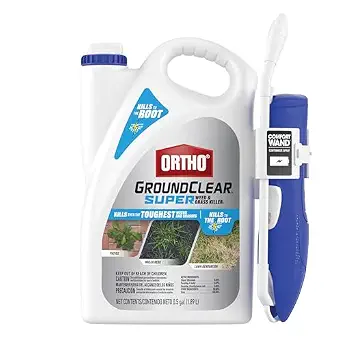 |
| Highest Rated A top-rated pick with lots of positive feedback | Roundup Weed & Grass Killer 4 with Comfort Wand, 1.33 gal |  |
| Most Popular A crowd favorite that many people choose with confidence | Roundup Weed & Grass Killer4 with Pump 'N Go 2 Sprayer, 1.33 gal |  |
Ortho GroundClear Weed & Grass Killer with Comfort Wand, 1 gal.

| Item Form | Spray |
|---|---|
| Coverage | 5120 square feet |
| Liquid Volume | 128 fluid ounces |
| Active Ingredients | Ammonium Nonanoate |
Ortho GroundClear is a one-gallon, ready-to-use spray formulated to kill common landscape weeds and grasses on contact. It is typically used to spot-treat weeds on patios, walkways and in garden beds where you need precise control; the included Comfort Wand helps aim spray at individual plants so you avoid desired plants. The formula contains ammonium nonanoate, gives visible browning in about 15 minutes, and becomes rainproof roughly two hours after drying, which reduces reapplication risk after light weather changes. As an OMRI listed product it can be used where organic-compliant products are preferred. Practical benefits include broad-spectrum control of dandelions, chickweed, crabgrass and moss and a large coverage claim for treating multiple areas without mixing. Important limitations are that perennial or well-established weeds may need repeat applications and this product is not for use on lawns or desirable plants since it will damage vegetation on contact. Users must follow safety directions to keep children and pets away until surfaces are dry.
Best for: Gardeners who want a reliable, easy-to-use spot treatment for weeds in beds and hardscapes and who prioritize quick visible control and organic-compliant ingredients.
Less Ideal for: Those seeking a selective lawn treatment or a systemic product for deep-rooted perennials should look at other specialized herbicides or cultural control methods.
- Ready-to-use spray with included Comfort Wand for precise spot application
- Fast visible results in about 15 minutes and becomes rainproof in 2 hours
- OMRI listed active ingredient suitable where organic-compliant products are wanted
- Covers a large area per container for treating multiple beds and hardscapes
- Not selective so it will kill any plant it contacts, not suitable for treating lawns
- Established perennial weeds may require multiple applications
Verdict: A convenient, OMRI-listed ready-to-use spray that gives fast, targeted weed control for garden beds and hardscapes.
Roundup Dual Action Weed & Grass Killer Plus 4 Month Preventer with Sure Shot Wand, 1.33 gal

| Item Form | Liquid |
|---|---|
| Coverage | 400 sq. ft. |
| Liquid Volume | 1.33 gallons |
This Roundup Dual Action product is a ready-to-use liquid herbicide designed to kill established weeds and grasses down to the root while preventing new growth for up to four months. It is typically applied to hardscapes, gravel areas, and landscape beds using the included Sure Shot wand, which helps target spray onto weeds and reduces overspray. The formula acts quickly—visible wilting in as fast as six hours and rainproof in about 30 minutes—so you can treat problem areas and expect rapid results. Coverage is up to 400 sq. ft. per 1.33 gallon container, making it useful for medium-sized bed and path treatments. Important limitations for garden bed use are that it creates a residual barrier in treated soil, so you must avoid spraying desirable plants and be prepared to wait about four months before replanting sensitive ornamentals or seeding. Also, the product is intended for spot and area treatments rather than selective use among close-planted, small bedding plants.
Best for: Gardeners who need fast, long-lasting clearance of persistent weeds in beds, paths, and hardscape edges and who prioritize performance and quick visible results.
Less Ideal for: People who want to selectively remove weeds around closely spaced or young ornamentals, or who need to replant beds within a few weeks after treatment.
- Kills existing weeds and grasses down to the root for thorough control
- Creates an invisible soil barrier that prevents new weeds for up to four months
- Sure Shot wand provides targeted application to reduce overspray
- Rainproof in about 30 minutes with visible results in as fast as six hours
- Leaves a residual barrier in soil that prevents planting or seeding for about four months
Verdict: Choose this product if you want a fast-acting, high-performance weed killer that also prevents new growth for up to four months.
Preen Garden Weed Preventer Pre‑Emergent Granules, 5.625 lb (2 Pack)

| Item Form | Granule |
|---|---|
| Coverage | 1800 square feet |
| Unit Count | 180 Ounce |
| Active Ingredients | Trifluralin |
Preen Garden Weed Preventer is a granular pre-emergent designed to stop weed seeds from germinating in mulched beds and around established plants. You apply it by removing existing weeds, sprinkling the granules over dry mulch or soil, then watering to activate an invisible barrier. One application covers up to 1,800 sq ft and the effect lasts up to three months, which reduces repeated hand-weeding during the growing season. The product lists trifluralin as the active ingredient and is formulated for safe use around many common ornamentals and vegetable plants when used as directed. Practical features include a flip-top applicator for controlled spreading and a rain-resistant formula so it stays effective after watering or light rain. Important limitations: it does not kill established weeds so beds must be cleared first, it is not recommended for lawn use, and protection is time-limited so seasonal reapplication is necessary for ongoing control.
Best for: Gardeners who want to minimize regular hand-weeding and keep mulched flower or vegetable beds tidy with a seasonal, low-effort prevention step.
Less Ideal for: Those needing a product to remove established weeds or for routine lawn weed control should choose a targeted post-emergent or turf-specific solution instead.
- Pre-emergent action prevents common broadleaf and grassy garden weeds for up to three months
- Covers up to 1,800 square feet per application, suitable for medium to large beds
- Safe for use around many established flowers, vegetables, trees, and shrubs when applied as directed
- Granular formula with flip-top applicator for controlled, easy spreading
- Does not kill existing weeds so beds require prep before use
- Protection is limited to about three months and requires reapplication for season-long control
Verdict: Use this granular pre-emergent to cut time spent weeding by creating a three-month weed barrier for mulched flower and vegetable beds.
Ortho GroundClear Super Weed & Grass Killer with Comfort Wand, 0.5 gal

| Unit Count | 64 Fluid Ounces |
|---|---|
| Item Form | Spray |
| Coverage | Broad spectrum coverage |
This ready-to-use Ortho GroundClear spray is designed to kill a broad list of weeds and grasses quickly and with targeted application. The bottle includes a Comfort Wand that delivers a continuous spray, which makes it easier to treat cracks, walkways, mulch beds, and areas around landscape plants without mixing or a separate sprayer. Its dual-action formula offers contact kill plus systemic uptake, so you often see wilting within hours and full dieback within days to a couple of weeks. It is rainfast in about 15 minutes, so timing applications is straightforward on dry days. Practical benefits for garden beds include precise spot treatment and the convenience of a built-in applicator, which reduces drift compared with handheld pump sprayers. Important limitations are that it is a non-selective herbicide so it will damage desirable plants on contact and safety precautions are required for around children, pets, and edibles. For prepping a bed for renovation or treating persistent weeds on hard surfaces, it is effective; it is not suitable for selective weed control inside planted beds where you want to keep surrounding ornamentals.
Best for: Gardeners who want an inexpensive, no-mix spot treatment to clear beds, pathways, or renovation areas quickly and who prioritize convenience over selective herbicide options.
Less Ideal for: People maintaining mixed ornamental beds who need to preserve nearby plants or home gardeners seeking an organic or selective solution for weeds among desirable plantings.
- Ready-to-use formula requires no mixing or measuring
- Attached Comfort Wand provides continuous targeted spray for easier spot treatments
- Dual-action formula gives both quick contact burn and root penetration for longer control
- Rainfast in about 15 minutes so short waiting time after application
- Non-selective herbicide that will harm desirable plants on contact
- Requires careful application and protective gear due to safety warnings
Verdict: If you want a low-effort ready-to-use spray to quickly remove weeds and prepare garden beds for renovation, this product delivers fast, root-killing results with a convenient comfort wand.
Roundup Weed & Grass Killer 4 with Comfort Wand, 1.33 gal

| Item Form | Liquid |
|---|---|
| Coverage | 400 sq. ft. |
| Liquid Volume | 1.33 gallons |
This Roundup product is a one-quart-plus ready-to-use herbicide with an integrated Comfort Wand for simple spot and small-area applications in garden beds and hardscape edges. It is formulated to kill common broadleaf weeds and grasses to the root, including dandelion, crabgrass, poison ivy, and clover, and claims visible results in hours and rainproof performance in about 30 minutes. The Comfort Wand provides one-touch continuous spray that reduces hand fatigue and makes treating around flowers, walkways, and foundations easier than transferring to a separate sprayer. Practical benefits include targeted coverage up to 400 square feet and guidance that allows planting 1 to 30 days after application depending on the planting type. Important limitations are that it is a nonselective herbicide so care is required to avoid desirable plants and to wait until spray has fully dried before allowing people or pets into the treated area. It also works best in warm conditions above about 60°F, so timing applications matters for reliability and effectiveness.
Best for: Gardeners who prioritize a reliable, no-mix solution for targeted weed control around beds, pathways, and foundations and who want an easy-to-use applicator that reduces hand strain.
Less Ideal for: Large-property owners or those who need selective control of weeds within mixed plantings where risk to desirable plants must be minimized.
- Ready-to-use liquid with built-in wand for easy, single-handed application
- Kills a wide range of common broadleaf weeds and grasses down to the root
- Fast visible results and becomes rainproof in roughly 30 minutes
- Comfort Wand offers one-touch continuous spray to reduce hand fatigue
- Covers up to 400 sq. ft., suitable for small to medium garden beds
- Nonselective formula can damage desirable plants if sprayed or if drift occurs
- Not optimized for large acreage since container covers about 400 sq. ft.
Verdict: A reliable, ready-to-use herbicide with an easy Comfort Wand that makes fast, targeted weed control in garden beds straightforward and low-effort.
Roundup Weed & Grass Killer4 with Pump 'N Go 2 Sprayer, 1.33 gal

| Unit Count | 170 Fluid Ounces |
|---|---|
| Item Form | Spray |
| Coverage | 300 Square_Feet |
| Active Ingredients | Triclopyr, Triethylamine Salt, Fluazifop-P-Butyl, Diquat Dibromide |
This Roundup Weed & Grass Killer4 comes in a 1.33 gallon container with an integrated Pump 'N Go 2 sprayer that lets you apply a continuous stream for up to 10 minutes without mixing. It is formulated to kill a wide range of broadleaf weeds and grasses down to the root and advertises visible browning in hours and rainproof protection in about 30 minutes, so treated areas can be replanted in 1 to 30 days depending on instructions. The extendable wand improves accuracy for edging around flower beds, foundations, and hard surfaces so you can target unwanted plants without bending over. Practical benefits include straightforward one-hand spraying, coverage suitable for small- to medium-scale cleanup, and a clear safety section that emphasizes protective clothing and keeping people and pets away until the spray dries. Important limitations are that it is a chemical herbicide with active ingredients buyers should review for toxicity and environmental impact, and it requires careful application to avoid drift onto desirable plants. The sprayer is convenient but adds weight as you carry and handle the full container.
Best for: Gardeners who want a ready-to-use, targeted herbicide to quickly clear weeds around beds and hardscapes and who prioritize easy application and fast visible results guided by other buyers' experience.
Less Ideal for: Organic gardeners or those who prefer nonchemical methods should look for mechanical or organic alternatives, and users who need very large-area broadcast control may prefer concentrate products or professional services.
- Built-in Pump 'N Go 2 sprayer with extendable wand for up to 10 minutes of continuous spray
- Produces visible results in hours and becomes rainproof in about 30 minutes
- Designed for use around flower beds, hardscapes, mulch and foundations for targeted spot treatment
- Covers a useful area from a single bottle suitable for small to medium beds
- Contains synthetic active ingredients that require careful handling and distancing of people and pets until dry
- Risk of harming nearby desirable plants if not applied precisely
Verdict: If you want a convenient, ready-to-use sprayer that gives fast, targeted weed control around garden beds and hardscapes, this package is a practical pick.
Choosing the Right Weed Killer for Garden Beds: Key Factors to Consider
Active Ingredient and Mode of Action
Different active ingredients work in distinct ways, and that affects both what weeds they kill and how they impact surrounding plants. Contact actives quickly scorch exposed foliage but may not control roots, so perennial weeds can resprout. Systemic actives move into roots and crowns and are better for deep-rooted perennials but can travel within plants and sometimes affect nearby closely rooted ornamentals.
Knowing the mode of action helps you match a product to the weed species and to bed planting: use contact options for isolated, aboveground weeds in heavily planted beds and choose systemic solutions for persistent perennial roots where you can protect desirable plants. Rotate modes of action across seasons to reduce the chance of resistance in problem weeds.
Selectivity and Non-target Plant Safety
Selectivity describes whether a product targets only certain plant types or kills everything it touches. Non-selective knockdowns are useful for clearing bare patches but are risky in mixed perennial beds because spray drift or runoff can injure ornamentals. Selective herbicides that target grasses or broadleaves let you remove specific weed types while preserving desired plants, but they require correct identification of the weed.
In beds, physical separation, spot treatment, and shielded applicators reduce non-target exposure. Always check label instructions for proximity to desirable plants and follow recommended buffer distances or soil incorporation guidance when present.
Residual Activity and Soil Impact
Residual activity determines how long a product remains active in the soil and continues to affect emerging plants. Some formulations leave little to no residue and allow replanting within days, which is ideal for annual bed rotations. Others persist longer and can prevent germination of seeds or damage newly planted seedlings.
Consider your planting timeline: if you plan to sow or transplant soon after treatment, choose a low-residue option. Also factor in soil health; products that persist may affect soil microbes and earthworms. Balance the need for long-term weed suppression with the ecological sensitivity of your beds.
Application Method and Precision
How a product is applied influences both effectiveness and safety in garden beds. Ready-to-use sprayers and wands allow spot treatment that protects nearby plants. Granules can provide localized control but may move with watering or heavy rain. Foam or gel formulations cling to foliage for targeted contact and reduce drift.
Choose an application method that matches the layout of your beds and your tolerance for risk near ornamentals. Precision tools reduce waste, lower exposure, and increase the chances of hitting only the weed you intend to remove.
Timing and Weather Considerations
When you apply a weed killer affects uptake and results. Warm, sunny, and dry conditions usually improve foliar absorption for contact and systemic products. Rain shortly after application can wash away contact treatments or move granules, reducing efficacy.
Plan treatments when weather is stable and winds are low to limit drift. For seasonal timing, treat weeds when they are actively growing; many herbicides work poorly on dormant or stressed plants. Also consider planting schedules so residual products do not interfere with desired seedlings or transplants.
Safety, Storage, and Environmental Precautions
Gardeners should weigh user safety and environmental risks. Concentrated products require careful measuring and mixing, proper protective gear, and secure storage away from children and pets. Consider biodegradable or lower-toxicity options if you garden organically or have sensitive nearby habitats.
Follow label instructions for disposal and avoid applying near water features unless the product is labeled for that use. Proper cleanup of equipment and minimized application rates reduce unintended impacts on pollinators and beneficial soil organisms.
Spot Treatments Versus Broadcast Applications
In garden beds spot treatments let you target individual weeds while protecting nearby ornamentals. A wand or shielded sprayer works well for isolated dandelions or annual weed flashes between plants. Broadcast applications clear larger areas but require removing desirable plants first or using protective barriers.
Decide which approach fits your bed layout and time available. Spot treatments are slower but safer in mixed plantings. Broadcast approaches are efficient for preparing beds for a full replanting or when clearing ground for new mulch.
- Spot treatment: best for established mixed beds and individual weeds
- Broadcast treatment: useful for bed renovation or clearing bare soil
- Shielding and physical barriers reduce drift during both methods
Safe Ways to Protect Ornamentals During Treatment
Use physical barriers like cardboard, plastic, or garden fabric draped around desirable plants when applying non-selective products nearby. Wetting the foliage of ornamentals before spraying can reduce herbicide uptake in some cases, but follow product guidance because this technique is not universally recommended.
Another tactic is to remove or temporarily relocate potted ornamentals while you treat the bed. For ground-planted specimens, targeted gel or foam applicators allow precise placement of herbicide on the weed without overspray to neighbors.
- Create temporary shields from cardboard or plastic
- Use gel applicators for very close proximity weeds
- Consider manual removal for small infestations to avoid chemical exposure
Organic and Low-toxicity Options
If you prefer minimal chemical impact, there are lower-toxicity and organic-compatible options that work in beds when applied properly. These tend to be contact actives and often require repeat applications to manage perennial weeds. They are most effective on small, young weeds and where root destruction is not required.
Pair organic treatments with cultural practices like mulching, dense planting, and hand-weeding to reduce reliance on chemical control. Over time, integrated approaches can limit weed pressure and reduce the need for more aggressive measures.
- Best for young annual weeds and spot control
- Often requires multiple treatments for perennials
- Combine with non-chemical methods for long-term control
Protecting Soil Life and Beneficial Insects
Herbicide choice and method affect more than just the target weed. Some products can harm soil microbes, earthworms, and non-target insects if used repeatedly or at high rates. Minimizing broadcast use and avoiding soil-applied residuals in biologically active beds protects these populations.
Time applications outside peak pollinator activity and avoid spraying flowering plants. When possible, use targeted approaches and apply only the amount necessary to control the weed problem.
- Avoid spraying blooms and nectar sources
- Limit residual soil-active products in biologically rich beds
- Rinse and clean equipment away from beds after mixing concentrates
Managing Resistant and Persistent Weeds
Weed resistance arises when the same mode of action is used repeatedly. Rotate herbicide types and combine chemical control with mechanical removal to prevent resistant populations from establishing. For persistent perennials, consider excavation of the root crown when feasible followed by targeted chemical spot treatment if regrowth occurs.
Document which modes of action you use each season and adjust tactics if you notice reduced control. Staggering methods reduces selection pressure and improves long-term management of challenging weeds.
- Rotate modes of action across seasons
- Combine cultural, mechanical, and chemical tactics
- Excavate deep-rooted perennials when practical before treating
How We Chose the Best Weed Killer for Garden Beds
We shortlisted products that deliver reliable weed control in garden beds while minimizing harm to desirable plants and soil organisms. We prioritized solutions with clear application methods for targeted treatment, documented active ingredients appropriate for bed use, and repeatable performance in common bed scenarios like mulch, bare soil, and dense perennial plantings. Ease of use was a key filter because precise application matters in beds to avoid contact with ornamentals. We excluded broad agricultural formulations intended for field spraying, products lacking clear label guidance for garden beds, and those with application restrictions that make typical bed use impractical. Our evaluation emphasized measurable criteria: kill efficacy on common bed weeds, control persistence to limit re-sprouting, selectivity or non-target safety around ornamentals, and application precision and user safety. We also considered environmental persistence and rinse/cleanup needs because gardeners often replant beds within a season.
FAQ
Can I use a weed killer in garden beds with young transplants?
It depends on the product. Many residual or non-selective herbicides can harm young transplants, so choose low-residue or highly targeted options and wait the interval recommended on the label. When in doubt, use spot treatments away from the transplants or delay application until seedlings are established.
How soon can I replant after applying a bed weed killer?
Replanting interval varies with the product and active ingredient. Low-residue contact products often allow planting within days, while some soil-active herbicides require weeks or months. Always follow the specific replanting or planting restrictions listed for the product and consider a soil test if unsure.
Are organic weed killers safe for vegetable beds?
Organic and low-toxicity products are generally safer for vegetable beds but are mainly contact treatments that rarely control roots. They are useful for spot control and can be part of an integrated approach, but may need repeated applications as part of a broader cultural weed management plan.
What is the best way to apply a spot treatment without harming nearby plants?
Use a shielded wand or hand-held applicator that lets you direct spray or gel to the target weed. Work on calm days to limit drift, wet down adjacent foliage if recommended by the product, and consider physical barriers to deflect spray.
Will rain wash away the weed killer I applied to a bed?
Rain can reduce the effectiveness of certain foliar and granular products if it occurs shortly after application. Follow label guidance for rainfastness intervals and avoid treating when heavy rain is forecast. Granules may also move with runoff, so apply when soil moisture and weather conditions are stable.
Final Verdict
Choosing the right weed killer for garden beds is a balance between effectiveness against the target weeds and safety for desirable plants and soil life. Prioritize the active ingredient and mode of action that match the species you need to control, select application methods that protect ornamentals, and factor in residual activity relative to your planting schedule. For most gardeners, targeted spot treatments and products with clear label directions will provide the best combination of control and minimal non-target impact. Use a layered approach of cultural, mechanical, and chemical tactics to manage weeds sustainably and reduce the need for stronger measures over time.
