

Note: This article contains affiliate links. If you click on these links and make a purchase, I may earn a small commission at no extra cost to you. This helps support my research and content. Read my full affiliate disclosure here.
Choosing the right potting soil for bonsai matters because these miniature trees have tight root zones and specific moisture needs. The wrong mix can hold too much water or break down quickly, both of which stress roots and shorten repotting intervals. This guide focuses on top potting soils for bonsai that provide consistent drainage, nutrient retention, and particle stability. We shortlisted seven top options and evaluated them on practical garden criteria like drainage, particle stability, and ease of watering. Read on to understand which soil traits matter for your bonsai and how the shortlisted mixes differ in structure and maintenance.
Top Picks at a Glance
| Best Overall The best all-around choice for most situations | Bonsai Jack Universal Organic Bonsai Soil Mix #221, 2 Gallons |  |
| Best Quality Built to a higher standard if you want something more solid | The Soil Sage Bonsai Soil Mix (5 qt) with Akadama, Pumice & Lava Rock |  |
| Best Value The sweet spot between price and what you get | Duspro Pre-Mixed 4-in-1 Bonsai Soil Mix, 2 Quart |  |
| Best Budget The cheapest option that still gets the job done reliably | Doter Bonsai Soil Mix (1 qt) |  |
| Highest Rated A top-rated pick with lots of positive feedback | Avalution Bonsai Soil Mix, 3 QT |  |
| Most Popular A crowd favorite that many people choose with confidence | PERFECT PLANTS Bonsai Soil, Organic All-Purpose Potting Mix, 2 qt |  |
| Best Seller A high-volume bestseller chosen again and again | The Bonsai Supply Fast-Draining Bonsai Potting Mix (2 qt) |  |
Bonsai Jack Universal Organic Bonsai Soil Mix #221, 2 Gallons

| Ingredients | 40% Bonsai Block, 40% Lava, 20% Pine Bark Fines |
|---|---|
| Screened to | Approximately 1/4 inch particle size |
| pH | Optimal pH of 6.4 |
| Volume | 2 gallons |
Bonsai Jack Mix #221 is a coarse, pre-washed bonsai substrate formulated for general-purpose bonsai use. The mix combines bonsai block, lava, and pine bark fines screened to about 1/4 inch so it drains well while still retaining some moisture, which helps roots spread quickly from the nebari. It is sold ready to use straight from the bag and is suitable for most bonsai species including tropicals, with guidance available by phone if you need setup advice. Practical benefits include reduced repotting shock when converting from gritty mixes and a consistent particle size that simplifies watering and root training. Limitations to note are that it is not intended for ordinary houseplants and a full conversion from nursery potting soil is best done gradually over two repots to avoid stress. For growers who prefer to tweak their own blends, this works well as a base to mix with additional ingredients.
Best for: Buyers who want a reliable, ready-made bonsai substrate that balances drainage and moisture retention for a wide range of bonsai species and who value consistency over crafting a custom blend.
Less Ideal for: People looking for a general potting mix for houseplants or gardeners who need a very fine, moisture-holding soil for non-bonsai containers.
- Coarse, screened mix (approx. 1/4 inch) that promotes drainage and root ramification
- Pre-washed and optimized for pH and water absorption for bonsai use
- Ready to use out of the bag with phone support available for setup
- Contains a balanced mix of bonsai block, lava, and pine bark fines for structure and aeration
- Not recommended for standard houseplants
- Full conversion from nursery/potting soil should be phased over repotting cycles to avoid shock
Verdict: A dependable, ready-to-use bonsai mix that gives balanced drainage and structure for most bonsai trees, making repotting and root training easier.
The Soil Sage Bonsai Soil Mix (5 qt) with Akadama, Pumice & Lava Rock

| Brand Name | The Soil Sage |
|---|---|
| Item Highlight | Ready to Use Soil Mix with Akadama, Pumice, Lava Rock, Fine Pine Bark |
| Volume | 5 quarts |
| Made in | U.S.A. |
This 5 quart bonsai mix from The Soil Sage is formulated for growers who prioritize root health and drainage. The blend of pumice and lava rock creates fast drainage and long-lasting pore space, while akadama and fine pine bark hold just enough moisture without compacting. That combination makes it easy to use for repotting or setting up young bonsai: fill pots, place the tree, and water — the mix drains reliably and keeps roots aerated. Durable inorganic components mean the soil retains structure over multiple seasons, so you will not need to repot as often as with pure organic mixes. It is suitable for indoor and outdoor bonsai species and pairs well with wiring and training work because it stays loose and workable. Limitations to note are the small 5 quart volume, which is fine for individual pots but not for larger projects, and there is no nutrient or fertilizer content specified so you will need to feed trees separately as they grow.
Best for: Experienced bonsai growers and hobbyists focused on performance who need a reliable, fast-draining mix for repotting, training, and maintaining healthy root systems.
Less Ideal for: Beginners who prefer an all-in-one, amended potting soil with fertilizer included or those needing large volumes for many trees.
- High drainage and aeration from pumice and lava rock.
- Moisture control from akadama and pine bark that reduces compaction.
- Durable inorganic components maintain structure over time.
- Ready-to-use mix appropriate for repotting and seedling setup.
- Suitable for both indoor and outdoor bonsai species.
- Small 5 quart bag limits quantity for multiple or larger bonsai projects.
- No included fertilizer or nutrient information, so separate feeding is required.
Verdict: Choose this mix when you want a performance-oriented, high-drainage bonsai soil that preserves structure and keeps roots healthy over multiple seasons.
Duspro Pre-Mixed 4-in-1 Bonsai Soil Mix, 2 Quart

| Brand Name | Duspro |
|---|---|
| Item Highlight | Akadama, Pumice, Vermiculite & Peat Moss blend |
| Number of Packs | 1 |
| Style Name | Modern |
This premixed 4-in-1 bonsai soil is made for routine care and repotting when you want a consistent, no-mix substrate. It combines akadama and pumice for structure and drainage with vermiculite and peat moss for moisture retention and some nutrient holding. In practice the bag saves time versus sourcing and measuring each component, and the texture suits shallow bonsai pots where root airflow and faster drainage are important. The package notes it works for common species such as ficus, juniper, maple and jade, and the 2 quart size is convenient for a couple of small pots or a single repot. Limitations to keep in mind are that premixed blends cannot be adjusted on the fly for very species-specific needs and hobbyists who prefer full control over grit ratios may prefer separate components. Also you will still want to rinse or leach any fine dust before use and monitor watering frequency after repotting since water retention will vary by species and pot style.
Best for: Buyers who want a reliable, time-saving bonsai soil that performs well for routine repotting and basic maintenance without blending individual components.
Less Ideal for: Advanced growers who formulate custom grit-heavy mixes for specific species or large-scale bonsai collections will prefer to buy individual components and mix to taste.
- Pre-mixed blend removes the need to buy and measure separate components
- Combination of akadama and pumice improves drainage and root aeration
- Vermiculite and peat moss help retain moisture and nutrients for small bonsai
- Suitable for a broad range of common bonsai species
- Convenient 2 quart size for single-tree repotting or small projects
- Premixed ratios cannot be customized for species that need very coarse or very fast-draining mixes
- Small package size may not suit multiple large repots
Verdict: A convenient, ready-made bonsai mix that delivers balanced drainage and moisture so you can repot quickly with predictable results.
Doter Bonsai Soil Mix (1 qt)
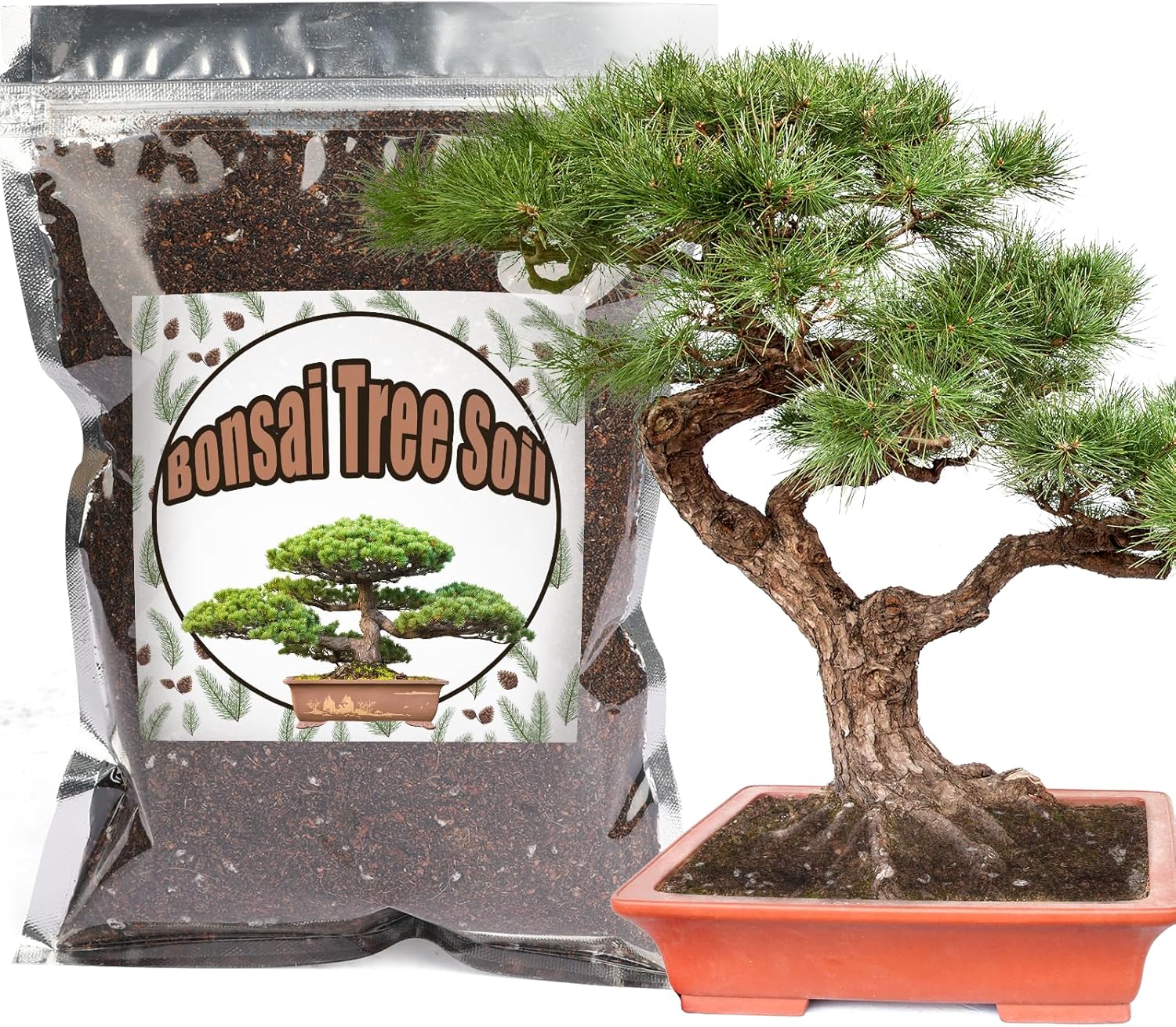
| Brand Name | Doter |
|---|---|
| Unit Count | 32 Ounce |
| Item Type Name | Garden soil |
| Volume | 1 quarts |
This Doter bonsai soil mix is a pre-mixed, ready-to-use 1 quart potting medium designed for small bonsai, seedlings, and repotting tasks. It combines organic components aimed at improving drainage and aeration while retaining enough moisture to support root development. In practice it works well for routine repotting of young or small bonsai where you want a balance of water retention and fast drainage to avoid root rot. The package size and straightforward formula make it convenient for spot repots, starter trees, and trial mixes with additives like pumice or perlite. Notable features are its nutrient-focused marketing and a lightweight, ventilated structure that helps roots breathe. Limitations are the small 1 quart volume, which means you will need multiple bags for larger trees or multiple plants, and the listing does not specify exact particle components or proportions so experienced bonsai growers may prefer to blend their own mix to control drainage precisely.
Best for: Practical gardeners and beginners looking for an inexpensive, no-fuss bonsai soil to use for small trees, seedlings, or occasional repotting tasks.
Less Ideal for: Serious bonsai hobbyists who build custom aggregates or need large volumes for multiple trees should look for multi-quart bags or component materials to mix themselves.
- Ready-to-use mix saves time preparing soil for repotting
- Designed to balance drainage and moisture retention for potted bonsai
- Compact 1 quart bag is convenient for single repots or starter trees
- Small volume not suited for multiple or larger bonsai without buying more bags
- No detailed ingredient percentages or particle sizes provided for precise mix control
Verdict: A convenient, budget-friendly 1 quart bonsai soil that works well for single repots and starter trees.
Avalution Bonsai Soil Mix, 3 QT

| Unit Count | 35.27 Ounce |
|---|---|
| Item Highlight | Perlite, Lava Rock, Pine Bark, Clay Pebbles, Diatomite |
| Style Name | Bonsai Soil Mix |
This ready-to-use Avalution bonsai soil mix is formulated to give bonsai roots a reliably airy, well-draining medium without additional blending. The mix combines perlite, black lava rock, pine bark, diatomite, and clay pebbles to reduce compaction, retain steady moisture, and speed water drainage—helpful when repotting indoor bonsai or potting small succulents and cacti. In practice it simplifies routine care: the chunky texture makes root inspection and watering easier and lowers the chance of overwatering. Because it is pre-mixed and consistent in particle size, it works for different bonsai species and growth stages, from seedlings to established trees. Limitations are its small unit size, which means multiple bags are needed for larger projects, and the coarse texture may require supplementing with finer material for very young or sensitive seedlings that need more immediate moisture. For growers who prefer an off-the-shelf, consistent substrate, this soil delivers dependable drainage and aeration.
Best for: Buyers who want a consistently mixed, low-maintenance substrate that reduces the risk of overwatering and simplifies repotting and routine care of indoor bonsai and container succulents.
Less Ideal for: Gardeners needing large volumes for outdoor beds or those growing very young seedlings that require a finer, more moisture-retentive medium.
- Pre-blended mix designed for bonsai so no on-site mixing required
- Chunky particles (perlite, lava rock, clay pebbles) improve drainage and reduce compaction
- Diatomite and pine bark provide steadier moisture retention for roots
- Versatile for bonsai, succulents, and cacti
- Small 3 quart/35.27 ounce unit not suited to larger repotting jobs without buying multiple bags
- Coarse texture may be too airy for very young seedlings without added fine material
Verdict: A reliable, ready-to-use bonsai soil that delivers consistent drainage and aeration to simplify repotting and reduce overwatering risk.
PERFECT PLANTS Bonsai Soil, Organic All-Purpose Potting Mix, 2 qt

| Unit Count | 64 Fluid Ounces |
|---|---|
| Item Type Name | Bonsai Soil |
| Item Highlight | Ready to use blend for junipers, redwoods, cedars and pine trees |
| Volume | 2 quarts |
This 2-quart Perfect Plants Bonsai Soil is a small-batch, resealable mix designed for bonsai and other containerized trees. It is formulated to balance moisture retention and drainage so roots do not stay waterlogged while still holding enough moisture between waterings. Typical use is topping up or repotting a single bonsai container and pairing with a pot that has drainage holes; the bag is sized for one tree and stores easily thanks to the heavy-duty resealable packaging. Notable features include an all-natural ingredient list intended to sweeten the soil and provide ongoing nutrients and a blend that the brand recommends for conifers such as juniper and pine. In practice this means less frequent watering mistakes and a stable medium for small-root systems, and it pairs well with slow-release bonsai fertilizer for longer-term feeding. Limitations are the small 2-quart volume, which makes it a single-tree solution, and the product does not list specific particle sizes or an NPK analysis for precise technical tuning of specialist bonsai techniques.
Best for: Buyers who want a ready-made, low-effort bonsai potting mix that minimizes watering mistakes and is convenient for maintaining a single containerized tree.
Less Ideal for: Collectors with multiple bonsai, advanced practitioners who tailor particle mixes precisely, or anyone repotting larger specimens should look for larger or more technical substrate options.
- Formulated to balance drainage and moisture retention for containerized bonsai
- Made from all-natural ingredients to provide ongoing nutrients and improve soil quality
- Heavy-duty resealable bag keeps remaining mix fresh and convenient to store
- Small-batch production aimed at consistent quality for bonsai use
- Only 2 quarts, so not suitable for multiple repottings or larger trees
- No detailed particle size distribution or NPK values provided for precision-focused growers
Verdict: A convenient, resealable 2-quart organic bonsai mix that delivers balanced drainage and moisture control for maintaining a single container tree.
The Bonsai Supply Fast-Draining Bonsai Potting Mix (2 qt)

| Style Name | Bonsai-specific, fast-draining, nutrient-rich potting mix |
|---|---|
| Unit Count | 64 Ounce |
| Volume | 2 quarts |
| Ingredients | Pumice, Calcined Clay, Pine Bark Fines, Black Lava |
This pre-mixed bonsai soil combines pumice, calcined clay, pine bark fines, and black lava to give container-grown plants good drainage, aeration, and steady nutrient retention without any mixing on your part. It comes in a resealable 2 quart pouch that is convenient for repotting small bonsai, succulents, cacti, and herb pots. The particle blend helps water pass through quickly while holding enough moisture and nutrients for short intervals between waterings, which reduces the risk of root rot especially for owners who prefer a low-fuss routine. Because it is sifted and consistent in texture, you avoid the variability of DIY mixes and get repeatable repotting results. Limitations are the small 2 quart volume, so larger bonsai or multiple repots require several bags, and there is no measured N-P-K fertility information so heavier feeding schedules will still need supplemental fertilizer. For someone who wants a reliable, ready-made bonsai substrate, this mix saves time and reduces guesswork.
Best for: Bonsai owners and casual container gardeners who want a reliable, ready-to-use substrate that minimizes mixing and reduces the risk of overwatering while simplifying repotting.
Less Ideal for: Gardeners who repot frequently larger trees or maintain many plants at once will find the small bag impractical and should choose bulk professional substrates instead.
- Pre-mixed, consistent particle blend reduces time and guesswork when repotting
- Fast-draining formula lowers risk of overwatering and root rot
- Contains pumice, calcined clay, pine bark fines and lava for aeration and nutrient retention
- Resealable pouch preserves freshness and is convenient for small repots
- Small 2 quart volume means multiple bags are needed for larger collections
- No explicit fertilizer analysis provided so additional feeding may be required
Verdict: Use this ready-made, fast-draining mix when you want a dependable, low-fuss bonsai soil that reduces repotting guesswork.
Choosing the Right Potting Soil for Bonsai: Key Factors to Consider
Drainage and Aeration
Bonsai require mixes that shed excess water quickly while keeping enough moisture at the root ball. Good drainage prevents root suffocation and rot in shallow containers where water can pool. Look for coarse components such as grit, pumice, or akadama that create air pockets and allow water to move through the mix rather than linger on the surface.
Drainage also affects how often you need to water and how fertilizer behaves. A fast-draining mix demands more frequent feeding but gives you tighter control over nutrient delivery. Conversely, mixes that hold too much water reduce oxygen around roots and make trees sensitive to overwatering.
Particle Size and Stability
Stable particle structure keeps pore space consistent as the mix ages, which preserves aeration and predictable watering. Finer materials can break down into sludge over seasons, reducing drainage and leading to compaction in the pot. Coarse, crush-resistant particles maintain root channels and make repotting easier because roots are less likely to be glued into a dense mass.
Consider how often you repot and whether you plan to use root pruning. If you repot infrequently, prioritize mixes with long-lasting particles. If you repot yearly, slightly finer mixes can be acceptable but still need a good portion of granular material to avoid collapse.
Water Retention Balance
The ideal bonsai potting soil holds enough moisture to sustain the tree between waterings while draining excess quickly. The right balance depends on species, pot size, and your climate. In hot, dry conditions a mix with slightly higher water retention is helpful. In humid or cool climates favor faster-draining compositions to avoid prolonged wetness.
Water retention also influences where you place the tree. A mix that dries very fast suits outdoor-positioned bonsai in windy sun, while indoor bonsai often benefit from mixes that retain a little more moisture to offset lower evaporation rates.
Nutrient Buffering and Fertility
Bonsai soils do not need to be highly fertile because frequent, controlled feeding is common practice. What matters is moderate nutrient buffering so nutrients remain available between feedings without building up salts. Materials like slow-release organic components or mineral amendments can help maintain a steady supply without causing swings in pH or salt concentration.
Avoid mixes that depend entirely on soluble, high-salt fertilizers embedded in the soil. Instead choose mixes that let you manage fertilization externally and that do not retain salts excessively after repeated feedings.
pH and Species Compatibility
Different bonsai species prefer different pH ranges. While many mixes stay near neutral, some constituents can raise or lower pH over time. Choose a mix compatible with the species you grow: acid-loving trees do better in slightly acidic media while broadleaf or conifer species may prefer neutral to slightly alkaline conditions.
If you grow a mix of species, opt for neutral mixes you can tweak with occasional amendments rather than a soil that permanently shifts pH.
Ease of Use and Repotting Practicalities
Consider how simple the mix is to measure, rinse, and layer when repotting. Pre-blended soils save time but may include finer fractions you will want to screen out. Components that rinse clean, do not create excessive dust, and are easy to mix by hand make repotting less messy and reduce stress on roots.
Also think about container drainage holes, rootball shaping, and how well the mix supports wiring or staking during styling. A mix that crumbles or compacts can make these tasks harder and increase the chance of root damage.
Mix Components Explained
Understanding common components helps you select or tweak a bonsai potting soil. Mineral elements like pumice, akadama, lava rock, and coarse grit provide structure, drainage, and stable pore space. Organic materials such as fir bark or aged compost add some water retention and slow nutrient release but break down faster than mineral ingredients.
A practical approach is to balance mineral and organic fractions according to species and climate. For outdoor deciduous bonsai a higher mineral ratio keeps roots healthy through wet seasons. For indoor species, a slightly greater organic portion can help reduce watering frequency without sacrificing aeration.
- Pumice: lightweight, retains some moisture, resists compaction
- Akadama: holds shape and moisture, commonly used in traditional bonsai mixes
- Lava rock: very stable, improves aeration, adds weight
- Coarse grit: inexpensive way to increase drainage
- Organic bark: increases water retention and nutrient capacity but decomposes over time
Adapting Mixes for Climate
Adjust the proportion of water-retaining versus draining components to match your local conditions. In arid, hot climates increase the organic or pumice fraction slightly to buffer moisture, while in cool or rainy regions prefer a higher proportion of lava rock or grit to prevent waterlogging.
Also consider seasonal adjustments. You can slightly alter the top layer in summer to retain moisture or remove finer components before winter to improve drainage. Small tweaks let the same base mix perform well year-round.
- Hot, dry: add pumice or organic to increase retention
- Wet, cool: boost lava rock and grit for faster drainage
- Indoor: moderate organic fraction to reduce watering frequency
Preparing Soil for Repotting
Before repotting, rinse or sieve mixes that contain dust or fine particles to preserve pore space. Pre-wetting some components makes mixing easier and prevents dry pockets. Lay a coarse drainage layer in the pot and build the rootball into the new mix, ensuring roots are spread and supported without air gaps.
After repotting, water thoroughly to settle the soil and then let the tree dry to the usual schedule for its species. Monitor moisture for the first few weeks since fresh mixes and changed root structures alter how quickly the pot dries.
- Screen finer fractions to maintain structure
- Pre-wet components for consistent mixing
- Firm the mix around roots but avoid compacting
Troubleshooting Common Soil Problems
If the mix compacts and holds water after several seasons, it likely has too much fine organic material. Remedy by repotting and increasing the mineral fraction. If the tree dries out too quickly, add a small percentage of pumice or organic bark to increase retention without sacrificing aeration.
Watch for salt buildup if leaves show tip burn or growth slows. Flush the pot with water several times and consider switching to a mix with better drainage or a lower buffering capacity to avoid salt accumulation.
- Compaction: increase mineral content at repot
- Too dry: add pumice or bark for retention
- Salt buildup: flush and reassess fertilization schedule
Storing and Handling Soil Components
Store dry components in breathable containers to avoid mold and to keep materials free-flowing. Keep organic materials separate from minerals to make custom blending easier. Label older bags with purchase or opening dates because organic fractions age and lose structure over time.
Handle dusty components outdoors or with a mask to avoid inhaling fine particles. Rinse dusty mineral materials when required and allow them to dry before mixing to prevent clumping.
- Store dry, breathable, and labeled
- Keep organic and mineral components separate
- Rinse dusty minerals before mixing if needed
How We Chose the Best Potting Soil for Bonsai
We selected potting soils that match bonsai cultural needs rather than general potting mixes. Editorial filters emphasized mixes formulated for small root volumes, stable particle sizes, and components known to age slowly in a bonsai pot. We prioritized soils that support predictable water uptake and aeration, because bonsai respond quickly to changes in root oxygen and moisture. Evaluation criteria included drainage rate under repeat watering, particle stability and resistance to compaction, nutrient buffering and slow-release properties, and compatibility with common repotting techniques and root pruning. We also considered ease of preparation for novices and suitability across common bonsai species. Exclusions included generic garden composts, mixes designed solely for seedlings, and any soils that rely exclusively on fine peat with no granular components. The final list balances practical performance in potted bonsai culture with longevity between repots.
FAQ
How often should I repot a bonsai when using a commercial bonsai mix?
It depends on species, pot size, and mix stability. Many deciduous bonsai need repotting every two to four years, while conifers or mixes heavy in stable minerals can go longer. Watch for reduced drainage or root crowding as signs it is time to repot.
Can I use regular potting soil for bonsai in a pinch?
Regular potting soil often contains fine materials and retains too much water for bonsai. It can be used temporarily if you amend it with coarse grit, pumice, or lava rock to improve drainage and aeration. Plan to repot into a more appropriate mix soon.
Should I rinse a packaged bonsai soil before use?
Rinsing helps remove dust and fines that can clog pores and reduce drainage. For mixes with visible fine dust or sand, a quick rinse and screening of the smallest particles will improve long-term structure and aeration.
How does pot size affect my choice of bonsai soil?
Smaller pots hold less water and heat faster, so using a slightly more water-retentive mix can prevent rapid drying. Larger pots allow more mineral-rich, free-draining mixes. Always match the mix to pot size and local climate.
What is the best way to prevent salt buildup in bonsai soil?
Use controlled fertilization and flush the pot with ample water periodically to leach excess salts. Selecting a mix with good drainage and moderate nutrient buffering also reduces the likelihood of salt accumulation.
Final Verdict
Prioritize a mix that balances drainage, particle stability, and the right level of water retention for your species and climate. The best potting soil for bonsai will maintain consistent pore space, resist compaction between repots, and let you control feeding without salt buildup. Decide based on pot size, repotting frequency, and local conditions: favor more mineral-rich mixes for outdoor or wet climates and slightly higher organic content for indoor or dry environments. With the right soil traits you will get steadier moisture, healthier roots, and fewer unplanned repotting needs.
