

Note: This article contains affiliate links. If you click on these links and make a purchase, I may earn a small commission at no extra cost to you. This helps support my research and content. Read my full affiliate disclosure here.
Birds can be charming, but when they damage plants, raid fruit, or leave droppings on patios and outdoor furniture you need targeted, humane control. Choosing the right bird repellent affects how well you protect specific areas such as raised beds, fruit trees, rooflines, or patio furniture without harming wildlife or creating a maintenance headache. This guide shortlists the top options gardeners trust for common problems and different site sizes. We evaluate each pick on practical real-world criteria so you can match a repellent to your garden layout and tolerance for regular upkeep.
Top Picks at a Glance
| Best Overall The best all-around choice for most situations | Bird-X Bird Proof Sticky Gel — 12 Tubes, 10 fl oz Each |  |
| Best Quality Built to a higher standard if you want something more solid | Thcritter 2026 Solar Ultrasonic Bird Repellent |  |
| Best Value The sweet spot between price and what you get | Bird B Gone Transparent Bird Gel, 10 oz Tube |  |
| Best Budget The cheapest option that still gets the job done reliably | KOKMEYA Reflective Bird Scare Tape, 262 ft Roll |  |
| Highest Rated A top-rated pick with lots of positive feedback | LNYUHAD Solar Ultrasonic Motion-Activated Bird Repeller (2026) |  |
| Most Popular A crowd favorite that many people choose with confidence | OFFO Reflective Bird Pinwheel Wind Spinner, 5.1 Inch |  |
| Best Seller A high-volume bestseller chosen again and again | Hausse 10‑Pack Reflective Mylar Pinwheels with Stakes |  |
Bird-X Bird Proof Sticky Gel — 12 Tubes, 10 fl oz Each

| Manufacturer | Bird-X |
|---|---|
| Item model number | BP-CART |
| Coverage per tube | Approximately 10 linear feet |
| Uses | Ledges, sills, gutters, beams, rafters, railings, air conditioners |
Bird-X Bird Proof Gel is a discreet, humane surface repellent that makes perching areas tacky so nuisance birds avoid them. It is applied with a standard caulking gun to places like window sills, gutters, rafters, signs, and air-conditioner housings where birds commonly roost. Notable features include a nearly invisible finish that maintains appearance, coverage of roughly 10 linear feet per tube, and a formula the manufacturer says remains tacky for up to a year. In practice the gel reduces droppings and the need for frequent cleanups while being simpler to install than nets or spikes. It is usable indoors or outdoors and works on a wide range of species including pigeons, starlings, and sparrows. Limitations are that treated surfaces must be kept reasonably clean and may need reapplication in very dirty or high-traffic areas, and sticky gel is not appropriate for areas where people or pets might brush against it. For many properties the gel provides an easy, low-profile way to cut bird nuisance without harming birds.
Best for: Buyers who want a low-profile, humane way to reduce bird perching and droppings on architectural ledges and equipment without major installation work.
Less Ideal for: Avoid if you need a solution for areas frequently touched by people or pets or for locations where permanent physical barriers are preferred over tactile repellents.
- Nearly invisible finish preserves the look of ledges and sills
- Easy application with a standard caulking gun
- Long-lasting tackiness with up to about a year of effectiveness per application
- Each tube covers approximately 10 linear feet, allowing predictable coverage planning
- Needs clean, dry surfaces and occasional reapplication in dirty or high-traffic locations
- Sticky residue can be transferred if people or pets contact treated areas
Verdict: A discreet, easy-to-apply gel that keeps pigeons and other nuisance birds off ledges and equipment with minimal visual impact.
Thcritter 2026 Solar Ultrasonic Bird Repellent

| Power Source | ac |
|---|---|
| Number of Pieces | 1 |
The Thcritter 2026 Solar Ultrasonic Bird Repellent is a weatherproof, solar-powered device that uses adjustable ultrasonic frequencies and motion detection to deter a variety of bird species. It is typically mounted on walls, fences, or poles where birds congregate; when motion is detected the unit emits species-targeted frequencies and an audible/ultrasonic stimulus designed to make the area uncomfortable for pigeons, woodpeckers, sparrows, starlings, and similar pests. Notable features include a 120-degree motion sensor with roughly a 40-foot trigger range, a sensitivity dial and multiple frequency modes so you can tailor output to different bird sizes, and an IP65 rating with a rechargeable battery supported by the solar panel for continuous operation. Practical benefits are hands-off protection over a wide area and reduced need for traps or physical barriers. Important limitations are that effectiveness can require 2 to 4 weeks of mode adjustments and that results depend on correct placement and trial-and-error tuning for local bird behavior.
Best for: Buyers who prioritize measurable, performance-focused pest control and are willing to fine-tune settings for maximum effectiveness across larger outdoor areas.
Less Ideal for: People who need immediate, guaranteed removal of birds or who prefer instant mechanical solutions rather than an adjustable, behavior-based deterrent.
- Solar-powered with rechargeable battery for continuous, low-maintenance operation
- Adjustable frequency modes and sensitivity dial to target different bird species
- 120° motion sensor with about a 40-foot triggering range for wide coverage
- IP65 waterproof rating for reliable outdoor use in rain and snow
- May require 2–4 weeks of experimentation to find the most effective mode for local birds
Verdict: Choose this solar ultrasonic unit if you want an adjustable, weatherproof deterrent you can tune for strong, long-term bird control across a wide outdoor area.
Bird B Gone Transparent Bird Gel, 10 oz Tube

| Unit Count | 1 Count |
|---|---|
| Material Type | Plastic |
| Power Source | MMTBG |
Bird B Gone Transparent Bird Gel is a sticky, humane deterrent applied with a standard caulking gun to ledges, parapet walls, pipes, signs, and similar horizontal surfaces. The clear formula is unobtrusive and designed specifically for pigeons and starlings, covering roughly 10 feet per tube and offering up to six months of outdoor protection per application. In practice it prevents birds from landing without harming them by creating an unpleasant perch surface that encourages them to move elsewhere. The gel works well on concrete, metal, and wood where you need a discreet solution that does not change the look of the building. Limitations are that each tube treats a relatively small area, so larger buildings or many ledges will require multiple tubes, and it is not intended for use where protected nesting birds may be present. Weather exposure and heavy soiling will reduce effective lifespan, so inspections and occasional reapplication are recommended for continuous protection.
Best for: Buyers who want a low-visibility, humane way to keep pigeons and starlings off building ledges and other horizontal surfaces and who prefer a simple DIY application.
Less Ideal for: Property owners needing broad coverage of a large building or those targeting a wide variety of bird species beyond pigeons and starlings should consider higher-coverage or multi-method solutions.
- Transparent gel blends into surfaces for a discreet deterrent
- Applied with a standard caulking gun for quick, familiar installation
- Provides up to six months of outdoor protection per application
- Specifically formulated to deter pigeons and starlings without harming birds
- One 10 oz tube only covers about 10 feet, so multiple tubes are needed for larger areas
- Effectiveness can decline with heavy weather exposure or accumulation of dirt
Verdict: A discreet, easy-to-apply gel that keeps pigeons and starlings off small to moderate horizontal surfaces for months.
KOKMEYA Reflective Bird Scare Tape, 262 ft Roll

| Unit Count | 1 Count |
|---|---|
| Power Source | hand_powered |
| Number of Pieces | 1 |
This reflective bird scare tape is a simple, low-tech deterrent that relies on bright, double-sided reflective surfaces to keep birds away from gardens, eaves, balconies, and orchards. You unroll and cut the supplied 262-foot length into strips, tie or hang them where birds congregate, and let sunlight and wind create flashing motion that startles sparrows, pigeons, and woodpeckers. The material is described as thickened, UV-resistant plastic so it should hold up to sun and rain for seasonal use and typically lasts around one to two years before effectiveness declines. Its length and flexibility make it easy to cover large areas or experiment with placement, and it can be combined with spikes or other deterrents for better results. Limitations are that it provides a visual-only deterrent that some birds may habituate to over time, and long-term outdoor exposure will gradually reduce reflectivity and strength. For gardeners on a tight budget who want an easy, nonlethal option, this tape is a practical first step.
Best for: Practical gardeners and property owners looking for an inexpensive, easy-to-deploy, nonlethal method to reduce bird presence around plants and structures.
Less Ideal for: People needing an immediate, permanent solution for large persistent flocks or those who prefer nonvisual control methods such as trapping or netting.
- Long 262-foot roll covers large areas or multiple sites without cutting many pieces
- Double-sided reflective surface and bright colors create noticeable flashes in sunlight
- UV-resistant, thickened plastic intended for year-round outdoor use
- Simple DIY installation — cut, tie, and hang where birds gather
- Effectiveness can decline after one to two years as reflectivity and material degrade
- Visual-only deterrent that some birds may become accustomed to over time
Verdict: A very affordable, easy-to-install visual deterrent that lets you cover wide areas quickly to reduce nuisance bird activity.
LNYUHAD Solar Ultrasonic Motion-Activated Bird Repeller (2026)

| Coverage | Up to 5,000 sq ft |
|---|---|
| Power | Solar with adapter charging support |
| Sensor | Motion-activated |
| Weather resistance | IP65 |
This solar ultrasonic bird repeller uses motion sensors and adjustable ultrasonic frequencies to discourage birds and small animals from nesting or foraging on roofs, patios, gardens, and outbuildings. It is typically mounted under eaves, on fences, or on poles where its solar panel can collect light; when motion is detected the unit emits disruptive ultrasonic pulses aimed at species like pigeons, woodpeckers, sparrows, and similar pests. The device claims up to 5,000 sq ft coverage and offers a frequency knob so you can tailor output to the animal you are targeting. Dual power options let the unit run on the built-in solar panel for everyday use and accept adapter charging in low-light locations. Its IP65-rated enclosure and rugged casing make it suitable for year-round outdoor exposure. Important limitations are that effectiveness varies by species and site layout, ultrasonic sound does not physically prevent birds from landing, and solar charging performance depends on placement and sun exposure. Expect the best results as part of an integrated approach rather than a lone solution.
Best for: Buyers who prioritize a low-maintenance, weatherproof deterrent that runs on solar power and prefers a humane, hands-off approach to reduce bird activity around homes, patios, or small orchards.
Less Ideal for: People seeking an immediate physical barrier or a guaranteed solution for heavy infestations should consider nets, spikes, or professional removal instead.
- Solar-powered with optional adapter charging for continuous operation
- Motion-activated sensor conserves power by only triggering when animals are present
- Adjustable frequency knob lets you target different bird species
- IP65 weatherproof rating and rugged casing for year-round outdoor use
- Ultrasonic deterrents can be inconsistent depending on species and surroundings
- Coverage claims depend on unobstructed line of sight and ideal placement
Verdict: A weatherproof, solar-powered ultrasonic unit for reliable, low-maintenance humane deterrence when properly sited.
OFFO Reflective Bird Pinwheel Wind Spinner, 5.1 Inch
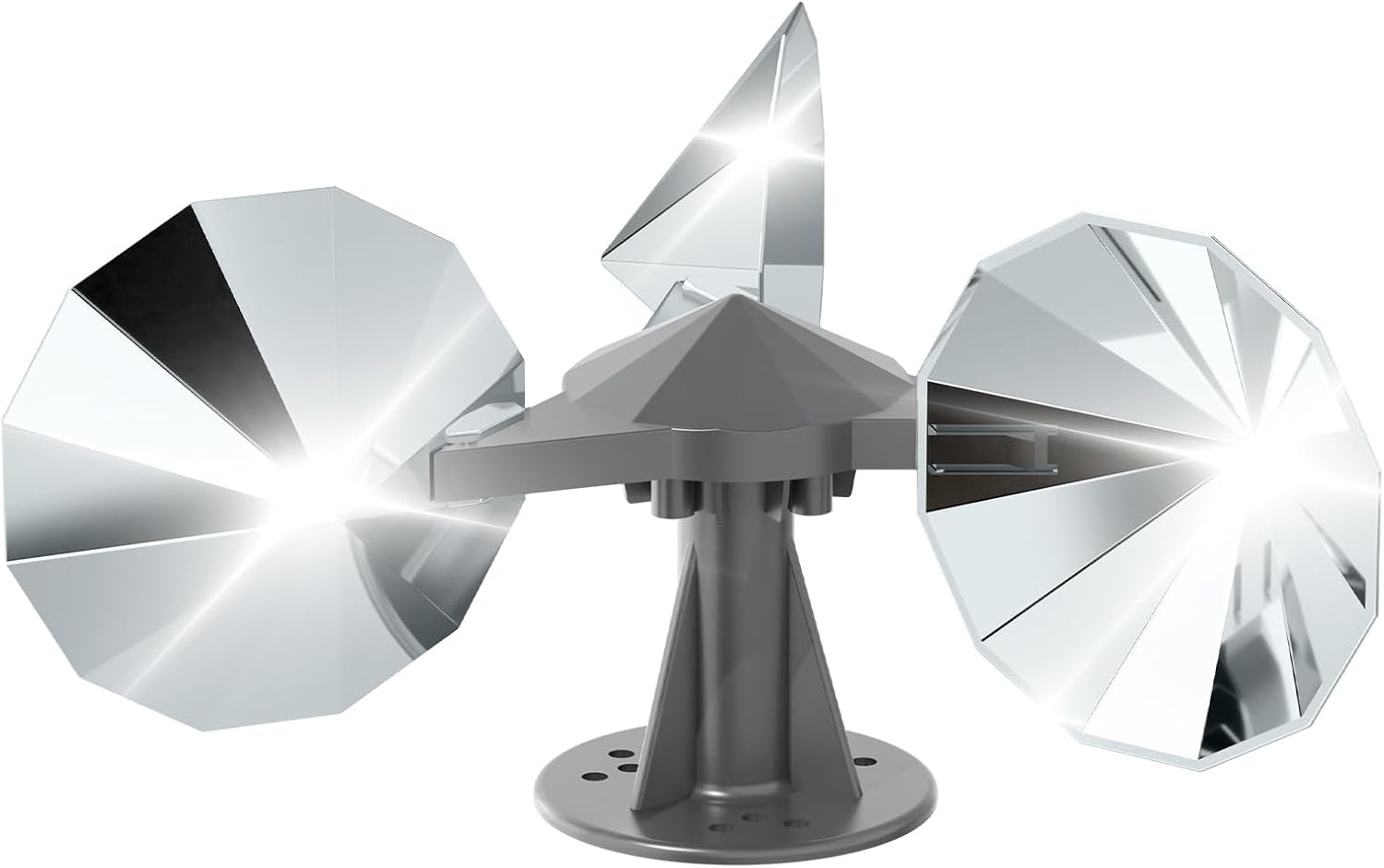
| Material Type | Acrylonitrile Butadiene Styrene (ABS) |
|---|---|
| Target Species | birds |
| Number of Pieces | 1 |
The OFFO reflective bird pinwheel is a compact, wind-driven device that uses mirrored, double-sided polygonal blades to create flashing movement that discourages pigeons, woodpeckers, and other birds from landing. It is typically mounted on railings, balconies, eaves, boats, or garden stakes where it gets sun and free airflow; internal bearings help it spin smoothly and the chrome-like finish increases reflectivity. The unit is preassembled, made from ABS and lightweight materials that resist rust and add minimal load to fragile surfaces, and it runs without batteries or electricity. Installation is straightforward with the included hardware and it can be fixed horizontally or vertically depending on the mounting location. Important limitations are its small coverage area — it is best for localized spots rather than large fields — and effectiveness depends on sunlight and wind, so it is less useful on still, shaded days. In very windy sites you may need to secure the blade connection more firmly to avoid loss.
Best for: Buyers who want a low-effort, visible deterrent for specific problem spots like balconies, railings, or boat tops and who prefer remedies supported by visible design and user feedback.
Less Ideal for: People seeking an all-weather, large-area bird control solution or those who need quiet effectiveness on still, shaded properties should consider more robust or active deterrents.
- Double-sided mirrored blades produce strong reflective flashes to unsettle nearby birds
- Preassembled, lightweight ABS construction resists rust and is safe for fragile mounting surfaces
- Internal bearings enable smooth spinning in light to moderate wind without power
- Includes mounting hardware and can be installed horizontally or vertically for flexible placement
- Small 5.1 inch height provides only localized coverage so multiple units are needed for larger areas
- Effectiveness depends on sunlight and wind so performance drops on calm or shaded days
Verdict: A simple, maintenance-free reflective spinner that provides an easy, visible deterrent for small bird problem spots.
Hausse 10‑Pack Reflective Mylar Pinwheels with Stakes

| Material Type | Plastic |
|---|---|
| Additional Features | waterproof |
| Number of Items | 10 |
| Blade Shape | Petal |
These Hausse reflective pinwheels are a simple visual bird deterrent sold in a 10‑pack and intended for garden, orchard, or yard use. Each unit assembles from separate plastic pieces onto a stake, then spins in light winds to create bright flashes that can discourage birds from landing on crops, balconies, or ponds. The set is made from waterproof, non‑toxic plastic Mylar so the blades stay shiny and usable outdoors, and the included stakes make it easy to place them across a small field, vegetable bed, or around fruit trees. Because they rely on wind and sunlight, they work best in open, sunny spots and where there is at least a light breeze; they will be less effective on calm, overcast days or for determined birds that have grown used to static deterrents. Assembly is required and the thin plastic parts are not heavy‑duty, so expect to replace or rebuy if left in storms or harsh conditions. For low‑risk, humane bird control over a broad area these pinwheels are an inexpensive, low‑maintenance option.
Best for: Buyers who want a low‑cost, humane way to reduce bird damage across gardens, small orchards, patios, or raised beds and prefer easy, visual deterrents over chemical or lethal options.
Less Ideal for: Not a good fit for people needing a reliable solution in calm, shaded locations or those who require heavy‑duty, permanent deterrents for large commercial fields.
- Ten pieces provide broad coverage for gardens or orchards
- Reflective Mylar blades produce bright flashes that scare birds without harm
- Waterproof, non‑toxic plastic construction suitable for outdoor use
- Included stakes make placement straightforward and flexible
- Performance depends on wind and sunlight so effectiveness varies by location and weather
- Plastic blades and connectors are lightweight and can wear or break in strong weather
Verdict: A budget-friendly, humane visual deterrent that gives risk‑averse gardeners an easy way to cover plants and keep birds away when placed in sunny, breezy spots.
Choosing the Right Bird Repellent: Key Factors to Consider
Coverage Area and Range
How much ground or vertical surface a repellent covers determines how many units you need and where they should be placed. For open lawns or orchards you may need devices or netting with a wide broadcast or large-footprint coverage. For small patios or individual raised beds you can choose compact options with a small effective radius.
Understanding labeled coverage lets you plan layout so there are no gaps that birds can use as entry points. Overlapping coverage is often necessary at edges, and physical deterrents should be sized so they reach the typical flight paths birds use to access fruit or ledges.
Material and Weather Resistance
Garden repellents are exposed to sun, wind, rain, and freezing temperatures, so materials and UV resistance matter for longevity. Netting and tape should resist tearing and brittle failure in sun and cold, while electronic or moving devices need housings that keep moisture out and electronics protected.
Durable construction reduces replacement frequency and keeps the deterrent working through seasons. Check for corrosion-resistant metal parts and UV-stable plastics when the repellent is intended for year-round outdoor use.
Installation Flexibility
Ease of installation affects whether you actually deploy the repellent correctly. Some products require stakes, brackets, or permanent mounts while others are temporary and portable. Consider how often you will move the device and whether you have tools and access to anchor points.
Options with adjustable mounting systems or simple ties are better for irregular shapes like pergolas or uneven tree canopies. Quick-install systems reduce setup time when you need seasonal protection only during fruiting.
Safety For Plants and Wildlife
A repellent should deter nuisance birds without injuring them or affecting pollinators and other wildlife. Avoid harsh chemical agents that can damage foliage or drift onto edible crops. Physical barriers and nonlethal visual or sonic methods are generally safer near flowering plants and bee activity.
Look for repellents labeled as non-toxic and safe for use around food crops if you plan to protect vegetables or fruit. Consider how the device affects beneficial species and whether placement can reduce unintended impacts.
Maintenance and Longevity
Different repellents require different levels of upkeep. Netting and physical barriers may need seasonal removal, cleaning, and re-tensioning. Visual deterrents like reflective tape or decoys often need replacement as color fades. Electronic and motion devices may need battery changes or occasional recalibration.
Estimate upkeep time and replacement costs when comparing options. Low-maintenance solutions can be worth a higher upfront effort if they save repeated attention during busy seasons.
Adaptability to Bird Species and Behavior
Bird species vary in intelligence, persistence, and flocking habits, so a repellent that works for small songbirds might fail against larger or more adaptable species. Consider whether a product has adjustable settings or combines multiple deterrent modes like visual and sonic cues.
Selecting a solution that lets you change intensity or move units gives flexibility if bird pressure shifts during the season. Combining methods is often necessary for persistent or large flocks.
Common Garden Scenarios and Recommended Approaches
Different garden areas invite different bird problems and need tailored repellent types. Small patios and container gardens respond well to compact visual or scent-based deterrents and to lightweight netting for individual containers. Fruit trees and berry patches often need whole-canopy solutions such as bird netting or perimeter deterrents that prevent birds from perching on branches.
Rooflines, eaves, and ledges require discreet solutions that do not damage building materials. Low-profile physical barriers, angled spikes on ledges where allowed, and long-lasting shiny tape or streamers can reduce roosting. Observing where birds land and feed helps you choose a targeted approach rather than scattering repellents randomly.
- Patios and small containers: small-area visual or temporary netting
- Fruit trees and shrubs: canopy netting or perimeter devices
- Rooflines and eaves: discreet ledge treatments and angled barriers
Combining Methods for Better Results
Single-method approaches can work for short-term problems, but persistent bird pressure is usually best handled with a combination of barriers and deterrents. Physical netting prevents access while visual or sonic devices discourage repeated attempts to breach the barrier.
Rotate or change visual cues and sonic patterns periodically. Birds habituate to static stimuli, so altering the appearance or placement of decoys and changing sound intervals keeps the pressure unpredictable.
- Use netting for primary exclusion and visual/sonic devices as secondary deterrents
- Change placement or patterns every few weeks to prevent habituation
Installation Tips to Maximize Effectiveness
Place repellents at likely approach paths and near the food source. Ensure netting is taut and anchored so birds cannot slip underneath. For devices that require height, position them at or above the primary perching points rather than at ground level.
Avoid gaps at corners and along edges. When mounting near trees, secure attachments so wind does not loosen lines and cause flapping that reduces effectiveness. Inspect installations after storms and re-tension or re-anchor as needed.
- Anchor netting tightly and check edges for gaps
- Mount devices at bird approach height, not just ground level
- Inspect after bad weather and adjust tension
Seasonal Use and Storage
Many repellents are most effective during specific seasons, such as fruiting or migration periods. Pull down and store netting and fragile visual devices when not in use to extend their life. Clean and dry items before storage to prevent mildew or corrosion.
Plan for overwintering hardware with corrosion-resistant fasteners and consider removable mounts for seasonal removal. Proper storage preserves reflective surfaces and electronics so they remain effective the following year.
- Remove and store delicate repellents when out of season
- Clean and dry netting before storage
- Use corrosion-resistant mounts for year-round installations
Legal and Ethical Considerations
Respect local wildlife regulations and avoid lethal or injurious approaches unless explicitly allowed and necessary. Many jurisdictions protect certain species and restrict methods that can cause harm. Choose humane deterrents that discourage birds without injury.
Consider neighbor relations when using sonic or highly visible repellents. Loud or flashing devices can be disruptive beyond your property, so aim for strategies that balance effectiveness with community impact.
- Check local regulations before using aggressive deterrents
- Prefer humane, nonlethal methods
- Be considerate of neighbors when using sound or bright visual devices
How We Chose the Best Bird Repellent
We prioritized solutions gardeners can use safely and effectively around plants, people, and pets. Evaluation focused on concrete, measurable dimensions: coverage effectiveness across different bird species and flock sizes, material durability against weather and UV exposure, ease and flexibility of installation for common garden sites, maintenance needs and longevity of the repellent effect, and safety for plants and non-target wildlife. Products that relied on illegal or inhumane methods were excluded, as were items lacking clear usage instructions or safety labeling. We also filtered out options that only address a single very specific scenario without adaptability. The final shortlist includes repellents that offer clear coverage metrics, documented expected lifespan, simple installation options for patios, fruit trees, raised beds, and rooflines, and manageable maintenance routines. These criteria align with the scoring metrics below so you can compare how each repellent performs where you garden.
FAQ
What type of repellent works best for fruit trees?
Netting that fully covers canopy and prevents access is usually most reliable for fruit trees. Combine netting with visual deterrents for perimeter pressure, and ensure the net is secured so birds cannot slip underneath.
Are sonic repellents safe for pets and pollinators?
Many sonic devices are designed to target bird hearing ranges and are safe for pets if placed correctly, but effectiveness varies. Keep devices away from pollinator hotspots and monitor for unintended effects on beneficial wildlife.
How long do visual repellents like reflective tape last outdoors?
Reflective materials degrade with sun and weather exposure and typically need replacement every season or two depending on UV exposure. Choosing UV-stable materials and using them on rotating schedules extends overall effectiveness.
Can I use netting over vegetable beds without harming plants?
Yes, lightweight netting designed for garden use can cover vegetables without shading them too much, provided it is installed with enough clearance to avoid crushing foliage. Remove netting during flowering if pollination by insects is needed.
Will birds get used to a single deterrent over time?
Often birds habituate to static deterrents, so rotating visual cues, changing device placement, or combining methods helps maintain effectiveness. Persistence and variation reduce the chance of habituation.
How do I decide between permanent and temporary solutions?
Choose permanent installations when bird pressure is year-round or for structural protection. Temporary or seasonal solutions are better for fruiting periods or when you want minimal visual impact during the off season.
Final Verdict
Choose the repellent that matches where birds are getting access and how much time you can spend on maintenance. Prioritize proven coverage for the problem area, durable materials for your climate, and methods that are safe for plants and local wildlife. Combine exclusion with deterrents when persistence is the issue, and plan seasonal removal or replacement to keep systems working effectively.
