

Note: This article contains affiliate links. If you click on these links and make a purchase, I may earn a small commission at no extra cost to you. This helps support my research and content. Read my full affiliate disclosure here.
If you have mice, rats, or other small rodents in or around your house or garden, choosing the right natural rodent repellent matters. You want something that reduces activity without creating hazards for kids, pets, or wildlife, and that works in real conditions like basements, sheds, raised beds, and compost areas. This guide lists seven carefully shortlisted natural options suited to home and garden use and explains how they perform on key measures such as deterrent effectiveness and safety. Read on to understand each repellent's strengths and which attributes matter most for your situation.
Top Picks at a Glance
| Best Overall The best all-around choice for most situations | SAHETO Peppermint Oil Rodent Repellent Balls, 36-Pack with Pouches |  |
| Best Quality Built to a higher standard if you want something more solid | EarthKind Fresh Cab Botanical Rodent Repellent, 4-Pack |  |
| Best Value The sweet spot between price and what you get | hersohis Rodent Repellent Balls (48-Pack) with Peppermint Oil |  |
| Best Budget The cheapest option that still gets the job done reliably | Victor Scent-Away Natural Rodent Repeller Sachets (Pack of 5) |  |
| Highest Rated A top-rated pick with lots of positive feedback | Scarilpest Peppermint Mouse Repellent Pouches, 36-Pack |  |
| Most Popular A crowd favorite that many people choose with confidence | Mighty Mint Peppermint Oil Rodent Repellent Spray, 16 oz |  |
| Best Seller A high-volume bestseller chosen again and again | Grandpa Gus's Mouse Repellent Pouches (Peppermint & Cinnamon), 10 Pack |  |
SAHETO Peppermint Oil Rodent Repellent Balls, 36-Pack with Pouches

| Package contents | 36 scent balls with drawstring pouches |
|---|---|
| Active scent | Peppermint essential oil |
| Intended use | Indoor and outdoor placement (garages, sheds, cars, RVs, storage) |
| Manufacturer | SAHETO |
These peppermint oil repellent balls offer a scent-based alternative to traps and poisons for discouraging mice and small rodents. The kit includes 36 plant-based scent balls and breathable drawstring pouches so you can tuck or hang sachets in garages, attics, basements, cars, RVs, sheds and other targeted areas. In practice you place several balls into a pouch and position it near suspected rodent entry points or storage areas; the peppermint aroma is intended to be pleasant for people but aversive to rodents and releases gradually over time. The main benefits are ease of use and low maintenance since there is no mess, no setup, and no toxic bait to handle. Effectiveness depends on placement and ventilation so you may need to replace balls more often in open or well-ventilated spaces. These are best used as part of an integrated approach that includes exclusion and sanitation rather than as the sole control for an active infestation.
Best for: Gardeners and homeowners seeking a low-effort, fragrance-based way to reduce rodent presence around storage areas, vehicles, and outbuildings without using poisons or traps.
Less Ideal for: Anyone facing a significant, active rodent infestation who needs immediate population reduction should choose professional removal or lethal control methods instead.
- Plant-based formula with peppermint essential oil intended to be family- and pet-friendly when used as directed
- Comes with breathable drawstring pouches for flexible placement and easy hanging or tucking
- No traps, baits, or messy application required which simplifies upkeep
- Large 36-ball pack provides multiple sachets or repeat replacements across areas
- Scent strength and duration vary with ventilation and may require frequent replacement in open spaces
- Not a lethal control and unlikely to stop an established infestation on its own
Verdict: Choose these peppermint oil scent balls if you want a simple, non-toxic, low-maintenance way to deter rodents around storage spaces and vehicles.
EarthKind Fresh Cab Botanical Rodent Repellent, 4-Pack

| Ingredients | Plant Fibers, botanical oils (balsam fir oil) |
|---|---|
| Duration per pouch | Up to 30 Days |
| Intended use | Indoor |
EarthKind Fresh Cab uses plant fibers and essential oils such as balsam fir to create a no-kill indoor rodent repellent delivered in small pouches. You place the pouches where you see mouse activity or potential entry points—closets, pantry shelves, garages, under sinks—and each pouch is formulated to last up to 30 days so you can set and forget for a month at a time. The product’s practical benefits are that it is toxin-free and family and pet friendly, so it avoids the cleanup and safety concerns of traps or poisons. Because it is botanical and passive, results tend to be preventive and best when combined with exclusion and sanitation; heavily infested homes may see slower or partial effect compared with lethal methods. The pouches are lightweight and discreet, and the natural scent that repels rodents is noticeable to people at first but typically fades. For someone who wants an eco-friendly, low-maintenance way to reduce mouse visits indoors, Fresh Cab offers an effective, low-risk option with straightforward placement and monthly replacement intervals.
Best for: Buyers who prioritize a non-toxic, low-maintenance way to reduce indoor mouse activity and who plan to use repellents alongside exclusion and cleaning.
Less Ideal for: Homes with an active, large rodent infestation seeking a fast kill-and-remove solution should consider mechanical or professional control instead.
- Botanical, no-poison formula safe for homes with people and pets
- Each pouch lasts up to 30 days for monthly maintenance
- Made in the USA with primarily US-grown ingredients
- Simple passive placement requires no setup or cleanup
- Not an immediate lethal solution so may not eliminate established infestations quickly
- Effectiveness depends on correct placement and good sanitation practices
Verdict: Choose Fresh Cab if you want an effective, pet-safe botanical pouch that reduces indoor mouse visits with monthly, no-poison maintenance.
hersohis Rodent Repellent Balls (48-Pack) with Peppermint Oil

| Package count | 48 balls (8 sealed packs) |
|---|---|
| Active scent | Peppermint oil blend |
| Protection duration | 60 to 90 days per placement |
| Intended use | Indoor and outdoor |
These repellent balls use a concentrated blend of botanical oils, primarily peppermint, to create an odor barrier pests avoid. The kit arrives as 48 balls in eight sealed packs so you can drop them where rodents appear most often — attics, basements, garages, sheds, RVs, and garden storage — with no tools or setup required. The manufacturer rates each placement to last about 60 to 90 days, which makes it simple to plan rotation and replacement. Being plant-based and described as pet- and family-friendly when used as directed is a practical advantage for households that want to avoid poisons or traps. The balls are weather resistant for outdoor use, but in very breezy or highly ventilated spots you will need to place more units to maintain an effective scent cloud. Also, performance depends on rodent pressure and environment, so heavily infested properties may need additional control methods alongside these balls.
Best for: Buyers who want a low-maintenance, non-toxic deterrent to reduce rodent visits around living spaces, storage areas, and outdoor structures and prefer scheduled, scent-based protection over traps or poisons.
Less Ideal for: People facing a severe, established infestation or those who need immediate removal of rodents should choose active capture or professional pest control instead.
- Plant-based peppermint formula provides a non-toxic option for deterring rodents
- 48 balls packaged in sealed packs make placement and staged replacement easy
- Rated 60 to 90 days of scent release per placement for low-maintenance protection
- Designed for both indoor and outdoor use and described as weather resistant
- Effectiveness varies with airflow and rodent pressure, requiring more units in windy or heavily infested areas
- Not a lethal control so it may not eliminate an existing infestation on its own
Verdict: A practical, low-maintenance plant-based deterrent for homeowners who want scheduled, non-toxic rodent prevention rather than lethal methods.
Victor Scent-Away Natural Rodent Repeller Sachets (Pack of 5)

| Number of Items | 5 |
|---|---|
| Item Volume | 1 fluid ounces |
| Scent Name | Peppermint |
| Item Form | Sachet |
| Indoor Outdoor Usage | Indoor |
The Victor Scent-Away sachets use peppermint-oil infused granules inside a breathable mesh to create a strong mint scent that rodents find unpleasant. You remove a sachet from the packaging and either hang it by the attached string or tuck it into confined spaces such as closets, cupboards, attics, basements, or vehicles. Each sachet is claimed to provide up to 30 days of protection before the scent fades, making them a low-effort, disposable option for short-term deterrence. The formulation is simple and marketed as natural and humane, which makes it suitable for homes with children and pets where traps or poisons are undesirable. Limitations are that effectiveness depends on placement and confinement of the scent, the packs are indoor use only, and they offer temporary scent-based deterrence rather than removing existing infestations. You should expect to replace sachets monthly in problem areas and combine them with exclusion and sanitation for best results.
Best for: Buyers looking for an inexpensive, low-effort way to deter rodents in enclosed indoor spaces who prefer non-toxic and humane options.
Less Ideal for: People dealing with an active or large infestation, or those who need an outdoor or long-term exclusion solution, should consider stronger mechanical or professional measures.
- Natural peppermint oil formulation avoids poisons and messy liquids
- Breathable mesh sachet makes placement tidy and mess-free
- Portable and easy to hang or tuck into enclosed spaces
- Each sachet lasts up to 30 days for predictable replacement cycle
- Provides only temporary, scent-based deterrence and will not eliminate established infestations
- Designed for indoor use only and should not be exposed to extreme heat or weather
Verdict: A cheap, no-mess peppermint sachet set that gives a simple, temporary rodent deterrent for confined indoor spaces.
Scarilpest Peppermint Mouse Repellent Pouches, 36-Pack
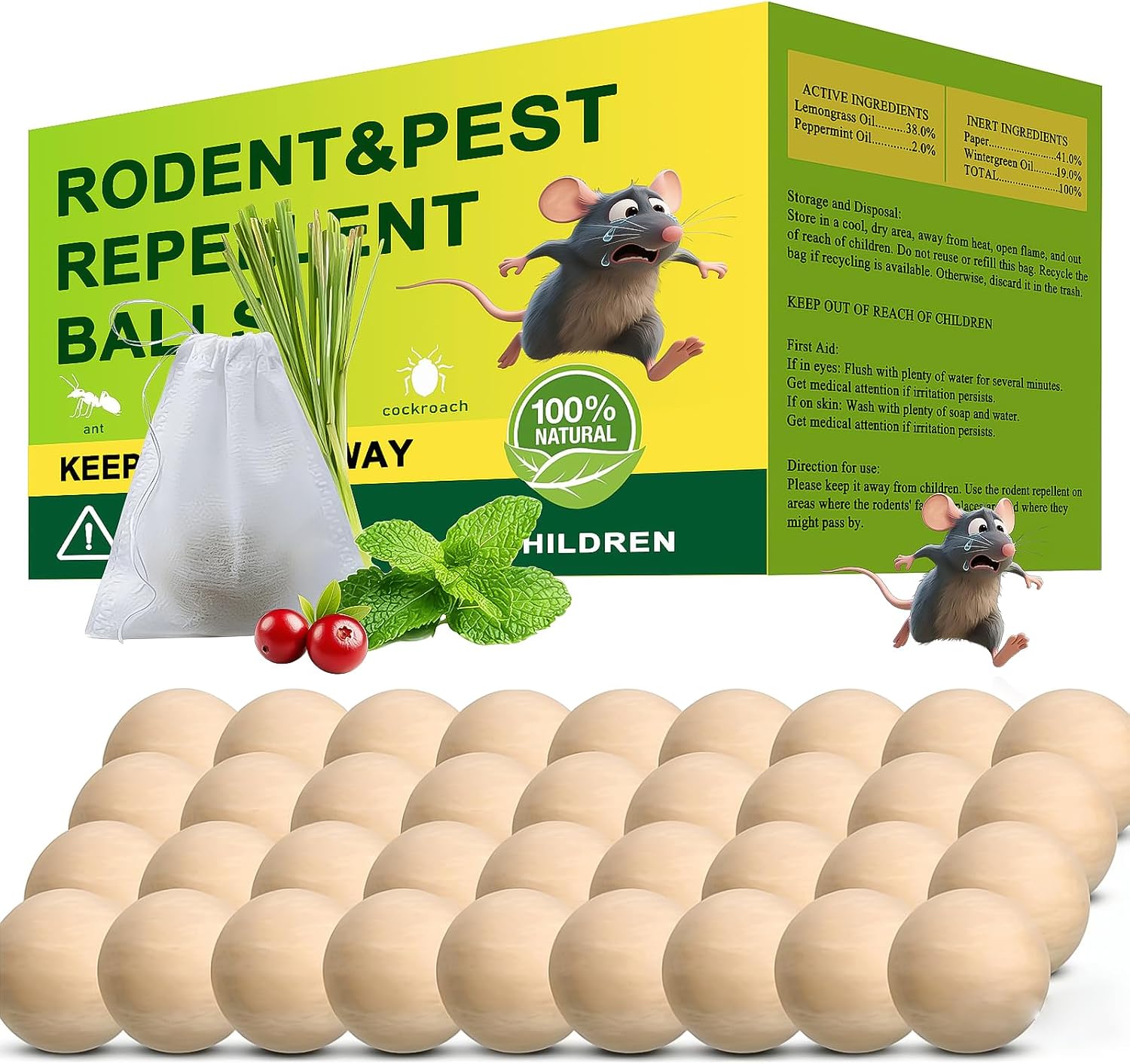
| Item model number | QS |
|---|---|
| Manufacturer | Scarilpest |
| Package count | 36 pouches |
| Intended use | Indoor & outdoor rodent deterrent |
Scarilpest’s peppermint mouse repellent comes as 36 small, ready-to-place pouches that use a peppermint-infused, plant-derived formula to discourage rodents. You place the compact sachets around likely entry points and problem areas such as kitchens, garages, basements, sheds, and vehicles; the scent is intended to create an environment rodents avoid without traps or poisons. The product emphasizes long-lasting, sustained deterrence so you do not need to reposition pouches frequently, and the large count makes it easy to cover multiple rooms or outdoor zones. Because the pouches are simple and non-electronic there is no setup or ongoing maintenance beyond occasional replacement when the scent fades. Limitations are that effectiveness depends on airflow, the extent of an existing infestation, and pests’ tolerance to scents, so very heavy infestations may require integrated control measures. Overall the pouches are a low-effort, non-toxic option for keeping rodents away in living and storage spaces where a chemical or lethal approach is not desired.
Best for: Buyers who prioritize a low-maintenance, non-toxic deterrent and want reliable, scent-based coverage for multiple indoor and outdoor areas.
Less Ideal for: People facing a heavy or established rodent infestation who need immediate removal or who require monitored, lethal control methods.
- Natural peppermint oil formula that avoids poisons and traps
- Large 36-count pack for broad coverage and repeat placement
- Ready-to-use pouches require no setup or tools
- Suitable for both indoor and outdoor use including garages and sheds
- Effectiveness can vary with ventilation and the severity of an infestation
- No measured active ingredient concentration or duration per pouch is provided
Verdict: A simple, ready-to-use peppermint pouch pack for buyers who want a non-toxic, low-effort way to deter rodents across multiple spaces.
Mighty Mint Peppermint Oil Rodent Repellent Spray, 16 oz

| Ingredients | Peppermint Oil, Glycerin, Water, Polyglycerol Oleate, Soap |
|---|---|
| Form | Ready-to-use spray |
| Intended pests | Mice, Rats, Small Rodents |
| Use areas | Indoor / Outdoor |
| Volume | 16 oz |
Mighty Mint Peppermint Oil Rodent Repellent is a plant-based, ready-to-use spray aimed at keeping mice and rats away from targeted areas like baseboards, entryways, garages, and vehicle compartments. You use it by shaking and spraying until surfaces are covered, then reapplying at least twice weekly for maintenance. The formula lists peppermint oil, glycerin, water, polyglycerol oleate, and soap, so it functions as an odor-based deterrent rather than a toxic control method. Practical benefits include a pleasant mint scent that most people find less offensive than chemical pesticides and a simple spray bottle for precise application in problem spots. It is labeled safe to use around people and pets when used as directed, which makes it suitable for homes with children and animals. Limitations are that it relies on repeated applications for effectiveness, may be less reliable against established infestations compared with traps or baits, and the strong peppermint aroma can bother those sensitive to scents. Testing on a small area is advised before broad application.
Best for: Buyers who prefer nonchemical, family- and pet-friendly pest prevention and want a simple spray to deter rodents from entry points and small problem areas.
Less Ideal for: People facing a large active infestation or those who need a one-time permanent solution should consider stronger mechanical or professional controls instead.
- Plant-based peppermint oil formula that repels common rodents without poisons
- Ready-to-use 16 oz spray bottle for targeted, easy application
- Safe for use around people and pets when applied as directed
- Suitable for indoor and outdoor spot treatments including garages and vehicle compartments
- Requires frequent reapplication (recommended twice weekly) to maintain effect
- May be less effective against large or established infestations compared with traps or baits
- Strong peppermint scent can be bothersome to scent-sensitive individuals
Verdict: A convenient, plant-based spray for people who want a pet-friendly, nonpoisonous way to deter rodents from entry points and small problem areas.
Grandpa Gus's Mouse Repellent Pouches (Peppermint & Cinnamon), 10 Pack

| Ingredients | Peppermint Oil, Cinnamon Oil |
|---|---|
| Directions | Place in enclosed low-airflow spaces; replace every 30 days or when scent diminishes |
| Intended Use Areas | Homes, garages, RVs, storage, engine bays (sheltered placement) |
| Safety | Keep out of reach of children; caution on back |
These pouches use peppermint and cinnamon oils in a time-release formula to create a scent barrier that discourages mice from nesting or returning to enclosed spaces. Typical use is place-and-forget: tuck pouches along baseboards, inside cabinets, attics, storage areas, vehicles, or RVs where airflow is limited. The product is mess-free and nonlethal, so it works as a preventive tool after active infestations are addressed. Notable features include natural active ingredients, an extra-strength scent intended to last about 30 days, and clear directions to limit airflow to extend life. Practical benefits are easy placement, kid- and pet-friendly formulation when used as directed, and no traps or poisons to handle. Important limitations are that pouches are scent-based deterrents only so they will not remove established nests or eliminate rodents on their own, performance drops as the scent fades, and they require monthly replacement and sheltered placement to work best.
Best for: Buyers who prefer a low-hassle, nonlethal preventive solution and want a natural, kid- and pet-friendly way to keep mice from re-entering enclosed indoor spaces.
Less Ideal for: People facing an active or heavy infestation who need immediate removal or a long-term extermination plan should consider professional treatment or more aggressive control methods.
- Uses natural peppermint and cinnamon oils rather than poison or traps
- Time-release scent formulation intended to last up to 30 days
- Mess-free, place-and-go pouches suitable for enclosed low-airflow spaces
- Safe for use around kids and pets when directions are followed
- Scent-only deterrent that will not resolve active infestations or remove existing nests
- Requires sheltered placement and monthly replacement as scent diminishes
Verdict: An easy, nonlethal natural pouch you can place around the home to prevent mice from nesting and returning.
Choosing the Right Natural Rodent Repellent: Key Factors to Consider
Active Method and Mode of Action
Understanding how a natural rodent repellent deters animals is critical because it determines where and how you can use it. Some repellents rely on smell-based deterrents such as essential oils or predator scents that make rodents avoid an area. Others use physical barriers or taste aversion methods that discourage chewing. Knowing the mode of action helps you match a repellent to the problem: scent-based options work well for open spaces and entry points but can be less reliable in strongly ventilated areas, while barrier methods are better for protecting specific items or openings.
Match the method to the infestation pattern. For example, if rodents are entering through foundation gaps, choose a barrier or targeted scent treatment at access points. If they are active in an outdoor compost pile or garden bed, opt for repellents that withstand moisture and retain activity outdoors.
Safety for Household Members and Wildlife
Safety is a top priority when using repellents around kitchens, play areas, or animal housing. Natural does not always mean harmless, so review active ingredients and their exposure risks. Essential oil-based repellents can be irritating to pets or small children if applied in concentrated form or left in accessible containers. Physical devices that emit noise, lights, or ultrasonic pulses may stress pets or wildlife depending on placement.
Consider where family members and companion animals frequent, and place or apply repellents to minimize contact. Avoid methods that rely on ingestion of deterrent substances when pets or wildlife could access them. Choose products with clear safety labeling and follow dilution and placement instructions to reduce unintended impacts.
Effectiveness in Different Garden and Home Microclimates
Microclimates around a property influence how well a natural repellent performs. High humidity, strong sun, heavy rain, and wind can reduce the longevity of scent-based products and wash away concentrates. Cold temperatures can slow the release of volatile compounds that rodents detect.
Plan for the local climate by selecting repellents with formulations or application methods designed for outdoor resilience if you need garden protection. For indoor use, focus on solutions that work in cooler, enclosed areas like basements or crawl spaces where scents persist longer. Reapplication schedules will vary with exposure, so factor climate into maintenance planning.
Coverage Area and Placement Strategy
Different products cover different footprints. Some formulations are intended for treating lofted open areas or perimeter zones, while localized devices are intended for specific burrows, holes, or storage areas. Effective placement is often more important than product strength: rodents follow predictable paths, so treat entry points, runways, and food or shelter sources rather than random open spaces.
Measure or estimate the area you need to protect and confirm the product's recommended coverage. For perimeter treatments, ensure continuous placement or spacing to avoid gaps. When protecting sensitive plants, place repellents so runoff or direct contact is avoided.
Longevity and Ongoing Maintenance
Natural repellents often require more frequent reapplication than synthetic baits or traps. Volatile compounds in scent-based products dissipate with time and weather exposure, and physical barriers may shift or degrade. Understand the typical active life between applications and whether the product needs seasonal replacement.
Budget time for checking treated areas and refreshing treatments after heavy rain or frequent watering. Factor longevity into the overall cost of use: frequent top-ups can mean higher labor and material needs over a growing season.
Compatibility with Garden Practices
Consider how a repellent fits into existing garden practices such as composting, crop rotation, irrigation, and beneficial insect management. Some scent-based treatments could interfere with pollinator behavior if applied to flowering plants. Mechanical or barrier methods may impede access to beds for maintenance and harvesting.
Choose repellents that allow normal garden workflows. For example, use localized devices around storage and compost areas while keeping planting beds free of concentrated scents during bloom. Select products that do not leave residues on produce and that are compatible with mulches and soil amendments.
Where Rodents Most Commonly Appear
Rodents show up where they can find food, shelter, and easy travel paths. Indoors, that often means kitchens, pantries, basements, and attics. Outside, look for activity near compost piles, woodpiles, shed foundations, raised beds, and dense groundcover. Identifying hotspots helps you focus repellent use where it will be most effective rather than treating entire yards indiscriminately.
- Check for droppings, gnaw marks, and burrow entrances to map activity.
- Follow runways and repeat paths; rodents seldom cross open spaces if avoidable.
- Target access points such as gaps around doors, vents, and utility lines.
Nonlethal Control Vs Exclusion and Habitat Reduction
Natural repellents are one piece of an integrated approach. Exclusion and habitat modification reduce the reasons rodents move in, while repellents discourage activity without killing animals. For many gardeners, combining repellents with good sanitation, sealed storage, and physical exclusion yields the most durable result.
Using repellents as a temporary deterrent while you fix structural issues or clear attractants lets you reduce sightings quickly without relying solely on long-term chemical approaches.
- Store birdseed and pet food in sealed containers.
- Remove dense brush and trim vegetation away from foundations.
- Seal gaps larger than a quarter inch where rodents can pass.
Applying Repellents Around Edible Gardens
When protecting vegetable beds and fruit trees, prioritize products that leave no harmful residues on produce or that are labeled for use near edibles. Apply repellents to perimeter barriers, under plant supports, and near burrow entrances rather than directly onto crops. Consider timing applications to avoid flowering periods that attract pollinators.
For potted herbs and delicate containers, use physical exclusion, like mesh or collars, in combination with perimeter scent or visual deterrents to keep animals away without contacting leaves or fruits.
- Avoid spraying scents directly on blossoms or harvestable leaves.
- Place barrier materials under plant drip lines to avoid contamination.
- Reapply or refresh perimeter treatments after heavy irrigation or rain.
Seasonal Timing and Expectation Management
Rodent activity and the effectiveness of repellents vary by season. In colder months, rodents move indoors seeking warmth and stored food, making indoor repellents and exclusion more important. In spring and fall, breeding and foraging increase activity outdoors. Align repellent application with these seasonal peaks to get the most benefit.
Set realistic expectations: repellents reduce activity and encourage avoidance but rarely eliminate all sightings alone. Use them as part of ongoing monitoring and exclusion work.
- Increase inspections and reapplications during wetter seasons.
- Use stronger perimeter focus during harvest and storage seasons.
- Combine repellents with trapping or exclusion when infestations are established.
How We Chose the Best Natural Rodent Repellent
We focused on products and approaches that rely on non-toxic or low-toxicity active methods and materials appropriate for home and garden use. Editorial filters emphasized real-world usability, so we evaluated how well a repellent performs in typical indoor and outdoor spots where rodents appear, how quickly it shows results, and how long its effects last under weather exposure. Safety for people, pets, and beneficial wildlife was a distinct filter: we excluded any method that depends on unrestricted use of toxic baits or poisons. We also prioritized ease of application and maintenance, looking for options that gardeners can deploy without specialized tools or training. Durability and cost-to-replace over a season were considered to reflect ongoing garden management. Finally, we screened for clear usage instructions and labelling that help homeowners apply products responsibly. Excluded from the list were methods that are illegal in many jurisdictions, industrial-scale controls, or treatments requiring professional-only installation.
FAQ
Are natural rodent repellents safe around pets and children?
Often they are safer than poisons, but safety depends on the specific product and formulation. Some essential oils and concentrated compounds can irritate or be toxic if ingested by pets. Always read safety instructions, place treatments out of reach, and choose products labeled for household use around animals and kids.
How quickly will I see results after applying a natural repellent?
Response time varies. Some scent-based repellents can reduce activity within days, while barrier and exclusion measures can stop access immediately once in place. Weather and the size of the infestation influence how fast you notice fewer signs of rodents.
Can I use natural repellents inside and outside the house?
Yes, but choose formulations suited to each environment. Indoor products should have low volatility and low odor to avoid bothering occupants. Outdoor options need weather-resistant formulations or physical designs that maintain effectiveness after rain and sun exposure.
Do natural repellents keep rodents away permanently?
Natural repellents usually deter animals while active but rarely provide permanent elimination on their own. Long-term control depends on addressing food sources, shelter, and entry points in addition to ongoing repellent use and monitoring.
Will repellents harm beneficial wildlife like pollinators?
Some repellents may affect non-target wildlife if applied directly to flowers or water sources. To protect pollinators, avoid spraying flowering plants and follow label guidance on placement and timing. Use targeted perimeter or exclusion methods near garden beds when possible.
Final Verdict
Choose a natural rodent repellent based on where rodents are active, how long protection needs to last, and who else uses the area. Prioritize safety around people, pets, and pollinators, and match the repellent method to the site-scent deterrents for open spaces, barriers for specific access points, and durable outdoor formulations for exposed garden areas. Use repellents as part of an integrated approach that includes exclusion and habitat reduction. With a clear placement and reapplication plan, you can reduce rodent activity while keeping the garden safe and functional.
