

Note: This article contains affiliate links. If you click on these links and make a purchase, I may earn a small commission at no extra cost to you. This helps support my research and content. Read my full affiliate disclosure here.
Outdoor rodent control is different from indoor baiting. You are dealing with open access, nontarget wildlife, and weather exposure, so the right rodent poison for outdoors should balance effectiveness with placement strategies that limit secondary poisoning and runoff. This guide covers a shortlisted group of top-performing outdoor rodent poisons, chosen for how they behave in real yard, garden, and building-perimeter settings. We evaluate active ingredient potency, environmental risk, and practical factors like weather resistance and bait stability to help you pick the option that fits your property and safety priorities. Read on to see which types made the list and why they suit common outdoor situations.
Top Picks at a Glance
| Best Overall The best all-around choice for most situations | Tomcat All-Weather Bait Chunx, 4 lb |  |
| Best Quality Built to a higher standard if you want something more solid | Bell Laboratories Final Blocks Rodenticide, 18 lb |  |
| Best Value The sweet spot between price and what you get | Victor Fast-Kill Bait Blocks II, 86-Count Rodenticide Bait Blocks (4 lb) |  |
| Best Budget The cheapest option that still gets the job done reliably | Tomcat Mouse Killer Refillable Bait Station with 16 Bait Blocks |  |
| Highest Rated A top-rated pick with lots of positive feedback | Farnam Just One Bite II Rat & Mouse Bait Bars, 8-pack |  |
| Most Popular A crowd favorite that many people choose with confidence | Tomcat Bromethalin Bait Chunx Pail, 4.25 lb |  |
| Best Seller A high-volume bestseller chosen again and again | Victor M925 Rodent Killer 4 lb Fish‑Flavored Bait | 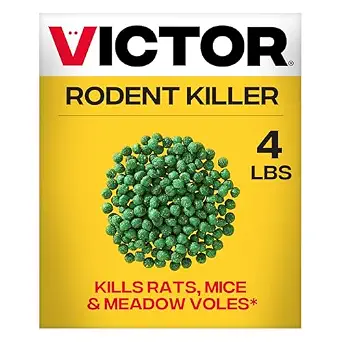 |
Tomcat All-Weather Bait Chunx, 4 lb

| Unit Count | 64 Ounce |
|---|---|
| Item Form | Tablets |
| Target Species | Rat & Mice |
| Active Ingredients | Diphacinone |
This 4 lb Tomcat All-Weather Bait Chunx is a compact, weather-resistant rodent bait designed for outdoor agricultural and rural use. The bait tablets contain the active ingredient diphacinone and are manufactured to be highly palatable so rodents will consume them quickly. Typical use is in bait stations or targeted locations around barns, sheds, and perimeter areas where rats and mice are active; the product is described as mold- and moisture-resistant, which helps it remain effective in damp conditions. Practical benefits include a formulation intended to attract rodents and a weight that suits multiple placements without frequent refilling. Expect results over several days as the product works after ingestion. Important limitations are the intended outdoor and agricultural labeling, which means it is not formulated for general indoor household use, and the active ingredient requires responsible placement to avoid non-target exposure to pets or wildlife. Follow local regulations and label directions for safe deployment.
Best for: Buyers who need a durable, no-frills outdoor rodent bait for farms, barns, or rural properties and prioritize an effective, weather-resistant solution.
Less Ideal for: Urban homeowners, indoor-only use, or anyone who cannot guarantee safe placement away from pets and wildlife should consider alternatives or professional services.
- Formulated to attract rats and mice with palatable ingredients
- Mold- and moisture-resistant for outdoor durability
- 4 lb package provides enough bait for multiple placements
- Contains a proven anticoagulant active ingredient for effective control
- Intended for agricultural and rural outdoor use rather than general indoor household use
- Contains a toxic active ingredient requiring careful placement to protect non-target animals
Verdict: A weather-resistant, palatable 4 lb rodent bait built for effective outdoor control of rats and mice.
Bell Laboratories Final Blocks Rodenticide, 18 lb

| Brand | Bell Laboratories |
|---|---|
| Item Form | Spray |
| Target Species | Rodents |
| Item Weight | 19.9 pounds |
Final Blocks is a professional-style rodenticide supplied as hardened bait blocks in a bulk 18 pound package for outdoor use. It is intended for perimeter baiting, bait stations, and other exterior placements to control mice and rats over large areas. The product’s block form makes it weather-resistant compared with loose bait and easier to place in commercial-style bait stations, and the bulk size is convenient for repeat treatments or large properties. Because it is a concentrated rodenticide, it delivers consistent, long-lasting control when used according to label directions, but that potency requires careful stationing to avoid non-target exposure. There is no detailed ingredient breakdown or dosing information in the provided listing, so buyers should consult the product label for active ingredient, safety, and legal use instructions before applying. This is a no-frills, performance-focused option best suited to experienced users managing significant outdoor rodent pressure.
Best for: Experienced homeowners, property managers, and pest-control contractors who prioritize strong, long-lasting rodent control across large outdoor areas and who will place bait in secure stations.
Less Ideal for: People with small yards, households with frequent children or pets, or first-time users looking for a low-toxicity or ready-to-use home product should consider safer or smaller alternatives.
- Large 18 lb bulk package suitable for treating large properties or multiple service visits
- Hardened block form is more weather-resistant and less likely to be scattered than loose bait
- Designed for use in bait stations and perimeter placements for sustained control
- Listing does not include active ingredient or application details, requiring label consultation
- Bulk packaging may be more than needed for small residential yards
Verdict: Choose this heavy-duty 18 lb block bait when you need a bulk, weather-resistant rodenticide for large outdoor areas and professional-style baiting.
Victor Fast-Kill Bait Blocks II, 86-Count Rodenticide Bait Blocks (4 lb)

| Unit Count | 1 Count |
|---|---|
| Included Components | 4lb Bag |
| Item Form | Blox |
| Target Species | Rodents |
| Active Ingredients | Bromethalin |
These Victor Fast-Kill Bait Blocks are a concentrated rodenticide solution intended for tackling moderate to large outdoor infestations of roof rats, Norway rats, and house mice. The 86 preformed blocks come ready to place inside tamper-resistant bait stations and use a palatable bromethalin formula that encourages rodents to eat until they receive a lethal dose, often within a night or two for mice. Typical use is spacing placements along runways and near signs of activity, replenishing bait at heavy-feeding spots and maintaining stations until feeding stops. The practical benefits are clear: the large 4 lb supply reduces refill trips, the block form is easy to handle with gloves, and instructions specify placement intervals for rats versus mice. Important limitations are safety and non-target risk — the product is toxic to people, pets, and wildlife so outdoor use requires secure bait stations and careful handling. Also, bromethalin baits can result in quicker carcass discovery and disposal compared with anticoagulants, so be prepared to collect and dispose of dead rodents safely.
Best for: Homeowners and property managers who need an efficient, low-maintenance outdoor solution for significant rodent problems and prioritize fast knockdown and fewer bait replenishments.
Less Ideal for: People with small, occasional rodent sightings who prefer non-chemical methods or who cannot guarantee secure, tamper-resistant outdoor bait placement.
- Large 4 lb pack provides 86 ready-to-use blocks so fewer refills during heavy infestations
- Palatable bromethalin formula encourages rapid consumption for faster control
- Block form is easy to place inside tamper-resistant bait stations and handle with gloves
- Label includes clear placement guidelines for rats and mice to simplify treatment strategy
- Contains bromethalin which is highly toxic to non-target animals and requires strict bait station use and careful handling
- Not suitable for unsecured areas where children, pets, or wildlife may access bait
Verdict: A practical choice for outdoor infestations when you need a large, ready-to-use bait supply that delivers fast control when used inside secure bait stations.
Tomcat Mouse Killer Refillable Bait Station with 16 Bait Blocks

| Unit Count | 16 Count |
|---|---|
| Target Species | Rodents |
| Power Source | manual |
| Material Type | Plastic |
This Tomcat kit combines a weather-resistant refillable bait station with 16 preformed bait blocks to control mice around buildings and yards. You place the station where activity is seen—against foundations, in garages, basements, or behind appliances—then monitor the clear lid and replace blocks as they are consumed. The station is designed to resist tampering by children and dogs and the bait blocks are intended to kill rodents after feeding so they leave the station before dying. Practical benefits include a reusable plastic station that makes ongoing monitoring simple and a supply of multiple premeasured bait blocks so you can maintain coverage without repackaging bait. Limitations to note are that poison requires caution during placement and handling and that results are not instantaneous, as rodents typically die days after feeding. This product targets mice primarily and does not replace exclusion work or sanitation as part of a complete outdoor rodent control plan.
Best for: Buyers who need an affordable, reusable station and a ready supply of bait for routine outdoor perimeter control and who prioritize ease of monitoring and tamper resistance.
Less Ideal for: People who want immediate knockdown or need a single heavy-duty solution for large rat infestations should consider other methods or products.
- Includes a reusable, weather-resistant bait station for outdoor placement
- Child- and dog-resistant design reduces accidental access
- Clear lid allows quick visual monitoring of bait level
- Comes with 16 premeasured bait blocks for extended use without extra refills
- Contains rodenticide so careful placement and handling are required
- Designed for mice primarily and may be less suitable for larger infestations of rats
Verdict: A cost-conscious option that pairs a tamper-resistant refillable station with 16 bait blocks for straightforward outdoor mouse control.
Farnam Just One Bite II Rat & Mouse Bait Bars, 8-pack

| Item Form | Bar |
|---|---|
| Target Species | Rat,Mouse |
| Active Ingredients | Bromadiolone |
| Unit Count | 128 Ounce |
Farnam Just One Bite II is a heavy-duty rodent bait sold as eight individually wrapped 1-pound bars formulated with bromadiolone. It is intended for outdoor and agricultural building use to control Norway rats, roof rats, and house mice. The bars have nibble ridges to encourage chewing so rodents ingest a lethal dose quickly, and the delayed 4 to 5 day mortality helps avoid immediate bait shyness. Individually wrapping each bar makes placement and storage easier and limits exposure while the concentrated active ingredient addresses populations that are resistant to warfarin. Important practical considerations are that this is a toxic anticoagulant bait meant for restricted outdoor and agricultural settings, so careful placement in tamper-resistant bait stations and strict adherence to label safety instructions are required. It is effective for reducing established infestations but not suitable for general household use where children, pets, or non-target wildlife could access baits.
Best for: Growers, farm and stable managers, or property owners who need a dependable, high-efficacy rodent bait for outdoor or agricultural buildings and prioritize fast reduction of established infestations.
Less Ideal for: Homeowners looking for a bait to use in typical family yards, apartments, or areas accessible to children, pets, or wildlife should choose lower-risk control options or rodent stations designed for domestic settings.
- High-efficacy anticoagulant (bromadiolone) that can kill in a single feeding
- Nibble-ridge bar shape promotes chewing and ingestion by rodents
- Individually wrapped 1-pound bars simplify placement and reduce handling
- Effective against warfarin-resistant rat populations
- Restricted to use in and around agricultural buildings and not intended for general household placement
- Contains a potent toxin that requires tamper-resistant stations and careful safety practices
Verdict: A reliable, professional-strength bait for outdoor and agricultural rodent control when you need fast, single-feeding effectiveness.
Tomcat Bromethalin Bait Chunx Pail, 4.25 lb

| Item Form | Bar |
|---|---|
| Target Species | Rodents |
| Net Weight | 4.25 lb |
Tomcat Bromethalin Bait Chunx is a bulk rodenticide supplied as 1 ounce bait blocks in a 4.25 pound pail intended for agricultural and professional use. It is designed for use around buildings, garages, basements, and similar outdoor perimeters provided blocks are placed inside tamper-resistant bait stations. The bromethalin formulation works quickly, with rodents often consuming a lethal dose in a single night and fatalities occurring within a few days. The 1 oz blocks are easy to place and compatible with disposable or reusable bait stations, and the pail holds enough blocks for ongoing treatment and follow-up inspections. Important practical considerations are that outdoor, above-ground use requires a weather- and tamper-resistant station and application must be within 100 feet of man-made structures. This product is not a DIY pet-safe solution and is intended for users who can follow label directions and secure bait from children, pets, and non-target wildlife. Also note there are species restrictions for certain uses in California that must be observed.
Best for: People responsible for outdoor perimeter or structural rodent control who prioritize an effective, professional-strength bait and will follow label directions and use tamper-resistant stations.
Less Ideal for: Homeowners looking for pet-safe, ready-to-use options or casual users unwilling to comply with bait-station and placement requirements should consider non-toxic or mechanical alternatives.
- Fast-acting bromethalin formulation that can kill rodents after a single night of feeding
- Comes in 1 oz bait blocks that are easy to place inside tamper-resistant stations
- Large 4.25 lb pail supplies many bait blocks for extended or repeated treatments
- Labeled for indoor and outdoor use near structures when used with appropriate bait stations
- Requires tamper-resistant bait stations for outdoor or public-area use, which are sold separately
- Not suitable for casual pet owners or households unable to secure bait from children, pets, or wildlife
- Restricted for use against certain species in California
Verdict: Buy this if you need a professional-strength, easy-to-place bromethalin bait in bulk for outdoor perimeter control when you can use tamper-resistant stations and follow label rules.
Victor M925 Rodent Killer 4 lb Fish‑Flavored Bait

| Item Form | Soft Bait |
|---|---|
| Target Species | Rodents |
| Active Ingredients | Diphacinone 0.005% |
| Specification Met | EPA |
| Included Components | 4lb Bag |
Victor M925 is a 4 lb, ready-to-use rodenticide made from fish-flavored soft bait that attracts rodents to consume a lethal dose. It is typically used by placing loose bait along rodent runways or inside tamper-resistant bait stations outdoors or in concealed indoor locations. The formulation is weather-resistant so it retains potency in wet or dry conditions, and the large bag supplies enough bait for extended placements around a yard or property. Because it contains the anticoagulant diphacinone, it works over repeated feedings rather than as an instant-kill toxin, which encourages consumption but requires placement out of reach of children, pets, and non-target wildlife and adherence to label precautions. Practical benefits include ease of use with no mixing required and compatibility with refillable bait stations for safer outdoor deployment. Important limitations are that it is a toxic pesticide requiring careful handling and secure placement, and it may not be suitable where non-target exposure cannot be prevented.
Best for: Homeowners who prioritize a dependable, easy-to-deploy rodent control product for outdoor areas and who will use tamper-resistant bait stations and follow safety instructions.
Less Ideal for: Properties where children, pets, livestock, or wildlife cannot be reliably kept away from bait placements or where nonchemical control is preferred.
- Ready-to-use soft bait requires no preparation and is quick to deploy
- Weather-resistant formula maintains effectiveness in wet outdoor conditions
- Large 4 lb bag provides ample bait for extensive or repeated placements
- Palatable fish-flavored bait encourages rodents to feed repeatedly enhancing effectiveness
- Contains the anticoagulant diphacinone and must be kept away from children, pets, and non-target wildlife
Verdict: A large, weather-resistant ready-to-use bait that gives risk-averse buyers a practical, station-compatible option for outdoor rodent control.
Choosing the Right Rodent Poison for Outdoors: Key Factors to Consider
Active Ingredient and Mode of Action
Knowing the active ingredient helps predict how quickly rodents will be incapacitated and the potential for secondary poisoning in predators. Anticoagulants act over several days, increasing the chance that a poisoned rodent is found and eaten, while acute toxicants typically cause faster mortality but carry their own risks. Read label language about species targeted and documented efficacy so you select a mode of action appropriate for the scale of infestation.
Different active ingredients also influence legal restrictions, required signage, and baiting strategies. For outdoor use you should favor formulations that come with clear mitigation instructions or are designed to be used in contained stations to reduce wandering baits.
Bait Formulation and Weather Durability
Outdoor baits face sun, rain, humidity, and temperatures that affect palatability and potency. Grain-based pellets can swell, crumble, or wash away in heavy rain, while wax blocks and secured sachets resist moisture better. Weather-resistant formulations hold up longer, reducing the need to replace baits frequently and limiting bait exposure to nontarget animals.
Consider how long you expect bait to remain in place. In high-rainfall areas choose formulations or packaging that shed water and retain scent. Check whether the product recommends protected placement or use inside a weatherproof bait station for longer durability.
Placement, Tamper Resistance, and Access Control
Outdoor applications require thought about where baits are placed to avoid dogs, cats, birds of prey, and beneficial wildlife. Using tamper-resistant stations, buried bait placements, or secured containers reduces accidental access. The label should describe acceptable placements and distances from human activity, structures, or water sources.
Access control also affects success. Place stations along runways, near burrows, or against building foundations where rodents travel. Properly installed stations make it easier to check and maintain baits while minimizing exposure to nontargets.
Environmental Risk and Runoff Considerations
Products placed outdoors can introduce contaminants to soil, water, and scavengers. Consider proximity to vegetable beds, ornamental plantings frequented by pollinators, and surface water such as ponds or drainage swales. Some active ingredients bind to soil and persist, while others break down faster; label guidance and local regulations often address acceptable distances from water and sensitive areas.
Minimizing runoff means avoiding bait placement in low spots where rainwater accumulates, and removing unused bait promptly. Choosing formulations intended for contained stations also reduces the chance of particles dispersing into the landscape.
Label Instructions, Legal Restrictions, and Record Keeping
Outdoor rodent poisons are subject to regulatory labeling that governs permitted uses, application rates, and required protective measures. Always follow label directions exactly; they are legal requirements and include critical safety steps for outdoor placement. Labels also indicate whether a product is restricted use, requires signage, or has special disposal instructions.
Keeping a record of placement locations, dates, and bait checks helps with follow-up control and demonstrates responsible stewardship if questions arise from neighbors or regulators.
Monitoring, Bait Checking, and Follow-up Control
Effective outdoor control is about ongoing management, not a single application. Check bait stations regularly to remove spent or contaminated bait and to detect non-target interference. Monitoring helps determine whether baiting is reducing activity and informs whether additional measures such as trapping, habitat modification, or exclusion are needed.
Follow-up should include sanitation to remove attractants, sealing entry points into structures, and making habitat changes that reduce shelter and food availability for rodents.
When to Use Poison Versus Other Control Methods
Poison is one tool among many and is most useful when populations are large or inaccessible to trapping. In open yards where rodents reproduce near foundations, poison can reduce numbers more rapidly than bait-free methods, but it should be used alongside exclusion, sanitation, and habitat modification.
If you can locate and access burrows, traps may be safer for nearby wildlife and pets. Use poison when traps are impractical or when the infestation is widely distributed and repeated monitoring is feasible.
- Use poison when quick population reduction is necessary and safe placement is possible
- Prefer traps or exclusion near high-traffic or wildlife-sensitive areas
- Combine methods for lasting control
Safe Outdoor Placement Techniques
Place bait in tamper-resistant stations anchored to the ground or in sealed containers that prevent birds and larger animals from reaching the bait. Position stations along rodent runways, near burrow entrances, or next to foundations where rodents forage.
Avoid placing baits near vegetable gardens, beehives, bird feeders, or water features. When in doubt, move the station a short distance to a less exposed location and check activity more frequently until you find a secure, effective spot.
- Anchor stations to prevent tipping
- Place on level ground away from direct runoff paths
- Use multiple small stations rather than one large exposed pile of bait
How to Reduce Secondary Poisoning Risk
Minimizing secondary poisoning starts with secure placement and choosing a formulation with label instructions aimed at reducing scavenger exposure. Check stations often and remove any dead rodents promptly, following label disposal guidance to prevent scavengers from consuming carcasses.
If predators are common in your area, consider strategies that limit time-to-death for target species, and increase the use of enclosed stations or trapping to reduce the chance predators consume poisoned prey.
- Inspect stations at least weekly and remove carcasses immediately
- Use enclosed bait boxes that restrict access to small mammals
- Avoid broadcast or loose baiting in areas visited by wildlife
Legal and Neighborhood Considerations
Local regulations may restrict certain active ingredients or require specific application practices for outdoor use. Check municipal ordinances and state guidelines before applying rodent poisons, and follow any mandated notification or signage requirements.
Communicating with neighbors can prevent accidental exposure to pets and alleviate concerns. If you maintain communal green spaces, coordinate with property managers or local associations to ensure your control methods align with community rules.
- Review local rules before application
- Document placement and follow-up actions
- Inform neighbors if baiting near shared or public spaces
Alternatives and Complementary Strategies
Habitat modification and sanitation reduce attractants such as exposed compost, pet food, and dense groundcover. Sealing entry points to buildings prevents rodents from moving indoors, where control becomes more difficult. Using mechanical traps and exclusion work well in combination with targeted baiting.
Biological controls like encouraging raptors can help long-term but are not an immediate fix. Consider an integrated plan that blends immediate reduction tactics with preventive landscape changes to keep rodent pressure low.
- Remove food sources and shelter opportunities
- Install door sweeps and seal foundation gaps
- Use traps as a targeted option in sensitive areas
How We Chose the Best Rodent Poison for Outdoors
We prioritized formulations and product characteristics that matter for outdoor use rather than indoor convenience. Key evaluation criteria included active ingredient class and labeled efficacy against common outdoor rodent species, bait weather resistance and persistence when exposed to rain and sun, and labeled restrictions or instructions aimed at reducing risk to nontarget wildlife and pets. We also assessed packaging and bait presentation that support secure placement in tamper-resistant stations or buried baiting setups, plus instructions for legal and safe disposal. Products were excluded if labeling lacked explicit outdoor use directions, if EPA registration information was missing, or if the formulation required indoor-only placement. Our final shortlist favored options that balance clear, actionable label directions, weather-hardy formulations, and realistic mitigation measures for secondary exposure. The scoring criteria below reflect these practical dimensions so gardeners and property managers can compare choices on concrete performance and safety margins.
FAQ
Can I use rodent poison outdoors near vegetable beds?
It usually depends on the product label. Many labels advise against placing baits near edible crops. If outdoor baiting is necessary near a garden, use tamper-resistant stations placed away from growing areas and follow all label instructions to prevent contamination.
How often should I check outdoor bait stations?
Check stations at least once per week in most situations and more often after heavy rain or wind. Frequent checks let you replace soggy or moldy bait, remove carcasses, and assess whether activity is decreasing.
What should I do if a pet or wildlife eats bait?
Contact a veterinarian or local wildlife rehabilitator immediately and provide label information on the product used. The label will list active ingredients and first-aid guidance that professionals need. Prompt action improves outcomes.
Are some active ingredients safer for outdoor use?
Some formulations and active ingredient classes have label directions that emphasize contained use and reduced risk. Safety depends on how the product is used and whether secure placement is possible. No active ingredient is risk-free, so follow label measures to lower exposure.
How do I dispose of unused or expired rodent poison?
Follow the product label for disposal instructions and local hazardous-waste rules. Do not throw large quantities into regular trash or bury them in the landscape. Many communities offer household hazardous waste collection for pesticides and similar materials.
Can rain wash poison into waterways?
Yes, loose or degraded bait can be carried by runoff into drainage areas. Avoid placing baits in low spots or near surface water and use enclosed stations to minimize movement. Remove contaminated or dispersed bait promptly.
Final Verdict
Outdoor rodent poisoning requires a careful balance between effective population reduction and protecting pets, wildlife, and the local environment. Prioritize formulations and placements that are weather-resistant, come with clear label mitigation measures, and allow use of tamper-resistant stations. Pair baiting with sanitation, exclusion, and monitoring to reduce the need for repeated applications. Ultimately, choose the option that fits your property layout and willingness to perform regular checks and carcass removal. When in doubt, favor contained placement and follow all label and local regulatory directions to protect non-target animals while getting rodent activity under control.
