

Note: This article contains affiliate links. If you click on these links and make a purchase, I may earn a small commission at no extra cost to you. This helps support my research and content. Read my full affiliate disclosure here.
Begonias need a growing medium that stays evenly moist without staying wet, drains well, and stays light enough for delicate roots. Choosing the right soil for begonia influences root oxygen, disease risk, and flowering consistency whether you grow them in containers, hanging baskets, or garden beds. This guide shortlists the top potting mixes and soil blends for begonias and explains how we evaluated them for drainage, moisture retention, and nutrient balance. Read on to match the right soil to your growing situation and microclimate.
Top Picks at a Glance
| Best Overall The best all-around choice for most situations | Gardenera Begonia Potting Mix, 5 Quart |  |
| Best Quality Built to a higher standard if you want something more solid | HydraGarden Forbidden Cereal Aroid Potting Mix, 6.5 QT |  |
| Best Value The sweet spot between price and what you get | Miracle-Gro Indoor Potting Mix for All Plants, 16 qt. |  |
| Best Budget The cheapest option that still gets the job done reliably | Back to the Roots Organic Indoor Potting Mix, 6 Quart |  |
| Highest Rated A top-rated pick with lots of positive feedback | FoxFarm Happy Frog Potting Soil, 2 cu ft (Container Garden) with 2 Plant Tags |  |
| Most Popular A crowd favorite that many people choose with confidence | Miracle-Gro Indoor Potting Mix for All Plants, 6 qt. (2-pack) |  |
| Best Seller A high-volume bestseller chosen again and again | Back to the Roots Organic Expanding Coco Coir Potting Soil Brick (10 lb) |  |
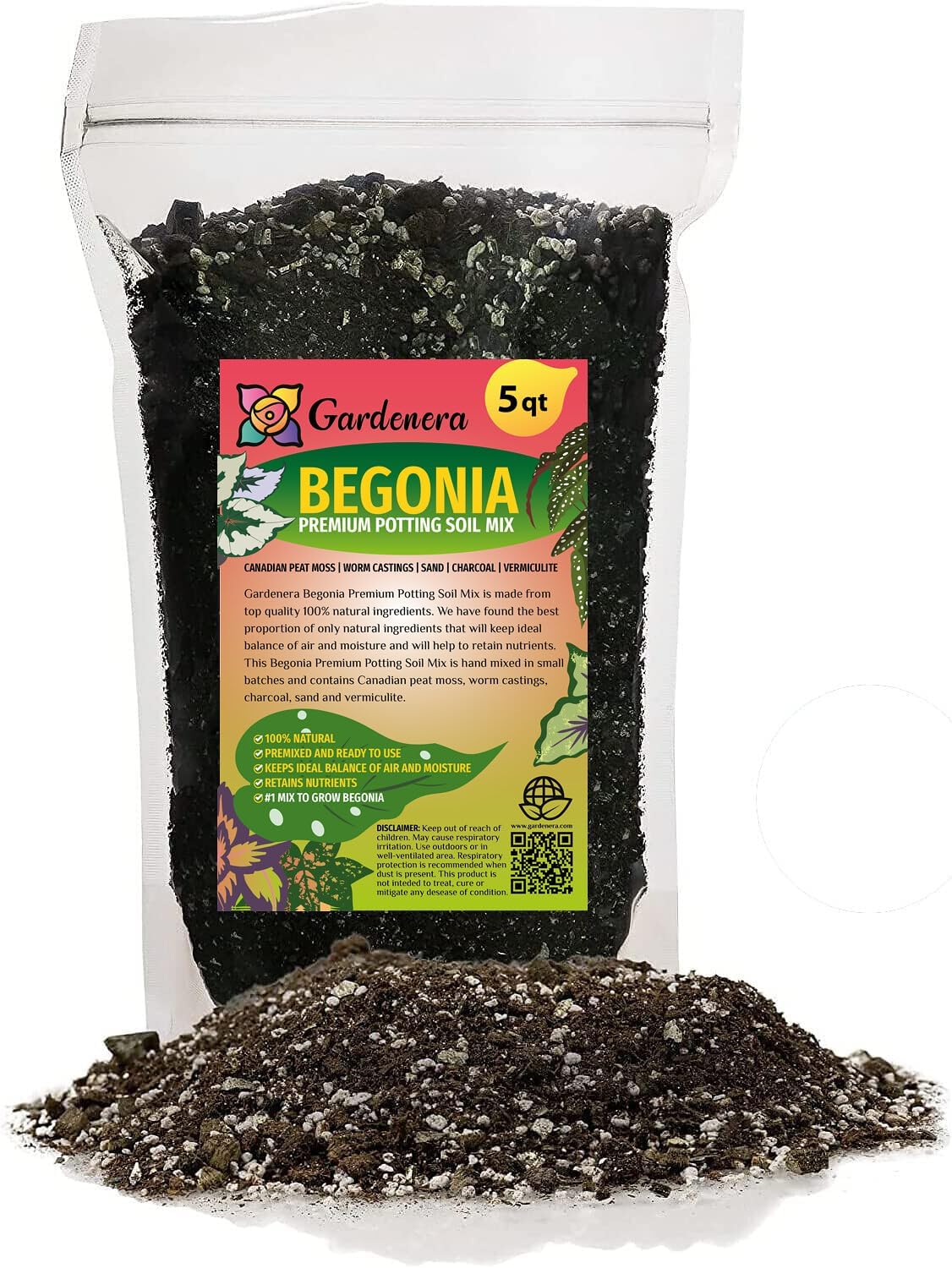
Gardenera Begonia Potting Mix, 5 Quart
| Brand Name | Gardenera |
|---|---|
| Item Type Name | Begonia Potting Mix |
| Unit Count | 1 Count |
| Volume | 5 quarts |
Gardenera Begonia Potting Mix is a purpose‑built soil blend intended to give begonias the moisture balance and nutrients they need for healthy foliage and flowering. You use it like a standard potting mix for repotting or topping up containers and indoor plants; its Canadian peat moss and vermiculite help hold moisture while sand improves drainage so roots are less likely to sit in water. Worm castings supply a gentle, organic nutrient source that supports steady growth without heavy synthetic feeds and charcoal helps reduce odors and impurities in the root zone. In practice this mix suits potted begonias, tuberous varieties, and container displays where consistent but not waterlogged moisture is important. Limitations to note are the small 5‑quart volume, which means multiple bags are needed for larger pots or several plants, and there is no stated fertilizer analysis or long‑term nutrient schedule included, so expect to supplement with a balanced feed over the growing season.
Best for: Buyers who want a ready‑made, plant‑specific potting mix that simplifies care for container or indoor begonias and prioritizes balanced moisture and organic nourishment.
Less Ideal for: Gardeners who need bulk soil for beds or many plants should choose larger volume options or mixes formulated for in‑ground use.
- Formulated specifically for begonias with ingredients that balance moisture retention and drainage
- Contains worm castings for an organic nutrient boost
- Charcoal inclusion helps keep the root zone cleaner and reduces impurities
- Vermiculite and peat moss improve water holding for consistent hydration
- Small 5 quart bag is not practical for multiple or large pots
- No nutrient analysis or fertilization guidance included
Verdict: If you want a begonia‑focused potting mix that balances moisture, drainage, and organic nutrition in containers, this ready blend is a convenient choice.
HydraGarden Forbidden Cereal Aroid Potting Mix, 6.5 QT

| Unit Count | 6.5 Ounce |
|---|---|
| Brand Name | HydraGarden |
| Style Name | Houseplants & Aroids |
| Ingredients | Orchid Bark, Charcoal, Perlite, Coco Chunks, Coco Coir, LECA Clay Pebbles, Worm Castings, Sphagnum Moss |
HydraGarden Forbidden Cereal is a high-drainage, soilless potting mix built from chunky components like orchid bark, coco coir, coco chips, perlite, biochar, worm castings and LECA clay pebbles with a small bag of New Zealand sphagnum moss layered on top. It is used as a repotting and growing medium for aroids and many common houseplants where preventing waterlogging and improving root oxygenation are priorities. The mix’s large particle profile lets water move quickly through containers, reduces the chance of root rot, and keeps roots from becoming compacted while still offering organic matter and nutrients from castings and charcoal. The separated sphagnum allows you to add a moisture-retaining topper when needed without compromising overall drainage. Practical limits are that its chunky texture holds less water than peat-rich mixes so watering frequency will increase for moisture-loving species, and the soilless formula may require more frequent feeding compared with a loam-based soil. For growers who prioritize fast drainage, root health, and a lightweight, peat-free blend, this mix delivers predictable, performance-focused results.
Best for: Serious growers who prioritize root health and fast drainage for aroids and tropical houseplants and who monitor watering and feeding closely to maximize plant performance.
Less Ideal for: Casual owners who want a low-maintenance, moisture-retentive potting medium or growers of very moisture-loving species that require consistently damp substrate.
- Very high drainage and aeration from chunky ingredients reduces risk of root rot
- Peat-free, soilless organic components including worm castings and biochar for nutrient support
- Layered sphagnum moss gives flexible moisture retention as a topper or propagation aid
- Includes LECA clay pebbles for improved structure and long-term stability
- Holds less moisture than peat-based mixes so plants may need more frequent watering
- Soilless formula typically requires more regular fertilizing for sustained nutrient supply
Verdict: Choose this mix if you need a chunky, peat-free medium that maximizes drainage and root aeration for high-performance aroid growing.
Miracle-Gro Indoor Potting Mix for All Plants, 16 qt.

| Unit Count | 128 Ounce |
|---|---|
| Item Type Name | Soil |
| Style Name | All Purpose Indoor Potting Mix |
| Volume | 16 quarts |
| Item Highlight | Feeds for up to 6 Months |
This 16 qt. Miracle-Gro Indoor Potting Mix is a lightweight, ready-to-use soil blend designed for repotting and maintaining indoor plants. It combines sphagnum peat moss, coconut coir, and perlite to retain moisture while allowing excess water to drain, which makes it suitable for common houseplants including foliage and flowering types. The formula is bark- and compost-free to reduce habitat for fungus gnats and includes nutrients intended to feed plants for up to six months, so you can repot without immediate fertilizing. Typical use is straightforward: fill a pot, set the plant, backfill and water; the mix is consistent and easy to work with for one-person repotting sessions. Limitations are that it is a general-purpose mix rather than a specialist medium for plants with very specific needs, and you will still need to top up nutrients after the advertised feeding period. For gardeners who want a dependable, low-fuss indoor soil that reduces pest-prone components, this performs well.
Best for: Ideal for practical indoor gardeners who want an easy, reliable potting mix for repotting begonias and other houseplants without mixing components or frequent feeding.
Less Ideal for: Not the best choice for growers needing a customized, very acidic, or moisture-exacting medium such as specialist mixes for orchids or carnivorous plants.
- Balanced blend of peat moss, coir, and perlite for moisture retention with good drainage
- Ready-to-use mix that eliminates the need to blend components yourself
- Formulated without compost or bark to reduce fungus gnat habitat
- Contains nutrients to feed plants for up to six months after repotting
- General-purpose formula may not meet the needs of plants requiring very acidic or highly specialized media
Verdict: A low-fuss, ready-to-use indoor potting mix that simplifies repotting and provides several months of nutrition for healthy begonias and other houseplants.
Back to the Roots Organic Indoor Potting Mix, 6 Quart

| Unit Count | 192 Fluid Ounces |
|---|---|
| Item Type Name | Indoor Potting Mix 6qt |
| Item Highlight | Peat-free, 100% organic, made in the USA |
| Ingredients | Coconut Coir, Yucca, Mycorrhizae, Perlite, Horticultural Sand |
This 6-quart indoor potting mix is formulated for common houseplants and uses coconut coir, yucca extract and mycorrhizae to support root health and moisture retention. It is typically used for repotting or top-dressing pothos, monstera, ferns and similar tropicals; the yucca helps the mix stay hydrated while the mycorrhizae encourage stronger root development and nutrient uptake. The peat-free, organic blend and added dolomitic limestone mean it is balanced for pH and avoids peat harvesting impacts, which is useful for gardeners who prefer sustainable options. Because it excludes bark and compost, it is less likely to attract indoor gnats and stays relatively clean in pots. The 6-quart size is convenient for small jobs but will require multiple bags for several plants or large repots, so plan accordingly if you have more than a few containers. For beginners it is easy to use and ready straight from the bag without amendments for many indoor tropicals like begonias.
Best for: Buyers looking for an affordable, sustainable indoor potting mix for a few houseplants who prioritize easy-to-use, low-mess soil that supports root health.
Less Ideal for: Large-scale gardeners or those who need a single bulk bag to repot many plants should consider larger volume products or mixes with built-in long-term fertilizer.
- Peat-free organic formula for environmentally minded growers
- Yucca extract improves moisture retention between waterings
- Contains mycorrhizae to support root establishment and nutrient uptake
- Balanced with dolomitic limestone to help stabilize soil pH
- Less prone to indoor gnats because it excludes bark and compost
- Small 6-quart bag requires multiple purchases for larger collections or many repots
- No added slow-release fertilizer so additional feedings may be needed for long-term growth
Verdict: A compact, organic peat-free potting mix that makes repotting begonias and other houseplants easier while supporting roots and moisture retention.
FoxFarm Happy Frog Potting Soil, 2 cu ft (Container Garden) with 2 Plant Tags

| Brand Name | FoxFarm |
|---|---|
| Item Highlight | Ready-to-Use Amended Container Blend with Soil Microbes, Earthworm Castings, Bat Guano, and Aged Forest Products |
| Volume | 2 cubic feet |
| Style Name | Container Garden |
FoxFarm Happy Frog Potting Soil is a premixed container blend designed to give potted plants a nutrient-rich, biologically active medium right out of the bag. Typical use is filling pots or containers for ornamentals and small shrubs, then planting and watering without needing to amend first. The formula lists earthworm castings, bat guano, aged forest products and a custom blend of soil microbes and mycorrhizal fungi, which in practice supports root development, improves nutrient availability, and encourages stronger vegetative growth and flowering. It is pH adjusted for good nutrient uptake and includes two plant tags for tracking varieties or dates. Practical benefits include convenience, consistent quality compared with ad hoc mixes, and reduced need for immediate fertilizers. Important limitations are that it is optimized for containers rather than in-ground beds and heavier bags mean handling and storage need planning; also serious growers may still add crop-specific fertilizers over the season for best results.
Best for: Buyers who want a reliable, ready-made potting mix for container-grown plants and prefer a biologically active soil that reduces the need for immediate amendments.
Less Ideal for: Gardeners looking to amend garden beds or who need a lightweight mix for frequent repositioning of small pots should consider other specialized soils.
- Ready-to-use container blend that requires no initial mixing
- Amended with earthworm castings, bat guano, and aged forest products for nutrient density
- Contains beneficial soil microbes and mycorrhizal fungi to improve root development
- pH adjusted to support efficient nutrient uptake
- Includes two plant tags for labeling and tracking plantings
- Formulated specifically for containers and not intended as an in-ground soil replacement
- Large, heavy bag may be awkward to lift and store
Verdict: A dependable, ready-to-use potting soil loaded with organic amendments and microbes that delivers consistent results for container-grown plants like begonias.
Miracle-Gro Indoor Potting Mix for All Plants, 6 qt. (2-pack)

| Number of Packs | 2 |
|---|---|
| Unit Count | 400.58 Ounce |
| Item Highlight | Feeds for up to 6 Months |
| Ingredients | Sphagnum Peat Moss, Coir, Perlite, Fertilizer, Wetting Agent |
This indoor potting mix is formulated as an all-purpose, ready-to-use soil for container houseplants including foliage and flowering types like begonias. The blend of sphagnum peat moss, coconut coir, and perlite creates a light, airy texture that holds moisture yet releases excess water so roots are less likely to sit wet. The included fertilizer feeds plants for up to six months, so newly potted begonias get an initial nutrient boost without extra mixing. A notable practical point is the formula avoids bark and compost, which helps reduce places where fungus gnats hide. Use it straight from the bag to repot or top-dress containers; one 6 qt. bag claims to fill about four 6‑inch pots. Limitations are that the product is a general mix rather than a begonia-specific formula, so extremely moisture-sensitive or specialty cultivars may need extra drainage amendments or a tailored fertilizer schedule after the initial feeding period.
Best for: Plant owners who want an easy, reliable repotting soil that establishes container plants quickly and reduces common pest spots without extra mixing.
Less Ideal for: Growers seeking a custom soil for finicky or specialist begonia cultivars that require precise pH, extra drainage, or a long-term feeding plan.
- Lightweight, well-aerated blend that helps prevent compacted roots
- Contains peat moss, coir, and perlite for balanced water retention and drainage
- Includes plant food that feeds up to six months for easier establishment
- Bark- and compost-free formula reduces habitat for fungus gnats
- Not a specialized begonia mix so highly specific moisture or pH needs may require adjustments
- Fertilizer effect is temporary so additional feeding is needed after six months
Verdict: A convenient, pest‑aware all-purpose indoor potting mix that gets begonias off to a strong start with light texture and six months of built‑in feeding.
Back to the Roots Organic Expanding Coco Coir Potting Soil Brick (10 lb)

| Item Highlight | 10 lb compressed coco coir brick; peat-free; OMRI Listed |
|---|---|
| Item Type Name | Coconut Coir |
| Volume | 2 cubic feet |
| Ingredients | Coconut Coir |
| Style Name | Expanding Potting Soil |
This expanding coco coir brick is a lightweight, peat-free substrate that soaks up water and fluffs into roughly 2 cubic feet of potting medium when hydrated. You rip or break the compressed block, add water, then let it expand to create a loose, aerated mix ideal for seed starting, potting indoor plants, or blending with existing soil. The product is OMRI listed and made from coconut coir only, so it offers a neutral pH and good water retention without the heaviness of garden loam. For begonias specifically, its airy texture helps prevent waterlogging around shallow roots while retaining enough moisture for their preference for consistent humidity. The main limits are that it is a single-ingredient coir with no added nutrients, so you will need to mix in organic compost or fertilize for long-term potted plants and mature begonias. Also expect to measure and rehydrate the block carefully to get the right consistency for seedlings versus mature plants.
Best for: Buyers who prioritize low-risk, organic substrates that are easy to store and handle and want a reliable, neutral medium for starting seeds or repotting begonias.
Less Ideal for: Gardeners who want an all-in-one potting mix with built-in fertilizer or those who prefer heavy, loam-based soils for in-ground beds.
- Peat-free, OMRI listed organic coco coir suitable for organic growing
- Expands to provide about 2 cubic feet of loose, aerated potting medium for easy storage and transport
- Neutral pH and good water retention that balances moisture and aeration
- Versatile: can be used alone for seedlings or mixed with compost or potting soil for mature plants
- Contains only coconut coir with no added nutrients or fertilizer
- Requires rehydration and mixing to reach desired texture before use
Verdict: A convenient, peat-free coco coir brick that expands into an airy, moisture-retentive medium ideal for starting and potting begonias when paired with feed or compost.
Choosing the Right Soil for Begonia: Key Factors to Consider
Drainage and Aeration
Begonias are vulnerable to root rot if the soil holds water and collapses around roots. A soil that drains well and maintains pore space keeps oxygen available to roots, supporting fine root health and new growth.
Look for mixes with coarse components such as perlite, pumice, or coarse sand combined with fibrous organic matter. Those components create channels for excess water to escape while leaving smaller pores to hold moisture near roots.
Moisture Retention
While drainage matters, begonias also need steady moisture between waterings. A mix that dries out too quickly stresses the plant and reduces flowering. The ideal potting mix holds moisture in the root zone while releasing it slowly.
Components like high-quality peat alternatives, coconut coir, and well-aged compost can improve moisture holding without turning the mix into a sponge. The goal is moderated retention that works with your watering schedule and container size.
Nutrient Balance and pH
Begonias prefer slightly acidic to neutral pH and benefit from a steady but moderate nutrient supply. Too much soluble fertilizer or an imbalanced base mix can cause foliage burn or weak growth.
Choose soils with a moderate nutrient profile and neutral pH, or plan to adjust fertilization accordingly. Mixes containing slow-release organic amendments or a small starter charge of balanced nutrients reduce early feeding needs while allowing you to fine-tune fertility as plants establish.
Organic Matter Quality
The type and age of organic matter in a mix determine both nutrient release and structural stability. Fresh, high-carbon materials that are not fully composted can tie up nitrogen as they break down, while well-composted materials feed plants and improve aggregation.
Seek soils with stable, well-aged compost or processed bark fines. These materials support beneficial microbial life, improve moisture management, and decompose slowly so the mix remains structurally sound over a growing season.
Compaction Resistance
Containers and shallow beds are at risk of soil compaction over time, especially when watered frequently. Compacted mixes reduce aeration and make roots more susceptible to disease and slow growth.
A good begonia mix maintains a light crumbly texture after repeated wetting and drying cycles. Coarse mineral components and rigid organic particles help preserve pore space and make repotting easier when growth requires fresh medium.
Sterility and Disease Suppression
Begonias are sensitive to soil-borne pathogens; starting with a clean, low-disease mix reduces early losses. Sterile or pasteurized components and well-composted organics minimize the risk of introducing fungi or nematodes.
Avoid raw manures or untested garden soils for container-grown begonias. Consider mixes that emphasize sanitized ingredients and good drainage to lower pathogen pressure in shaded, humid environments.
Match Soil Texture to Container Type
Shallow pots and decorative ceramic containers need lighter, faster-drying mixes because they hold less volume of soil and heat up sooner. Deep or long-hanging baskets can use mixes with slightly more moisture retention because their greater volume buffers drying between waterings.
If you use terracotta pots or unglazed containers, expect faster moisture loss and choose a mix with added moisture-holding components. For plastic or glazed pots that retain moisture, prioritize drainage and aeration to avoid soggy roots.
- Shallow pots: prioritize drainage and aeration.
- Hanging baskets: blend good retention with light texture.
- Terracotta: increase moisture retention modestly.
Adjusting Mixes for Indoor Vs Outdoor Shade
Indoor begonias in stable environments benefit from mixes with consistent moisture retention and low nutrient fluctuations. Outdoors in shaded beds or under trees, mixes need to handle intermittent rain and variable temperatures, so better drainage and robust organic matter help prevent compaction.
For indoor use, ensure mixes are free of pests and contain ingredients that support steady humidity levels near foliage. For outdoor potted displays, include coarser components to prevent puddling during heavy rains.
- Indoor: focus on pest-free, moisture-stable blends.
- Outdoor shade: emphasize drainage and structural stability.
Feeding and Long-Term Soil Life
Soils that are too lean require frequent fertilization, while mixes heavy in fresh organic matter can release an early flush of nutrients then decline. Plan your fertilization to match the expected nutrient curve of the mix.
Consider adding granular slow-release organic fertilizer at repotting or a light liquid feed during the growing season. Also rotate or refresh the top layer annually to maintain structure and replenish organic content without disturbing roots excessively.
- Use slow-release organics for consistent feeding.
- Top-dress annually to refresh nutrients and structure.
Customizing Mixes with Additives
Gardeners often tweak premixed soils to suit local conditions. Common adjustments include adding pumice or perlite for extra aeration, coarse sand to increase weight in windy sites, or a small portion of coir to boost moisture retention without acidity.
Make changes conservatively and test on a few pots before altering all your containers. Small ratios produce big changes in water behavior and handling characteristics.
- Perlite or pumice: improves aeration.
- Coarse sand: adds weight for stability.
- Coconut coir: increases water retention without lowering pH.
Repotting Timing and Best Practices
Repot begonias when roots start circling the container or when the mix has broken down and holds water too long. Spring repotting before active growth begins helps plants recover quickly.
When repotting, gently tease roots and replace only a portion of the old soil if the plant is healthy. Fresh mix restores structure and nutrients while minimizing transplant shock.
- Repot in spring for fastest recovery.
- Replace majority of mix when compaction is severe.
How We Chose the Best Soil for Begonia
We focused on practical, gardener-centered performance factors that affect begonia health in real-world conditions. Primary evaluation criteria included drainage and aeration, water-holding capacity, nutrient balance and pH suitability, organic matter quality and decomposition rate, and compaction resistance for long-term container use. We also considered mix consistency and the presence of disease-suppressing ingredients such as well-composted organic matter. To create the shortlist we prioritized mixes formulated or commonly used for rhizomatous and fibrous-rooted begonias, plus blends suited to shaded container culture. We excluded generic garden soil or heavy topsoil that lacks the structure needed in pots and mixes with unproven additives. We did not include proprietary blends with unavailable formulation details. Our selection favored blends that deliver consistent drainage while retaining enough moisture for frequent but not constant watering.
FAQ
What pH do begonias prefer in potting soil?
Begonias usually do best in slightly acidic to neutral soil, roughly pH 5.5 to 7.0. If your mix is outside that range, amend with lime to raise pH or with sulfur-containing amendments to lower it, testing after adjustments.
Can I use garden soil for container-grown begonias?
Garden soil is generally too heavy and prone to compaction for containers. It reduces aeration and drainage, increasing risk of root problems. Use a light, well-draining potting mix instead, or blend garden soil sparingly with coarse components for outdoor beds.
How often should I water begonias in pots?
Water frequency depends on pot size, mix, and environment. Generally water when the top inch of mix feels slightly dry. Avoid letting the mix fully dry out or remain constantly wet; both extremes stress the plant.
Is peat moss necessary in a begonia mix?
Peat moss offers strong water retention but can be acidic and compress over time. Alternatives like coconut coir provide similar moisture-holding capacity with better sustainability and less compaction. Either can work when balanced with coarse components.
Should I sterilize potting mix before planting begonias?
Sterile mixes reduce initial pathogen risk but are not always required. If you suspect contaminated garden soil or have had past disease problems, use pasteurized or sterile components to lower the chance of soil-borne issues.
Final Verdict
Choosing the right soil for begonia comes down to balancing drainage with steady moisture, using stable organic matter, and preventing compaction in containers. Prioritize mixes that maintain pore space while supplying moderate nutrients and a near-neutral pH. Match the texture to your pot style and growing location, and plan for gentle amendments like perlite or coir rather than wholesale changes. That approach helps you keep roots healthy and flowering consistent across seasons.
