

Note: This article contains affiliate links. If you click on these links and make a purchase, I may earn a small commission at no extra cost to you. This helps support my research and content. Read my full affiliate disclosure here.
If your soil test shows low phosphorus, choosing the right fertilizer matters for seedling establishment, strong root systems, and better flowering. You want a source that delivers usable phosphorus without locking it up, fits your planting schedule, and matches the soil chemistry in your garden or raised bed. This guide shortlists seven top options for phosphorus needs and walks through how each type behaves in a real garden. We evaluated nutrient form, release profile, application ease, and environmental impact to help you decide which phosphorus fertilizer fits your situation.
Top Picks at a Glance
| Best Overall The best all-around choice for most situations | Miracle-Gro Water Soluble Bloom Booster Flower Food, 10-52-10, 1 lb |  |
| Best Quality Built to a higher standard if you want something more solid | FoxFarm Tiger Bloom Liquid Plant Food (1 qt) |  |
| Best Value The sweet spot between price and what you get | Easy Peasy Triple Super Phosphate Fertilizer 0-46-0 (Granules) |  |
| Best Budget The cheapest option that still gets the job done reliably | RAW Phosphorus Fertilizer — Water-Soluble High-Phosphate Powder, 2 oz |  |
| Highest Rated A top-rated pick with lots of positive feedback | Supply Solutions Triple Superphosphate 0-45-0 High-Phosphorus Granular Fertilizer (10 lb) |  |
| Most Popular A crowd favorite that many people choose with confidence | FoxFarm Tiger Bloom Liquid Plant Food (1 pint) |  |
| Best Seller A high-volume bestseller chosen again and again | Farmer's Secret Fruit & Bloom Booster Liquid Fertilizer (8 oz) |  |
Miracle-Gro Water Soluble Bloom Booster Flower Food, 10-52-10, 1 lb

| Item Form | Liquid |
|---|---|
| Application Method | Water Soluble |
| Coverage | 500 square feet |
| Target Species | all blooming plants |
| Mixing Ratio | 1 tablespoon/gallon (1.5 tsp for indoor plants) |
This Miracle-Gro bloom booster is a water-soluble plant food designed for flowering annuals and perennials, and it is typically mixed into a watering can or used with a garden feeder. The 10-52-10 formula supplies a high phosphorus dose aimed at increasing bud set and flower production, and it starts working quickly through root and foliar feeding when applied as directed. Practical features include a simple mixing ratio (1 tablespoon per gallon for outdoor use, reduced rate for indoor plants) and compatibility with the Miracle-Gro garden feeder for easy coverage up to about 500 square feet per refill. For gardeners focused on colorful displays, the concentrated phosphorus and repeat feeding schedule (every 7 to 14 days during bloom) deliver noticeably fuller flower shows. Limitations are that it is specifically a bloom booster rather than an all-purpose fertilizer and should be used only during bud set and bloom to avoid nutrient imbalance; following label rates is important to prevent overfeeding. For basic container or bedding displays, it is an easy-to-use option that targets bloom performance without complicated application steps.
Best for: Gardeners who want an affordable, straightforward booster to increase flower production on annuals and container displays and who plan to feed regularly during the bloom period.
Less Ideal for: Those seeking an all-in-one, season-long fertilizer or a slow-release product for hands-off maintenance should look elsewhere.
- High phosphorus 10-52-10 formula to promote more blooms and better bud set
- Water-soluble for quick uptake and easy mixing in a watering can or garden feeder
- Clear mixing instructions with lower indoor rate to reduce risk of burning when used as directed
- Covers a substantial area per feeder refill, useful for beds and multiple containers
- Focused on bloom boosting rather than providing a balanced, all-season nutrient program
Verdict: If you want an inexpensive, easy-to-use booster that reliably increases blooms on annuals and containers, this is a strong, no-frills choice.
FoxFarm Tiger Bloom Liquid Plant Food (1 qt)

| Item Form | Liquid |
|---|---|
| Specific Uses For Product | Hydroponic |
| Coverage | Medium |
| Mixing Ratio | 100:2 or 100:3 |
FoxFarm Tiger Bloom is a concentrated liquid bloom booster designed for use from the first signs of flowering through harvest. With a 2-8-4 N-P-K ratio and a low pH formulation, it supplies extra phosphorus and micronutrients that encourage larger flowers and better fruit set. Typical use is dilute feeding at 2 to 3 teaspoons per gallon every other watering, or foliar sprays applied early in the morning. Its liquid form makes it fast-acting and easy to mix for both soil and hydroponic setups, and the mixing ratio options let you adjust strength for heavier feeding. Important limitations are that it contains phosphorus, which may be restricted for lawn use in some areas, and that overuse can risk nutrient imbalance, so careful measuring is required. Safety precautions are recommended for handling and storage because it is a concentrated solution.
Best for: Growers focused on maximizing flower and fruit production who want a fast-acting, easy-to-dose bloom fertilizer for soil or hydroponic setups.
Less Ideal for: Casual gardeners who do not need high-phosphorus feedings or users who prefer slow-release granular fertilizers for low-maintenance lawns and beds.
- Phosphorus-rich 2-8-4 formula targets bud and bloom development
- Liquid concentrate mixes quickly for fast nutrient uptake
- Suitable for both soil and hydroponic systems
- Flexible mixing ratios allow light to heavy feeding schedules
- Contains phosphorus which may be restricted for non-agricultural turf in some jurisdictions
Verdict: Choose Tiger Bloom when you want a concentrated, phosphorus-focused liquid fertilizer to quickly boost buds and blooms.
Easy Peasy Triple Super Phosphate Fertilizer 0-46-0 (Granules)

| Item Form | Granules |
|---|---|
| Specific Uses For Product | Lawns,Plant Food |
| Application Method | Work into the top six inches of the soil |
| Target Species | Cactus |
This triple super phosphate product supplies a concentrated source of phosphorus in a granular form for gardeners who want to boost bloom size and root development. It is typically worked into the top of the soil and applied every 6 to 8 weeks during the growing season to support flowering plants such as wisteria, fruit trees, and ornamentals. Notable features include a 0-46-0 analysis that provides one of the highest phosphate concentrations available and a slow-release granular form that reduces the risk of burning plant roots compared with liquid high-strength alternatives. Practical benefits are clearer: stronger root establishment, more prolific flowering when phosphorus is the limiting nutrient, and easy soil incorporation around established shrubs and vines. Important limitations are that it supplies phosphorus only, so nitrogen and potassium must be provided separately, and it will not correct other soil issues like pH or micronutrient deficiencies. Also, because it is high in phosphate it should be used according to soil test results to avoid excess buildup.
Best for: Gardeners focused on maximizing blooms and root strength for flowering vines and shrubs who will apply targeted phosphorus treatments as part of a broader feeding plan.
Less Ideal for: People seeking an all-in-one balanced fertilizer or a product to correct pH or micronutrient deficiencies should consider a different option.
- Very high phosphate concentration (0-46-0) for strong bloom and root promotion
- Granular slow-release form lowers burn risk and is easy to work into soil
- Recommended application interval (every 6–8 weeks) aligns with growing season needs
- Suitable for a wide range of flowering shrubs and vines that benefit from extra phosphorus
- Provides only phosphorus so other nutrients must be added separately
- Can contribute to phosphate buildup if used without soil test guidance
Verdict: Use this concentrated phosphate granule to push bigger blooms and stronger roots on wisteria and other flowering shrubs when phosphorus is the primary limiting nutrient.
RAW Phosphorus Fertilizer — Water-Soluble High-Phosphate Powder, 2 oz

| Item Form | Powder |
|---|---|
| Specific Uses For Product | Gardening |
| Coverage | Medium |
| Unit Count | 2 Ounce |
RAW Phosphorus is a compact, water-soluble powder that supplies a high phosphate dose (61% P2O5) with a small amount of ammonium nitrogen for bloom and fruit-stage feeding. Gardeners typically dissolve the measured powder in water and apply it as a drench, foliar spray, or in hydroponic systems; the product is suitable for seedlings, transplants, vegetables, flowers, and ornamental plants. The main benefit is quick availability of phosphorus during early root establishment and bloom when plants need a surge of energy for flowering and fruit set. The powder format makes it easy to store and mix for precise, small-batch applications, which is convenient for hobbyists and container growers. Important limitations are the small unit size and the concentration note: a 2-ounce bottle treats only a limited number of applications for larger gardens and requires careful measuring to avoid overapplication. Also follow local regulations about phosphorus use to prevent runoff into waterways.
Best for: Gardeners who want a targeted, easy-to-mix phosphorus boost for flowering plants, container gardens, or small hydroponic setups and who prioritize getting concentrated nutrient performance from a small package.
Less Ideal for: Large-scale vegetable beds or landscapers who need bulk quantities and fewer refill cycles should choose larger, economy-sized phosphorus fertilizers instead.
- Very high water-soluble phosphate (61% P2O5) for rapid uptake during bloom and root development
- Water-soluble powder mixes easily for use in soil, coco, hydroponics, or foliar feeding
- Compact 2 oz size is easy to store and allows precise, small-quantity dosing
- Includes some ammonium nitrogen to support early growth alongside phosphorus
- Small 2 oz unit provides limited total applications for medium to large gardens
- Highly concentrated formula requires careful measuring to avoid overfeeding
Verdict: Pick this if you need a compact, high-concentration phosphorus booster for bloom and root development in small gardens or hydroponic systems.
Supply Solutions Triple Superphosphate 0-45-0 High-Phosphorus Granular Fertilizer (10 lb)

| NPK | 0-45-0 |
|---|---|
| Form | Granules |
| Unit Count | 160 Ounce |
| Includes | Granules Fertilizer |
Supply Solutions 0-45-0 Triple Superphosphate is a straightforward, phosphorus-focused granular fertilizer intended to strengthen roots and promote bigger blooms and fruit. You apply it as a dilute solution for potted plants or broadcast granules for outdoor beds and lawns following the label directions; typical use is every 4 to 6 weeks during active growth. Its concentrated 0-45-0 NPK delivers a strong phosphorus dose with added calcium to support cell strength and soil conditioning, which is useful as a starter treatment for transplants, for orchids and flowering shrubs, or as a seasonal booster for fruit trees and lawns. The product is versatile across indoor pots and garden plots and is easy to measure and mix with water or spread with a garden spreader. Important limitations are that it supplies virtually no nitrogen or potassium, so it should be used alongside a balanced fertilizer program when plants need overall nutrition, and it is not a complete feed for continuous use without complementary products.
Best for: Gardeners who prioritize consistent, measurable phosphorus boosts for flowering and fruiting plants and who plan to pair this with other feeds as part of a reliable fertilizer routine.
Less Ideal for: Beginners who want an all-in-one fertilizer or growers seeking a single-product maintenance feed for overall vegetative growth.
- Very high phosphorus concentration (0-45-0) for strong bloom and root stimulation
- Granular form that can be mixed for liquid feeds or broadcast for soil application
- Contains calcium to support cell strength and improve soil structure
- Clear application rates for both indoor and outdoor use make feeding predictable
- No nitrogen or potassium included, so it is not a standalone complete fertilizer
- Not suited for plants that need regular balanced feeding without additional products
Verdict: Choose this product when you need a dependable, high-phosphorus booster to reliably drive stronger roots, blooms, and fruit as part of a planned feeding program.
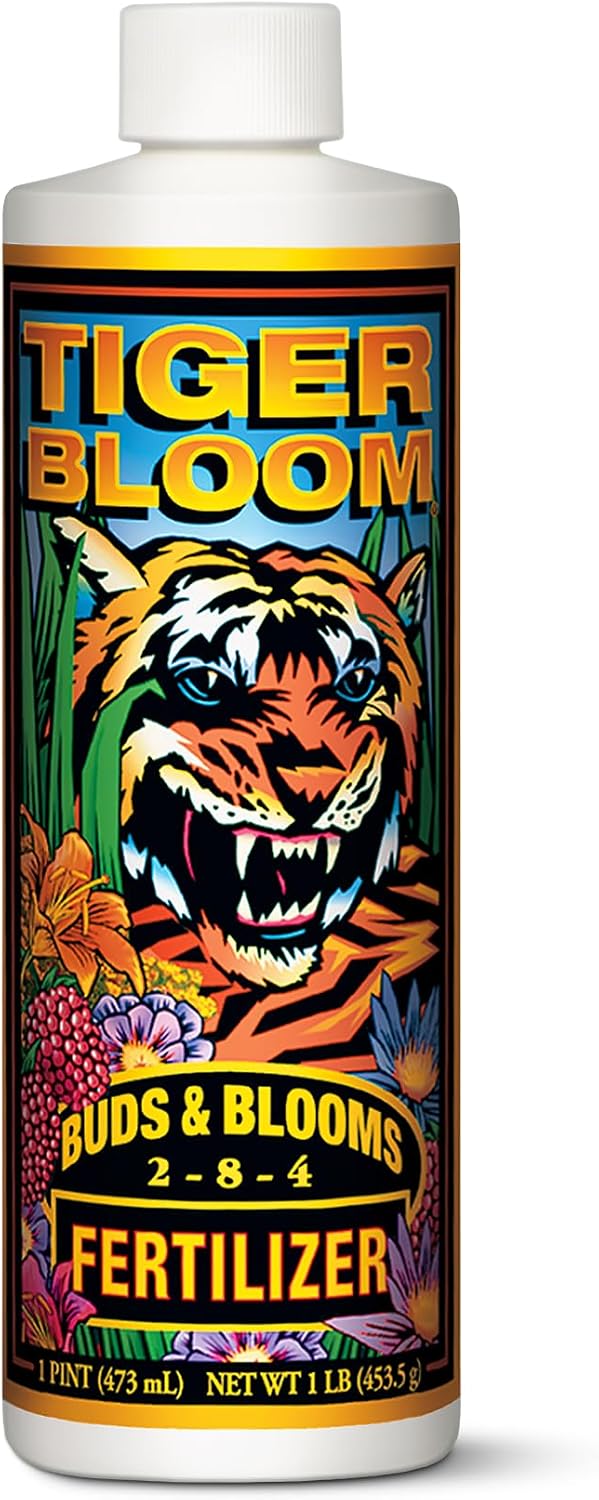
FoxFarm Tiger Bloom Liquid Plant Food (1 pint)
| Item Form | Liquid |
|---|---|
| Specific Uses For Product | Hydroponic |
| Application Method | Watering; Foliar spraying |
| Target Species | Flowering Plants |
| Mixing Ratio | 1:200 or 1:300 |
Tiger Bloom is a liquid, high-phosphorus fertilizer designed to push plants into a strong flowering and fruiting phase. You mix a small amount into the irrigation water or use it as a foliar spray and apply from first signs of flowering through harvest. The 2-8-4 formula and included micronutrients support bud set and larger blooms, and the concentrate mixes at 1:200 to 1:300 for routine feeding or 2 to 4 teaspoons per gallon for heavier feeding. It works in both soil and hydroponic setups and is formulated for quick nutrient uptake and stable micronutrient availability during storage. Practical benefits include flexible application methods, suitability for intensive flowering cycles, and a small bottle that lasts when used at recommended dilutions. Important limitations are that it is bloom-focused rather than an all-purpose feed so it may not meet vegetative needs, and the phosphorus content means users near waterways should follow local regulations to avoid runoff issues.
Best for: Serious growers who prioritize maximizing flower and bloom performance and want a concentrated, fast-acting bloom booster for soil or hydroponic environments.
Less Ideal for: Casual gardeners seeking a single all-purpose fertilizer for every growth stage or those managing turf or non-flowering lawns where phosphorus restrictions apply.
- High phosphorus NPK (2-8-4) concentrated for stronger bud development
- Works in soil and hydroponic systems for versatile use
- Liquid concentrate mixes easily for foliar or watering applications
- Formulated for quick nutrient uptake and stable micronutrient availability
- Focused on flowering so it is not a balanced all-stage fertilizer
- Contains phosphorus which may be restricted near waterways
Verdict: Choose Tiger Bloom when you need a concentrated, fast-acting bloom booster to maximize flower and fruit production.
Farmer's Secret Fruit & Bloom Booster Liquid Fertilizer (8 oz)

| Item Form | Liquid |
|---|---|
| Liquid Volume | 8 fluid ounces |
| Mixing Ratio | 1 teaspoon : 2 gallons |
| Application Method | dilute with water and pour or spray |
Farmer's Secret Fruit & Bloom Booster is a concentrated liquid plant food designed for mid-to-late season use when plants begin to bud and set fruit. You dilute a small amount (1 teaspoon per 2 gallons) and apply it either to the soil with your watering can or as a foliar spray, repeating every 1 to 2 weeks. The formula emphasizes phosphorus and potassium alongside trace minerals to promote root development, flowering and fruit set, which is the kind of nutrient profile banana growers look for during fruiting. Because it is liquid and already mixed, nutrients are immediately available and it is easy to integrate with irrigation or regular watering. The bottle is small but very concentrated, so a little goes a long way. A practical limitation is that the 8 ounce size supplies only a limited number of applications for larger banana plants or multiple trees, so you will need to plan purchases for season-long feeding. Follow dilution directions carefully to avoid overapplication.
Best for: Gardeners who prefer a proven, easy-to-use liquid feed to encourage blooms and fruit and who want straightforward instructions and predictable results.
Less Ideal for: Growers with large banana groves or multiple mature plants who need bulk or long-term feeding should consider larger-volume fertilizers or granular options.
- High phosphorus and potassium formulation supports flowering and fruit set
- Liquid concentrate delivers nutrients immediately and is usable as soil or foliar feed
- Simple, low-strength mixing ratio makes it easy for beginners to apply safely
- Contains additional trace minerals (iron, zinc, calcium) that support overall plant health
- Small 8 oz bottle provides relatively few applications for mature banana plants or multiple trees
Verdict: A highly concentrated, easy-to-use liquid booster that quickly delivers flowering and fruiting nutrients for backyard banana plants and other fruiting ornamentals.
Choosing the Right Fertilizer for Phosphorus: Key Factors to Consider
Phosphorus Form and Solubility
Phosphorus in fertilizers appears as different chemical forms, from highly soluble orthophosphates to more slowly available mineral phosphates. Soluble forms supply immediate plant-available phosphate and are useful for transplant establishment and quick bloom set. Slow-release or sparingly soluble forms are better when you want a steadier supply over weeks or months and to reduce the need for repeat applications.
Solubility also affects how phosphorus interacts with soil minerals. In many home soils, soluble phosphate binds to iron or aluminum compounds or precipitates with calcium, so understanding the form helps you predict availability and whether banding or starter placement is needed.
Release Rate and Timing
Release rate determines when and how long phosphorus is available after application. Fast-release phosphorus supports seedlings and flowering quickly but can be washed away in heavy rain if not incorporated. Slow-release or mineral sources provide a longer tail of availability and can be less sensitive to watering schedules.
Match release timing to plant needs: use quicker-release options for transplants and bloom initiation, and slower-release sources for maintenance feeding of established beds and containers. Consider the season and upcoming weather to avoid losing phosphorus to runoff after application.
Soil pH and Local Soil Chemistry
Phosphorus availability is tightly tied to soil pH. In strongly acidic soils, phosphate can bind to iron and aluminum and become unavailable. In very alkaline soils, it can precipitate with calcium. Knowing your soil pH helps you pick a phosphorus source and application method that maximizes availability.
If pH adjustments are planned, coordinate those changes with phosphorus applications. In some cases, placing phosphorus near the root zone or using acidifying or chelating companion amendments improves uptake without excessive fertilizer use.
Application Method and Handling
Different fertilizers are designed for broadcast spreading, banding, side-dressing, foliar feed, or incorporation at planting. Choose a product that fits how you work in the garden. Granular materials are easy to band or broadcast and often safer to handle, while water-soluble fertilizers are more convenient for foliar feeding or fertigation in containers.
Also consider dust, odor, and the need for protective equipment. Home gardeners usually prefer low-dust, clearly labeled products with straightforward mixing and application instructions to reduce mistakes and exposure.
Compatibility with Plants and Crop Stage
Not all crops need the same phosphorus intensity. Root crops and bulbs benefit from steady phosphorus early in development, while flowering ornamentals and fruiting vegetables often respond to targeted applications at bloom set. Overapplication can inhibit uptake of other nutrients, so tailor phosphorus inputs to crop type and growth stage.
Refer to planting guides or soil tests to determine whether a one-time corrective application or a staged feeding program is best for your garden beds and container plantings.
Environmental Impact and Runoff Risk
Phosphorus runoff contributes to water quality issues in nearby streams and ponds, so minimizing loss from gardens matters. Slow-release forms, placement near the root zone, and avoiding application before heavy rain reduce runoff risk. Choosing lower-solubility sources or controlled-release formulations can limit how much phosphorus moves off-site.
Also consider local regulations or best-practice recommendations for phosphorus use in residential areas. Responsible application protects waterways while still supporting plant health.
When to Add Phosphorus
Add phosphorus after confirming a soil test shows deficiency or when establishing new plantings that need strong root development. Early spring at seedling stage or at transplanting is the most common time to apply targeted phosphorus.
Avoid routine blanket applications without testing because excess phosphorus can reduce uptake of other nutrients and increase runoff risk. If you suspect deficiency based on plant symptoms such as weak root growth or poor flowering, test the soil first to confirm and quantify the shortfall.
- Apply at transplanting for root development
- Use targeted side-dress or banding rather than broadcast for established beds
- Delay major phosphorus applications if heavy rain is forecast
Using Soil Tests to Guide Application Rates
Soil tests are the most reliable way to determine phosphorus needs. Results typically report available phosphorus and recommended application rates. Use those recommendations to choose product amounts rather than guessing.
If tests indicate marginal phosphorus, favor modest, staged applications and re-test after a growing season. For severe deficiencies, a corrective application combined with proper placement will correct levels more efficiently than repeated heavy broadcast treatments.
- Follow the test's suggested pounds per acre or per square foot conversion
- Adjust rates for containers and small beds to prevent overapplication
- Re-test periodically to track changes after amendments
Placement and Application Techniques
Placement changes how much phosphorus plants can access. Banding or placing fertilizer close to the seed or root ball concentrates the nutrient where roots can absorb it, reducing waste. Incorporating phosphorus into the planting hole or root zone is common for transplants and bulbs.
For established plants, side-dressing 2 to 4 inches from the drip line and lightly working the material into the soil surface helps reduce runoff. Watering in after application moves phosphorus into the root zone but avoid heavy irrigation immediately after banded applications to prevent lateral movement.
- Band or place near roots for maximum uptake
- Side-dress established beds rather than broadcasting
- Water lightly after application to move nutrients into the root zone
Phosphorus Management in Containers and Raised Beds
Containers and raised beds often need different handling because of limited soil volume. Use lower, more frequent doses or water-soluble forms for container crops to avoid salt buildup and root damage. Slow-release granules can work in raised beds but account for the smaller soil mass when calculating rates.
Monitor plants closely for deficiency signs in containers and flush media periodically if salts accumulate. Mixing a measured slow-release formulation into potting mix at planting provides a steady supply without repeated heavy applications.
- Reduce rates proportionally for containers and small planters
- Consider soluble feeds for quick corrections in pots
- Use controlled-release granules cautiously in small-volume media
Practical Safety and Storage Tips
Store fertilizers in a cool, dry place away from children and pets, and keep them in their original containers with labels intact. Keep granular and powdered materials sealed to prevent moisture pickup and caking.
Wear gloves and a dust mask if handling dusty materials, and avoid creating dust clouds that can spread beyond the garden area. Rinse tools and containers promptly after use to reduce cross-contamination with other amendments.
- Keep materials sealed and labeled
- Wear basic protective gear when handling dusty products
- Clean tools and equipment after application
How We Chose the Best Fertilizer for Phosphorus
We focused on product attributes that matter when correcting or boosting soil phosphorus. First, nutrient form was assessed because soluble phosphate and mineral phosphate behave differently in soil and determine how quickly plants can access phosphorus. Second, release profile and longevity were considered so gardeners can match feeding schedules to planting stages and avoid repeated applications. Third, compatibility with soil pH and common garden soils was included, since phosphorus availability drops in very acidic or alkaline conditions. Fourth, application method and handling safety were evaluated to reflect routine backyard use, container culture, and small-scale vegetable beds. Finally, environmental risk and runoff potential were weighed, looking for options that supply phosphorus without high leaching or runoff tendencies. We excluded specialty formulations designed only for large-scale agricultural spreaders or commercial growers and products that lack clear nutrient analysis or usage guidance. The resulting shortlist emphasizes accessible, well-documented phosphorus sources suitable for home gardeners, container growers, and hobbyist vegetable and flower beds.
FAQ
How can I tell if my garden needs phosphorus?
A soil test is the best method to determine phosphorus deficiency. Symptoms like poor root growth, delayed maturity, and reduced flowering can indicate low phosphorus, but these signs overlap with other nutrient issues so testing is recommended.
Will adding phosphorus help if my soil pH is low?
Adding phosphorus can help but availability is reduced in very acidic soils. If pH is strongly acidic, correcting pH alongside phosphorus additions or using placement techniques can improve uptake. Test pH and phosphorus together to plan treatment.
Is foliar feeding phosphorus effective?
Foliar phosphorus sprays offer limited and temporary uptake and are rarely a substitute for soil-applied phosphorus. They can be useful for quick corrective treatments but do not correct soil deficiency long term.
How often should I re-test soil phosphorus?
Re-test every one to three years depending on crop intensity and previous amendment levels. High-demand vegetable beds may warrant annual checks, while established ornamental beds can be tested less frequently.
Can I overapply phosphorus and what happens if I do?
Yes. Overapplication can reduce uptake of micronutrients like iron and zinc and increase runoff risk. Excess phosphorus may bind in the soil and contribute to environmental issues, so follow test-based recommendations.
Final Verdict
Prioritize a phosphorus source that matches your soil test results, planting timing, and application preferences. Balance immediate needs for transplants or bloom set with the longer-term stability required for established beds by choosing an appropriate form and release profile. Focus on placement, release timing, and environmental precautions to get the most from your fertilizer for phosphorus. That approach limits waste and supports stronger roots and better flowering without creating nutrient imbalances or runoff problems.
