

Note: This article contains affiliate links. If you click on these links and make a purchase, I may earn a small commission at no extra cost to you. This helps support my research and content. Read my full affiliate disclosure here.
Picking the right soil for ferns changes how well those delicate fronds thrive indoors and out. Ferns need a balance of moisture retention, aeration, and steady nutrients more than most potted plants. The wrong mix can lead to soggy roots, compacted media, or nutrient stress that shows up as yellowing or limp growth. This guide covers seven shortlisted soil options chosen for fern-friendly structure and feeding characteristics. We explain the key qualities that help ferns hold water without drowning roots, how mixes behave in containers and garden beds, and what to expect seasonally. Read on for the factors we prioritized and quick notes to help you match a soil to your planting situation.
Top Picks at a Glance
| Best Overall The best all-around choice for most situations | Soil Sunrise Fern Potting Soil Mix (8 Quarts) |  |
| Best Quality Built to a higher standard if you want something more solid | Josh's Frogs Tree Fern Fiber Substrate (10 quarts) |  |
| Best Value The sweet spot between price and what you get | Rio Hamza Trading Fern Potting Soil Mix (8 Quart) |  |
| Best Budget The cheapest option that still gets the job done reliably | Doter Fern Potting Soil Mix, 1 qt |  |
| Highest Rated A top-rated pick with lots of positive feedback | Wekiva Foliage Fern Soil Mix, 2 Quart |  |
| Most Popular A crowd favorite that many people choose with confidence | Rosy Soil Organic Houseplant Potting Soil Mix, 4 Quart |  |
| Best Seller A high-volume bestseller chosen again and again | Back to the Roots Organic Indoor Potting Mix, 6 Quart |  |
Soil Sunrise Fern Potting Soil Mix (8 Quarts)

| Volume | 8 quarts |
|---|---|
| Ingredients | Peat moss, pine bark, perlite, sand, charcoal, lime |
| Unit Count | 1 Count |
| Manufacturer | Soil Sunrise |
This 8-quart Soil Sunrise mix is formulated specifically for ferns and is intended for use in indoor pots and outdoor containers. The blend combines peat moss to retain moisture with perlite and sand to improve drainage and prevent compaction, while pine bark and horticultural charcoal support root health and soil structure. It is hand-blended in small batches, which the maker says helps consistency. In practice the mix works well for moisture-loving ferns such as Boston and maidenhair by keeping roots aerated yet damp, and it should be easy to use when repotting or making a fresh container. The presence of lime suggests pH adjustment for fern-friendly conditions. Important limitations are the small 8-quart volume—which covers roughly a 12-inch pot—so plan for multiple bags for larger collections, and the product advises avoiding skin or eye contact and using good ventilation indoors. No fertilizer is listed, so plan to supply nutrients separately for long-term growth.
Best for: Buyers who want a ready-made, fern-specific potting medium for repotting or refreshing container ferns and who value a balanced, low-maintenance soil blend.
Less Ideal for: People needing bulk soil for beds or large-scale plantings or gardeners who prefer an all-in-one mix with built-in fertilizer.
- Formulated mix targeted to ferns with peat, bark, charcoal and perlite for balanced moisture and aeration
- Hand-blended in small batches for consistent texture
- Includes components that protect root health and improve soil structure
- Suitable for both indoor and outdoor container fern varieties
- Small 8-quart bag may require multiple units for large pots or several plants
- No added fertilizer included so additional feeding is needed for long-term vigor
Verdict: A compact, fern-tailored potting mix that delivers the moisture retention and drainage balance most container ferns need.
Josh's Frogs Tree Fern Fiber Substrate (10 quarts)

| Brand Name | Josh's Frogs |
|---|---|
| Volume | 10 quarts |
| Item Weight | 3.1 pounds |
Josh's Frogs Tree Fern Fiber is a long‑lasting, coarse substrate made from shredded tree fern that keeps mixes loose and well aerated. In practice you blend it with potting soil or orchid bark to increase drainage and prevent compaction, which helps fern roots and epiphytes breathe in high‑humidity conditions. Its slow decay means you do not need to replace or refresh mixes frequently, and it also provides structure for springtails and isopods in bioactive setups. The product comes in a compact 10‑quart volume suitable for small to medium pots or as part of a custom mix. Important limitations are that it is not intended as a sole substrate so it must be mixed with finer components for moisture retention and nutrients, and users with allergies should avoid direct contact. For growers focused on root health and lasting substrate structure, this fiber is a practical component to improve aeration in fern potting media.
Best for: Growers who prioritize root aeration and long‑term substrate performance for ferns, orchids, or bioactive terrariums and who plan custom potting mixes rather than buying ready blends.
Less Ideal for: Casual gardeners who want a ready‑to‑use potting soil or those who prefer a single all‑in‑one mix that retains high moisture without mixing.
- Adds durable structure to mixes that resists compaction in humid conditions
- Improves airflow and drainage to support healthy fern and epiphyte roots
- Slow decay extends interval between substrate refreshes
- Supports microfauna like springtails and isopods useful in bioactive setups
- Not suitable as a standalone substrate and must be combined with finer media for moisture and nutrients
- May cause allergic reactions on skin or eyes if handled without protection
Verdict: Choose this tree fern fiber when you need a durable, slow‑decaying additive that improves airflow and drainage in fern potting mixes.
Rio Hamza Trading Fern Potting Soil Mix (8 Quart)

| Volume | 8 quarts |
|---|---|
| Ingredients | peat moss, perlite, lime, sand, charcoal, mulch |
This fern potting soil is formulated to give ferns a balance of water retention and airflow that supports healthy fronds and root growth. Typical use is potting or repotting indoor and outdoor ferns in containers where consistent moisture and good drainage matter; the mix lists peat moss, perlite, sand, charcoal, mulch, and lime as ingredients, which together help hold moisture without letting soil compact. The 8-quart size is convenient for repotting several small to medium plants or refreshing the top layer of larger pots. Practical benefits include improved root aeration from perlite and sand, gentle nutrient support from the organic components, and moisture buffering from peat moss. Limitations are that the bag is a modest single 8-quart unit, so larger collections will need multiple bags, and peat-based mixes can dry out in very warm, low-humidity indoor environments requiring closer watering attention. This is a straightforward, plant-focused mix for gardeners who want a ready-made fern substrate without needing to blend components themselves.
Best for: Buyers who want a ready-made, no-mix substrate that reliably supports fern health and saves time when potting or repotting small to medium collections.
Less Ideal for: Large-scale gardeners who need bulk soil or growers who prefer a peat-free or custom-blended substrate for specific environmental conditions.
- Formulated blend tailored for ferns with peat moss and perlite for moisture retention and aeration
- Includes sand and charcoal to improve drainage and reduce compaction
- Nutrient-containing organic components to support foliage growth
- Convenient 8-quart package suitable for potting or repotting multiple small plants
- Only an 8-quart quantity which may be insufficient for larger collections or full soil replacement
- Contains peat moss which may require more frequent watering in dry indoor conditions
Verdict: A convenient ready-to-use fern mix that delivers the moisture retention and aeration ferns need for healthy foliage.
Doter Fern Potting Soil Mix, 1 qt
| Brand Name | Doter |
|---|---|
| Unit Count | 32 Ounce |
| Item Type Name | Garden soil |
| Volume | 1 quarts |
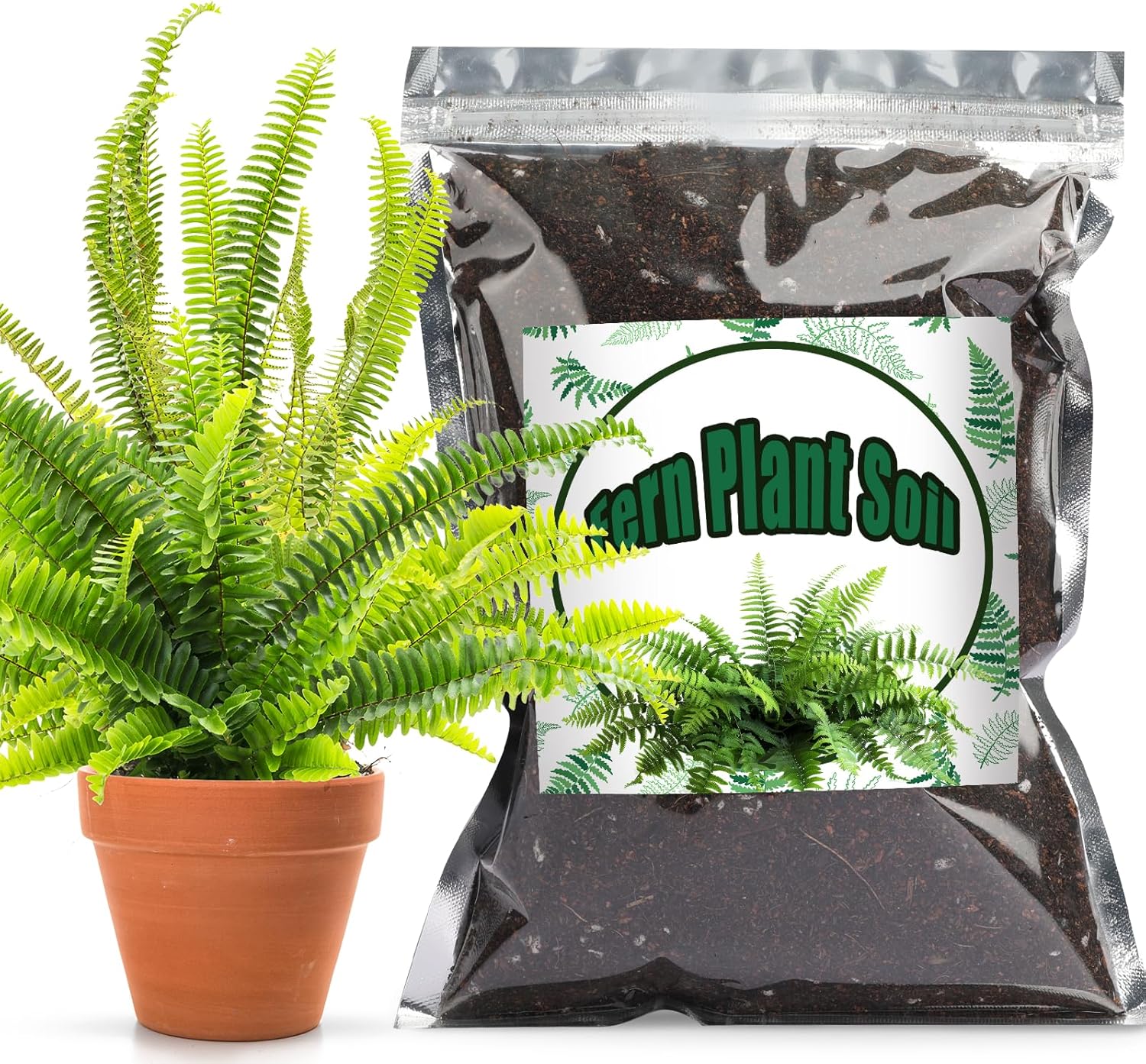
This 1-quart Doter fern potting mix is designed specifically for ferns and other moisture-loving plants. The blend combines moisture-retentive ingredients such as peat moss and worm castings with drainage components like perlite and pine bark so pots stay evenly moist without becoming waterlogged. For small pots, terrariums or when repotting a single fern, the pre-mixed quart size is convenient and clean to use. The nutrient-rich formula supports leafy growth and reduces how often you need to water, while the perlite and charcoal elements help aerate the root zone and limit root rot in poorly draining containers. Because the bag is small, it is easiest for hobbyists with a few plants or for trying a new mix before buying larger quantities. Limitations are the modest volume and that there are no measured nutrient NPK values provided, so heavier feeders or larger pots will need additional soil or fertilizer and more frequent purchases for multiple plants.
Best for: Budget-minded indoor gardeners or beginners who want a fern-specific mix in a small, trial-friendly bag for a few pots or occasional repotting.
Less Ideal for: Gardeners who need bulk soil for many containers, large pots, or for fertilization plans that require exact nutrient specifications.
- Formulated specifically for ferns with a balance of moisture retention and drainage
- Contains organic components like peat moss and worm castings to support foliage growth
- Includes perlite and horticultural charcoal to improve aeration and reduce root rot risk
- Convenient 1-quart size for small pots, repotting trials, or indoor plant mixes
- Small 1-quart volume makes it impractical for multiple or large pots
- No detailed nutrient analysis or NPK values provided for precise feeding plans
Verdict: A convenient, fern-focused 1-quart potting mix that balances moisture retention and drainage for small indoor or outdoor potted ferns.
Wekiva Foliage Fern Soil Mix, 2 Quart

| Brand | Wekiva Foliage |
|---|---|
| Unit Count | 2 Count |
| Volume | 1 quarts |
This fern-specific potting mix is formulated to give typical house and garden ferns a reliable growing medium that balances moisture retention with drainage. It combines peat moss and HydraFiber for water-holding capacity, perlite and aged bark for aeration, and added lime, gypsum and Nitroform to adjust pH and supply nutrients. Use it for repotting Boston, maidenhair, staghorn or Kimberly Queen ferns in containers, hanging baskets, or beds where steady moisture and oxygen at the roots matter. The blend reduces the risk of waterlogging while still holding enough moisture between waterings, and the bark/perlite components help roots breathe for stronger growth. Because it ships in a 2 quart unit, it is best for small pots or for topping up soil rather than large-scale repots. If you want a ready-to-use, fern-targeted medium that minimizes common watering problems and supports lush foliage, this mix delivers consistent, nursery-style performance.
Best for: Buyers who prioritize dependable, plant-targeted growing media for maintaining healthy fern foliage and who routinely repot or top-dress small to medium container ferns.
Less Ideal for: Gardeners who need large volumes for beds or many plants should choose bulk soil or mixes sold in larger bags.
- Formulated specifically for ferns with peat, perlite and aged bark for balanced moisture and aeration
- Includes pH and nutrient amendments (lime, gypsum, Nitroform) to support healthy foliage
- Suitable for indoor and outdoor use in pots, hanging baskets, and beds
- Particle mix reduces risk of root rot by improving drainage and airflow
- Small 2 quart unit is insufficient for repotting multiple or large ferns
- Contains peat which may compact over long term and require periodic refreshing
Verdict: A reliable, fern-focused potting mix that balances moisture retention and drainage for lush, consistent foliage in small to medium containers.
Rosy Soil Organic Houseplant Potting Soil Mix, 4 Quart

| Unit Count | 128 Ounce |
|---|---|
| Included Components | Indoor Potting Soil Mix – 4 Quart |
| Item Type Name | Soil |
| Item Highlight | Biochar and Worm Castings, for Monstera, Pothos, Tropical Indoor Plants, Peat Free |
This 4-quart Rosy Soil mix is designed for indoor tropicals and works well as a ready-to-use potting soil for ferns and other moisture-loving houseplants. The mix replaces peat with biochar and bark fines for better structure and slower compaction, while worm castings and compost supply micronutrients. Mycorrhizal fungi are included to help roots access water and nutrients, which can be especially helpful when repotting delicate ferns. Its chunky, well-draining texture encourages airflow and reduces the chance of waterlogged crowns and root rot, yet it retains enough moisture for shade-loving foliage. The bag is resealable so unused soil stays usable between repots. Limitations to note are the small 4-quart volume, which fills only a few medium pots, and that concentrated orchid- or aroid-specific mixes may still outperform it for highly specialized epiphytic species. Still, for routine fern repotting and top-ups this mix offers an organic, low-compaction option that supports healthy root development.
Best for: Buyers who want an organic, low-compaction potting soil that promotes root health for ferns and other indoor tropicals and value products with supporting biological amendments.
Less Ideal for: Gardners who need large volumes for outdoor beds or who require a specialized epiphytic or cactus-specific mix for highly particular plants should look elsewhere.
- Peat-free organic formula with biochar and compost for stable structure and reduced compaction
- Includes worm castings and compost to supply micronutrients and promote foliage health
- Contains mycorrhizal fungi to improve root nutrient and water uptake
- Chunky, well-draining texture that helps prevent root rot while retaining adequate moisture
- Resealable bag keeps unused soil fresh between uses
- Small 4-quart volume may require multiple bags for larger collections or big repots
- Not tailored for highly specialized epiphytic orchids or succulents where a different texture is preferred
Verdict: A compact, peat-free potting mix that brings organic nutrients and mycorrhizae to ferns and other indoor tropicals for healthier roots and foliage.
Back to the Roots Organic Indoor Potting Mix, 6 Quart

| Unit Count | 192 Fluid Ounces |
|---|---|
| Item Type Name | Indoor Potting Mix 6qt |
| Item Highlight | Peat-free, 100% organic, made in the USA |
| Ingredients | Coconut Coir, Yucca, Mycorrhizae, Perlite, Horticultural Sand |
This 6 quart Back to the Roots indoor potting mix is designed for common houseplants including ferns, pothos and monstera and aims to make repotting and routine care easier. The blend uses coconut coir as the base with yucca extract to help the mix retain moisture and mycorrhizae to support root development. It is peat-free and contains dolomitic limestone to balance pH, which can reduce the need for frequent amendments. For fern growers the mix’s moisture retention and light, well-draining texture mean pots stay evenly damp without becoming waterlogged, helping avoid root rot while still supporting the higher humidity ferns prefer. It is made in the USA and formulated to be low on bark and compost to reduce indoor gnats. The main limitations are package size and volume — a single 6 qt bag is convenient for small pots but you will need multiple bags for large collections or frequent repotting, and specific nutrient needs for certain fern species may require occasional fertilizing.
Best for: Buyers who want a low-risk, ready-to-use organic potting mix for indoor ferns and common houseplants and prefer a peat-free option that helps retain moisture and supports roots.
Less Ideal for: Growers managing a large fern collection, outdoor planting beds, or those who need a specialized, high-nutrient mix for heavy feeders.
- Peat-free and 100% organic formulation suitable for environmentally conscious buyers
- Yucca extract helps the soil retain moisture, beneficial for moisture-loving ferns
- Includes mycorrhizae to support root development and nutrient uptake
- Balanced with dolomitic limestone to help stabilize soil pH and nutrient availability
- Small 6 quart bag is not economical for repotting many plants or large pots
- May require supplemental fertilizer for species with higher nutrient demands
Verdict: A small, peat-free organic potting mix that reliably retains moisture and supports root health, making it a safe choice for indoor ferns.
Choosing the Right Soil for Ferns: Key Factors to Consider
Moisture Balance and Drainage
Ferns need consistently damp, not waterlogged, soil. A good fern soil holds moisture in the pore spaces around organic particles while allowing excess to drain through larger particles. If the soil retains too much free water, roots can suffocate and rot; if it dries out too quickly, fronds will brown and wilt.
Look for mixes that combine fine organic matter with coarser components such as coarse peat substitutes, shredded bark, or perlite to create a sponge-like structure. The balance you choose depends on container size, ambient humidity, and whether the plant sits in a saucer or a well-draining bed.
Organic Matter Quality and Breakdown Rate
The type and quality of organic matter determine how the soil behaves over time. Fresh, fibrous materials like coconut coir and well-composted leaf mold hold water and provide slow nutrient release without compacting as rapidly as fine peat. Fast-decomposing materials may feed plants initially but collapse into denser material that reduces aeration.
Aim for mixes that list stable, well-aged compost or leaf mold plus a fibrous amendment. That slows volume loss, maintains a light crumb structure, and supports the microflora fern roots prefer.
Particle Size and Aeration
Ferns have many fine, shallow roots that need oxygen. Particle size creates pore space for air and water. A mix with a range of particle sizes-fine particles for moisture, medium for root anchorage, and coarse for drainage-supports healthy root architecture.
Avoid soils that are uniformly fine and dusty, which compact and suffocate roots. Coarse elements such as pumice, coarse sand, or shredded bark keep channels open, especially in containers and when soils are repeatedly moistened.
Nutrient Availability and Feeding Rhythm
Most ferns do not need heavy feeding but require steady access to nitrogen and micronutrients to maintain green fronds. Slow-release organic nutrients or a balanced low-strength fertilizer program works best to avoid rapid lush growth that stresses the delicate fronds.
Soils with a modest level of compost or incorporated slow-release organic fertilizer provide consistent nutrition. Be cautious with mixes labeled for heavy feeders; excess fertilizer salts can burn fern roots in shallow containers.
pH and Mineral Content
Many common fern species prefer slightly acidic to neutral soil. pH influences nutrient availability and the activity of beneficial soil microbes. If the soil is too alkaline, iron and manganese can become less available, which causes yellowing between veins.
Choose a mix with a neutral to slightly acidic profile, or be prepared to adjust pH with acidifying amendments like elemental sulfur or acidic organic mulches. Also check for high levels of soluble salts or lime in potting mixes, which can stress ferns over time.
Working with Fern Soil in Containers
Container-grown ferns respond quickly to potting mix changes because roots occupy a limited volume. Use a mix that drains well from the pot base yet retains moisture around the root zone. Smaller pots will dry faster, so increase the proportion of moisture-retentive organic matter for tiny containers and use larger-grit drainage material for big pots to prevent saturation at the bottom.
- Use saucers sparingly; standing water invites root rot.
- Repot every 12 to 24 months to refresh structure and nutrients.
- Topdress with a thin layer of compost or leaf mold to maintain organic content.
Using Fern Soil in Shaded Garden Beds
In the garden, soil blends for ferns should be integrated into the planting hole and surrounding root zone rather than used as an isolated mound. Amend native soil with generous organic matter and coarse texture improvers to increase water holding and aeration without creating a hydrophobic pocket. Keep finished grades even to prevent water pooling.
- Mix amendments into the top 8 to 12 inches of bed soil.
- Avoid creating a dense peat barrier that repels water once dried.
- Mulch with shredded leaf litter to mimic forest floor conditions.
Adjusting Soils by Season and Climate
In cool, humid climates, reduce moisture retention slightly to avoid prolonged saturation during wet seasons. In hot, dry environments, lean toward mixes that hold water and consider thicker mulches and more frequent light watering. Indoor ferns in low-humidity homes benefit from soils that hold water and from humidity-raising practices like pebble trays or regular misting.
- Increase coarse material when winters are wet.
- Add more organic sponge in summer-dry regions.
- Monitor soil moisture with a finger test or a probe to adapt irrigation.
Common Amendments and How They Behave
Different amendments change soil behavior in distinct ways. Coconut coir retains water while remaining aerated, leaf mold adds forest-like nutrients and microbial life, and pumice or perlite improves drainage and long-term structure. Shredded bark provides both aeration and slow nutrient release as it breaks down.
- Coconut coir keeps mixes light and holds water without acidifying.
- Leaf mold improves moisture retention and feeds soil life slowly.
- Pumice or coarse perlite ensures pore space remains after repeated wetting.
How We Chose the Best Soil for Ferns
We selected soils that fit fern horticulture rather than general potting use. Our editorial filters emphasized mixes and amendments that deliver consistent moisture retention without waterlogging, sufficient aeration for fine, shallow fern roots, and a nutrient profile suited to steady, moderate feeders. We also prioritized materials that resist compaction over time and that perform well across container sizes and shaded garden locations. Evaluation criteria included drainage versus water-holding balance, organic matter quality and breakdown rate, particle size and aeration, nutrient availability and slow-release behavior, and suitability for indoor versus outdoor shaded beds. We excluded general-purpose soils that are heavy on clay or fast-drying cactus blends, and any media lacking clear ingredient transparency. The final shortlist contains mixes that gardeners reported using successfully for multiple fern species and that score well on durability and root health in typical fern conditions.
FAQ
How often should I water ferns in pots with moisture-retentive soil?
It often depends on pot size and environment, but check the top inch of soil. Water when that layer feels slightly dry rather than bone dry. Smaller pots will need more frequent light waterings; larger pots can hold enough moisture for several days.
Can I use garden soil for planting ferns in containers?
Garden soil alone is usually too dense for pots and can compact, reducing oxygen to roots. If you must use native soil, mix it with coarse organic matter and drainage amendments to improve aeration and prevent waterlogging.
Will adding compost make fern soil too rich?
Compost adds nutrients and improves structure, but too much fresh compost can be high in soluble salts or nitrogen. Use well-aged compost sparingly and mix with fibrous materials to maintain light texture.
How do I tell if soil is compacted or lacking aeration?
Signs include slow drainage, a hard crust on the surface, yellowing fronds, or a musty smell from pots. Gently examine the root ball; healthy roots should be visible through crumbly media rather than a dense, clumped mass.
Should I adjust pH for ferns?
Many ferns prefer slightly acidic to neutral soil. Test soil pH if you suspect nutrient deficiencies that do not respond to feeding. Minor adjustments with acidic organic mulches or specific amendments can help, depending on test results.
How often should I repot ferns to refresh soil structure?
Typically every 12 to 24 months for container ferns, depending on growth rate and whether the media compacts. Repotting refreshes organic matter and improves aeration, which supports active new growth.
Final Verdict
Choose soil for ferns by balancing moisture retention with good aeration and stable organic matter. Prioritize mixes that maintain a light, crumbly texture as they age and that provide a steady, moderate nutrient supply rather than quick-release fertility. Match the mix to the planting situation: increase coarse drainage elements for wet climates and larger pots, and add more fibrous organic matter for dry interiors or small containers. Focusing on particle size, organic quality, and steady feeding will give you the best chance of healthy, vigorous fronds.
