

Note: This article contains affiliate links. If you click on these links and make a purchase, I may earn a small commission at no extra cost to you. This helps support my research and content. Read my full affiliate disclosure here.
Choosing the right soil for organic raised beds shapes how well vegetables, herbs, and flowers grow in a contained planting environment. The wrong mix can stay waterlogged, lose nutrients quickly, or fail to support healthy root systems. This guide looks at six shortlisted soil options that are suitable for organic raised beds and explains the attributes that matter in real garden use. We evaluate mixes for texture, nutrient content, moisture management, and organic matter so you can pick a soil that fits your crop choices and maintenance style. Below you will find clear criteria used to compare the top picks and practical advice for filling and refreshing raised beds.
Top Picks at a Glance
| Best Overall The best all-around choice for most situations | FoxFarm Raised Bed Planting Mix, 1.5 cu ft |  |
| Best Quality Built to a higher standard if you want something more solid | Coast of Maine Castine Blend Raised Bed Mix, 1 cu ft (4-Pack) |  |
| Best Value The sweet spot between price and what you get | Burpee Premium Organic Potting Mix with Coco Coir (9 Qt) |  |
| Best Budget The cheapest option that still gets the job done reliably | Espoma Organic Vegetable & Flower Garden Soil (1 cu ft) |  |
| Highest Rated A top-rated pick with lots of positive feedback | FoxFarm Happy Frog Potting Soil, 2 cu ft (Container Garden) with 2 Plant Tags |  |
| Best Seller A high-volume bestseller chosen again and again | Back to the Roots Premium Organic Potting Mix, 6 Quart |  |
FoxFarm Raised Bed Planting Mix, 1.5 cu ft

| Brand Name | FoxFarm |
|---|---|
| Style Name | Raised Bed |
| Volume | 1.5 cubic feet |
| Ingredients | Aged forest products, sphagnum peat moss, earthworm castings, oyster shell, dolomite lime |
This FoxFarm Raised Bed Planting Mix is a premixed, ready-to-use soil blend intended for raised beds and container gardening. It combines aged forest products and sphagnum peat moss for moisture retention and aeration, and is amended with earthworm castings, oyster shell, and dolomite lime to supply slow-release nutrients and help balance pH. Typical use is simply filling a raised bed or large container and planting directly—no on-site mixing required—making it convenient for busy gardeners or those new to raised beds. The mix drains well while holding enough moisture for consistent root contact, and the organic amendments promote healthy root development and steady growth. Important limitations are that the bag is relatively small for building or refilling large beds and the peat-containing formula may not suit gardeners avoiding peat for sustainability reasons. Also follow the safety guidance to avoid dust inhalation and keep it away from waterways.
Best for: Gardeners who want a convenient, all-purpose organic-lean mix for productive raised beds and container plots and prefer a plug-and-play soil that supports vegetables and ornamentals without extra amendments.
Less Ideal for: People building large-volume beds who need bulk soil or gardeners who avoid peat-based products for environmental reasons should look at bulk or peat-free alternatives.
- Ready-to-use formula requires no on-site mixing
- Balanced moisture retention with good drainage for raised beds and containers
- Includes organic amendments like earthworm castings and oyster shell for slow-release nutrients
- Formulated specifically for vegetables, herbs, flowers, and fruits
- 1.5 cu ft bag is small for filling or amending multiple large raised beds
- Contains sphagnum peat moss which some gardeners avoid for sustainability reasons
Verdict: A convenient, nutrient-rich ready mix that lets you fill raised beds and start planting immediately for reliable organic-style results.
Coast of Maine Castine Blend Raised Bed Mix, 1 cu ft (4-Pack)

| Brand Name | Coast of Maine |
|---|---|
| Number of Packs | 4 |
| Unit Count | 4 Count |
| Volume | 3 liters |
Coast of Maine Castine Blend is a purpose-built raised bed mix that combines compost, peat moss, aged bark, biochar, worm castings, shell meals and mycorrhizae to create a nutrient-rich, living soil for vegetable and container gardening. It is typically used straight from the bag in raised beds, planter boxes, and large containers without additional amendments. Notable features are the diverse organic amendments and OMRI listing, which together improve moisture retention, drainage and aeration while providing slow-release nutrients to support steady growth. In practice this blend promotes healthy root development and reduces the need for frequent feeding, and the inclusion of mycorrhizae and biochar helps with long-term soil structure and microbial activity. Expect consistent performance for season-long beds, though gardeners who prefer fully peat-free mixes or exact DIY blends may find the pre-mixed formula less customizable. Also, the product is sold in multiple 1 cu ft bags so storage and handling of several bags is something to plan for.
Best for: Gardeners who want a high-performing, low-fuss organic soil for raised beds and containers and who prioritize reliable season-long growth over customizing base mix recipes.
Less Ideal for: Growers who need peat-free growing media or who prefer to craft custom soil blends from separate components.
- Ready-to-use organic blend formulated specifically for raised beds and containers
- Contains a variety of organic amendments including compost, worm castings, shell meal and mycorrhizae to support soil biology
- Balance of moisture retention and drainage helps steady vegetable growth without frequent reworking
- OMRI listed ingredients for compatibility with organic gardening practices
- Includes sphagnum peat moss which some gardeners avoid for sustainability reasons
- Pre-mixed formula limits ability to fine-tune nutrient or texture balance for specialty crops
Verdict: A convenient OMRI-listed raised bed mix that delivers reliable, biologically active soil for organic vegetable and container gardens.
Burpee Premium Organic Potting Mix with Coco Coir (9 Qt)

| Item Form | Powder |
|---|---|
| Specific Uses For Product | Plant Growth, Root Development, Seed Development, Soil Conditioning |
| Coverage | 9 Qt Container |
| Liquid Volume | 9 quarts |
Burpee Premium Organic Potting Mix is a ready-to-use container soil that combines organic nutrients with coco coir to balance moisture and aeration for vegetables, flowers, and herbs. It is typically used to fill pots, planters, and small raised beds or to top off containers before planting seedlings. The inclusion of coco coir helps retain water without waterlogging while improving drainage compared with straight peat, and the formula provides slow-release nutrition that the manufacturer says can feed plants for up to three months. Practical benefits for raised beds include improved root development for transplants and reduced watering frequency in warm weather. Limitations are its 9 quart bag size, which makes it more suitable for small beds or as an amendment rather than bulk filling large raised beds, and the product lists general ingredients without a detailed N-P-K breakdown on the packaging. For gardeners prioritizing organic, easy-to-use mixes for containerized vegetables and herbs, this is a convenient starter soil that reduces prep time and helps seedlings establish quickly.
Best for: Gardeners who want a low-effort, organic potting mix to establish seedlings and maintain vegetables or herbs in containers and small raised beds with less frequent watering.
Less Ideal for: Those building or refilling large raised beds who need bulk quantities or gardeners who require precise fertilizer ratios and full ingredient transparency.
- OMRI listed organic mix suitable for certified organic gardening
- Coco coir improves moisture retention while promoting drainage and aeration
- Formulated to support seedling and root development for vegetables, herbs, and flowers
- Provides slow-release nutrients reportedly feeding plants up to three months
- Small 9 quart bag size limits use to small containers or as an amendment for larger raised beds
- No detailed N-P-K values or full ingredient breakdown presented in the product details
Verdict: A convenient OMRI-listed organic potting mix with coco coir that makes starting seedlings and maintaining container vegetables and herbs easier.
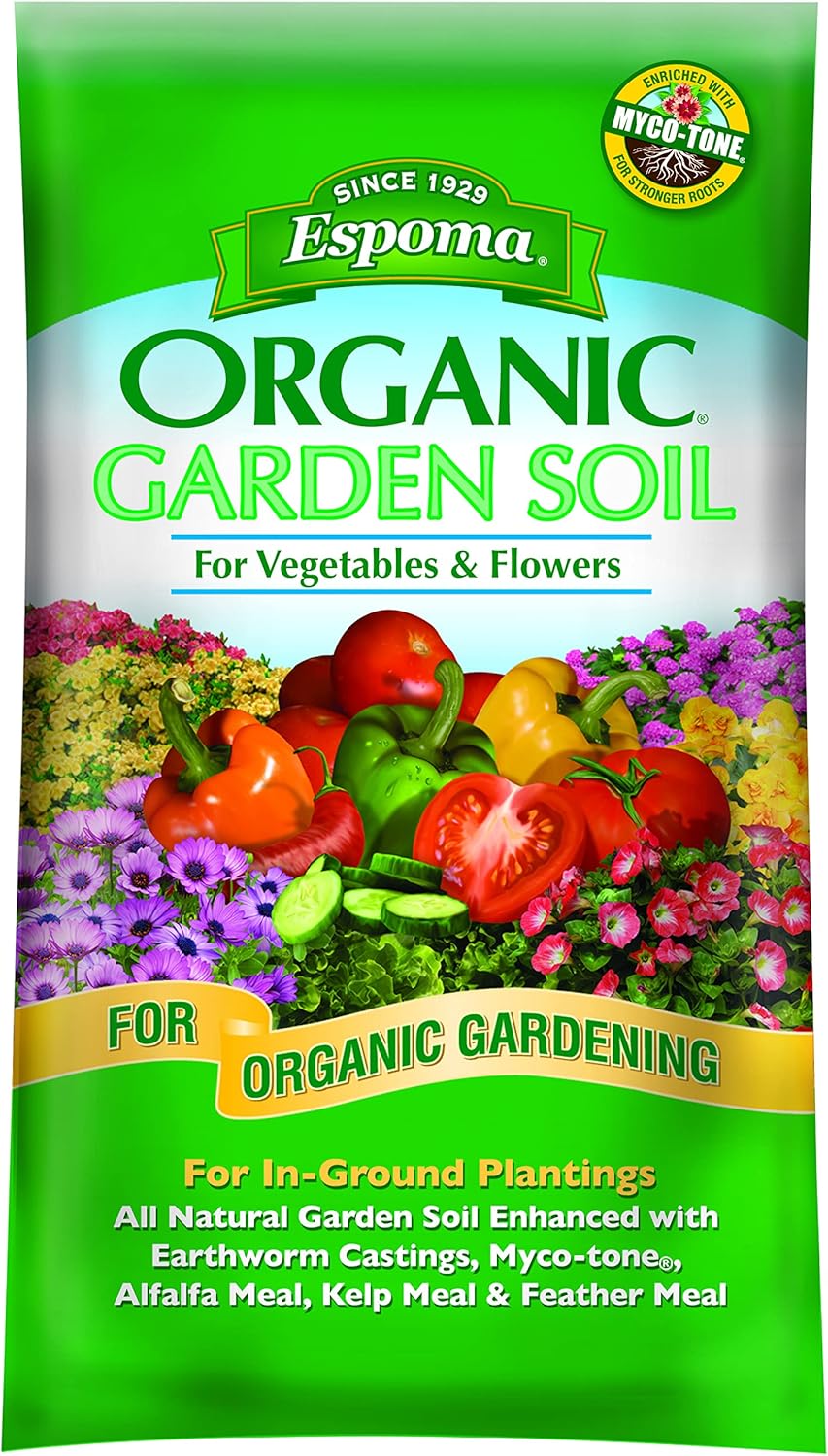
Espoma Organic Vegetable & Flower Garden Soil (1 cu ft)
| Volume | 1 cubic feet |
|---|---|
| Unit Count | 1536 Ounce |
| Style Name | Peat Moss |
| Ingredients | Peat moss, aged forest products/composted rice hulls, limestone, earthworm castings, alfalfa meal, kelp meal, feather meal, yucca extract |
| Intended Use | Use when planting & transplanting for organic gardening |
Espoma Organic Vegetable & Flower Garden Soil is a ready-to-use planting mix intended to be blended into native soil when planting or transplanting in raised beds. It contains peat moss, aged organic materials, earthworm castings and a mix of natural amendments such as alfalfa, kelp and feather meals plus a mycorrhizal blend to support root establishment. Typical use is to work the mix into existing bed soil to improve texture, drainage and nutrient availability for vegetables and flowers. The inclusion of compost-like materials and slow-release organic meals means it contributes both immediate organic matter and ongoing nutrient release without synthetic fertilizers. Because it comes in a one cubic foot bag, it is easy to handle for spot amendments or small raised beds, but larger beds will require multiple bags and mixing effort. The product is formulated for organic gardening, but users should plan volumes and pre-mixing to avoid uneven distribution in large beds.
Best for: Home gardeners building or amending organic raised beds who want a ready-made, natural planting mix to blend into existing soil and support transplants.
Less Ideal for: Large-scale raised bed projects or those who want to fill entire beds with a single purchase without mixing multiple bags should consider bulk soil or compost alternatives.
- Formulated for organic gardening with natural amendments and no synthetic fertilizers
- Contains earthworm castings and mycorrhizae to support root health and nutrient uptake
- Easy to use one-cubic-foot bag for spot improvements and transplanting
- Includes a blend of slow-release organic meals for ongoing nutrient supply
- Small 1 cu ft volume means multiple bags are needed for full raised bed fills
Verdict: A convenient organic planting mix to improve native soil and give transplants a natural nutrient and microbial boost in raised beds.
FoxFarm Happy Frog Potting Soil, 2 cu ft (Container Garden) with 2 Plant Tags

| Brand Name | FoxFarm |
|---|---|
| Unit Count | 600 Ounce |
| Volume | 2 cubic feet |
| Style Name | Container Garden |
FoxFarm Happy Frog Potting Soil is a premixed, ready-to-use container blend designed to give potted plants and small raised beds a nutrient-dense, biologically active medium. You simply fill containers or add it to an organic raised bed, plant, and water; the mix is amended with earthworm castings, bat guano, and aged forest products to supply slow-release nutrients and organic matter. Built-in soil microbes and mycorrhizal-friendly components help roots access nutrients more efficiently and encourage strong vegetative growth and flowering. Practical benefits include less need for immediate fertilizing, improved root health for transplanting, and convenience when you want a reliable organic base without DIY mixing. The product comes in a 2 cu ft bag intended for container use and includes two plant tags for tracking plantings. Limitations are that it is formulated for containers and smaller planting areas rather than bulk in-ground use, and heavier-feeding crops may still need periodic targeted fertilization over the season.
Best for: Buyers who want a dependable, organic-ready potting mix that delivers consistent biological activity and nutrition for containers and small raised beds without custom mixing.
Less Ideal for: Gardeners building large-volume raised beds or amending entire garden plots who need bulk soil or prefer to custom-blend ingredients at scale.
- Ready-to-use amended blend reduces prep time for containers and small raised beds
- Contains earthworm castings, bat guano, and aged forest products for sustained organic nutrition
- Includes beneficial soil microbes to support root development and nutrient uptake
- pH adjusted for improved nutrient availability
- Pack size and formulation are targeted to containers and may not be economical for large raised beds
- May require additional fertilization for heavy-feeding vegetables over a full season
Verdict: A convenient, microbe-rich potting mix that provides reliable organic nutrition and root support for containers and small raised beds.
Back to the Roots Premium Organic Potting Mix, 6 Quart

| Unit Count | 192 Fluid Ounces |
|---|---|
| Item Highlight | Peat-free potting soil for outdoor plants, indoor plants, vegetables, herbs and flowers |
| Item Type Name | 100% Organic Potting Mix |
| Volume | 6 quarts |
This 6-quart Back to the Roots Premium Organic Potting Mix is a peat-free, all-purpose soil designed for container plants, raised beds, herbs and vegetables. It blends organic plant food with yucca extract to help with moisture control and dolomitic limestone to stabilize pH, making it useful when starting transplants or topping up raised beds. The small bag size is convenient for planting several containers or refreshing the surface of a raised bed without hauling bulk soil. Because it is made from upcycled plant matter and wood fines and labeled 100% organic, it fits gardeners who want an environmentally minded option. The product is manufactured in the USA and works well for indoor and outdoor use, but the 6-quart volume means you will need multiple bags for larger raised beds. Expect the usual limitations of small packaged mixes: not intended as a complete replacement for several cubic feet of garden soil and may require additional amendments for long-term fertility in large beds.
Best for: Gardeners who prefer ready-to-use organic, peat-free mixes for starting seedlings, potting containers, or refreshing the top layer of raised beds and who prioritize ease and environmental footprint.
Less Ideal for: People building or filling large raised beds who need bulk soil or a long-term base mix without frequent top-ups or additional amendments.
- 100% organic and peat-free, made from upcycled plant matter and wood fines
- Includes yucca extract for improved moisture control
- Dolomitic limestone included to help balance soil pH
- Versatile all-purpose mix suitable for herbs, vegetables, flowers and container plants
- Only 6 quarts per bag so multiple bags are required for filling raised beds
- Small packaged mix may need extra nutrients for long-term fertility in larger beds
Verdict: A convenient, peat-free organic potting mix that works well for potting, seed starting, and topping up raised beds when you want an eco-conscious, ready-to-use option.
Choosing the Right Soil for Organic Raised Beds: Key Factors to Consider
Soil Texture and Drainage
Texture determines how water moves through the bed and how easily roots penetrate the mix. A loamy balance of sand, silt, and clay with plenty of pore space lets excess water drain while still holding enough moisture for plants.
Poorly drained mixes lead to root rot and surface compaction, while overly sandy soils drain too quickly and require more frequent watering. When choosing a soil, consider how it will behave under your local rainfall or irrigation schedule and whether you will add extra coarse material like pine bark fines or horticultural grit to improve structure.
Organic Matter and Compost Content
Organic matter is the primary store of slow-release nutrients and supports beneficial soil biology. A high proportion of well-aged compost or decomposed organic materials helps maintain nutrient cycling and improves soil structure over time.
However, freshly added uncomposted materials can tie up nitrogen as they break down, so look for mixes that specify finished compost or stabilized organic amendments. For organic raised beds, the quality and source of organic material affect pest and weed seed content as well, so choose blends with clean, tested compost when possible.
Moisture Retention Vs Aeration
Raised beds dry out differently than in-ground soil because they sit above surrounding ground and warm faster. A good bed soil holds moisture to reduce watering frequency yet maintains air pockets so roots can breathe.
Materials like coconut coir, peat alternatives, and fine compost increase water-holding capacity, whereas coarse wood products and perlite boost aeration. Match the mix to your watering habits and crop types; moisture-loving greens need more retention, while onions and garlic prefer drier, looser mixes.
Nutrient Density and Starter Fertility
Soil for organic raised beds should provide an initial nutrient pool to support seedlings and early growth without synthetic fertilizers. Look for blends that list compost, rock minerals, or plant-based meals to supply nitrogen, phosphorus, and potassium in organic forms.
Because organic nutrients release slowly, gardeners often plan for mid-season fertility top-ups. Consider whether the base mix pairs well with common organic amendments like fish emulsion, kelp, or compost tea so you can maintain steady production.
pH and Mineral Balance
pH affects nutrient availability and plant health. Most vegetables prefer slightly acidic to neutral ranges. A recommended mix will note if it is limed or acidified or provide guidance on common adjustments.
Mineral balance matters for long-term soil function. Some bagged soils include rock dust or other mineral supplements to prevent slow deficiencies. If a mix is low in certain micronutrients, plan to correct that with targeted organic amendments based on simple soil tests.
Longevity and Maintenance Needs
Raised bed soils settle and decompose with each season, so longevity matters for workload and cost. A mix that retains structure longer will need less annual top-up and fewer major renovations.
Check how quickly the blend breaks down and whether it benefits from annual compost top-dressing, cover crops, or replacement layers. Also consider how much labor you are willing to invest in raking, turning, or amending beds each year.
Preparing and Filling New Organic Raised Beds
Start by measuring bed volume so you purchase the right amount of mix. When filling, place a layer of coarse material at the bottom only if drainage is a known issue; in most cases, a uniform filling with the chosen soil gives better root continuity.
Lightly water the soil as you fill to settle air pockets and allow small compaction. Avoid packing the soil; instead, firm gently with your hands or a flat board. Leave space at the top of the bed for mulch or a finishing layer of compost to protect against erosion and moisture loss.
- Fill beds to allow a 1 to 2 inch mulch layer without overfilling
- Avoid burying treated lumber or debris in the planting zone
- Consider a thin layer of compost on top rather than deep-digging fresh amendments into established beds
Recharging Bed Fertility During the Season
Organic fertility is a season-long process. Use compost tea, liquid kelp, or fish-based feeds selectively for hungry crops and to correct mid-season dips in vigor. Apply these in moderation and according to label or recipe guidance.
Top-dressing with well-aged compost in spring and after heavy harvests replenishes organic matter and supports microbial activity. For heavy feeders, plan an additional side-dress of compost or an organic granular fertilizer mid-season.
- Apply a 1/2 to 1 inch compost top-dress in early spring
- Mulch after seeding or transplanting to preserve moisture
- Rotate crops to reduce pest and nutrient pressure
Adjusting Soil Mixes for Specific Crops
Different plants prefer different structures. Root crops like carrots and parsnips do best in loose, deep, stone-free mixes. Leafy greens tolerate slightly heavier soil with more moisture retention. Fruiting crops such as tomatoes and peppers benefit from mixes with higher organic matter and steady nutrient supply.
If you grow a range of crops, consider creating bed-specific mixes or amending zones within a single bed to suit particular needs. That targeted approach reduces compromise and improves yield across diverse plant types.
- Loosen the bed to about 12 inches for root vegetables
- Add more compost and mulch for heat-loving fruiting plants
- Use coarser components for beds that host perennials to slow compaction
Testing and Monitoring Soil Health
Regularly test your bed soil for pH and basic nutrient levels, especially before establishing long-term plantings. Simple home kits or laboratory tests can reveal deficiencies that are hard to detect by sight alone.
Monitor soil texture and biological activity. Worms, crumbly structure, and a healthy smell indicate a living soil. If the bed becomes compacted or slimy, it likely needs more organic matter and better aeration.
- Test pH every 1 to 2 years
- Observe drainage after a heavy rain to gauge texture performance
- Track crop vigor as an indirect measure of soil nutrient status
Sourcing and Storage of Bulk Soil
When buying soil in bulk or bags, check the ingredient list and look for clear descriptions of compost quality, particle sizes, and any added amendments. Store unopened bags in a dry, shaded place to prevent nutrient loss or mold growth.
If you must store bulk soil outdoors, cover it with breathable fabric to avoid waterlogging and weed seed contamination. Rotate stock so older material is used first, and mix stored soil before use to reintroduce aeration.
- Keep stored soil off bare ground using pallets or tarps
- Protect organic blends from prolonged wetting during winter
- Label stored bags with purchase date and any amendment notes
How We Chose the Best Soil for Organic Raised Beds
We focused on attributes that matter to gardeners using raised beds with an organic approach. Evaluation prioritized physical texture and drainage, organic matter and nutrient density, moisture retention balanced with aeration, and the presence of certified organic inputs or clearly labeled natural amendments. Longevity and how the mix changes over a season were assessed by looking at typical breakdown rates and amendment needs. Practical handling factors such as ease of shoveling, dust levels, and compatibility with common mulches and compost top-ups were considered as well. We excluded soils containing synthetic fertilizers, persistent chemical additives, or unclear ingredient lists. Blends marketed mainly for lawns, heavy clay remediation, or decorative potted displays were not considered unless specifically formulated for raised beds or vegetable production. The final shortlist emphasizes mixes that give gardeners a good starting structure and nutrient baseline while remaining compatible with ongoing organic fertility practices.
FAQ
How deep should soil be in an organic raised bed?
Most vegetables and herbs do well with 10 to 12 inches of quality soil. Deep-rooted crops benefit from 14 inches or more. If you plan root vegetables, aim for a deeper, loose mix to allow unobstructed root growth.
Can I make my own soil mix for organic raised beds?
Yes. A homemade blend typically mixes compost, topsoil, and a drainage component like coarse sand or aged bark. Ensure compost is fully decomposed to avoid nitrogen drawdown and consider a simple soil test to balance minerals.
How often should I add compost to raised beds?
A light top-dress of 1/2 to 1 inch of compost once a year in spring is common for maintenance. Heavy-feeding crops may require additional side-dressing mid-season. The exact frequency depends on decomposition rates and how intensively you grow.
Is coconut coir a good substitute for peat in raised beds?
Coconut coir is a reasonable peat alternative that retains moisture and improves structure. It usually requires supplementation with mineral-rich compost or amendments because coir is low in nutrients compared with peat-based blends.
Will raised bed soil compact over time?
Yes. Organic materials break down and settle, which reduces volume and can lead to compaction. Regular top-dressing with compost, avoiding heavy tilling, and using cover crops in the off-season help maintain structure and reduce the need for complete refill.
Final Verdict
For organic raised beds, prioritize a soil that balances drainage, moisture retention, and a healthy level of organic matter. Decide based on the crops you grow and how much seasonal maintenance you want to do. Pay attention to texture and starter fertility so plants establish quickly, and plan for annual compost top-ups to sustain productivity. Ultimately, choose a mix that fits your watering habits and maintenance rhythm. If you prefer lower upkeep, select a longer-lasting, well-structured blend; if you are hands-on, a lighter, fast-aging mix with regular compost additions can deliver rapid growth and high yields.
