

Note: This article contains affiliate links. If you click on these links and make a purchase, I may earn a small commission at no extra cost to you. This helps support my research and content. Read my full affiliate disclosure here.
Choosing the right bagged soil for growing grass matters more than gardeners often realize. The wrong texture, nutrient balance, or moisture retention profile can lead to patchy germination, extra watering, and wasted seed. This guide focuses specifically on bagged mixes formulated for lawn establishment, whether you are overseeding a thin yard, laying sod, or installing new turf in a small patch. We shortlisted six top bagged soils and evaluated them for the properties that affect grass establishment: particle size and texture, nutrient and pH profile, drainage and water-holding balance, and ease of use for common lawn tasks. Below you will find what to look for and practical considerations to help you pick the right mix for your lawn project.
Top Picks at a Glance
| Best Quality Built to a higher standard if you want something more solid | PlantBest Coco Lawn Soil Compressed Coconut Coir Block (expands to 19.8 gal) |  |
| Best Value The sweet spot between price and what you get | Scotts Turf Builder LawnSoil, 1 cu ft (2-pack) |  |
| Best Budget The cheapest option that still gets the job done reliably | Generic Premium Topsoil, 2-Pack |  |
| Highest Rated A top-rated pick with lots of positive feedback | Coast of Maine Monhegan Blend Organic Topsoil (1 cu ft) |  |
| Most Popular A crowd favorite that many people choose with confidence | Garden Magic Organic Potting Top Soil Blend, 40 lb |  |
| Best Seller A high-volume bestseller chosen again and again | Scotts Turf Builder LawnSoil, 1 cu ft, 2-Pack | |
PlantBest Coco Lawn Soil Compressed Coconut Coir Block (expands to 19.8 gal)

| Unit Count | 383 Ounce |
|---|---|
| Item Type Name | Top Soil |
| Volume | 19.8 gallons |
| Item Highlight | Organic, 100% Coconut Coir; Expands to 79.2 Quarts; Covers 125 Sq. Ft. |
This compressed coco coir block is built for quick lawn repair and overseeding: one compact 11 lb. block soaks up water and expands into about 19.8 gallons of loose topsoil that can cover roughly 125 sq ft at a quarter-inch depth. In practice you add water, let it rehydrate, and spread the loose, fibrous coir over bare spots or thin turf; its high water retention helps keep seed moist longer while the open texture improves aeration and drainage so roots establish without compaction. The lightweight, compact format makes storage and handling far easier than bulky soil bags and reduces lifting. Limitations to expect are that this is a coir-based growing medium rather than mineral-rich topsoil, so it offers less native nutrients and may benefit from a starter fertilizer when seeding; also the bulky expanded volume can be awkward to move in small batches once hydrated. For performance-focused lawn work it excels at keeping seed zones consistently moist and improving germination speed compared with standard bagged dirt.
Best for: Buyers who prioritize fast, effective overseeding and want a material that promotes quick germination and reliable moisture retention without hauling heavy bags.
Less Ideal for: Gardeners seeking a nutrient-rich, mineral topsoil replacement or those who need an immediately ready-to-use, heavy top dressing without adding amendments.
- Expands to usable topsoil volume from a compact, easy-to-handle block
- High water retention that helps maintain consistent moisture for seed germination
- Fibrous texture improves aeration and drainage to reduce compaction
- Peat-free and made from 100% coconut coir
- Provides limited inherent nutrients compared with traditional topsoil so fertilizer is often needed for best lawn establishment
- Must be hydrated and handled after expansion which can be messier to move than dry bagged soil
Verdict: A compact, high‑water‑retention coconut coir block that makes overseeding and patching faster and easier while improving seed moisture and aeration.
Scotts Turf Builder LawnSoil, 1 cu ft (2-pack)

| Number of Packs | 2 |
|---|---|
| Manufacturer | The Scotts Miracle-Gro Company |
| Item Weight | 32 pounds |
Scotts Turf Builder LawnSoil is designed as a ready-to-use planting medium for starting new lawns, repairing bare spots, or installing sod. The product mixes a soil base with Scotts starter-brand fertilizer and moisture-retaining components so newly sown seed or installed sod has nutrients and improved germination compared with native soil. Typical use is spreading a 1-inch layer over prepared ground or bare patches, raking lightly, and then seeding or laying sod; the built-in fertilizer supports early root development while the moisture-holding properties reduce stress during hot, dry spells. Practical benefits include fewer separate soil amendments, faster establishment of grass, and a consistent medium for small repairs or plug projects. Important limitations are that one-cubic-foot bags cover limited area so larger lawns require many bags and repeated applications, and the product is an amendment not a complete replacement for deep soil issues like compaction or drainage problems.
Best for: Gardeners who prioritize efficient, no-fuss lawn establishment and spot repairs and want a ready-mixed product that supplies starter nutrients and improved germination.
Less Ideal for: People renovating large lawns from scratch or those needing to correct deep soil structure problems should consider bulk soil deliveries or professional soil remediation instead.
- Includes starter-brand fertilizer to support early root and shoot growth
- Formulated to retain moisture and improve germination compared with native soil
- Ready-to-use mix suitable for seeding, sod installation, patching, and plugs
- Sold in manageable 1 cu ft bags that are easy to spread by hand
- Small bag volume means many bags are needed for medium to large lawns
- Does not address underlying soil compaction or drainage issues
Verdict: A convenient, fertilizer-enhanced lawn soil that speeds establishment for seeding, sod, and small repairs.
Generic Premium Topsoil, 2-Pack

| Number of Packs | 2 |
|---|---|
| Item Highlight | Lawn Care, Garden Use |
| Manufacturer | The Scotts Miracle-Gro Company |
| Item Weight | 32 pounds |
This two-pack of premium topsoil is designed for common lawn tasks like filling low spots, topdressing, seeding, and repairing bare patches. The blend emphasizes organic matter and minerals to improve drainage and moisture retention, so it helps grass roots establish more quickly than plain subsoil. Bags spread easily for a smooth surface and are useful for small to medium repairs or for improving thin, depleted turf before overseeding. The product includes safety guidance to avoid dust inhalation and skin or eye contact. Because it is sold in bagged form, it is convenient for homeowners who want to work in specific areas without ordering bulk soil, though moving and spreading multiple bags can be labor intensive for larger yards. Expect modest improvements in lawn texture and fertility when used as a top dressing or to correct low spots, and combine with seed or compost for best seeding results.
Best for: Homeowners working on small to medium lawn repairs or overseeding projects who want an easy, bagged topsoil to improve turf health without buying bulk deliveries.
Less Ideal for: People needing to renovate or topdress large lawns where bulk soil delivery would be more practical and cost-effective.
- Formulated mix of organic matter and minerals to improve soil structure
- Suitable for multiple lawn tasks: filling low spots, topdressing, seeding, and repairs
- Sold in convenient bagged packs for targeted, small-area work
- Bagged format requires physical handling and is inefficient for large-area projects
Verdict: A convenient bagged topsoil option for DIY lawn repairs and overseeding that improves soil condition in small to medium areas.
Coast of Maine Monhegan Blend Organic Topsoil (1 cu ft)
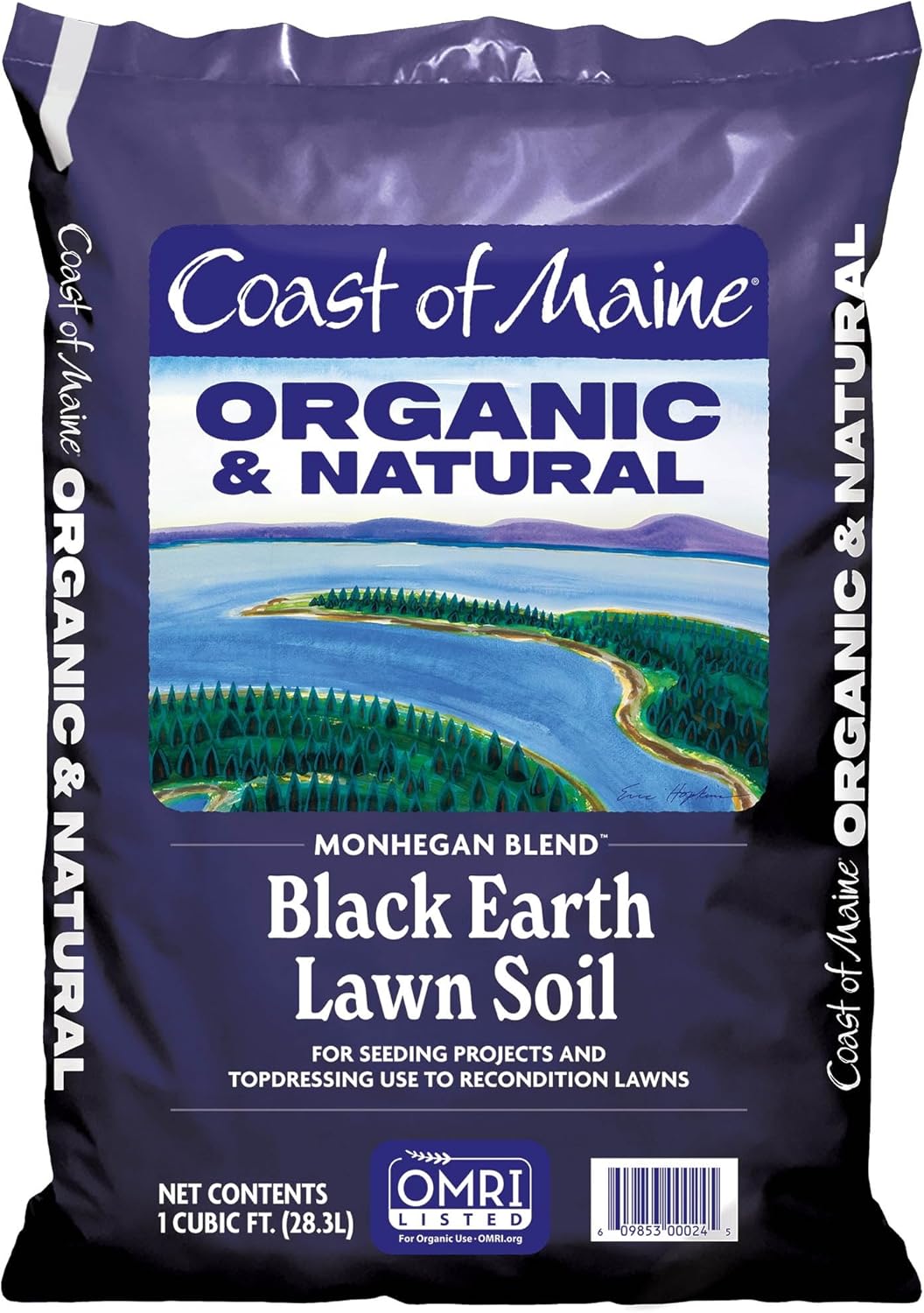
| Unit Count | 1 Count |
|---|---|
| Volume | 1 cubic feet |
| Main Ingredients | Composted farm manures, sphagnum peat moss, aged bark |
| Made in | United States |
Coast of Maine Monhegan Blend is an organic topsoil formulated from composted farm manures, sphagnum peat moss, and aged bark that works well for reconditioning lawns and filling thin or bare patches. Typical use is as a topdressing or spot repair material: spread a thin layer over the turf or bare area, water it in, and allow grass to grow through. Notable features include OMRI listing for organic gardening, a fine texture that makes it easy to spread by hand or with a rake, and ingredients that improve moisture retention and soil structure to support root development and beneficial microbes. In practice this means fewer amendments are needed to establish seed or strengthen weakened turf and it is light enough to use in raised beds and containers as well. Limitations to note are the small 1 cu ft bag size, which requires many bags for large lawns, and the peat content, which some gardeners avoid for sustainability reasons. Also handle with care to avoid inhaling fine particles.
Best for: Gardeners who prioritize a reliable, organic soil amendment for repairing lawns and improving thin turf and who prefer ready-to-use topdressing that supports soil biology.
Less Ideal for: People who need to cover large lawn areas with a single purchase or who want a peat-free or bulk delivery soil option.
- OMRI-listed organic formula suitable for organic lawns
- Fine, easy-to-spread texture ideal for topdressing and patching
- Blend of composted manures, peat moss, and aged bark improves moisture retention and soil structure
- Supports beneficial microorganisms that aid turf recovery
- Small 1 cubic foot bag means multiple bags are needed for larger lawns
- Contains peat moss, which some gardeners avoid for environmental reasons
Verdict: Choose this OMRI-listed topsoil when you want a dependable organic blend for reliable lawn patching and topdressing.
Garden Magic Organic Potting Top Soil Blend, 40 lb

| Brand Name | Garden Magic |
|---|---|
| Item Highlight | Dark Reed Sedge Peat and Sand – Moisture Retaining Mix |
| Included Components | Michigan Peat – 5540 – 40lb |
| Volume | 40 liters |
Garden Magic Organic Potting Top Soil is a ready-to-use 40 lb bagged mix of dark reed sedge peat and sand formulated for both indoor and outdoor planting and top dressing lawns. In practice it is used to fill holes, loosen compacted clay, improve moisture retention in light soils, and provide a planting medium for grass seed, vegetables, and container plants. The peat and sand balance helps retain moisture while still allowing excess water to drain, so seeded areas and raised beds establish without staying waterlogged. Because it is a general-purpose top soil rather than a specialized turf starter, users should expect it to improve surface soil structure and seedbed contact but not to replace a soil test or targeted amendments for nutrient-poor lawns. The 40 liter volume is convenient for small lawn repairs and garden projects, and the product’s long sales history and positive customer feedback make it a dependable choice for everyday lawn patching and potting tasks.
Best for: Buyers who want a reliable, no-prep top soil to repair patches, prepare seedbeds, or refresh planting areas and who value proven performance backed by many satisfied users.
Less Ideal for: Gardeners needing a fertilized lawn starter mix, a tailored soil amendment based on soil test results, or large-scale turf renovation projects should look for specialized products.
- Ready-to-use mix suitable for indoor and outdoor planting
- Balanced peat-and-sand texture that retains moisture yet allows drainage
- Useful for filling holes, top dressing, and improving compacted clay
- Versatile for grass seed beds, raised beds, and container planting
- Not formulated as a nutrient-rich lawn fertilizer or specialized turf starter
Verdict: A dependable, ready-to-use top soil bag that makes quick lawn patching and seedbed preparation easy and consistent.
Scotts Turf Builder LawnSoil, 1 cu ft, 2-Pack
| Number of Packs | 2 |
|---|---|
| Manufacturer | The Scotts Miracle-Gro Company |
| Item Weight | 32 pounds |
Scotts Turf Builder LawnSoil is a ready-to-use lawn soil formulated to give new grass a stronger start. It is typically spread over bare patches, used when installing sod, or worked into topsoil before seeding; the included starter fertilizer helps early root development while the soil's moisture-retaining properties improve germination compared with many native soils. The 2-pack format makes covering several small patches or a modest new lawn straightforward without mixing your own amendments. Practical benefits include ease of use, fertilizer already incorporated so you do not need a separate starter feed, and improved handling of hot, dry spells for newly seeded turf. Important limitations are that a single cubic-foot bag covers only a small area so larger lawns require many bags, and it is not a substitute for full soil renovation where deep compaction or drainage problems exist. Also follow the safety guidance to avoid inhaling dust and keep it away from children and pets.
Best for: Homeowners who want a simple, low-risk way to repair bare spots or start small lawn areas with minimal mixing and a built-in starter nutrient boost.
Less Ideal for: People planning large-scale lawn rebuilds, dealing with serious soil compaction, or needing a custom soil blend for specialty turf varieties should look for bulk soil delivery or professional soil amendment services.
- Preblended with starter fertilizer to support early root and shoot growth
- Moisture-retaining formula improves germination in warm or dry conditions
- Convenient 2-pack lets you treat multiple patches without mixing amendments
- Designed specifically for seeding, sod installation, and patch repairs
- Small per-bag coverage makes it inefficient for large lawn renovations
- Not intended to correct deep compaction or major drainage issues
Verdict: Use this preblended lawn soil when you want an easy, fertilizer‑ready option to seed, sod, or patch small lawn areas with minimal fuss.
Choosing the Right Bagged Soil for Growing Grass: Key Factors to Consider
Texture and Particle Size
Soil texture determines how well seed makes contact with the medium and how the surface behaves after watering. Fine, sifted mixes can offer excellent seed contact and quick germination, but overly fine material may crust and impede emergence. Conversely, very coarse mixes drain quickly but can leave small seeds stranded in gaps.
Aim for a uniform crumb with a mix of fine and small granular particles for most turf species. That balance supports moisture retention at the seed level while permitting adequate air exchange for developing roots.
Starter Nutrient Profile
Young grass needs a reliable source of phosphorus and available nitrogen to build roots and shoots in the first few weeks. Bagged establishment mixes often include a starter fertilizer or an N-P-K ratio tuned for root development. Check whether the product lists a balanced starter and whether the nutrients are slow-release or water-soluble.
A moderate, turf-focused nutrient profile reduces the need for immediate additional feeding while avoiding excessive salt concentrations that can harm seedlings. Consider how the nutrient profile fits your soil test and whether follow-up feeding will be needed.
Drainage Versus Moisture Retention
Grass seed requires consistently moist contact with soil during germination, but prolonged saturation causes rot and weak roots. The best bagged soils strike a balance: they hold enough water at the seed level to prevent rapid drying between light irrigations while allowing excess water to percolate away.
Assess the mix's components for peat, coir, sand, or compost content. Higher sand content improves drainage but reduces water-holding. Peat and coir boost retention but can compact if overused. Choose a blend that suits your local watering habits and climate.
pH and Soluble Salts
Soil pH affects nutrient availability for turfgrass; most lawn grasses prefer a near-neutral to slightly acidic range. Bagged mixes should indicate a pH range compatible with common turf types. High soluble salt levels from certain amendments or fertilizers can inhibit germination and scorch young roots.
If your site has salt-sensitive grass species or you are establishing in containers or raised areas, favor mixes tested for low soluble salts. Adjustments to pH are easier before seeding than after the lawn is established.
Organic Matter Content and Stability
Organic matter improves nutrient-holding capacity and soil structure, promoting healthy root growth over time. However, fresh uncomposted organic matter can settle unevenly and create nitrogen drawdown as microbes decompose it. Well-stabilized compost or humus provides lasting benefits without major short-term nutrient swings.
Look for mixes that state compost origin or stability. Higher organic content helps drought resilience and microbial activity but should be balanced to avoid excessive settling under foot traffic.
Bag Size, Coverage, and Ease of Application
Practical details influence project success. Bags that provide clear coverage area per bag let you estimate how many to buy and reduce waste. Weight and bag design affect how easy it is to carry and spread the product across the lawn.
Also consider how easily the mix spreads with typical tools like a rake or drop spreader. A consistent, non-clumping texture makes hand raking, topdressing, and seeding operations smoother and more uniform.
Preparing the Site Before Applying Bagged Soil
Proper site prep sets the stage for any bagged soil to perform. Remove debris, loosen compacted areas with a garden fork or aerator, and correct low spots so the new soil layer sits flush with surrounding turf. A thin, even application of establishment mix over scarified soil improves seed-to-soil contact and reduces the chance of washouts.
If you face persistent compaction, focus on mechanical loosening before adding mixes. For very small patches, hand tools are fine; larger areas benefit from aeration or dethatching. After spreading, lightly roll or firm the surface so seed and soil remain in contact during the first irrigations.
- Clear weeds and thatch from the seeding area.
- Loosen compacted soil to a depth appropriate for root growth.
- Spread bagged soil evenly and avoid creating thick ridges.
Seeding and Watering with Establishment Mixes
Seed placement and moisture management are the critical follow-up steps to using a bagged establishment mix. Broadcast seed evenly and lightly rake to ensure good contact with the soil layer. For very fine seeds, pressing or rolling can improve contact without burying seed too deeply.
Water gently but frequently to keep the soil surface consistently moist during germination. After seedlings reach a half-inch to an inch, gradually reduce frequency and increase depth of irrigation to encourage deeper rooting.
- Use a fine spray or mist for the first 7 to 14 days.
- Transition to longer, less frequent watering as grass establishes.
Topdressing and Repair Over Existing Lawns
Bagged soils can be used for topdressing thin lawns and repairing bare patches. Apply a shallow layer-typically no more than a quarter to a half inch-so existing crowns are not buried. This encourages tillering and fills low spots without stressing established grass.
When using mixes for patch repairs, focus the richer establishment soil in the immediate repair area and feather it into surrounding turf for a smooth transition. Avoid smothering healthy grass with deep topdressing layers.
- Feather edges of topdressed areas to blend with the lawn.
- Keep repaired patches moist until new growth is visible.
Adjusting Mix Choice for Climate and Grass Type
Different climates and turf species have varying requirements for drainage and water retention. Cool-season grasses in temperate, wetter climates benefit from mixes that drain well to avoid winter saturation. Warm-season grasses in hot, dry regions need mixes with better moisture retention during establishment.
Match the mix to your grass type and irrigation routine. If you water frequently, prioritize drainage to avoid soggy conditions. If you rely on infrequent deep watering, choose blends that hold moisture at the seed level.
- Consider sandier mixes for heavy clay soils or high-rain areas.
- Choose higher organic content mixes for sandy soils or drought-prone sites.
Storing and Handling Bagged Soil
Store unopened bags in a dry, covered spot to prevent moisture uptake and nutrient loss. If bags get wet, let them dry before use to avoid compacting when spread. Once opened, reseal or cover to protect the remaining product from rain and pests.
Handle bags carefully to prevent tearing and spilling. Transfer what you need to a wheelbarrow or tarp and work in manageable sections to maintain consistency in how the mix is applied across the site.
- Keep bags off the ground on pallets or boards if possible.
- Use smaller, sealed containers for leftover material to keep it fresh.
How We Chose the Best Bagged Soil for Growing Grass
We prioritized attributes that directly influence grass germination and early root development. Key evaluation criteria included texture and particle size distribution, because a consistent crumb structure helps seed-to-soil contact and prevents crusting. Nutrient content and starter fertilizer presence were used to judge how well a mix supports the first few weeks of growth. Drainage versus moisture retention balance was evaluated to ensure mixes do not stay bone-dry or waterlogged under typical lawn irrigation. pH compatibility and soluble salt levels matter for young grasses, so we checked whether mixes fell within acceptable ranges for turfgrass. We also considered organic matter content and stability, which affect long-term soil tilth and microbial activity, plus bag weights and coverage to judge practicality for small to medium lawn projects. Exclusions included mixes designed strictly for planters, potting soils with heavy peat-only composition, or products intended only for decorative topdressing rather than establishment. The final list favors mixes that give gardeners straightforward, reliable performance for seed and sod applications.
FAQ
Can I use bagged garden soil to grow grass from seed?
Often yes, but it depends on the mix. Look for establishment or lawn-specific bagged soils that emphasize fine texture, starter nutrients, and low salts. General garden soils may be too coarse or imbalanced for reliable turf germination.
How deep should I apply bagged soil when overseeding a lawn?
A light application is best for overseeding. Spread a thin layer that improves seed contact without burying crowns-typically a quarter to half an inch for topdressing. Heavier layers are better reserved for full renovations.
Do I need to test my soil before using a bagged mix?
It depends on the project. A quick pH and nutrient test helps if you have persistent problems or plan a large renovation. For small repairs or overseeding, a turf-focused bagged mix with a balanced starter profile often performs well without prior testing.
Will a bagged soil reduce the number of times I need to water?
It can, if the mix includes moisture-retentive components like stable organic matter. However, newly sown seed still needs frequent light watering during germination. Choose a mix suited to your irrigation schedule to avoid extra work.
Is it better to use a sandier mix on clay soils?
Sand can help improve drainage in heavy clay, but it must be mixed properly. A bagged mix that balances sand with organic matter is a simpler solution for small areas. For large-scale amendments, broader soil conditioning is usually necessary.
Final Verdict
When choosing bagged soil for growing grass, prioritize mixes that support seed-to-soil contact, provide a starter nutrient profile, and balance drainage with moisture retention. Match the mix to your climate and grass type, and plan site preparation and watering to maximize germination success. Successful turf establishment is often about tradeoffs: a lighter texture helps seed contact but may need more frequent watering, while higher organic content holds moisture but can settle. Focus on the practical criteria discussed here to pick a mix that fits your planting method and maintenance routine.
