

Note: This article contains affiliate links. If you click on these links and make a purchase, I may earn a small commission at no extra cost to you. This helps support my research and content. Read my full affiliate disclosure here.
Choosing the right soil for citrus trees changes how those trees grow, set fruit, and survive hot, wet, or container conditions. The wrong mix can hold too much water, lock up nutrients, or produce poor root development that limits yields. This guide looks at seven shortlisted soils suited for citrus trees, explaining how each one addresses drainage, nutrient balance, and root aeration so you can match a mix to your garden, patio container, or grove. We evaluated mixes based on pH suitability, drainage behavior, nutrient content, and how they perform in containers versus in-ground planting. Read on to understand which soil traits matter most for citrus and why those traits affect tree health and fruit production.
Top Picks at a Glance
| Best Overall The best all-around choice for most situations | Soil Sunrise Citrus Tree Potting Soil Mix (30 Quarts) |  |
| Best Quality Built to a higher standard if you want something more solid | FoxFarm Ocean Forest Potting Soil, 12 qt |  |
| Best Value The sweet spot between price and what you get | Miracle-Gro Cactus, Palm & Citrus Potting Mix, 8 qt. |  |
| Best Budget The cheapest option that still gets the job done reliably | Doter Citrus Tree Potting Soil Mix (1 qt) |  |
| Highest Rated A top-rated pick with lots of positive feedback | E.B. Stone Organics Citrus & Palm Mix Potting Soil, 1.5 cu ft |  |
| Most Popular A crowd favorite that many people choose with confidence | Miracle-Gro Indoor Potting Mix for Cactus & Succulent, 8 qt. (2-Pack) |  |
| Best Seller A high-volume bestseller chosen again and again | Duspro Pre-Mixed 4‑in‑1 Citrus Tree Potting Soil Mix, 6 Quarts |  |
Soil Sunrise Citrus Tree Potting Soil Mix (30 Quarts)

| Volume | 30 quarts |
|---|---|
| Ingredients | Peat moss, perlite, sand, worm castings, lime |
| Unit Count | 1 Count |
| Style Name | Sandy |
Soil Sunrise Citrus Tree Potting Soil is a ready-to-use, 100% natural mix designed for potted lemons, limes, mandarins and other container citrus. The blend pairs peat moss, perlite and coarse sand for an airy texture and quick drainage, while worm castings supply slow-release nutrients and added lime helps stabilize citrus-friendly pH. You would typically use it for repotting young trees, filling containers for new plantings, or refreshing topsoil in established pots. The practical benefits are straightforward: it reduces the risk of soggy roots, improves root aeration to encourage growth, and contains organic matter that supports feeding between fertilizer applications. On the downside the bag does not list N-P-K values or long-term nutrient schedules so you may still want to plan a feeding routine for heavy fruiting trees, and the peat content means it will compress over time compared with purely inorganic media. For a gardener seeking a balanced, citrus-focused potting mix this product covers the common needs of container citrus with minimal fuss.
Best for: Gardeners who want a reliable, ready-made potting mix tailored to potted citrus and prefer a natural ingredient list rather than mixing components themselves.
Less Ideal for: Growers who need a complete, measured fertilization plan or those who prefer peat-free or purely inorganic cactus-style mixes for maximal long-term aeration.
- Formulated specifically for citrus with ingredients that promote drainage and aeration
- Includes worm castings for natural nutrient support
- Lime added to help maintain citrus-preferred pH
- 100% natural blend with no additives or fillers
- Resealable packaging mentioned in brand materials for easier storage
- No explicit fertilizer N-P-K analysis or feeding schedule provided
- Contains peat which can compress over time and may require refreshes
Verdict: A balanced, citrus-specific potting mix that simplifies container growing by combining drainage, organic feed and pH support in one ready-to-use bag.
FoxFarm Ocean Forest Potting Soil, 12 qt

| Item Form | Granules |
|---|---|
| Specific Uses For Product | Dry Fertilizer |
| Coverage | 4.8 sq ft |
| Mixing Ratio | 1:1 |
FoxFarm Ocean Forest is a pre-mixed potting soil built to jump-start seedlings, houseplants, and container gardens by combining aged forest products, sandy loam, and sphagnum peat moss for good aeration and drainage. It includes organic amendments such as fish meal, crab meal, and earthworm castings so pots receive a nutrient boost without additional fertilizer for the first month. Typical use is straight from the bag: fill containers, plant, and water; it can also be blended 1:1 with heavier garden soils or used as a topdress. The mix’s light, aerated texture helps roots establish and reduces compaction in citrus containers, while pH adjustment supports nutrient uptake. Important limitations are that it is a potting medium rather than a slow-release fertilizer replacement long term and heavier feeding or pH monitoring may be needed for mature citrus over time. Also the bag covers a modest area, so you will need multiple bags for larger trees or multiple containers.
Best for: Gardeners who prioritize vigorous early growth for citrus seedlings or container citrus and want a high-quality, ready-made mix that promotes root development and drainage.
Less Ideal for: Growers who need a bulk landscape soil for in-ground planting or those seeking an all-in-one long-term fertilizer solution for mature trees.
- Ready-to-use straight from the bag for quick planting
- Contains organic amendments (fish meal, crab meal, earthworm castings) to support early growth
- Light, aerated texture improves root development and drainage in containers
- Not a long-term complete fertilizer for mature trees beyond the first 30 days
- Coverage per 12 qt bag is modest for large containers or multiple citrus trees
Verdict: Choose this soil when you want a nutrient-rich, well-aerated potting mix that helps citrus seedlings and container trees establish quickly.
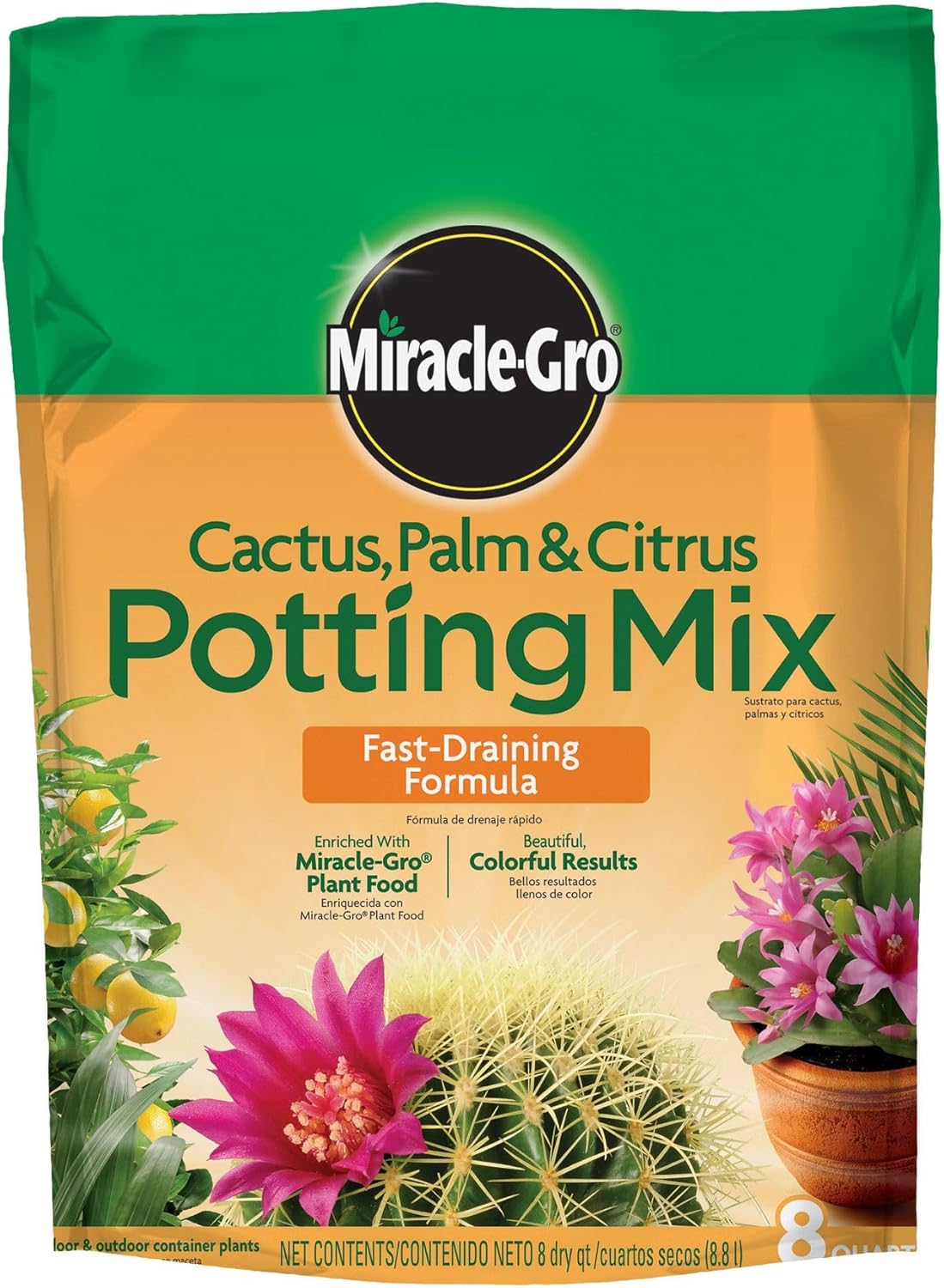
Miracle-Gro Cactus, Palm & Citrus Potting Mix, 8 qt.
| Volume | 8 quarts |
|---|---|
| Unit Count | 1 Count |
| Item Weight | 16 ounces |
| Style Name | Potting Mix |
This 8 qt. Miracle-Gro potting mix is designed for container-grown succulents, palms, and citrus, combining peat moss, sand, perlite, and forest products to create a loose, fast-draining medium. Typical use is repotting or topping up pots with a drain hole, filling roughly a third of the container, seating the root ball, then adding mix and watering through. The included plant food gives an early nutrient boost and the mix is formulated to resist compaction so roots get air and excess water drains away quickly. For citrus in containers this helps reduce root rot risk and encourages healthier growth and fruiting when paired with routine feeding. Limitations are obvious for larger in-ground trees or long-term container culture because an 8 qt bag covers only small pots and the mix will require regular refeeding and annual repotting for citrus that outgrows its pot.
Best for: Gardeners growing citrus in containers who want an easy, ready-to-use mix that improves drainage and gives plants a nutrient head start.
Less Ideal for: People planting mature or in-ground citrus trees or anyone needing bulk soil for large beds should choose a different product.
- Fast-draining formula reduces standing water and helps prevent root rot in containers
- Enriched with Miracle-Gro plant food for an initial nutrient boost
- Contains perlite and sand to improve aeration and resist soil compaction
- Formulated specifically for container palms, succulents, and citrus
- Small 8 qt bag covers only a few small to medium pots, requiring frequent replenishment for multiple trees
- Not intended as a long-term in-ground soil amendment for established citrus trees
Verdict: A convenient, fast-draining potting mix that makes container citrus healthier and easier to maintain.
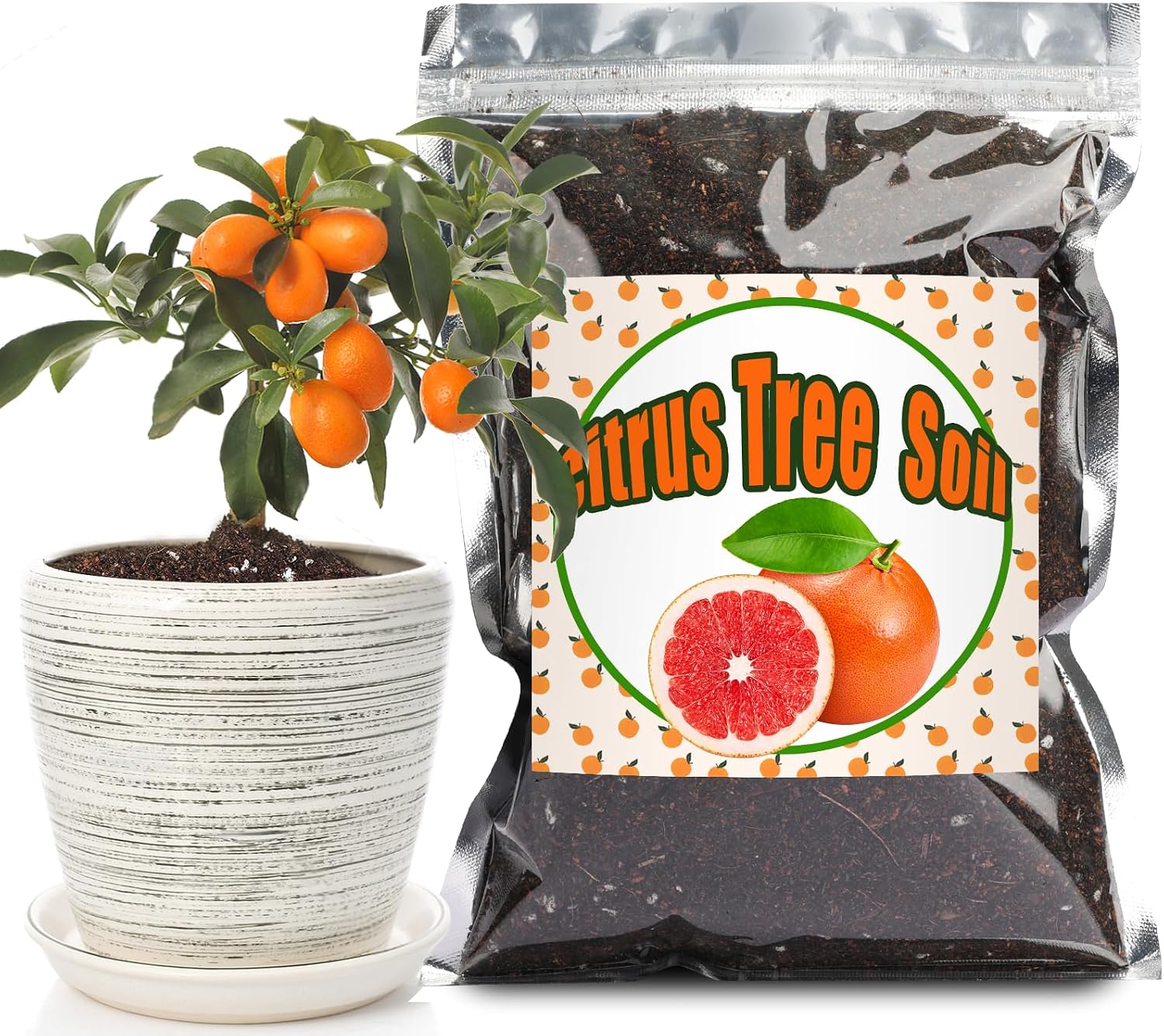
Doter Citrus Tree Potting Soil Mix (1 qt)
| Brand Name | Doter |
|---|---|
| Item Type Name | Garden soil |
| Volume | 1 quarts |
| Item Weight | 224 g |
This one-quart Doter citrus potting mix is made to give potted lemon, lime, orange and other citrus trees a fast, usable growing medium straight from the bag. It is described as pH-balanced (about 6.0–7.1) and blended for good drainage and aeration, so it helps prevent waterlogging while still supplying organic and mineral nutrients that support root development and fruiting. Typical uses are repotting young container citrus, topping off planters, or mixing with larger volumes of basic potting soil to tweak acidity and drainage. The key practical benefits are convenience and a citrus-specific formulation that reduces the guesswork for novice growers. The small 1 quart size makes it easy to trial the mix or refresh the top layer, but it also means you will need multiple bags for larger pots or several trees. Expect useful performance for container citrus but plan to supplement with larger quantities or additional fertilizer as trees grow larger.
Best for: Buyers who want an affordable, pre-mixed soil to quickly repot or top-dress potted citrus and prefer a product tailored to citrus needs without mixing components themselves.
Less Ideal for: Gardeners needing bulk soil for in-ground citrus or those who prefer to blend custom mixes for large trees should look for larger-volume or professional-grade options.
- pH adjusted for citrus-friendly range to improve nutrient uptake
- Formulated for enhanced drainage to reduce root rot risk in containers
- Contains organic and mineral nutrients to support growth and fruiting
- Ready-to-use small bag is convenient for repotting or top-dressing
- Very small 1 quart volume requires many bags for larger pots or multiple trees
- No detailed ingredient breakdown or guaranteed nutrient analysis provided
Verdict: A convenient, citrus-specific ready mix that lets budget-minded growers quickly repot or refresh potted lemon and lime trees.
E.B. Stone Organics Citrus & Palm Mix Potting Soil, 1.5 cu ft

| Brand | E.B. Stone Organics |
|---|---|
| Volume | 1.5 cubic feet |
This citrus and palm mix is designed for planting and repotting citrus trees, palms, avocados and tropical foliage both in containers and in-ground. The blend pairs aged fir bark and pumice to create fast drainage and good aeration around deep roots, which reduces the risk of waterlogged soil and root rot. Beneficial mycorrhizae are included to improve nutrient and water uptake, helping young roots establish and mature trees maintain vigor. Because it is sold ready to use, you can pot up straight from the bag or work it into planting holes without additional amendments for most plantings. The main limitations are that the bag is a single 1.5 cu ft unit, so larger trees or multiple pots require several bags, and the mix is specialized for citrus and tropicals rather than general-purpose use. For buyers who prioritize dependable, plant-specific soil that promotes healthy root systems, this delivers consistent, predictable results.
Best for: Buyers who want a dependable, plant-specific soil for citrus and tropicals and value predictable drainage and root health when potting or planting.
Less Ideal for: Gardeners looking for a bulk landscape soil for large-scale planting or a universal potting mix for mixed-species containers should consider other options.
- Formulated specifically for citrus, palms and tropical plants to meet their root and drainage needs
- Aged fir bark and pumice provide fast drainage and improved aeration to reduce root rot risk
- Includes beneficial mycorrhizae to enhance nutrient and water uptake
- Ready to use out of the bag for potting or mixing into planting holes
- Small 1.5 cubic foot bag means multiple bags are needed for large trees or multiple containers
- Not formulated as a general-purpose potting mix for a wide variety of plants
Verdict: A reliable, ready-to-use organic mix that gives citrus and tropical roots the drainage and beneficial microbes they need to establish and thrive.
Miracle-Gro Indoor Potting Mix for Cactus & Succulent, 8 qt. (2-Pack)

| Item Highlight | Fast-Draining Cactus and Succulent Potting Mix with Plant Food |
|---|---|
| Number of Packs | 2 |
| Included Components | 2 bags |
| Item Type Name | Soil |
| Ingredients | Sphagnum Peat Moss, Sand, Perlite |
This Miracle-Gro indoor potting mix is a fast-draining, plant-food–enriched blend designed for cacti, succulents and other indoor container plants such as small citrus. The mix combines sphagnum peat moss, sand, perlite and forest products to improve aeration and reduce water retention, which helps prevent root rot in sun-loving, drought-tolerant species. It is sold as two 8 qt. bags that are convenient for repotting multiple 4–6 inch pots without mixing your own amendments. Practical benefits include easier watering control, improved drainage for shallow-rooted succulents and a built-in nutrient boost to get plants off to a strong start. Limits to note are that the bags are modest volume per unit so larger citrus or repeated repotting will need more material, and peat-based mixes will eventually compact and need replenishing or repotting every couple of years. For indoor citrus, expect to supplement with a citrus-specific fertilizer over time rather than rely solely on the included plant food.
Best for: Buyers who want an easy, reliable potting mix for indoor succulents, cacti and small container citrus and prefer a product with built-in plant food and proven reviews to reduce risk.
Less Ideal for: Gardeners repotting large citrus trees or filling big containers who need bulk potting soil or a long-term soil substitute should choose larger volume or specialty citrus mixes instead.
- Fast-draining formula (peat moss, sand, perlite) reduces risk of overwatering and root rot
- Includes plant food to give newly potted plants an initial nutrient boost
- Ready-to-use bags eliminate the need to blend amendments for succulents and small container citrus
- Two 8 qt. bags provide enough soil for multiple small pots, useful when repotting several plants
- Each bag is relatively small for larger citrus trees or frequent repotting, requiring additional purchases
- Peat-based mixes can compact over time and need repotting or amendment every couple of years
Verdict: A convenient, fast-draining potting mix with added plant food that makes repotting small indoor citrus and succulents quick and low-risk.
Duspro Pre-Mixed 4‑in‑1 Citrus Tree Potting Soil Mix, 6 Quarts

| Style Name | 6 Quarts |
|---|---|
| Brand Name | Duspro |
| Item Highlight | Indoor Fruit Tree Mix for Potted Lemon Tree, Oranges & Other Citrus Trees |
This Duspro 4-in-1 citrus potting mix is built for repotting potted lemon, lime and other citrus trees without the need to measure or blend ingredients yourself. The pre-mixed formula pairs coco coir and coco fiber with vermiculite to help retain balanced moisture while perlite increases drainage and root aeration, which reduces the risk of waterlogged roots in containers. It is easy to use: pour into a pot with drainage, center the tree, fill around roots and water. The product is double-screened for a consistent texture that pours cleanly and is available in sizes suitable for one to several 8-inch pots. Practical benefits include saving time, avoiding mixing errors, and a formulation tailored to the moisture and airflow needs of container citrus. Limitations to note are that the bag can be dusty when opened so some caution is needed during handling and the smallest 6-quart size only covers a limited number of repots for larger trees.
Best for: Buyers who want a reliable, no-mix potting medium for indoor or patio citrus trees and prefer a ready-made blend that reduces repotting guesswork and effort.
Less Ideal for: Growers who need very large volumes for multiple mature trees or who prefer to custom-blend their own media with specific amendments.
- Pre-mixed 4-in-1 formula (coco coir, coco fiber, perlite, vermiculite) tailored for container citrus
- Double-screened texture for cleaner pouring and more consistent repotting
- Promotes balanced moisture retention while improving drainage and root aeration
- Available in multiple sizes to match small to medium container needs
- Dusty when opened, requiring a mask or careful handling to avoid inhaling particles
- 6-quart size covers only a small number of repots for larger citrus trees
Verdict: A convenient, professionally blended potting mix that takes the guesswork out of repotting potted citrus trees.
Choosing the Right Soil for Citrus Trees: Key Factors to Consider
Soil pH and Adjustability
Citrus trees thrive in slightly acidic soil, typically between pH 6.0 and 7.0. Soil pH affects nutrient availability; iron, manganese, and other micronutrients become less available in alkaline conditions and can cause chlorosis even when nutrients are present.
When choosing a soil, look for mixes labeled as slightly acidic or designed for acid-loving fruit. If a preferred mix is outside the ideal range, you can acidify slowly with elemental sulfur or acid-forming organic amendments, but that requires monitoring. Regular pH testing after planting helps you know if adjustments are needed to keep trees productive.
Drainage and Porosity
Citrus roots are sensitive to extended wet feet; poor drainage leads to root rot and reduced vigor. A good citrus soil combines water-holding capacity with free drainage so water moves through after irrigation but enough moisture remains in pore spaces for roots.
Texture elements like coarse sand, perlite, or pumice increase porosity and prevent compaction. For in-ground plantings, ensure native soil is amended to improve structure. In containers, use mixes designed for rapid drainage with enough organic matter to retain moisture between waterings.
Nutrient Content and Release
Young and fruiting citrus trees need steady access to nitrogen, phosphorus, potassium, and micronutrients. A mix with a balanced starter nutrient charge or incorporated slow-release fertilizer reduces early deficiencies and supports bloom and fruit set.
Avoid soils with overly high initial nutrient salt loads that can stress roots. For long-term fertility, choose mixes with organic components that break down slowly, feeding soil life and releasing nutrients over the season, while planning a feeding schedule tailored to tree age and production goals.
Organic Matter and Texture Stability
Organic matter improves moisture retention, provides food for beneficial microbes, and helps aggregate soil for good root penetration. However, not all organic materials behave the same. Coir and compost retain moisture but can compress over time; coarse bark or aged wood chips improve aeration but may temporarily immobilize nitrogen as they break down.
Select mixes that balance stable organic components with inorganic porosity. This preserves texture across seasons so you do not end up with a compacted mix that impedes root growth or holds too much water after a few months.
Salt Content and Water Quality
High soluble salts in a soil mix or from irrigation water can damage sensitive citrus roots and reduce fruit set. Soils made from recycled materials or with marine-derived components sometimes carry elevated salt levels that stress trees, especially in containers.
Check product information for soluble salt or electrical conductivity data when available. If your irrigation water is salty or you live in a coastal area, prioritize mixes with low salt readings and plan periodic leaching or rainwater capture to avoid buildup.
Suitability for Containers Versus In-Ground
Container citrus and in-ground citrus have different soil needs. Containers need mixes that drain quickly and remain light, because limited root volume makes trees more vulnerable to waterlogging and salt buildup. In-ground trees benefit from soils that integrate with existing soil, offering water retention but improved structure so roots can spread.
When buying soil, choose mixes formulated for container fruiting plants if you plan to grow in pots. For planting in beds, select a blend that will integrate with native soil without creating a perched water table or dramatic pH mismatch.
Preparing Native Soil Before Planting
Before you add a commercial mix to the planting hole, test the native soil for texture and pH. For heavy clay, incorporate coarse sand and compost to improve drainage and root penetration. For very sandy soil, add organic matter to increase water-holding capacity while maintaining aeration.
When planting, avoid creating a sharp boundary between amended soil and native soil. Backfill gradually to encourage roots to move between layers rather than staying confined to the amended pocket.
- Dig a hole twice as wide as the root ball to loosen surrounding soil.
- Blend amended soil with native soil at the rim to prevent pooling.
- Raise the graft union slightly above grade for improved air circulation.
Soil Mixes for Container Citrus
Container citrus needs a mix that drains freely yet retains enough moisture between waterings. A typical container blend pairs a lightweight organic component with coarse inorganic material to keep pore space open. Monitor moisture more frequently than with in-ground trees because pots dry and concentrate salts faster.
Choose a mix with modest initial nutrients and plan a feeding routine; slow-release fertilizers or regular diluted liquid feedings maintain production without causing salt stress.
- Use pots with drainage holes and a raised saucer to prevent root saturation.
- Consider blends that include pumice, perlite, or coarse sand for long-term aeration.
How to Amend Soil for Improved Fruit Set
Improved fruiting often comes from correcting pH and ensuring consistent nutrient supply. If leaves show pale veins or stunted growth, test pH and available iron and magnesium. Adjust pH gradually and apply micronutrient foliar sprays when deficiencies appear.
Mulching around the root zone with coarse organic material helps conserve water and feed soil life. Do not overapply high-nitrogen amendments late in the season, since excessive vegetative growth can reduce flowering and fruit set.
- Apply a balanced citrus fertilizer according to tree age and soil test results.
- Use mulch 2 to 4 inches deep, kept off the trunk to avoid collar rot.
Managing Watering and Irrigation with Different Soils
Water needs change with soil type. Fast-draining mixes need more frequent but shorter waterings to keep roots hydrated without waterlogging. Heavier mixes require less frequent irrigation but better drainage to avoid standing moisture. Adjust irrigation schedules seasonally and after repotting.
Install a simple moisture meter or use the finger test to check for available moisture at root depth before watering. Consistent, moderate moisture supports flowering and reduces stress-related fruit drop.
- Water deeply and allow the top few inches to dry in container mixes designed for drainage.
- Leach containers occasionally with extra water to prevent salt buildup.
Long-Term Soil Care and Rejuvenation
Soils change over time as organic components decompose and salts accumulate. For containers, refresh the top few inches of mix annually and repot into fresh mix every 3 to 5 years depending on tree size. For orchard plantings, add organic matter yearly and correct pH based on periodic tests.
Encourage healthy soil biology by avoiding overuse of harsh soluble salts or repeated heavy applications of chemical fertilizers. Compost teas and organic amendments support microbial life that helps nutrient cycling for fruit production.
- Schedule annual soil or substrate checks for pH and salt levels.
- Topdress with compost and mulches rather than deep tilling to protect roots.
How We Chose the Best Soil for Citrus Trees
We selected soils based on four to six concrete, garden-relevant criteria that matter for citrus tree health. First, pH suitability was a must because citrus prefers slightly acidic conditions; mixes outside that range were excluded or noted for needing adjustment. Second, drainage and porosity were evaluated so roots avoid waterlogging yet retain moisture between irrigations. Third, nutrient profile and slow-release feeding potential were considered to support flowering and fruit set without frequent corrective feeding. Fourth, organic matter content and texture were reviewed to assess root development and microbial activity. Fifth, salt content and source material were checked to avoid mixes that can harm young roots. We excluded blends intended only for succulents, general houseplants, or heavy clay remediation that do not meet citrus water and nutrient needs. We also filtered out mixes with undisclosed or excessively high soluble salt readings. Our process prioritized real-world garden performance: suitability for containers and in-ground planting, ease of use for typical gardeners, and clear, relevant ingredient information.
FAQ
What pH should I aim for when planting citrus trees?
Aim for a slightly acidic pH around 6.0 to 7.0. That range keeps key micronutrients available. Test soil and adjust slowly with sulfur or acidic amendments if needed.
Can I use regular garden soil in containers for citrus?
Regular garden soil is usually too dense for containers and can hold water, risking root rot. Use a light, well-draining container mix formulated for fruiting plants instead.
How often should I water citrus in different soil types?
Fast-draining mixes typically need more frequent, shorter waterings. Heavier, more organic mixes require less frequent watering but ensure drainage is good. Always check moisture at root depth before irrigating.
How do I know if my soil has too much salt for citrus?
Symptoms include leaf burn, yellowing, or limited growth. You can test electrical conductivity or leach the soil with extra water to see if symptoms improve. Choose low-salt mixes and dilute irrigation salts when possible.
Should I add compost to citrus planting holes?
Yes, but use compost sparingly and blended with native soil to avoid creating a water-holding pocket. Well-aged compost improves structure and provides slow nutrient release without shocking roots.
Final Verdict
Prioritize soil that balances drainage, pH suitability, and steady nutrient release when choosing a soil for citrus trees. The main tradeoffs are between rapid drainage to prevent root rot and enough organic matter to feed roots and support fruiting. For containers, favor lighter, porous mixes and a strict watering routine. For in-ground trees, focus on integrating amendments to improve structure without creating a perched wet layer. With these priorities in mind, pick a mix that matches your planting situation and plan for periodic testing and maintenance to keep trees productive.
