

Note: This article contains affiliate links. If you click on these links and make a purchase, I may earn a small commission at no extra cost to you. This helps support my research and content. Read my full affiliate disclosure here.
A good garden bed weed barrier changes how often you garden and how well your plants establish. The right barrier suppresses weeds without trapping water or suffocating roots, so beds spend less time under maintenance and more time producing healthy plants. This guide shortlists top options suited to raised beds and in-ground beds, and evaluates each by durability, permeability, and ease of installation. Use the evaluation notes here to match a barrier to your soil type, planting style, and long-term garden plans.
Top Picks at a Glance
| Best Overall The best all-around choice for most situations | Happybuy 6 ft x 300 ft Heavy-Duty Weed Barrier Landscape Fabric |  |
| Best Quality Built to a higher standard if you want something more solid | DeWitt Pro-5 Heavy-Duty Woven Weed Barrier Fabric (5 oz) |  |
| Best Value The sweet spot between price and what you get | Amazon Basics Weed Barrier Landscape Fabric, 3 x 50 Feet |  |
| Best Budget The cheapest option that still gets the job done reliably | HANWRAPS 3.3 ft x 13 ft Heavy-Duty Weed Barrier Fabric (3.2 oz) |  |
| Highest Rated A top-rated pick with lots of positive feedback | Topfurn Biodegradable Garden Paper Weed Barrier, 4 x 100 ft |  |
| Most Popular A crowd favorite that many people choose with confidence | ECOgardener Premium 5 oz Landscape Fabric, 3 ft x 50 ft |  |
| Best Seller A high-volume bestseller chosen again and again | LAVEVE Heavy Duty Weed Barrier Landscape Fabric, 4 ft x 100 ft (two 4×50 ft rolls) |  |
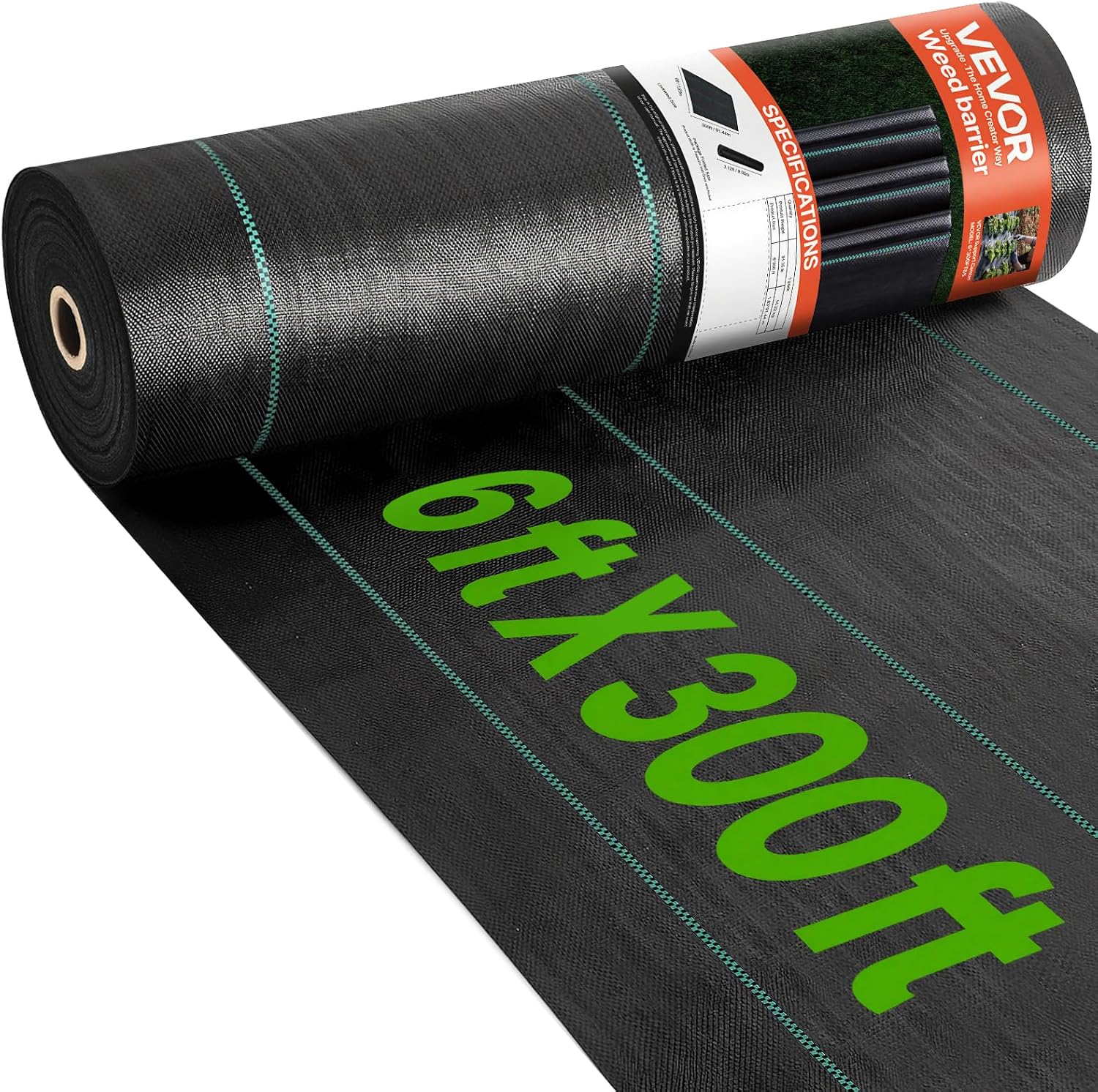
Happybuy 6 ft x 300 ft Heavy-Duty Weed Barrier Landscape Fabric
| Material | Polypropylene fabric |
|---|---|
| Size | 6 ft x 300 ft |
| Weight (fabric density) | 2.4 oz (density 12) |
This Happybuy landscape fabric is a heavy-duty woven polypropylene weed barrier sold as a 6 by 300 foot roll that covers roughly 1800 square feet when unrolled. It is used as an underlayer for beds, paths, driveways, and around plantings to suppress weeds while letting water and air reach the soil. Notable features include a tear-resistant woven construction, green guide lines for cutting and layout, and a breathable design that helps retain soil moisture without puddling. In practice the fabric is easy to cut and position and works well under mulch, gravel, or pavers; staples or landscape pins (not included) are recommended to keep edges secure. Limitations are that the black fabric will eventually show wear in high-traffic areas and persistent perennial weeds can grow through seams or holes, so occasional maintenance and careful overlap are needed. Also the roll is bulky to handle solo, so two people make installation faster on larger areas.
Best for: Gardeners or homeowners who want a practical, durable fabric to reduce routine weeding across medium to large beds and hardscape underlayers and who value easy installation and long coverage.
Less Ideal for: People needing a decorative surface finish as this is a functional underlayer rather than a visible landscape material and those with very small container or indoor plantings where a roll this large is impractical.
- Large coverage area reduces number of seams for medium to large beds
- Woven polypropylene construction offers tear resistance and weatherproofing
- Permeable design lets water and air through to protect soil health
- Printed guide lines make cutting and aligning plants easier
- Bulky roll can be awkward for one person to unroll and position
- Not a permanent barrier against aggressive perennial weeds that can exploit gaps or edges
Verdict: Choose this heavy-duty 6×300 ft woven polypropylene fabric when you need broad, breathable weed suppression that is easy to cut and lay for medium to large garden projects.
DeWitt Pro-5 Heavy-Duty Woven Weed Barrier Fabric (5 oz)

| Manufacturer | Dewitt |
|---|---|
| Item model number | P5 |
| Fabric weight | 5 oz |
| Intended use | Landscaping and commercial installations |
The DeWitt Pro-5 is a heavy-duty woven weed barrier intended for large landscaping and commercial garden use. In practice you roll it out under mulch, gravel, or along planting rows to suppress weeds while still letting water, air, and nutrients pass through to the soil. Its 5 oz woven construction resists tears and punctures during installation and in higher-traffic areas, and gold alignment stripes every 12 inches make it easy to lay straight rows and space plants accurately. The material is durable enough for pathways, raised beds, and long planting runs where a longer service life is important. Expect easier maintenance and fewer chemical controls when used correctly, but be prepared to cut planting holes for perennials or vegetables and secure the fabric with staples or pins to prevent shifting. The fabric does not remove the need for good edging or periodic weed removal where soil and debris collect on top of the mat, and it is heavier than lightweight options which can make handling on very large rolls more demanding.
Best for: Buyers who prioritize long‑term, professional performance for large beds, pathways, or commercial landscaping and want a durable fabric that reduces recurring weed work.
Less Ideal for: Casual gardeners with only small container or potted projects who prefer lightweight, easy‑to‑handle covers or temporary solutions.
- Commercial‑grade 5 oz woven construction resists tears and punctures during installation and use
- Permits air, water, and nutrients to reach soil to support plant health
- Gold alignment stripes every 12 inches simplify straight rows and plant spacing
- Durable enough for paths, raised beds, and high‑traffic landscape areas
- Heavier, bulkier rolls that can be harder to handle for solo installers
- Requires cutting and securing for planting which adds installation time
Verdict: Choose DeWitt Pro‑5 when you need a tough, long‑life woven barrier that keeps weeds down while allowing water and air to reach the soil.
Amazon Basics Weed Barrier Landscape Fabric, 3 x 50 Feet

| Material | Polypropylene |
|---|---|
| Weight | 90 GSM (3.2 oz) |
| Purpose | Weed control, erosion prevention |
This Amazon Basics landscape fabric is a straightforward heavy-duty weed barrier intended for garden beds, paths, and under gravel or pavers. Made from 90 GSM (3.2 oz) polypropylene, the material is tear-resistant and laid flat to suppress weed growth while remaining permeable so water and fertilizer reach plant roots. The 3 x 50 foot roll covers a typical raised bed or several smaller beds and is easy to cut to shape; factory guide lines simplify alignment and trimming tips help reduce edge fraying. It is commonly used under mulch, river rock, or around perennials where long-term weed suppression is desired without impeding drainage. Limitations are that heavier soils or high-traffic areas will eventually wear the fabric and that it does not stop weeds that grow from seed on top of mulch or from root intrusion without proper installation and overlap. For gardeners focused on straightforward, durable weed control this fabric delivers a low-effort solution, especially when paired with correct installation and surface mulch.
Best for: Gardeners who prioritize practical, low-maintenance weed suppression for beds and borders and want an affordable, easy-to-install fabric to pair with mulch or decorative rock.
Less Ideal for: Growers who prefer no-barrier methods like sheet mulching or those needing an impermeable membrane for heavy paving or structural erosion control.
- 90 GSM polypropylene offers tear resistance suitable for garden-bed and under-gravel use
- Breathable fabric allows water and nutrients to penetrate to the soil
- Guide lines on the fabric make alignment and cutting easier
- Large 3 x 50 ft roll covers multiple beds or a long border without frequent joins
- Will eventually degrade or wear in high-traffic or heavily amended soil areas
- Does not prevent weeds that sprout above the fabric without proper mulch and maintenance
Verdict: A durable, breathable landscape fabric that gives practical, low-effort weed suppression for garden beds and borders.
HANWRAPS 3.3 ft x 13 ft Heavy-Duty Weed Barrier Fabric (3.2 oz)

| Material | Polypropylene |
|---|---|
| Fabric weight | 3.2 oz |
| Size | 3.3 ft x 13 ft |
| Manufacturer | HANWRAPS |
HANWRAPS weed barrier fabric is a budget-friendly woven polypropylene cloth sold in a 3.3 ft by 13 ft roll intended for garden beds, pathways, and light landscaping. It is a 3.2 oz heavy-duty fabric with a high-density weave that resists tearing and holds up to sun and cold exposure, yet remains permeable so water and air reach the soil. Typical use is to lay the fabric over prepared soil, cut to shape, secure with pins, and cover with mulch or gravel to suppress weeds while retaining soil moisture. The material is easy to cut for custom beds and can be butted or overlapped to cover larger areas. Practical benefits include simple installation, decent durability for seasonal projects, and versatility for small home gardens or underlayment tasks. Limitations are the single-roll size that may require several pieces for larger beds and that woven polypropylene will eventually degrade under prolonged UV exposure, so it is better for medium-term rather than permanent installations.
Best for: A gardener on a budget who needs an affordable, easy-to-install weed barrier for small to medium beds, pathways, or under mulch and gravel.
Less Ideal for: People planning permanent, heavy-traffic installations or covering large areas who prefer industrial-grade geotextiles designed for long-term civil projects.
- High-density woven polypropylene offers good tear resistance for routine garden use
- Permeable weave lets water and air reach roots while reducing weed growth
- Easy to cut and splice for custom bed shapes and modular coverage
- Single 3.3 ft x 13 ft roll is small for larger landscapes so multiple rolls may be needed
- Woven polypropylene will slowly break down with long-term UV exposure and heavy wear
Verdict: A cost-conscious, easy-to-cut woven fabric that reliably suppresses weeds and retains soil moisture for small to medium garden projects.
Topfurn Biodegradable Garden Paper Weed Barrier, 4 x 100 ft

| Item Form | Sheet |
|---|---|
| Coverage | non-selective broad spectrum coverage |
| Number of Packs | 1 |
| Brand | Topfurn |
This Topfurn biodegradable weed barrier is a 4 x 100 foot roll of heavy-duty natural pulp paper intended for use under vegetables, in garden beds, greenhouses, and around established plants. Lay it over prepared soil, cut holes for seedlings, and anchor with staples or mulch; the sheet blocks light to suppress weeds while remaining breathable so water and air pass through to roots. Its natural pulp construction means the fabric will gradually decompose and integrate with soil, removing the need to remove plastic landscape fabric later. Practical benefits include reduced hand-weeding, lower soil evaporation for more consistent moisture, and a simple installation that can be tailored by cutting the roll to fit beds. Limitations are that it is less durable than synthetic woven fabrics if used in high-traffic areas and it will not provide a permanent barrier since it is designed to biodegrade over time, so it may need replacement for long-term weed control.
Best for: Gardeners who prioritize reliable, low-impact weed control and want an easy-to-install barrier that improves moisture retention and later biodegrades back into the bed.
Less Ideal for: People who need a permanent, heavy-duty landscape fabric for pathways, driveways, or areas with frequent foot traffic should choose a more durable synthetic product.
- Made from 100% natural pulp paper that biodegrades and safely integrates into soil
- Large 4 x 100 ft roll covers extensive garden beds without many seams
- Breathable and moisture resistant to reduce soil evaporation while allowing water through
- Easy to cut and shape on site for planting rows, raised beds, or greenhouse use
- Will degrade over time so it is not a permanent long-term barrier
- Less tear-resistant than synthetic woven fabrics in high-traffic or heavily worked beds
Verdict: Choose this biodegradable garden paper when you want effective, eco-friendly weed suppression and moisture retention that naturally returns to the soil.
ECOgardener Premium 5 oz Landscape Fabric, 3 ft x 50 ft

| Fabric weight | 5 oz |
|---|---|
| Construction | Two-layer needle-punch |
| Intended use | Weed barrier for garden beds and landscaping |
| Installation | Use with landscape staples or pins |
| Permeability | Allows water and air flow |
This ECOgardener 5 oz landscape fabric is a professional-grade weed barrier meant for garden beds, raised beds, and other landscaped areas where long-term weed control and soil moisture retention matter. Made with a two-layer needle-punch construction, the fabric lies flat and resists tearing during installation; the felted side is intended to face down so the material grips soil. It is porous enough to let water and air reach roots while slowing weed emergence, and it is commonly installed under mulch or gravel using landscape staples or pins. Practical benefits include reduced hand-weeding, lower mulch consumption, and a neater bed edge when used with bricks or borders. Limitations are that it does not eradicate established perennial weeds at the roots and will need cutting for plantings and occasional maintenance where roots find cracks; it is also a permanent barrier that can complicate future bed renovation if not removed. For gardeners seeking long-lasting weed suppression, it performs as advertised, but expect some upfront work to fit it around existing plants and borders.
Best for: Gardeners who value a durable, low-maintenance ground cover and want a proven product that reduces time spent weeding and mulching in planted beds.
Less Ideal for: People planning frequent bed redesigns or those who prefer to cultivate soil without any permanent barrier, since the fabric complicates major renovations.
- Heavy two-layer needle-punch construction resists tears and holds up during installation
- Permeable design allows water and air to reach plant roots while blocking light to weeds
- Helps conserve soil moisture and reduces the frequency and volume of mulch needed
- Straightforward installation with staples or pins and compatible with mulch or gravel top layers
- Will not kill or remove established perennial weeds that grow through or around edges
- Requires cutting and fitting around existing plants which adds installation time
Verdict: Choose this fabric if you want a durable, professional-grade weed barrier that markedly reduces weeding and conserves soil moisture in established beds.
LAVEVE Heavy Duty Weed Barrier Landscape Fabric, 4 ft x 100 ft (two 4×50 ft rolls)

| Material | Polypropylene |
|---|---|
| Permeability | Breathable, allows water and air flow |
| UV resistance | Resistant to sun exposure |
| Package | Two rolls totaling 4 ft x 100 ft |
This LAVEVE landscape fabric is a heavy-duty woven polypropylene ground cover intended to suppress weeds while letting moisture and air reach the soil. It ships as two 4 ft x 50 ft rolls (total 4 ft x 100 ft) with printed guide lines that make cutting and alignment straightforward. In practice it is laid over prepared beds, cut for plantings, and secured with U-shaped pegs; the fabric’s permeability helps reduce erosion and allows irrigation to penetrate. The material is UV-resistant and built for typical garden uses such as flower beds, vegetable plots, gravel paths, and sidewalks. Because it is a woven polypropylene, it is sturdier than thin nonwoven mats and stands up to foot traffic when covered with mulch or gravel. Limitations to expect are that surface-seeded weeds or seeds blown onto mulch can still germinate on top, and long-term burial or heavy soil compaction can reduce effectiveness; occasional maintenance and proper installation around plants are required to keep beds weed-free.
Best for: Gardeners who want a durable, breathable ground cover to reduce routine weeding and tidy beds across medium-length runs of pathway or planting area, and who value a product with solid usage feedback.
Less Ideal for: People seeking a permanent, maintenance-free solution or those who prefer chemical weed control methods; also not the best choice for beds where frequent deep digging or planting changes are required.
- Woven polypropylene construction provides durable, tear-resistant coverage
- Permeable design allows water and air to reach soil, reducing erosion
- Printed guide lines make measuring and cutting easier during installation
- Suitable for multiple applications including beds, paths, and under gravel
- Comes as two rolls totaling 4 ft x 100 ft for extended coverage
- Does not prevent weeds that germinate in mulch or on top of the fabric
- Requires proper securing and occasional maintenance to stay effective
Verdict: A sturdy, breathable woven fabric that gives reliable, easy-to-install weed suppression for medium garden beds and paths backed by strong user approval.
Choosing the Right Garden Bed Weed Barrier: Key Factors to Consider
Permeability and Drainage
Permeability determines whether water and air can move between the soil and the surface. A barrier that repels water or suffocates soil will create anaerobic pockets, slow infiltration of irrigation or rain, and increase risk of root rot in sensitive plants.
Choose a material rated for water passage and with a weave or porosity suited to your soil. Sandy soils tolerate finer fabrics because drainage is already high. Heavy clay soils benefit from higher-permeability barriers so surface runoff does not pool.
Material Strength and Tear Resistance
Garden beds see foot traffic, tool contact, and plantings that require cutting or piercing the fabric. Stronger, woven materials resist tearing when tacked down, when edging is installed, or when larger seedlings are set in place.
Consider heavier-weight woven fabrics or reinforced mats for high-use beds and paths. Lighter nonwoven fabrics may be easier to cut but will lace open after seasonal stress, causing more frequent replacement.
UV Stability and Weather Longevity
UV exposure breaks down many polymers over time, so a barrier rated for outdoor UV stability lasts longer before becoming brittle. Weather longevity reduces how often you need to lift mulch and replace fabric, which is valuable in large beds.
Look for products with UV inhibitors or manufacturer ratings for outdoor years. Even UV-stable fabrics will eventually degrade in full-sun beds, so plan inspection and replacement cycles into long-term garden maintenance.
Installation and Compatibility with Planting
Some barriers are installed as continuous sheets under mulch, others are cut and fit around plants. Installation method affects planting speed, root disturbance, and the types of plants you can grow. For perennial beds, a more permanent anchoring method may be preferable; for annual vegetable plots, easier-to-cut fabrics speed seasonal turnover.
Also consider compatibility with drip lines, soaker hoses, and mulches. A barrier that complicates irrigation routing or mulch replenishment will create workflow friction in routine garden care.
Effect on Soil Life and Mulch Interaction
Barriers alter the microenvironment at the soil surface. Impermeable or excessively thick fabrics can reduce litter breakdown and limit beneficial surface insects and microbes. More porous barriers let organic matter decompose and nourish soil, while still reducing weed germination.
Think about how often you topdress with compost or mulch and whether the barrier allows organic inputs to integrate with the soil. Some gardeners prefer removable layers to preserve soil biology during intensive amendments.
Aesthetics and Edge Finishing
Visible barrier edges and the way fabric meets borders affect bed appearance and maintenance. Clean edges that tuck under edging or are covered by mulch produce a tidy look and minimize wind lifting. Frayed edges invite weeds and complicate mowing or trimming next to beds.
Choose a product whose weight and finish fit your edging style. Thinner sheeting may require extra anchoring or finishing strips in accessible beds.
Matching Barrier Types to Bed Use
Different barrier constructions suit different gardening tasks. Woven polypropylene fabrics are common for long-term installation in ornamental beds because they balance strength and permeability. Nonwoven geotextiles and biodegradable paper-based barriers are more common where seasonal turnover or soil integration is a priority.
In vegetable beds where you remove and replant each season, choose easier-to-cut or removable materials so you can refresh soil without heavy demolition. For perennial or ornamental beds, heavier fabrics and mechanical anchoring reduce weed ingress and limit maintenance.
- Permanent ornamental beds: heavier woven fabrics with strong anchoring
- Seasonal vegetable beds: lighter, easy-to-cut fabrics or removable mats
- Shade beds: choose higher-permeability materials to reduce waterlogging risk
Preparing Soil and Installing Barrier
Prepare the bed by removing large weeds and loosening compacted spots. A relatively smooth surface reduces tears and ensures close contact between barrier and soil. Spread a uniform layer of compost or topsoil if you plan to plant through the fabric.
When installing, overlap edges by several inches and secure with landscape staples or edging. Cut planting holes or slits as small as practical around stems, and cover the fabric with at least 2 to 3 inches of mulch to protect it from UV and hide edges.
- Smooth and level soil before laying fabric
- Overlap seams and secure with staples every 12 to 18 inches
- Cover fabric with mulch to extend life and improve appearance
Managing Mulch, Compost, and Irrigation
Barriers work best when paired with an appropriate mulch strategy. Organic mulches help retain moisture, moderate soil temperature, and further suppress weeds. Ensure mulch depth does not bury crowns or slow water movement to roots.
Plan irrigation so water reaches the root zone. Use drip irrigation or soaker hoses either above the fabric (with access ports) or beneath it where compatible. Avoid surface-only watering that leaves the root zone dry under an impermeable layer.
- Use 2 to 4 inches of organic mulch over fabric for protection
- Route drip lines to deliver water below or through the barrier when possible
- Topdress compost through planting holes or during scheduled fabric lifting
When to Replace or Remove a Barrier
Inspect barriers each season for tears, seam gaps, and UV brittleness. Replace or repair sections where weeds are penetrating or fabric has become fragile. For annual beds, plan seasonal removal when you need to amend soil deeply.
If soil structure is poor or you need to incorporate organic matter, removing the barrier for a season may be better than leaving a degraded fabric in place. Reinstall a fresh barrier after major soil work to maintain weed control going forward.
- Check for gaps after winter and high winds
- Repair small tears with patching material or replace sections
- Remove and refresh fabric when doing deep soil amendments
Environmental and Long-Term Soil Considerations
Think about the long-term interaction between barrier material and soil health. Biodegradable barriers can reduce plastic waste but may break down faster than synthetic fabrics, requiring more frequent replacement. Non-biodegradable fabrics that fragment over time may leave micro-debris in the soil if not removed.
Balance the desire for low maintenance with plans for soil improvement. For gardens where you actively build soil life and organic matter, choose approaches that allow periodic direct contact with the soil.
- Biodegradable options reduce waste but have shorter life spans
- Durable synthetics last longer but require end-of-life removal
- Plan maintenance cycles based on soil improvement goals
How We Chose the Best Garden Bed Weed Barrier
We selected products that reliably reduce weed pressure while preserving soil health and plant vigor. Our editorial filters prioritized long-term performance in outdoor growing conditions, with attention to materials that resist tearing, UV degradation, and frequent foot traffic. Permeability and drainage were decisive because barriers that block water or air cause root stress and disease in many bed types. Ease of installation and compatibility with common bed treatments, such as mulch, compost topdressing, or drip irrigation, were included so the barrier integrates with typical garden workflows. Durability under common maintenance actions like planting, hoeing, and seasonal turnover was also evaluated. We excluded thin, single-season fabrics and non-breathable plastic films that commonly trap moisture and lead to plant decline. The result is a curated list of options that balance weed suppression, soil breathing, drainage, and installer-friendly handling.
FAQ
Will a weed barrier stop weeds completely?
A barrier greatly reduces weed pressure but rarely eliminates weeds entirely. Seeds blown in or germinating in mulch can still appear, especially at seams, edges, and planting holes. Regular inspection and mulch maintenance keep intrusion minimal.
Can I plant directly through a weed barrier?
Yes. Many gardeners cut small holes or slits to set transplants through the fabric. Keep planting openings as small as practical and cover the area with mulch to protect edges and reduce weed germination near the planting.
Is a biodegradable barrier a good choice?
Biodegradable barriers can be a good choice if you plan seasonal soil work or want to avoid long-term plastic. They break down over time, which is helpful for soil integration, but you should expect more frequent replacement compared with synthetic, UV-stable fabrics.
How does a barrier affect watering?
A breathable barrier should allow water and air to reach roots. Non-breathable plastic sheeting blocks infiltration and can cause water to pool on the surface or run off. Match the barrier's permeability to your irrigation method and soil type.
Will a barrier harm soil life?
Some barriers reduce surface interaction and slow litter decomposition, which can affect surface-dwelling organisms. Choosing a permeable fabric and refreshing organic inputs through planting holes or seasonal lifts helps maintain soil biology.
Final Verdict
Choose a garden bed weed barrier by balancing weed control with the needs of your soil and plants. Prioritize permeability and durability for long-term, low-maintenance beds, and favor easier-to-remove materials where you plan frequent amendments or seasonal planting. Consider installation and irrigation compatibility as practical constraints that will shape how effective the barrier is in everyday garden work. Focus on the tradeoffs between maintenance frequency and material longevity to pick an option that fits your workflow and soil-improvement goals. With the right match, a barrier cuts weeding time while supporting healthy root systems and tidy beds.
