

Note: This article contains affiliate links. If you click on these links and make a purchase, I may earn a small commission at no extra cost to you. This helps support my research and content. Read my full affiliate disclosure here.
A well-chosen woven weed barrier can cut back on weeding and protect soil structure without suffocating plant roots. If you spend weekends ripping weeds or watching mulch sink into weeds, the right woven fabric changes how a bed performs across seasons. This guide highlights the top shortlisted woven weed barriers gardeners rely on for long-term weed suppression and reliable water movement. We evaluated fabrics for strength, permeability, and handling in real garden conditions so you can pick a fabric that fits your beds, planting style, and maintenance plan. Below are the top contenders and the criteria we used to judge them, followed by practical advice for installation and upkeep.
Top Picks at a Glance
| Best Overall The best all-around choice for most situations | DeWitt Sunbelt Woven Weed Barrier Fabric, 3.2 oz, 4 x 300 ft |  |
| Best Quality Built to a higher standard if you want something more solid | DeWitt Pro-5 Heavy-Duty Woven Weed Barrier Fabric (5 oz) |  |
| Best Value The sweet spot between price and what you get | Vanver 4 ft x 300 ft Heavy-Duty Weed Barrier Landscape Fabric |  |
| Best Budget The cheapest option that still gets the job done reliably | LGJIAOJIAO 3.2 oz Heavy-Duty Weed Barrier Landscape Fabric (3 ft x 50 ft) |  |
| Highest Rated A top-rated pick with lots of positive feedback | iropro 5oz Heavy-Duty Weed Barrier Fabric, 3ft x 250ft |  |
| Most Popular A crowd favorite that many people choose with confidence | Happybuy 6 ft x 300 ft Heavy-Duty Weed Barrier Landscape Fabric |  |
| Best Seller A high-volume bestseller chosen again and again | LAVEVE Heavy Duty Weed Barrier Landscape Fabric, 4 ft x 100 ft (two 4×50 ft rolls) |  |
DeWitt Sunbelt Woven Weed Barrier Fabric, 3.2 oz, 4 x 300 ft

| Fabric weight | 3.2 oz |
|---|---|
| Material | Woven polypropylene |
| Roll length | 4 x 300 ft |
| UV-stabilized | Yes |
This DeWitt Sunbelt woven weed barrier is a commercial-grade ground cover for large garden and landscape projects. The dense polypropylene weave blocks most weed growth while remaining permeable so water and nutrients still reach the soil, which makes it suited for raised beds, greenhouse floors, garden rows, and long planting runs. The material is UV-stabilized and resists tears and punctures from foot traffic, tools, and repositioning, so it holds up under frequent use. Golden alignment stripes every 12 inches simplify straight-row layout and spacing when installing in nursery or orchard rows. Installation is straightforward but requires staples or pins for secure anchoring, and the roll size means handling and cutting can be bulky for one person. It is a practical, durable choice when you need dependable, long-lasting weed suppression across large areas, though smaller hobby gardeners may find the roll unwieldy to manage alone.
Best for: Gardeners and landscapers who need a robust, long-lasting ground cover for large beds, greenhouse floors, or long planting rows and value durability and ease of layout.
Less Ideal for: Small-plot or container gardeners who want a lightweight, easy-to-handle product or anyone looking for a temporary, disposable fabric option.
- Woven polypropylene construction lets water and air through while blocking weeds.
- UV-stabilized for sustained outdoor exposure without rapid degradation.
- Durable against tears and punctures from tools and foot traffic.
- 12-inch alignment stripes help lay out straight rows and consistent plant spacing.
- Large roll size can be bulky and awkward for a single person to unroll and position.
- Requires pins or staples to secure; not a standalone solution for weed control.
Verdict: Choose this fabric when you want a durable, UV-stable woven barrier that provides long-term weed suppression and easy row alignment across large garden or landscape areas.
DeWitt Pro-5 Heavy-Duty Woven Weed Barrier Fabric (5 oz)

| Manufacturer | Dewitt |
|---|---|
| Item model number | P5 |
| Fabric weight | 5 oz |
| Intended use | Landscaping and commercial installations |
The DeWitt Pro-5 is a heavy-duty woven weed barrier intended for large landscaping and commercial garden use. In practice you roll it out under mulch, gravel, or along planting rows to suppress weeds while still letting water, air, and nutrients pass through to the soil. Its 5 oz woven construction resists tears and punctures during installation and in higher-traffic areas, and gold alignment stripes every 12 inches make it easy to lay straight rows and space plants accurately. The material is durable enough for pathways, raised beds, and long planting runs where a longer service life is important. Expect easier maintenance and fewer chemical controls when used correctly, but be prepared to cut planting holes for perennials or vegetables and secure the fabric with staples or pins to prevent shifting. The fabric does not remove the need for good edging or periodic weed removal where soil and debris collect on top of the mat, and it is heavier than lightweight options which can make handling on very large rolls more demanding.
Best for: Buyers who prioritize long‑term, professional performance for large beds, pathways, or commercial landscaping and want a durable fabric that reduces recurring weed work.
Less Ideal for: Casual gardeners with only small container or potted projects who prefer lightweight, easy‑to‑handle covers or temporary solutions.
- Commercial‑grade 5 oz woven construction resists tears and punctures during installation and use
- Permits air, water, and nutrients to reach soil to support plant health
- Gold alignment stripes every 12 inches simplify straight rows and plant spacing
- Durable enough for paths, raised beds, and high‑traffic landscape areas
- Heavier, bulkier rolls that can be harder to handle for solo installers
- Requires cutting and securing for planting which adds installation time
Verdict: Choose DeWitt Pro‑5 when you need a tough, long‑life woven barrier that keeps weeds down while allowing water and air to reach the soil.
Vanver 4 ft x 300 ft Heavy-Duty Weed Barrier Landscape Fabric

| Material | Woven polypropylene |
|---|---|
| Weight | 3.2 oz |
| Pack options | 4ft × 300ft (long roll) |
This Vanver weed barrier fabric is a heavy-duty woven polypropylene roll aimed at long runs of garden beds, borders, or small drive stabilization. It is typically unrolled over prepared soil, cut to fit, anchored with staples, and covered with mulch or gravel. The 3.2 oz material is described as tear-resistant and suitable for occasional foot or light vehicle traffic, so it holds up better than lightweight fabrics for paths and high-use beds. Its weave lets water and nutrients through while blocking sunlight and most weed growth, reducing hand-weeding and herbicide use. Installation is straightforward and custom-cutting makes it flexible for irregular beds, though overlapping and securing edges is necessary to avoid gaps where weeds can penetrate. The fabric will eventually degrade under constant UV exposure, so expect several years of service rather than permanent suppression, and it does not stop established perennial roots without additional edging or root barriers.
Best for: Gardeners who want a durable, low-maintenance barrier to reduce recurring weeding across large beds and pathways and who prioritize straightforward, time-saving landscaping improvements.
Less Ideal for: Those seeking a permanent, maintenance-free weed solution or gardeners relying on raised beds and frequent deep soil cultivation where fabric would interfere with planting methods.
- Heavy woven polypropylene construction that resists tearing in high-traffic areas.
- Permeable weave allows water and nutrients to reach soil while blocking light to weeds.
- Long 300 ft roll covers large beds or multiple projects without joins.
- Easy to cut and lay, so installation and customization are straightforward.
- Not a permanent solution; prolonged UV exposure and time will degrade fabric.
- Requires proper overlapping, anchoring, and mulching to prevent weed intrusion at edges.
Verdict: Choose this heavy-duty woven fabric when you need a long, durable roll to cut and cover large garden areas for effective, low-effort weed suppression.
LGJIAOJIAO 3.2 oz Heavy-Duty Weed Barrier Landscape Fabric (3 ft x 50 ft)

| Material | Polypropylene |
|---|---|
| Fabric weight | 3.2 oz |
| Available roll sizes | 3 x 50 ft (also other widths/lengths) |
This LGJIAOJIAO landscape fabric is a straightforward weed-control ground cover intended for flower beds, vegetable plots, pathways, and driveway underlayment. Made from 3.2 oz polypropylene, the woven material resists tearing and holds up to foot and occasional vehicle traffic when used as a stabilizing underlayer. It is typically rolled out over prepared soil, cut for plant holes, secured with pins or staples, and covered with mulch or gravel to hide the fabric and improve aesthetics. The fabric lets water and nutrients pass through while suppressing weeds by limiting light, and its heavier weight compared with lightweight options means it lasts longer before needing replacement. Expect easier seasonal maintenance and fewer weeds around plantings, but installation requires some cutting and anchoring work and it is not a permanent barrier for deep-rooted perennials that can work through or around the fabric over time. Also the darker woven surface can be visible through thin mulches unless covered adequately.
Best for: Buyers who want a reliable, heavier-weight fabric to reduce routine weeding and prefer products with established customer feedback and practical, multi-use performance.
Less Ideal for: If you want a zero-installation organic approach or need a temporary surface cover for seasonal planting beds, lighter-weight or biodegradable options may be a better fit.
- Heavy 3.2 oz polypropylene weave offers good tear resistance and longer lifespan than thin fabrics
- Allows water and nutrients to pass through so planted beds remain irrigated
- Versatile for beds, paths, vegetable gardens and as a driveway underlayment
- Comes in roll form that can be cut to fit irregular beds and layouts
- Requires cutting and securing during installation which adds labor
- May become visible under thin mulch and is less effective against deep-rooted weeds over many seasons
Verdict: Choose this heavier 3.2 oz woven polypropylene fabric if you want a durable, proven ground cover that substantially cuts down on hand-weeding across beds and paths.
iropro 5oz Heavy-Duty Weed Barrier Fabric, 3ft x 250ft

| Material weight | 5oz |
|---|---|
| Manufacturer | iropro |
This iropro 5oz heavy-duty weed barrier fabric is built for long-lasting weed control in demanding landscaping projects. It is typically rolled out under gravel, around garden beds, along pathways, or under mulch to block sunlight and prevent weed seeds from germinating while remaining breathable so water and nutrients pass through to plant roots. The 5oz woven construction increases puncture and tear resistance compared with lighter fabrics, so it stands up to foot traffic, gravel loads, and repeated garden work. Installation is straightforward: cut to shape, anchor with staples or pins, and overlap seams for continuous coverage. Practical benefits include reduced maintenance, better ground stability under gravel, and a durable base for beds that reduces the need for repeated replacement. Important limitations are that it still requires correct installation to avoid gaps where weeds can infiltrate and that perennial weeds with deep roots may eventually find their way through or around the fabric, so it is not a guaranteed permanent solution.
Best for: Homeowners and landscaping pros who prioritize a durable, low-maintenance fabric for long-term beds, pathways, and gravel areas and want a reliable material that tolerates heavy use.
Less Ideal for: Gardeners seeking a lightweight, temporary solution for small annual beds or those who prefer chemical weed control rather than physical barriers.
- 5oz heavy-duty woven construction increases resistance to punctures and tears
- Breathable and permeable design allows water and nutrients to reach plant roots
- Suitable for high-traffic areas and under gravel to improve ground stability
- Easy to cut and lay for straightforward installation on large projects
- Not a foolproof permanent barrier against aggressive perennial roots
- Effectiveness depends on careful overlap and anchoring during installation
Verdict: Choose this 5oz woven fabric when you need a tough, professional-grade weed barrier that holds up to foot traffic and gravel for long-term landscape projects.
Happybuy 6 ft x 300 ft Heavy-Duty Weed Barrier Landscape Fabric
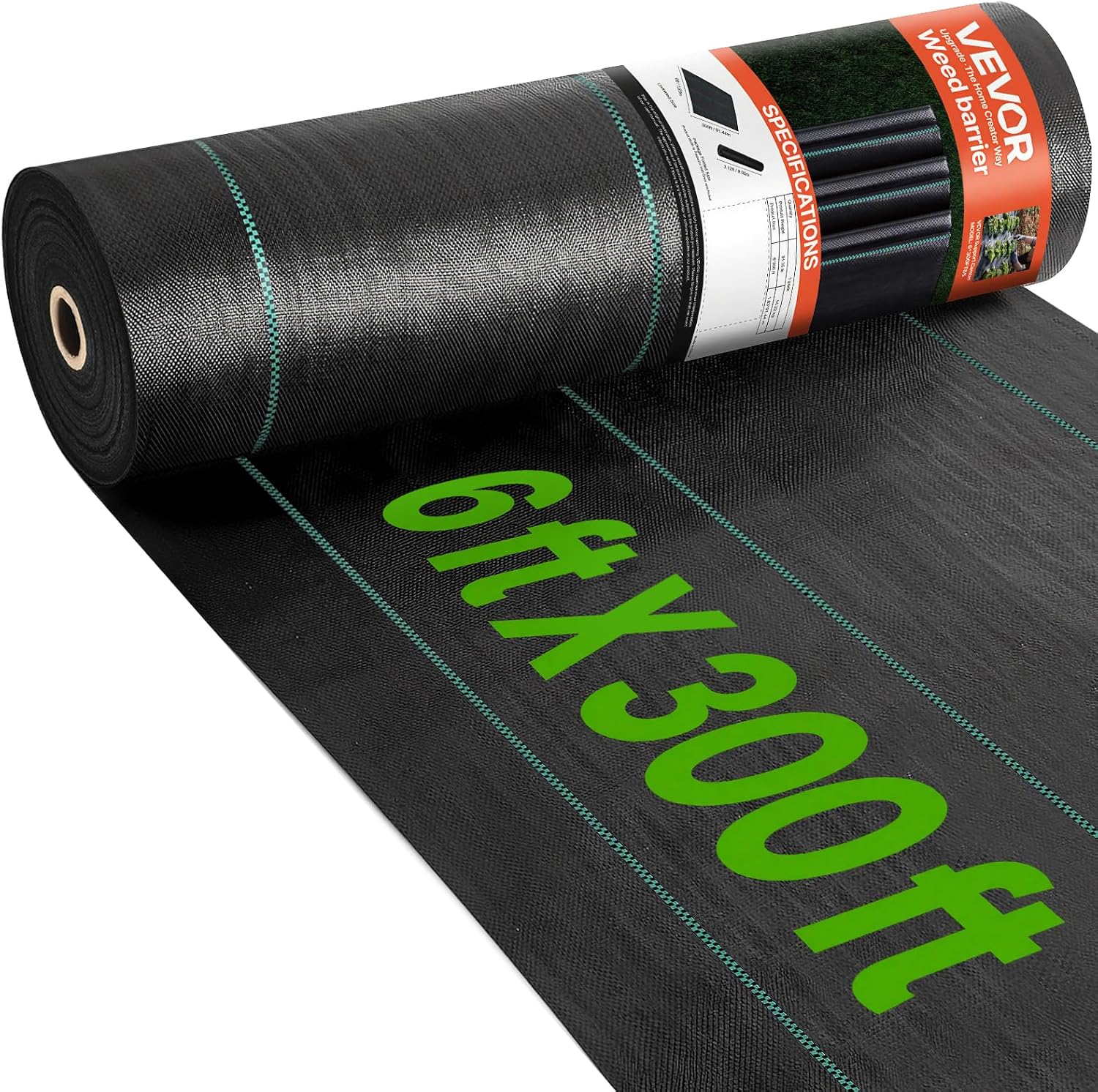
| Material | Polypropylene fabric |
|---|---|
| Size | 6 ft x 300 ft |
| Weight (fabric density) | 2.4 oz (density 12) |
This Happybuy landscape fabric is a heavy-duty woven polypropylene weed barrier sold as a 6 by 300 foot roll that covers roughly 1800 square feet when unrolled. It is used as an underlayer for beds, paths, driveways, and around plantings to suppress weeds while letting water and air reach the soil. Notable features include a tear-resistant woven construction, green guide lines for cutting and layout, and a breathable design that helps retain soil moisture without puddling. In practice the fabric is easy to cut and position and works well under mulch, gravel, or pavers; staples or landscape pins (not included) are recommended to keep edges secure. Limitations are that the black fabric will eventually show wear in high-traffic areas and persistent perennial weeds can grow through seams or holes, so occasional maintenance and careful overlap are needed. Also the roll is bulky to handle solo, so two people make installation faster on larger areas.
Best for: Gardeners or homeowners who want a practical, durable fabric to reduce routine weeding across medium to large beds and hardscape underlayers and who value easy installation and long coverage.
Less Ideal for: People needing a decorative surface finish as this is a functional underlayer rather than a visible landscape material and those with very small container or indoor plantings where a roll this large is impractical.
- Large coverage area reduces number of seams for medium to large beds
- Woven polypropylene construction offers tear resistance and weatherproofing
- Permeable design lets water and air through to protect soil health
- Printed guide lines make cutting and aligning plants easier
- Bulky roll can be awkward for one person to unroll and position
- Not a permanent barrier against aggressive perennial weeds that can exploit gaps or edges
Verdict: Choose this heavy-duty 6×300 ft woven polypropylene fabric when you need broad, breathable weed suppression that is easy to cut and lay for medium to large garden projects.
LAVEVE Heavy Duty Weed Barrier Landscape Fabric, 4 ft x 100 ft (two 4×50 ft rolls)

| Material | Polypropylene |
|---|---|
| Permeability | Breathable, allows water and air flow |
| UV resistance | Resistant to sun exposure |
| Package | Two rolls totaling 4 ft x 100 ft |
This LAVEVE landscape fabric is a heavy-duty woven polypropylene ground cover intended to suppress weeds while letting moisture and air reach the soil. It ships as two 4 ft x 50 ft rolls (total 4 ft x 100 ft) with printed guide lines that make cutting and alignment straightforward. In practice it is laid over prepared beds, cut for plantings, and secured with U-shaped pegs; the fabric’s permeability helps reduce erosion and allows irrigation to penetrate. The material is UV-resistant and built for typical garden uses such as flower beds, vegetable plots, gravel paths, and sidewalks. Because it is a woven polypropylene, it is sturdier than thin nonwoven mats and stands up to foot traffic when covered with mulch or gravel. Limitations to expect are that surface-seeded weeds or seeds blown onto mulch can still germinate on top, and long-term burial or heavy soil compaction can reduce effectiveness; occasional maintenance and proper installation around plants are required to keep beds weed-free.
Best for: Gardeners who want a durable, breathable ground cover to reduce routine weeding and tidy beds across medium-length runs of pathway or planting area, and who value a product with solid usage feedback.
Less Ideal for: People seeking a permanent, maintenance-free solution or those who prefer chemical weed control methods; also not the best choice for beds where frequent deep digging or planting changes are required.
- Woven polypropylene construction provides durable, tear-resistant coverage
- Permeable design allows water and air to reach soil, reducing erosion
- Printed guide lines make measuring and cutting easier during installation
- Suitable for multiple applications including beds, paths, and under gravel
- Comes as two rolls totaling 4 ft x 100 ft for extended coverage
- Does not prevent weeds that germinate in mulch or on top of the fabric
- Requires proper securing and occasional maintenance to stay effective
Verdict: A sturdy, breathable woven fabric that gives reliable, easy-to-install weed suppression for medium garden beds and paths backed by strong user approval.
Choosing the Right Woven Weed Barrier: Key Factors to Consider
Fabric Strength and Durability
A woven weed barrier needs enough tensile strength to survive being walked on, having edging pressed against it, and being cut to fit around plants. Strong woven fibers resist accidental rips during planting and when you move tools or pots across beds.
Durability also determines how long you can expect the fabric to function as a weed barrier before it fragments or loses structure. Choosing a fabric rated for higher tear resistance reduces the chance of holes forming where weeds can reestablish, and it means fewer replacements over multiple seasons.
Water Flow and Drainage
Permeability is critical because plants need both water and oxygen at the root zone. A woven barrier should allow rainfall and irrigation to pass through rather than pooling on the surface, which can cause root rot or uneven watering.
Look for fabrics that balance filtration with permeability. Too-tight weaves may shed water or channel it away from planted areas, while too-loose weaves will let fine weed seeds pass through. The right permeability keeps soil moisture consistent while still blocking light to weeds.
UV Resistance and Expected Lifespan
Sunlight degrades many synthetic fabrics over time. Woven weed barriers with built-in UV stabilizers and a heavier weave will typically last longer in exposed beds or raised planters.
Consider the installation exposure when judging lifespan. A fabric placed under mulch and away from direct sun will last much longer than one left uncovered. Long-life fabrics cost more up front but can be more economical over several seasons because they need fewer replacements.
Compatibility With Mulch and Soil Life
Mulch behavior over a woven barrier affects both aesthetics and function. Some mulches settle and compact on top of fabric, while others integrate more loosely. A barrier that allows moderate contact with mulch without trapping fine particles helps maintain soil respiration and surface appearance.
Also consider soil biology. Fabrics should allow gas exchange so beneficial microorganisms and earthworms can continue working the soil. Barriers that block all movement can create an artificial layer that interferes with long-term soil health.
Ease of Cutting, Securing, and Workability
Gardeners install weed barrier in irregular shapes around plants, edging, and paths. Fabrics that are easy to cut cleanly and hold staples or pins securely save time and reduce frustration during installation.
Workability also covers how manageable a roll is for one person, whether edges fray when cut, and how well the fabric lies flat. Choose a fabric that balances stiffness and flexibility so it conforms to bed contours without constant readjustment.
Environmental Impact and Disposal
Most woven weed barriers are synthetic and will eventually need disposal. Consider materials that minimize shedding of microfibers and that are recyclable where facilities exist.
If you plan to remove and replace fabric, pick an option that breaks down into larger, less-dusty pieces rather than fabrics that fragment into fine fibers. Also weigh the tradeoff between a longer-lasting fabric and end-of-life disposal: durable fabrics reduce replacement frequency but may persist longer in waste streams.
Preparing Beds for Woven Fabric Installation
Start by clearing perennial weeds and large roots so the fabric sits on a relatively smooth surface. Remove stones and level soil to avoid punctures and to help the fabric lie flat. If the bed has heavy thatch or debris, rake it out to reduce gaps between soil and fabric.
- Trim perennial roots and remove crowns to prevent regrowth through the fabric.
- Grade the bed so water flows toward intended drainage points.
- Keep a clean line at edges to anchor the fabric under edging or soil.
Cutting and Fitting Around Plants
Measure and plan cuts before you start. For established plants, make an X or cross cut large enough to slide the fabric under the plant base without compressing stems. For new plantings, cut holes slightly larger than the root ball so the fabric does not pinch roots when backfilled.
- Use a sharp utility knife or heavy-duty shears for clean edges.
- Overlap seams by at least 6 inches to prevent weeds from growing between pieces.
- Secure cuts with staples or landscape pins to prevent edges from lifting.
Anchoring Methods That Last
Landscape staples, U-pins, and being tucking edges under edging or soil are reliable ways to keep woven fabric in place. Place anchors every 18 to 24 inches across the piece and closer at seams or around planted areas where disturbance is likely.
- Use corrosion-resistant staples in wet climates.
- Bury outer edges under a lip of soil or under hard edging for a finished look.
- Avoid driving anchors through mulch where possible to reduce movement.
Integrating Mulch and Surface Finishes
Apply mulch directly on top of the woven fabric to give a finished look and to protect the fabric from UV exposure. Spread a layer appropriate to your plants; usually 2 to 3 inches of organic mulch is sufficient. Lighter mulches may shift more, while heavier hardwood chips tend to stay put.
- Replenish mulch as it decomposes to maintain coverage.
- Avoid piling mulch directly against woody stems where rot can start.
- Choose mulch particle sizes that sit well on fabric without sifting through woven gaps.
When Not to Use Woven Fabric
Woven weed barrier is not ideal for annual-heavy vegetable beds that need frequent soil amendments or deep digging each season. Regular soil turnover can tear the fabric and make removal messy. In no-dig or permanent perennial beds, woven fabric performs best by cutting maintenance and limiting weed pressure.
- Avoid using under shallow-rooted seed beds where the fabric blocks direct sowing.
- Skip fabric where you plan to plant closely spaced, fast-growing annuals that demand seasonal bed tilling.
- Consider alternatives like thick mulch or sheet composting for beds that change every year.
How We Chose the Best Woven Weed Barrier
We focused on attributes that materially affect how a woven weed barrier performs in a real garden. Primary criteria included fabric tensile strength and puncture resistance to ensure the material resists tears during installation and from foot traffic. Water permeability was measured as how readily the fabric allows rain and irrigation to pass through so soil does not become waterlogged. UV resistance and expected lifespan under sun exposure were assessed to estimate how long the barrier will remain effective before breaking down. Ease of handling and installation covered weight, flexibility, and how easy the fabric is to cut and secure around plantings. Finally, environmental behavior looked at whether the fabric sheds fibers, traps mulch, or interferes with soil biology. We excluded non-woven spunbond fabrics, thin landscape papers, and products intended only for temporary construction use. The list favors woven fabrics designed for ongoing garden use and those that balance permeability and durability. Our evaluation emphasizes measurable, gardener-focused dimensions rather than marketing claims.
FAQ
Will woven weed barrier stop all weeds permanently?
Woven barrier greatly reduces weeds that rely on light and surface space, but it does not stop deep-rooted perennials with robust roots. Weeds can also grow in gaps at seams or where soil and mulch collect. Regular inspection and spot weeding where fabric is compromised will keep beds tidy.
Can I plant directly through woven fabric?
Yes. Cut a cross or hole in the fabric and place the plant so the root ball sits on soil beneath it. Make the opening large enough to avoid constricting roots, and secure the fabric edge to prevent movement as you backfill.
How does woven fabric affect watering and irrigation?
A correctly chosen woven fabric allows water and fertilizer to pass through while preventing surface light. Most woven barriers are permeable enough for drip irrigation and rainfall, but very tight weaves can slow water movement. Choose a fabric rated for good permeability in your climate.
How long will woven weed barrier last in the garden?
Lifespan varies with UV exposure, traffic, and whether the fabric is covered by mulch. In protected, mulched beds a durable woven fabric can last several years. In exposed sunlight with heavy foot traffic, life will be shorter. Expect variable service life based on site conditions.
Is woven fabric safe for vegetable gardens?
Woven fabric can be used in vegetable beds where you plan minimal digging and want fewer weeds, especially in permanent raised beds. For beds that need annual reworking or direct sowing, it is often less convenient than removable mulches or temporary ground covers.
Final Verdict
Woven weed barriers are a practical choice when you want dependable weed suppression with good water movement and minimal seasonal disruption. Prioritize fabrics with adequate tensile strength, UV resistance, and permeability that match your bed type and maintenance habits. Remember the tradeoff between a long-lasting fabric and ease of future soil work: choose longer-lived, stronger fabric for permanent beds and more temporary options where you will dig regularly. Match your choice to how you garden, secure the fabric carefully at installation, and protect it with mulch to extend life. With the right selection and installation, a woven barrier can significantly reduce routine weeding and help maintain tidy, healthy beds.
