

Note: This article contains affiliate links. If you click on these links and make a purchase, I may earn a small commission at no extra cost to you. This helps support my research and content. Read my full affiliate disclosure here.
If you spend nights camping where you need to process firewood, the right camping axe for splitting wood changes how much time and effort you spend at the fire. A splitting-focused axe behaves differently from a hatchet built for light chopping: it needs a wider, wedge-shaped head, a comfortable handle for follow-through, and a weight that lets you split rounds without exhausting your arms. This guide shortlists five top options chosen for real-world campsite use and evaluates them on the specs that matter to outdoorspeople. Below you will find practical notes on handling, durability, and transport so you can pick an axe that fits your typical wood size and camping style.
Top Picks at a Glance
| Best Quality Built to a higher standard if you want something more solid | Gränsfors Bruks Small Forest Axe, 19-inch |  |
| Best Value The sweet spot between price and what you get | KSEIBI 274150 Camping Hatchet Axe (Forged Steel, Fiberglass Handle) | 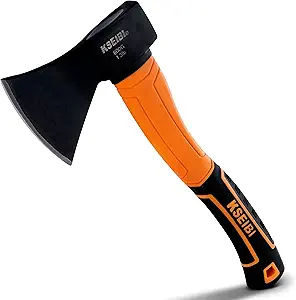 |
| Best Budget The cheapest option that still gets the job done reliably | DESHIL 10-inch Outdoor Hatchet with Fiberglass Handle and Sheath |  |
| Highest Rated A top-rated pick with lots of positive feedback | Fiskars X14 14" Universal Axe (Hatchet) |  |
| Most Popular A crowd favorite that many people choose with confidence | Fiskars X7 Hatchet, 14-inch |  |
Gränsfors Bruks Small Forest Axe, 19-inch

| Blade Material | Stainless Steel |
|---|---|
| Handle Material | Hickory Wood |
| Head Type | Forest |
| Blade Edge | Convex |
The Gränsfors Bruks Small Forest Axe is a high-quality 19-inch hand axe built for cutting, limbing, and splitting small sticks and limbwood on camp trips. It pairs a convex stainless steel head shaped for forest work with a hickory handle that balances control and swing power in a compact package. Typical use will be chopping small trees, limbing felled wood, and splitting kindling for a campfire; the included vegetable-tanned leather sheath protects the blade when stored. Notable features are the finely ground convex edge for effective bite and durability, the short handle that makes it easy to carry and control around a campsite, and traditional hand-forging craftsmanship that keeps the head robust against repeated strikes. Limitations are its modest blade length and lighter head mass, which make it less efficient on large rounds or heavy splitting compared with full-sized splitting axes or mauls. For campers who want a durable, well-balanced axe for chopping and preparing small to medium firewood, this model delivers refined performance in a portable size.
Best for: Campers and outdoorspeople who prioritize a durable, well-crafted axe for chopping, limbing, and splitting kindling at camp and want a compact tool that is easy to carry and control.
Less Ideal for: Users who need maximum splitting power for large rounds or who prefer two-handed full-size splitting mauls for felling and heavy-duty processing should choose a larger tool.
- High-quality convex stainless steel head for reliable cutting performance and edge durability
- Hickory handle provides good balance and shock absorption for controlled swings
- Compact 19-inch length is easy to carry and maneuver at camp
- Comes with a vegetable-tanned leather sheath for safe transport and storage
- Smaller head and shorter handle limit efficiency on large logs and heavy splitting tasks
Verdict: A compact, hand-forged forest axe that gives campers dependable cutting and kindling-splitting performance in a portable form.
KSEIBI 274150 Camping Hatchet Axe (Forged Steel, Fiberglass Handle)

| Blade Material | Forged Steel |
|---|---|
| Handle Material | Fiberglass |
| Head Weight | 600 g |
| Blade Length | 4.13 inches |
The KSEIBI 274150 is a small camping hatchet built for routine campsite tasks: splitting kindling, chopping small to medium logs, and other general outdoor work. It pairs a 600 g forged steel head with an anti-corrosion coating and a fiberglass handle that includes rubberized inserts for grip and shock absorption. The weight and balance make it easy to swing quickly, which helps cut deeper with each strike and reduces fatigue during repeated use. It ships moderately sharp and will benefit from a tune-up if you need maximum cutting performance. A molded hole in the handle offers simple hanging or lanyard attachment and the package includes a carrying sheath for safe storage. Limitations are its size and head weight, which are optimized for portability and kindling rather than splitting very large or frozen rounds; heavy-duty log splitting will require a larger splitting axe or a maul. The hatchet’s throwing suitability and ergonomic grip make it a versatile camp tool for campers who value a durable, lightweight axe for everyday campsite chores.
Best for: Buyers who want a compact, reliable camp axe for splitting kindling, campsite chores, and occasional survival tasks and who prioritize portability and low fatigue during repeated use.
Less Ideal for: Anyone who plans to split large, heavy, or frozen logs regularly should choose a heavier splitting axe or maul instead.
- Forged steel 600 g head with anticorrosive coating for durable cutting performance
- Fiberglass handle with rubber inserts that reduces shock and improves grip
- Well-balanced design that increases swing speed and efficiency for kindling and small logs
- Includes carrying sheath and a hanging hole for easy storage and transport
- Moderately sharp out of the box for general use but may need additional sharpening for optimal performance
- Head weight and compact length are not suited for splitting large or very dense logs
Verdict: A lightweight, well-balanced camping hatchet that delivers durable, efficient performance for splitting kindling and everyday camp tasks.
DESHIL 10-inch Outdoor Hatchet with Fiberglass Handle and Sheath

| Handle Material | Fiberglass |
|---|---|
| Blade Material | Carbon Steel |
| Head Type | Hatchet |
| Blade Edge | Convex |
| Included Components | Protective Blade Cover |
This DESHIL 10-inch hatchet is a straightforward, budget-friendly camping tool for cutting kindling, trimming small branches, and light splitting at camp. The heat-treated carbon steel head holds an edge well for its class and the convex blade profile helps with controlled chopping and carving. The fiberglass handle absorbs shock and has an anti-slip grip so swings feel steadier than on a plain wooden handle, and the bonded head-to-handle construction reduces worry about loosening. The flat back doubles as a hammer for tent stakes or light driving tasks and a plastic sheath keeps the blade covered during transport. Expect good performance for small to medium camp jobs but limited leverage for large logs or heavy splitting compared with longer, heavier axes. It is easy to resharpen with a stone, though the smaller head means more effort when processing bigger rounds. For campers who need a capable, low-cost hatchet for kindling and light splitting, this is a practical pick.
Best for: Campers and hikers looking for an inexpensive, compact hatchet primarily for kindling, campsite tasks, and occasional light splitting who prioritize portability and straightforward, reliable performance.
Less Ideal for: People who need a tool for heavy-duty wood splitting, felling larger trees, or frequent high-volume chopping should choose a longer, heavier splitting axe instead.
- Heat-treated carbon steel head that holds an edge longer than untreated blades
- Fiberglass shock-reduction handle with anti-slip grip for more comfortable swings
- Flat back head that functions as a hammer for tent stakes and camp tasks
- Includes a protective blade sheath for safe transport and storage
- Small 10-inch length limits leverage and effectiveness on large logs
Verdict: A compact, low-cost camping hatchet that gives dependable kindling and light splitting performance with a shock-absorbing fiberglass handle.
Fiskars X14 14" Universal Axe (Hatchet)

| Head Type | Hatchet |
|---|---|
| Handle Material | Alloy Steel |
| Blade Material | Forged Steel |
| Included Components | Sheath |
The Fiskars X14 is a compact universal axe sized for comfortable single-handed use on campsite and yard tasks. It pairs a double-hardened forged-steel blade with a low-friction coating so the edge stays sharp longer and slices through fresh resinous wood more cleanly than a blunt hatchet. The FiberComp handle is lightweight, engineered to absorb shock and reduce overstrike damage, and the ergonomically curved shaft with SoftGrip texture improves control during repetitive swings. An insert-molded head reduces the chance of the head loosening from the handle, and the included sheath protects the blade on the trail. For camping use this hatchet excels at chopping kindling, limbing small branches, and light felling of small trees, while its balance makes one-handed control easier. Limitations are its shorter 14-inch length and hatchet-style head, which means it is not ideal for splitting large rounds or heavy-duty log work compared with a full-sized splitting axe. Expect excellent durability and a safe, controllable tool for routine campsite wood preparation rather than heavy splitting jobs.
Best for: Buyers who prioritize a durable, easy-to-control camping hatchet for regular campsite use and reliable performance when preparing kindling and limbing small trees.
Less Ideal for: People who need a tool for splitting large rounds or heavy-duty firewood processing should choose a full-sized splitting axe instead.
- Double-hardened forged-steel blade with low-friction coating for cleaner cuts and rust resistance
- Lightweight FiberComp handle that absorbs shock and reduces overstrike damage
- Ergonomic curved handle with SoftGrip texture for confident one-handed control
- Insert-molded axe head design reduces loosening and improves long-term durability
- Includes sheath to protect blade during storage and transport
- Short 14-inch length and hatchet head limit effectiveness on large log splitting
- Handle material listed as alloy steel in some specs which may cause confusion about actual FiberComp construction
Verdict: Choose the Fiskars X14 when you want a reliably durable, well-balanced campsite hatchet that delivers clean cuts and long-term edge life for routine wood preparation.
Fiskars X7 Hatchet, 14-inch

| Blade Material | Forged Steel |
|---|---|
| Handle Material | Wood |
| Head Type | Hatchet |
| Included Components | Fiskars X7 Hatchet (14") |
The Fiskars X7 is a 14-inch hatchet built for campsite wood prep and light splitting. Its forged-steel head uses Fiskars’ blade-grinding geometry and a low-friction coating to slice cleanly and resist sticking, so you get deeper cuts with fewer swings. The insert-molded head and FiberComp handle create a virtually unbreakable connection and deliver a balanced power-to-weight ratio that increases swing speed without excess fatigue. The handle’s shock-absorbing design and non-slip grip make repeated use more comfortable, and the included sheath keeps the blade protected in a pack. This hatchet is optimized for kindling, small logs, and trimming branches rather than heavy felling or large splitting jobs; the 14-inch length and head weight favor control and portability over brute force. Expect a durable, low-maintenance tool that stays sharp longer than basic hatchets, but be prepared to carry a larger axe or splitting maul for big rounds or repeated heavy splitting tasks.
Best for: Buyers who want a reliable, low-maintenance camp tool for efficient kindling and light splitting and who prioritize proven durability and user comfort.
Less Ideal for: People needing a primary tool for felling trees or splitting large firewood rounds should choose a full-size splitting axe or maul instead.
- Forged steel blade with specialized grinding for longer edge life and cleaner cuts
- Low-friction coating reduces blade sticking when chopping wood
- Balanced head and lightweight design increase swing speed and efficiency
- Shock-absorbing FiberComp handle and non-slip grip reduce user fatigue
- Insert-molded head construction improves durability and reduces risk of head separation
- 14-inch hatchet is not intended for heavy felling or splitting large logs
Verdict: Choose the Fiskars X7 when you want a dependable, easy-to-carry hatchet that makes kindling and small-log splitting faster and less tiring.
Choosing the Right Camping Axe for Splitting Wood: Key Factors to Consider
Head Geometry and Wedge Angle
The shape of the axe head determines how wood fibers separate on impact. A broader, more pronounced wedge forces the split open, reducing the need for repeated strikes. For splitting wood at camp you usually want a head with a steeper, flared profile rather than a thin chopper edge. That geometry helps when working with rounds, seasoned logs, or irregular split wood.
Different wedge angles change how the axe drives through the wood and how much force is needed. A very steep wedge can require more swing weight to be effective, while a subtle wedge may get stuck in denser hardwood. Consider the typical diameter and species of wood you will process and choose a head profile that matches those conditions.
Swing Weight and Balance
Swing weight is the feel of the axe in motion and combines head mass with handle length. For splitting, added head mass helps deliver force without extra effort, but too-heavy heads become tiring on long sessions and harder to control. Balance matters for accuracy and to prevent glancing blows that can damage the head or handle.
Think about your strength and typical session length. If you will split multiple rounds for an evening fire, a moderately heavy but well-balanced axe reduces fatigue. For backpacking where pack weight matters, a lighter option with a longer, ergonomic handle may offer a better compromise between power and portability.
Handle Material and Length
Handle material affects comfort, resilience, and how the tool transmits shock. Traditional hickory absorbs vibration well and is serviceable in the field, but it can break if severely abused. Synthetic composite handles are more weather resistant and often dampen shock, and some designs can flex to absorb impact energy. Metal handles with overmold grips can be extremely durable but may transmit more vibration.
Length affects leverage and control. Longer handles increase force at the head but reduce packability. Shorter handles are easier to carry and maneuver for fine camp chores. Consider whether you need a full-length splitting axe for maximum leverage or a shorter, packable tool that still splits small-to-moderate rounds.
Steel Hardness and Edge Retention
Steel hardness and how well the edge holds affects how often you must sharpen in the field. Harder steels keep an edge longer but can be more brittle and harder to resharpen with limited tools. Tougher, lower-hardness steels are easier to touch up but may dull faster.
For campsite splitting, a balance is best: steel that holds a useful edge between touch-ups but can still be sharpened with a compact file or stone. Also consider whether the head design allows for easy reprofiling and whether the spine or poll is usable for light hammering or batoning when appropriate.
Durability and Weather Resistance
An axe that will see rain, humidity, or rough handling needs corrosion resistance and a handle that tolerates moisture. Heads with protective finishes and steels with reasonable corrosion resistance require less maintenance. Handles with sealed wood or synthetic construction reduce swelling, cracking, or rot.
Also consider how well the head-to-handle connection is engineered. Wedges, pins, or modern bonded connections behave differently under load. A robust attachment minimizes the chance of loosening after repeated heavy swings.
Packing and Transport Tips
How you carry a splitting-focused camping axe affects safety and comfort on the trail. Use a sturdy sheath that covers the blade and secures to your pack or belt to prevent accidental contact. If the axe has a full-length handle, consider mounting it horizontally on the outside of a backpack or inside a gear box when traveling by car.
For backpackers, choose models with shorter handles or break-down designs that fit inside or alongside a sleeping pad. Remember that weight distribution matters: a heavy head far from your pack center can make carrying uncomfortable over long distances.
- Use a sheath with a locking strap for blade security
- Distribute axe weight to avoid pack imbalance
- Protect handle finishes from abrasion during transport
Sharpening and Field Maintenance
Regular edge maintenance keeps a splitting axe effective and safer to use. Carry a compact file or sharpening stone to touch up the bevel after several sessions. For camping use, reprofile the edge to a slightly blunter angle than a chopper to preserve the wedge shape that aids splitting.
Clean and lightly oil the head after exposure to moisture. For wooden handles, apply a light coat of linseed oil or an appropriate finish seasonally to prevent drying and cracks. Inspect the head-to-handle joint and any fasteners before each trip.
- Carry a small round or flat file for quick edge work
- Use oil to prevent rust after wet conditions
- Check handle attachment and replace wedges or pins if loose
Safe Swinging and Camp Setup
Establish a stable splitting station with a flat chopping block at waist height. This reduces the chance of the axe glancing off the log and limits downward overreach that can cause injury. Keep bystanders at a safe distance and clear the area of trip hazards.
Adopt a controlled, full follow-through swing rather than wild chopping. A controlled swing transfers energy efficiently and reduces the risk of handle failure. Wear eye protection and sturdy gloves when splitting larger rounds.
- Use a chopping block to raise work and reduce ground strikes
- Stand with a stable stance and controlled swing
- Keep bystanders at least two axe-lengths away
Matching Axe to Wood Type
Different species and moisture levels change how wood splits. Seasoned softwoods split readily and respond well to lighter splitting tools. Dense hardwoods and knotty pieces require more head mass and a wider wedge to open the fibers. Always size your tool to the typical wood you will encounter at camp.
If you expect to process a mix of sizes, consider a heavier head for larger rounds and a small hatchet or saw for finer work. Carrying two complementary tools can save effort and improve efficiency when preparing a campfire.
- Softwoods: lighter heads, less wedge required
- Hardwoods: heavier head and wider wedge helpful
- Knotty wood: patience and multiple light strikes can be safer than aggressive swings
How We Chose the Best Camping Axe for Splitting Wood
We selected candidates based on criteria that matter for campsite splitting and repeated field use. We prioritized head geometry and wedge angle because those shapes determine how reliably an axe opens wood fibers on impact. Weight and swing balance were important to ensure the axe splits effectively without requiring excessive force. Handle material and length were assessed for shock absorption, grip security, and packability. Edge retention and steel quality were considered to reduce time spent sharpening in the backcountry. Finally, durability and maintenance needs were evaluated so the tool remains serviceable after exposure to moisture and rough use. Excluded items included lightweight hatchets intended mainly for batoning, multi-tool hatchets not optimized for splitting, and axes whose construction or handle design made them unsafe or impractical for repeated splitting. Our editorial filters removed any tools that lacked clear specification of head geometry, used unknown steel grades with no durability data, or had handles that are not suitable for overhead swings. The scoring criteria listed below reflect the concrete dimensions we used during selection and evaluation.
FAQ
Is a splitting axe the same as a hatchet for camping?
Not exactly. Hatchets are smaller and designed for chopping, light limbing, and small splitting tasks. A splitting-focused axe has a wider wedge and more head mass to open rounds efficiently. Which you need depends on the size of wood you plan to process.
How heavy should a camping splitting axe be?
It depends on your strength and how much wood you will process. For car camping, a heavier head delivers more splitting power with fewer swings. For backpacking, a lighter, well-balanced tool is more practical. Aim for a balance between deliverable force and carry comfort.
Can I sharpen a splitting axe in the field?
Yes. You can maintain a splitting axe with a compact file or stone. Keep the blade profile appropriate for splitting by maintaining a slightly blunter bevel than a chopping edge. Regular touch-ups prolong the edge and make splitting safer.
Should I choose a wooden or synthetic handle?
Both have tradeoffs. Wooden handles absorb shock and are easy to repair in the field, but they can rot or crack if not cared for. Synthetic handles resist moisture and are often more durable, though they can transmit more vibration. Choose based on expected exposure and maintenance preferences.
Is it safe to use the axe poll as a hammer?
Some axes have a poll designed for hammering, but not all. Using the poll as a hammer can stress the head-to-handle connection and may loosen components if the tool is not built for that purpose. Check the tool design and avoid heavy hammering unless the manufacturer or design indicates it is acceptable.
Final Verdict
When choosing a camping axe for splitting wood, prioritize head geometry, swing weight, and a handle that matches how you carry and use the tool. Expect tradeoffs between splitting power and packability: heavier, wider-wedged heads split faster but add weight, while lighter options are easier to carry but require more effort. Decide based on typical wood species and the number of rounds you will split at camp. Focus on durability and maintainability so the axe remains serviceable over multiple trips. With the right priorities you can pick a tool that makes camp fire prep faster, safer, and less tiring.
