

Note: This article contains affiliate links. If you click on these links and make a purchase, I may earn a small commission at no extra cost to you. This helps support my research and content. Read my full affiliate disclosure here.
Begonias need a potting medium that holds enough moisture without staying soggy and that offers good airflow to delicate roots. Picking the right potting mix for begonias affects how often you water, how well plants recover from stress, and whether stems and rhizomes stay healthy in containers or houseplant beds. This guide shortlists seven top options and explains the qualities that matter in real garden and indoor settings. The picks were chosen for mixes that deliver reliable moisture control, aeration, and disease resistance. Below you will find practical guidance on the components to look for, how mixes behave in pots and trays, and common tradeoffs to consider before you buy.
Top Picks at a Glance
| Best Overall The best all-around choice for most situations | Gardenera Begonia Potting Mix, 5 Quart |  |
| Best Quality Built to a higher standard if you want something more solid | Grow Queen Craft Aroid Potting Mix, Chunky Peat-Free Soil for Tropical Houseplants, 4 qt |  |
| Best Value The sweet spot between price and what you get | Rosy Soil Organic Houseplant Potting Mix, 4 Quart |  |
| Best Budget The cheapest option that still gets the job done reliably | Burpee Premium Organic Potting Mix with Coco Coir (9 Qt) |  |
| Highest Rated A top-rated pick with lots of positive feedback | Miracle-Gro Indoor Potting Mix for All Plants, 6 qt., 2-Pack |  |
| Most Popular A crowd favorite that many people choose with confidence | Back to the Roots Organic Indoor Potting Mix, 6 Quart |  |
| Best Seller A high-volume bestseller chosen again and again | Back to the Roots Organic Expanding Coco Coir Potting Soil Brick |  |
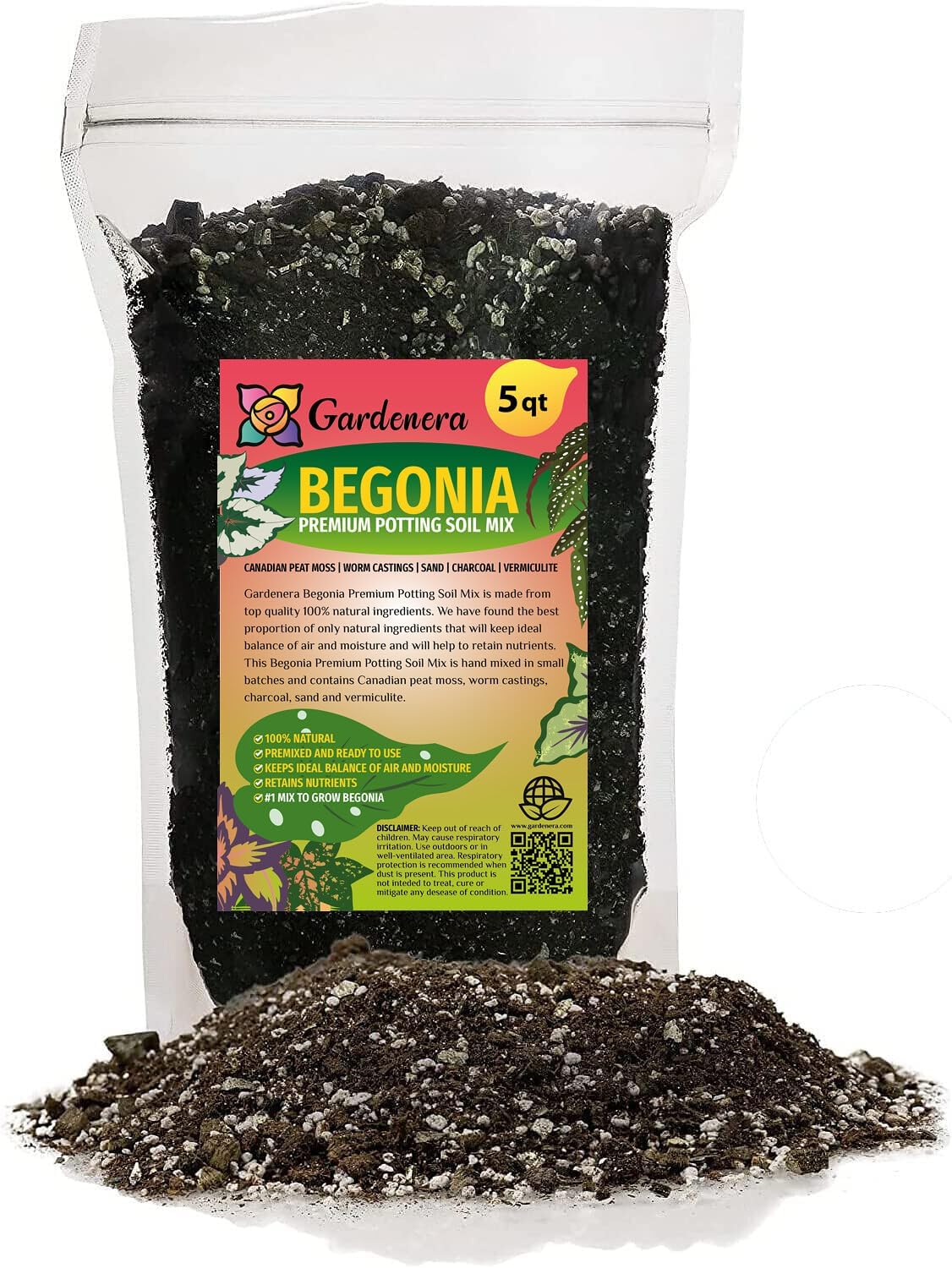
Gardenera Begonia Potting Mix, 5 Quart
| Brand Name | Gardenera |
|---|---|
| Item Type Name | Begonia Potting Mix |
| Unit Count | 1 Count |
| Volume | 5 quarts |
Gardenera Begonia Potting Mix is a ready-to-use blend aimed at giving Begonia species the moisture balance and nutrients they need to thrive. You use it like any potting soil for repotting, top dressing, or starting new plants indoors or in shaded outdoor beds. The formula combines Canadian peat moss and vermiculite to hold moisture without becoming waterlogged, while sand and charcoal improve drainage and root aeration and help reduce impurities. Worm castings add organic nutrients that support steady foliage growth and flowering without immediate need for extra fertilizer. In practice this mix makes watering less fussy and helps roots establish quickly, especially for tuberous and rhizomatous Begonias that prefer evenly moist but well-drained media. Limitations are its small 5-quart size, which means frequent purchases for multiple plants or large pots, and the peat content may compress over time requiring occasional refresh or remixing. For gardeners wanting a begonia-focused, low-effort medium this mix covers the essentials well.
Best for: Beginners and experienced houseplant owners who want a low-fuss, purpose-built potting medium for begonias that reduces watering mistakes and encourages steady growth.
Less Ideal for: Gardeners repotting many large containers, landscapers, or anyone needing bulk soil should choose larger-volume or bulk mixes instead.
- Tailored ingredient blend (peat moss, vermiculite, sand) that balances moisture retention and drainage
- Includes worm castings for slow-release organic nutrition
- Charcoal helps absorb impurities and keeps the root zone cleaner
- Ready-to-use mix suitable for indoor and shaded outdoor begonias
- Small 5-quart volume may be insufficient for multiple or large pots
- Contains peat which can compress and may need refreshing over time
Verdict: Buy this if you want a small, purpose-formulated potting mix that makes growing healthy begonias easier and less fussy.
Grow Queen Craft Aroid Potting Mix, Chunky Peat-Free Soil for Tropical Houseplants, 4 qt

| Volume | 4 quarts |
|---|---|
| Ingredients | Coco Coir, Pumice, Lava Rock, Earthworm Castings, Alfalfa Meal, Gypsum, Tree Fern Fiber, Fir Bark |
| Style Name | For plants that like high drainage with good moisture retention |
| Item Type Name | Potting Mix |
This Grow Queen Craft Aroid Mix is a chunky, peat-free potting soil designed to mimic a rainforest floor for aroids and other tropical houseplants. It combines coco coir, Douglas fir bark, pumice, lava rock and charged biochar to create large air pockets that improve drainage and resist compaction while small amounts of coir and biochar retain moisture between waterings. The mix includes earthworm castings, alfalfa meal and gypsum to provide gentle, immediate nutrition and support beneficial microbes. It arrives pre‑moistened and is ready to use for repotting seedlings to medium houseplants. Practical benefits for performance-minded growers include fast drainage that reduces root rot risk, a stable chunky structure that holds up over time, and a slightly acidic pH suitable for many tropical species. Limitations are the small 4 quart volume that only fills a few small pots and the absence of perlite, which some growers prefer to adjust aeration manually; heavier feeders may need to supplement with additional fertilizer over time.
Best for: Buyers who prioritize plant performance and root health and want a ready-to-use, biologically active mix that promotes fast drainage for tropical and aroid-type houseplants.
Less Ideal for: People repotting many large plants or furnishing large containers who need bulk volume or those who prefer to custom-blend every amendment for precise control.
- Chunky particle mix (bark, pumice, lava rock) for excellent drainage and aeration
- Peat-free formula with certified organic coco coir and charged biochar for moisture retention without sogginess
- Contains organic amendments (earthworm castings, alfalfa, gypsum) that provide gentle nutrition and support microbes
- Pre‑moistened and ready to use for immediate repotting
- pH balanced toward slightly acidic to suit tropical aroids
- Small 4 quart bag covers only a few small pots, so multiple bags are needed for larger repotting projects
- No perlite included for growers who prefer that specific amendment
Verdict: Choose this mix if you want a ready-made, peat-free chunky soil that delivers reliable drainage and living nutrients for performance-focused tropical houseplants.
Rosy Soil Organic Houseplant Potting Mix, 4 Quart

| Unit Count | 128 Ounce |
|---|---|
| Item Type Name | Soil |
| Item Highlight | Biochar and Worm Castings, for Monstera, Pothos, Tropical Indoor Plants, Peat Free |
| Style Name | Houseplant |
This 4-quart Rosy Soil houseplant potting mix is built for indoor tropicals and other common houseplants, using biochar, worm castings, compost and mycorrhizal fungi instead of peat. It is typically used for repotting Monsteras, pothos, ferns and similar plants or for refreshing existing pots by mixing into older soil. The charged biochar and bark fines create a chunky, well-draining structure that helps water move through the pot rather than pool, reducing the risk of root rot. Worm castings and beneficial fungi support nutrient uptake so foliage responds quickly after repotting. The bag is resealable and compact, enough to refresh two to three medium pots. Limitations are the small 4 qt volume if you have many plants and the mix may be coarser than standard houseplant soils, so very small-rooted seedlings may need a finer seed-starting medium. For someone who wants a peat-free, microbially active potting mix that improves drainage and root vigor, this does the job without added synthetic inputs.
Best for: Buyers who want a sustainable, low-maintenance indoor potting mix that boosts root health and drainage for common tropical houseplants and want a ready-to-use organic option.
Less Ideal for: Not suited for gardeners who need large quantities for many plants or those focused on seed starting where a finer, finer-textured mix is required.
- Peat-free organic formula with biochar and worm castings for sustainable nutrient supply
- Contains mycorrhizal fungi to improve root nutrient and water uptake
- Chunky, well-draining texture that reduces standing water and root rot risk
- Resealable bag helps keep unused soil fresh between repots
- Small 4 quart volume may be insufficient for users with many plants or large pots
- Coarser texture may not be ideal for very small seedlings or delicate root systems
Verdict: A peat-free, microbially active potting mix that improves drainage and root vigor for indoor tropicals, ideal for practical plant owners who want healthier repots with minimal fuss.
Burpee Premium Organic Potting Mix with Coco Coir (9 Qt)

| Coverage | 9 Qt Container |
|---|---|
| Item Form | Powder |
| Specific Uses For Product | Plant Growth, Root Development, Seed Development, Soil Conditioning |
This Burpee Premium Organic Potting Mix is a ready-to-use container mix that combines coco coir and organic nutrients to support seed starting, root development, and steady growth in pots. Typical use is filling small to medium containers or seed trays, planting begonias, vegetables, herbs, or annual flowers, then watering and letting the mix provide moisture retention and aeration. Notable features include OMRI listing for organic gardening, a coco coir component that balances moisture without waterlogging, and a formula that supplies nutrients for up to three months. In practice the mix makes starting and repotting begonias easier because it holds enough moisture for shade-loving, moisture-preferring varieties while still offering good drainage to avoid root rot. The main limitations are the small 9-quart bag size and powdered, lightweight texture which means you may need multiple bags for several pots and should handle gently to avoid compaction when filling larger containers.
Best for: Beginners and casual gardeners who want an organic, ready-made potting mix that keeps moisture steady for container-grown begonias and other shade-tolerant plants without extra amendments.
Less Ideal for: Large-scale growers or landscapers who need bulk soil for many pots and beds should choose a commercial-volume product instead.
- OMRI-listed organic mix suitable for organic container gardening
- Coco coir improves moisture retention while maintaining good aeration
- Formulated to support seed germination and root development
- Provides slow-release nutrients that feed plants for up to three months
- Small 9-quart bag may require several units for multiple containers
- Light, powdered texture can compact if overwatered or packed tightly
Verdict: A convenient organic potting mix that balances moisture and aeration, making it a practical starter mix for container-grown begonias.
Miracle-Gro Indoor Potting Mix for All Plants, 6 qt., 2-Pack

| Number of Packs | 2 |
|---|---|
| Item Highlight | Feeds for up to 6 Months |
| Ingredients | Sphagnum Peat Moss, Coir, Perlite, Fertilizer, Wetting Agent |
| Unit Count | 400.58 Ounce |
Miracle-Gro Indoor Potting Mix is a lightweight, ready-to-use soil blend designed for a wide range of indoor plants. It combines sphagnum peat moss, coconut coir, and perlite to hold and release moisture while staying airy enough for container roots, and the included fertilizer feeds plants for up to six months so you do not need to amend immediately. Typical use is straightforward: fill a drainage pot, add the plant and backfill, then water thoroughly. The formula is bark- and compost-free, which reduces hiding places for fungus gnats and makes it a cleaner choice for indoor spaces. Practical benefits include consistent moisture retention without waterlogging, good root aeration from perlite, and a nutrient boost that helps recently repotted begonias and other houseplants recover faster. Limitations are that the bag provides a moderate volume per unit so larger pots will need multiple bags and you should still repot annually to refresh nutrients and prevent compaction over time.
Best for: Buyers who want a reliable, no-fuss indoor potting mix that supports healthy root growth and reduces pest risk for common houseplants like begonias.
Less Ideal for: Gardeners who need a custom soil recipe for specialty begonias with atypical drainage or pH needs or those who prefer organic-only ingredients.
- Balanced blend of peat moss, coir, and perlite for moisture retention and good drainage
- Contains long-lasting fertilizer that feeds plants for up to six months
- Bark- and compost-free formula helps reduce fungus gnat habitat
- Ready-to-use mix requires no additional blending or amendments before potting
- Single 6 qt. bag is relatively small for large pots or multiple repots
- Nutrients will deplete over time so annual repotting or supplemental feeding is still required
Verdict: A dependable, ready-to-use indoor potting mix that helps begonias and other houseplants establish quickly while reducing fungus gnat problems.
Back to the Roots Organic Indoor Potting Mix, 6 Quart

| Unit Count | 192 Fluid Ounces |
|---|---|
| Item Type Name | Indoor Potting Mix 6qt |
| Brand Name | Back to the Roots |
| Item Highlight | Peat-free, 100% organic, made in the USA |
| Ingredients | Coconut Coir, Yucca, Mycorrhizae, Perlite, Horticultural Sand |
This 6‑quart indoor potting mix is designed for houseplants like pothos, monstera and other foliage, and its formula focuses on steady moisture retention and root development. It contains coconut coir as the primary medium, yucca extract to help the mix hold water, horticultural sand for drainage, and mycorrhizae to improve root nutrient uptake. In practice it works as an all‑purpose repotting and top‑up soil for begonias that need a balance of moisture and air around roots. The peat‑free, organic composition reduces environmental impact and is less attractive to indoor pests. It is supplied ready to use straight from the bag, making it convenient for quick repots or small container refreshes. Limitations are the small 6 qt volume for larger collections and the lack of specific fertilizer content, so heavy feeders will need routine fertilization after potting to maintain vigorous blooming.
Best for: Indoor gardeners who prioritize organic, low‑gnat potting media and want a ready‑to‑use soil that supports root health for foliage plants like begonias.
Less Ideal for: Growers with many large containers or those who want an all‑in‑one fertilized mix should look for larger bulk bags or mixes with added nutrients.
- Organic, peat-free blend suitable for environmentally conscious indoor gardeners
- Contains yucca extract to improve moisture retention without sogginess
- Includes mycorrhizae to support root development and nutrient uptake
- Formulated with sand and coir for a balance of drainage and water-holding
- Small 6 quart bag is best for single plants or small repotting jobs
- No built-in fertilizer so additional feeding is needed for heavy bloomers
Verdict: A compact, peat‑free potting mix that keeps indoor plants like begonias comfortably hydrated while supporting stronger root growth.
Back to the Roots Organic Expanding Coco Coir Potting Soil Brick

| Item Highlight | 10 lb compressed coco coir brick; peat-free; OMRI Listed |
|---|---|
| Item Type Name | Coconut Coir |
| Volume | 2 cubic feet (expanded) |
This compressed coco coir brick expands into a lightweight, fluffy potting medium when mixed with water and is intended for use alone or as an amendment to existing soil. It is OMRI listed and peat-free, so it suits gardeners looking for an organic substrate that improves aeration and water retention without heavy, compacted bagged soil. For begonias the coir’s balanced pH and good drainage help prevent root rot while holding enough moisture for those moisture-loving varieties. The block is easy to store and transport compared with loose soil and is straightforward to hydrate and mix into pots or seed trays. Limitations include that coco coir has minimal inherent nutrients, so you will need to add fertilizer for long-term container growth, and the lightweight texture can dry faster in very warm, exposed locations. For a risk-averse gardener, its organic certification and predictable, repeatable expansion make it a dependable base or amendment for potting begonias.
Best for: Gardeners who prefer a reliable, organic, easy-to-store potting medium and want a consistent amendment to improve drainage and moisture retention for container-grown begonias.
Less Ideal for: Growers who want an all-in-one fertilized potting mix or those who need a very heavy moisture-holding substrate for long unattended periods.
- Peat-free, OMRI listed organic coco coir suitable for organic growing
- Expands to about 2 cubic feet from a compact 10 lb block for easy storage
- Improves aeration and water retention, reducing compacted soil issues
- Versatile use alone or mixed with existing potting mixes and seed starting
- Contains little to no nutrients so requires regular fertilization for potted plants
- May dry out faster than heavier mixes in hot, exposed conditions
Verdict: A dependable, peat-free coco coir brick that provides consistent, easy-to-store potting medium ideal for improving drainage and moisture balance in begonia containers.
Choosing the Right Potting Mix for Begonias: Key Factors to Consider
Moisture Retention Versus Waterlogging
Begonias need a medium that holds enough moisture to support steady leaf and flower production while avoiding prolonged saturation. A mix with good moisture retention reduces watering frequency, which helps when plants are in shaded or indoor locations. However, excessive water-holding particles can trap water around crown and rhizome tissue and lead to rot.
Look for blends that combine moisture-holding materials like peat or coir with coarse components that create channels for excess water. Understanding how long a mix stays damp after watering helps you match it to your environment and watering habits.
Particle Size and Aeration
The size and shape of mix particles control airflow to roots. Begonias do best in a loose, open structure that allows oxygen movement while still supporting the plant. Fines and compacted organic matter reduce pore space and can suffocate roots, especially in deeper pots.
A good begonia mix will include larger particles such as perlite, coarse sand, or bark to maintain pore space. Particle mix also affects how the medium dries from the top down versus throughout the pot, which influences watering frequency and root health.
Organic Matter Type and Nutrient Base
Different organic components provide distinct water and nutrient behavior. Peat moss holds moisture and buffers pH, while coir is more sustainable and drains a bit faster. Compost or aged leaf mold adds nutrients but can introduce fine particles that reduce aeration if overused.
Consider whether you want a ready-to-use nutrient baseline or prefer a low-nutrient mix you will fertilize. Begonias appreciate steady, mild feeding, so mixes with modest starter nutrients work well for new plantings; long-term containers may need periodic feedings regardless of base mix.
pH and Mineral Content
Begonias generally prefer slightly acidic to neutral pH. The pH and mineral content of the mix influence nutrient availability and susceptibility to certain disorders. Some components, like perlite and bark, are neutral, while peat tends to lower pH.
If your water supply is very alkaline, choose a mix with buffering capacity or plan to adjust pH with fertilizers. Checking the mix pH or selecting components that match your local water chemistry reduces nutrient lockout and leaf chlorosis.
Weight, Pot Size, and Hanging Applications
Mix weight matters when planting many pots, placing containers on benches, or using hanging baskets. High proportions of heavy amendments increase the load and change how a pot dries. For hanging begonias choose lighter mixes with more coarse, airy components to prevent pots from becoming too heavy when watered.
Also consider pot depth and diameter. Shallow or narrow pots dry faster, so mixes with better moisture retention are useful there, while deep containers benefit from mixes that maintain aeration throughout the profile.
Cleanliness and Disease Risk
Begonias are vulnerable to crown and root rots, so starting with a pathogen-free mix reduces early losses. Sterilized, heat-treated, or bagged mixes with controlled ingredients lower the chance of introducing fungal spores or soil pests.
Avoid using raw garden soil or unaged compost for container-grown begonias. If you reuse potting mix, refresh its texture and consider heat treatment or mixing in fresh components to reduce disease buildup.
Mix Components That Work Best for Begonias
Successful begonia mixes combine moisture-holding organic material with coarse particles that keep the medium airy. Typical components include peat or coir for water retention, perlite or pumice for aeration, and shredded bark to add structure. Small amounts of compost can supply nutrients but use it sparingly to avoid fines that reduce pore space.
- Peat moss or coir for steady moisture
- Perlite, pumice, or coarse sand for drainage and aeration
- Shredded bark or orchid-type mixes for structure
- Limited compost or slow-release starter nutrients
Adjusting Mixes for Different Begonia Types
Rhizomatous and tuberous begonias have slightly different needs. Rhizomatous varieties often prefer a looser, shallower medium that drains well to prevent crown rot. Tuberous begonias, which hold energy in underground tubers, benefit from a mix that retains more moisture around the root zone without becoming waterlogged. You can tweak a base mix by adding more coarse material for rhizomatous types and a bit more moisture-retentive organic matter for tuberous varieties. Monitor plant response and adjust the ratio over the growing season.
- More coarse particles for rhizomatous forms
- Slightly higher organic ratio for tuberous types
- Use shallow pots for rhizomatous and deeper pots for tuberous when possible
Repotting and Refreshing Old Mixes
Begonias in containers will eventually deplete or compact their potting mix. When repotting, check for compaction, poor drainage, or root-bound plants. Refresh the root ball by removing fine, decomposed material and replacing it with fresh mix that restores aeration and water-holding balance. If you reuse an old mix, blend in fresh coarse material and a small amount of fresh organic matter. Inspect roots for rot or pests before replanting, and trim away damaged tissue to encourage healthy regrowth.
- Inspect for compaction and root health during repotting
- Replace fines with fresh coarse material to restore aeration
- Trim rotten roots and refresh with balanced mix
Container and Watering Practices That Complement the Mix
Even the best potting mix needs proper container choice and watering technique. Use pots with adequate drainage holes and avoid trays that hold standing water under containers. Water thoroughly, then allow the top portion of the mix to dry slightly before the next watering to encourage healthy root spread. Mulching the surface with small bark chips or grit can reduce evaporation and protect crown tissue in humid or high-light environments. Match watering frequency to pot size, mix composition, and ambient conditions rather than a fixed schedule.
- Use pots with clear drainage
- Avoid standing water in saucers for long periods
- Let the top inch or so dry before rewatering in most indoor situations
How We Chose the Best Potting Mix for Begonias
We started by prioritizing the physical properties begonias need most: consistent moisture retention without waterlogging, open structure for oxygen around roots, and resistance to compaction over time. Our evaluation emphasized component composition, drainability, and how mixes perform in typical container sizes used for begonias from small pots to hanging baskets. We also considered whether mixes accommodate the two main begonia habits: rhizomatous and tuberous types, because those forms have different water and anchoring needs. Concrete criteria used to filter candidates were water-holding capacity, particle size distribution and aeration, organic content and nutrient baseline, resistance to compaction, and pathogen-free processing or sterilization. We excluded blends that are primarily garden soil or heavy loam, and any mixes formulated only for succulents or cacti since those underretain moisture. The final list favors mixes that balance moisture and airflow, are stable in containers, and are suitable for indoor and covered outdoor environments where begonias are commonly grown.
FAQ
How often should I water begonias in potting mix?
It depends on mix texture, pot size, and conditions. Generally water when the top inch feels slightly dry; in airy mixes this may be every 5 to 10 days, while mixes that retain more moisture can stretch to longer intervals. Adjust frequency for light levels and temperature.
Can I make my own potting mix suitable for begonias?
Yes. Combine a moisture-retentive base like peat or coir with perlite or pumice and some shredded bark. Keep compost low to avoid fines and monitor how the blend drains before planting. Homemade mixes let you customize weight and moisture behavior.
Is coir a good substitute for peat moss for begonias?
Coir can substitute well because it holds moisture and is more sustainable. It tends to drain a bit faster than peat, so you may need slightly more coir or a bit less coarse material to achieve the same retention. Watch pH and salt content if using coir from an untested source.
What signs indicate my potting mix is failing for begonias?
Watch for persistent crown or root rot, yellowing leaves, slow growth, or soils that stay sodden for days after watering. Compaction and reduced airflow often cause these issues. Repot and refresh the medium if you see these problems.
Should I fertilize mixes made for begonias?
Most bagged mixes provide a modest starter nutrient charge, but container-grown begonias typically benefit from regular, diluted feeding during the growing season. Use a balanced, water-soluble fertilizer on a schedule appropriate for the plant's vigor and the mix's nutrient retention.
Final Verdict
Choose a potting mix for begonias by balancing moisture retention and aeration to match the plant type and container. Prioritize mixes that resist compaction, offer clean, pathogen-free ingredients, and allow you to control watering frequency. Expect to refresh or amend mixes over time rather than relying on a single solution for years. Focus on the tradeoff between holding enough water to support leaves and flowers and providing channels for oxygen around roots. With the right mix and watering routine, you can confidently grow healthy begonias in pots, hanging baskets, and indoors.
