

Note: This article contains affiliate links. If you click on these links and make a purchase, I may earn a small commission at no extra cost to you. This helps support my research and content. Read my full affiliate disclosure here.
If you want garden beds that need less weekly maintenance and suffer fewer pest problems, the right mulch makes a big difference. Mulch to prevent weeds and bugs acts as a physical barrier to seedlings and hides attractants that draw insects, while also stabilizing soil moisture and temperature. This guide shortlists six effective mulches for that specific purpose, with practical notes on durability, application depth, and how they behave over a season. We evaluated each option for how well it suppresses weeds and deters common garden pests, plus longevity and soil benefits. Below are our top picks for different garden situations, followed by what to consider for installation and long-term care.
Top Picks at a Glance
| Best Overall The best all-around choice for most situations | GranuCide Cedar Granules 8 lb — Natural Cedar Chips for Pest Repellent and Mulch |  |
| Best Quality Built to a higher standard if you want something more solid | HealthiStraw GardenStraw Premium Garden Mulch, 3 cu ft |  |
| Best Value The sweet spot between price and what you get | USA PINESTRAW Long Needle Pine Straw Mulch, Square Bale |  |
| Highest Rated A top-rated pick with lots of positive feedback | Capital Forest Products Cedar Mulch 3.0 Cu Ft |  |
| Most Popular A crowd favorite that many people choose with confidence | Cedarcide Original Cedar Granules (8 lb) |  |
| Best Seller A high-volume bestseller chosen again and again | Envelor 11" Coconut Coir Mulch Rings, 15-Pack |  |
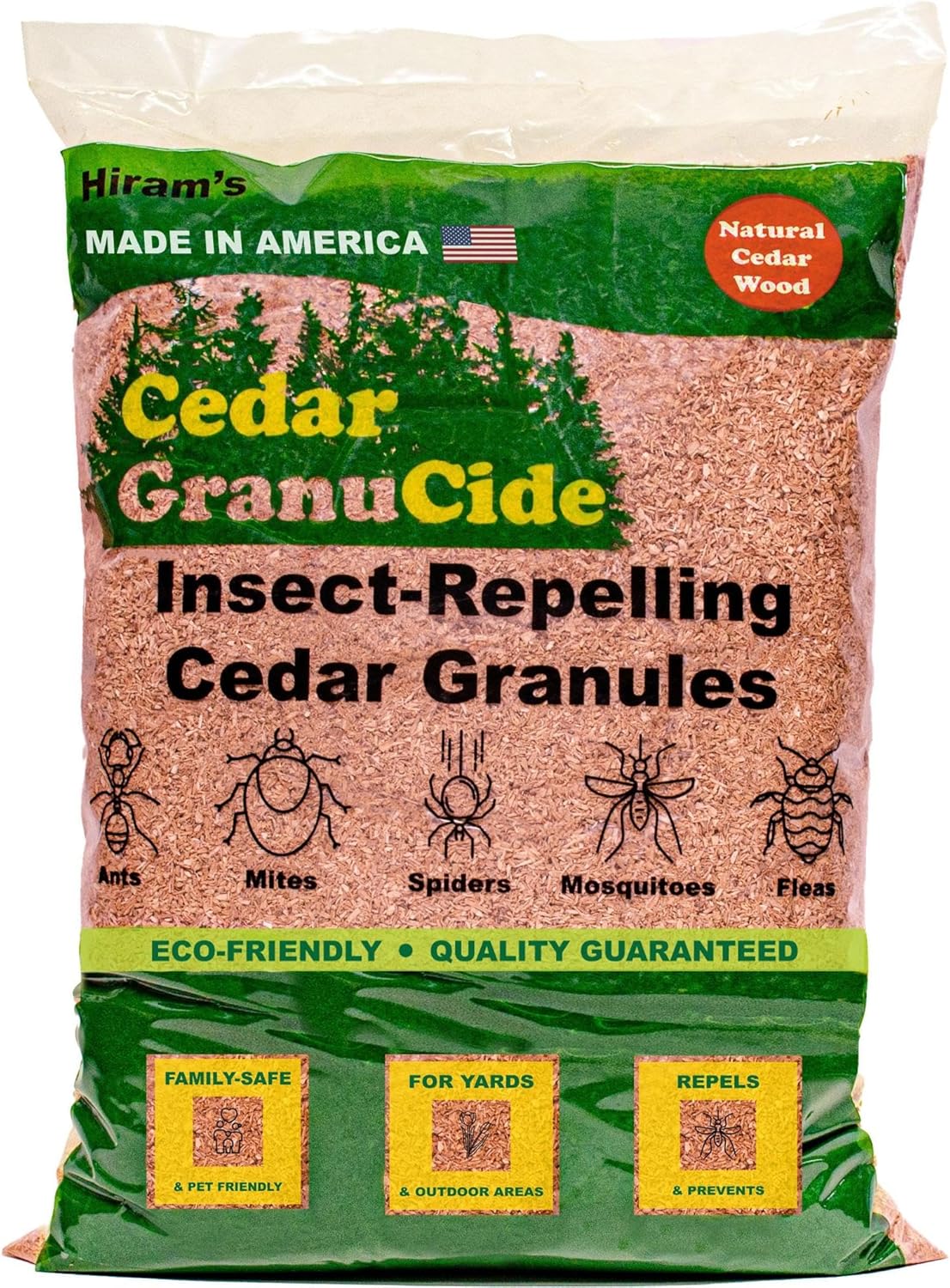
GranuCide Cedar Granules 8 lb — Natural Cedar Chips for Pest Repellent and Mulch
| Ingredients | 100% cedar granules |
|---|---|
| Directions | Sprinkle in gardens, potted plants, lawns, patios, around home perimeter |
| Made in | Made in America |
| Manufacturer | HIRAM'S |
GranuCide Cedar Granules are loose, aromatic cedar chips intended for use as a nonchemical insect repellent and decorative mulch. You sprinkle the granules around garden beds, potted plants, trees, patios, or along foundation perimeters; the cedar scent helps deter mosquitoes, ants, fleas, spiders, aphids and other small pests while also providing a neat mulch layer that can reduce surface evaporation. The product is 100% untreated cedar sustainably sourced from the Pacific Northwest, so it is pet and family safe and can be used indoors or outdoors. Practical benefits include easy application, a pleasant natural fragrance, and dual-purpose use as both pest control and moisture-conserving mulch. Limitations to expect are that granules provide a passive deterrent rather than immediate knockdown of heavy infestations and will need occasional replenishing as they break down or wash away; they are not labeled as a sole solution for pervasive pest problems. For gardeners seeking a low-toxicity, attractive mulch that also helps repel common garden insects, these cedar granules are a simple, maintenance-light option.
Best for: Gardeners who want a low-toxicity, low-effort mulch that also helps reduce common insect visitors and freshen planting areas.
Less Ideal for: People facing heavy or established pest infestations who need fast-acting insecticide treatments or those who require a permanent, long-lasting groundcover solution.
- Made from 100% untreated cedar so it is pet and family safe
- Natural aroma that deters a broad range of garden and household insects
- Works as both decorative mulch and moisture-conserving ground cover
- Easy to apply by sprinkling around beds, potted plants, and perimeters
- Provides passive repellent action and will not eliminate established infestations
- Granules degrade and scatter over time so periodic replenishment is required
Verdict: Choose these cedar granules if you want a safe, natural mulch that also helps repel common garden pests with minimal effort.
HealthiStraw GardenStraw Premium Garden Mulch, 3 cu ft

| Net volume | 3 cu ft |
|---|---|
| Intended use | Garden mulch, lawn seeding, compost-friendly |
| Material | 100% wheat straw |
| Source | Sustainably sourced, non-GMO |
HealthiStraw GardenStraw is a 3 cubic foot compressed bale of cleaned wheat straw formulated for use as garden mulch and seed protection. It is designed for vegetable, herb, flower and shrub beds where you want a lightweight, compostable mulch that retains soil moisture and suppresses weeds. The straw is processed to reduce dust and stray seeds and the short, specially cut fibers interlock when watered so the mulch stays in place without chemical tackifiers. For bushes you can apply a 2 to 3 inch layer around the drip line to cut evaporation, reduce compaction and gradually add organic matter as it breaks down. Practical benefits include easy spreading from a compressed bale, fast composting into the soil, and reduced watering needs. Limitations are that straw is less decorative than bark or wood chips and will decompose faster, so it requires periodic replenishing; it also provides less long-term weed barrier than heavier mulches. For gardeners focused on soil health and moisture conservation, it is a straightforward, low-risk choice.
Best for: Gardeners who prioritize soil health and want an easy-to-apply, compostable mulch for shrubs and mixed beds that reduces watering and improves organic matter over time.
Less Ideal for: People seeking a long-lasting, decorative mulch or a heavy-duty weed barrier for high-traffic beds should consider wood chips or stone instead.
- Cleaned, non-GMO wheat straw with reduced dust and seeds
- Fibers interlock when wetted so the mulch stays in place without binders
- Helps retain soil moisture and can reduce watering needs substantially
- Composts quickly and adds organic carbon to improve soil structure
- Decomposes faster than wood mulches so it needs topping up more often
- Less decorative and provides a lighter-duty weed barrier compared with heavier bark or rock mulches
Verdict: A clean, fast-composting straw mulch that conserves moisture and improves soil health, making it a safe, practical choice for mulching bushes.
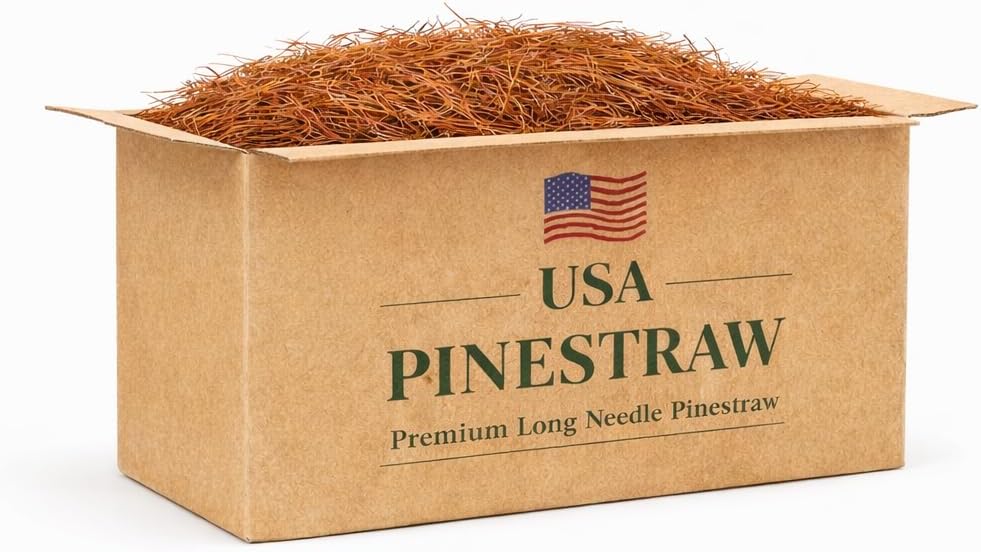
USA PINESTRAW Long Needle Pine Straw Mulch, Square Bale
| Material Type | Pine |
|---|---|
| Other Special Features of the Product | Organic |
| Package Size Name | Square Bale |
| Unit Count | 1 Count |
This product is a single premium square bale of long-needle pine straw intended for use as organic mulch around beds and shrubs. It is typically spread 2 to 4 inches deep around plants, pathways, and trees to suppress weeds, retain soil moisture, and protect roots from temperature swings. Because it is long-needle pine straw, it interlocks well and resists blowing away better than chopped mulches, and it decomposes slowly to add organic matter without dramatically altering soil texture. Practical benefits for blueberry plantings include good acidifying potential over time and excellent moisture retention, both helpful for blueberry health. Limitations are that you will need multiple bales for larger beds and periodic top-ups each season as the straw settles and decomposes. Also pine straw can be bulky to handle compared with bagged compost or wood chips, and it does not provide immediate nutrient boosts the way composted mulches do.
Best for: Gardeners seeking a low-maintenance, organic mulch for acid-loving shrubs who want better moisture retention and natural weed suppression in small to medium beds.
Less Ideal for: People who need a sterile, compacted mulch for container-grown blueberries or those wanting immediate nutrient-rich soil amendments rather than a slow-decomposing cover.
- Organic long-needle pine straw that naturally suppresses weeds
- Good moisture retention that reduces watering frequency
- Interlocking needles resist wind displacement better than loose shredded mulches
- Slow decomposition adds organic matter over time without rapid nutrient release
- Sold as single square bale so multiple purchases needed for larger beds
- Bulky to handle and store compared with bagged options
Verdict: Choose this long-needle pine straw bale if you want an organic, moisture-retaining mulch that stays put and supports acid-loving plants like blueberries.
Capital Forest Products Cedar Mulch 3.0 Cu Ft

| Unit Count | 1 Count |
|---|---|
| Manufacturer | CAPITAL FOREST PRODUCTS |
| Item model number | CFD_1301215 |
| UPC | 742638888222 |
This cedar mulch is a straightforward, naturally aromatic ground cover intended for garden beds, foundations, and patios. Made from processed cedar, it lays down easily to help block light, reduce weed germination, slow erosion, and hold soil moisture for planted areas. Typical use is spreading a 2 to 3 inch layer around perennials, shrubs, and foundation plantings where weed suppression and moisture retention are priorities. The cedar material also gives a clean, natural appearance and a pleasant scent while resisting rapid decomposition compared with some softer mulches. Limitations are that cedar does not form the tight mat that some synthetic weed barriers provide and will need occasional replenishing as it breaks down and settles; it also does not replace mechanical weeding or pre-emergent herbicides in heavy weed situations. For gardeners seeking a low-maintenance, natural mulch that contributes to healthier soil and fewer surface weeds, this is a reliable choice.
Best for: Gardeners who prioritize a durable, natural mulch to reduce weeding and conserve moisture around beds and shrubs and who prefer a low-maintenance, long-lasting organic option.
Less Ideal for: People who need an immediate, maintenance-free impermeable barrier against weeds or who prefer a non-organic, permanent solution for high-traffic mulched areas.
- Natural cedar composition helps suppress weed germination and retain soil moisture
- Pleasant cedar scent and attractive natural appearance for beds and foundations
- Resists rapid breakdown compared with softer mulches, so it lasts longer between refreshes
- Helps reduce erosion on slopes and around plantings when applied evenly
- Does not form a solid barrier like landscape fabric and will require periodic top-up
- May be less effective alone against aggressive perennial weeds without additional control methods
Verdict: Choose this cedar mulch if you want a natural, longer-lasting organic layer that reduces surface weeds and helps retain soil moisture in garden beds.
Cedarcide Original Cedar Granules (8 lb)

| Unit Count | 128 Ounce |
|---|---|
| Item Form | Granules |
| Target Species | Insects |
| Special Features | Weather-Resistant |
| Active Ingredients | cedar granules |
Cedarcide Original Cedar Granules are 100% cedar chips sold in an 8 pound bag for outdoor and indoor use as a natural insect deterrent. You apply them by sprinkling or broadcasting around lawns, flower beds, patios, planters, foundations, and along fences; the granules release a cedar aroma that interferes with insect pheromones and helps keep mosquitoes, fleas, ants, chiggers, and similar pests away. The product is simple to use, family and pet safe when used as directed, and weather resistant so it remains effective between reapplications. For maintenance the maker recommends reapplying every 4 to 6 weeks or sooner after heavy rain. Limits to expect are coverage and persistence: one 8 pound bag is intended for modest areas and will need routine replenishing after storms, and performance can vary by pest pressure and site conditions. These granules work best as part of an integrated approach rather than a one-time cure for heavy infestations.
Best for: Buyers who prioritize a low-toxicity, natural solution for routine perimeter and garden pest control and who prefer products with established customer acceptance.
Less Ideal for: People facing large-scale infestations or who need a long‑lasting, single-application pesticide should consider stronger targeted treatments instead.
- Made from 100% natural cedar chips that repel a wide range of insects
- Can be applied outdoors and indoors (pots, closets, planters) for flexible use
- Weather-resistant formulation so granules last between applications
- Family and pet safe when used as directed
- Single 8 lb bag covers a modest area and requires periodic reapplication
- Effectiveness depends on insect pressure and may not replace targeted pesticide treatments
Verdict: A simple, pet‑safe way to reduce common outdoor insects around beds and foundations without synthetic chemicals.
Envelor 11" Coconut Coir Mulch Rings, 15-Pack

| Material | Coconut Coir Fiber |
|---|---|
| Diameter | 11 inches |
| Pack Size | 15 rings |
| Thickness | 0.2 inches |
These Envelor coco mulch rings are precut discs made from 100% coconut coir fiber intended to sit around the base of trees, shrubs, or potted plants. Installation is simple: place a ring around the plant stem, trim if needed, and let the porous coir hold moisture while blocking surface weeds. The product is thin and lightweight, so it works well in containers and garden beds without disturbing roots and allows water and air to pass through for healthy soil. The natural fiber also discourages animals from digging and breaks down over time, returning organic matter to the soil. Because the rings are not permanent landscape fabric, they will need replacement after a season or two in heavy weather or high decomposition environments. They do not provide long-term physical barrier against deep-rooted weeds and can shift if not tucked or weighted on loose soil. For someone who wants a low-maintenance, natural mulch that improves moisture retention and looks neat around plant bases, these perform as advertised.
Best for: Buyers who want a low-risk, natural mulch solution that looks tidy and reduces watering frequency while minimizing chemicals and maintenance around shrubs, trees, and container plants.
Less Ideal for: Gardeners seeking a long-lasting, impermeable weed barrier or those who need a heavy-duty solution for aggressive, deep-rooted weeds.
- Made from 100% natural coconut coir for biodegradable, eco-friendly mulch
- Precut rings are easy to place and trim for a neat fit around stems
- Porous structure retains moisture while allowing air and water to reach roots
- Helps suppress surface weeds and discourages light digging by animals
- Lightweight and suitable for both pots and garden beds
- Thin 0.2" profile decomposes over time and will require periodic replacement
- Not a rigid barrier so it will not stop deep-rooted or persistent weeds
Verdict: A simple, natural mulch ring for tidy moisture retention and light weed suppression around plants without synthetic materials.
Choosing the Right Mulch to Prevent Weeds and Bugs: Key Factors to Consider
Mulch Material and Particle Size
The type of material and how coarse or fine its particles are changes how well it stops weed seedlings and how attractive it is to pests. Coarse, chunky mulches create a physical barrier that shades the soil and is harder for tiny weed seedlings to push through. They also avoid compacting into a dense mat that can trap moisture excessively.
Fine-textured mulches settle and can form a crust that allows some weeds to exploit small gaps. Some organic fine mulches also hold moisture close to the surface and may attract slugs or sowbugs. Choose a particle size that balances strong weed suppression with the moisture and aeration needs of the plants you are protecting.
Decomposition Rate and Maintenance Frequency
How quickly a mulch breaks down affects how often you need to top it up and whether it will continue acting as a weed barrier. Slow-decomposing materials retain structure longer and maintain suppression for multiple seasons, while fast-decomposing mulches may require twice-yearly replenishment.
Consider the workload you are willing to accept. Organic mulches that break down add nutrients to the soil but demand more frequent refreshing. Inorganic mulches tend to last longer but do not improve soil fertility and may require an initial installation investment to achieve proper coverage depth.
Impact on Soil Moisture and Temperature
Mulch influences evaporation and ground temperature, which in turn affects weed germination and insect activity. A good mulch will conserve soil moisture, reducing stress on plants and making the soil less hospitable for drought-tolerant weed seedlings. It also moderates temperature swings that can trigger seed germination or encourage insect hiding places under cool conditions.
Match the mulch choice to your local climate and the water needs of your plants. In hot, dry regions, thicker moisture-retaining mulches are beneficial. In poorly drained soils, avoid mulches that retain excessive surface moisture and encourage root diseases or slug problems.
Pest Attraction and Deterrence Traits
Some mulches provide habitat or food that attracts insects, rodents, or slugs. Wood-based mulches can shelter overwintering pests if piled too deep against stems, while aromatic mulches or certain inorganic surfaces may deter some insects. The surface texture also matters: smooth, reflective, or hot surfaces will not be hospitable to many crawling pests.
Think beyond short-term aesthetics. Choose a material and installation approach that minimizes hiding places near stems, keeps mulch pulled slightly away from trunks and crowns, and avoids combining mulch choices that exacerbate pest problems.
Installation Depth and Coverage
The correct depth is crucial for both weed suppression and pest management. Too thin a layer will allow light through and permit weed seedlings to grow. Too deep a layer can smother desirable plants, create anaerobic pockets, or provide shelter for larger pests. Typical recommended depths vary by material, so set a target depth that maximizes suppression without harming plant roots.
Even coverage and periodic patching of bare spots are more effective than uneven, very deep mounds. Proper edging and keeping mulch off stems and trunks reduces pest access and moisture-related problems.
Environmental and Soil Health Effects
Mulch choice affects soil pH, nutrient cycling, and long-term bed health. Organic mulches add organic matter as they break down, encouraging beneficial soil life and improving structure, but they can temporarily tie up nitrogen during decomposition if too much fresh material is applied. Some inorganic options have minimal impact on soil chemistry but may alter surface temperature or water runoff.
Consider how the mulch will interact with your soil goals. If building soil organic matter is a priority, choose a slowly decomposing organic mulch and plan for occasional top-dressing to maintain suppression while feeding the soil.
Best Mulch Strategies By Garden Situation
Different planting situations call for different mulch tactics. Vegetable rows, perennial beds, newly planted shrubs, and established landscape beds each have distinct needs for weed control and pest management. For long-term landscape beds, choose a durable layer that is not refreshed too often. For vegetable beds, a combination of quick-cover organic mulch and targeted hand-weeding may be preferable to balance fertility with suppression.
Tailor installation depth, edge control, and proximity to stems depending on whether the area is actively cultivated. In high-traffic or narrow beds, consider thinner, more frequently refreshed mulch to allow easier access while still reducing weed pressure.
- Vegetable beds: moderate-depth organic mulch that supplies some nutrients but is easy to lift for harvest.
- Perennial borders: slow-decomposing coarse mulch for long-lasting suppression.
- New plantings: lighter initial cover with staged increase to avoid root smothering.
Application Tips That Reduce Pest Problems
How you apply mulch can be as important as which type you choose. Keep mulch pulled a few inches away from trunks and crown tissue to prevent moisture buildup that attracts pests and disease. Avoid piling mulch into volcano shapes around stems; instead create a shallow, even layer that tapers at the edges.
Rake or fluff the top layer annually to discourage overwintering insects. If slugs are an issue, avoid continuous dense layers of fine organic matter at the soil surface and consider a coarser top layer or localized slug traps rather than changing the entire bed approach.
- Maintain a 2-4 inch mulch band for most beds, adjusting by material.
- Inspect and thin overly compacted areas to reduce hiding places for pests.
- Top-dress in spring after soil warms rather than in late fall in regions with slug issues.
Combining Barriers and Mulch for Tough Weeds
For persistent perennial weeds or heavy weed seed banks, combine a physical barrier with your chosen mulch. Landscape fabric or biodegradable weed barriers placed beneath the mulch can block seedlings while still allowing water and air movement. Choose a barrier that is compatible with the mulch type and with future maintenance plans.
Remember that barriers require proper installation to avoid soil compaction and must be anchored and overlapped to prevent gaps. In many cases, an effective barrier plus a durable top mulch will drastically reduce hand-weeding needs for multiple seasons.
- Use breathable fabric under coarse mulches to avoid water pooling.
- Overlap seams and secure edges to prevent weed ingress.
- Combine with spot-treatment weeding rather than blanket chemical approaches.
Seasonal Care and When To Refresh
Plan when you will refresh mulch based on local climate and material decomposition. Spring application helps conserve moisture and suppress spring germinating weeds, while a late-season refresh can protect roots and reduce winter weeds in some regions. For fast-decomposing organic mulches, schedule two refreshes per year for continuous coverage.
Monitor for thinning spots that let weeds establish and for areas where mulch has compacted. Refreshing only the thin areas is more efficient than a full replacement and reduces disturbance to soil life.
- Inspect beds in early spring and mid-summer for patchy coverage.
- Top-dress rather than replace to preserve soil structure and microbial life.
- Adjust timing if slugs or other pests are seasonally active in your area.
Sustainable Choices and Reuse
Sustainability matters in garden decisions. Many gardeners prefer mulches that are locally sourced or made from reclaimed yard materials to reduce transport impacts. Compost-based and recycled wood mulches can be sustainable when managed to avoid introducing weed seeds or contaminants.
Consider how long a mulch will last and whether it can be composted or reused once it degrades. Choosing materials that feed the soil as they break down can reduce external fertilizer needs and support a healthier garden ecosystem.
- Check local municipal programs for free or low-cost shredded wood or compost.
- Avoid mulch that may contain invasive plant seeds.
- Plan for end-of-life use, such as incorporating old organic mulch into compost.
How We Chose the Best Mulch to Prevent Weeds and Bugs
We focused on attributes that matter in everyday garden use when the main goals are preventing weed emergence and reducing pest pressure. Evaluation criteria included how well the mulch physically blocks sunlight and weed seeds, its resistance to breakdown over a growing season, and whether its texture or odor discourages crawling and burrowing pests. We also measured how mulch affected soil moisture and temperature since those influence both weed germination and insect activity, plus how easy the material is to apply and refresh. Practical durability and maintenance needs were important to gardeners who prefer low-effort beds. We excluded decorative-only products that lack meaningful weed suppression or that rapidly disintegrate into fine particles within weeks. We also excluded materials that are known to introduce pests or disease to beds. The result is a list of widely available mulch types that balance physical weed barrier performance, pest-resistance characteristics, and sensible maintenance demands. These criteria align with the scoring metrics used in our product scorecards and informed which options made the shortlist.
FAQ
How deep should I lay mulch to prevent weeds and pests?
Depth depends on the material, but most effective weed suppression comes from a 2 to 4 inch layer for coarse organic mulches. Inorganic mulches may require similar or slightly greater depth. Avoid excessive depth near stems to reduce pest shelter and root problems.
Will mulch attract rodents or insects?
Some mulches can provide shelter for rodents or moisture-loving insects, especially if piled against trunks or left overly deep. Coarser, well-aerated mulches and keeping mulch away from stems reduce that risk. Choice of material also affects attraction; aromatic or reflective surfaces tend to be less hospitable to many pests.
Can I put mulch directly on top of weed fabric?
Yes, when breathable landscape fabric is used and properly installed, it can enhance weed control beneath mulch. Ensure the fabric allows water and air through and that seams are overlapped and secured to prevent weeds from emerging in gaps.
Does mulch stop seeds from blowing in?
Mulch reduces germination of seeds that reach the soil by blocking light and creating an unfavorable surface, but it will not prevent all airborne seeds from settling. Heavy or denser mulches do a better job of keeping tiny seeds from finding soil contact and germinating.
How often should I replace organic mulch?
Replacement frequency depends on decomposition rate. Fast-breaking mulches may need top-dressing twice a year, while slow-decomposing materials can last several seasons before significant replenishment is necessary.
Is inorganic mulch a better choice to stop bugs?
Inorganic mulches can be less attractive to some pests because they do not provide food or shelter and they maintain structure longer. However, they do not improve soil organic matter and may change surface temperatures, so weigh pest benefits against soil goals.
Final Verdict
When your priority is reduced weed pressure and fewer pest headaches, choose a mulch that balances strong physical suppression with low pest-attracting characteristics. Coarser, longer-lasting materials typically reduce weed emergence and provide fewer hiding places for insects, while organic options contribute to soil health at the cost of more frequent maintenance. Consider local climate, plant water needs, and how much annual upkeep you want to do, then select a material and installation depth that target those tradeoffs. With the right approach you can cut weeding time and minimize pest problems while supporting healthier soil.
