

Note: This article contains affiliate links. If you click on these links and make a purchase, I may earn a small commission at no extra cost to you. This helps support my research and content. Read my full affiliate disclosure here.
Picking the right soil for snake plants matters more than it seems. These succulents tolerate low water but suffer in mixes that stay wet; the wrong potting medium leads to root rot, poor growth, or stunted recovery after repotting. This guide covers seven shortlisted Snake Plant soils chosen for real growing conditions in pots, planters, and small indoor gardens. We evaluate mixes based on drainage, aeration, nutrient retention, and ease of repotting to help you match a soil to your watering routine and light levels. Below you will find the top soil options along with practical notes on when to use each mix and what garden tasks they suit best.
Top Picks at a Glance
| Best Overall The best all-around choice for most situations | Perfect Plants Snake Plant Soil, 8 qt Coco Coir Potting Mix |  |
| Best Quality Built to a higher standard if you want something more solid | rePotme Snake Plant Houseplant Potting Soil Mix — 8 Quart Resealable Bag |  |
| Best Value The sweet spot between price and what you get | Leaves & Soul Professional Snake Plant Potting Soil, 8.2 Quarts |  |
| Best Budget The cheapest option that still gets the job done reliably | Doter Snake Plant Potting Mix, 1 qt |  |
| Highest Rated A top-rated pick with lots of positive feedback | Gardenera Snake Plant Potting Mix, 1 Quart |  |
| Most Popular A crowd favorite that many people choose with confidence | Perfect Plants Snake Plant Soil, 4 qt Coco Coir Potting Mix |  |
| Best Seller A high-volume bestseller chosen again and again | Back to the Roots Organic Succulent & Cacti Soil, 6 Quart |  |
Perfect Plants Snake Plant Soil, 8 qt Coco Coir Potting Mix

| Volume | 8 quarts |
|---|---|
| Item Type | Snake Plant Soil |
| Ingredients | Coconut coir, pine bark, perlite, sand |
| Fertilizer | No added slow-release fertilizer |
This 8 qt Perfect Plants blend is a purpose-built potting mix for snake plants that pairs coconut coir, pine bark, perlite and sand to keep roots drier and reduce compaction. You use it like any repotting mix: open the resealable bag, fill a pot, set the plant and top up around the rootball. The mix drains quickly and maintains air pockets so Sansevieria types tolerate less frequent waterings and are less prone to root rot. Because it contains no added slow-release fertilizer it is neutral at potting time and gives you control over feeding schedules. The bag size and resealable packaging make small repots convenient for indoor growers. Expect the soil to be coarser than standard all-purpose mixes, which is good for succulents and upright snake plants but means it will hold fewer nutrients without supplemental feeding. If you want a pre-fertilized or moisture-retentive mix for very dry-tolerant varieties this product will require pairing with your own fertilizer routine.
Best for: Plant owners who want a drainage-first potting mix tailored to snake plants and prefer to manage feeding and watering themselves.
Less Ideal for: Buyers who want a richly amended, pre-fertilized potting soil or a moisture-retentive mix for plants that need consistently damp substrate.
- Formulated blend of coconut coir, pine bark, perlite and sand for fast drainage and reduced compaction
- Resealable 8 quart bag suited to multiple small repots
- No added slow-release fertilizer so you control feeding
- Coarse texture preserves air space around roots, lowering root-rot risk
- No nutrients added so additional fertilizing is needed after repotting
- Coarser mix holds less moisture which may require more frequent watering for very dry indoor conditions
Verdict: A drainage-focused, all-natural mix that makes repotting snake plants simple while giving you full control over feeding.
rePotme Snake Plant Houseplant Potting Soil Mix — 8 Quart Resealable Bag

| Brand Name | rePotme |
|---|---|
| Item Type Name | Potting Soil |
| Unit Count | 96 Ounce |
| Volume | 8 quarts |
This rePotme houseplant potting mix is a small-batch, hand-blended soil intended for indoor plants like snake plants, monsteras, pothos and other common houseplants. It comes in a resealable pouch and is blended to give good drainage and optimal water retention for pot-grown plants. In practice the mix handles repotting and top-ups cleanly thanks to a balanced texture that keeps roots aerated while holding enough moisture to reduce frequent watering. The brand emphasizes fresh ingredients and a formulation used by conservatories, which suggests consistent quality. Practical benefits include the resealable bag for storage and a blend suitable for a wide range of houseplants so you can use one mix across several species. Important limitations are the small 8 quart volume, which means it is best for a few pots or small repots rather than large plants, and the product can produce dust so gloves and a mask are advisable when handling.
Best for: Buyers who prioritize reliable growing performance and prefer a fresh, professionally blended mix for repotting or maintaining a few indoor plants, especially snake plants and other common houseplants.
Less Ideal for: Gardeners who need large volumes for many or very large pots should consider bulk commercial mixes or larger bags instead.
- Hand-blended in small batches for consistent freshness
- Resealable pouch for convenient storage between uses
- Formulated for good drainage and moisture balance suitable for common houseplants
- Brand used by botanical gardens and conservatories, indicating professional-grade sourcing
- Only 8 quarts per bag, so not economical for large repots or many plants
- May produce dust during use requiring protective gear
Verdict: Choose this hand-blended, resealable houseplant mix if you want a fresh, well-draining soil tailored to snake plants and other indoor favorites.
Leaves & Soul Professional Snake Plant Potting Soil, 8.2 Quarts

| Brand Name | Leaves and Soul |
|---|---|
| Volume | 8.2 quarts |
| Made in | USA |
| Style Name | Snake Plant Soil (8.2 Quarts) |
Leaves & Soul Snake Plant Potting Soil is a ready-to-use 8.2 quart mix designed to give snake plants a well-aerated, fast-draining root zone. The blend of peat moss and coco coir retains enough moisture for steady growth while perlite and dolomite improve drainage and prevent compaction. You typically use it for repotting mature plants, planting new purchases, or refreshing soil around divisions and pups; the resealable bag makes storing leftovers easy. Practical benefits include improved oxygen around roots, reduced risk of prolonged saturation that leads to rot, and a medium that supports fertilizer efficiency without extra amendments for most indoor uses. Important limitations are that the mix relies on correct container choice and watering habits to work well and it may dry faster in very bright or warm locations, requiring more frequent checks. The product includes guidance on matching pot type and watering to indoor conditions, but it does not replace diagnosing issues caused by pests, light, or root damage.
Best for: Buyers who want a low-fuss, plant-specific potting mix to reliably repot and maintain indoor snake plants and values a ready-to-use solution that improves drainage and root aeration.
Less Ideal for: People who prefer to custom-blend amendments for specific pH or nutrient targets or who need soil for outdoor beds or non-drought-tolerant plant species.
- Formulated for drainage and aeration with peat moss, coco coir, perlite, and dolomite
- Ready-to-use mix that supports strong root development without extra amendments
- Resealable durable bag for easy storage between repotting projects
- Available in an 8.2 quart size suitable for repotting multiple pots or larger specimens
- Requires appropriate pot choice and careful watering to avoid drying out or overwatering
- May dry faster in very warm, bright indoor spots, increasing watering frequency
Verdict: A practical, ready-to-use potting mix that gives snake plants improved drainage and root aeration for straightforward repotting and indoor care.
Doter Snake Plant Potting Mix, 1 qt

| Brand Name | Doter |
|---|---|
| Unit Count | 32 Ounce |
| Item Type Name | Garden soil |
| Volume | 1 quarts |
This 1-quart Doter Snake Plant Potting Mix is a ready-made growing medium designed to simplify care for snake plants and other low-water houseplants. It blends components intended to balance drainage and moisture retention so pots avoid waterlogging while still supplying enough moisture between waterings. The mix is promoted as nutrient-rich and suitable for filling planters, repotting small specimens, or topping up soil in containers. Practical benefits include easy handling straight from the bag and a composition aimed at supporting root development and healthy foliage without needing immediate soil amendments. Important limitations are the small 1-quart size, which is only enough for small pots or a single repotting, and the product listing does not detail exact ingredient proportions or long-term fertilizer content, so heavier feeders may need to supplement nutrients later. The warning to wet the soil before handling to reduce dust is useful for indoor use.
Best for: Buyers who want an inexpensive, no-fuss soil option for one or two small snake plants and prefer a plug-and-play product over mixing components themselves.
Less Ideal for: Gardeners repotting many plants, filling large containers, or those who prefer complete control of soil composition and fertilization schedules.
- Formulated specifically for snake plants to balance drainage and moisture retention
- Ready-to-use mix that saves time when repotting or topping up containers
- Small bag size minimizes waste for single plants or trialing a new mix
- 1-quart volume is too small for larger pots or multiple plants
- Ingredient proportions and exact components are not fully specified in the listing
Verdict: A convenient, budget-friendly 1-quart snake plant mix that makes repotting small plants quick and easy.
Gardenera Snake Plant Potting Mix, 1 Quart

| Brand Name | Gardenera |
|---|---|
| Unit Count | 32 Ounce |
| Volume | 1 quarts |
This one-quart Gardenera mix is a ready-to-use soil blend made specifically for snake plants. It combines peat moss, extra perlite, lime, and worm castings to create an airy, fast-draining medium that helps prevent root rot and encourages quicker root development. Typical use is simple repotting or top-dressing of Sansevieria varieties: remove the plant from its pot, add the mix around roots to improve aeration and drainage, and water sparingly. The included worm castings give an organic nutrient boost so plants establish without additional amendments, and the higher perlite content keeps the soil from compacting in containers. Practical benefits are reduced overwatering risk and less frequent repotting due to healthier root systems. Important limitations are the small 1 quart quantity, which is best for single pots or small transplants, and the peat-based formula which can be dry and may require careful watering and occasional supplementation for long-term container-grown specimens.
Best for: Buyers who want a dependable, ready-made soil that improves drainage and root health for individual snake plants and small repotting jobs.
Less Ideal for: People repotting multiple large plants or filling large containers should choose bulk soil options instead.
- Formulated specifically for snake plants with a blend of peat, perlite, lime, and worm castings
- High perlite content for strong drainage and reduced risk of waterlogged roots
- Pre-mixed and ready to use, simplifying repotting and small transplant jobs
- Small 1 quart volume may not be sufficient for multiple or large repots
- Peat-based mix can dry out quickly and may need careful watering or periodic amendments
Verdict: A small-batch, ready-mixed soil that reliably improves drainage and root development for snake plants, ideal for single-plant repots.
Perfect Plants Snake Plant Soil, 4 qt Coco Coir Potting Mix
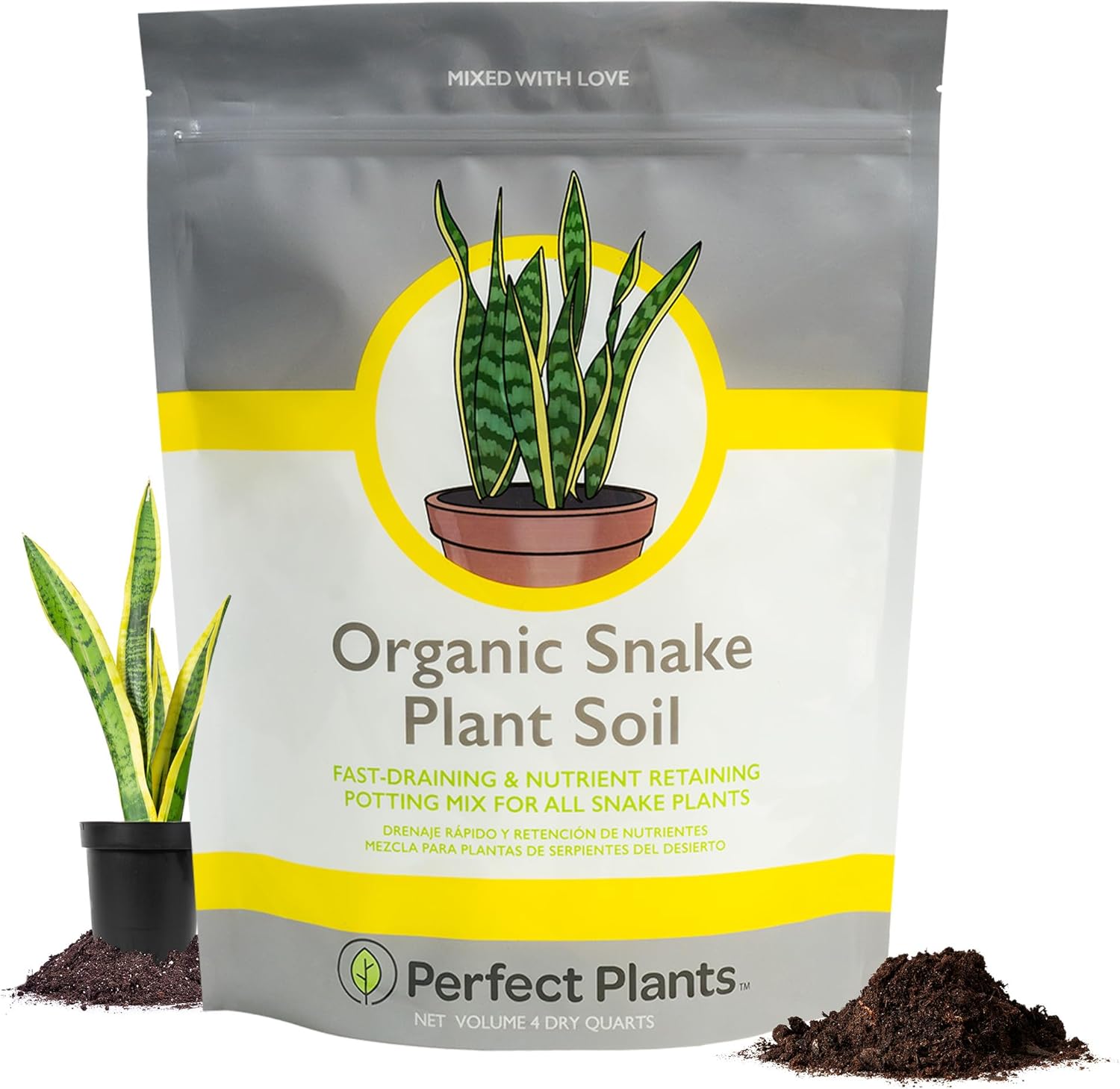
| Volume | 4 quarts |
|---|---|
| Item Highlight | All-natural pine bark, perlite and sand blend for Sansevieria varieties |
| Unit Count | 1 Count |
This 4 quart Perfect Plants mix is made specifically for snake plants, combining coconut coir, pine bark, perlite and sand to give a light, chunky medium that drains quickly and resists waterlogging. You would use it for repotting mature snake plants or refreshing the top few inches in containers; the coarse components help air reach roots and reduce root rot risk compared with straight potting soil. The bag is resealable and made in the USA, which makes storage and multiple uses convenient. Notably the formula contains no slow-release fertilizer, so growers who want an all-in-one repotting solution should plan to fertilize separately. The texture is ideal for both indoor pots and outdoor containers where fast drainage is needed, but because the mix is tailored to Sansevieria it may be less suitable if you need a moisture-retentive or nutrient-rich all-purpose soil. For buyers who prioritize a reliably draining substrate for snake plants, this product delivers a consistent, purpose-built option backed by many positive user reviews.
Best for: Buyers who want a purpose-made, fast-draining potting mix for repotting snake plants and who prefer a product with many positive user experiences to lean on.
Less Ideal for: Gardeners who need a moisture-retentive or nutrient-rich all-purpose potting soil or those repotting many large plants who require bulk quantities.
- Blend of coconut coir, pine bark, perlite and sand provides fast drainage and good aeration
- Resealable bag format lets you store leftover mix without mess
- Formulated specifically for snake plant varieties, reducing risk of overwatering damage
- No added slow-release fertilizer so you must provide nutrients separately
- Small 4 quart volume may not be enough for multiple or large repots
Verdict: Choose this mix when you want a reliably draining, snake-plant–specific potting medium that protects roots from overwatering.
Back to the Roots Organic Succulent & Cacti Soil, 6 Quart

| Volume | 6 quarts |
|---|---|
| Item Highlight | Fast-draining cactus and succulent soil; peat-free; made in the USA |
| Ingredients | Dolomitic Limestone, Perlite, Horticultural Sand, Aged Bark, Plant Food |
This 6-quart succulent and cacti mix from Back to the Roots is a ready-made soil aimed at plants that need fast drainage and good aeration. It combines aged bark, perlite, horticultural sand and dolomitic limestone to create a gritty, well-structured medium that helps prevent waterlogging and root rot. You would use it as a potting medium when repotting snake plants, aloe, jade, or any desert-adapted houseplants where quick drainage is important. The formula is organic and enriched with plant food, so it gives a helpful nutrient boost at planting while still leaving room for supplemental fertilizer later. Practical benefits include easier watering routines for less experienced growers and a lower risk of overwatering issues. Limitations are the small 6-quart volume, which means buying multiple bags for larger pots or multiple plants, and the mix may dry faster than all-purpose potting soils so you will need to adjust watering frequency for thicker-leaved plants like snake plants.
Best for: Buyers who prefer a ready-made, low-risk soil that simplifies care for water-sensitive houseplants and want an organic, fast-draining medium with predictable performance.
Less Ideal for: Gardeners who need a bulk supply for many or very large pots or who prefer a heavier, moisture-retentive mix for consistently damp conditions.
- Fast-draining blend with perlite and horticultural sand to reduce risk of root rot
- Aged bark improves aeration and root development
- Peat-free organic formula with added plant food for initial nutrient support
- Made in the USA with ingredients listed for safer handling
- Small 6-quart bag may be insufficient for repotting multiple or large snake plants
- Dries out quicker than general potting mixes, requiring more frequent monitoring
Verdict: Choose this soil when you want a reliable, organic fast-draining mix that reduces overwatering risk for snake plants and other succulents.
Choosing the Right Snake Plant Soil: Key Factors to Consider
Drainage and Particle Size
Snake plants do best in mixes that shed excess water quickly. Larger particles such as coarse sand, perlite, pumice, or grit create channels that let water pass and air move around roots. A mix dominated by fine peat or compacted compost will hold too much moisture and increase the risk of root rot.
Consider the particle size distribution when choosing soil. A balance of chunky inorganic material and finely textured organic matter helps you control watering frequency and reduces the chance of waterlogging in common indoor pots.
Aeration and Root Structure
These plants develop thick rhizomes that need air as well as moisture. A tightly packed mix restricts rhizome expansion and slows new shoot growth. Good aeration comes from coarse components and an open structure that resists compaction over time.
Long-term potting mixes should maintain porosity through repeated wet-dry cycles. Materials like pumice and perlite keep the mix light, while fibers from coconut coir or bark help preserve voids for roots to explore.
Moisture Retention Versus Drying Rate
Snake plants prefer a soil that holds enough moisture for occasional watering but dries adequately between sessions. Too-dry mixes force overly frequent irrigation; too-moist mixes trap water. The ideal medium retains a small amount of moisture near organic particles while allowing the bulk to dry.
Match the soil to your watering habits and pot size. Smaller pots dry faster and may need a mix with slightly higher moisture retention, while large planters benefit from faster-draining blends to avoid saturated lower layers.
Nutrient Content and Longevity
Snake plants are not heavy feeders but need steady, low-level nutrients for sustained growth. Organic components provide slow-release fertility, while inert ingredients do not. Look for mixes with stabilized organic matter rather than freshly composted materials that can heat, compact, or leach nutrients unpredictably.
Consider whether you want a ready-to-use enriched mix or a leaner planting medium you will fertilize periodically. Longevity matters if you plan to keep plants in the same pot for multiple seasons without repotting.
pH and Chemical Suitability
Snake plants prefer a slightly acidic to neutral pH. Extremely alkaline or acidic substrates can inhibit nutrient uptake and stunt growth. Check that the mix falls in a neutral to mildly acidic range or can be adjusted with common amendments.
Avoid soils pretreated with high-salt fertilizers or fungicides that could harm sensitive roots. When in doubt, rinse unfamiliar potting media and monitor plant response after repotting.
Container Size and Repotting Frequency
Soil choice should match how often you repot and the container type. Smaller pots heat and dry faster, so mixes that retain a touch more moisture work better. If you repot infrequently, choose a stable medium that resists compaction and supports slow root growth between changes.
Also consider weight for hanging planters or elevated stands. Adding heavier aggregates improves stability but changes how quickly the soil dries, so balance container weight, drainage, and plant stability when selecting a soil.
When to Use a Fast-Draining Mix
Fast-draining mixes are ideal when you have a busy watering schedule or low light that slows evaporation. These blends reduce the risk of root rot and are particularly useful for taller pots where water can pool at the bottom.
If you keep snake plants in compact indoor spaces or rotate plants infrequently, choose a mix with a higher proportion of inorganic material to ensure the root zone stays aerated between waterings.
- Best for low-light rooms and infrequent watering
- Helps root systems stay healthy in deep pots
- Pairs well with terracotta or unglazed containers that wick moisture
When to Use a Moisture-Balanced Mix
A balanced mix suits most indoor growers who water on a predictable schedule and want moderate nutrition without heavy feeding. These blends include organic matter for nutrient supply but maintain enough grit for drainage.
Balanced mixes are the safest all-purpose choice for new snake plant owners because they reduce the chance of dramatic moisture swings while still supporting gradual growth.
- Good for small to medium pots
- Works across a range of light levels
- Requires standard fertilization every few months
DIY Mix Recipes and Simple Adjustments
You can tailor store-bought potting soil by adding perlite, pumice, coarse sand, or bark to improve drainage. For a basic DIY approach, blend 1 part quality potting mix with 1 part coarse inorganic material and 1 part coconut coir or aged compost for structure.
Adjust ratios depending on pot size and humidity. Increase inorganic content in large pots or humid rooms. For small pots or drier climates, keep a higher portion of organic matter so the soil does not dry out too quickly.
- 1:1:1 mix as a starting point
- Add more pumice or grit for faster drying
- Use coir instead of peat for better long-term structure
Repotting Tips and Soil Preparation
When repotting, gently tease roots and remove obviously dead material before placing the plant into fresh soil. Position the rhizome slightly above the soil line to avoid trapping moisture against the crown.
Water lightly after repotting to settle the mix, then allow the soil to dry more than usual before the next watering. This helps roots reestablish without staying waterlogged.
- Avoid packing soil tightly around roots
- Ensure pots have functioning drainage holes
- Let fresh potting mixes rest briefly if heavily amended
Managing Watering and Fertilizer with New Soil
New soil changes how quickly a pot dries. Track the first few watering cycles after repotting so you can adjust frequency. Use finger tests or a moisture meter rather than a fixed schedule.
Fertilize lightly during the growing season if the chosen mix is lean. For richer mixes, delay feeding until you observe steady new growth to avoid nutrient burn.
- Reduce watering after repotting for the first two weeks
- Fertilize sparingly in spring and summer
- Flush salts from containers occasionally if fertilizer is used
How We Chose the Best Snake Plant Soil
We selected soils that suit the specific needs of snake plants in container culture and small indoor gardens. Our evaluation focused on concrete, gardener-visible properties: particle size and drainage, organic content and nutrient availability, moisture retention balance, pH suitability for snake plants, and ease of repotting or mixing. We looked for mixes that combine inorganic grit with stable organic components to prevent compaction while supplying slow-release nutrients. We excluded any potting media formulated primarily for cacti that lack sufficient organic content, and we did not include mixes meant only for outdoor beds or propagation plugs. Products that required significant DIY alteration before being safe for snake plants were also filtered out. The final list emphasizes ready-to-use mixes and straightforward blends that perform in typical indoor conditions.
FAQ
Can I use regular indoor potting soil for a snake plant?
Often you can, but many standard potting soils are too fine and hold excess water. If you use a regular potting mix, amend it with perlite, pumice, or coarse sand to improve drainage and aeration.
How often should I water snake plants in a well-draining mix?
Watering frequency depends on pot size, light, and season. In a well-draining mix, you will typically water less often-allow the top few centimeters to dry between waterings and reduce frequency in lower light or winter months.
Is peat or coir better for snake plant soil?
Coconut coir provides similar moisture retention to peat but resists compaction and is more sustainable. Both work when balanced with inorganic material, but coir often offers better long-term structure in pots.
Do snake plants need fertilizer in their potting mix?
They only need light feeding. A potting mix with modest, slow-release nutrients is sufficient for several months. For leaner mixes, apply a diluted houseplant fertilizer during the active growing season.
How can I tell if my soil is compacting and harming roots?
Signs include slow drainage, soil that feels hard when dry, poor new growth, and yellowing leaves without other stressors. Repot into a fresher, chunkier mix if compaction is visible.
Final Verdict
Choose a soil that matches how you keep and water your snake plant. Faster-draining, chunky mixes reduce root-rot risk and suit larger pots or humid rooms. Balanced mixes with stable organic matter are a safe, flexible choice for most indoor settings. Prioritize drainage, aeration, and a modest nutrient supply when selecting potting media. Match the soil to container size and watering routine so you can focus on light and overall plant care rather than frequent rescue repotting.
