

Note: This article contains affiliate links. If you click on these links and make a purchase, I may earn a small commission at no extra cost to you. This helps support my research and content. Read my full affiliate disclosure here.
If you manage multiple yards, a large property, or a commercial turf area, a tow lawn dethatcher can save hours of backbreaking work while improving turf health. Choosing the right tow-mounted dethatcher matters because different units vary in tine aggressiveness, attachment options, and how they handle varying turf types and soil conditions. This guide shortlists seven top-rated tow lawn dethatchers that suit larger lawns and light commercial use. We evaluated ease of hookup, tine design and adjustability, build durability, and how well each unit removes thatch without damaging crowns or roots. Read on to match a dethatcher to your mowing rig and lawn needs before you move on to the product summaries below.
Top Picks at a Glance
| Best Overall The best all-around choice for most situations | Brinly DT2-40BH Premium Tow-Behind Dethatcher, 40" | 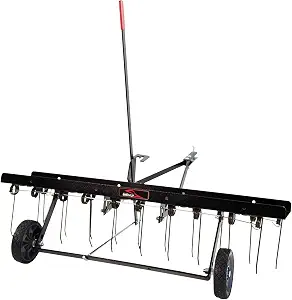 |
| Best Quality Built to a higher standard if you want something more solid | Agri-Fab 48-Inch Tow-Behind Lawn Dethatcher with 24 Spring Steel Tines |  |
| Best Value The sweet spot between price and what you get | Suchtale 40-inch Tow-Behind Lawn Dethatcher with 20 Spring Tines |  |
| Best Budget The cheapest option that still gets the job done reliably | FTOPBTB 40-Inch Tow Lawn Dethatcher with 20 Heat-Treated Replaceable Tines |  |
| Highest Rated A top-rated pick with lots of positive feedback | EAGWON 40-Inch Tow-Behind Lawn Dethatcher with 20 Spring Steel Tines |  |
| Most Popular A crowd favorite that many people choose with confidence | Agri-Fab 45-0294 40-inch Tow-Behind Lawn Dethatcher | |
| Best Seller A high-volume bestseller chosen again and again | Brinly 48" Tow-Behind Lawn Dethatcher |  |
Brinly DT2-40BH Premium Tow-Behind Dethatcher, 40"

| Working width | 40" |
|---|---|
| Tine construction | Triple-coil 3/16" spring steel (20 tines) |
| Weight tray capacity | Holds up to 70 lbs. |
| Transport wheels | 6" never-flat wheels |
The Brinly DT2-40BH is a performance-focused tow-behind dethatcher designed to remove thatch and scarify turf on small to medium lawns. It uses two rows of 20 triple-coil 3/16" spring-steel tines that flex to comb out built-up organic material and can be set for either gentler dethatching or a more aggressive scarifying action useful before reseeding. The 40" working width covers a lot of ground per pass and the heavy-duty weight tray accepts up to 70 pounds of ballast when you need more tine penetration. Transport wheels engage from the driver seat for crossing driveways and the universal hitch and adjustable drawbar make hookup to most riders, ZTRs, and ATVs straightforward. Tines come preassembled which reduces setup time and a safety rod helps prevent broken tines from contacting mower blades. Expect solid, tractor-style performance, though it is a specialized attachment so maneuvering in very tight beds or around delicate plantings will be limited compared with handheld tools.
Best for: Gardeners and property owners who prioritize fast, effective dethatching and want a tow-behind attachment that delivers deeper penetration and professional-style results across small to medium lawns.
Less Ideal for: Those with very small yards, heavily planted ornamental beds, or users who need a portability-first handheld tool rather than a tractor-mounted implement.
- Wide 40" working width speeds up dethatching on medium lawns
- Dual rows of durable triple-coil spring-steel tines for consistent thatch removal
- Heavy-duty weight tray holds up to 70 lbs. for deeper scarification when needed
- Universal hitch and adjustable drawbar fit most rider tractors, ZTRs, and ATVs
- Transport wheels engage from the driver seat for safe crossings
- Not suited for very tight or intricately landscaped areas where a handheld dethatcher is required
- Requires a tow vehicle which adds storage and compatibility considerations
Verdict: Choose the Brinly DT2-40BH if you want a tow-behind dethatcher that clears thatch quickly and can be weighted for aggressive scarifying and reseeding prep.
Agri-Fab 48-Inch Tow-Behind Lawn Dethatcher with 24 Spring Steel Tines

| Head Size | 48 inches |
|---|---|
| Included Components | Agri-Fab 45-0295 48-Inch Tine Tow Dethatcher |
| Handle Material | Metal, Rubber |
| Head Material | Alloy Steel |
| Manufacturer Warranty Description | 3 Year Limited Warranty |
The Agri-Fab 48-inch tow-behind dethatcher is built to strip away dead, matted grass and loosen compacted soil on medium to large residential lawns. You tow it behind a lawn or garden tractor using the universal hitch, lower the spring-loaded tines with the cantilever transport handle, and make passes to pull up thatch while the flat-free wheels maintain consistent depth. The unit’s 24 heat-treated, rust-resistant spring tines are replaceable and the integrated 70 lb weight tray lets you increase tine penetration for tougher turf. Its wide 48-inch head covers more area per pass, which saves time on larger properties, and the heavy-gauge deck and steel construction feel sturdy for seasonal use. Expect some setup and occasional tine replacement if you use it frequently, and it requires a compatible tractor to operate so it is not a walk-behind option. For homeowners who want a durable, tractor-mounted tool that simplifies seasonal dethatching, this model balances coverage and durability well.
Best for: Homeowners with a lawn tractor who want a reliable, easy-to-use dethatcher for seasonal maintenance and efficient coverage of medium to large yards.
Less Ideal for: People with small lawns who do not own a tractor or who need a lightweight walk-behind dethatcher should consider other options.
- Wide 48-inch working width covers large areas faster
- 24 heat-treated, rust-proof spring tines that are replaceable
- Universal hitch fits most lawn and garden tractors for easy hookup
- Cantilever transport handle allows simple raising and lowering of tines
- Requires a tow vehicle such as a lawn tractor so not suitable for homeowners without one
- Some assembly and occasional tine replacements are needed with regular use
Verdict: If you have a lawn tractor and need fast, dependable seasonal dethatching across a larger yard, this sturdy 48-inch tow-behind unit gets the job done.
Suchtale 40-inch Tow-Behind Lawn Dethatcher with 20 Spring Tines

| Working width | 40 inch |
|---|---|
| Tines | 20 spring steel tines |
| Frame material | All-steel |
| Ballast platform | 70 lb |
| Hitch type | Pin-style tow hitch |
This tow-behind dethatcher is built for routine lawn maintenance on medium to large yards. It attaches to riding mowers or ATVs via a pin-style hitch and rolls on bearing-supported wheels while 20 heat-treated, triple-coil spring steel tines flex to pull up matted grass and surface debris. The steel frame, reinforced side plates and solid axle aim to resist bending during towing, and a 70 lb ballast platform lets you add downward force when the tines need more soil contact. A transport handle raises and lowers the tine tray for easy switching between work and storage. Practical benefits include a wide 40-inch working width that reduces passes, replaceable rust-resistant tines, and a heavier build than many consumer models for better stability under load. Limitations are that it requires a compatible tow vehicle and some assembly and ballast management, and the relatively heavy construction makes it less convenient to lift by hand for storage or mounting in tight spaces.
Best for: Buyers who want a durable, no-frills tow-behind dethatcher to speed up regular dethatching on medium to large lawns and who prioritize reliable construction over ultra-lightweight gear.
Less Ideal for: Small-plot gardeners who only use push tools or homeowners without a tow-capable mower should consider hand rakes or compact dethatchers instead.
- 40-inch working width covers ground quickly to reduce passes
- 20 heat-treated spring steel tines that flex and are replaceable
- Reinforced all-steel frame with solid axle and bearing-supported wheels for stable towing
- 70 lb ballast platform increases tine penetration when needed
- Requires a compatible riding mower or ATV hitch to use
- Heavy construction can be awkward to handle for one person during installation or storage
Verdict: A sturdy, wide tow-behind dethatcher that speeds up regular lawn maintenance with durable spring tines and a reinforced steel frame.
FTOPBTB 40-Inch Tow Lawn Dethatcher with 20 Heat-Treated Replaceable Tines

| Power Source | Manual |
|---|---|
| Cutting width | 40 inches |
| Number of Positions | 1 |
| Material Type | Alloy Steel |
This 40-inch tow dethatcher is built for routine lawn maintenance with a simple, durable design that hooks to a riding mower or lawn tractor. It uses 20 rust-resistant, heat-treated tines to pull up thatch while a 40-inch tray accepts material and can be weighted to increase tine depth. The frame is alloy steel and the tines are replaceable, so worn parts can be swapped without replacing the whole unit. Assembly is straightforward and operation is manual, so it requires a tractor to move and no power source. Practical benefits include effective thatch removal across medium to large lawns and long-term usability thanks to replaceable tines and robust materials. Limitations are that it is not self-powered and has only a single adjustment position listed, so fine-tuning depth on varying turf types may need manual weighting or multiple passes. Wheels are modest size, so rough terrain could reduce stability compared with heavier-duty commercial attachments.
Best for: Gardeners who prioritize a dependable, repairable dethatcher for seasonal lawn care and who already own a riding mower or lawn tractor to tow it.
Less Ideal for: Homeowners without a tractor or those needing fine, tool-free depth adjustment or heavy-duty commercial-grade attachments should look elsewhere.
- 20 heat-treated, rust-resistant tines for durable thatch removal
- Replaceable tines extend the service life and simplify maintenance
- Alloy steel frame provides sturdy construction for regular use
- Tow-behind design attaches to riding mowers and lawn tractors for easy coverage of larger lawns
- Manual operation with a single listed adjustment position limits precise depth control
- Smaller 7-inch wheels and lighter construction may struggle on very uneven terrain
Verdict: A straightforward, repairable tow-behind dethatcher that gives reliable seasonal thatch removal for owners of riding mowers and lawn tractors.
EAGWON 40-Inch Tow-Behind Lawn Dethatcher with 20 Spring Steel Tines

| Head Size | 40 inches |
|---|---|
| Handle Material | Alloy Steel |
| Head Material | Alloy Steel |
The EAGWON 40-inch tow-behind dethatcher is built to clear thatch and light debris across medium to large lawns while attaching directly to most ATVs and lawn tractors. Its 20 spring steel tines penetrate the turf to lift compacted thatch and the wide 40-inch head covers ground quickly, while the optional rake mode helps collect leaves and clippings so you can finish two tasks in one pass. A lift handle allows on-the-fly tine-height adjustment to match turf conditions and reduce scalping. Construction uses alloy steel for both head and handle, which gives a sturdy, serviceable feel expected for regular seasonal use. Limitations include a basic hitch setup with no motorized drive and no detailed assembly or durability extras in the listing, so long-term performance depends on care and correct towing speed. For property owners who want a simple, heavy-metal tow attachment to maintain lawn health and reduce manual raking, this is a practical, no-frills choice.
Best for: Buyers who prioritize a dependable, heavy-duty tow attachment to maintain lawn health across medium to large properties and who prefer straightforward mechanical tools over complex powered systems.
Less Ideal for: Those who need a motorized dethatcher, very fine control for small ornamental lawns, or a plug-and-play unit with detailed warranty and accessory kit included.
- 40-inch working width covers ground efficiently for medium to large lawns
- Twenty spring steel tines that penetrate and lift thatch for improved turf airflow
- Alloy steel head and handle offer solid, durable construction
- Dual-function design doubles as a rake to collect leaves and grass clippings
- Lift handle lets you adjust tine height without tools for different turf conditions
- No powered drive or leveling system so effectiveness depends on correct tow speed and multiple passes in heavy thatch
- Listing provides limited detail on included hitch hardware and long-term durability features
Verdict: A robust, no-frills tow-behind dethatcher that reliably clears thatch and light debris for homeowners who want durable, mechanical lawn maintenance.
Agri-Fab 45-0294 40-inch Tow-Behind Lawn Dethatcher
| Included Components | Tine Tow Dethatcher |
|---|---|
| Material Type | Alloy Steel |
| Power Source | Corded Electric |
| Operation Mode | Manual |
The Agri-Fab 45-0294 is a simple tow-behind dethatcher built to clear dead grass and loosen compacted soil across a 40-inch width. It mounts to a lawn or garden tractor and uses twenty heat-treated 3/16-inch spring tines attached to a heavy steel tray to pull up thatch and improve aeration and water penetration. The tines are replaceable and described as rustproof, and height is adjusted from the tractor seat via a long upright lever that raises and lowers the tine assembly. Semi-pneumatic 7-inch wheels help it roll over uneven turf without needing constant attention. Assembly is required but reportedly tool-free, and the unit is intended for periodic use in spring, mid-summer, and fall. This is a mechanically straightforward machine that focuses on durability and ease of use rather than power features. It is best for homeowners who already own a tow-capable tractor and want a low-tech, reliable way to maintain lawn health; it is not a powered dethatching machine and will be limited by the tractor's pulling power and the tine depth selected.
Best for: Homeowners with a lawn or garden tractor who want a rugged, low-maintenance dethatching attachment to improve turf health on medium to large lawns and value proven, well-built equipment.
Less Ideal for: People without a tow vehicle or those who need a powered, high-impact dethatcher for very heavy industrial or commercial turf applications should look elsewhere.
- 40-inch working width covers large swaths quickly when towed
- Twenty heat-treated spring steel tines are replaceable and designed for durability
- Simple lever control allows raising and lowering from the tractor seat
- Semi-pneumatic 7-inch wheels traverse uneven terrain with reduced bouncing
- Requires a tow-capable lawn or garden tractor to operate
- Manual, non-powered design limits performance in very dense thatch or heavy compacted soil
Verdict: If you already own a tow-capable tractor and need a durable, no-frills dethatcher to maintain lawn health across mid-size to large yards, this Agri-Fab unit delivers reliable, easy-to-use performance.
Brinly 48" Tow-Behind Lawn Dethatcher

| Working width | 48 inches |
|---|---|
| Tines | 24 triple‑coil spring steel tines |
| Frame | 14 gauge steel |
The Brinly 48" tow‑behind dethatcher is built for covering large yards quickly by combing through turf with two rows of 24 triple‑coil spring steel tines. It mounts to a garden tractor or lawn tractor via an adjustable drawbar and operates as you tow it across the lawn, pulling up dead grass and roots and leaving the thatch on the surface for mulching or collection. Notable features include a wide 48 inch working width that reduces passes, in‑line transport wheels that help the tray follow lawn contours, and a 14 gauge steel frame for durability. In practice it speeds up dethatching compared with hand raking and is suited to regular seasonal use in spring or early fall. Expect straightforward hookup and minimal maintenance, although it is an attachment that requires a compatible tractor hitch and some storage space. The unit is optimized for performance on larger properties and for users who prefer a durable, mechanical approach to thatch control rather than manual labor.
Best for: Owners of lawn or garden tractors with medium to large lawns who prioritize fast, mechanical dethatching and durable, low‑maintenance attachments.
Less Ideal for: People with small yards, no tractor hitch, or those who prefer lightweight, handheld dethatching tools should look elsewhere.
- 48 inch working width covers large areas quickly, reducing passes
- Twenty‑four triple‑coil 3/16" spring steel tines for effective thatch removal
- 14 gauge all‑steel frame designed for long‑term durability
- Inline transport wheels level the tray and minimize attachment footprint
- Requires a compatible lawn or garden tractor hitch so not suitable for walk‑behind mowers
- Relatively large footprint needs storage space when not in use
Verdict: Choose this dethatcher if you want a rugged, tractor‑mounted tool that clears large swaths of thatch quickly and reliably.
Choosing the Right Tow Lawn Dethatcher: Key Factors to Consider
Tine Type and Spacing
Tine type and spacing determine how aggressively thatch is lifted and how much soil and roots are disturbed. Stiffer, thicker tines cut deeper and remove more compacted organic debris, which can be useful on heavily thatched lawns but increases the risk of scalping or root damage if set too deep.
Wider tine spacing tends to be gentler and good for routine light dethatching, whereas closely spaced tines offer more thorough removal for neglected turf. Consider seasonal timing and set tines shallow for spring or when grass is actively growing to reduce stress. Removable or replaceable tines give flexibility to change aggressiveness over time without replacing the whole unit.
Depth Control and Adjustment Mechanisms
Precise depth control matters because small differences in tine penetration separate effective thatch removal from damaging the crown. Look for simple, reliable adjustment systems that allow incremental changes and can be locked for consistent pass-to-pass performance.
Mechanisms that permit on-the-fly adjustments or easy lifting for transport reduce the need to stop and reconfigure between passes. Gauge wheels, ratchet-style lifts, or mechanical turnbuckles each have pros and cons for durability and ease of use. The best choices balance fine control with rugged parts that tolerate grit and moisture in field conditions.
Hitch Compatibility and Ease of Hookup
Tow dethatchers are meant to attach to a variety of tractors and riding mowers, so hitch geometry and mounting options are critical. A unit that adapts to both ball hitches and pin connections covers more equipment without modification.
Low-clearance designs and adjustable tongue lengths help maintain correct operating angle for different towing rigs. Quick-connect features save time when switching implements. Confirm the required towing capacity and match the dethatcher to the tractor's drawbar height to avoid improper tine contact or uneven working depth.
Frame Strength and Corrosion Resistance
Tow dethatchers see repeated shock loads as tines hit rocks, roots, and compacted soil. A robust frame with reinforced welds, boxed tubing, and quality fasteners resists bending and keeps tine alignment consistent. Thinner materials can flex and change working depth under load, making results uneven.
Because these tools spend time outdoors, protective finishes, galvanizing, or powder coatings slow rust and extend service life. Pay attention to the construction around pivot points and axle mounts where wear concentrates. Heavier frames add weight for better tine penetration but make transport and storage heavier.
Transport, Storage, and Footprint
Consider how you will move and store the dethatcher between jobs. Units that fold or lift into a compact transport position reduce garage space needs and improve road clearance. A wide transport stance may require more storage width but can be more stable on slopes.
The overall footprint during operation matters for maneuvering around obstacles and tight beds. Smaller working widths speed up maneuvering in residential yards but increase passes on large properties. Balance working width with your storage constraints and the size of the areas you maintain.
Serviceability and Spare Parts
Regular replacement of tines, bearings, and wear plates is normal for tow dethatchers. Designs that offer accessible mounting points, common fastener sizes, and standard replacement parts reduce downtime and maintenance headaches.
Check whether tines can be removed without cutting or welding and whether bearings and wheels use sealed units for lower upkeep. Readily available replacement parts and straightforward adjustment procedures keep the tool in service longer and lower long-term operating burden.
When to Dethatch Using a Tow Unit
Tow dethatchers are best for large lawns or turf areas where walk-behind tools are inefficient. The ideal timing depends on grass type: cool-season grasses often respond best to dethatching in early fall or early spring, while warm-season grasses tolerate late spring to early summer work when actively growing.
Perform dethatching when soil moisture is moderate. Too dry and tines will tear rather than lift thatch; too wet and the machine can smear soil and compact crowns. Make a pass after mowing to a normal height and test settings in a small patch to gauge aggressiveness before treating the whole lawn.
- Check turf recovery forecasts and pick a time with several weeks of growth expected
- Avoid dethatching before drought or extreme heat spells
- Run a short test pass to verify depth and tine effect
Preparing the Lawn Before Tow Dethatching
Mow the lawn to its regular height and remove excess debris so tines can engage evenly. If the lawn has heavy surface debris like sticks or stones, rake or blow those away to protect tines and bearings. Mark sprinkler heads and shallow irrigation lines so towing paths avoid them.
Outline the area to be treated and note slope changes. Work downhill on steep terrain where possible and avoid sudden turns at full working depth to reduce stress on the frame and tines.
- Mow and remove clippings if dense
- Mark obstacles and irrigations
- Check and adjust the dethatcher on a small test area
Aftercare: Helping Turf Recover
After dethatching, the lawn will look rough and may have visible patches where thatch was removed. Lightly rake to remove detached material or use a blower to collect debris. Overseeding thin areas and applying a balanced fertilizer can speed recovery, but only if the seedbed is prepared and moisture can be maintained.
Water management is important after dethatching. Keep the soil surface consistently moist but not waterlogged to encourage seed germination and root recovery. Avoid heavy foot traffic until grass has reestablished a strong root system.
- Collect loosened thatch to prevent smothering new growth
- Consider overseeding directly after cleaning up debris
- Maintain consistent, light irrigation for several weeks
Safety and Tractor Considerations
Ensure your towing vehicle has adequate drawbar capacity and that weight distribution keeps the front end stable. Tow dethatchers shift load and can affect steering response when raised or lowered. Use appropriate hitch pins, safety chains, and confirm the rake is locked in the transport position before road travel.
Wear eye protection and maintain a safe distance from rotating tines. Inspect for loose bolts, damaged tines, and worn bearings before each use. Be cautious on slopes and avoid abrupt steering inputs when the dethatcher is engaged.
- Match dethatcher tongue height to tractor drawbar
- Lock the unit for transport and use safety chains
- Inspect and tighten fasteners before each season
Working Widths and Efficiency Tradeoffs
Tow dethatchers come in a range of working widths. Wider units cover ground faster but require more tractor power to pull and make turning in tight yards harder. Narrower units are more maneuverable around landscaping features and storage-friendly but increase total pass count on large areas.
Choose a working width that balances how quickly you want to complete the job with the physical constraints of your property and the pulling capacity of your tractor. Remember that added width increases frame stress and the need for robust construction.
- Estimate average yard width and compare with working width to gauge time savings
- On irregular properties, a moderate width often reduces rework
- Ensure tractor power rises with working width to maintain consistent tine engagement
How We Chose the Best Tow Lawn Dethatcher
We focused on features and performance dimensions that matter for towing dethatchers on larger lawns. Evaluation emphasized tine design and adjustability because the aggressiveness and spacing of tines directly control how much thatch is lifted versus how much root and crown disturbance occurs. Attachment compatibility and hitch options were weighed to ensure units fit common lawn tractors and compact utility tractors. Durability checks looked at frame construction, tine mounting, and corrosion resistance since tow tools face repeated stress and outdoor storage. Ease of depth control and on-the-fly adjustment were included so operators can match settings to seasonal conditions and turf type. Finally, maintenance access and spare part availability were considered because routine replacement of tines and bearings affects long-term ownership cost and downtime. We excluded handheld and walk-behind dethatchers, small utility scarifiers, and powered tow units that require specialized chassis beyond typical garden tractors. Our shortlist includes only tow-mounted mechanical dethatchers suited to homeowners with larger properties or contractors using standard tow hitches. The listed criteria align with scoring metrics focused on deployability, turf safety, and serviceability.
FAQ
How deep should I set a tow dethatcher for typical lawns?
Set the tines shallow for routine maintenance so they lift thatch without cutting into crowns. On heavier thatch buildup you can increase depth slightly, but always test in a small area first. The goal is to remove the thatch layer, not to gouge soil.
Can I tow a dethatcher with a compact lawn tractor?
Often yes, if the dethatcher is rated for light towing and your tractor has adequate drawbar strength. Check hitch compatibility and the recommended towing capacity. Smaller tractors may require narrower units and gentler tine settings to avoid strain.
How often should I dethatch with a tow unit?
Most lawns benefit from dethatching every one to three years depending on grass type and maintenance practices. Excessive dethatching can stress turf, so monitor thatch depth and only treat when buildup exceeds a quarter inch to a half inch.
Will dethatching damage my sprinkler system?
It can if heads or shallow lines are struck. Mark sprinkler locations and either lift the dethatcher when crossing them or avoid those zones. Maintaining correct tow height and using test passes reduces the risk of striking irrigation components.
What maintenance does a tow dethatcher need?
Routine checks include tightening fasteners, inspecting and replacing worn tines, greasing pivot points if applicable, and checking wheels and bearings. Store the unit dry and touch up coatings where paint has been scratched to minimize corrosion.
Should I overseed immediately after dethatching?
Often overseeding soon after dethatching is beneficial because the seed can make contact with loosened soil and thatch openings. Clear loose debris first and keep the area consistently moist to encourage germination. Timing depends on grass type and local climate.
Final Verdict
For larger lawns and light commercial turf areas, choose a tow lawn dethatcher that matches your tractor's hitch and pulling capacity while offering adjustable tine aggressiveness. Prioritize units with reliable depth control, robust frames, and easy access to replacement tines to minimize downtime. Balance working width against maneuverability and storage needs, and plan dethatching during active growth windows so turf recovers quickly. By matching equipment features to your property size and turf conditions, you can restore lawn health efficiently while limiting stress to grass crowns and roots.
