

Note: This article contains affiliate links. If you click on these links and make a purchase, I may earn a small commission at no extra cost to you. This helps support my research and content. Read my full affiliate disclosure here.
If you manage large turf areas, sports fields, or a groundskeeping contract, choosing the right commercial lawn dethatcher has a direct effect on turf health and maintenance efficiency. A good commercial dethatcher removes old grass stems and organic buildup without excessive turf damage, so you get faster recovery and better air, water, and nutrient penetration. This guide covers seven shortlisted commercial lawn dethatchers that suit heavy-duty, frequent-use jobs. We evaluated machines on durability, dethatching efficiency, depth control, and serviceability to help you pick the right tool for your property and workload. Read on for what mattered in selection and practical guidance for matching a machine to your turf conditions.
Top Picks at a Glance
| Best Overall The best all-around choice for most situations | Brinly 42" Tow-Behind Combo Lawn Sweeper and Dethatcher |  |
| Best Quality Built to a higher standard if you want something more solid | Brinly 48" Tow-Behind Lawn Dethatcher |  |
| Best Value The sweet spot between price and what you get | BlumeTrec 48-Inch Tow-Behind Lawn Dethatcher with 24 Spring Steel Tines |  |
| Best Budget The cheapest option that still gets the job done reliably | Vlaeng 40" Tow-Behind Dethatcher with 20 Rust-Resistant Tines |  |
| Highest Rated A top-rated pick with lots of positive feedback | EAGWON 40-Inch Tow-Behind Lawn Dethatcher with 20 Spring Steel Tines |  |
| Most Popular A crowd favorite that many people choose with confidence | Agri-Fab 45-0294 40-inch Tow-Behind Lawn Dethatcher |  |
| Best Seller A high-volume bestseller chosen again and again | Agri-Fab 48-Inch Tow-Behind Lawn Dethatcher with 24 Spring Steel Tines | |
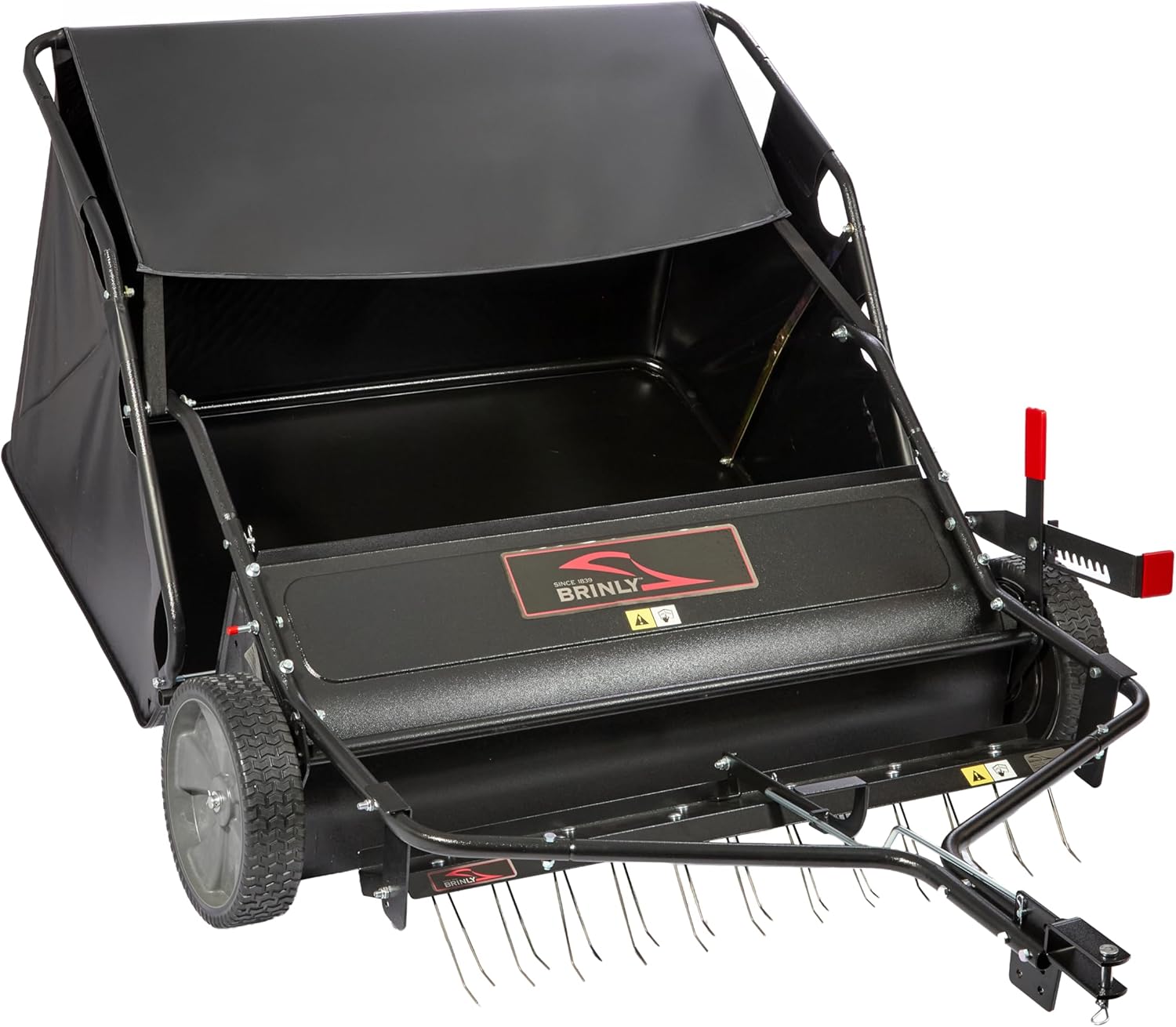
Brinly 42" Tow-Behind Combo Lawn Sweeper and Dethatcher
| Operation Mode | Manual |
|---|---|
| Number of Positions | 10 |
| Material Type | Powder-Coated Steel |
| Cutting width | 42 inches |
The Brinly 42" Tow‑Behind Combo combines a dethatcher and high‑capacity lawn sweeper so you can lift thatch and collect debris in a single pass behind a lawn tractor or ZTR. Dual rows of heat‑treated steel tines dig into the turf to loosen thatch while six high‑velocity brushes feed loosened material into a 20 cu ft fabric hamper. Tool‑free Quick‑Shift tine control and a side‑mounted 10‑position height adjuster let you dial in tine depth for different seasons and turf conditions. A universal rear hitch with a magnetic hitch pin speeds hookup and the powder‑coated steel frame feels robust for repeated use. Practical benefits include fewer passes, less stopping to empty the large hamper, and the option to lock the tines in transport or run sweeper‑only mode. Expect a heavy, workshop‑ready attachment that needs proper tractor lift capacity and storage room; assembly and occasional tine or brush maintenance are normal for this class of equipment. For buyers seeking a durable combination tool to reduce dethatching time, this model is straightforward and effective, though it is larger and heavier than simple push dethatchers.
Best for: Gardeners and small‑property contractors who want to cut dethatching time by combining removal and cleanup in one tractor‑pulled pass and value durability and high capacity.
Less Ideal for: Owners of very small lawns, lightweight garden tractors, or those who need a compact, handheld dethatching solution should consider simpler, lighter tools instead.
- Two‑in‑one design lets you dethatch and collect debris in one pass
- 42" working width and six high‑velocity brushes speed coverage and pickup
- Tool‑free tine height adjustment with 10 locking positions for quick tuning
- Large 20 cu ft hamper reduces frequency of emptying
- Sturdy powder‑coated steel frame and universal hitch for broad tractor compatibility
- Substantial weight requires a capable tractor and space for storage
- Assembly and periodic maintenance of tines and brushes are required
Verdict: If you need a rugged, high‑capacity dethatcher that also sweeps debris in one tractor‑pulled pass, this Brinly 42" combo delivers efficient, heavy‑duty performance.
Brinly 48" Tow-Behind Lawn Dethatcher

| Working width | 48 inches |
|---|---|
| Tines | 24 triple‑coil spring steel tines |
| Frame | 14 gauge steel |
The Brinly 48" tow‑behind dethatcher is built for covering large yards quickly by combing through turf with two rows of 24 triple‑coil spring steel tines. It mounts to a garden tractor or lawn tractor via an adjustable drawbar and operates as you tow it across the lawn, pulling up dead grass and roots and leaving the thatch on the surface for mulching or collection. Notable features include a wide 48 inch working width that reduces passes, in‑line transport wheels that help the tray follow lawn contours, and a 14 gauge steel frame for durability. In practice it speeds up dethatching compared with hand raking and is suited to regular seasonal use in spring or early fall. Expect straightforward hookup and minimal maintenance, although it is an attachment that requires a compatible tractor hitch and some storage space. The unit is optimized for performance on larger properties and for users who prefer a durable, mechanical approach to thatch control rather than manual labor.
Best for: Owners of lawn or garden tractors with medium to large lawns who prioritize fast, mechanical dethatching and durable, low‑maintenance attachments.
Less Ideal for: People with small yards, no tractor hitch, or those who prefer lightweight, handheld dethatching tools should look elsewhere.
- 48 inch working width covers large areas quickly, reducing passes
- Twenty‑four triple‑coil 3/16" spring steel tines for effective thatch removal
- 14 gauge all‑steel frame designed for long‑term durability
- Inline transport wheels level the tray and minimize attachment footprint
- Requires a compatible lawn or garden tractor hitch so not suitable for walk‑behind mowers
- Relatively large footprint needs storage space when not in use
Verdict: Choose this dethatcher if you want a rugged, tractor‑mounted tool that clears large swaths of thatch quickly and reliably.
BlumeTrec 48-Inch Tow-Behind Lawn Dethatcher with 24 Spring Steel Tines

| Head Size | 48 inches |
|---|---|
| Handle Material | Metal |
| Head Material | Carbon Steel |
| Number of Items | 1 |
| Manufacturer | BlumeTrec |
The BlumeTrec 48-inch tow-behind dethatcher is built for large yards where one-pass coverage matters. It connects with a universal pin-style hitch to riding mowers, tractors, ATVs or UTVs and uses two rows of 24 heat-treated spring tines that flex to lift thatch, dead grass, and light debris while letting air and water into the root zone. A heavy-duty carbon steel frame and an integrated ballast tray (holds up to 100 lb) let you increase tine penetration for tougher thatch, and the wheel bearings improve load handling and towing stability. Height adjustment protects tines on hard surfaces and lets you control working depth. Assembly is straightforward and the wide 48-inch head reduces time on large properties. Expect routine maintenance like cleaning soil from the tines and occasional replacement of worn springs, and avoid reversing while operating. This is a practical, work-focused tool rather than a precision landscaper’s implement, but it covers ground efficiently and is robust enough for seasonal dethatching on big lawns.
Best for: Buyers with large lawns who prioritize efficient, time-saving tools and want a durable tow-behind dethatcher that works with existing ride-on equipment.
Less Ideal for: Small-plot gardeners, homeowners without a compatible tow vehicle, or those who need a lightweight handheld dethatching solution should consider alternatives.
- Wide 48-inch working width covers large areas quickly
- 24 heat-treated spring tines that flex to lift thatch without excessive turf damage
- Heavy-duty carbon steel frame with ballast tray for deeper tine penetration
- Universal pin-style hitch fits most riding mowers, tractors, ATVs and UTVs
- Adjustable height lets you protect tines and control working depth
- Not suitable for use while reversing and requires towing vehicle capable of hitching
- May need periodic tine replacement and cleaning after heavy use
- Ballast tray must be manually loaded for maximum penetration
Verdict: A robust tow-behind dethatcher that saves time on large lawns by delivering wide, adjustable coverage and deeper penetration when weighted.
Vlaeng 40" Tow-Behind Dethatcher with 20 Rust-Resistant Tines

| Working width | 40 inches |
|---|---|
| Tines | 20 rust-resistant spring tines |
| Frame material | Alloy steel |
| Weight capacity | 70 lbs |
This Vlaeng tow-behind dethatcher is a straightforward, budget-minded tool for clearing thatch, dead grass, pine needles, and surface debris from medium to large lawns. It hooks to a lawn tractor, ATV, or UTV using a universal connector and covers a 40-inch swath so you can make quick passes across open turf. The unit uses 20 rust-resistant spring tines mounted on a heavy-alloy steel frame, and an adjustable tine height lets you shift between light surface raking and deeper penetration; the tow cart also accepts up to 70 pounds of added weight to increase penetration where needed. Two heavy-duty wheels make transport simple and raising the tines protects driveways and hard surfaces. On the downside assembly and occasional clearing of debris from the steel teeth are required, and the 20-tine setup is less aggressive than larger commercial dethatchers for very heavy thatch. For homeowners who want a low-cost way to maintain lawn health on acres or big yards, this unit delivers practical performance without extra features.
Best for: Homeowners with medium to large yards who want an affordable tow-behind dethatcher to reduce manual raking and improve lawn health without buying professional equipment.
Less Ideal for: Those who need heavy-duty, commercial-grade dethatching or have very small lawns where a push dethatcher or hand rake would be more practical.
- Wide 40-inch working width speeds up treatment of medium to large lawns
- Adjustable tine height and add-weight platform let you control penetration depth
- Rust-resistant spring tines and alloy steel frame improve durability for seasonal use
- Universal tow connector fits lawn tractors, ATVs, and UTVs for flexible use
- Only 20 tines means less aggressive thatch removal compared with larger commercial units
- Requires periodic cleaning of debris from steel teeth and some assembly
Verdict: A cost-conscious tow-behind dethatcher that gives homeowners a simple, adjustable way to remove surface thatch across medium to large lawns.
EAGWON 40-Inch Tow-Behind Lawn Dethatcher with 20 Spring Steel Tines

| Head Size | 40 inches |
|---|---|
| Number of Tines | 20 spring steel tines |
| Handle Material | Alloy Steel |
| Head Material | Alloy Steel |
The EAGWON 40-inch tow-behind dethatcher is built to clear thatch and surface debris across wide swaths by using 20 spring steel tines that penetrate turf and pull up compacted organic material. You tow it behind an ATV or a lawn mower and use the lift handle to set tine depth, which makes it straightforward to switch between light raking and deeper dethatching. The all-alloy steel construction for the head and handle suggests strong durability for repeated commercial or heavy residential use, and the 40-inch head covers ground quickly so large properties are done faster than with hand tools. It also functions as a lawn rake to collect grass clippings and leaves, reducing the need to change implements during a maintenance pass. Expect simple hookup and low-tech operation, but note this is a mechanical tool with fixed spring tines so results depend on proper depth adjustment and multiple passes for very dense thatch. There is no powered drive or adjustable tine pattern, so operators who need finer control over tine aggressiveness may need a different, more adjustable commercial model.
Best for: Maintenance teams or property owners who prioritize a durable, low-complexity tow-behind tool to remove surface thatch quickly across medium to large lawns.
Less Ideal for: Users who need precise, adjustable dethatching settings or a powered commercial dethatcher for heavy, deeply compacted turf.
- 40-inch working width covers ground quickly for large areas
- Twenty spring steel tines penetrate and pull thatch effectively
- Alloy steel head and handle for robust, long-lasting construction
- Compatible with most ATVs and lawn mowers for easy tow-behind use
- No powered or adjustable tine pattern limits fine control over aggressiveness
- Requires multiple passes or depth tuning for very dense or compacted thatch
Verdict: A rugged, wide tow-behind dethatcher that reliably clears surface thatch on large lawns with simple hookup and low-maintenance construction.
Agri-Fab 45-0294 40-inch Tow-Behind Lawn Dethatcher

| Included Components | Tine Tow Dethatcher |
|---|---|
| Material Type | Alloy Steel |
| Power Source | Corded Electric |
| Operation Mode | Manual |
The Agri-Fab 45-0294 is a simple tow-behind dethatcher built to clear dead grass and loosen compacted soil across a 40-inch width. It mounts to a lawn or garden tractor and uses twenty heat-treated 3/16-inch spring tines attached to a heavy steel tray to pull up thatch and improve aeration and water penetration. The tines are replaceable and described as rustproof, and height is adjusted from the tractor seat via a long upright lever that raises and lowers the tine assembly. Semi-pneumatic 7-inch wheels help it roll over uneven turf without needing constant attention. Assembly is required but reportedly tool-free, and the unit is intended for periodic use in spring, mid-summer, and fall. This is a mechanically straightforward machine that focuses on durability and ease of use rather than power features. It is best for homeowners who already own a tow-capable tractor and want a low-tech, reliable way to maintain lawn health; it is not a powered dethatching machine and will be limited by the tractor's pulling power and the tine depth selected.
Best for: Homeowners with a lawn or garden tractor who want a rugged, low-maintenance dethatching attachment to improve turf health on medium to large lawns and value proven, well-built equipment.
Less Ideal for: People without a tow vehicle or those who need a powered, high-impact dethatcher for very heavy industrial or commercial turf applications should look elsewhere.
- 40-inch working width covers large swaths quickly when towed
- Twenty heat-treated spring steel tines are replaceable and designed for durability
- Simple lever control allows raising and lowering from the tractor seat
- Semi-pneumatic 7-inch wheels traverse uneven terrain with reduced bouncing
- Requires a tow-capable lawn or garden tractor to operate
- Manual, non-powered design limits performance in very dense thatch or heavy compacted soil
Verdict: If you already own a tow-capable tractor and need a durable, no-frills dethatcher to maintain lawn health across mid-size to large yards, this Agri-Fab unit delivers reliable, easy-to-use performance.
Agri-Fab 48-Inch Tow-Behind Lawn Dethatcher with 24 Spring Steel Tines
| Head Size | 48 inches |
|---|---|
| Included Components | Agri-Fab 45-0295 48-Inch Tine Tow Dethatcher |
| Handle Material | Metal, Rubber |
| Head Material | Alloy Steel |
| Manufacturer Warranty Description | 3 Year Limited Warranty |
The Agri-Fab 48-inch tow-behind dethatcher is built to strip away dead, matted grass and loosen compacted soil on medium to large residential lawns. You tow it behind a lawn or garden tractor using the universal hitch, lower the spring-loaded tines with the cantilever transport handle, and make passes to pull up thatch while the flat-free wheels maintain consistent depth. The unit’s 24 heat-treated, rust-resistant spring tines are replaceable and the integrated 70 lb weight tray lets you increase tine penetration for tougher turf. Its wide 48-inch head covers more area per pass, which saves time on larger properties, and the heavy-gauge deck and steel construction feel sturdy for seasonal use. Expect some setup and occasional tine replacement if you use it frequently, and it requires a compatible tractor to operate so it is not a walk-behind option. For homeowners who want a durable, tractor-mounted tool that simplifies seasonal dethatching, this model balances coverage and durability well.
Best for: Homeowners with a lawn tractor who want a reliable, easy-to-use dethatcher for seasonal maintenance and efficient coverage of medium to large yards.
Less Ideal for: People with small lawns who do not own a tractor or who need a lightweight walk-behind dethatcher should consider other options.
- Wide 48-inch working width covers large areas faster
- 24 heat-treated, rust-proof spring tines that are replaceable
- Universal hitch fits most lawn and garden tractors for easy hookup
- Cantilever transport handle allows simple raising and lowering of tines
- Requires a tow vehicle such as a lawn tractor so not suitable for homeowners without one
- Some assembly and occasional tine replacements are needed with regular use
Verdict: If you have a lawn tractor and need fast, dependable seasonal dethatching across a larger yard, this sturdy 48-inch tow-behind unit gets the job done.
Choosing the Right Commercial Lawn Dethatcher: Key Factors to Consider
Machine Construction and Frame Strength
Commercial dethatchers face heavy, repetitive loads so the frame and chassis material matter. Look for welded steel frames, reinforced mounting points, and corrosion-resistant finishes because these extend service life in wet, gritty field environments.
A stout construction reduces vibration and prevents parts misalignment that can wear tines and bearings prematurely. Heavier components can also help maintain consistent tine penetration across uneven turf. Consider machines with replaceable wear plates or bolted reinforcements so you can repair high-stress areas without replacing the whole unit.
Tine Type, Quality, and Replacement Options
Tines are the working end of a dethatcher; their shape, steel grade, and mounting method determine cutting action and longevity. Spring tines give a flexible, forgiving action on uneven ground while rigid flail or blade-style tines cut more aggressively. Choose the tine design that matches turf strength and operator tolerance for surface scarring.
Also evaluate how easily tines are changed and whether replacement sets are offered individually or in kits. Hardened steel or heat-treated tines last longer in abrasive soils. Machines that allow mixed tine configurations or staggered spacing offer more tuning for different thatch levels.
Depth Control and Adjustability
Precise depth control prevents unnecessary sod damage while ensuring you reach the thatch layer. Commercial machines should offer incremental depth adjustments, quick settings for different turf zones, and clear indicators for operators. Mechanical depth stops are more reliable in heavy use than ad hoc spacers.
Good adjustability lets you start shallow and gradually increase aggressiveness on problem areas. It also reduces recovery time after dethatching because you can avoid tearing live crown tissue. Check for easy-to-operate controls that can be set from the operator platform or tractor hitch area when applicable.
Powertrain, Drive System, and Mobility
How the machine moves across turf affects efficiency and surface impact. Self-propelled or tractor-mounted dethatchers must offer consistent forward speed and traction control to maintain uniform tine engagement. Hydrostatic drives provide smooth variable speed control useful for matching ground speed to thatch density.
Consider turning radius, steering response, and the ability to maneuver around obstacles. For large sites, transport speed and hitch compatibility matter. Machines with adjustable wheels or floatation options help distribute weight and reduce compaction on softer turf.
Service Access and Maintenance Requirements
Commercial tools need straightforward maintenance to minimize downtime. Evaluate how accessible bearings, belts, tine mounts, and grease points are. Centralized lubrication points and modular components speed routine service.
Also check whether routine adjustments can be performed with common hand tools and whether replacement parts are standardized. Machines that require complex disassembly for basic jobs increase maintenance time and can lead to longer out-of-service periods.
Operator Comfort, Controls, and Safety Features
Operators spend long shifts moving and controlling these machines, so ergonomics matter. Look for clearly marked controls, vibration-damping handles or platforms, and seating that reduces fatigue. Intuitive controls help maintain consistent dethatching depth and speed, which improves turf results.
Safety features such as shields over moving parts, emergency stop access, and clear sightlines reduce the chance of accidents. Comfort and safety reduce operator error and help maintain quality across long jobs.
When to Dethatch Vs Other Turf Repairs
Dethatching is useful when a visible layer of matted, decomposing grass and roots prevents water and air exchange. However, not all thin, patchy turf needs dethatching. If the issue is compacted soil, core aeration or topdressing may be a better first step because dethatching alone will not relieve compaction.
Assess a problem area by raking a small section and inspecting for a dense, sponge-like layer about three quarters of an inch or thicker. If present, dethatching with a commercial unit can restore penetration and stimulate healthy growth, but pair dethatching with overseeding and appropriate fertilization for best results.
- Dethatch in early fall or spring when turf is actively growing for faster recovery
- Avoid dethatching during heat stress or drought; wait until turf is healthy enough to recover
- Use shallower passes on thin turf and deeper passes where thick thatch accumulates
Matching Machine Aggressiveness to Turf Type
Cool-season grasses and fine-bladed turf often recover faster from deeper dethatching than warm-season species with more delicate crowns. Adjust tine type and depth to the grass species and its seasonal vigor.
Start with conservative settings on fine lawns and increase aggressiveness only if the thatch layer is substantial. For sports turf or heavily trafficked areas, staged passes with increasing depth reduce the risk of tearing live tissue while achieving the desired thatch removal.
- Fine turf: lighter tine pressure and shallower settings
- Ryegrass or fescue: can handle moderate depth if actively growing
- Warm-season lawns: favor gentler passes and follow-up care
Maintenance Checklist for Commercial Dethatchers
A regular maintenance routine preserves performance and reduces downtime. After each use, clean debris from tines and inspect for bent or broken pieces. Lubricate bearings and pivots per the service schedule and check fasteners for tightness.
Schedule periodic inspections of the drive system, belts, and hydraulic components. Replace tines that show significant wear rather than risking uneven cutting action. Keep a small stock of commonly replaced parts so routine service does not halt operations.
- Daily: clean tines, check tire pressure, inspect guards
- Weekly: grease points, inspect belts and bearings
- Monthly: check frame welds, check depth settings and linkage for wear
Transport and Site Logistics
Commercial dethatchers are heavy and may need trailers or compatible tractors for transport. Confirm hitch compatibility, lift points, and securement options before moving between sites. Consider machines with foldable or removable components to simplify loading for smaller transport rigs.
On-site, plan routes that avoid fragile plantings and steep slopes. Use protective wheel settings or floatation tires on soft soils to reduce rutting. Also consider storage: machines should be kept dry and protected from the elements to prevent accelerated corrosion.
- Confirm hitch type and rated hitch capacity before transport
- Use protective matting when loading on soft ground to avoid sinking
- Store indoors or under cover when not in use to protect bearings and finishes
Post-Dethatching Care and Recovery
After dethatching, turf needs supportive care to recover quickly. Light topdressing, overseeding bare spots, and a balanced fertilization program help new shoots establish. Water timing is critical; apply light, frequent irrigation to keep seedbeds moist without causing erosion.
Allow recovery time before heavy use or mowing at lower heights. Monitor for signs of stress and adjust irrigation and nutrition accordingly. Proper follow-up care often influences the visible benefit of dethatching more than the initial machine pass.
- Overseed high-traffic areas after dethatching for faster recovery
- Keep mower heights slightly higher for several weeks post-service
- Avoid heavy foot traffic for at least two weeks or until turf greens up
How We Chose the Best Commercial Lawn Dethatcher
We focused on real-world durability and functional performance for groundskeepers and professional landscapers. Key evaluation criteria included build durability, dethatching efficiency, depth and tine control, serviceability and parts access, and machine mobility and traction. Each machine had to demonstrate robust frame and component materials suitable for daily or weekly commercial use. We prioritized units with adjustable cutting depths and clear mechanisms to change or maintain tines so operators can tune aggressiveness for different turf and thatch conditions. We also assessed how easy it is to access wear parts, replace tines, and perform routine maintenance because downtime and repair complexity directly affect operating costs for professionals. Mobility features such as drive system stability and maneuverability were considered for large lawns and tight areas. Units that lacked sufficient depth adjustment, had fragile structural components, or offered poor service access were excluded. The final list favors machines that balance aggressive thatch removal with the ability to minimize turf scarring during frequent use.
FAQ
How often should I use a commercial dethatcher on high-traffic turf?
Frequency depends on use and soil conditions, but many grounds managers dethatch once per season for routine maintenance. High-traffic or heavily thatched areas may need more frequent attention, often as part of a seasonal program that includes aeration and overseeding.
Will dethatching damage my lawn?
Dethatching can cause temporary surface disruption, especially if performed too aggressively. Proper depth control and timing during active growth reduce lasting damage. Follow-up care like overseeding and watering helps turf recover quickly.
Can I use a commercial dethatcher on small residential lawns?
You can, but commercial units are designed for larger areas and frequent use. For small yards the weight and aggressiveness may be unnecessary and could risk more turf stress. Consider a smaller, lighter unit or hire a service if you only need occasional dethatching.
What maintenance keeps a dethatcher running reliably?
Regular cleaning, checking and replacing worn tines, greasing bearings, and inspecting belts and fasteners are the core tasks. A scheduled checklist that includes daily, weekly, and monthly items prevents most common failures.
Is dethatching the same as aeration?
No. Dethatching removes the layer of dead organic material at the soil surface while aeration removes small plugs of soil to relieve compaction. Both practices can complement each other, but they address different turf problems.
Final Verdict
For commercial turf care, prioritize machines that balance robust construction with precise depth control. Durable frames and high-quality tines reduce downtime and replacement costs, while good adjustability and service access let you tune aggressiveness to turf conditions. Consider mobility and operator ergonomics if you cover large or complex sites frequently. Focus on the tradeoff between aggressive thatch removal and recovery time: choose machines that let you stage passes and make incremental adjustments. That approach gives predictable results across diverse turf types and minimizes long-term turf damage while keeping maintenance efficient.
